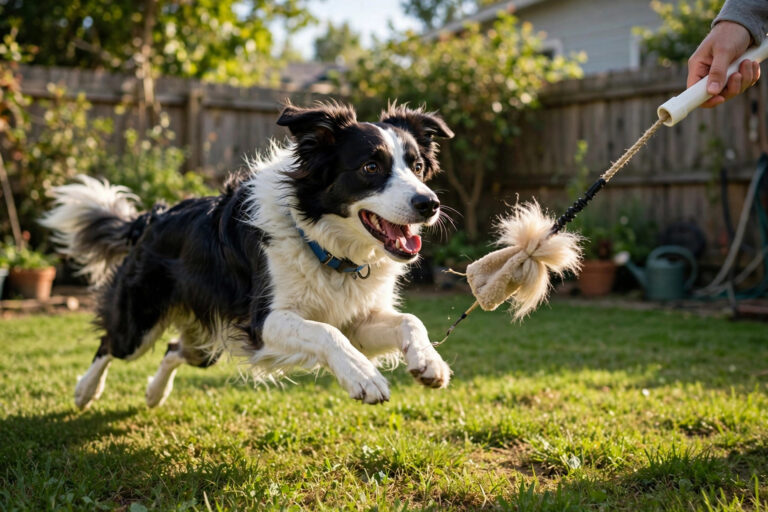
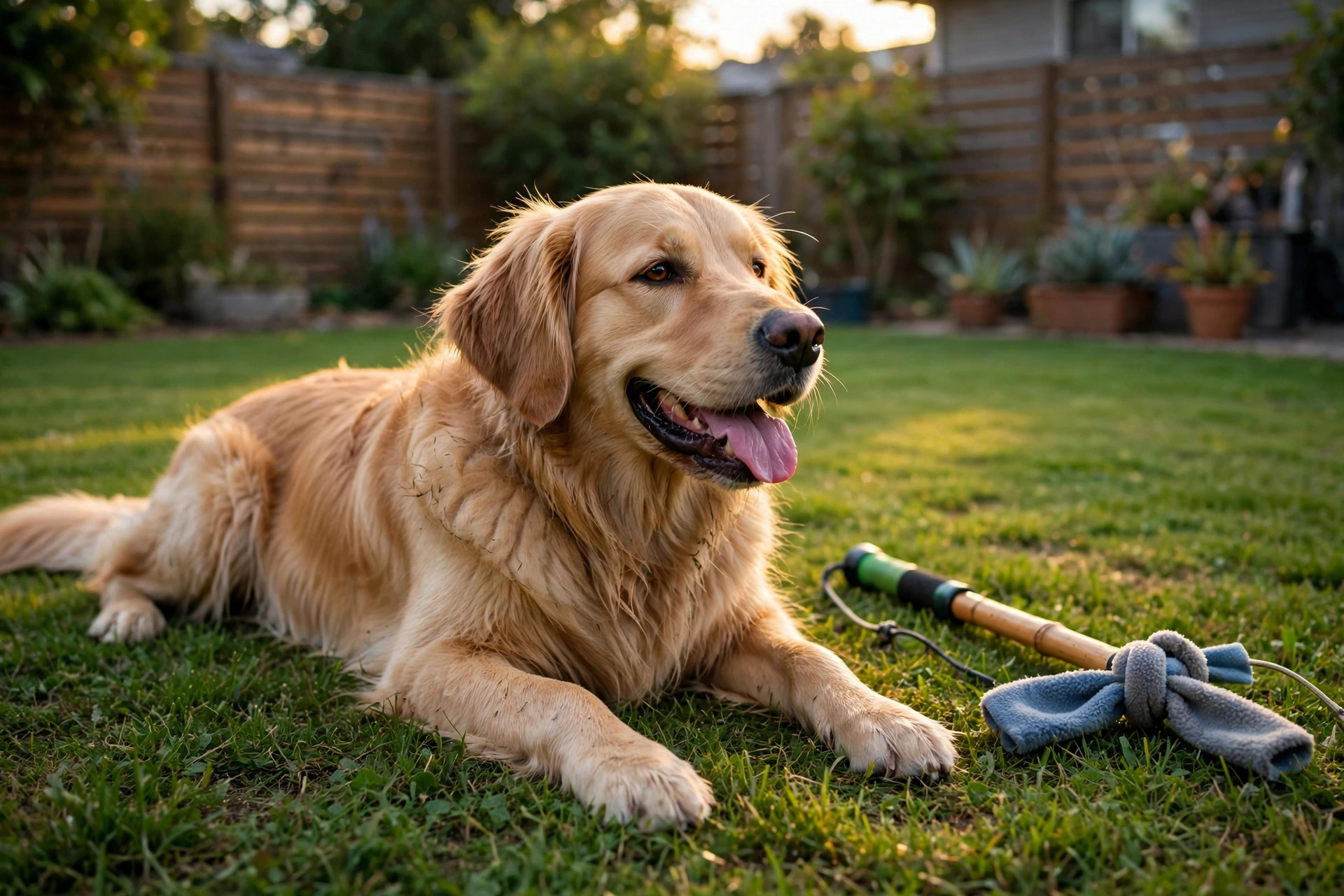
A flirt pole is basically a giant cat toy for dogs: a long pole with a rope and a lure on the end that you drag, whip and zigzag around while your dog chases it. And for high-drive dogs — terriers, collies, shepherds, any dog that lives to chase — it is the single fastest way to burn off energy without leaving your backyard.
Ten minutes of flirt-pole play tires out many dogs the way an hour of fetch never quite does. Fetch is a straight line; a flirt pole is unpredictable. Your dog has to turn, brake, think and sprint in bursts — that’s mental and physical exercise in one. It’s also brilliant for dogs that need “a job”: the chase satisfies the prey drive in a controlled, constructive way.
A shop-bought flirt pole costs $20–$40 and breaks sooner than you’d like. The DIY version costs about $10, takes 30 minutes, and you can replace any part in minutes. If your dog already loves the enrichment builds in our DIY dog toys and DIY dog puzzle toys guides, this is the next one to make — it’s the chase-drive toy that fills the gap the indoor games leave.
What you need
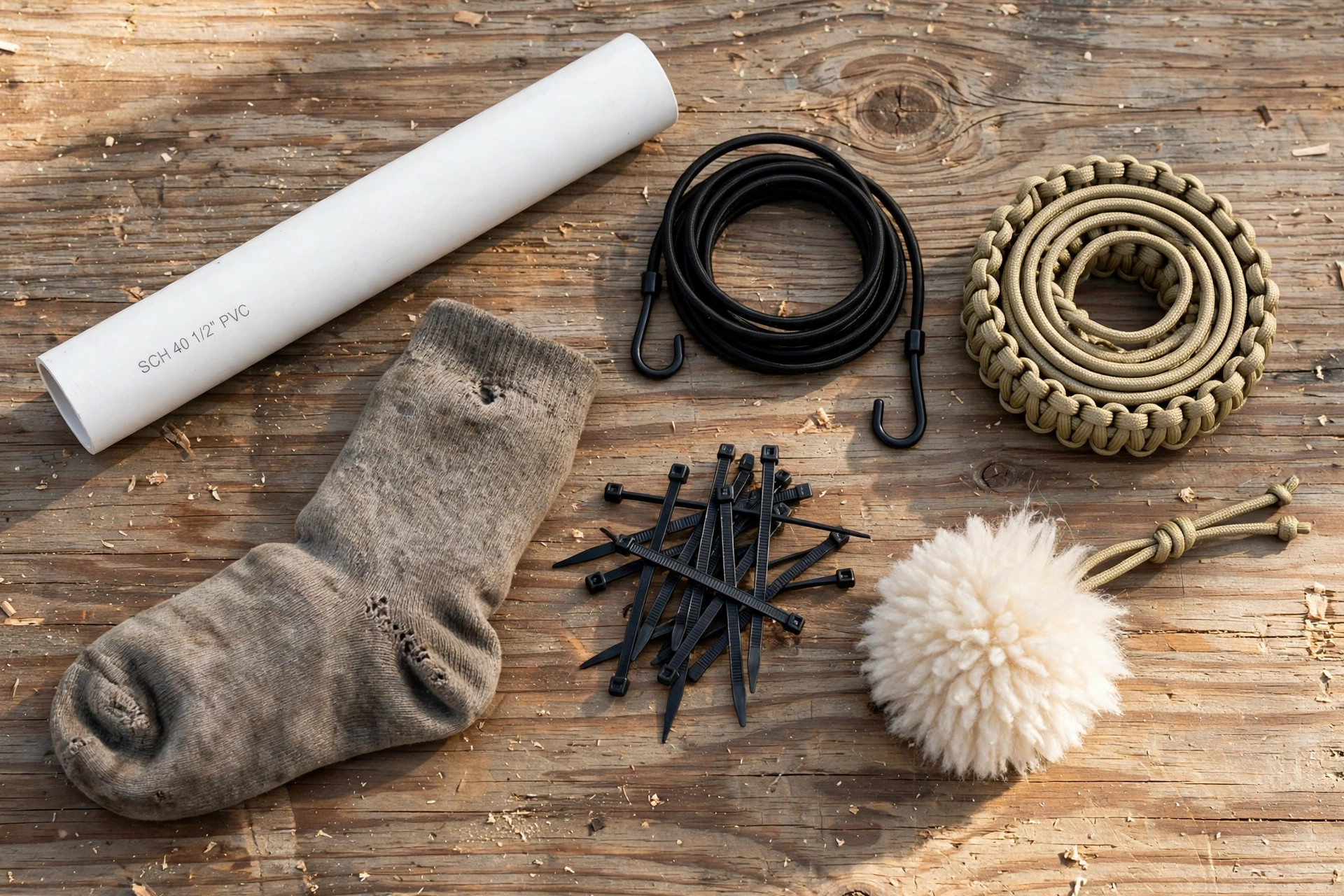
You can buy everything in one trip to a hardware store:
- PVC pipe, 1.2–1.5 m — 2 cm (¾ inch) diameter is the sweet spot: stiff enough to whip around, light enough to play for ten minutes. Cap one end with a PVC cap (or tape it shut) so it doesn’t whistle or crack.
- Bungee cord or strong elastic, ~1 m — the bungee is the shock absorber. It protects your dog’s neck and spine from sudden jerks and makes the lure move more erratically (more fun for the dog).
- Rope, ~1 m — paracord or climbing cord works. This extends your reach; combined with the bungee, the total trailing line should be roughly your dog’s body length.
- A lure — an old sock stuffed with fabric, a braided fleece strip, a store-bought squeaky toy you don’t mind destroying. Avoid lures with small parts that detach easily.
- Cable ties or strong cord to join the rope to the pole and the lure to the bungee.
Measure the right length
The pole + line should let you keep the lure 1–2 m away from your feet at all times — you never want your dog crashing into your legs at full speed. For small dogs (terriers, corgis), a 1 m pole with a 1 m line is plenty. For big dogs (labs, shepherds), go up to 1.5 m of pole with 1.5 m of trailing line. When in doubt, make the pole a touch shorter: a shorter pole is easier to control, and control is everything in this game.
Build it in 3 steps
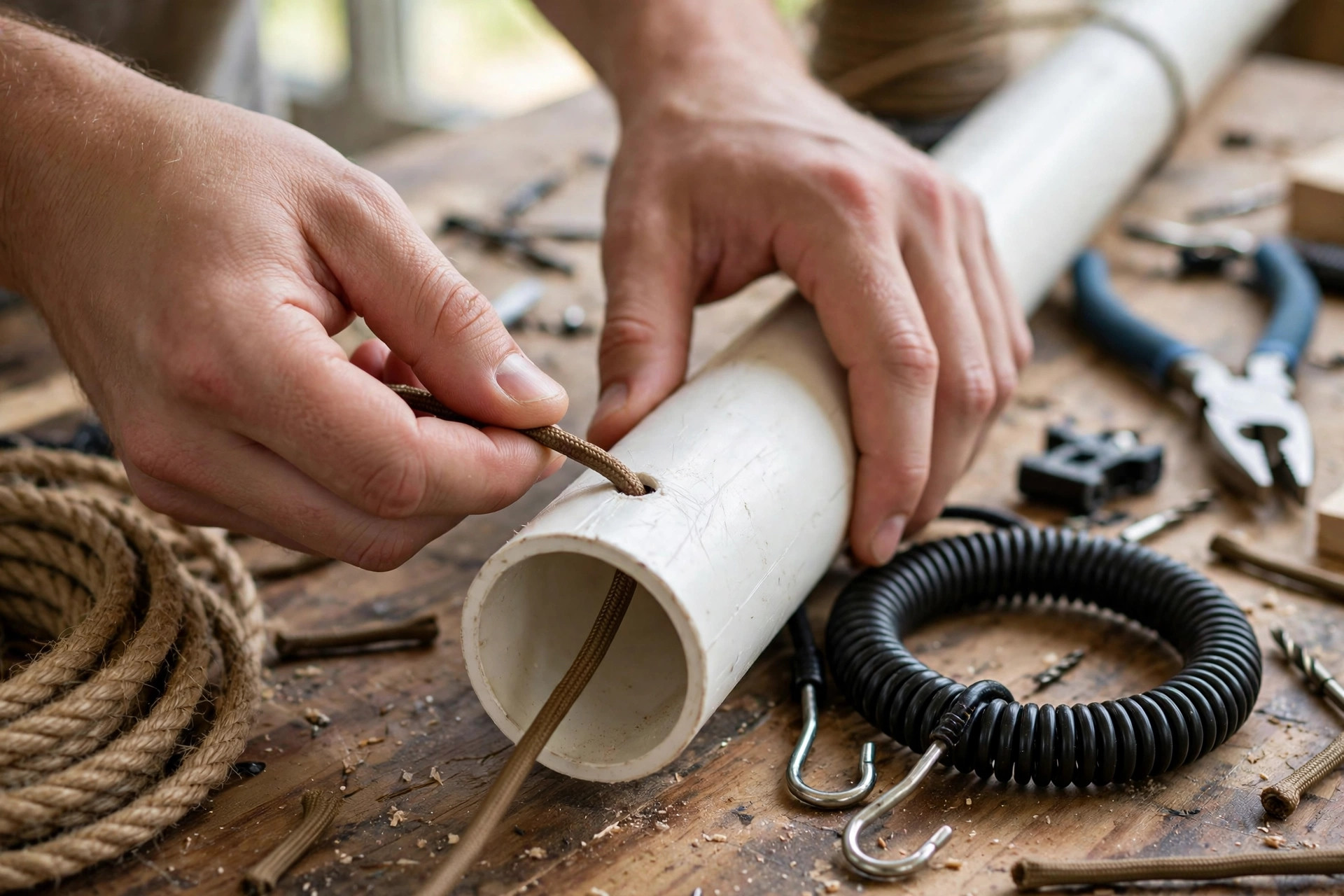
Step 1 — Rig the pole. Drill a small hole through the PVC near one end (or just wrap the cord tightly around it and secure with tape). Thread your paracord through, knot it solidly, and tape over the knot so it can’t slip. This is the main handle end — everything else hangs from this.
Step 2 — Add the bungee. Tie one end of the bungee cord to the free end of the paracord with a secure knot (a double fisherman’s knot is ideal), and cable-tie it as backup. The bungee is the most important part of the build: it’s what keeps sudden direction changes from wrenching your dog’s neck when they grab the lure at speed.
Step 3 — Attach the lure. Tie or cable-tie the lure to the free end of the bungee. Give it a hard tug test — if it survives you yanking it, it’ll survive your dog. Your flirt pole is done. Total build time: about half an hour, most of it spent deciding which lure your dog will destroy first.
How to play
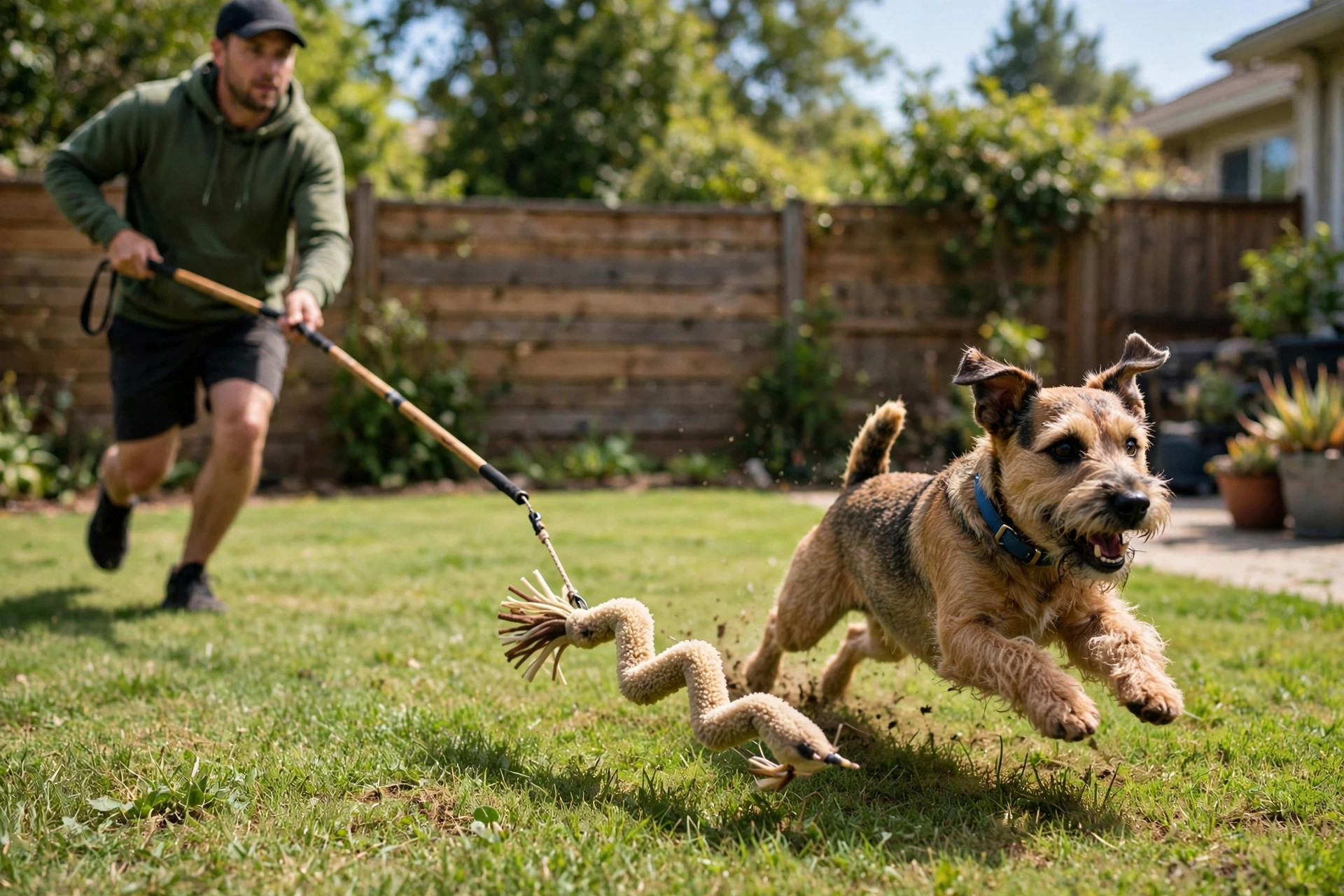
This is not fetch — you don’t throw the lure and wait. You’re the “prey driver”:
- Drag, don’t dangle. Keep the lure on the ground, zigzagging it like a fleeing animal. A lure on the ground is what triggers the chase instinct; a lure dangling in the air triggers jumping, which you want to limit (see safety below).
- Let them catch it — sometimes. A dog that never catches the lure gets frustrated and quits. Let them grab it every 30–60 seconds, then trade it for a treat to get it back. The catch-and-release rhythm keeps the game fun.
- Keep sessions short. Five to ten minutes, once or twice a day, is perfect. End while your dog still wants more — that builds drive for the next session.
- Swap directions. Alternate clockwise and anticlockwise turns so your dog works both sides of their body evenly.
Safe play rules (read these first)
- Warm up first. A five-minute loose-lead walk before play and a gentle cool-down after. Cold muscles plus explosive sprinting is how soft-tissue injuries happen.
- No hard jumping for puppies. Puppies under 12 months (longer for giant breeds — check with your vet) shouldn’t leap and twist for a lure. Keep the lure on the ground for them, always.
- Soft ground only. Grass or packed dirt, never concrete or hard-packed gravel.
- Watch the neck. The bungee cord is there for a reason. If your dog hits the end of the line hard and yelps, the bungee is too stiff or the game is too wild — calm it down.
- Skip it for some dogs. Dogs with hip dysplasia, elbow problems, recent surgery, or serious arthritis should sit this one out (the DIY dog ramp guide is the better build for them). When in doubt, ask your vet.
Training with a flirt pole
The flirt pole doubles as an impulse-control trainer — one of the hardest things to teach a chase-driven dog. Work these cues into play:
- “Wait” before the game starts: lure on the ground, dog in a sit, release with your chase cue.
- “Drop it” when they catch the lure: trade for a high-value treat. Practice this every session — a reliable drop-it on the flirt pole transfers to the park, the beach and the squirrel on the fence.
- “Enough” to end the game: lure stops moving, you ask for a sit, treat, done. Dogs that learn an off-switch for the flirt pole are easier to call off everything else.
When to retire the toy
A flirt pole takes a beating, and that’s the point — but retire it when: the bungee has lost its stretch (it becomes a hard line, which defeats its purpose), the lure is chewed to pieces with stuffing or string hanging out (ingestion risk), or the PVC is cracked or splintered. The beauty of the DIY build: replacing any of those takes five minutes and a couple of dollars.
The bottom line
A DIY flirt pole is the cheapest, fastest build on this site: one hardware-store trip, thirty minutes, and you’ve got the toy that finally matches your high-drive dog’s energy. Keep the lure on the ground, keep sessions short, and always end while they’re still begging for more. Your dog will sleep like a rock — and you’ll have the quietest evening of the week.
FAQs
Is a flirt pole safe for my dog?
Yes for healthy adult dogs, provided you keep the lure on the ground, play on soft surfaces, warm up first, and keep sessions to 5–10 minutes. Puppies and dogs with joint problems need the modified version — or should skip it and check with a vet first.
What age can puppies start?
Puppies can play a gentle ground-lure version from about 4–6 months — no jumping, no tight turns, short sessions. Save the full-speed version for after 12 months (longer for giant breeds, once growth plates close).
How long should a flirt pole session be?
Five to ten minutes is the sweet spot — one to two sessions a day. It’s intense exercise: a tired-but-still-eager dog at the end is exactly right.
What can I use as the lure?
A stuffed sock, braided fleece strips, a worn-out plush toy, or a dedicated flirt-pole lure from a pet store. Avoid anything with buttons, beads or parts that detach when chewed.
My dog is obsessed and won’t stop. What do I do?
That’s normal for high-drive dogs — it means the toy works. Teach “enough” as a hard end-of-game cue (lure stops, sit, treat, done), and keep the schedule predictable: two short sessions a day, not on-demand all day.