
A dog crate is a den, not a cell — and a bed is what makes it feel like one. But crate shopping is where most bed mistakes happen: a plush rectangle that folds up at the edges, a bolster bed that eats half the standing room, or a “crate-sized” pad that slides around like a rug. The best dog bed for a crate is not the thickest or the cutest — it is the one that fits the pan, survives the dog, and washes easily when it does not.
Crates come in standard sizes (24, 30, 36, 42 and 48 inches), but no two manufacturers cut their pans exactly the same way. This guide walks you through measuring, choosing the right style for your dog, and the picks worth your money — whether you have a teething puppy, a power chewer, or a senior who wants a soft landing.
For the full bed-type overview, see our 10 dog bed ideas for every kind of sleeper roundup; for anxiety-prone dogs, the calming dog beds deep dive; and for joint issues, the orthopedic dog beds guide.
Measure the crate pan first — not the crate’s label
The single most common crate-bed mistake is trusting the crate’s advertised size. A “36-inch crate” refers to its length, and the interior floor pan is usually an inch or two smaller in every direction. Measure the pan itself: length × width, inside the walls, at the floor. Write both numbers down and buy to them.
As a rule of thumb, the bed should cover the pan fully but sit flat — no bunching at the corners, no raised edges where the pan meets the walls. A bed that is 2 cm short on each side is fine (it will not shift if the fit is otherwise snug); a bed 5 cm too long will fold and make an uneven surface your dog will not settle on.
If you use a divider panel for a growing puppy, measure the active section only, and plan to size up as the panel moves. Puppies outgrow crate beds fast — buy to the current section, not the crate’s future full size.

Flat pads vs bolster beds in a crate
Flat pads and bolster (raised-rim) beds behave very differently inside a crate, and the right choice depends on the dog more than the look:
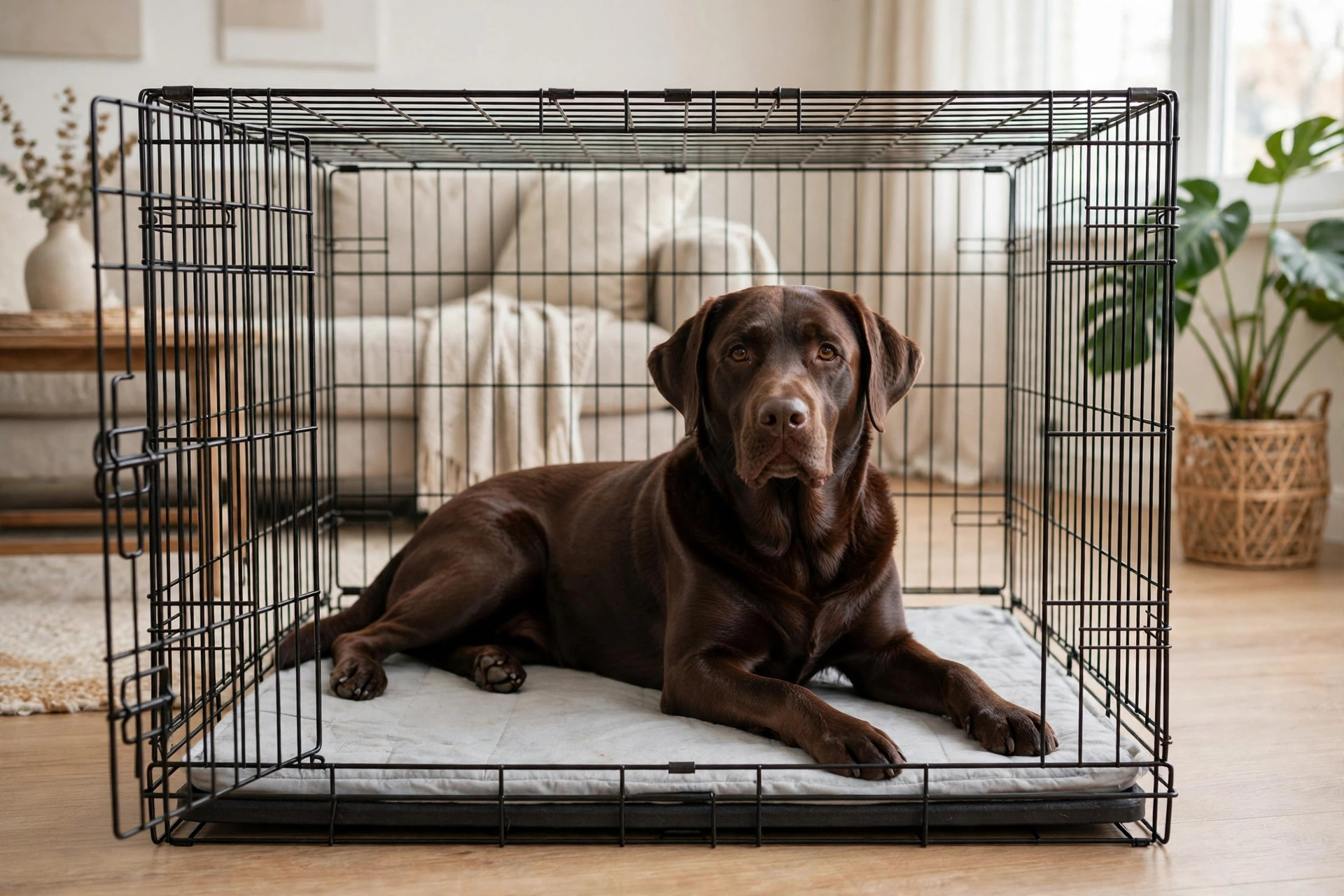
Flat crate pads are the default for a reason. They sit flush on the pan, lose no floor space, and work in every crate size. They are also the easiest to wash — most have a single removable cover. For puppies and chewers, flat pads are nearly always the right call: fewer edges to grab and destroy.
Bolster beds have a raised rim that dogs love to rest their chin on, and the raised edge can make the crate feel den-like, which helps anxious dogs settle. The trade-off is space: in a standard crate, a bolster bed can eat 10–15 cm of floor on each side, leaving a tall dog cramped. Bolsters suit medium and large crates with smaller dogs inside — a beagle in a 36-inch crate, not a labrador in the same crate.
Orthopedic crate pads deserve a mention for senior dogs: low-profile memory-foam pads (5–7 cm) fit crates well and protect stiff joints without the bulk of a full orthopedic bed. If your senior still uses a crate at night, this is the category to shop.
What the bed should be made of
Three material questions matter more than brand names:
- Chew resistance. If your dog chews bedding, shop for ballistic nylon or Cordura covers, reinforced stitching, and no loose tags or zippers. Flat pads beat bolster beds here — fewer grab points. And supervise: no bed is truly chew-proof, and ingested filling is a vet visit.
- Washability. Crate beds collect accidents, muddy paws and drool. Look for a fully removable, machine-washable cover and a water-resistant liner between cover and fill. Foam cores should survive a spin cycle or at least a hose-down. Our how-to-wash-a-dog-bed guide covers keeping any bed fresh.
- Fill type. Polyfill flattens fast in a crate. Egg-crate or memory foam holds its shape and supports joints. Avoid loose bead fills in crate beds — if a chewer opens a seam, tiny beads scatter everywhere.
Picks by dog type
For puppies: a flat, washable crate pad with a waterproof liner. Skip expensive beds until teething ends — most puppies destroy at least one bed. Buy cheap now, upgrade at a year old.
For power chewers: a ballistic-nylon flat pad or an elevated cot-style bed sized to the crate pan (the raised mesh frame keeps the surface taut and chew-resistant). No bolster, no plush.
For seniors: a low-profile orthopedic crate pad (5–7 cm memory foam) with a water-resistant liner for the occasional accident. Easy entry matters — flat pads are lower than bolsters.
For anxious dogs: a snug-fitting bolster bed in a crate one size up, so the rim fits without cramping. The chin rest really does help — pair it with a covered crate for the full den effect. More on the mechanism in our calming dog beds guide.
For hot sleepers: a mesh elevated cot that fits the crate footprint, or a cooling-gel flat pad. Crates trap heat, so avoid thick faux-fur beds in warm rooms.
What NOT to put in a crate
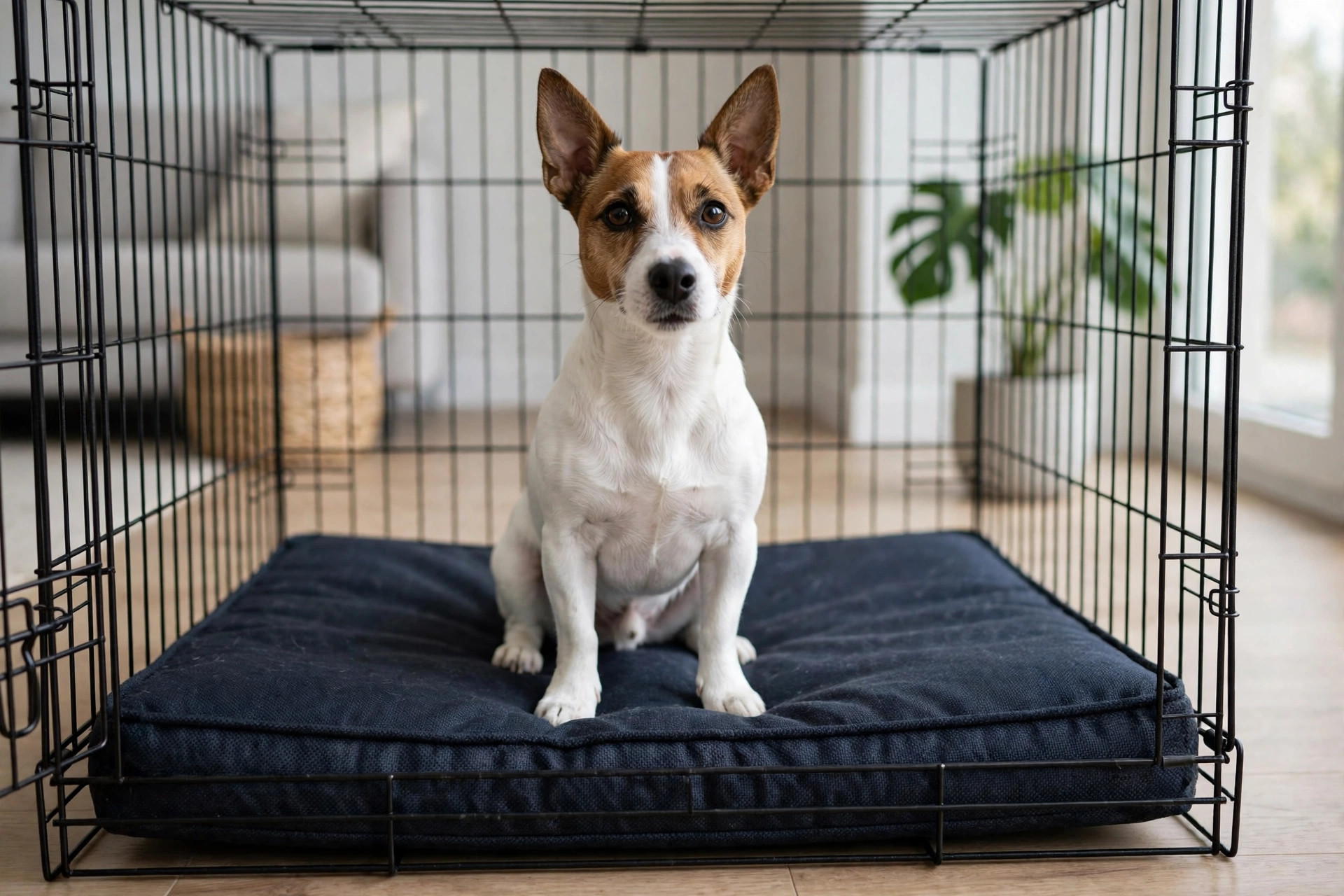
- Beds thicker than ~10 cm in a standard-height crate — they eat headroom your dog needs to sit and stand.
- Loose blankets, towels or quilts as the main bedding for unsupervised dogs — they bunch, and determined chewers shred and swallow fabric.
- Beds with small parts: buttoned covers, decorative bows, dangling tags.
- Electric heated pads in a crate with a chewer — cord risk. Use self-warming (mylar-lined) pads instead.
- Anything with cedar or aromatic fill in an enclosed crate — the scent concentrates.
Safety notes
Crate beds are for supervised settling, not for a dog left to destroy things out of boredom. If your dog shreds every bed, that is information: they may need more exercise before crate time, a tougher chew toy in the crate, or a vet check for anxiety. Remove and replace any bed with exposed filling immediately. Puppies under 12 weeks do fine on the bare pan with a single flat washable pad — comfort matters less than safety at that age.
FAQs
How do I know what size bed fits my dog’s crate? Measure the inside of the crate pan (length × width) and buy a bed that matches or is within 2 cm on each side. Never size by the crate’s advertised length alone — the pan is always smaller.
Can puppies have a bed in their crate? Yes, but keep it simple: one flat, washable, cheap pad. Expect destruction during teething. Skip bolsters and plush until the chewing phase passes.
Flat pad or bolster bed for a crate? Flat for puppies, chewers and small crates. Bolster for calm adult dogs in a crate one size up, where the rim adds comfort without cramping. Low-profile orthopedic pads suit seniors either way.
How often should I wash a crate bed? The cover every 1–2 weeks; the liner monthly. Wash immediately after accidents — enzyme cleaner on the foam, then air-dry fully before it goes back in the crate.

My dog bunches the bed into a corner. What now? The bed is probably too small for the pan, or the dog is too hot. Size up so it sits flat edge to edge, or switch to a breathable flat pad and check the room temperature.
Are elevated cot beds good in crates? For chewers and hot sleepers, yes — if the cot frame matches the pan dimensions exactly. A frame that presses against the crate walls can rattle and stress anxious dogs.
What is the best crate bed for a dog that chews? A ballistic-nylon flat pad with no bolster and reinforced stitching. Nothing is indestructible, so supervise and remove the bed if chewing starts — crate time should not be chew time on the bed itself.
The bottom line
Measure the pan, not the label. Flat and washable for puppies and chewers, bolster for calm adults with room to spare, low-profile orthopedic for seniors. The best dog bed for a crate is the one your dog actually settles on — and you will know within a week, because a well-fitted crate bed barely moves and smells like nothing.