Watch your dog sleep for five minutes and you’ll learn more than any product
review could tell you. Some dogs sprawl like they’ve paid rent; others
bulldoze every cushion into a nest and burrow underneath. Seniors press
against something solid, puppies gnaw whatever’s chewable. One bed does not
fit all — and a dog that sleeps better is, unscientifically but observably, a
better-behaved dog.
Here are 10 dog bed ideas matched to sleeper type, with the materials and
shapes that suit each one, plus sizing, washing and safety notes at the end.
For the sprawlers
1. The oversized rectangle mat
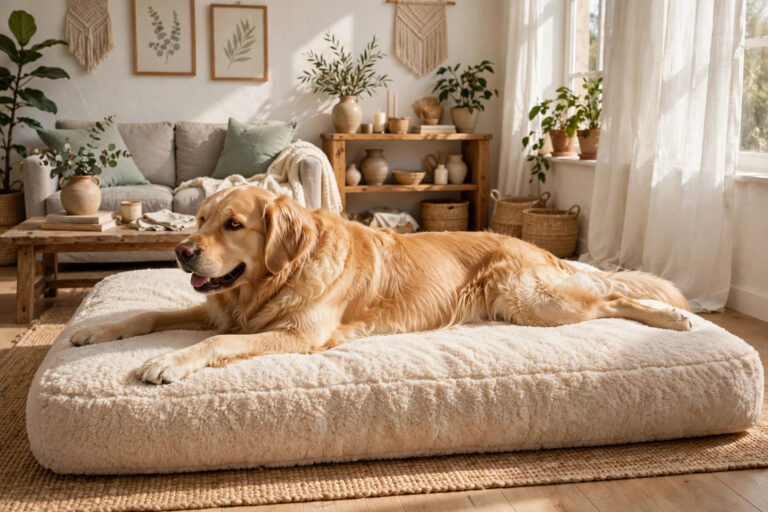
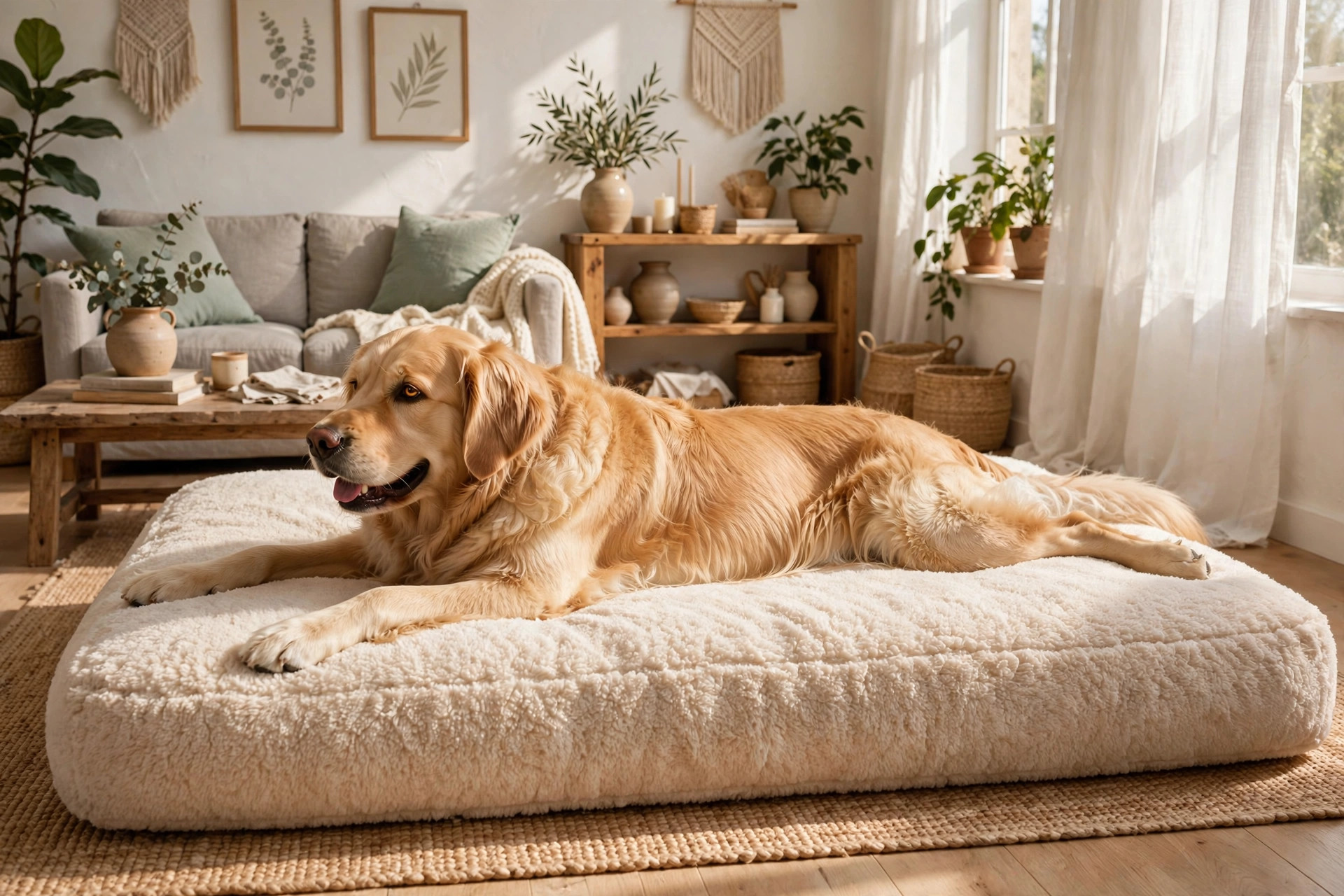
Sprawlers need surface area, not walls. A thick rectangular pillow mat —
about 10 cm of fill — gives them room to fling all four legs without sliding
off onto hard floor. Best pick for large breeds, hot sleepers, and multi-dog
piles. Look for a non-slip base so it stays put on wooden floors.
2. The low-profile floor cushion
Flat, wide and slightly overstuffed, these suit dogs that sprawl but still
want something to push against — the cushion edge becomes a headrest. A
removable, washable cover is non-negotiable here, since big flat surfaces
collect the most hair.
For the burrowers and nesters
3. The hooded cave bed
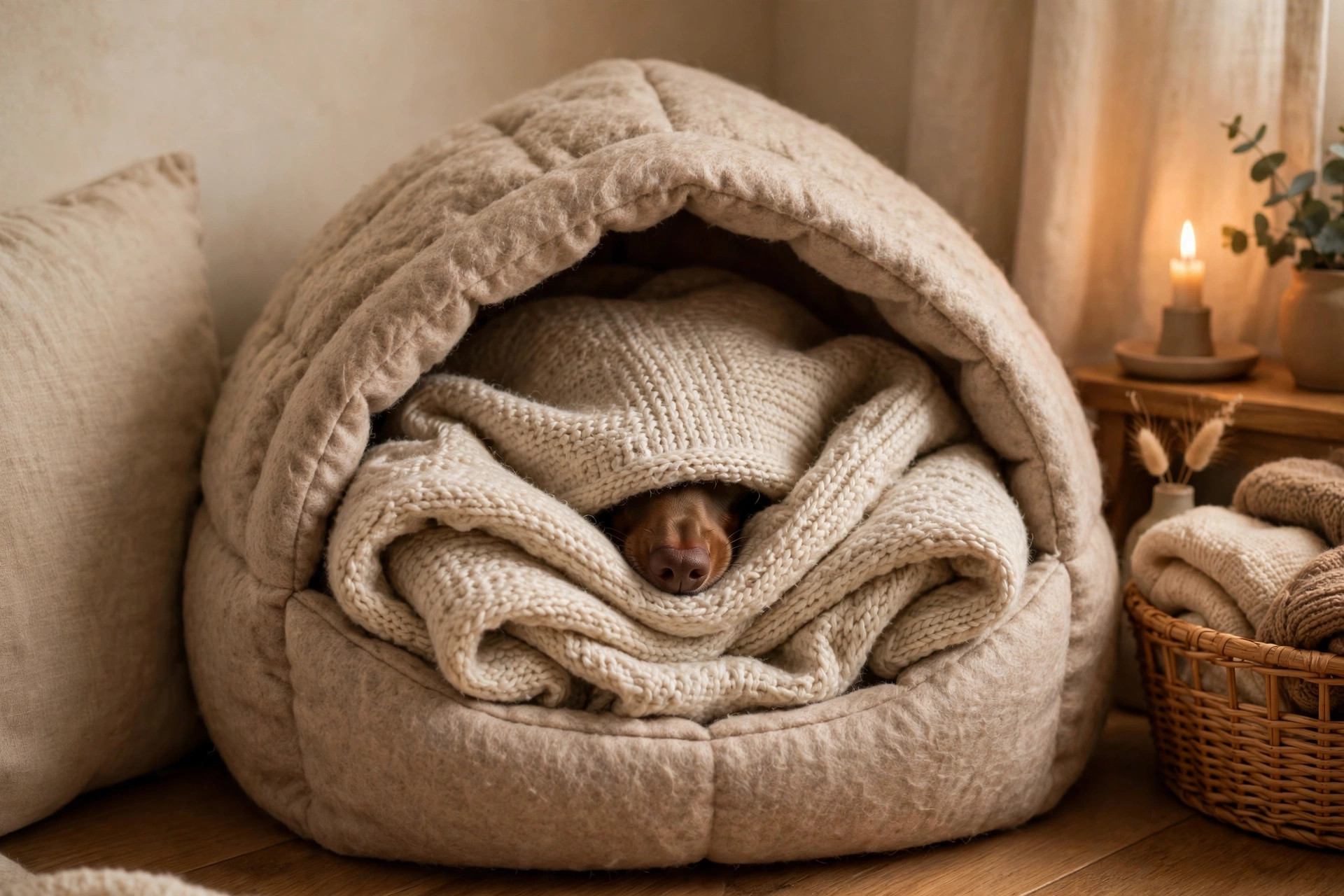
Part bed, part blanket fort: a rounded bed with a low hood or attached
blanket flap. Burrowers shove their noses under the flap and settle —
fantastic for anxious dogs, dachshunds, terriers and any dog that used to
sleep under your duvet. The hood also muffles household noise, which many
light sleepers love.
4. The blanket-topped donut bed
A classic donut with an extra-soft blanket layer folded into the centre.
Nest-diggers can paw, circle and knead the blanket exactly as they would
your sofa cushions, while the raised rim gives them something to curl
against. Choose one with a washable liner — digging dogs are dusty dogs.
For the seniors
5. The orthopedic memory-foam bed
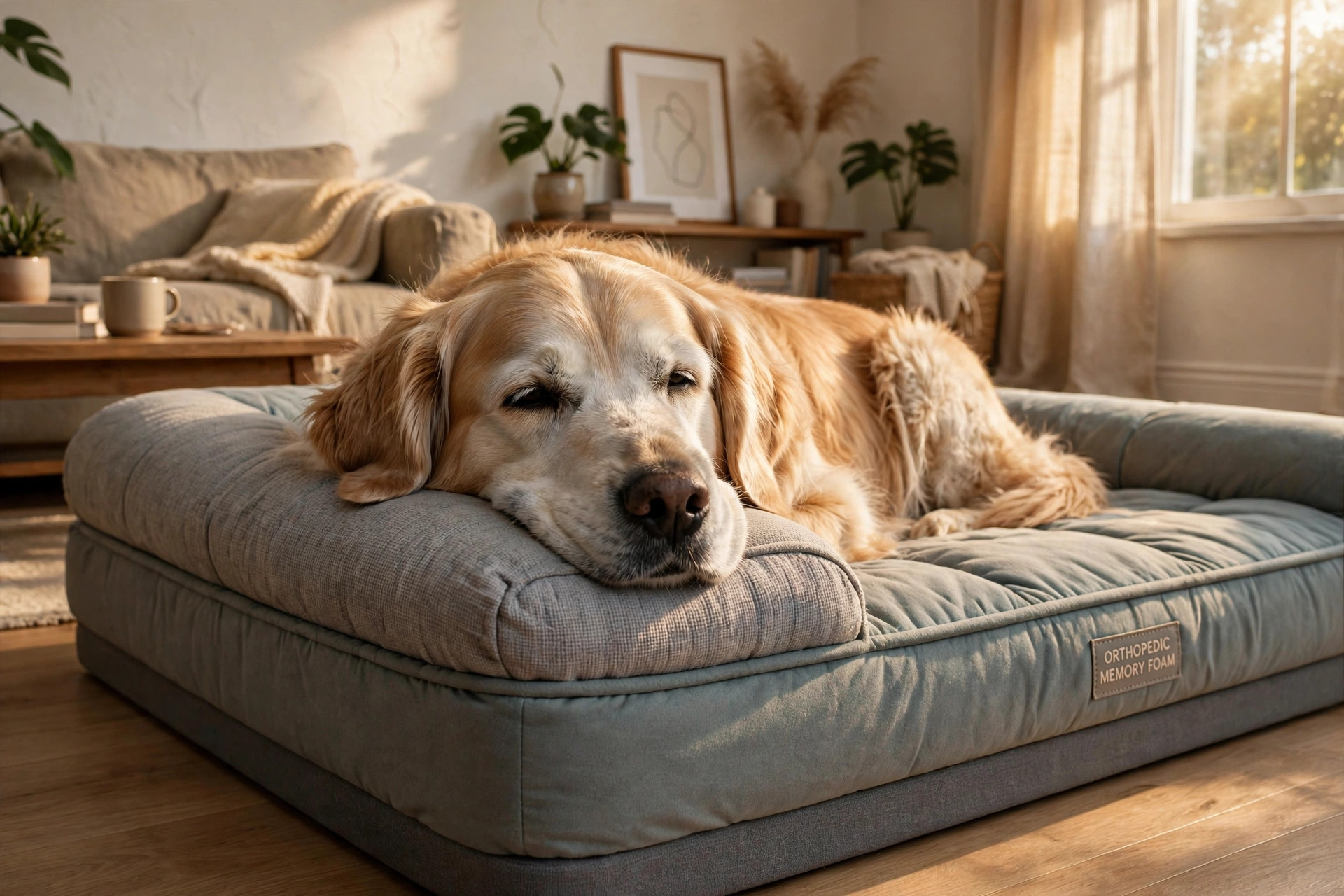
The single biggest upgrade you can make for an older dog. Real memory foam
(at least 7–8 cm of it, not “egg-crate” convoluted foam) distributes weight
away from stiff hips and elbows. Seniors that grumble when standing up often
change noticeably within a week of getting proper support. Flat rectangular
shapes beat bolsters here — arthritic dogs step in more easily and sprawl
without climbing.
6. The low bolster bed
For seniors that still love leaning: a bed with one low, wide bolster side
instead of four tall walls. They can press a hip against the cushion and
drop their head onto it, without needing to clamber over a rim. Make sure the
bolster is firm — soft squishy rims collapse under a leaning dog and
frustrate them.
For the chewers and puppies
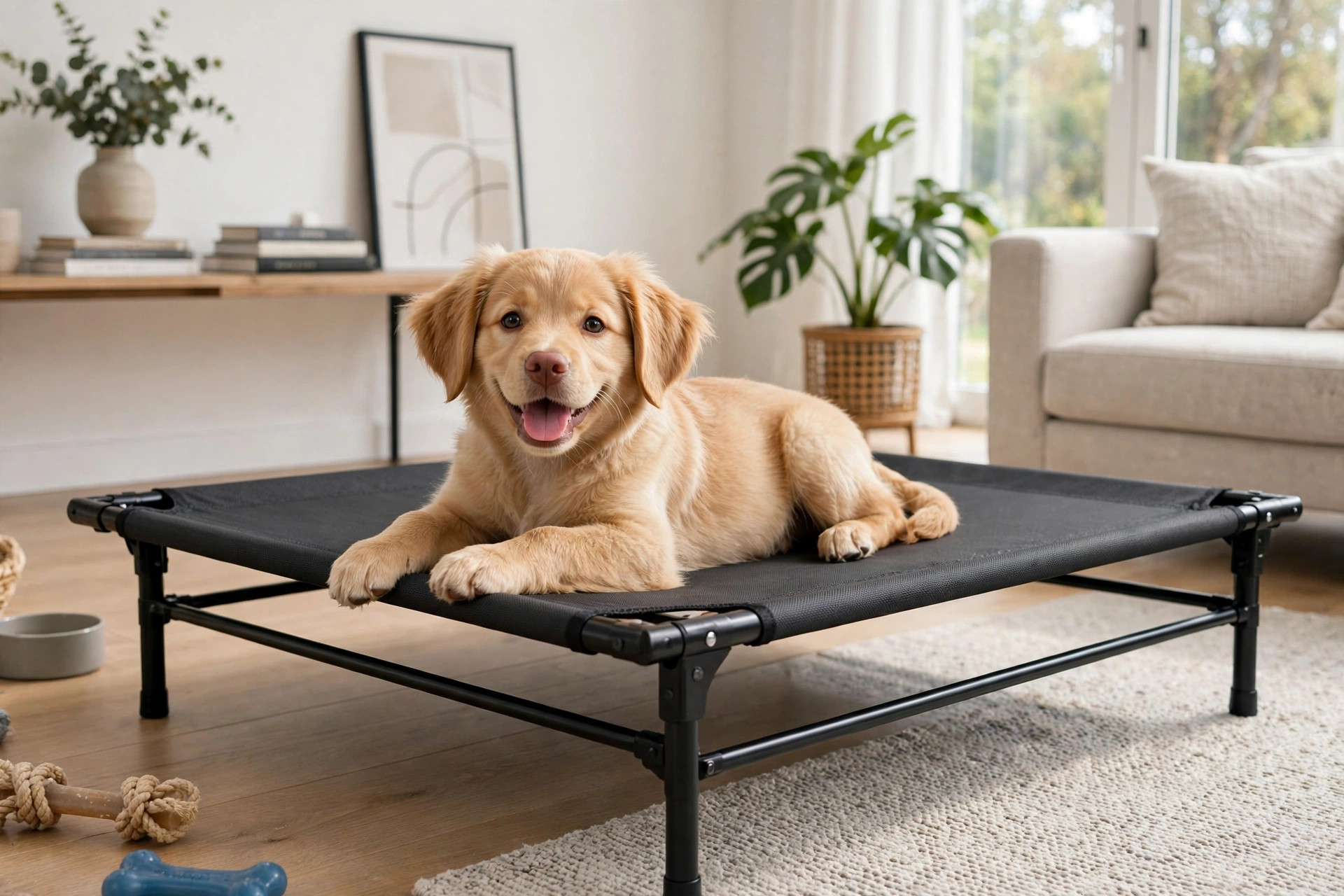
7. The chew-proof cot
Raised camp-style cots (a taut fabric panel on a metal or PVC frame) remove
almost everything chewable: no stuffing, no seams at tooth height, no corners
to worry. They also keep hot puppies cool and stay dry after accidents, since
there’s nothing to absorb them. If your puppy destroys beds for sport, this
is the one — many come with chew-resistant guarantees.
8. The tough rope-twist donut
For the moderate chewer that’s past the puppy-shredding stage: tightly
braided rope or canvas-look fabrics resist claws and teeth far better than
plush. It’s still soft enough for nesting behaviour, but the dense weave
won’t surrender its stuffing at the first nibble. Supervise at first — no
bed is truly indestructible.
For special sleepers
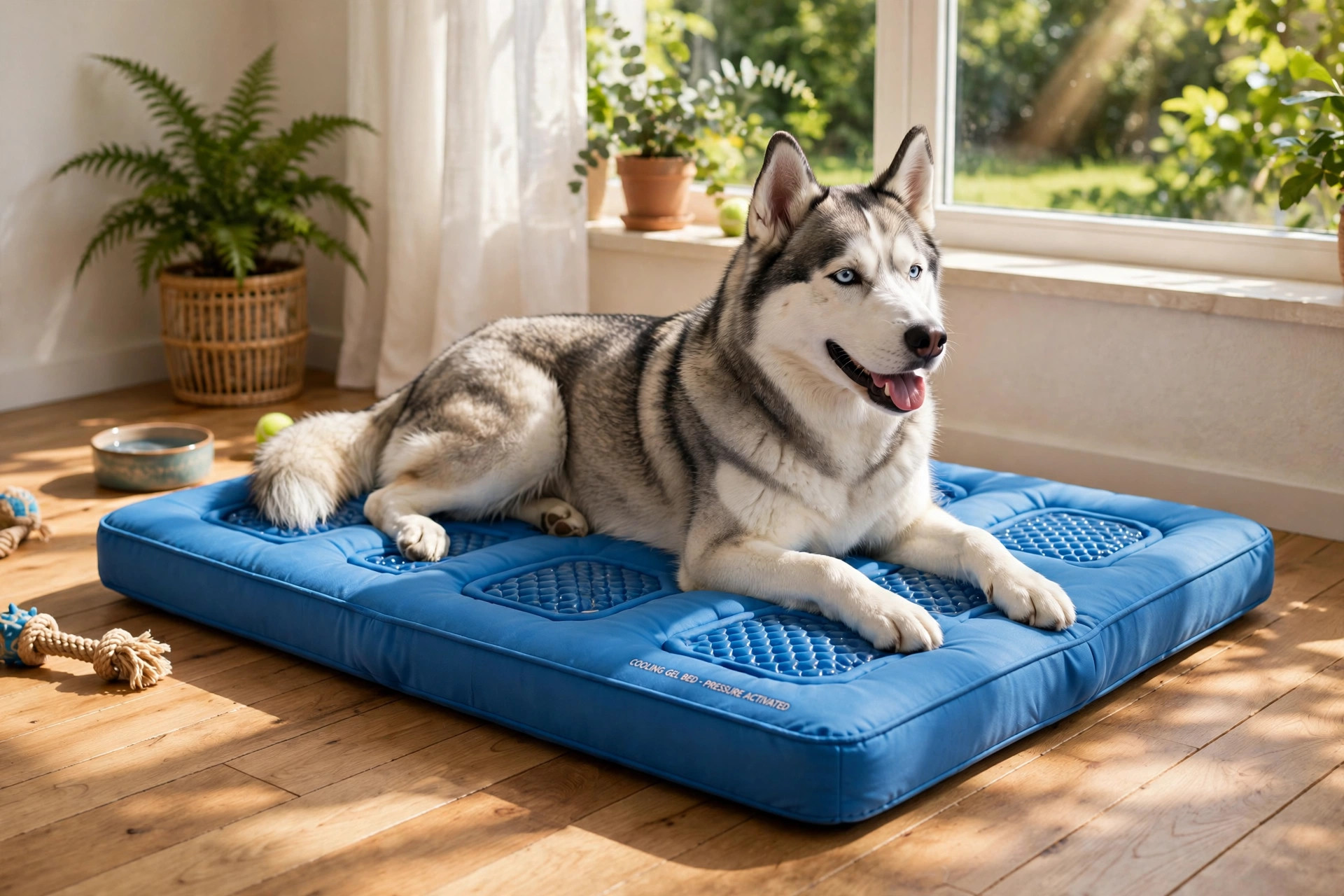
9. The cooling gel bed
Dogs that pant at night or seek out the kitchen tiles are heat-shedders.
Cooling beds use pressure-activated gel pads (no electricity, no water to
fill) that draw heat away for an hour or two at a time. Pair one with a
regular bed: the dog chooses. They’re also brilliant for summer heatwaves and
for thick-coated breeds.
10. The travel-and-crate pad
A thin, foldable pad that goes inside the crate, the car boot or the holiday
rent — same smell, same feel, wherever you are. Routine-sensitive dogs
settle dramatically faster in new places on their own pad. Washable,
lightweight, and cheap enough to keep a spare.
The sizing rule (measure, don’t guess)
-
Length: dog stretched nose-to-tail, plus 15–20 cm. If in doubt, size up —
undersized beds are the number-one reason dogs abandon them. -
Weight: check the bed’s fill rating against your dog’s weight; cheap
beds flatten within weeks under heavy dogs. -
Curlers vs sprawlers: measure the dog in its favourite sleeping pose,
not standing. A donut bed is measured by internal diameter, a rectangle by
flat length.
Washing and care tips
-
Removable, machine-washable cover first. Whatever the style, if the
cover doesn’t zip off, it becomes a smell within a month. Wash at 30–40°C
with a gentle, unscented detergent. -
Foam cores air, don’t wash. Spot-clean memory foam and air-dry it
fully — trapped damp breeds mildew. Waterproof liners between foam and
cover are cheap insurance against accidents. -
Vacuum between washes. A weekly lint-roll or vacuum stops hair and
dander baking into the fabric. -
Rotate two covers. One on the bed, one in the wash — a bed is never
“unavailable”, and your dog isn’t forced onto a bare foam core.
Safety notes
-
Chewing risk: no bed is safe to chew unsupervised. If your dog eats
stuffing or fabric, remove the bed when you leave the room — intestinal
blockages are genuinely dangerous. The chew-proof cot (idea 7) is the
safest unattended option. -
Cedar-filled beds: smell lovely, but cedar oils can irritate some dogs’
skin and respiratory tracts. If your dog scratches after switching beds,
the fill is suspect number one. -
Heated beds: only use vet-designed low-wattage heated beds, never
human heat pads — dogs can’t move off quickly enough if they overheat, and
they chew through cords. -
Bolsters vs puppies: very small puppies can get wedged between a tall
bolster and a wall; keep flat-sided beds against walls with a small gap,
or choose low rims until they’re bigger.
FAQs
How often should I replace a dog bed?
When the fill stops springing back — roughly 1–2 years for polyfill, 3–5
for quality memory foam. A flattened bed is decoration, not support.
My dog ignores the expensive bed and sleeps on the sofa. Why?
Usually scent, temperature or location. Put the bed where the dog already
naps (they’ve told you the spot), add a worn t-shirt of yours, and reward
them with treats for settling on it for a few days.
Are elevated cots good for old dogs?
Yes for cool rest and easy cleaning, but very arthritic dogs can struggle
to climb onto taller frames — choose a low one, or stick with orthopedic
foam.
Can dogs share one big bed?
If they choose to pile up, yes — but keep a second bed available. Dogs that
love cuddling at bedtime still want their own space at 3 a.m.
What’s the cheapest bed that isn’t rubbish?
A washable floor cushion (idea 2) with a dense polyfill pad — under most
bed budgets, easy to launder, and honest about what it is.