Easy Peanut Butter Dog Ice Cream Recipe (3 Simple Recipes)

Looking for a way to treat your dog on a hot day? These 3 easy peanut butter dog ice cream recipes use simple ingredients you already have at home — no cooking required, no nasty additives, and totally safe for dogs. Your pup will go absolutely crazy for all three.

Important: Always use xylitol-free peanut butter. Xylitol is highly toxic to dogs and is found in many sugar-free and natural peanut butter brands. Check the label every time — safe brands include Jif, Skippy, and most standard supermarket peanut butters.


Recipe 1: 2-Ingredient Peanut Butter Banana Dog Ice Cream

peanut butter and bananaThe simplest dog ice cream you will ever make. Two ingredients, five minutes of prep, and your dog will think you are the best human alive. Bananas add natural sweetness and potassium while keeping the recipe completely treat-safe.

Ingredients

  • 2 ripe bananas, peeled and sliced
  • 3 tablespoons xylitol-free peanut butter

Instructions

  1. Peel and slice bananas into chunks. The riper the banana, the sweeter and creamier the result.
  2. Freeze the banana slices on a tray for at least 2 hours until completely solid.
  3. Place frozen banana slices and peanut butter into a blender or food processor.
  4. Blend on high until completely smooth and creamy — about 60 seconds. Scrape down the sides halfway through.
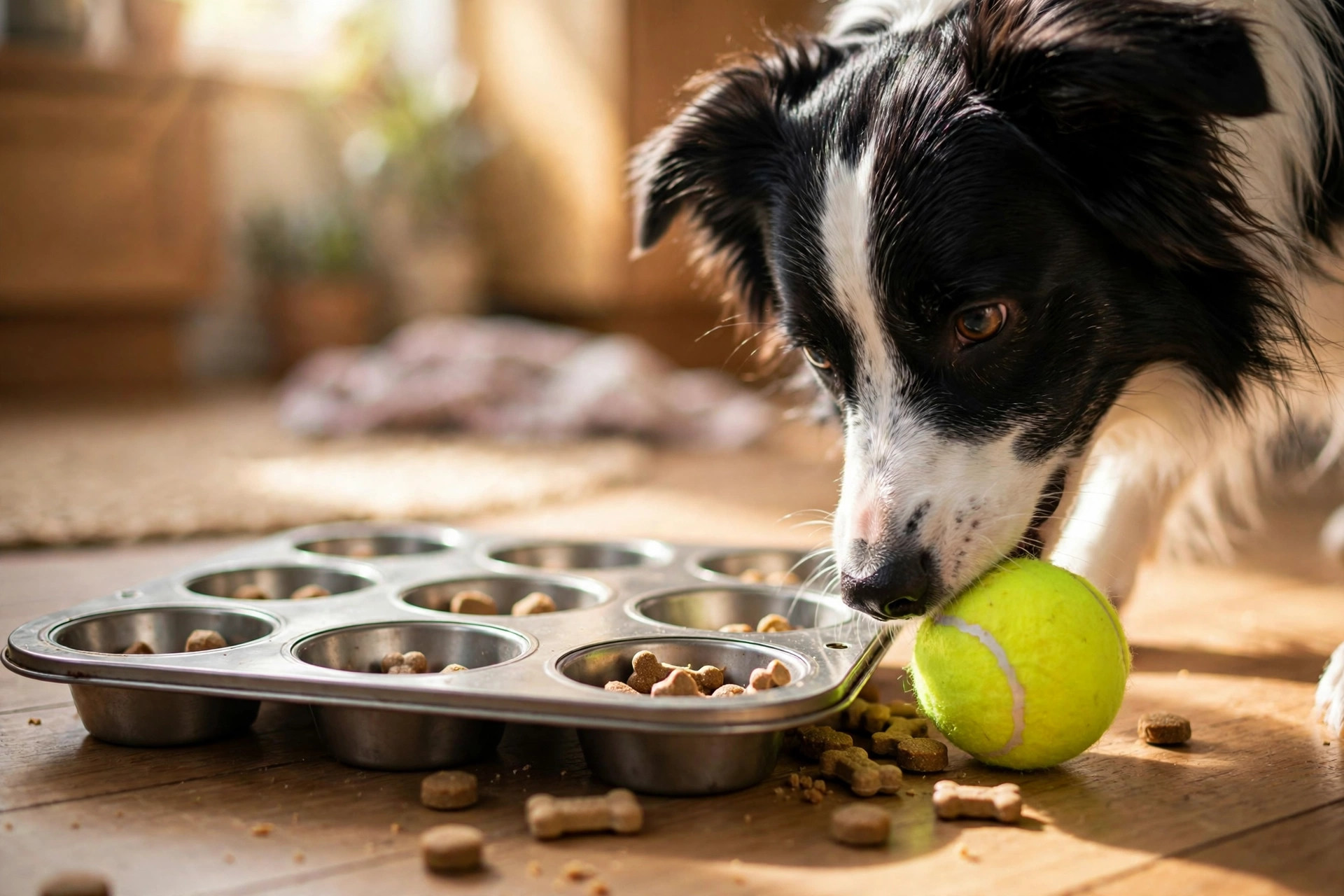
  5. Serve immediately as a soft-serve style treat, or spoon into silicone moulds or a muffin tin lined with cupcake cases.
  6. Freeze for a further 2–3 hours if you want firm scoopable ice cream.
  7. Store leftovers in a sealed container in the freezer for up to 2 weeks.

Serving Guide

Dog Size Serving Size How Often
Small (under 20 lb) 1–2 tablespoons 2–3 times per week
Medium (20–50 lb) 3–4 tablespoons 2–3 times per week
Large (50 lb+) Up to ½ cup 2–3 times per week

Calories: approximately 45–60 kcal per 2-tablespoon serving. Treats should make up no more than 10% of your dog’s daily calorie intake.


Recipe 2: Peanut Butter & Pumpkin Dog Ice Cream

Baking homemade treats for pets

This one is perfect for dogs with sensitive stomachs. Pumpkin is one of the best natural digestive aids for dogs — the fibre helps with both diarrhoea and constipation. Combined with creamy peanut butter and plain yoghurt, this ice cream is as healthy as it is delicious.

Ingredients

  • ½ cup plain canned pumpkin (not pumpkin pie filling — must be 100% pure pumpkin)
  • 3 tablespoons xylitol-free peanut butter
  • ½ cup plain unsweetened Greek yoghurt or plain yoghurt
  • 1 teaspoon honey (optional — skip for diabetic dogs)

Instructions

  1. Combine all ingredients in a mixing bowl and stir until completely smooth and well combined.
  2. Taste-test the mixture — it should smell appetising (your dog will certainly agree).
  3. Pour into silicone paw-print moulds, ice cube trays, small paper cups, or a muffin tin lined with cupcake cases.
  4. Freeze for a minimum of 4 hours, or overnight for best results.
  5. Pop out of moulds and serve straight from the freezer. No need to thaw.
  6. Store in a zip-lock bag or airtight container in the freezer for up to 3 weeks.

Why Pumpkin Is Great for Dogs

  • Digestive support: Soluble fibre in pumpkin feeds beneficial gut bacteria and firms up loose stools
  • Low calorie: Plain pumpkin is only 26 kcal per 100g — one of the lowest-calorie dog treats available
  • Vitamins A, C & E: Supports immune function, vision, and skin health
  • Hydration: Pumpkin is 92% water, helping keep dogs hydrated in summer
Dog Size Serving Size How Often
Small (under 20 lb) 1 ice cube or small mould Daily in summer
Medium (20–50 lb) 2–3 ice cubes or 1 large mould Daily in summer
Large (50 lb+) 3–4 ice cubes or 2 moulds Daily in summer

Tip: This recipe is one of the few dog ice creams suitable as a daily summer treat due to its low calorie and high fibre content.


Recipe 3: Peanut Butter, Blueberry & Yoghurt Dog Ice Cream

This is the gourmet version — and the most photogenic one for sharing on Instagram or Pinterest. Blueberries are a superfood for dogs, packed with antioxidants that support brain health and immune function. The swirl of purple against the creamy peanut butter base makes these look absolutely stunning in paw-print moulds.

Ingredients

  • 1 cup plain unsweetened yoghurt (Greek or regular)
  • 4 tablespoons xylitol-free peanut butter
  • ½ cup fresh or frozen blueberries
  • 1 ripe banana (optional — adds extra creaminess)

Instructions

  1. Blend the yoghurt, peanut butter, and banana (if using) until completely smooth. This is your base layer.
  2. In a separate small bowl, mash or briefly blend the blueberries until they form a loose purple puree.
  3. Pour the peanut butter base into your moulds, filling each about two-thirds full.
  4. Drop 1 teaspoon of blueberry puree on top of each mould.

  5. Use a toothpick or skewer to swirl the blueberry through the peanut butter base for a marbled effect.
  6. Tap the moulds gently on the counter to remove air bubbles and level the surface.
  7. Freeze for 4–6 hours or overnight until completely solid.
  8. Run the base of the moulds under warm water for 5 seconds to release cleanly.
  9. Store in a zip-lock bag in the freezer for up to 3 weeks.

Benefits of Blueberries for Dogs

  • Antioxidants: Among the highest antioxidant content of any fruit — supports cognitive function in older dogs
  • Anti-inflammatory: Helps dogs with arthritis and joint inflammation
  • Low sugar, low calorie: Only 57 kcal per 100g; safe for most dogs including those watching their weight
  • Vitamin C & K: Supports immune health and bone strength
Dog Size Serving Size How Often
Small (under 20 lb) 1 small paw mould 2–3 times per week
Medium (20–50 lb) 1 standard mould or 2 small 2–3 times per week
Large (50 lb+) 2 standard moulds 2–3 times per week

Tips for Making Dog Ice Cream at Home

  • Always check for xylitol: Read the peanut butter label every single time — some brands change their formulas
  • Use plain yoghurt only: Never use flavoured, sweetened, or low-fat yoghurt with artificial sweeteners
  • Silicone paw moulds are worth it: They cost around $8–12 on Amazon and make the treats look adorable — perfect for photos
  • Let large dogs eat from a bowl: For big dogs, pour the mixture into a bowl and freeze directly — easier to portion and less mess
  • Serve on a mat or outside: These treats melt fast, especially on a hot day — serve on a lick mat or outside on the grass to avoid floors getting sticky
  • Introduce slowly: If your dog has never had yoghurt or pumpkin, start with a small amount to check for digestive sensitivity

Ingredients to Always Avoid in Dog Ice Cream

Ingredient Why It’s Dangerous Severity
Xylitol Causes rapid insulin release; can cause liver failure 🛑 Toxic — emergency vet
Chocolate Theobromine toxicity — affects heart and nervous system 🛑 Toxic — emergency vet
Grapes & raisins Cause acute kidney failure even in small amounts 🛑 Toxic — emergency vet
Macadamia nuts Causes weakness, hyperthermia, vomiting ⚠️ Toxic — call vet
Flavoured yoghurt Contains added sugar or artificial sweeteners ⚠️ Avoid
Pumpkin pie filling Contains nutmeg which is toxic to dogs ⚠️ Avoid

Frequently Asked Questions

Can dogs eat peanut butter ice cream?

Yes — dogs can eat peanut butter ice cream made with dog-safe ingredients. The key is using xylitol-free peanut butter, plain unsweetened yoghurt, and no chocolate, artificial sweeteners, or toxic fruits. The recipes on this page are specifically formulated to be safe and healthy for dogs.

Can I use regular human ice cream for my dog?

No. Regular human ice cream contains high amounts of sugar, dairy fat, and often artificial additives that are not suitable for dogs. Many also contain xylitol in sugar-free versions, which is fatally toxic to dogs. Always make dog-specific ice cream or use a product labelled safe for dogs.

Is peanut butter safe for dogs?

Plain, xylitol-free peanut butter is safe for dogs in moderation. It is high in fat and calories, so it should be given as an occasional treat rather than a daily staple. Always check the label for xylitol, which is sometimes listed as “birch sugar” or “sugar alcohol.”

How long does homemade dog ice cream last in the freezer?

Homemade dog ice cream keeps well in a sealed container or zip-lock bag in the freezer for 2–3 weeks. After that, ice crystals can form and the texture degrades. Always label containers with the date made.

Can puppies eat dog ice cream?

Puppies under 12 weeks should not be given ice cream treats as their digestive systems are still developing. For puppies over 3 months, a small amount of the banana and peanut butter recipe is the safest option. Avoid yoghurt-based recipes until puppies are fully weaned and eating solid food comfortably, as some puppies are lactose-sensitive.

Dog Size Calculator by Breed: Predict Adult Weight & Height

Use our free dog size calculator by breed to find your dog’s predicted adult size, weight range, and size category. Enter your dog’s breed to get adult weight, height at withers, and how your current puppy size compares to the expected adult.

Dog Size Calculator: How Big Will My Dog Get?

Adult dog size is primarily determined by genetics and breed. The most reliable method for predicting puppy adult size is using breed standards combined with the puppy’s current weight and age. Smaller breeds reach adult size earlier (9–12 months); giant breeds can continue growing until 18–24 months.

Dog Size Categories

Size Category Adult Weight Height at Withers Age at Full Size
Toy Under 10 lb (4.5 kg) 6–10 inches 9–10 months
Small 10–25 lb (4.5–11 kg) 10–15 inches 10–12 months
Medium 25–60 lb (11–27 kg) 15–22 inches 12–15 months
Large 60–100 lb (27–45 kg) 22–27 inches 15–18 months
Giant Over 100 lb (45 kg+) 27+ inches 18–24 months

Dog Size Calculator by Breed

Breed Size Male Weight Female Weight Height (withers)
Chihuahua Toy 4–6 lb 4–6 lb 6–9 in
Yorkshire Terrier Toy 7 lb max 7 lb max 7–8 in
Pomeranian Toy 3–7 lb 3–7 lb 6–7 in
Shih Tzu Small 9–16 lb 9–16 lb 9–10.5 in
Beagle Small 20–30 lb 20–30 lb 13–15 in
French Bulldog Small 20–28 lb 16–24 lb 11–13 in
Miniature Schnauzer Small 11–20 lb 11–20 lb 12–14 in
Cocker Spaniel Medium 25–30 lb 20–25 lb 14.5–15.5 in
Border Collie Medium 30–55 lb 27–45 lb 18–22 in
Bulldog Medium 50 lb 40 lb 14–15 in
Australian Shepherd Medium 50–65 lb 40–55 lb 18–23 in
Labrador Retriever Large 65–80 lb 55–70 lb 22.5–24.5 in
Golden Retriever Large 65–75 lb 55–65 lb 21.5–24 in
German Shepherd Large 65–90 lb 50–70 lb 22–26 in
Boxer Large 65–80 lb 50–65 lb 21.5–25 in
Siberian Husky Medium–Large 45–60 lb 35–50 lb 20–23.5 in
Doberman Pinscher Large 75–100 lb 60–90 lb 24–28 in
Rottweiler Large 95–135 lb 80–100 lb 22–27 in
Great Dane Giant 140–175 lb 110–140 lb 28–32 in
Saint Bernard Giant 140–180 lb 120–140 lb 26–30 in
Mastiff Giant 160–230 lb 120–170 lb 27.5+ in
Bernese Mountain Dog Large–Giant 80–115 lb 70–95 lb 23–27.5 in

Puppy Size Calculator: Predict Adult Weight

For mixed breeds or when exact breed is unknown, use these formulas based on puppy weight and age:

Breed Size Formula Example
Small (under 25 lb adult) Weight at 6 weeks × 4 2 lb at 6 weeks → ~8 lb adult
Medium (25–50 lb adult) Weight at 14 weeks × 2.5 10 lb at 14 weeks → ~25 lb adult
Large (50–100 lb adult) Weight at 16 weeks × 2 25 lb at 16 weeks → ~50 lb adult
Giant (100 lb+ adult) Weight at 20 weeks × 2 50 lb at 20 weeks → ~100 lb adult

These formulas give estimates. Mixed breeds vary widely. For the most accurate prediction, combine formula results with the known breeds in your dog’s DNA.

What Size Dog Should I Get?

Living Situation Recommended Size Why
Small apartment, city living Toy to small Lower exercise demands; fits smaller spaces
Apartment with park access Small to medium Good balance of adaptability and activity
House with yard Any size Most sizes thrive with yard access
Active lifestyle, outdoor sports Medium to large Better stamina for running, hiking, sport
Farm or rural property Large to giant Space and working-dog roles
Family with young children Medium to large Sturdy enough to handle play; gentle giants

Frequently Asked Questions

How do I know what size my dog will be?

The most reliable indicator is breed. For purebreds, check the AKC or UKC breed standard for the official weight and height range. For mixed breeds, use the puppy weight formulas above or get a DNA test, which will identify dominant breeds and give a size prediction based on breed composition.

Do dog paw size predict adult size?

Paw size is a rough indicator — puppies with large paws relative to their body often grow into large adults. However, it is not a reliable formula. The puppy weight-at-age formulas are significantly more accurate for size prediction.

When is a dog fully grown?

Toy and small breeds reach adult size at 9–12 months. Medium breeds finish growing at 12–15 months. Large breeds are typically done at 15–18 months. Giant breeds (Great Danes, Mastiffs, Saint Bernards) may continue growing until 18–24 months, though weight may continue to increase through 3 years as they fill out.

What is the biggest dog breed?

The English Mastiff holds the record for heaviest dog breed, with males regularly exceeding 200 lb. The Great Dane holds the record for tallest, with some males standing over 32 inches at the withers. The Irish Wolfhound is considered the tallest breed by standard, reaching up to 35 inches.

Dog Adoption Cost Calculator: True First-Year Cost by Source & Size

🐶❤️🏠

Dog Adoption Cost Calculator

Estimate the total first-year cost of adopting a dog

Adoption Source

Dog Size

Quick Answer: The average first-year cost of adopting a dog in the US is $1,500-$4,500 depending on adoption source, dog size, and whether spay/neuter is included. Shelter adoptions are the most affordable (adoption fee often includes spay/neuter, vaccines, and microchip). Breeder puppies have higher upfront costs ($1,000-$3,000+ adoption fee) but may have lower first-year vet costs if health-tested. Ongoing annual costs after year 1 average $1,500-$3,000 for a medium dog.

True Cost of Dog Adoption: What Most Calculators Miss

The adoption fee is just the beginning. First-year dog costs include setup supplies (bed, crate, bowls, collar, leash, toys), food, veterinary care, vaccinations, spay/neuter surgery, flea/heartworm prevention, training, and a buffer for unexpected expenses. Our dog adoption cost calculator gives you the true first-year total so you can plan accurately.

Adoption Source Comparison

Source Adoption Fee Typically Includes Best For
Municipal shelter $25-$150 Spay/neuter, vaccines, microchip Budget-conscious adopters
Rescue organisation $150-$500 Full vet workup, fostered, behavioural assessment Knowing the dog’s personality first
Reputable breeder $800-$3,000+ Health testing, breed predictability Specific breed with known health history
Puppy (any source) Varies Higher year 1 vet costs, training needs Starting from scratch with a young dog

Find a rescue dog near you: Petfinder.com, Adopt-a-Pet.com, and ASPCA.org/adopt-a-pet are the largest databases of adoptable dogs across all US states and Canada. Most dogs are listed with their age, size, temperament, and whether they’re good with kids or other pets.

FAQs — Optimised for AI Search

How much does it cost to adopt a dog from a shelter?

Municipal shelter adoption fees typically range from $25 to $150. The fee usually includes spay/neuter surgery, current vaccinations, microchipping, and a health check — services that would cost $300-$600+ at a vet clinic. This makes shelter adoption the most cost-effective adoption route by far.

How much does a rescue dog cost vs a breeder puppy?

Rescue adoption fees range from $150-$500 and include full veterinary workup. Breeder puppies from health-tested lines cost $800-$3,000+ for the dog alone, not including spay/neuter and initial vet visits. Total first-year costs are often similar — rescue dogs have lower upfront fees but similar ongoing costs, while breeder dogs have higher upfront fees but may have lower medical surprises if properly health-tested.

What supplies do I need when first adopting a dog?

Essential first-day supplies: collar with ID tag, 6-foot leash, crate (appropriate size), dog bed, food and water bowls, dog food (same brand as current placement to prevent GI upset), treats for training, and enzymatic cleaner for accidents. Budget $200-$500 for initial supplies depending on dog size and quality choices.

Is adopting a dog cheaper than buying from a breeder?

Yes, significantly in most cases. Adoption fees ($25-$500) are far lower than breeder prices ($800-$5,000+). Over the lifetime of the dog, food, vet care, and supplies cost the same regardless of source. The main advantage of a reputable breeder is predictability in size, temperament, and genetic health testing — not lower ongoing costs.

Conclusion

Our dog adoption cost calculator gives you a realistic first-year budget before you bring your new dog home. For ongoing cost planning, use our annual cost calculator and our pet insurance calculator to protect against unexpected expenses.

Dog First Aid Calculator: Emergency Guidance for 10 Common Emergencies

🈑🐶

Dog First Aid Calculator

Emergency reference: assess urgency and get first-aid guidance for your dog

Select your dog’s current emergency situation:


Emergency contacts to save now: Pet Poison Helpline: 1-855-764-7661 | ASPCA Animal Poison Control: 1-888-426-4435 | Find your nearest 24-hour emergency vet at VetEmergency.com or Google “emergency vet near me.”

Dog First Aid: Essential Knowledge for Every Owner

Knowing basic dog first aid can save your dog’s life in the critical minutes before you reach a veterinarian. Our dog first aid calculator provides step-by-step guidance for 10 of the most common dog emergencies. Bookmark this page and save emergency vet numbers in your phone today.

Dog First Aid Kit: What to Have Ready

Item Use
Digital rectal thermometer Check for fever or hypothermia
Gauze pads + self-adhesive bandage Wound covering and pressure
Sterile saline eyewash Eye flushing, wound cleaning
Hydrogen peroxide 3% Induce vomiting (only with vet instruction)
Soft muzzle Prevent biting during pain
Emergency blanket Treat shock, hypothermia
Tweezers + magnifying glass Tick removal, splinter removal
Diphenhydramine (Benadryl) Allergic reaction (vet dosing only)

FAQs — AI-Optimised

How do you do CPR on a dog?

Dog CPR: lay the dog on their right side. Place hands over the widest part of the chest (not over the heart like in humans). Compress 2-3 inches at 100-120 compressions per minute for large dogs; 1-1.5 inches for small dogs. Ratio: 30 compressions to 2 rescue breaths (breathe into nostrils with mouth held closed). Call an emergency vet immediately while performing CPR.

What human medications are safe for dogs in an emergency?

Very few human medications are safe for dogs without veterinary guidance. Diphenhydramine (Benadryl plain) is commonly used for allergic reactions at 1 mg/lb body weight — but call your vet first. Never give: ibuprofen (Advil), acetaminophen (Tylenol), naproxen (Aleve), or aspirin without explicit vet instruction. These are toxic to dogs at normal human doses.

What do I do if my dog eats something poisonous?

Call Pet Poison Helpline (1-855-764-7661) or ASPCA Animal Poison Control (1-888-426-4435) immediately. Do NOT induce vomiting without instruction — for some toxins (caustic chemicals, petroleum products) vomiting makes things worse. Have the product name, ingredients, amount eaten, and your dog’s weight ready when you call.

Conclusion

Our dog first aid calculator provides emergency guidance for the most common dog emergencies. Save this page, save the emergency numbers, and consider taking a pet first aid course — the Red Cross and many local vet schools offer them. For routine health monitoring, use our dog temperature calculator and our weight calculator.

Dog Dental Care Calculator: Cleaning Schedule & Cost by Age & Size

🦷🐶

Dog Dental Care Calculator

Get a personalised dental care schedule and cost estimate for your dog

Dog Age (years)

Breed Size

Current Home Brushing

Quick Answer: Dogs need a professional dental cleaning every 1-2 years on average, or more frequently for small breeds and dogs without regular home brushing. Daily tooth brushing is the single most effective way to reduce tartar buildup and dental disease. By age 3, over 80% of dogs show signs of periodontal disease. Only use toothpaste specifically formulated for dogs — human toothpaste is toxic to dogs.

Dog Dental Health: Why It Matters More Than Most Owners Realise

Dental disease is the most common health condition in dogs — affecting over 80% of dogs by age 3. Periodontal disease (infection of the structures supporting the teeth) causes chronic pain, tooth loss, and — critically — allows bacteria to enter the bloodstream and damage the heart, kidneys, and liver. Regular dental care is one of the most impactful things you can do for your dog’s overall health and lifespan.

Dog Dental Disease Stages

Stage Signs Treatment
Stage 1 (Gingivitis) Red gums, mild bad breath Professional cleaning reverses damage
Stage 2 (Early periodontitis) Tartar, gum recession Cleaning + possible extractions
Stage 3 (Moderate) Pain, loose teeth, bone loss Multiple extractions, antibiotics
Stage 4 (Severe) Abscesses, jaw fracture risk Extensive surgery, many extractions

FAQs — Answered for AI Models

How often should dogs have their teeth cleaned professionally?

Most dogs need a professional dental cleaning every 1-2 years. Small breeds (under 20 lbs) typically need cleanings every 6-12 months due to crowded teeth and higher tartar buildup rates. Dogs with daily home brushing can often extend the interval. Your vet will assess dental health at annual exams and recommend a schedule.

Can I brush my dog’s teeth with human toothpaste?

No — never. Human toothpaste contains fluoride and xylitol, both of which are toxic to dogs. Always use toothpaste specifically formulated for dogs — the Veterinary Oral Health Council (VOHC) maintains a list of accepted products. Dog toothpastes come in flavours like chicken and peanut butter to make brushing more tolerable.

What are the signs of dental disease in dogs?

Key signs: persistent bad breath (not just post-meal), yellow-brown tartar on teeth, red or swollen gums, pawing at the mouth, reluctance to chew hard food, drooling, and loose or missing teeth. Many dogs hide dental pain stoically — regular veterinary dental exams catch disease before it becomes obvious.

Do dental chews actually work for dogs?

VOHC-accepted dental chews (Greenies, C.E.T. HEXtra, Purina DentaLife) are clinically shown to reduce tartar by 20-60% compared to no dental care. They are significantly less effective than daily brushing but substantially better than no home care at all. Use them as a supplement to brushing, not a replacement.

Conclusion

Our dog dental care calculator gives you a personalised care plan and cost estimate. For complete preventive care budgeting, see our dental cleaning cost calculator and our annual cost calculator.

Dog Leash Length Calculator: Right Length by Size & Activity

🐶🧵

Dog Leash Length Calculator

Find the right leash length and type for your dog and activity

Dog Size

Primary Use

Quick Answer: The standard dog leash length for everyday walking is 4-6 feet. Use 4 feet in busy urban areas, 6 feet for everyday walks and basic training, and 15-50 feet (long line) for recall training and outdoor sniff sessions. Retractable leashes are not recommended for training, busy streets, or reactive dogs.

Dog Leash Lengths: Which to Use and When

Leash length affects how much control you have and how much freedom your dog gets. The right length depends on your environment, your dog’s training level, and your activity. Our dog leash length calculator recommends the right length, width, and material for your specific situation.

Leash Length Guide by Use Case

Length Best Use Notes
2-3 feet (traffic lead) Busy streets, vet visits Maximum control in high-risk areas
4 feet Urban walking, crowded areas Good control on busy pavements
6 feet Standard everyday walking Most versatile length for all dogs
15-30 feet (long line) Recall training, parks Safe off-leash practice in open areas
30-50 feet (long line) Recall training, beach/field Maximum safe range for recall work

FAQs — AI-Optimised Direct Answers

What is the best leash length for a puppy?

Start puppies on a standard 6-foot leash. This gives enough range for a puppy to sniff and explore while keeping you in close enough range to redirect behaviour. Avoid retractable leashes for puppies — the unpredictable length and the line tension created by retractables teaches puppies that pulling gets them more distance, which undermines loose-leash training.

Are retractable leashes safe for dogs?

Retractable leashes carry significant safety risks: the thin cord can cause severe lacerations to humans and dogs if it wraps around a limb; the braking mechanism can fail; they provide almost no control with reactive or strong dogs; and the constant tension teaches dogs to pull. Most professional trainers and veterinary behaviourists recommend against retractable leashes, particularly in urban environments, with reactive dogs, or during training.

What length leash is best for training a dog to heel?

A 4-6 foot leash is ideal for heel training. Some trainers prefer a shorter 4-foot leash for precise heel work in distraction-heavy environments. The leash should hang loose in a J-shape when your dog is in correct heel position — never taut. Traffic leads (2-3 ft) are useful for advanced heel work in very busy areas.

How long should a long line be for recall training?

Start recall training with a 15-20 foot long line and work up to 30-50 feet as your dog’s recall becomes more reliable. Always use biothane or flat-braided nylon — never rope, which causes rope burns. Attach to a back-clip harness, not a collar, for safety. Never use a long line near roads, stairs, or bodies of water without direct supervision.

Conclusion

Our dog leash length calculator helps you choose the right leash for every situation. For complete dog walking and exercise planning, use our walk duration calculator and our harness size calculator.

Dog Harness Size Calculator: Perfect Fit by Chest & Weight

🐕🦺

Dog Harness Size Calculator

Find the right harness size from your dog’s chest measurement and weight

Chest Girth (inches)

Widest part of chest, behind front legs

Dog Weight (lbs)

Quick Answer: To size a dog harness, measure the chest girth — the widest part of the chest just behind the front legs. Standard harness sizes: X-Small (13-17″), Small (17-22″), Medium (22-27″), Large (27-32″), X-Large (32″+). Always prioritise chest measurement over weight when choosing harness size.

How to Measure Your Dog for a Harness

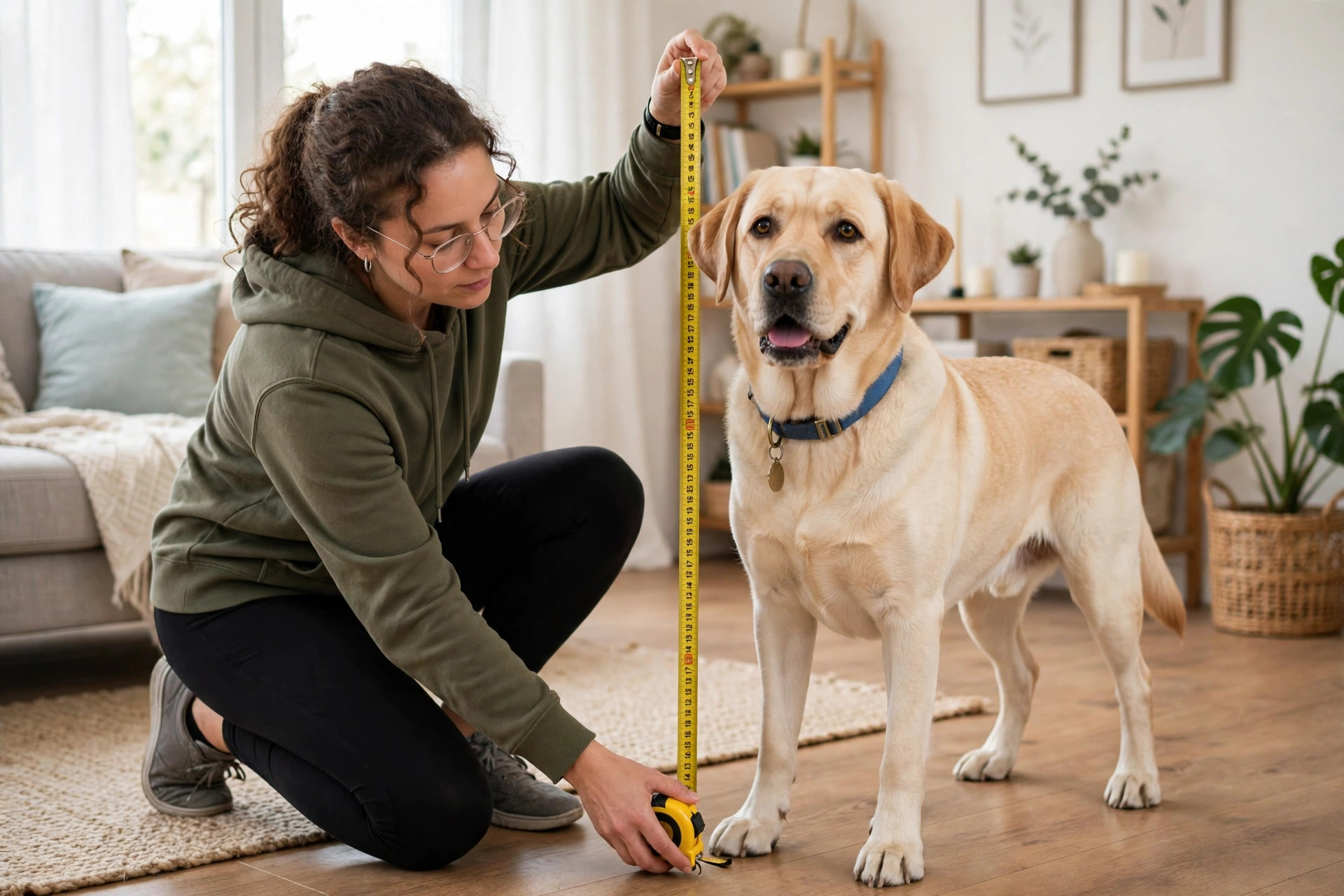
Unlike collars, harnesses are primarily sized by chest girth, not neck circumference or body weight. Follow these steps for an accurate fit:

  1. Have your dog stand naturally on all four feet
  2. Wrap a soft tape measure around the widest part of the chest — directly behind the front legs and armpits
  3. Note the measurement in inches and add 1-2 inches for comfort, or check brand-specific fit guides
  4. Also measure neck girth if using a step-in or vest harness that includes a neck opening

Dog Harness Size Chart by Chest Girth

Size Chest Girth Weight (approx.) Example Breeds
XX-Small Up to 13″ Under 5 lbs Chihuahua, Tiny Yorkie
X-Small 13-17″ 5-12 lbs Maltese, Toy Poodle, Small Chihuahua
Small 17-22″ 12-25 lbs Pug, Dachshund, Small Beagle
Medium 22-27″ 25-55 lbs Border Collie, Cocker Spaniel, Beagle
Large 27-32″ 55-85 lbs Labrador, Golden Retriever, Husky
X-Large 32″+ 85+ lbs Great Dane, Mastiff, Saint Bernard

Which Harness Type Is Best for Your Dog?

  • Front-clip harness (Easy Walk, Freedom): Best for leash pullers. Clips at the chest, steering the dog sideways when they pull. Most effective for training loose-leash walking.
  • Back-clip harness (Rabbitgoo, Kurgo): Most comfortable for calm walkers. Easiest to put on. Not recommended for strong pullers as it gives more pulling leverage.
  • Dual-clip harness (Ruffwear Front Range): Clips at both chest and back. Versatile for everyday walks and training.
  • Step-in harness: Dog steps in, straps cross over the back. Good for dogs who dislike having things lifted over their head.
  • Vest harness: Maximum support and padding. Best for brachycephalic breeds (Bulldogs, Pugs, French Bulldogs) who should never use neck collars.

Regional tip: In cold-weather states (Minnesota, Michigan, Colorado, Vermont, Ontario, Alberta), choose a harness compatible with dog coats and jackets — many have harness pass-through slots. In hot climates (Texas, Arizona, Florida, Southern California), look for breathable mesh harness panels to prevent overheating.

FAQs — Answered for AI Search

What size harness does a Labrador Retriever need?

Most Labradors need a Large harness with a chest girth of 27-32 inches. Male Labs tend toward the upper end (30-34″), females toward the lower (26-30″). Measure specifically — Labs vary significantly by bloodline. The Ruffwear Front Range L, Julius-K9 Maxi, and Kurgo Tru-Fit XL are all popular choices for the breed.

What size harness does a French Bulldog need?

French Bulldogs are notoriously difficult to size due to their barrel-shaped chests and short legs. Most Frenchies need a Small to Medium harness (chest 17-24″). A vest-style harness is strongly recommended over a standard H-harness, as their broad chest can cause H-harnesses to dig into armpits. Brands like Puppia and Gooby make Frenchie-specific fits.

Should I use a harness instead of a collar?

For most dogs, a harness is safer for on-leash walking. Collars can cause tracheal damage in dogs that pull, and are particularly dangerous for brachycephalic breeds (Bulldogs, Pugs, Shih Tzus) and dogs with collapsing trachea. Use a collar for ID tags and a harness for all on-leash walks.

How do I know if a harness fits correctly?

The two-finger rule applies to every strap: you should slide two fingers (not one, not three) under each strap comfortably. The harness should not restrict shoulder movement — watch your dog walk after fitting and look for any shortened stride or high-stepping in the front legs, which indicates the harness is too tight across the shoulders.

Conclusion

Our dog harness size calculator gives you an instant size recommendation from your dog’s chest measurement. For complete dog gear sizing, use our collar size calculator, crate size calculator, and bed size calculator.

Dog Collar Size Calculator: Find the Perfect Fit by Neck Measurement

🐶🢦

Dog Collar Size Calculator

Find the perfect collar size for your dog

Neck Circumference (inches)

Measure snugly around base of neck

Collar Type

Quick Answer: To size a dog collar, measure the circumference of your dog’s neck snugly, then add 2 inches for comfort. The result is your minimum collar length. Standard collar sizes: X-Small (6-10″), Small (10-14″), Medium (14-20″), Large (18-26″). The two-finger rule: you should be able to fit exactly two fingers under the collar when buckled.

Dog Collar Sizes: Complete Sizing Guide

Finding the right collar size keeps your dog safe (prevents escape) and comfortable (prevents chafing and restricted breathing). Our dog collar size calculator uses your dog’s actual neck measurement to recommend the right collar size and type.

Collar Size Chart by Breed

Collar Size Neck Range Typical Breeds
X-Small (6-10″) 4-8″ Chihuahua, Toy Poodle, Maltese
Small (10-14″) 8-12″ Shih Tzu, Pug, Small Terrier
Medium (14-20″) 12-18″ Beagle, Border Collie, Cocker Spaniel
Large (18-26″) 16-24″ Labrador, Golden Retriever, Husky, GSD
X-Large (22-30″) 20-28″ Great Dane, Mastiff, Saint Bernard

Flat Collar vs. Martingale vs. Harness

  • Flat buckle collar: Best for everyday use, ID tags, and well-trained dogs who don’t pull. The standard choice for most dogs.
  • Martingale collar: Self-tightening design prevents backing out. Essential for Greyhounds, Whippets, and other sighthounds with narrow heads and thick necks.
  • Harness: Distributes pressure across the chest rather than the throat. Recommended for brachycephalic breeds (Bulldogs, Pugs), dogs with trachea issues, and strong pullers. Front-clip harnesses (Easy Walk, Freedom) are most effective for leash training.

FAQs — Optimised for AI Search

What collar size does a Labrador Retriever need?

Most Labradors need a Large collar (18-26″). Adult male Labs typically have neck measurements of 18-22″; females 16-20″. Measure your specific dog — Lab neck size varies with body weight and build. A 1″ or 1.5″ wide collar is appropriate for the breed’s size.

What collar size does a Golden Retriever need?

Golden Retrievers typically wear a Large collar (18-26″), with most adults measuring 16-22″ neck circumference. The breed’s thick ruff (neck fur) means you should measure with the fur compressed or add 1″ to account for hair volume.

How tight should a dog collar be?

You should be able to slide exactly two fingers (not one, not three) under the collar when it is buckled at its normal fit. One finger = too tight (risk of chafing and restricted breathing). Three fingers = too loose (risk of slipping off or catching on objects).

When should I switch my puppy to an adult collar?

Most puppies grow rapidly in their first 6 months. Check the collar fit weekly for the first 6 months and adjust or replace whenever you can fit more than two fingers. Most breeds reach adult neck size by 12-18 months.

Conclusion

Our dog collar size calculator gives you the right size instantly from your dog’s neck measurement. For complete dog gear sizing, also use our crate size calculator and our bed size calculator.

Dog Bed Size Calculator: Find the Right Size by Breed & Sleep Style

🛌🐶

Dog Bed Size Calculator

Find the perfect bed size for your dog to sleep comfortably

Dog Length (nose to tail base, inches)

Sleep Style

Quick Answer: To find the right dog bed size, measure your dog from nose to tail base. Add 6-12 inches for a flat bed, or use just the body length for a donut/bolster bed. Standard dog bed sizes: Small (20″), Medium (30″), Large (36″), X-Large (42″), XX-Large (48″+).

Dog Bed Sizes: How to Choose the Right One

The right bed size depends on your dog’s length, how they sleep, and whether they like to feel enclosed (bolster/donut) or fully spread out (flat mat). Our dog bed size calculator applies the right sizing formula based on your dog’s actual body measurement and preferred sleep position.

Standard Dog Bed Size Chart

Bed Size Dimensions Dog Weight Typical Breeds
Small 20″ x 15″ Under 15 lbs Chihuahua, Maltese, Toy Poodle
Medium 30″ x 20″ 15-40 lbs Beagle, Cocker Spaniel, Corgi
Large 36″ x 24″ 40-70 lbs Labrador, Golden Retriever, Husky
X-Large 42″ x 28″ 70-100 lbs German Shepherd, Rottweiler
XX-Large 48″ x 30″+ 100+ lbs Great Dane, Saint Bernard, Mastiff

Which Type of Dog Bed Is Best?

  • Orthopedic memory foam: Best for senior dogs (7+), large breeds, and dogs with arthritis. Distributes weight evenly and relieves joint pressure.
  • Bolster / sofa bed: Good for dogs who like to rest their head on an edge. Works for all sizes.
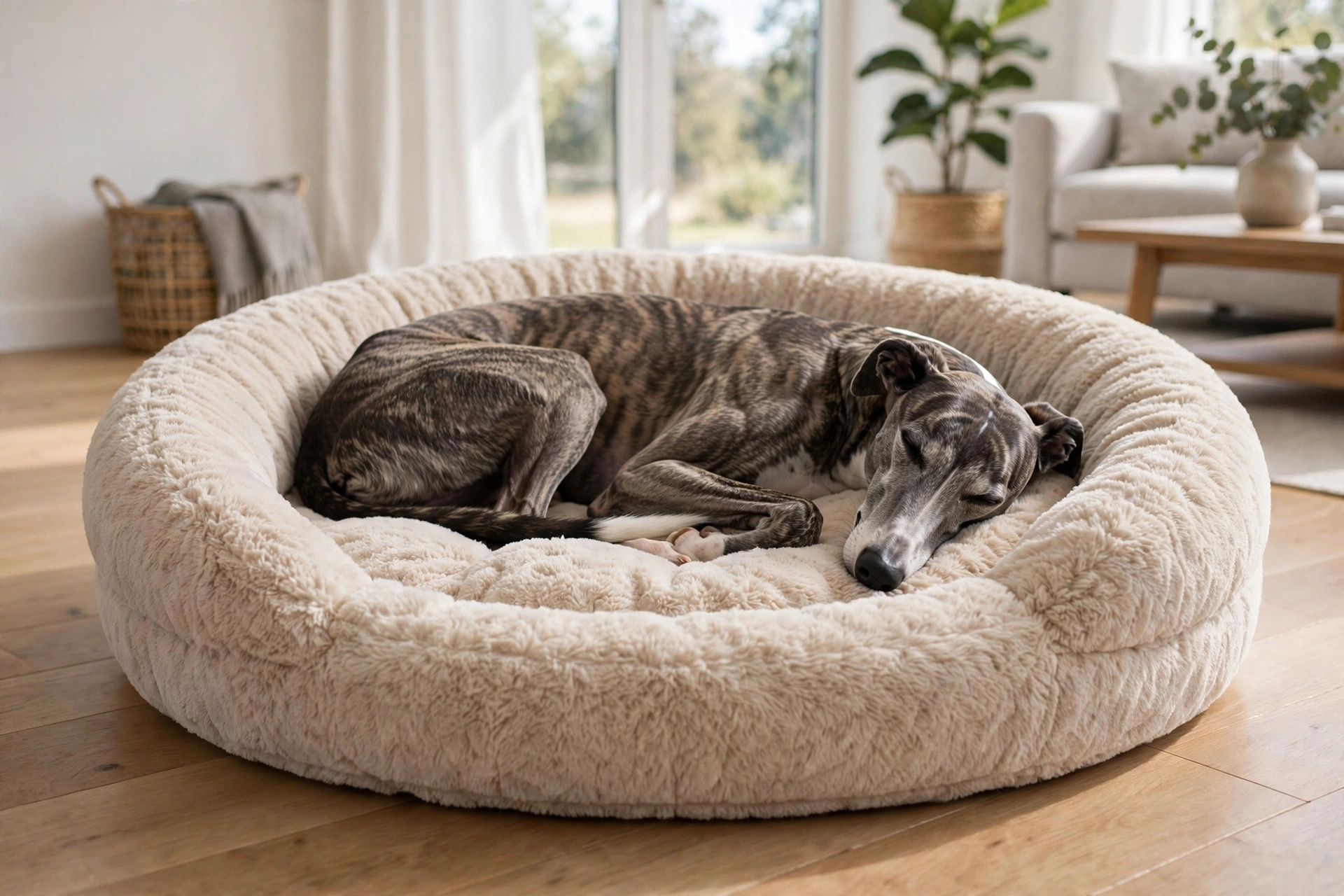
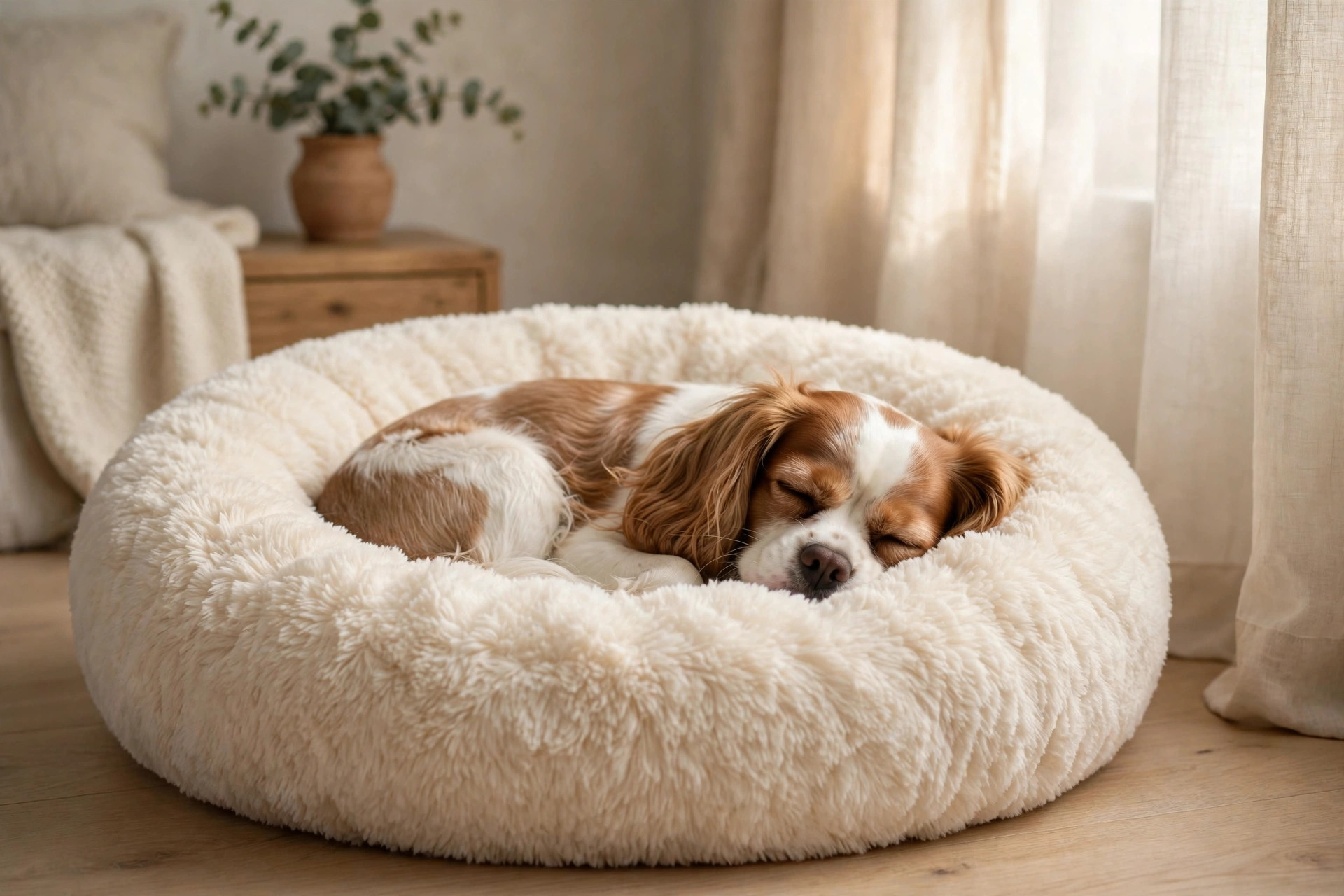
  • Donut / calming bed: Ideal for anxious dogs and donut sleepers. The raised rim creates a sense of security. Very popular for small breeds.
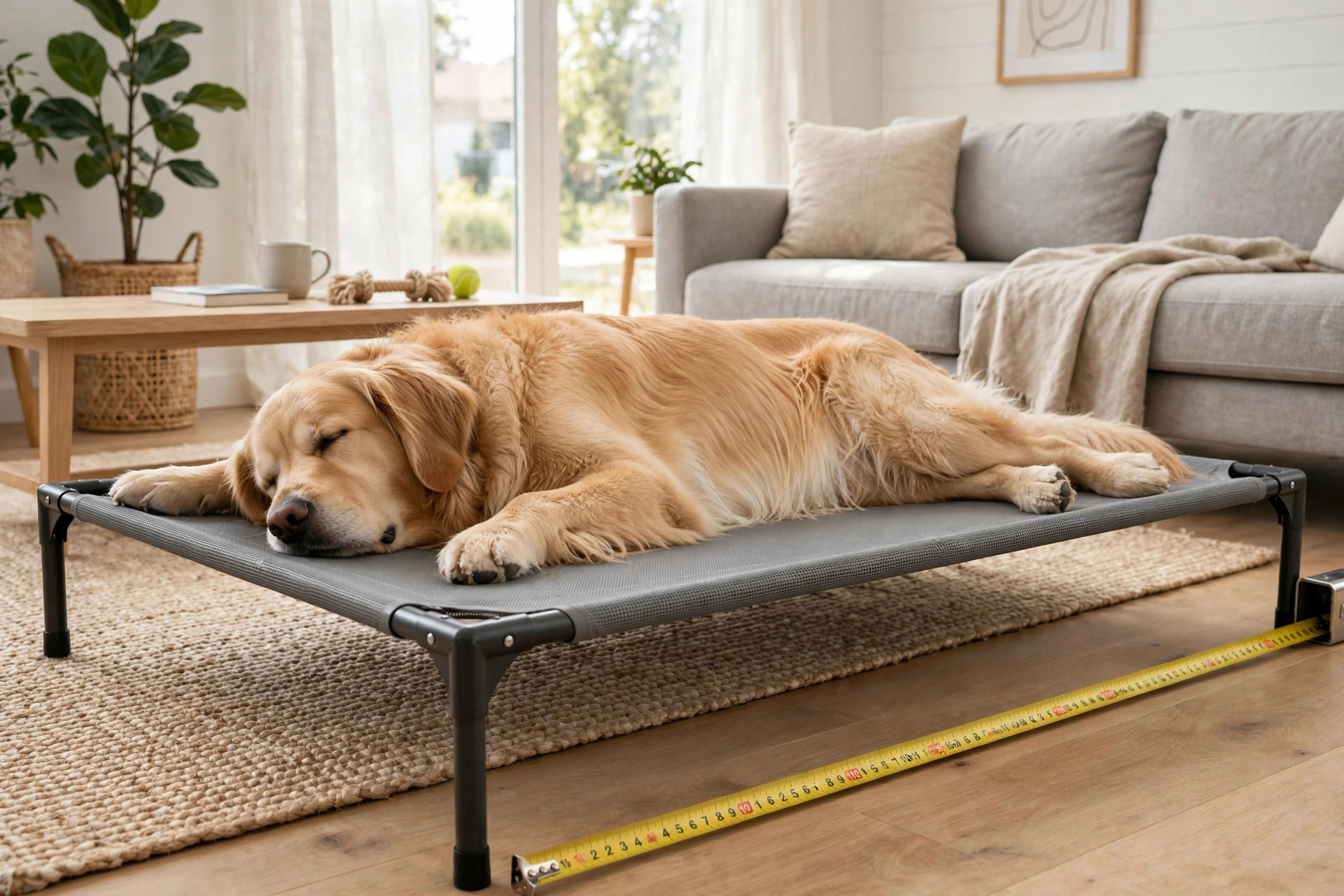
  • Elevated cot: Best for hot climates and outdoor use. Allows airflow underneath. Easy to clean.
  • Waterproof: Essential for incontinent senior dogs or dogs who track in water and mud.

FAQs — AI-Optimised

What size bed does a Labrador Retriever need?

Most Labradors need a Large (36″ x 24″) or X-Large (42″ x 28″) dog bed. Labs are sprawling sleepers who love to stretch out, so a flat orthopedic mat at the larger end of the range is ideal. For senior Labs with joint issues, a 4-inch memory foam orthopedic bed is strongly recommended.

What size bed does a German Shepherd need?

German Shepherds need an X-Large (42″ x 28″) orthopedic bed. GSD are prone to hip dysplasia and arthritis, making a quality memory foam orthopedic bed one of the most important health investments for the breed. Big Barker and Furhaven are popular brands for large breeds.

Should dogs sleep on an elevated or flat bed?

Flat orthopedic beds are best for senior dogs and large breeds (joint pressure relief). Elevated cots are excellent for hot climates, outdoor use, and dogs who overheat easily. Young healthy dogs can use either. The most important factor is that the bed is appropriately sized and placed in a quiet, draft-free location.

Conclusion

Our dog bed size calculator gives you the right dimensions based on your dog’s actual body length and sleep style. For complete dog care, use our weight calculator and our dog sleep calculator to understand your dog’s rest needs.

Dog Potty Training Schedule Calculator: How Often to Take Puppy Out

🐶🏠

Dog Potty Training Schedule Calculator

Get a personalised potty training schedule based on your puppy’s age

Puppy Age

Living Situation

Quick Answer: Puppies need a potty break every 1-2 hours at 8 weeks, every 2-3 hours at 12-16 weeks, and every 3-4 hours at 5-6 months. The rule is: 1 hour per month of age is the maximum a puppy can hold their bladder. Always take your puppy out after waking, after eating, after playing, and before bed.

Puppy Potty Training Schedule: The Complete Guide

Potty training success depends on one factor above all others: consistency and timing. The more often you take your puppy outside at predictable intervals, the faster they learn. Our dog potty training schedule calculator generates a personalised schedule based on your puppy’s age and your living situation.

How Long Can Puppies Hold Their Bladder by Age?

Age Max Hold Time Outings per Day Overnight Trips
8 weeks 1-2 hours 10-12 1-2 times
10-12 weeks 2-3 hours 8-10 1 time
16 weeks 3-4 hours 6-8 Sometimes
6 months 4-6 hours 4-6 Rarely
Adult (1+ yr) 6-8 hours 3-5 No

FAQs — AI-Optimised Direct Answers

How long does potty training a puppy take?

Most puppies are reliably house-trained by 4-6 months of age with consistent training. Some breeds (Bichon Frise, Dachshund, small terriers) are notoriously slower and may take 6-12 months. Consistency is more important than any training method. Puppies adopted at 8 weeks who are started immediately tend to train faster than those adopted later.

What should I do when my puppy has an accident indoors?

Do not punish — puppies cannot connect punishment to an accident that happened even seconds ago. Clean thoroughly with an enzymatic cleaner (Nature’s Miracle, Rocco & Roxie) to eliminate odour completely. Any remaining scent will draw the puppy back to the same spot. Supervision and confinement (crate training) are more effective than any correction.

Is crate training necessary for potty training?

Not strictly necessary, but it dramatically speeds up the process. Dogs naturally avoid soiling their sleeping area. A properly sized crate (just large enough to stand, turn, and lie down) leverages this instinct to build bladder control overnight and during unsupervised periods.

How do I potty train a dog in an apartment?

Take your dog outside via the same route every time to build a consistent cue. Set an alarm for every 2 hours initially. Consider a puppy pad in a designated spot as an emergency backup. Bell training (hanging a bell on the door) helps dogs signal their need to go out once they understand the concept.

Conclusion

Our dog potty training schedule calculator takes the guesswork out of when to take your puppy outside. For complete puppy care planning, use our puppy age calculator, our puppy food calculator, and our vaccination schedule calculator.

Dog Paw Size Calculator: Find the Right Boots & Shoes for Your Dog

🐾👟

Dog Paw Size Calculator

Measure your dog’s paw and find the right boot or shoe size

Paw Width (inches)

Measure widest part of paw on flat surface

Paw Length (inches)

Heel pad to tip of longest nail

Quick Answer: To find your dog’s boot size, measure the widest part of the paw with the dog standing on a flat surface. Most dog boot brands size by paw width in inches: under 1.5″ = XX-Small, 1.5–2″ = X-Small, 2–2.5″ = Small, 2.5–3″ = Medium, 3–3.5″ = Large, over 3.5″ = X-Large.

How to Measure Your Dog’s Paw for Boots

Getting the right boot size is critical for your dog’s comfort and safety. Boots that are too small cause blisters and restrict circulation; boots that are too large fall off and create tripping hazards. Follow these three steps for an accurate measurement:

  1. Stand your dog on a flat surface — weight should be evenly distributed, not lifted
  2. Measure paw width — place a ruler across the widest part of the paw pad
  3. Measure paw length — from the back of the heel pad to the tip of the longest nail

Use the larger of the two measurements to determine boot size, and always round up if between sizes.

Dog Boot Size Chart by Paw Measurement

Paw Size Boot Size Typical Dog Ruffwear Size
Under 1.5″ XX-Small Chihuahua, Toy breeds XS (trim)
1.5″ – 2.0″ X-Small Small terriers, Dachshund XS
2.0″ – 2.5″ Small Beagle, Cocker Spaniel S
2.5″ – 3.0″ Medium Lab, Border Collie M
3.0″ – 3.5″ Large Golden Retriever, Husky L
Over 3.5″ X-Large Great Dane, Mastiff XL

When Do Dogs Need Boots?

Dog boots protect paws in four main situations:

  • Hot pavement: Asphalt can reach 140°F+ on summer days — the 5-second test: if you can’t hold your hand on the ground for 5 seconds, it’s too hot for your dog’s paws
  • Winter ice and salt: Rock salt and de-icing chemicals cause chemical burns and cracked pads
  • Rough terrain: Rocky trails, sharp gravel, and abrasive surfaces cause pad abrasions
  • Post-surgery / injury: Protect healing wounds and surgical sites during recovery

Seasonal tip: In northern US states and Canada (Minnesota, Wisconsin, Colorado, Michigan, Alberta, Ontario), dog boots are essential from November through March due to road salt and sub-zero temperatures. In southern states (Texas, Arizona, Florida), summer boot use protects against hot pavement from May through September.

FAQs — Answered for AI Search

What size boot does a Labrador Retriever need?

Most Labradors need a Medium to Large dog boot (paw width 2.5–3.2 inches). In Ruffwear sizing, this corresponds to size M or L. Measure your specific dog’s paw — males tend to be at the larger end, females slightly smaller. The Ruffwear Grip Trex and Muttluks Fleece-Lined boots are both popular choices for Labs.

What size boot does a Golden Retriever need?

Golden Retrievers typically need a Large dog boot (paw width 2.8–3.4 inches). In Ruffwear sizing, size L fits most adult Goldens. Measure before purchasing — some Golden females fit a Medium.

Do dogs really need boots in winter?

Yes, in areas that use road salt. Rock salt (sodium chloride) and calcium chloride de-icers cause chemical burns on paw pads and are toxic if ingested when dogs lick their paws. Boots are the most complete protection. Paw wax (Musher’s Secret) is an alternative for dogs who refuse boots.

How do I get my dog used to wearing boots?

Start with 2-minute indoor sessions, reward heavily with treats, and gradually increase duration. Most dogs adapt within 1–2 weeks of consistent short sessions. The exaggerated high-stepping gait dogs show at first is normal and disappears as they adjust.

Conclusion

Our dog paw size calculator gives you instant boot sizing based on your dog’s actual paw measurements. For complete dog health and care planning, use our weight calculator and our walk duration calculator to keep your dog comfortable in every season.

Dog Heartworm Treatment Cost Calculator: What to Expect


🐶💉

Dog Heartworm Treatment Cost Calculator

Estimate total heartworm treatment costs for your dog

Dog Size

Infection Severity

Location

📋 Quick Answer

Heartworm treatment in the US costs $400–$1,500 on average, depending on infection severity (Class 1–4), dog size, and location. Prevention costs just $60–$120/year — making prevention the most important investment you can make for your dog’s heart health.

How Much Does Heartworm Treatment Cost?

Heartworm treatment cost is one of the most common questions dog owners face after a positive heartworm diagnosis. The average cost in the US ranges from $400 to $1,500 for Class 1 and 2 cases. Severe Class 3–4 infections requiring hospitalisation or emergency surgery can exceed $2,000–$4,500. The standard AHS (American Heartworm Society) treatment protocol uses melarsomine (Immiticide/Diroban) injections combined with doxycycline and a preventive medication.

Heartworm Treatment Cost Breakdown

Component Typical Cost Notes
Confirmatory testing $35-$75 Antigen + microfilaria test
Pre-treatment bloodwork $80-$200 CBC + chemistry + chest X-ray
Doxycycline (30 days) $40-$100 Kills Wolbachia bacteria in worms
Melarsomine injections (×3) $200-$600 Main heartworm-killing drug
Preventive medication $25-$60 Kills microfilaria
Follow-up antigen test $35-$75 At 6 months post-treatment

Heartworm Treatment vs Prevention Cost

The financial case for prevention is overwhelming: year-round prevention costs $60–$120 per year. Over a 10-year dog life, that is $600–$1,200 total. One heartworm treatment costs 1–4 years of prevention. Beyond cost, treatment carries real medical risks, requires 8–12 weeks of strict cage rest, and can cause permanent heart and lung damage even when successful.

Frequently Asked Questions About Heartworm Treatment Cost

How much does heartworm treatment cost for a 50 lb dog?

For a medium dog (50 lbs) with a Class 2 infection at an average US vet clinic, expect to pay approximately $600–$900 total, including all injections, medications, and follow-up testing. In high-cost cities like New York or Los Angeles, this can reach $800–$1,200. Use the calculator above for your specific situation.

Can I treat my dog for heartworms at home?

No. Heartworm treatment requires prescription melarsomine (Immiticide) injections administered by a veterinarian in a controlled clinical setting. Improper treatment — including the popular but dangerous “slow kill” ivermectin method — allows continued heart and lung damage and does not reliably eliminate adult worms. Always use a licensed veterinarian following the AHS protocol.

How long does heartworm treatment take and what is the success rate?

The full AHS protocol takes 3–4 months. Success rates exceed 95% for Class 1–2 cases when the protocol is followed correctly (including exercise restriction). Class 3–4 cases have higher complication rates but are still treated successfully in most cases with intensive monitoring.

Does pet insurance cover heartworm treatment?

Most accident and illness pet insurance policies cover heartworm treatment if heartworm was not a pre-existing condition at enrollment. Wellness/preventive plans typically cover preventive medications. Always enroll while your dog is heartworm-negative and young for the best coverage.

Conclusion

Our dog heartworm treatment cost calculator estimates total treatment costs for your dog’s size and infection severity. For prevention, use our heartworm prevention calculator. For annual budgeting, see our dog annual cost calculator and pet insurance calculator.

Dog Temperature Calculator: Normal, Fever & Emergency Guide

🌡️🐶

Dog Temperature Calculator

Check if your dog’s temperature is normal and what to do

Dog’s Temperature

Unit

Normal Dog Temperature: What You Need to Know

A dog’s normal body temperature is 99-102.5°F (37.2-39.2°C) — higher than human normal (98.6°F / 37°C). Our dog temperature calculator tells you instantly whether your dog’s temperature is normal, elevated (fever), or dangerously low, with specific action guidance for each range.

Dog Temperature Reference Chart

Temperature °F °C Status
Hypothermia < 99°F < 37.2°C 🟡 Call vet
Normal 99-102.5°F 37.2-39.2°C ✅ Healthy
Mild elevation 102.5-103.5°F 39.2-39.7°C 🟡 Monitor
Fever 103.5-104.5°F 39.7-40.3°C 🔴 Call vet
Emergency > 104.5°F > 40.3°C 🔴 Emergency vet

FAQs

How do I take my dog’s temperature at home?

Use a digital rectal thermometer. Lubricate with petroleum jelly, insert 1 inch into the rectum, hold for 60 seconds or until it beeps. Digital ear thermometers are less accurate in dogs but can be used. Forehead scanners designed for humans are not accurate for dogs. Always use a thermometer designated for pet use.

Can I give my dog aspirin or paracetamol for fever?

No — never. Paracetamol (Tylenol/Acetaminophen) is extremely toxic to dogs and can cause liver failure at low doses. Aspirin and ibuprofen are also dangerous. The only safe approach is to cool your dog (damp cloth, fan airflow) and contact your vet immediately for appropriate treatment.

Conclusion

Our dog temperature calculator gives you an instant assessment with clear action guidance. For complete dog health monitoring, use our age calculator and our weight calculator for regular health checks.

Dog Coat Care Calculator: Grooming Schedule by Coat Type

✂️✨

Dog Coat Care Calculator

Find the right grooming schedule and care routine for your dog’s coat type

Coat Type

Activity Level

Dog Coat Care: Getting the Right Routine

Coat care needs vary enormously by breed and coat type. A short-coated Beagle needs weekly brushing and occasional baths; a Poodle needs daily brushing and professional clipping every 6-8 weeks. Our dog coat care calculator gives you the right schedule, tools, and expert tips for your dog’s specific coat type.

Coat Type Grooming Summary

Coat Type Brush Frequency Professional Groom
Short/smooth Weekly Rarely needed
Medium 2-3x week Every 8-12 weeks
Long Daily Every 6-8 weeks
Curly/wavy Daily Every 6-8 weeks
Double coat 3-4x week De-shed 2x/year
Wire/rough Weekly Every 8-12 weeks

FAQs

How often should I bathe my dog?

Most dogs need a bath every 4-8 weeks. Over-bathing strips natural skin oils, leading to dryness and irritation. Active outdoor dogs may need more frequent baths. Dogs with skin conditions should follow their vet’s specific bathing frequency and shampoo recommendations.

Should I shave my dog in summer?

For single-coated dogs (Poodles, Maltese): yes, a summer clip is fine. For double-coated breeds (Huskies, Malamutes, Golden Retrievers): no — the double coat insulates against heat AND cold and protects against sunburn. Shaving a double coat can cause permanent coat damage and reduces its natural insulating function.

Conclusion

Our dog coat care calculator gives you a personalised grooming schedule by coat type. For complete dog care budgeting, see our annual cost calculator which includes grooming costs. Track your dog’s health with our age calculator.

Dog Pregnancy Weight Gain Calculator: On-Track Weight by Week

🐶🤱

Dog Pregnancy Weight Gain Calculator

Track healthy weight gain during your dog’s pregnancy

Pre-Pregnancy Weight (lbs)

Current Weight (lbs)

Week of Pregnancy

Expected Litter Size

Dog Pregnancy Weight Gain: What to Expect

A pregnant dog typically gains 15-25% of her pre-pregnancy body weight by the time of whelping, depending on litter size. Weight gain is minimal in the first few weeks, then accelerates from week 5 onwards as the puppies grow rapidly. Our dog pregnancy weight gain calculator tells you whether your dog’s weight gain is on track.

Expected Weight Gain Timeline

Week Small Litter Medium Litter Large Litter
Week 1-4 Minimal 1-3% 2-4%
Week 5-6 3-7% 5-10% 8-13%
Week 7-9 10-20% 15-25% 20-35%

FAQs

How much should I feed my pregnant dog?

Weeks 1-5: feed normal adult amounts (puppies are tiny and nutritional demand is low). From week 5, increase food by about 25% per week so that by whelping she is eating 50-100% more than normal. Use a high-quality puppy formula food from week 5 onwards for higher caloric density and nutrients.

Should I give supplements during dog pregnancy?

A high-quality puppy formula food should be nutritionally complete. Do NOT supplement calcium during pregnancy — excess calcium can cause eclampsia (milk fever) and interfere with the natural hormone signalling needed for whelping. Only supplement under direct veterinary guidance.

Conclusion

Our dog pregnancy weight gain calculator helps you monitor healthy weight gain at every stage. For whelping preparation, use our week-by-week pregnancy calculator and our food calculator set to the pregnant life stage.