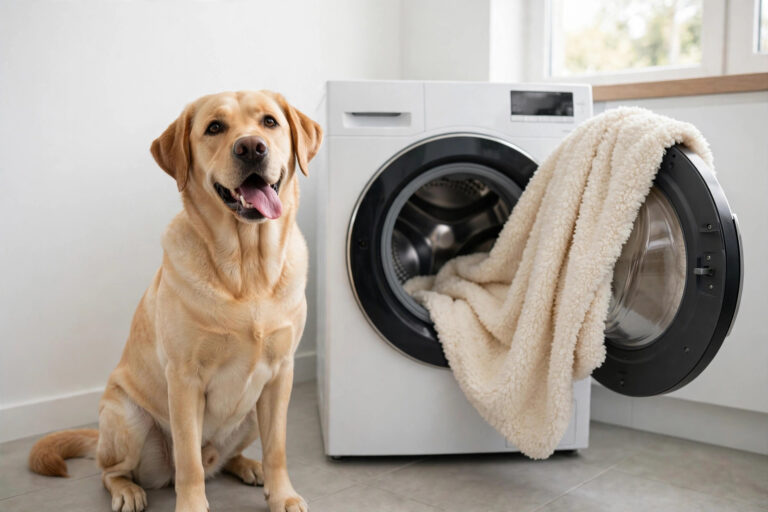
A dog bed picks up everything — dirt from muddy paws, drool, shed
hair, the faint funk of a dog who “just went swimming”. Left
unwashed, it stops being the cosy den your dog loves and starts
being a little ecosystem of its own. But most people either never
wash the bed (afraid of ruining it) or wash it wrong and end up
with a lumpy, flat, sad cushion. Here’s how to do it right.
The short version: wash the cover often, the insert rarely, dry
everything thoroughly, and match the method to the bed type. The
details below keep your dog’s bed fresh and your wallet intact.
How often should you wash a dog bed?
For most dogs, the cover should go through the wash every one to
two weeks — more often if your dog sheds heavily, swims a lot,
spends time outdoors, or has skin allergies. The foam or
polyfill insert needs a full wash only a few times a year unless
it smells or your dog has had an accident on it.
A good rhythm: strip and wash the cover with your regular pet
laundry (towels, blankets, throws) every Sunday. Vacuum the bed
itself midweek to pull out hair and dust. Deep-clean the insert
seasonally. If the bed starts smelling despite fresh covers, the
insert needs attention — that’s your cue.
Dogs with allergies or sensitive skin benefit from the weekly
schedule, since beds trap dust mites and pollen. And if your dog
has just come back from a beach trip, a muddy walk, or a bout of
illness, wash the whole bed right away rather than waiting.
Step 1: Check the label and prep the bed
Every wash starts with the care label. “Machine washable” usually
means the cover; the insert is often spot-clean only. Memory foam
inserts in particular should never go in the machine — they absorb
water like a sponge, can take days to dry, and the agitation can
crumble the foam.
Prepping the bed takes five minutes and saves the washer:
Remove the cover via the zip. Wash it separately from the insert.
Vacuum everything first. Run a vacuum (upholstery attachment)
over the cover and the insert to pull off hair and loose dirt.
Washing a hairy bed raw sends all that fur straight into your
machine’s filter.
Pre-treat stains. Dab urine, vomit, or mystery stains with an
enzymatic pet-stain cleaner before the wash. Regular detergent
masks these stains; enzymes break them down properly. Blot, don’t
rub — rubbing drives the stain deeper.
Check for damage. Small tears in a cover become big tears in
the spin cycle. Stitch up any rips or wash the bed in a large
laundry bag to contain them.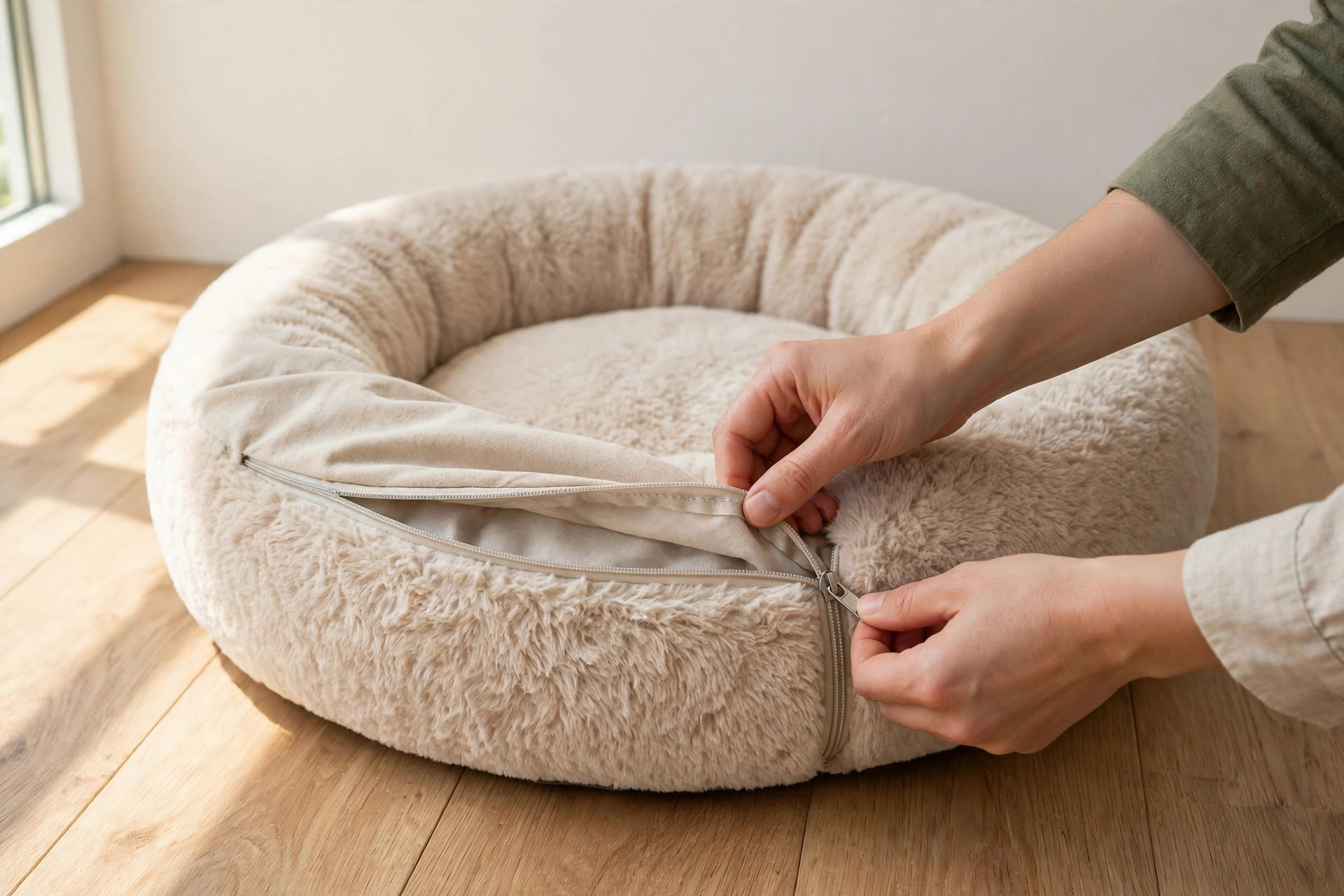
Step 2: Washing the cover — machine settings that matter
The cover is the easy part and the one you should wash most. Use
these settings:
Cold or warm water (30°C / 85°F max). Hot water sets some
stains and can shrink cotton or boucle covers. Cold keeps fabrics
happy and is kinder to colours.
Gentle or delicate cycle. Dog bed covers take enough beating
already; the gentle cycle reduces pilling and wear.
A pet-safe, fragrance-free detergent. Heavy fragrances can
irritate a dog’s skin and nose — and some dogs will refuse to
sleep on a bed that smells like a perfume counter. Use a
fragrance-free detergent, and skip the fabric softener: it coats
fibres and reduces absorbency over time.
Load size matters. A big donut-bed cover fills a domestic
machine on its own. Overloading stops things from rinsing
properly, and trapped detergent makes dogs itchy. Wash a huge
cover on its own, or take it to a laundromat with a commercial
machine.
Baking soda boost for odour. Add half a cup of baking soda to
the drum along with the detergent for a genuinely fresher smell
— it deodorises without perfume. A splash of white vinegar in the
rinse compartment works too, as a natural softener that rinses
clean.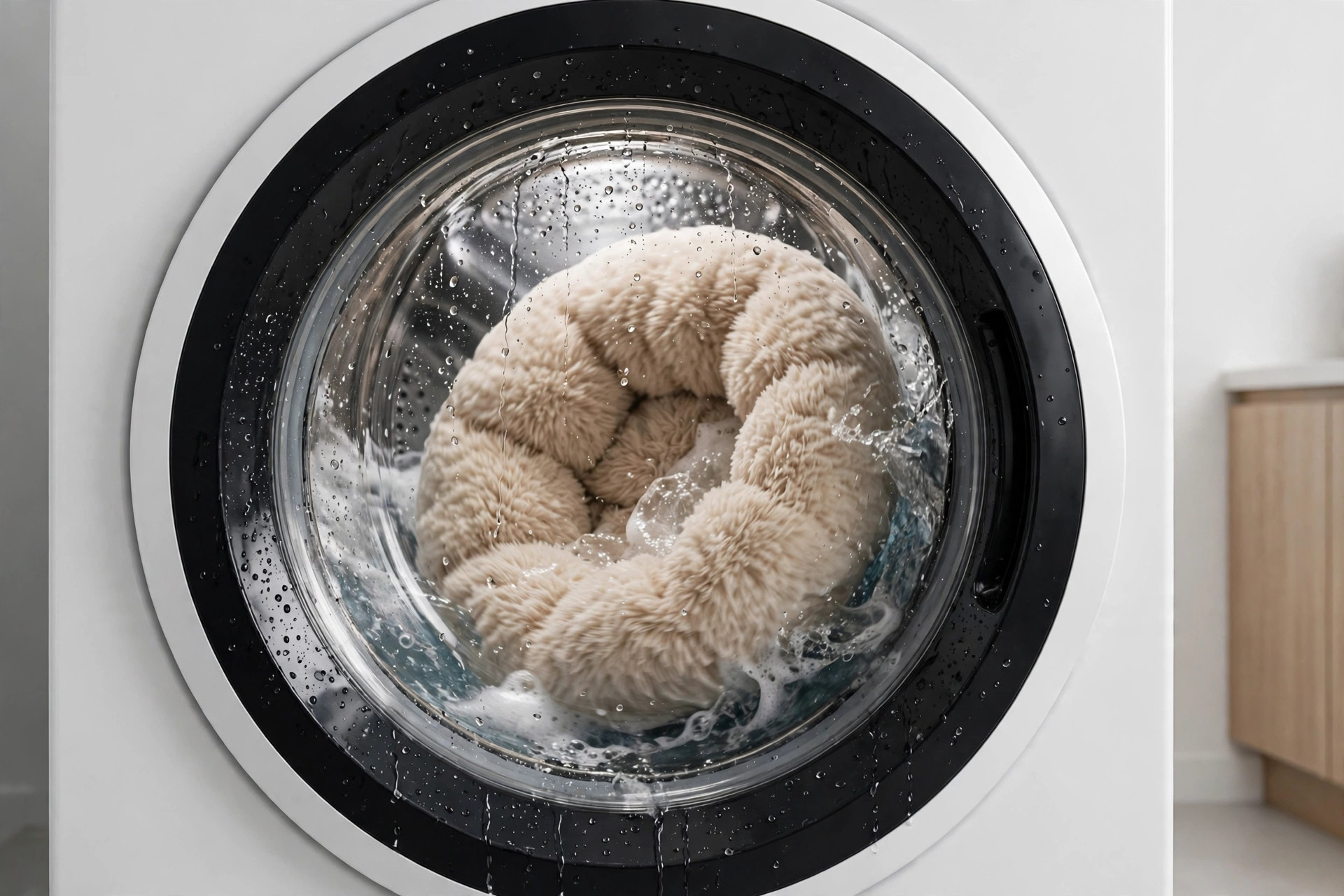
Step 3: Washing the insert — by bed type
This is where beds get ruined, so match the method to the type.
Polyfill / fibre-fill beds: usually machine washable on a
gentle cycle with cold water. Add a couple of clean tennis balls
(or dryer balls) to the load — they bounce the fill apart and
stop it clumping. Use a large laundry bag if the insert has a
thin inner liner.
Memory foam beds: never machine wash. Spot-clean with a
damp cloth and a little mild detergent, or sprinkle baking soda
over the foam, leave it for an hour to absorb odour, then vacuum
it off. For a deeper clean, hand-wash in a bathtub with lukewarm
water and mild soap, press (don’t wring) the water out, and dry
flat — this can take 24–48 hours with good airflow.
Orthopaedic / egg-crate foam: same as memory foam — spot
clean or bathtub wash only. Wringing or machine agitation tears
the foam structure apart.
Cedar or buckwheat-fill beds: the fill itself doesn’t get
washed — empty it into a bin, wash the outer casing, and replace
the fill when it loses its scent or gets damp. Cedar fill can
usually just be aired in the sun.
Elevated / cot-style beds: wipe the fabric deck with a damp
cloth and mild soap, rinse with a hose, and let it air-dry. The
mesh dries fast and these are the lowest-maintenance beds going.
Whichever type you have, a waterproof liner between the cover
and the insert is the single best investment — it stops
accidents from reaching the insert at all, and it costs less
than one replacement bed.
Drying without the clumps
Drying is where most wash jobs go wrong. A cover that comes out
of the dryer half-damp will smell musty within days, and a foam
insert dried in direct heat can warp or crumble.
Covers: tumble dry on low heat or line-dry. If the cover is
thick (donut beds, bolster beds), add dryer balls to keep it
moving. Take it out promptly — leaving it bunched in the dryer
breeds that damp-fabric smell.
Polyfill inserts: tumble dry on low with dryer balls, and
check every 20 minutes. Pause the cycle, pull the insert out,
fluff it by hand, and redistribute the fill before it dries into
a lump. Patience here is the whole game.
Foam inserts: air-dry only, flat, in a ventilated room or
outdoors in shade. A fan pointed at the foam speeds things up
dramatically. Never tumble-dry foam and avoid direct hot
sunlight, which can break down the material over time.
The sniff test. Before reassembling, smell the insert. Any
dampness or mustiness means it isn’t done. A bed put away damp
grows mildew — and your dog will notice before you do.
Deodorising between washes
Between full washes, these keep things fresh:
Baking soda refresh. Sprinkle baking soda over the bed,
leave for 20–30 minutes, then vacuum thoroughly. It lifts odours
without wetting anything.
Sunlight. UV is a free disinfectant. Put the bed in direct
sun for a few hours on wash day — it kills odour-causing
bacteria and dries out any residual dampness. (Don’t overdo it
with foam; shade-dry foam instead.)
Pet-safe fabric spray. A light spritz of an enzymatic pet
deodoriser between washes buys you a few extra days. Avoid
anything with essential oils like tea tree, which are toxic to
dogs.
Rotate two covers. If your dog’s bed has a removable cover,
buy a spare. One washes while the other is on duty, and the bed
never has to sit around naked waiting.
When to replace the bed instead of washing it
No bed lasts forever. Replace it when the foam stays compressed
after fluffing (it no longer supports the dog’s weight), when
odour survives a full wash-and-dry cycle, when the cover’s zip
fails or the fabric wears through, or when your dog has outgrown
it and hangs off the edges. A good rule of thumb: with regular
washing, a quality bed lasts two to three years of daily use.
If your dog is a senior, watch for thinning cushion in their
favourite sleeping spot — that’s the bed telling you it’s done.
An unsupportive bed can make arthritic joints worse overnight.
Safety notes
Keep these in mind and the wash stays dog-safe:
- No bleach, no harsh chemicals. Chlorine bleach residues
irritate skin and paws. If you need disinfecting power (after
illness or fleas), use a pet-safe enzymatic cleaner or a
veterinary disinfectant, and rinse thoroughly. - Rinse twice if your dog is sensitive. An extra rinse cycle
removes detergent residue that can cause itching. - Dry completely. A damp bed is a mildew bed. If in doubt,
give it another hour. - Check for loose stuffing after washing. Fill can work its
way out of seams in the wash; trim loose threads and check
that no clumps of stuffing are accessible to chew.
The bottom line
Washing a dog bed isn’t complicated — it’s just specific.
Covers wash easily and often; inserts wash rarely and gently,
matched to their fill type; everything dries completely before
the dog gets it back. Two covers in rotation and a waterproof
liner underneath turn the whole job into a ten-minute weekly
habit, and your dog gets a fresh den every week.
FAQs
Can I put a whole dog bed in the washing machine?
Only if the entire bed is labelled machine washable — small
polyfill beds and some donut beds are. Foam, memory foam, and
cedar-fill beds should never go in whole; wash the cover and
treat the insert separately.
How do I get dog smell out of a bed that survives washing?
Pre-soak the cover in cold water with a cup of baking soda for
an hour before washing, add half a cup of baking soda to the
wash, and dry the bed in direct sun. If the smell is in the
insert itself, the baking-soda-sprinkle-and-vacuum method or a
replacement insert may be needed.
Can I use regular laundry detergent on a dog bed?
Yes, as long as it’s fragrance-free and dye-free. Scented
detergents and fabric softeners can irritate a dog’s skin and
put some dogs off using the bed entirely. An extra rinse cycle
is a good safety margin.
How do I wash a dog bed without a removable cover?
Vacuum thoroughly, spot-clean stains with an enzymatic cleaner,
then hand-wash the whole bed in a bathtub with lukewarm water
and mild soap if the fill allows it (polyfill yes, foam no —
spot-clean foam only). Squeeze, don’t wring, and dry flat with
a fan.
My dog’s bed is flat after washing — can I fix it?
Sometimes. Tumble the polyfill insert on low heat with dryer
balls, pausing to fluff by hand every 20 minutes, and the fill
often springs back. If the foam itself has compressed and stays
flat, the bed has reached the end of its life — time to replace.