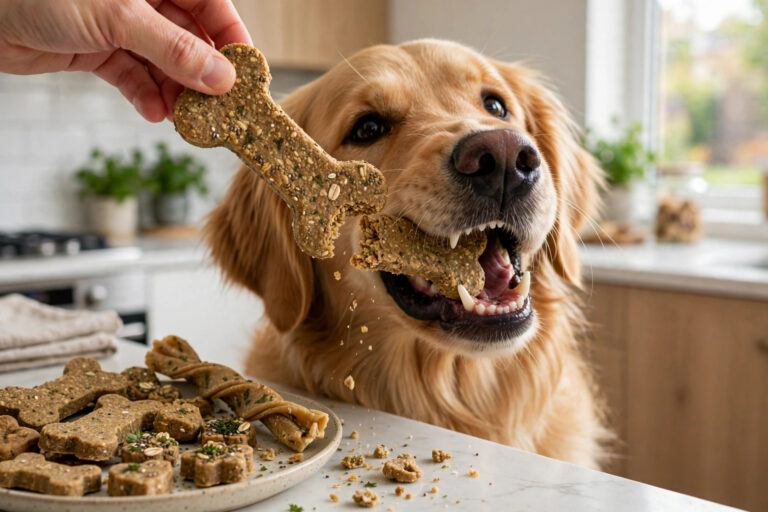
Most dogs over the age of three have some degree of dental disease —
tartar, gum inflammation, the works. Brushing is the gold standard,
but let’s be honest: most of us don’t manage it every day. That’s
where dental treats earn their place. The catch? Most shop-bought
“dental” treats are just ordinary treats with mint flavouring and a
clever label.
A treat that actually helps teeth does a real job: it scrubs as the
dog chews, keeps the jaw working for more than a few seconds, and
brings along ingredients that support gum health. These four
homemade recipes are built exactly that way — crunchy, chewy,
dog-safe, and cheap to make.
Quick reality check before we start: treats support dental health;
they don’t replace brushing or vet dental checks. If your dog
already has red gums, bad breath that clears a room, or broken teeth,
see the vet first — a treat won’t fix established dental disease.
What actually makes a treat “dental”?
Three things, and they matter in this order.
Texture that scrubs. The treat needs enough body to scrape
plaque as the dog chews. Hard, crunchy textures do mechanical
cleaning; treats that vanish in one gulp do nothing for teeth.
Size matters too — the treat should be big enough that the dog
has to chew it rather than swallow it whole.
Chewing time. Anything that keeps the jaw moving for 30
seconds or more wins over a treat that’s gone in a snap. This is
why chewy strips and dense crunchers outperform soft biscuits
every time.
Supporting ingredients. Parsley and mint freshen breath;
coconut oil has antimicrobial properties that help gum health;
crunchy raw veg like carrots and apples do the scrubbing work
for free.
The VOHC (Veterinary Oral Health Council) lists products with
proven plaque or tartar claims — worth checking if you ever buy
commercial. For homemade treats, there is no certification, so
we lean on the three principles above.
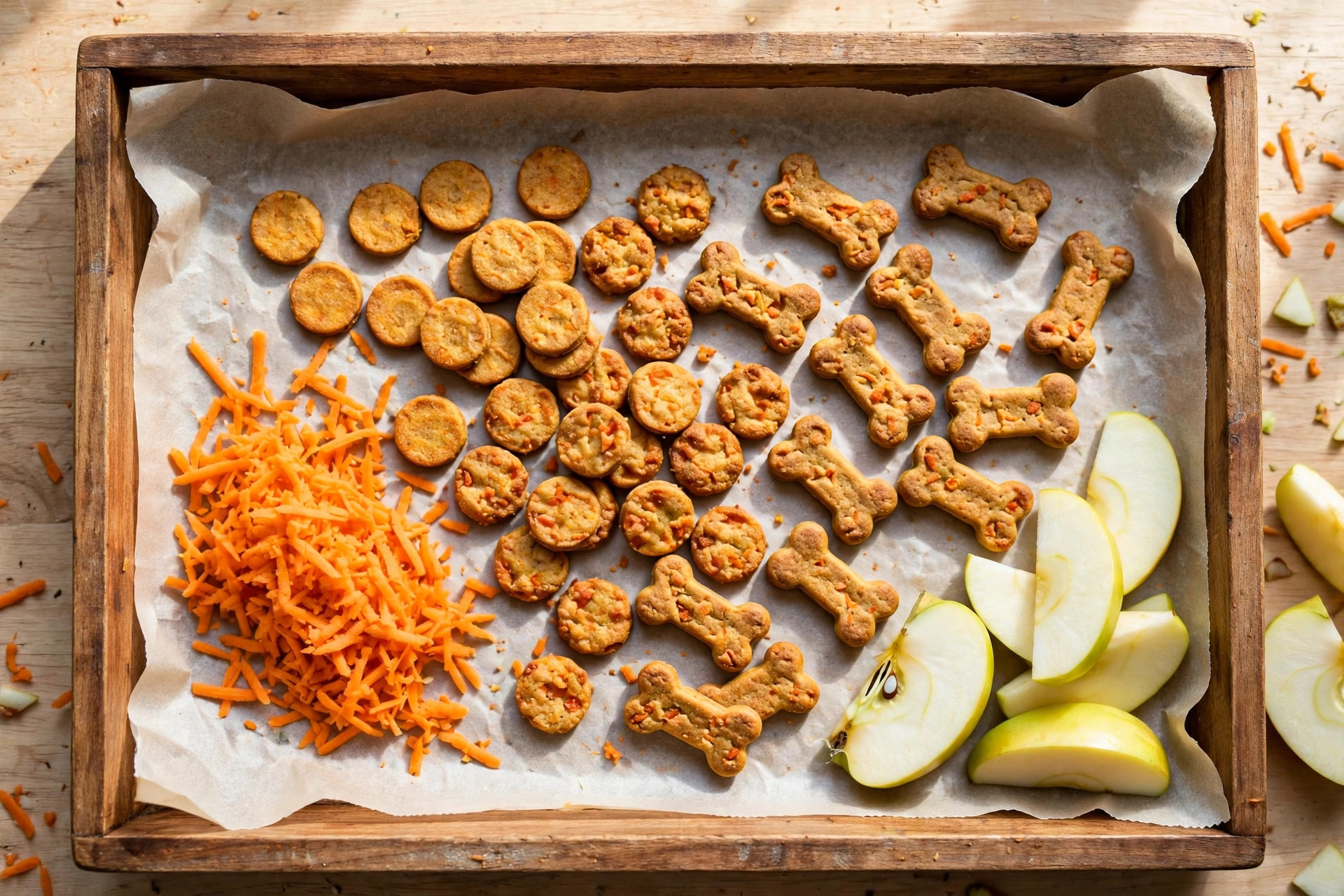
Recipe 1: Crunchy carrot and apple bites
Carrots and apples are the original dental treats — cheap,
crunchy, and most dogs love them. These baked bites concentrate
the crunch.
You need: 1 grated carrot, 1 grated apple (core and seeds
removed), 150 g oat flour, 1 egg, 1 tablespoon coconut oil
(melted), a pinch of cinnamon.
Method: mix everything into a firm dough, roll to about 1 cm
thick, and cut into coins or small bone shapes. Bake at 180°C
(350°F) for 25–30 minutes until hard and crisp — underbaking is
the enemy here; they should snap, not bend. Cool completely.
These keep two weeks in an airtight tin. The snap forces real
chewing, and the apple’s malic acid is mildly astringent, which
is why it turns up in so many fresh-breath products.
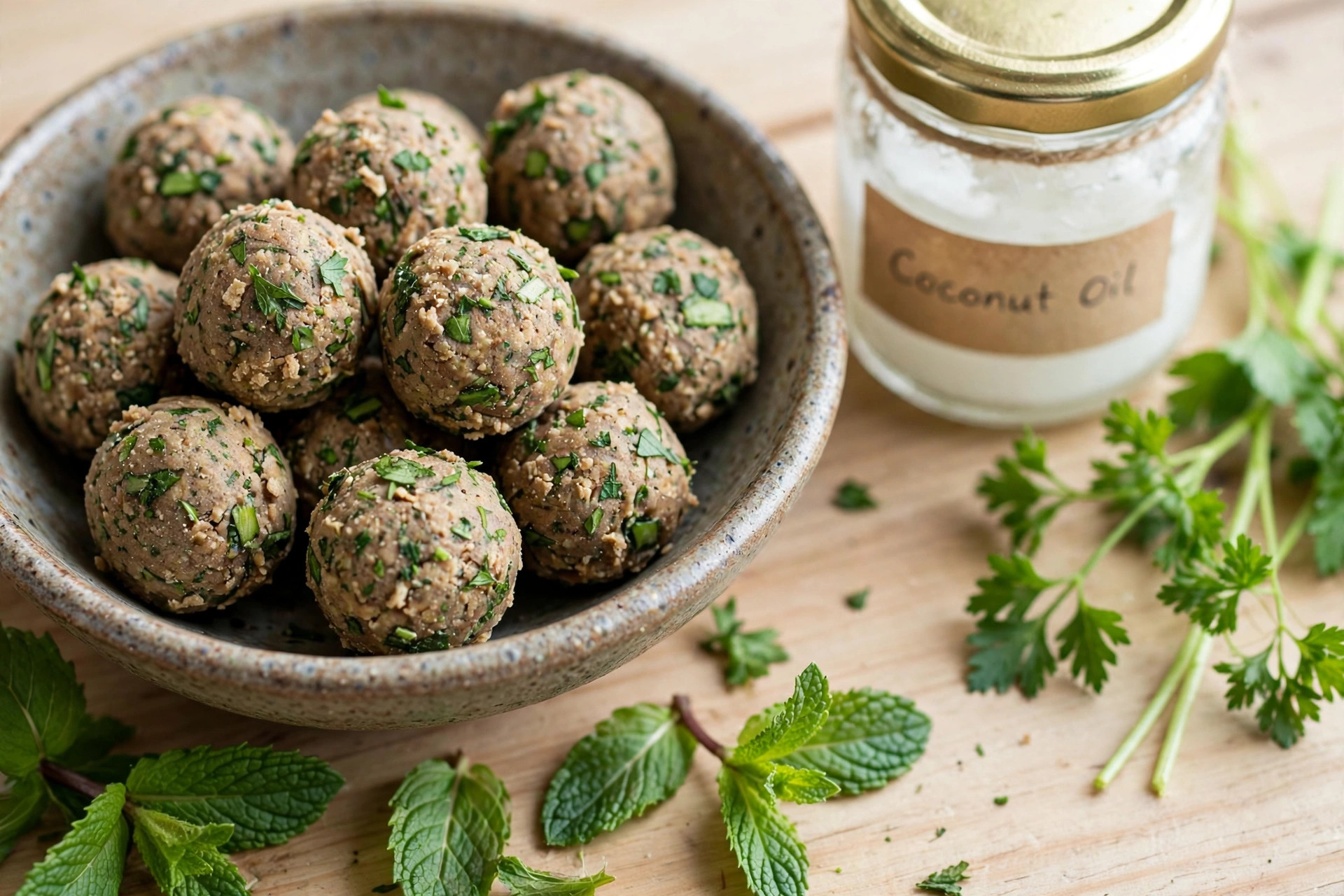
Recipe 2: Minty parsley and coconut-oil fresh-breath bites
For the dog whose breath could knock over furniture.
You need: 150 g oat flour, 2 tablespoons finely chopped fresh
parsley, 1 teaspoon finely chopped fresh mint (not garden mint
varieties with pennyroyal — culinary mint only), 2 tablespoons
melted coconut oil, 1 egg, water to bind.
Method: mix into a stiff dough, roll to 5 mm, and cut small
rounds. Bake at 170°C (325°F) for 20 minutes until firm and
golden at the edges. Coconut oil firms up as it cools, giving a
nice dense chew.
Parsley is a natural breath freshener and the coconut oil
supports gum health. Keep them small — these are daily
fresh-breath treats, one or two after dinner.
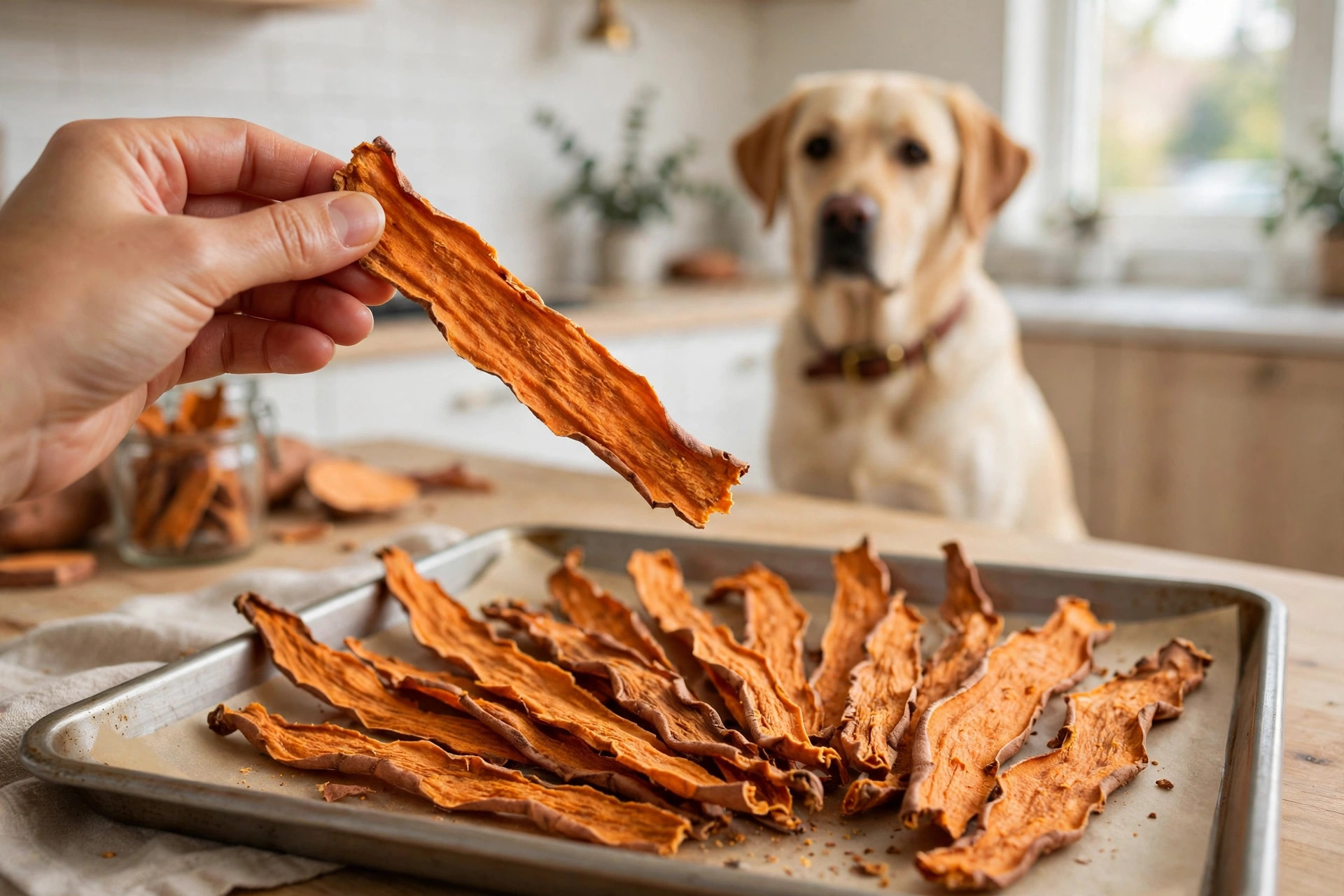
Recipe 3: Chewy sweet-potato strips
The slow-chew of the set. Sweet potato dehydrates into tough,
leathery strips that keep a dog working — exactly the extended
chewing that helps teeth.
You need: 2 large sweet potatoes, coconut oil (optional,
lightly brushed).
Method: scrub, slice lengthways into 5 mm strips (no need to
peel). Arrange on a lined tray, brush very lightly with coconut
oil if you like, and bake at 120°C (250°F) for 2–3 hours,
flipping once, until dry and leathery. They should bend
slightly, not snap.
Store refrigerated for up to a week or freeze in batches.
Because they take a while to chew through, these are the closest
homemade equivalent to a dental chew — just size each strip so
the dog can’t inhale it whole (see the safety notes below).
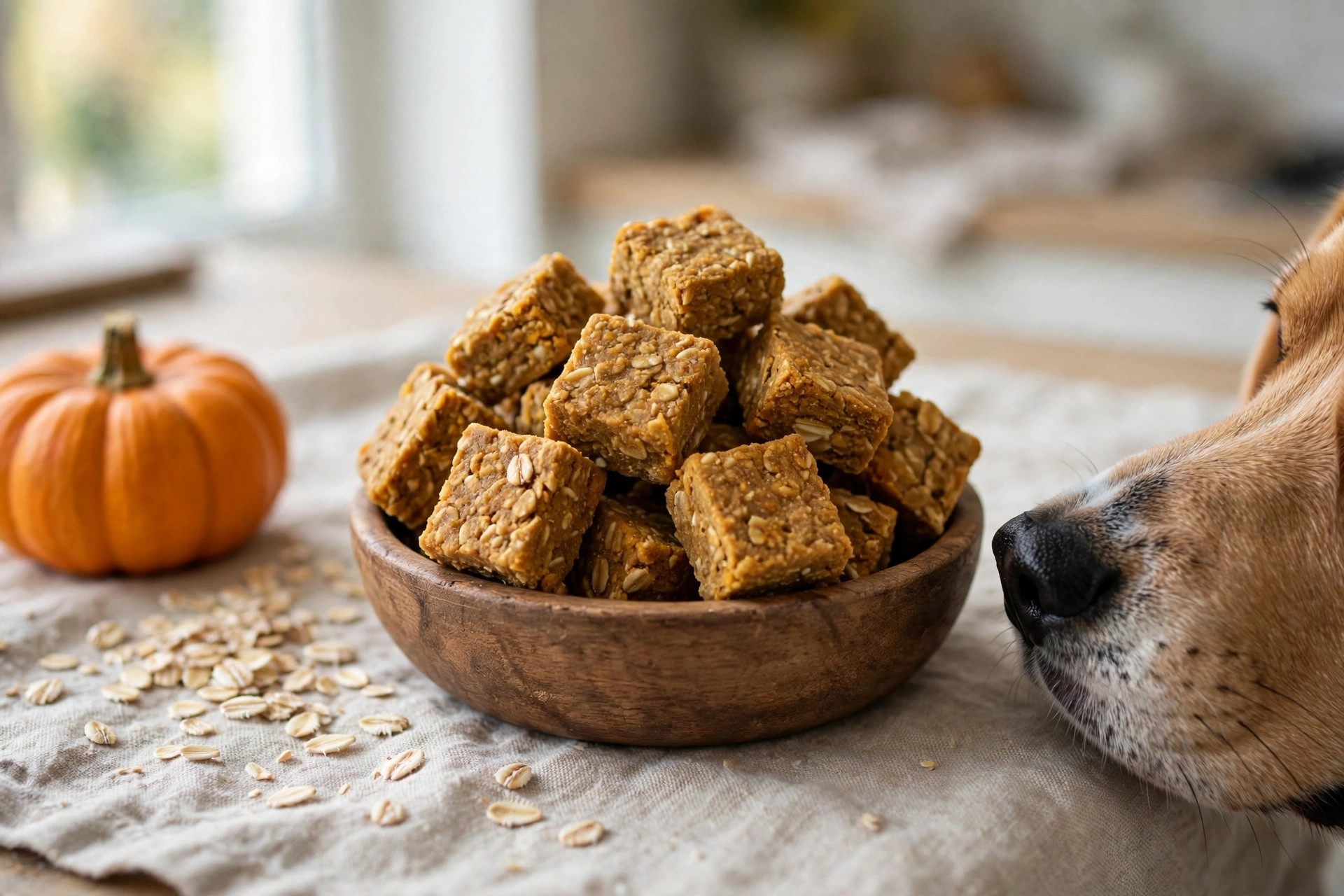
Recipe 4: Pumpkin and oat dental crunchers
A grain-light cruncher with pumpkin, which most dogs find
irresistible and which is gentle on stomachs.
You need: 120 g oat flour, 100 g plain pumpkin purée (not
pumpkin pie filling), 1 egg, 1 tablespoon ground flaxseed,
½ teaspoon cinnamon.
Method: mix, roll to 1 cm, cut into chunks, and bake at
180°C (350°F) for 30 minutes until completely hard. Let them
cool in the turned-off oven for extra crunch — residual heat
drives out the last moisture.
These are the batch-bake heroes: they keep three weeks in an
airtight container, and the flaxseed adds a little omega-3 for
gum tissue support.
How to use dental treats properly
After meals, not instead of them. A dental treat right after
dinner extends the chewing session when plaque is freshest —
that’s when mechanical cleaning counts most.
Respect the 10% rule. Treats should stay under 10% of daily
calories. For a medium dog, that usually means one to three of
these treats a day, depending on size — dental treats are still
calories.
Match the size to the dog. Small dogs get small coins;
big dogs get full strips. A treat the dog can swallow whole is
a choking risk and a dental waste.
Combine with brushing. Even three brushings a week plus a
daily dental treat dramatically outperforms treats alone. A
finger brush and dog toothpaste takes two minutes once you
both get the hang of it.
Treats to keep away from your dog’s teeth
Not everything marketed as a chew is tooth-friendly.
Rock-hard chews. Real bones, antlers, hooves and hard nylon
bones can crack teeth — slab fractures of the big upper
premolars are a classic vet-dentist repair job. If you can’t
dent it with your thumbnail, it’s too hard.
Xylitol. This sweetener (also labelled birch sugar) is
toxic to dogs and turns up in some “sugar-free” breath mints
and dental products. Never use it; check every label.
Sugary or sticky treats. Caramel-coated biscuits and
gummy treats stick to teeth and feed the bacteria that cause
plaque. The opposite of the point.
Ice cubes as chews. Crunching ice is a common cause of
cracked teeth. Fine in water bowls — not as a chew toy.
Safety notes
-
Always supervise when your dog gets a dental chew, especially
the sweet-potato strips — remove the treat if it gets small
enough to swallow. -
Introduce new ingredients one at a time and watch for
digestive upset or allergies (pumpkin and oats are usually
gentle, but every dog differs). -
Skip the mint if your dog is on any medication — check with
your vet first. -
These recipes are for dogs, not cats or other pets.
-
If your dog has kidney disease, diabetes or food allergies,
ask your vet which of these recipes are safe before baking.
The bottom line
A good dental treat is simple: crunchy or chewy enough to scrub,
big enough to chew, and made from ingredients you’d recognise.
Bake a batch of the carrot-apple bites for crunch, keep sweet
potato strips for the serious chewers, and the minty bites for
fresh breath — and keep up with brushing and vet checks. Your
dog’s teeth will thank you every time they grin.
FAQs
Do dental treats really work for dogs?
They help, within limits. Treats with real crunch or extended
chew time reduce plaque mechanically — but they don’t replace
brushing or professional cleanings. Think of them as the floss
to brushing’s toothbrush.
How many dental treats can a dog have per day?
Treats of all kinds should stay under 10% of daily calories.
For most dogs that means one to three dental treats a day,
depending on the dog’s size and the treat’s size.
Are homemade dental treats as good as shop-bought ones?
Often better, because you control the hardness and the
ingredients — many commercial “dental” treats are just soft
biscuits with flavouring. What homemade treats lack is VOHC
certification, so lean on texture and chewing time as your
quality test.
Can puppies have dental treats?
Older puppies (over six months, with adult teeth coming in)
can have soft homemade dental treats, but avoid very hard
crunchers until the adult teeth are fully in — usually by
seven to eight months.
My dog swallows treats whole — what should I do?
Size up the treat or choose chewy options like the sweet
potato strips, and always supervise. A treat that isn’t
chewed does nothing for teeth and can be a choking hazard.