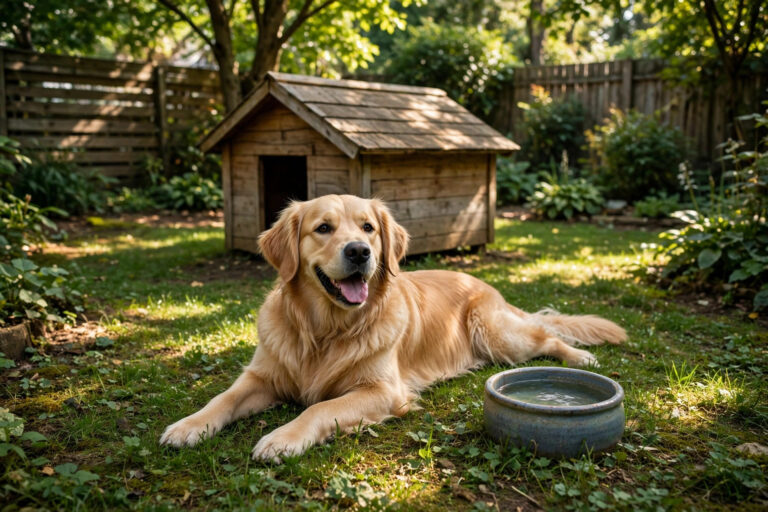
Every dog deserves a corner of the garden that is theirs. Not the whole lawn to destroy and not a bare patch by the back door — a proper outdoor dog area, built for how dogs actually use a garden: somewhere shady to sleep, somewhere to dig, somewhere to do their business, fresh water always within reach, and a fence that holds. It does not need to be big, and it does not need to cost much. Most of the builds in this guide use things you already own, a Saturday afternoon, and a bit of planning.
This guide walks through the five zones every good outdoor dog area needs, how to lay them out in a small garden, the fence and safety checks to do before you start, and a simple weekend plan that gets the whole thing done in two days.
Before you start — the 5 rules
1. Fence first. Check every panel, gate and gap before you build anything else. A dog area is only as safe as its weakest fence board.
2. Shade is not optional. Dogs overheat fast, especially in summer. Every outdoor area needs real shade — a tree, a sail, or a covered shelter — not just a sunny patch.
3. Fresh water, always. A heavy bowl or a wall-mounted waterer that cannot be tipped over, refilled daily, in the shade.
4. No toxic plants. Check what grows in and around the area — lilies, sago palm, foxglove, oleander, and cocoa-shell mulch are all dangerous to dogs. Remove them first.
5. Supervise the first week. Watch how your dog actually uses the space before you call it done. Dogs will tell you what is wrong with a layout faster than any guide can.
The 5 zones every outdoor dog area needs
Think of the area like rooms in a house. Dogs are happier when each activity has its own place, and your garden survives far better when the dog has somewhere to dig that is not your flower beds.
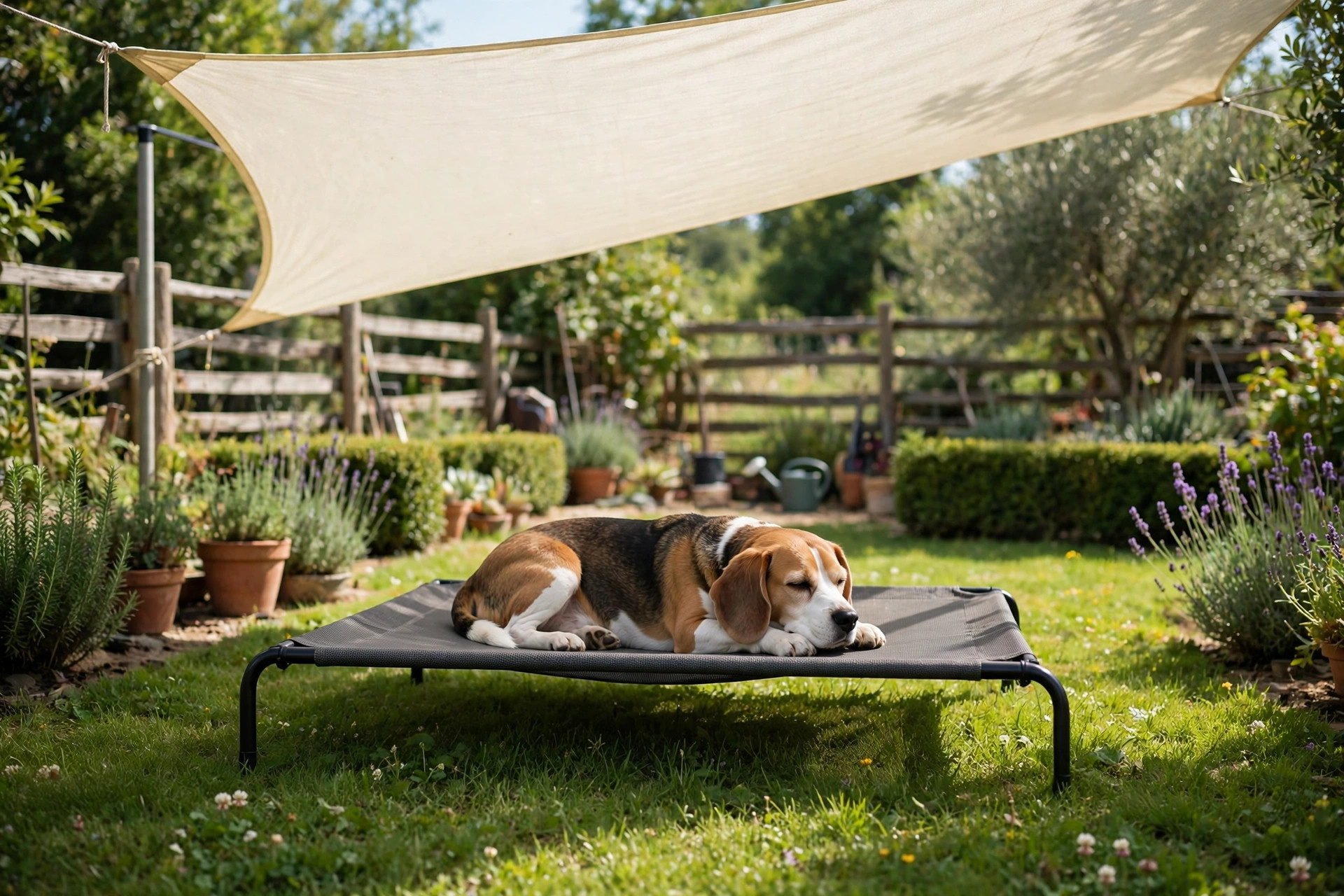
1. The rest zone. A shaded, dry spot for sleeping and watching the world. A raised bed or a DIY dog house works well, but a simple shaded platform with an outdoor dog bed does the job. Put it where the shade falls in the afternoon, when the sun is hottest, and face it towards the house so your dog can see you.
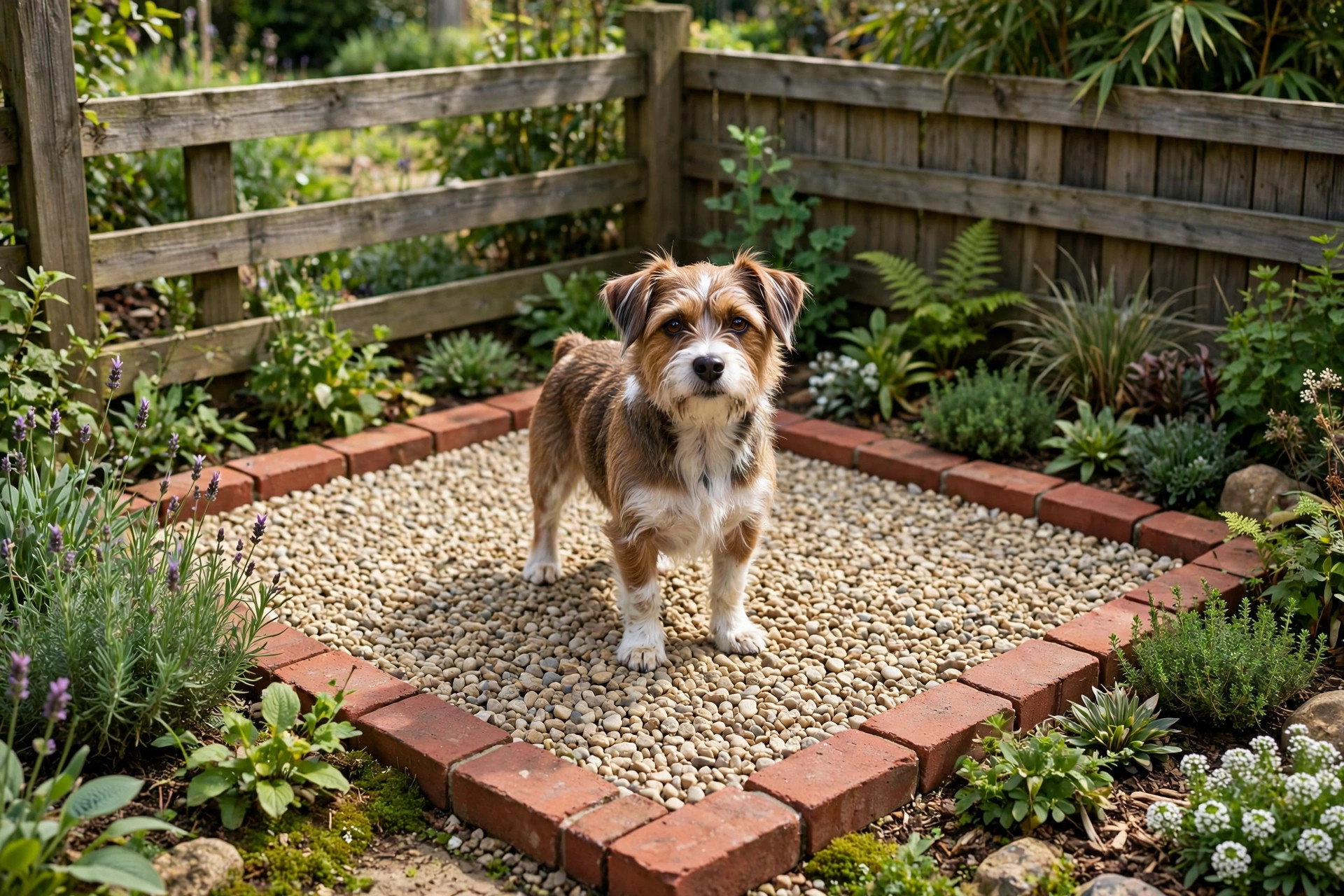
2. The potty spot. Pick one corner and train your dog to use it. Gravel or mulch drains well and is easy to clean; grass turns to mud fast. A low border of bricks or timber keeps the surface in place and marks the spot clearly. Scoop daily and hose it down weekly — a potty spot only works if it stays clean.
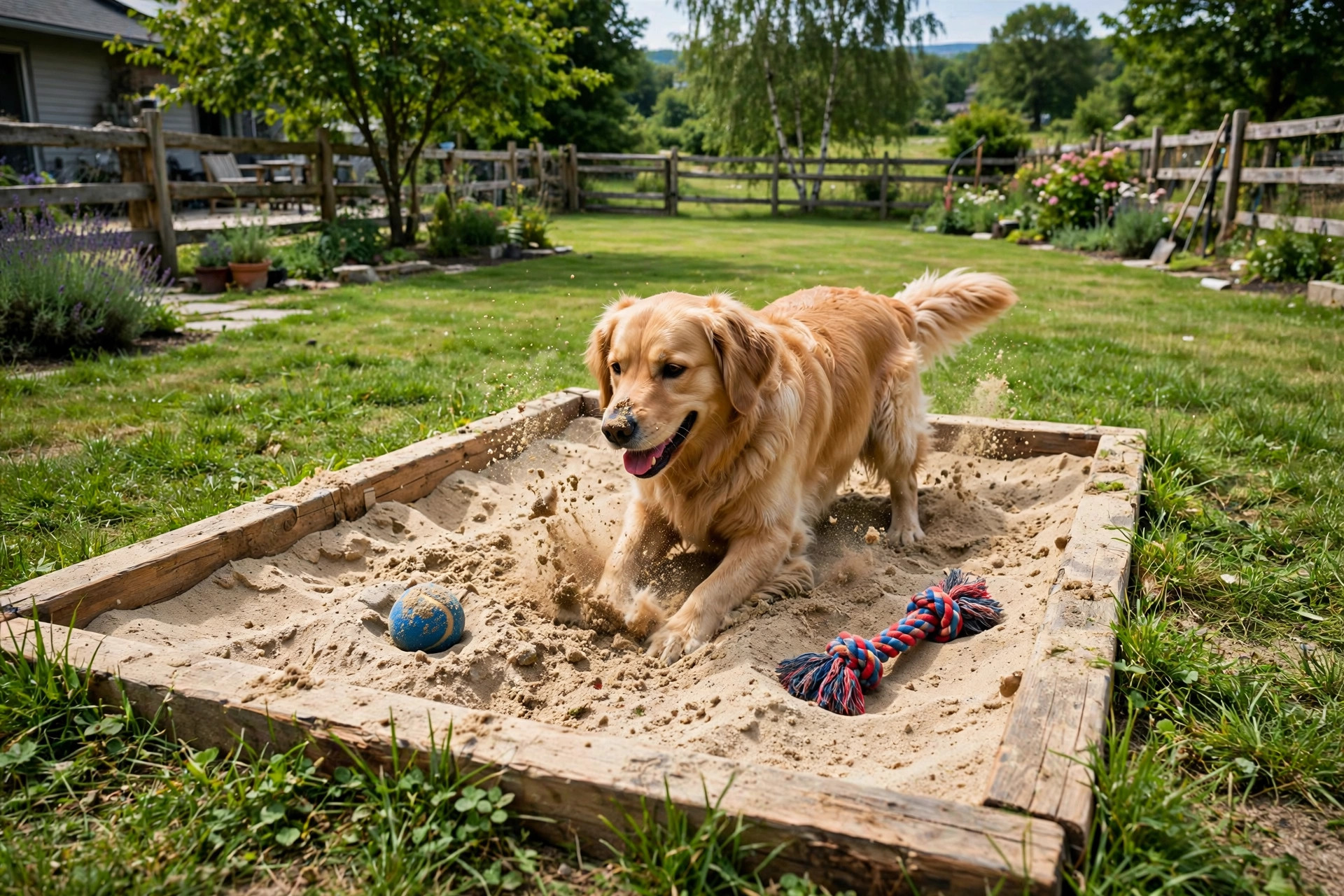
3. The digging zone. If your dog digs, give them a legal place to do it. A shallow sandpit framed with timber, filled with play sand, and with a few buried toys inside, keeps most diggers happy and your lawn intact. Bury a treat or a toy in it on the first day so your dog discovers the idea fast.
4. The play zone. Open ground for fetch, tug and zoomies. Keep it clear of anything breakable and leave room to throw a ball properly. A basket of DIY dog toys from old clothes by the back door makes it easy to grab one on the way out.
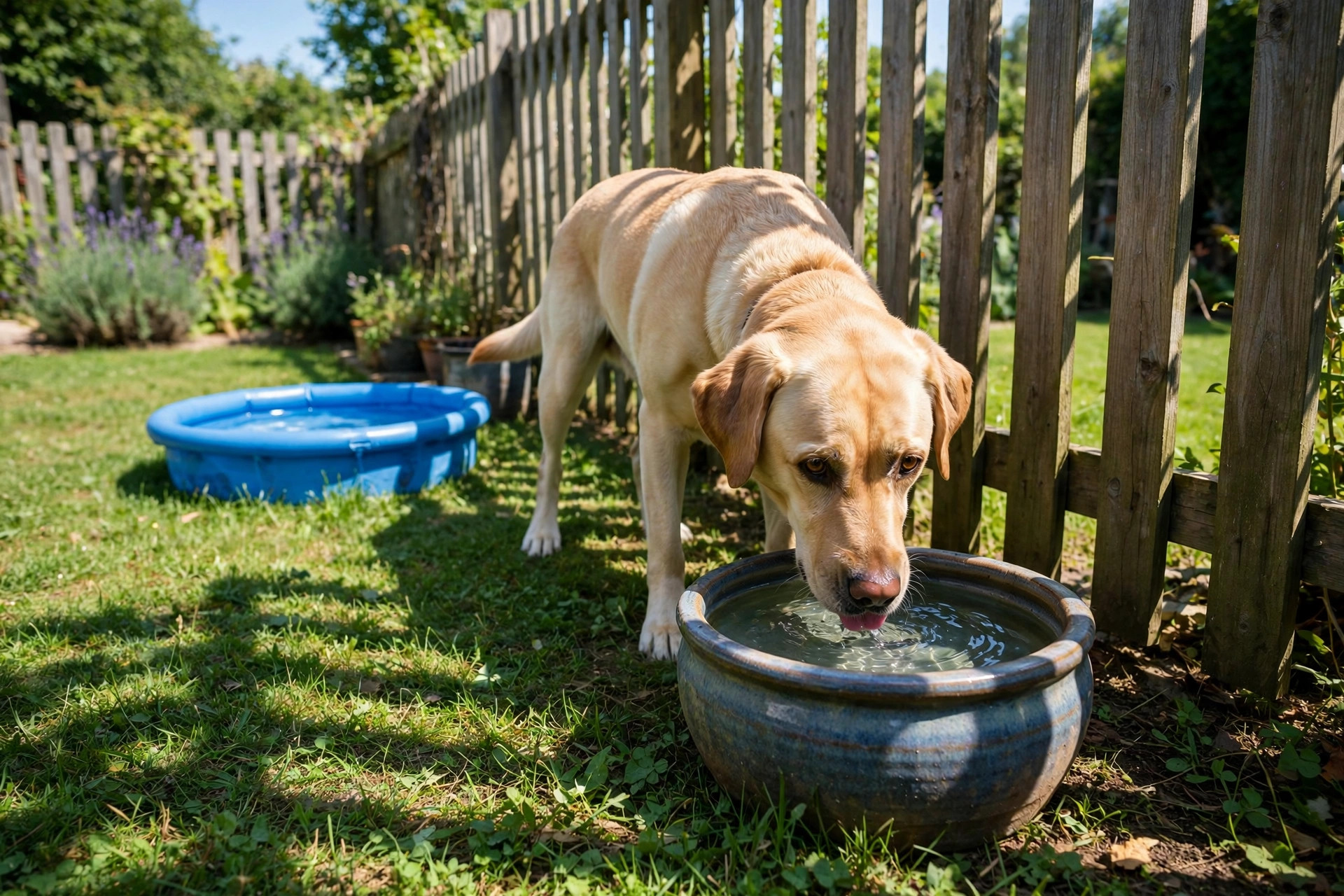
5. The water station. A heavy ceramic bowl or a bucket clipped to the fence, in the shade, near the rest zone. In summer, add a few ice cubes in the morning. If your dog loves water, a shallow paddling pool or a splash mat in the play zone is a cheap way to keep them cool — just empty it daily so it does not breed mosquitoes.
Planning the layout in a small garden
You do not need a big garden. Even a 3-by-4-metre corner works if the zones are arranged sensibly. Put the rest zone in the shadiest corner, the potty spot in the farthest corner from the house (downwind if you can), the digging zone next to it, and leave the middle open for play. Keep the water station close to the back door so refilling it is easy — if it is a chore, it will not get done.
If your garden is long and narrow, run the zones in a line: rest zone by the house, play in the middle, potty and digging at the far end. If it is wide and short, split it into a left half for rest and play and a right half for potty and digging. The exact shape matters less than the separation — dogs learn the layout in days, and a clear layout is what stops the whole garden becoming a toilet and a digging site at once.
For inspiration on the overall look, our best dog backyard ideas roundup covers styles from tidy lawns to full pet-friendly gardens.
The fence and safety check
Do this before you buy or build anything. Walk the whole boundary and look for:
- Gaps under fences. Dogs dig under, not just through. Fill gaps with bricks, paving slabs or a buried strip of welded wire mesh bent into an L shape.
- Loose panels and rotten posts. Push each panel — if it moves, fix it now. A dog leaning on a weak panel will find out before you do.
- Climbable objects. Move bins, woodpiles and garden furniture away from the fence. Athletic dogs use them as steps.
- Gates that latch. Fit a self-closing hinge or a simple spring, and check the latch actually holds when the wind blows. A gate left ajar is the most common way dogs get out.
- Escape routes through hedges. Thick hedges look solid but often have gaps at the base. Check from your dog’s height, not yours.
Also check what is on the other side. A neighbour’s compost heap, a busy road, or a dog on the other side of the fence all change how much supervision the area needs.
The weekend build plan
Saturday morning — clear and fence. Clear the corner, remove toxic plants, and do the full fence check. Fix gaps, tighten panels, and fit the gate latch. This is the least fun part and the most important — get it done first.
Saturday afternoon — rest zone and water station. Set up the shade (a sail, a canopy, or a simple wooden shelter), place the raised bed or dog house, and fix the water bowl in place. Your dog can start using the rest zone from tonight.
Sunday morning — potty spot and digging zone. Edge the potty corner with bricks or timber and fill it with gravel. Frame the sandpit, fill it with play sand, and bury a couple of toys. Show your dog both spots on the lead, and reward them for using the potty spot.
Sunday afternoon — play zone and finishing touches. Clear the play area, put the toy basket by the door, add a path of stepping stones or bark chips between zones if the ground gets muddy, and do a final safety walk. Then let your dog explore on the lead, zone by zone, with treats in each one.
What it costs
A basic outdoor dog area can cost almost nothing if you reuse materials: an old pallet becomes a raised bed, offcuts become the sandpit frame, and a spare bucket is a water bowl. A mid-range build — a shade sail, a bag of gravel, play sand, timber edging, a heavy ceramic bowl — usually comes in under the price of one shop-bought dog house. The expensive mistakes are the ones you redo: a fence you did not check, a potty spot on the wrong surface, or a shade sail that does not actually shade the rest zone at 3 pm. Measure the sun before you buy the sail.
Keeping the area clean and safe
A dog area is only good if it stays clean. Scoop the potty spot daily. Rinse the water bowl every morning and wash it properly once a week. Top up the sandpit when it gets low, and rake the gravel flat after rain. Check the fence monthly — weather loosens panels fast — and check the shade fixings after any storm. In winter, move the rest zone’s bed into the driest spot and add a windbreak; in summer, check the water twice a day and make sure the shade still covers the bed as the sun moves.
FAQs
How big should an outdoor dog area be?
Big enough for the five zones with a clear play space in the middle. For one medium dog, a 3-by-4-metre corner works well. Bigger dogs and multi-dog households need more room, especially for the play zone — but a well-laid-out small area beats a big empty lawn every time.
Can I build a dog area on a patio or balcony?
Yes, with adjustments. Use a raised bed for the rest zone, a grass tray or gravel tray for the potty spot, and a sandpit in a shallow storage box for digging. The water station and shade still apply, and the fence check becomes a railing check — make sure gaps are too small for your dog to slip through.
What surface is best for the potty spot?
Pea gravel or smooth river stones drain well and are easy to scoop from. Mulch works but needs replacing more often. Avoid cocoa-shell mulch — it is toxic to dogs. Grass is the hardest to keep clean and turns to mud in wet weather.
How do I stop my dog digging up the rest of the garden?
Give them a legal digging zone and make it rewarding — bury toys and treats in the sandpit, praise digging there, and calmly redirect digging elsewhere back to the pit. Most dogs settle within a week once the sandpit is more fun than the flower beds.
Is it safe to leave my dog outside alone in the area?
For short periods, yes, once the fence is checked and the area has shade and water. But no outdoor area replaces supervision entirely — check on your dog regularly, never leave them out in extreme heat or storms, and bring them in at night. Puppies and elderly dogs should only use it supervised until you know how they behave in it.
The bottom line
A DIY outdoor dog area is not a big build — it is five small zones, a fence check, and a weekend of work. Shade and water first, then the rest zone, the potty spot, the digging zone and the play zone, laid out so your dog can find each one without thinking. Do the fence check before anything else, supervise the first week, and keep it clean after that. Your dog gets a garden that is actually theirs, and you get a lawn that survives the summer.
Pin this for later 📌 — and if you want more ideas for the whole garden, our best dog backyard ideas roundup is the place to start.