{
“title”: “Maltese Dog Grooming Styles DIY: 7 Cute Cuts You Can Do at Home”,
“slug”: “maltese-dog-grooming-styles-diy”,
“excerpt”: “Maltese dog grooming styles you can do at home: puppy cut, teddy bear cut, top knot and more — tools, steps and safety tips for that white coat.”,
“meta_description”: “Maltese dog grooming styles you can do at home: puppy cut, teddy bear cut, top knot and more — tools, steps and safety tips for that white coat.”,
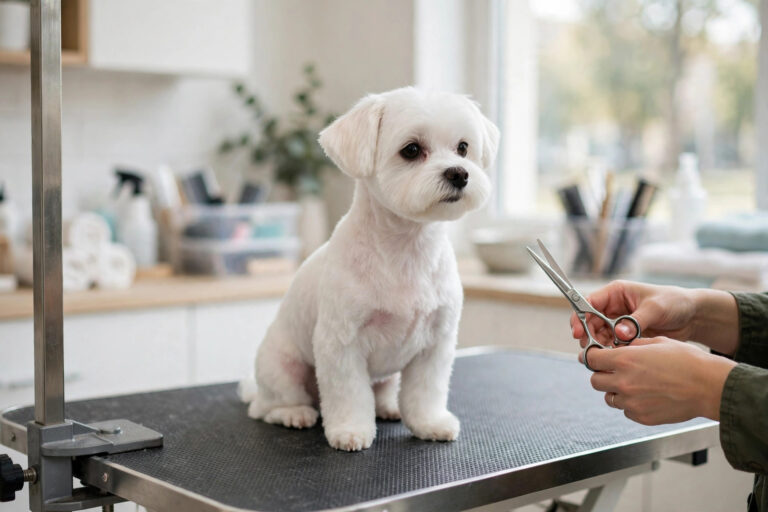
“featured_image_alt”: “White Maltese dog with a neat puppy cut sitting on a grooming table during a home grooming session.”,
“content_html”: “
A Maltese in a full show coat is a beautiful sight — floor-length white silk, a top knot, a face like a porcelain doll. It is also a full-time job. Most Maltese owners do not want a show dog; they want a happy little companion whose coat stays clean, mat-free and cute without an hour of brushing every single day. That is exactly what a good DIY grooming style gives you.
\n
The Maltese coat is unusual: long, straight, silky hair with no undercoat, which means it barely sheds but mats fast. A mat in a Maltese coat tightens close to the skin, pulls with every step, and hides sore spots underneath. The right cut keeps all of that under control — and the breed’s small size makes it one of the easiest dogs to groom at home. A Maltese weighs 3–4 kg, fits on a table, and holds still far better than a wriggling spaniel.
\n
This guide covers the seven Maltese grooming styles worth knowing, the tools you actually need, the step-by-step routine for a home cut, and the white-coat care that keeps a Maltese looking bright instead of dingy. It is the breed-specific companion to our general dog haircuts guide, which covers coat types, tools and the safety rules for every breed, and to our DIY dog grooming at home guide, which covers the full routine — brushing, bathing, nails and ears.
\n
Why Maltese grooming is different from other breeds
\n
Three things make the Maltese special. First, the coat: a single layer of long, silky hair that grows continuously and never stops. There is no shedding season to wait out — if you do not cut it, it keeps growing until it drags on the floor. Second, the colour: pure white shows everything. A muddy paw print, a food stain around the mouth, a rusty tear track under the eye — all of it is visible on a white coat within hours. Third, the face: big dark eyes set in white fur, with tear ducts that stain easily and a muzzle that picks up food colour.
\n
None of this is a problem once you have a routine. A Maltese on a 4–6 week trim schedule with a quick daily brush stays mat-free, and a 30-second face wipe after meals handles most of the staining. The styles below are all variations on the same idea: choose the length that matches how much brushing you are honestly willing to do.
\n

The 7 Maltese grooming styles
\n
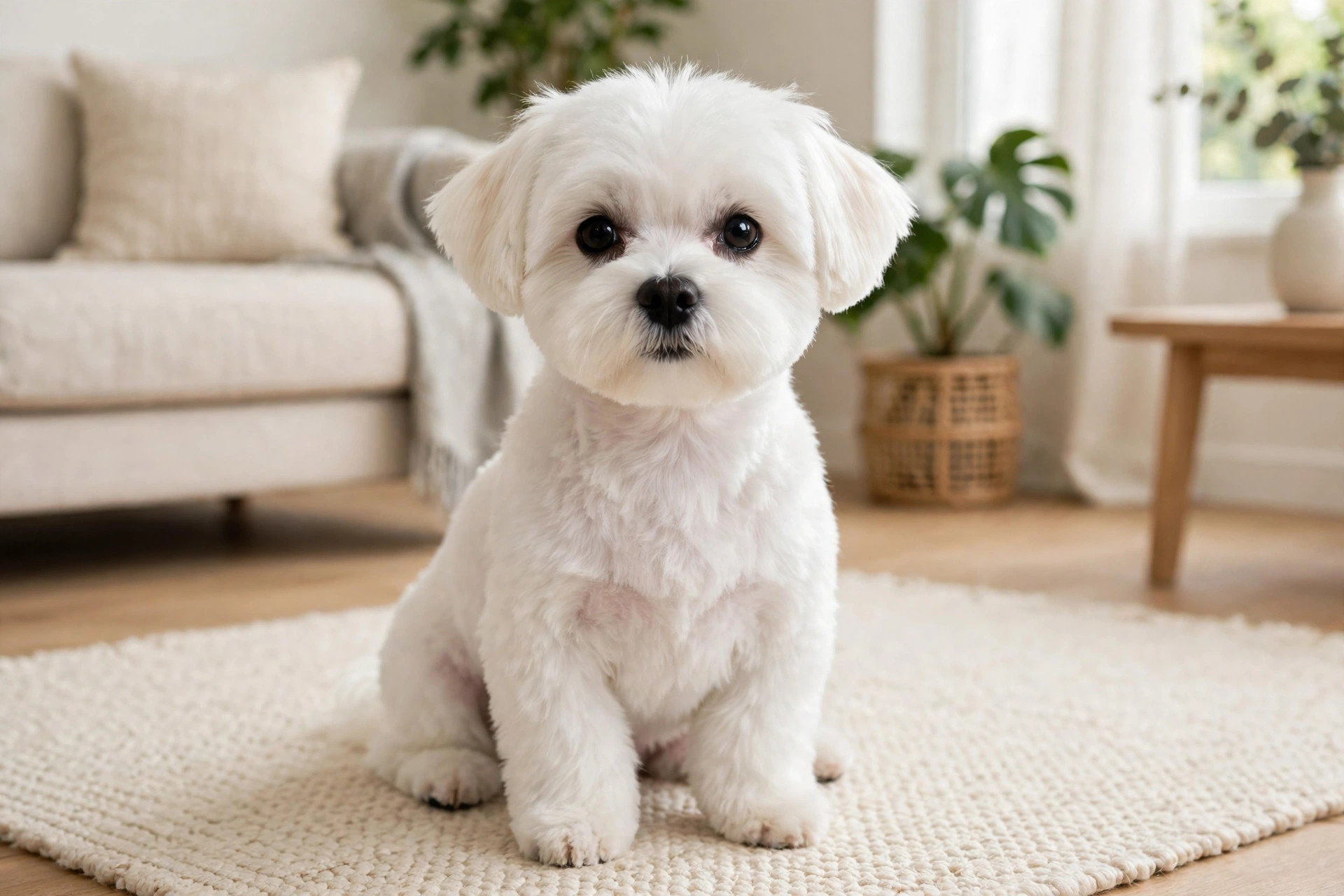
1. The puppy cut. The most popular Maltese cut in the world, and the easiest to do at home. The whole coat is clipped to one even length, usually 1–2.5 cm, with the face and ears left a little longer and rounded. It suits every Maltese, it is the most forgiving cut for a beginner, and it keeps a Maltese comfortable for weeks with almost no daily brushing. If you only learn one Maltese style, learn this one. It is also the cut most owners mean when they say \”just make her look cute and tidy.\”
\n
2. The teddy bear cut. A puppy cut with a rounder, softer face — the muzzle trimmed short and the cheeks and ears left fluffy so the head looks like a teddy bear. It is the signature look for Maltese, doodles and bichons, and it photographs beautifully. The trick is the blending: the face must flow into the neck, not sit on top of it like a helmet. Thinning shears are your best friend here, because they soften the line between the short muzzle and the fluffy cheeks.
\n
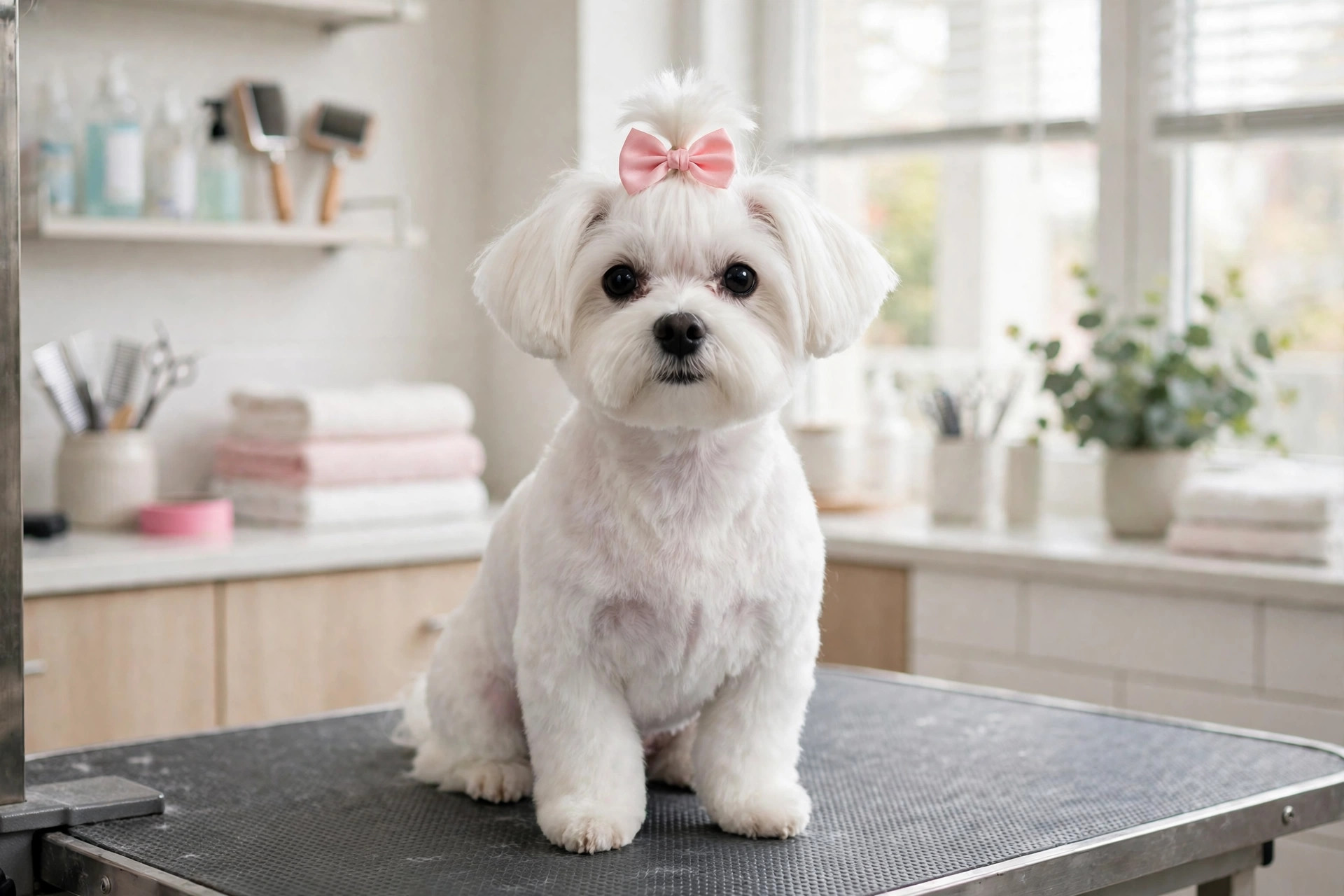
3. The top knot (with a short body). The classic Maltese look, but in a practical version: the body kept short in a puppy cut while the hair on top of the head is left long, gathered into a small top knot with a soft band or bow. The top knot keeps the hair out of the eyes, which is the whole point — a Maltese with hair falling over its eyes cannot see properly and rubs at its face constantly. If you want the classic look without the floor-length coat, this is the compromise that works.
\n
4. The show coat. The full-length coat, grown to the floor and parted down the middle of the back. It is stunning, and it is a serious commitment: daily brushing with a pin brush, wrapping the coat in papers or bands to protect it, and a bath every week. This is the one style in this guide we do not recommend as a DIY project — a show coat needs an experienced groomer and an owner willing to brush for 20 minutes a day. We list it so you know what it is, not so you attempt it on a Saturday afternoon.
\n
5. The summer cut. A very short clip for hot weather — about 1 cm all over, face and ears tidied. Because the Maltese is single-coated, a short summer cut is safe: there is no undercoat to ruin, unlike a double-coated breed. The coat grows back normally, and the dog stays cooler, dries in minutes after a bath, and picks up far less mud on walks. Leave enough length to protect the skin from the sun — never clip to the skin.
\n
6. The Korean cut (Asian fusion). The round-faced style popularised by Korean groomers: a big round head, short body, and the ears and legs left slightly fluffy so the dog looks like a soft toy. It suits the Maltese perfectly because the breed already has the round face and the silky coat that holds the shape. It takes more scissoring than a puppy cut, so it is a second or third project, not a first — but it is the cut that gets the most compliments at the park.
\n
7. The lamb cut. A longer body with the legs left fuller, so the dog looks like a little lamb — a soft, rounded silhouette with fluffy legs and a neat body. It is a good middle ground between the puppy cut and the show coat: the body stays manageable while the legs keep their fluffy charm. The trade-off is that the legs mat faster than the body, so the legs need a quick comb-through every day or two.
\n
How often should you groom a Maltese?
\n
Use the coat length as your guide, not the calendar. A Maltese in a puppy cut or summer cut needs a trim every 4–6 weeks, a bath every 2–3 weeks, and a brush-out 2–3 times a week. A Maltese in a teddy bear or Korean cut needs the same trim schedule, plus a daily face wipe and a brush every other day. A Maltese in a longer lamb cut needs brushing every day, or the legs mat within a week.
\n
The golden rule: if you can see mats forming, if the fur covers the eyes, or if the coat drags on the ground, the cut is overdue. And one rule overrides everything — never let a mat reach the skin. A mat pressed flat against the skin hides sores, traps moisture, and cannot be brushed out without hurting the dog.
\n
The tools you actually need
\n
You do not need a professional kit. You need six things, and they should be made for dogs — human clippers run too hot and human scissors are the wrong shape.
\n
- \n
- Dog clippers with a #10 blade and guard combs. A quiet, low-vibration model matters more than a powerful one. A Maltese is small and easily startled, and a scared dog and a loud clipper is a bad combination. Guard combs set the length — start with the longest guard and work shorter only if you need to.
- Rounded-tip scissors. For the face, ears, paws and tail. The rounded tip is the single most important safety feature in the whole kit: a Maltese moves its head without warning, and a sharp point near a dark eye is how accidents happen.
- Thinning shears. These blend the lines where the clippers stop and the scissors start, so the cut looks smooth instead of stepped. They are also the kindest tool for a nervous dog, because they are quiet — and they are essential for the teddy bear and Korean cuts.
- A steel comb and a slicker brush. The comb finds the mats the brush glides over. If the steel comb cannot pass through a section of coat, that section is matted and must be dealt with before any cutting starts. Our best grooming brush for German Shepherds guide explains brush types in detail, though a Maltese needs a much smaller, softer slicker than a shepherd.
- A detangling spray and a dog whitening shampoo. The spray lets the comb slide through the silky coat without breaking hair. The shampoo keeps the white bright — use a proper dog whitening shampoo, never a human purple shampoo, which is far too harsh for dog skin.
- A non-slip mat and good light. A small dog that slips on a table panics; a cut done in poor light is a cut done blind. If you are setting up a proper wash area, our DIY dog wash station guide shows how to build one in a laundry room or garage corner.
\n
\n
\n
\n
\n
\n
\n
Skip the fancy stuff until the basics are second nature: de-matting combs, curved scissors and clipper coolant spray can wait. A clean, oiled clipper blade and a patient Maltese matter far more.
\n
Before you pick up the clippers — brush, bath, dry
\n
Every good Maltese cut starts before any cutting. A dirty, tangled coat clogs clippers, pulls painfully, and hides the true length of the fur.
\n
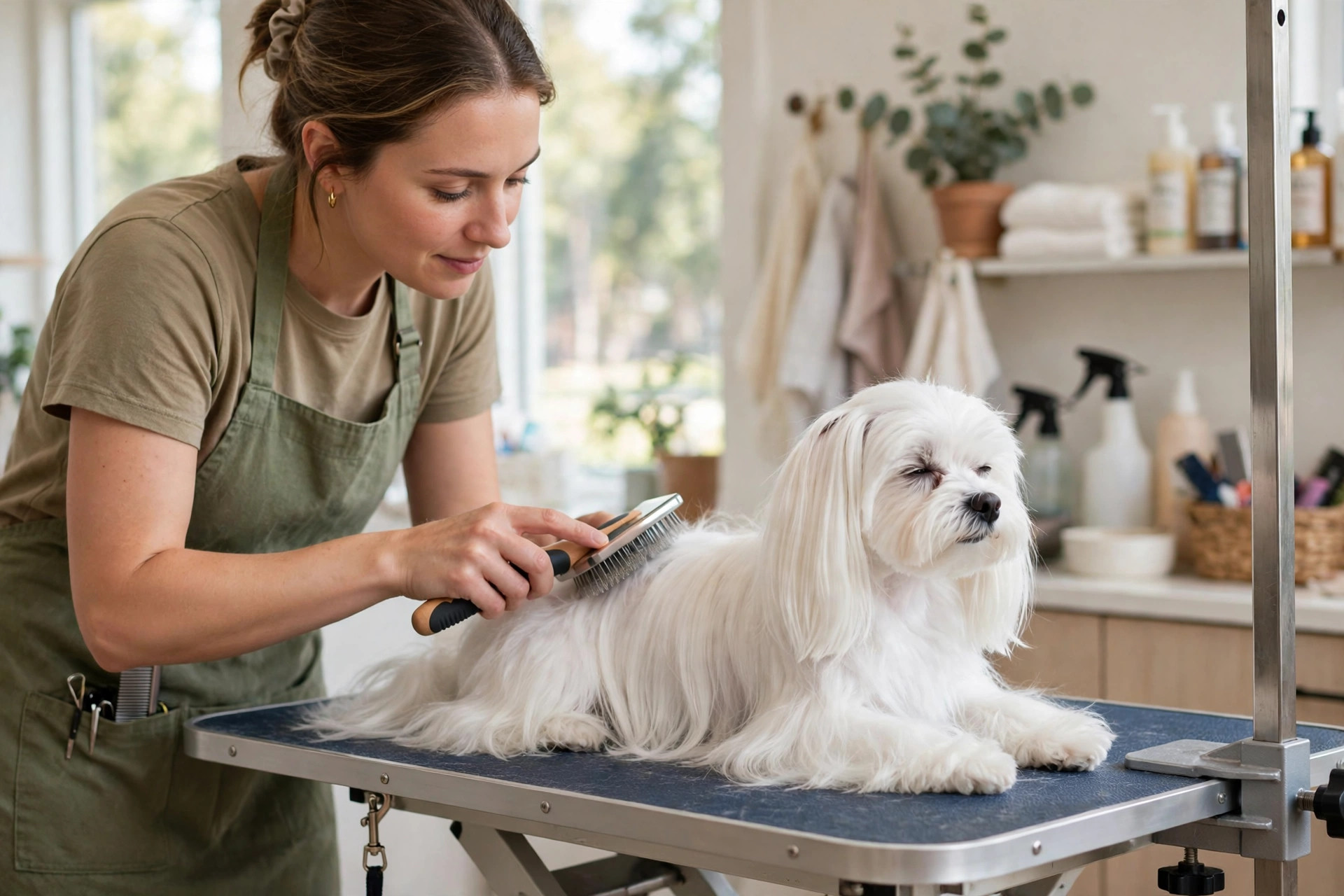
Brush first. Work through the whole coat with the slicker brush, then check with the steel comb. Any tangle the comb will not pass through is a mat. Small mats can be worked apart gently with your fingers and a little detangling spray. Large, tight mats should be cut out carefully with thinning shears held flat against the skin — never pull a mat, and never slide scissors under it with the blade pointing at the skin. Pay special attention to the armpits, behind the ears, under the collar and between the back legs: these are where Maltese mats form first.
\n
Bath second. A clean coat cuts evenly and the clippers glide instead of dragging. Use a dog shampoo, lukewarm water, and rinse twice as long as you think you need to — shampoo residue makes white fur look grey and clump together. For a Maltese, a whitening shampoo used every second or third bath keeps the coat bright without drying the skin.
\n
Dry third — fully. Never cut a wet coat. Wet fur hangs longer than dry fur, so a cut done wet ends up shorter than planned once it dries, and it dries unevenly. Towel-dry first, then finish with a dryer on a low, cool setting, brushing as you go. The coat should be completely dry and fluffed up before the clippers come out.
\n
How to groom your Maltese at home — in 3 steps
\n
Step 1 — Brush and prep. Brush the whole coat out, check with the steel comb, remove any mats, then bath and dry fully as above. Lay out every tool within reach, put the non-slip mat down, and let the dog sniff the clippers while they are off, then on — a treat for staying calm. A tired dog is an easier dog: a good walk before the cut helps enormously.
\n
Step 2 — Clip the body. Start with the longest guard comb and clip with the grain of the fur, in long, smooth strokes from neck to tail. Keep the clipper flat against the body — tipping it digs in and leaves lines. Do the back and sides first, then the chest and belly with the dog standing. Stop every few minutes to check the blade temperature on the inside of your wrist; a hot blade burns skin, and Maltese skin is thin and delicate. If the dog fidgets, stop, treat, and resume — never chase a moving dog with running clippers.
\n
Step 3 — Tidy the face, ears and paws. Switch to rounded-tip scissors. Trim the fringe above the eyes so the dog can see, following the curve of the brow — cut a little, comb, and look again. Tidy the ears by combing the fur down and trimming the edges level, never cutting into the ear leather. If you are keeping a top knot, gather the hair on top of the head now, comb it up, and secure it with a soft band — never a tight rubber band, which breaks hair. Trim the fur between the paw pads level with the pads so the dog stops slipping on smooth floors, and neaten the tail with thinning shears. Finish by combing the whole coat and blending any steps with the thinning shears. Our best nail clippers for German Shepherds guide covers the nail trim that usually goes with a grooming day.
\n
Keeping that white coat white
\n
A white Maltese coat is a daily maintenance job, but a small one. Three habits do most of the work.
\n
Wipe the face daily. Tear stains are the Maltese owner’s constant companion: the tears run down from the inner eye and leave a rusty-brown track. Wipe the eye area every day with a warm, damp cloth, and keep the hair around the eyes trimmed short so the tears do not wick into the fur. Never use bleach, peroxide or whitening products near the eyes — a damp cloth and a short trim are all you need. If the staining is sudden or heavy, ask your vet: blocked tear ducts and ear infections both make it worse.
\n
Wipe the mouth after meals. Wet food, coloured treats and even some kibbles stain the fur around the mouth. A quick wipe with a damp cloth after eating stops the stain setting in, and a short muzzle trim — the teddy bear cut does this naturally — keeps food out of the fur in the first place.
\n
Wash the paws after muddy walks. White paws pick up every puddle. A quick rinse in a shallow bowl by the door, then a towel dry, keeps the paws white and stops mud being tracked through the house. A whitening shampoo once every few baths lifts the grey that builds up over time.
\n
Sensitive areas — where accidents happen
\n
Four places need extra care, and they cause most home-grooming injuries: the face (eyes, lips and the tongue, which dogs stick out at the worst moment), the ears (thin skin that nicks easily), the armpits and groin (loose, folded skin that the clipper can catch), and the tail base. In all four, the rules are the same: use rounded-tip scissors, not clippers, wherever the skin folds; pull the skin taut with your free hand before the clipper passes over it; and if the dog will not hold still, stop. A half-finished Maltese cut is fixable. A nicked ear is a vet visit and a dog that fears grooming for months.
\n
Never cut the whiskers — they are sensory tools, not stray hairs. Never use clippers on a mat pressed flat against the skin; the blade slides under the mat and cuts the skin underneath. And never trim inside the ear canal: the outer ear only, with a cotton pad and ear cleaner, never a cotton bud pushed in.
\n
7 mistakes to avoid
\n
- \n
- Cutting a dirty or matted coat. It pulls, it clogs the clippers, and the result looks patchy.
- Letting mats reach the skin. A mat you can brush out today becomes a vet job next week.
- Starting with the shortest guard. You can always go shorter; you cannot put fur back. Start long, check, then go shorter.
- Skipping the blade-temperature check. A hot blade burns before you notice. Check it on your wrist every few minutes.
- Using sharp-pointed scissors near the face. Rounded tips exist for exactly this reason.
- Using human whitening products on the coat. Human purple shampoo and bleach-based whiteners are far too harsh for dog skin and eyes.
- Rushing a nervous Maltese. A stressed small dog moves suddenly. Short sessions with treats beat one long battle.
\n
\n
\n
\n
\n
\n
\n
\n
When to book a professional instead
\n
Some jobs belong to a groomer. A coat full of tight mats that reach the skin, a Maltese that bites or panics at the clippers, a show coat you want kept long, a senior Maltese with thin skin and lumps, or any skin condition — redness, sores, a smell you cannot explain — all of these are groomer or vet jobs, not home experiments. A good groomer will also let you watch and learn, which is the fastest way to get better at home cuts. If you want a proper grooming space first, our dog grooming salon ideas guide shows how to set one up.
\n
A professional cut every second or third time, with home tidy-ups in between, is the routine most Maltese owners settle into. It keeps the coat in shape, keeps the dog used to being handled, and keeps the cost down.
\n
FAQs
\n
How often should I groom my Maltese?\nA trim every 4–6 weeks, a bath every 2–3 weeks, and a brush-out 2–3 times a week for a puppy cut; daily brushing if you keep the coat longer. The face needs a wipe every day to control tear staining.
\n
What is the easiest Maltese cut for beginners?\nThe puppy cut: one even length all over with the longest guard comb, then a tidy-up of the face, ears and paws with rounded-tip scissors. It is forgiving, it suits every Maltese, and a small uneven patch blends out with thinning shears.
\n
Can I cut my Maltese’s hair with human clippers?\nNot safely. Human clippers run hotter, vibrate more and are not built for thick dog fur — they drag, overheat and scare the dog. Dog clippers with guard combs are quieter, cooler and cut evenly.
\n
How do I stop tear stains on my Maltese?\nWipe the eye area daily with a warm, damp cloth, keep the hair around the eyes trimmed short, and never use bleach or peroxide near the eyes. Sudden or heavy staining is worth a vet check — blocked tear ducts and ear infections both make it worse.
\n
Should I cut my Maltese’s hair wet or dry?\nAlways dry, and always after a brush-out and a bath. Wet fur hangs longer than dry fur, so a wet cut ends up shorter than planned, and it dries patchy.
\n
Is a short summer cut safe for a Maltese?\nYes. The Maltese is single-coated, so there is no undercoat to ruin — unlike double-coated breeds, where shaving can damage the coat permanently. Leave about 1 cm so the skin stays protected from the sun.
\n
How do I keep my Maltese’s white coat white?\nDaily face and mouth wipes, a paw rinse after muddy walks, and a proper dog whitening shampoo every second or third bath. Never use human purple shampoo or bleach-based products on a dog.
\n
The bottom line
\n
A Maltese grooming style is a deal between you and the coat: the puppy cut if you want easy, the teddy bear cut if you want cute, the top knot if you want the classic look without the floor-length commitment, and the show coat only if you are ready to brush every day. Brush out the mats, bath and dry fully, clip with the longest guard first, and tidy the face, ears and paws with rounded-tip scissors. Wipe the face daily, keep the ears and eyes trimmed, and hand the tricky jobs to a professional. Done every 4–6 weeks, it keeps the coat mat-free, the skin healthy and the dog comfortable — and the cute part takes care of itself.
\n
Pin this for later 📌 — and if you want the full routine, our DIY dog grooming at home guide covers brushing, bathing, nails and ears step by step.
“,
“source_draft”: “/home/hatch/workspace/goals/pinterest-pin-automation-for-petsmush-com/files/maltese-dog-grooming-styles-diy-post-draft.md”,
“status”: “publish”
}