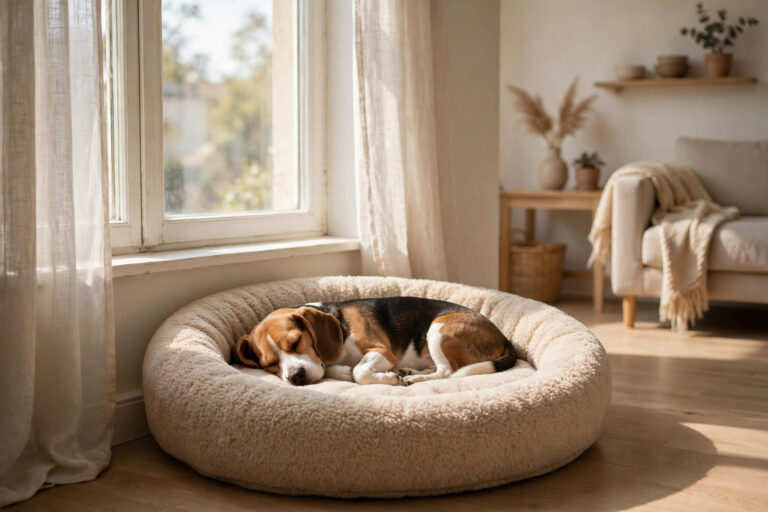
A small apartment is not a bad home for a dog. The dog doesn’t measure square footage — it measures routine, attention and a few well-chosen zones. What a small space actually demands is intention: every corner has to earn its keep, and the dog’s gear has to disappear into the decor instead of colonising it.
This guide gives you ten space-smart ideas that work in studios and one-beds: the fold-away crate nook, vertical gear storage, a dead-corner feed station, balcony potty solutions, noise-proofing for barkers, indoor exercise that doesn’t need a garden, the drying kit at the door, furniture that hides dog stuff, tight-quarters dog-proofing, and the routine design that replaces the yard. None of them needs a renovation — most need a weekend afternoon at most.
1. The fold-away crate nook
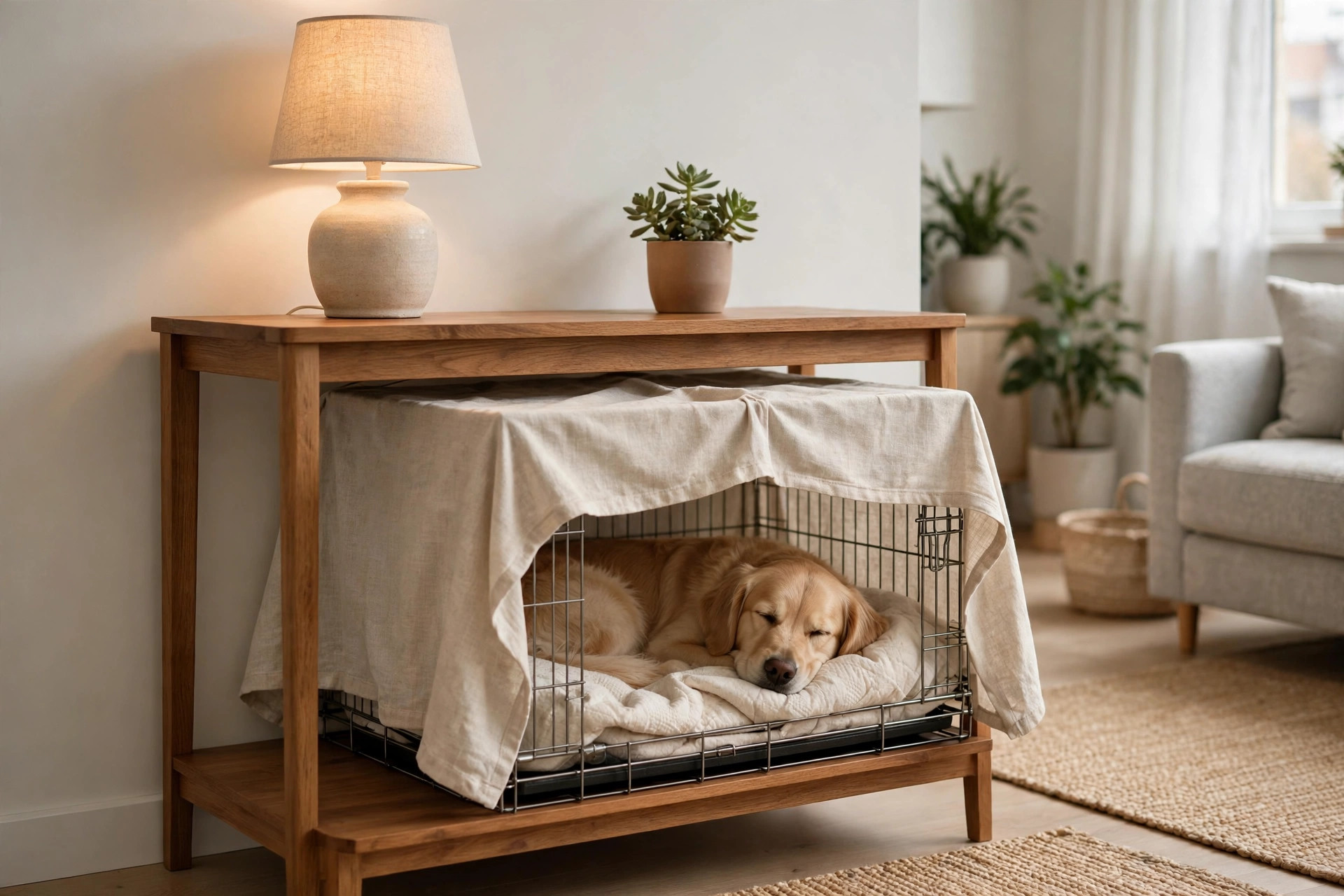
The crate is the biggest single item in a small dog home, so where it lives decides the whole layout. The space-smart answer is a nook, not a centrepiece: tuck the crate under a console table, into a wardrobe alcove, or beside the sofa where it reads as an end table.
A collapsible crate earns its place twice: it folds flat to a few centimetres when guests come or when you’re deep-cleaning, and it travels with you. For permanent setups, a wooden crate-style side table works as actual furniture — lamp on top, dog sleeping inside. Either way, drape a breathable cover over the top and sides so the crate becomes a den: dark, quiet, and visually tidy.
Safety note: a crate is a den, not storage. Never stack things on top of a wire crate, never use it as punishment, and make sure the dog can stand up, turn around and lie flat out. If the dog can’t stretch fully, the crate is too small for the apartment trick to work.
2. Go vertical with gear storage
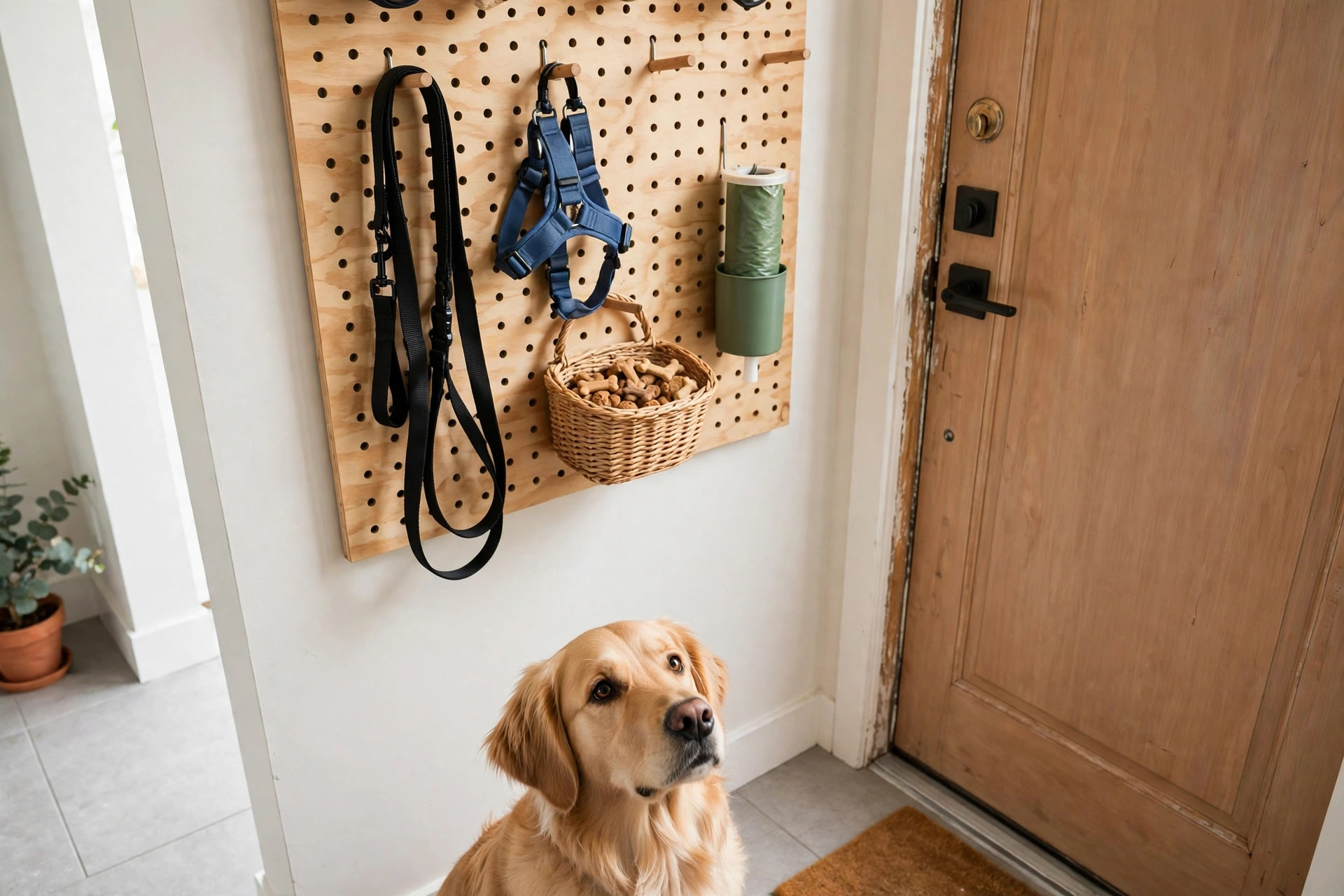
Leashes, harnesses, poop bags, brushes and treats take over horizontal surfaces fast. Move them to the wall: a pegboard or a row of hooks by the front door holds the whole walk kit in about 40 cm of wall.
The grab-and-go rule makes it work: everything needed for a walk lives at the door, in one place, visible. A small basket on the hooks holds poop bags and treats; the harness hangs ready. No more hunting through drawers while the dog spins in circles.
3. The dead-corner feed station
Feeding doesn’t need a kitchen footprint. Pick a dead corner — beside the fridge, under the breakfast bar, the end of a hallway — and claim about 60 cm of it with a raised feeder on a waterproof tray mat. The tray catches the splashes that would otherwise ruin flooring or a rug, and it defines the zone so bowls don’t migrate.
In a small apartment, store the kibble in a slim airtight container that slides into the gap beside the counter — decanting keeps it fresh and kills the crinkly bag on the worktop.
4. Balcony potty solutions that actually work
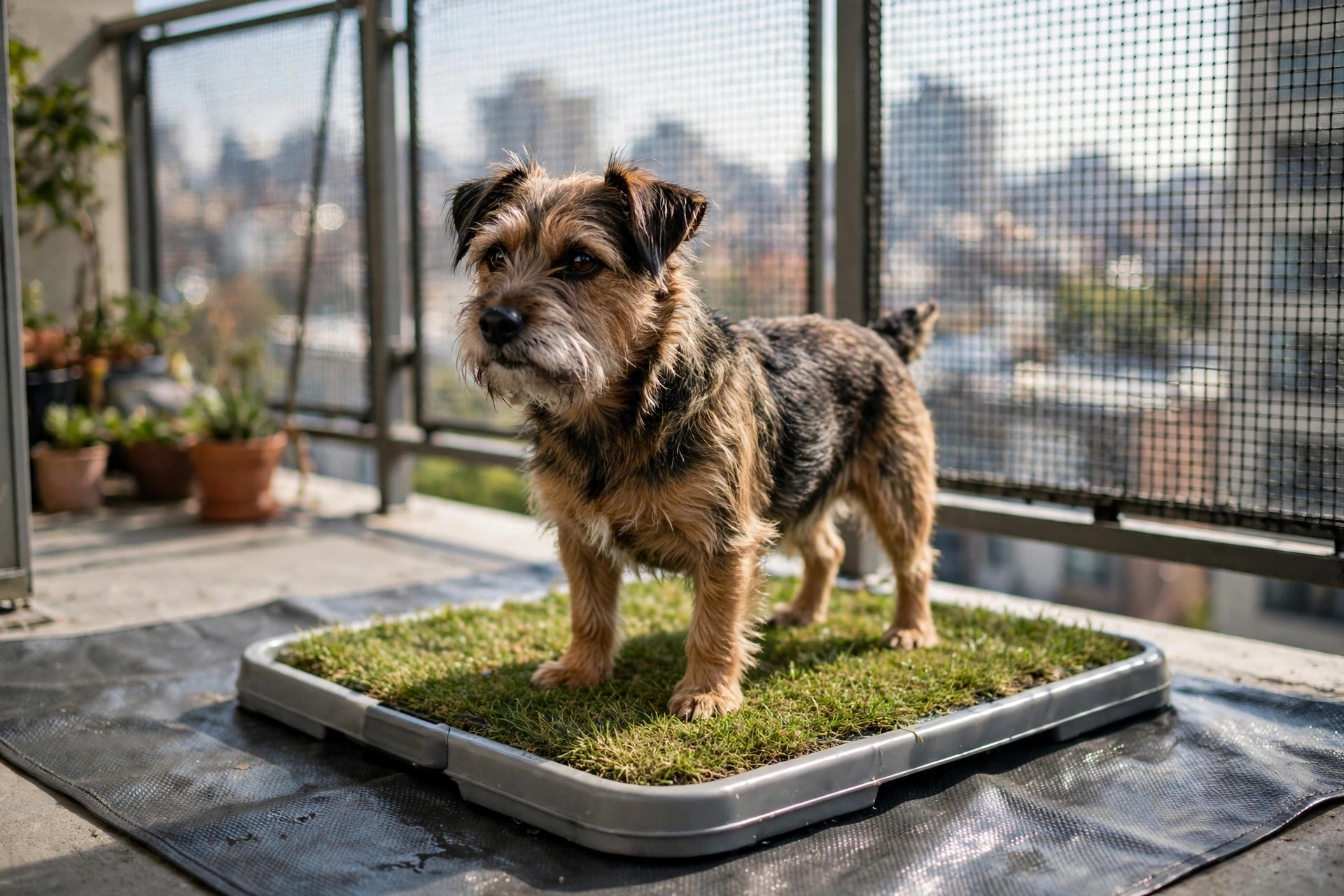
If your building allows it, a balcony potty spot is the single biggest quality-of-life upgrade for apartment dogs — midnight needs, rainy nights, puppies between vaccinations. The setup that works: a large tray with a real or hydroponic grass pad on top, on a waterproof mat with a slight lip.
The maintenance rules matter more than the purchase:
- Pick up solids immediately. Odour in a small apartment is a neighbour-relations issue, not just a smell issue.
- Rinse the tray weekly and replace grass pads on the manufacturer’s schedule — a sour pad is the reason most people abandon the system.
- Drainage: keep the tray off the balcony floor on small risers so water doesn’t pool and stain.
Safety note: balcony railings must be dog-proof. Small dogs can squeeze through rail gaps and large dogs can jump lower ones — add mesh or acrylic panels to at least chest height before the dog ever goes out unsupervised. And never leave a dog on a high balcony in direct sun without water and shade.
5. Noise-proofing for barkers
In an apartment, your dog’s bark is everyone’s business. You can’t soundproof a rental, but you can take the edge off with soft furnishings — which doubles as the petcore look:
- Rugs with thick underlay in the hallway and the dog’s main room deaden footstep and claw-click noise.
- Heavy curtains on the street-facing windows cut both incoming street noise (a bark trigger) and outgoing sound.
- A white-noise machine or low radio near the front door masks hallway sounds that set off alert barking.
- Draught-excluder strips around the front door reduce the sound leaking into the corridor — and the corridor sounds leaking in.
The training side matters more than any curtain: reward quiet check-ins, and desensitise the dog to door sounds with treats rather than shouting over the barking.
6. Indoor exercise that doesn’t need a garden
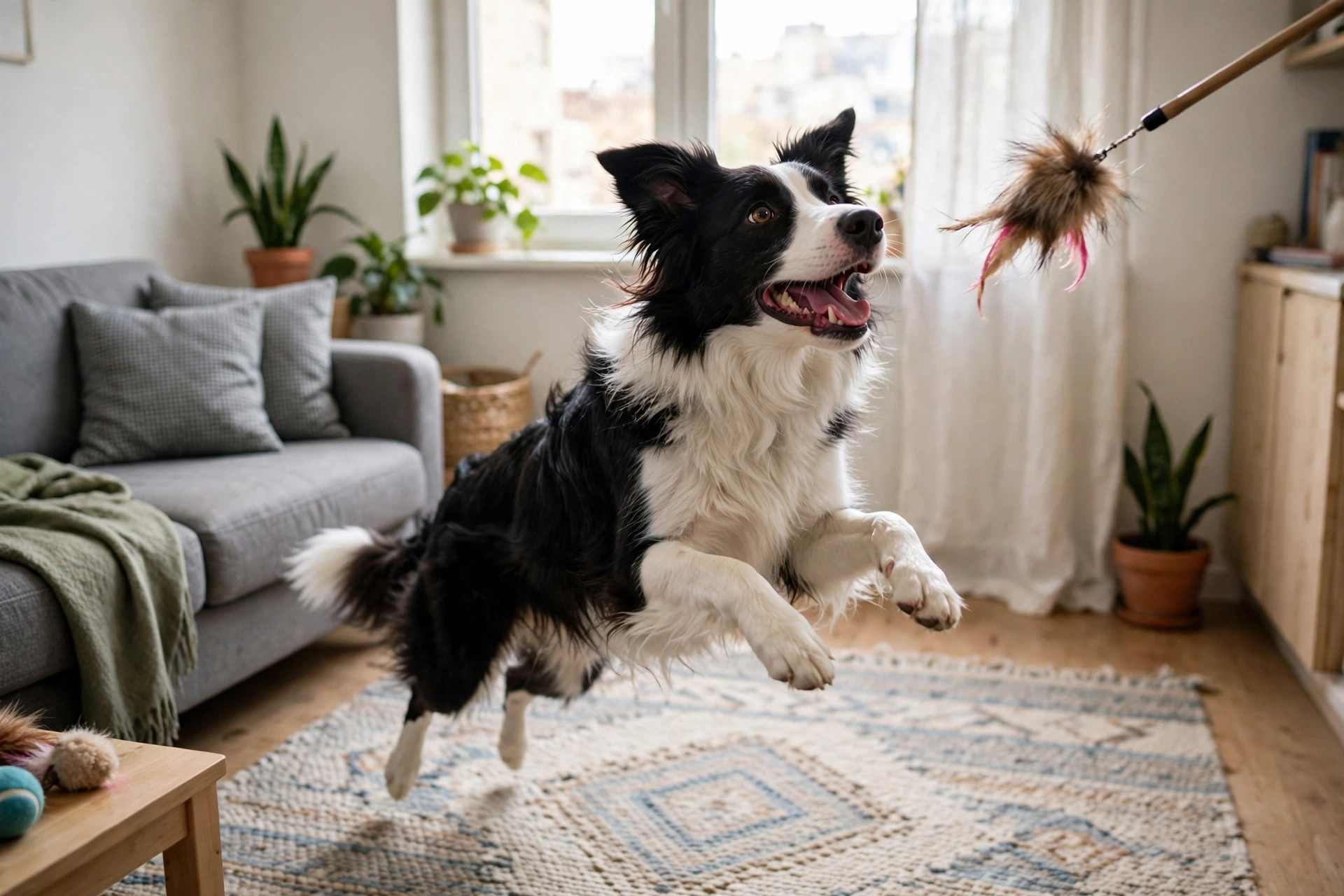
No yard means the apartment has to host the dog’s workout. The good news: small-space games tire dogs out fast because they’re mentally intense.
- The hallway fetch. A soft toy down a hallway is a full sprint in 8 metres. Three sessions of ten throws and most dogs are done.
- Flirt pole play. A flirt pole in a living room (furniture pushed back, or in a corridor) is five minutes of explosive chase — the highest-intensity workout per square metre you can buy.
- Snuffle and puzzle work. Scatter feeding, a DIY snuffle mat or muffin-tin puzzle games burn mental energy that rivals a walk — perfect for rainy days and for winding a dog down before you leave for work.
- Stair-free strength work. “Up” onto a sturdy ottoman and “off” again, repeated, is a legitimate workout for small and medium dogs. Keep it low-impact for seniors and puppies.
Aim for two focused play sessions a day on top of walks — a tired dog is a quiet neighbour.
7. The drying and cleaning kit at the door
Small apartments punish muddy paws disproportionately: one muddy dog, one hallway rug, one disaster. Keep a basket right inside the door with a stack of old towels, a paw-washing cup, and a spray bottle of paw-safe rinse. The routine takes ninety seconds and saves the rug.
If you want the full version, a compact DIY dog wash station in a laundry corner or on the balcony handles the whole muddy-dog problem at the entry point — but even the basket version changes the game.
8. Furniture that hides dog stuff
In a small home, the dog’s things should look like your things. The pieces that do double duty:
- A storage ottoman that opens: the dog’s toys, chews and spare lead live inside, and the dog sleeps on top of it.
- A side-table crate: looks like furniture, works as a den (see idea 1).
- A lidded basket by the sofa for blankets and the spare harness — tidies in ten seconds when guests arrive.
- Under-sofa storage boxes for the treat stash, grooming kit and poop-bag refills.
One rule: everything dog-related should be put away in under two minutes. If tidying the dog’s stuff is a project, it won’t happen, and the apartment stays a obstacle course.
9. Tight-quarters dog-proofing
Small spaces concentrate hazards. Run this checklist once, then forget about it:
- Cords: in a studio the dog is always near outlets. Run cables through covers or behind furniture — chewing a live cable is one of the most common apartment emergencies.
- Plants: check every houseplant against a toxic-plants list. In a small apartment the dog can reach all of them.
- Small objects: coins, hair ties, earbuds, medication — in a big house they scatter; in a studio they land on the dog’s level. A weekly floor sweep at dog-eye height catches them.
- Bins: a pedal bin with a locking lid, or bins inside a cupboard. Kitchen smells in a small flat are irresistible, and bin contents are a vet visit waiting to happen.
- Cleaning products: locked away, not under the sink. Dogs in small spaces encounter the under-sink cupboard constantly.
10. Design the routine, not just the rooms
The apartment dog’s real “yard” is the walk schedule. In a small space, routine replaces square footage:
- Three walks minimum, with at least one long sniffy walk a day. Sniffing is mental exercise — a 40-minute sniff walk tires a dog more than a 20-minute march.
- Feed on a schedule rather than free-feeding. Routine feeding means routine digestion, which means predictable balcony-pad or walk timing.
- Alone-time training in small doses. Practice short departures with a stuffed Kong so the dog learns that alone time is normal — separation anxiety is the number-one reason small-space dogs become problem barkers.
- A wind-down ritual. Same order every evening: last walk, dinner, chew, lights low. Dogs in small apartments live close to your energy; a calm evening routine keeps the whole flat calm.
What not to do in a small space
A few common mistakes that make small apartments harder than they need to be: buying the biggest bed that fits instead of the right-sized one (an oversized bed in a studio becomes an obstacle); skipping the balcony-pad maintenance until the neighbours complain; assuming a small dog needs less exercise (many small breeds are the sportiest dogs alive); and choosing a puppy or a high-drive breed without a plan for the energy. The space isn’t the constraint — the plan is.
The bottom line
A small apartment dog setup is ten small decisions, not one big renovation: a crate nook instead of a crate in the middle of the room, gear on the wall instead of the floor, a balcony pad with a maintenance routine, soft furnishings that hush the barking, and indoor games that replace the garden. Do those, keep the routine tight, and the dog won’t just cope with apartment life — it’ll thrive in it.
FAQs
What is the best dog for a small apartment?
The best apartment dog is more about energy and noise than size. Calm, lower-energy breeds and mixes — retired greyhounds are the classic example — often do better than small but hyper breeds. Whatever the breed, the setup and routine matter more than the floor plan.
Can a large dog live happily in a small apartment?
Yes, if the exercise and routine are right. Many large breeds are couch potatoes indoors and only need their outdoor exercise covered. The setup adjustments are mostly about a right-sized bed, a sturdy crate nook, and enough walking.
How do I stop my dog barking in an apartment?
Combine the environment and the training: soften the space (rugs, curtains, white noise, door seals), reward quiet behaviour, and desensitise the dog to hallway and door sounds with treats. Never punish barking after the fact — the dog can’t connect it.
Is a balcony potty pad enough, or does my dog still need walks?
The pad is a supplement, not a replacement. Dogs still need walks for exercise, sniffing, socialisation and mental stimulation. The pad covers emergencies and bad-weather nights.
How often should I wash my dog’s bedding in an apartment?
More often than in a house — smells concentrate in small spaces. Wash removable covers every 1–2 weeks and the bed itself monthly, and keep a spare cover in rotation.