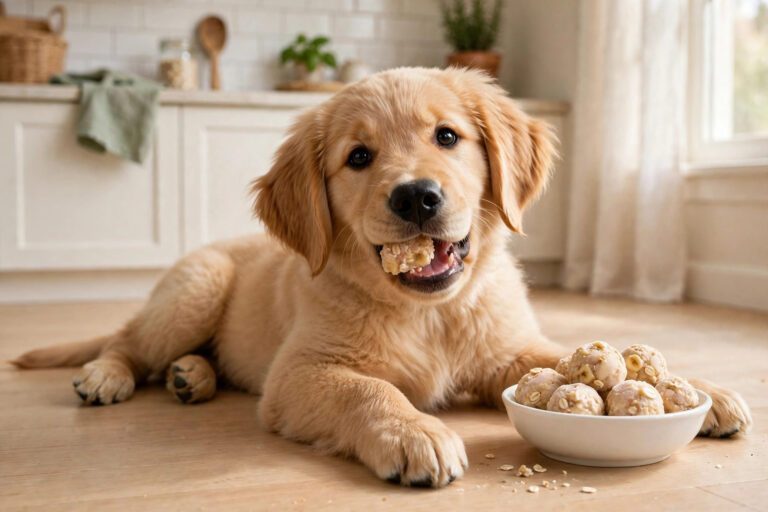
There is a special kind of chaos that arrives with a teething puppy: the chewed table leg, the damp socks, the tiny needle teeth testing every surface in the house. Teething is uncomfortable — and a puppy in pain chews to relieve it. The good news is that the right homemade teething treats for puppies can do double duty: they soothe those sore, swollen gums and redirect all that chewing energy onto something safe, cold and delicious.
This guide covers five simple teething treats you can make with everyday ingredients, the science of why cold works, and — just as important — the items you should never hand a teething puppy, no matter how convincing those eyes are.
When do puppies teeth — and what does it feel like?
Most puppies start teething at around 3 to 4 weeks old (those first needle-sharp baby teeth), lose them from about 12 weeks, and finish growing their full set of 42 adult teeth by 6 to 7 months. The roughest stretch is usually between 4 and 6 months, when the baby teeth fall out and the adult teeth push through.
Classic signs your puppy is teething: chewing everything in sight, drooling more than usual, fussiness or whining, bleeding gums (a little blood on a chew toy is normal), reduced appetite, and a sudden disinterest in hard kibble. Cold treats help because the chill numbs the inflamed gums — the same reason humans reach for an ice lolly for a sore throat.
What makes a good teething treat?
Before the recipes, here is the checklist a teething treat has to pass:
- Cold, not rock-hard. Frozen is great; frozen-solid objects a puppy can crack a tooth on are not. Semi-frozen or thawed-for-a-few-minutes is the sweet spot for aggressive chewers.
- Soft enough to give. If you cannot dent it with your thumbnail, it is too hard for baby teeth.
- Supervision-sized. Nothing smaller than a puppy can swallow whole, and nothing that breaks into sharp shards.
- Dog-safe ingredients only. No xylitol (birch sugar), no chocolate, no grapes or raisins, no onion or garlic, no macadamia nuts. Check every label — especially peanut butter.
Recipe 1 — Frozen banana-oat teething bites
The classic for a reason: soft, naturally sweet, and the banana gives the bites a creamy texture even from the freezer.
You will need: 1 ripe banana, 60 g rolled oats, 2 tablespoons plain unsweetened yoghurt (no xylitol).
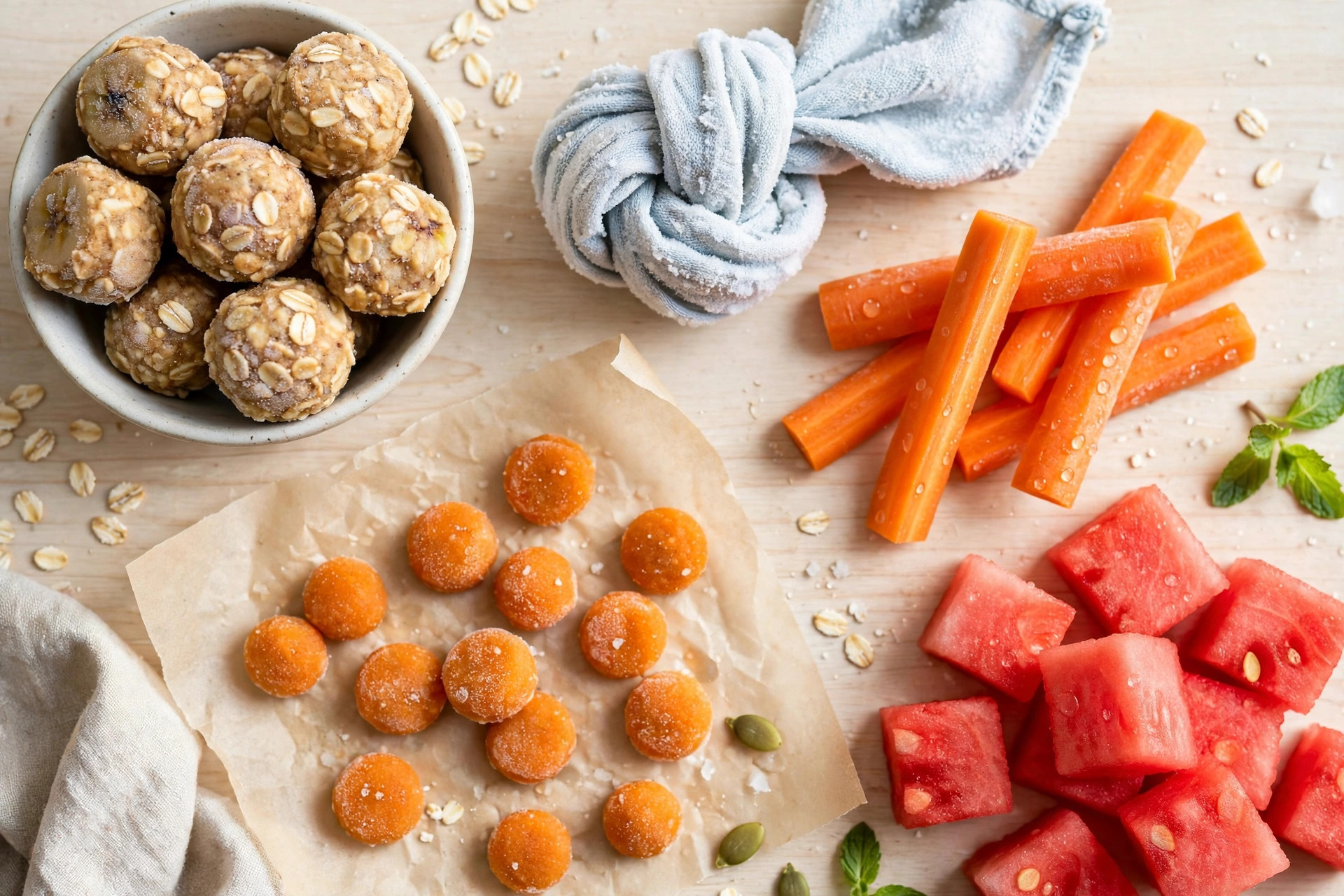
Method: Mash the banana, stir in the oats and yoghurt, and drop teaspoon-sized mounds onto a parchment-lined tray. Freeze for 3 hours. Store in a freezer bag for up to 2 weeks. Serve one or two at a time — the cold soothes, the oats give a gentle chew.
Recipe 2 — Frozen chamomile washcloth chew
This is the oldest trick in the teething book, and puppies go mad for it.
You will need: 1 clean cotton washcloth (no loose threads), 1 cup weak chamomile tea, cooled.
Method: Soak the washcloth in the tea, wring it out well, twist it into a knot or braid, and freeze flat in a zip bag. Chamomile is traditionally used for its calming properties, and the knotted frozen cloth gives the puppy something to gnaw that is cold all the way through. Retire the cloth once it starts to fray — ingested threads are a vet visit.

Recipe 3 — Cold carrot sticks
The simplest teething treat of all, and a favourite with vets because it adds almost no calories.
You will need: 1 large carrot per session.
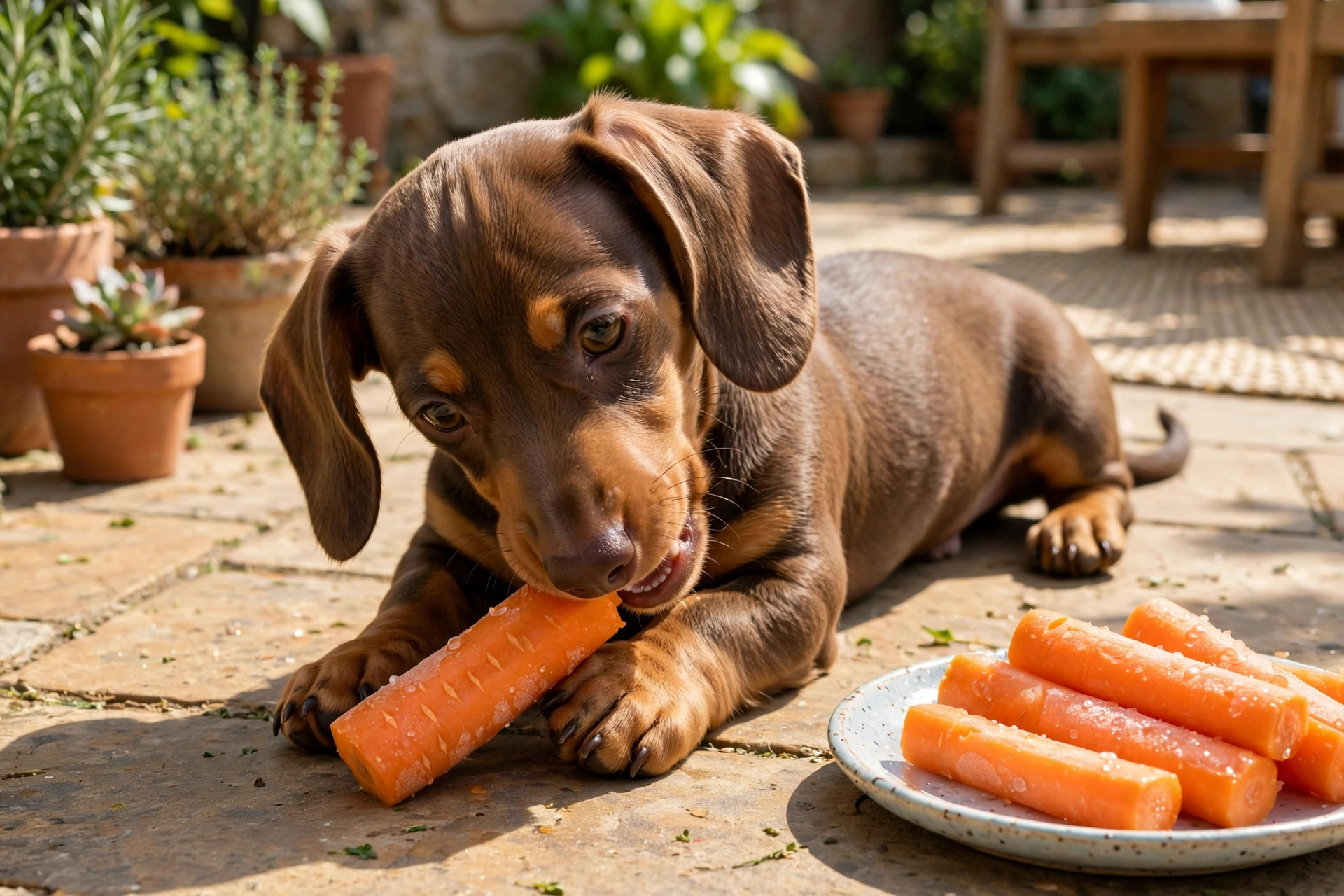
Method: Peel the carrot, cut it into thick sticks (never thin coins a puppy could swallow), and chill in the fridge — not the freezer — for at least 2 hours. Fridge-cold is plenty for carrots; frozen carrots can splinter under a determined chewer. A thick cold carrot stick gives 10 to 15 minutes of satisfying gnawing.
Recipe 4 — Frozen pumpkin and yoghurt dots
Pumpkin is gentle on puppy stomachs and most dogs find it irresistible.
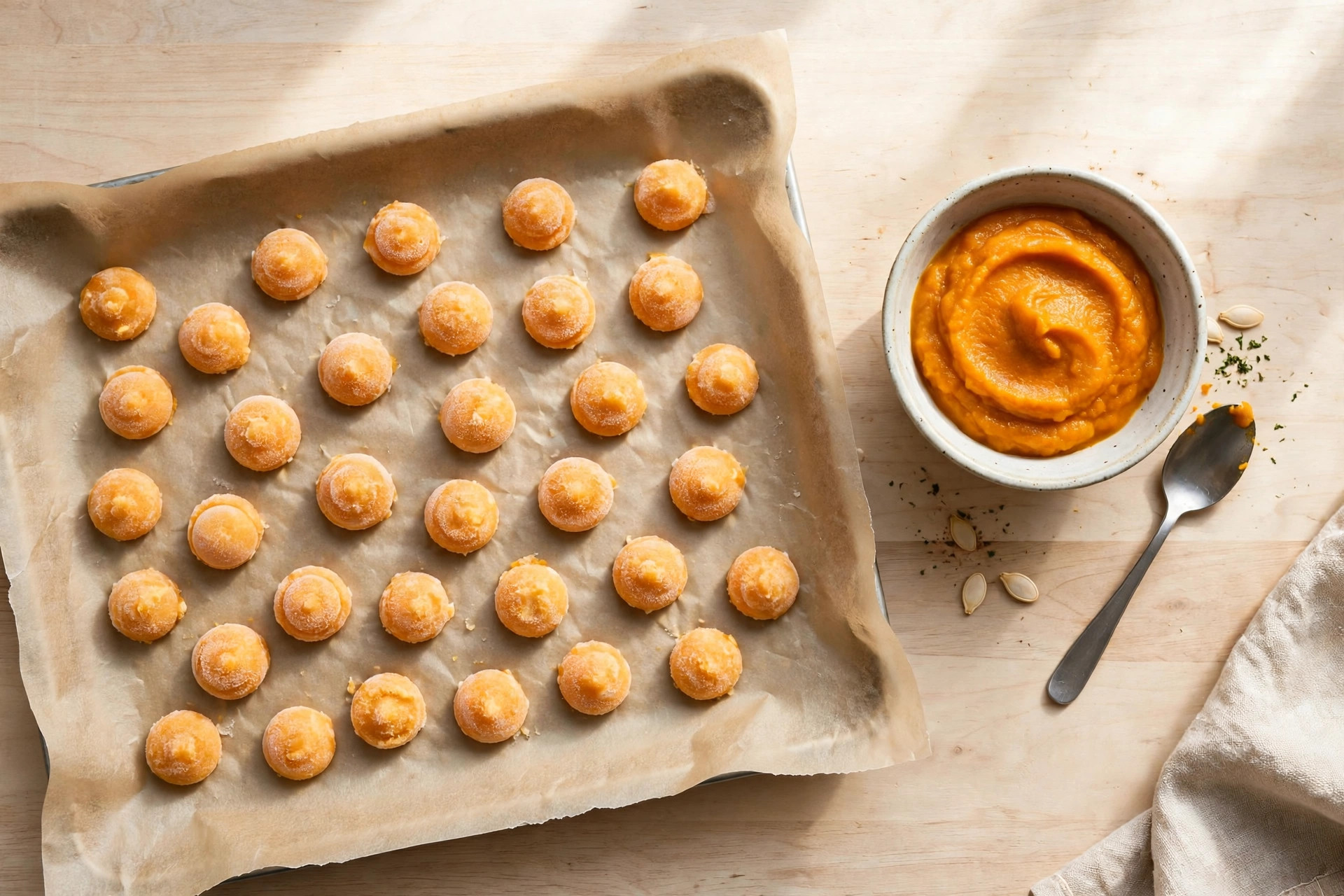
You will need: 120 g plain tinned pumpkin (pure pumpkin, not pie filling), 3 tablespoons plain unsweetened yoghurt.
Method: Whisk together, pipe or spoon small dots onto parchment, and freeze for 2 to 3 hours. The dots melt quickly in the mouth, so they suit younger puppies who are just starting to teethe. As with all dairy, keep portions small — a tablespoon or two of yoghurt per serving is plenty.
Recipe 5 — Watermelon and cucumber coolers
For hot days when the gums are sore and the puppy is restless, these are pure refreshment.
You will need: seedless watermelon chunks and thick cucumber spears.
Method: Cut the watermelon into chunks too big to swallow whole and freeze for 2 hours; chill the cucumber spears in the fridge. Serve the watermelon semi-frozen (5 minutes on the counter first) so it yields under the teeth. Both are over 90 percent water, so they hydrate as they soothe — just remove any seeds first.
What NOT to give a teething puppy
Some popular “teething” suggestions are genuinely dangerous. Avoid all of these:
- Ice cubes. They seem logical, but a whole ice cube is a choking hazard and can crack a tooth if the puppy bites down hard. Crushed ice in water is fine; cubes are not.
- Hard bones, antlers and hooves. Anything you cannot dent with a thumbnail risks a slab fracture of a tooth — an expensive vet emergency.
- Rawhide. It swells in the stomach, and teething puppies tear off and swallow large pieces.
- Frozen solid toys or treats. Frozen is good; frozen-rock-hard is how teeth break. If it clinks on the counter, let it thaw a little.
- Anything with xylitol, chocolate, grapes, raisins, onion or garlic. Teething desperation is not an excuse to skip the toxic-foods list.
Teething treat safety rules
Treats should make up no more than 10 percent of your puppy’s daily calories — teething or not. Serve frozen treats on a washable surface (melted banana on a rug is a memory you do not need), always supervise chewing sessions, and take the treat away once it is small enough to swallow. If your puppy has diarrhoea, vomiting, bleeding that will not stop, or a baby tooth that hangs on while the adult tooth erupts beside it (a “retained” tooth), call your vet rather than reaching for another treat.
For the full feeding picture as your puppy grows, see our guide to best puppy food by age and breed size. And once the adult teeth are in, our homemade dental treats help keep them clean.
FAQs
When do puppies start teething?
Baby teeth arrive at 3 to 4 weeks; they start falling out around 12 weeks, and the full adult set of 42 teeth is usually in by 6 to 7 months.
How long does the painful part last?
The most intense chewing phase is typically 4 to 6 months. Most puppies are noticeably more comfortable once the adult teeth finish erupting around 7 months.
Can I give my teething puppy ice?
Skip whole ice cubes — they are a choking risk and can crack teeth. Crushed ice in the water bowl is fine, and semi-frozen treats made for the purpose are safer.
Are frozen carrots safe for puppies?
Fridge-cold thick carrot sticks are excellent. Fully frozen carrots can splinter, so chill rather than freeze them, and always supervise.
My puppy swallowed a piece of treat — what now?
A small soft piece usually passes without issue, but watch for choking, gagging, vomiting or lethargy over the next 24 hours. If you see any of those, call your vet. This is why supervision and size-appropriate treats matter.
Can teething treats replace chew toys?
No — use both. Chew toys handle the all-day gnawing urge; frozen treats are the special-ops relief for the sorest moments.
The bottom line
A teething puppy is not being naughty — they are in discomfort, and chewing is how they cope. Five minutes of prep gives you a freezer full of gum-soothing relief: banana-oat bites, a knotted chamomile cloth, cold carrot sticks, pumpkin-yoghurt dots and watermelon coolers. Keep them soft, keep them cold (not rock-hard), keep them supervised — and keep the ice cubes, hard bones and rawhide far away. Your table legs will thank you.