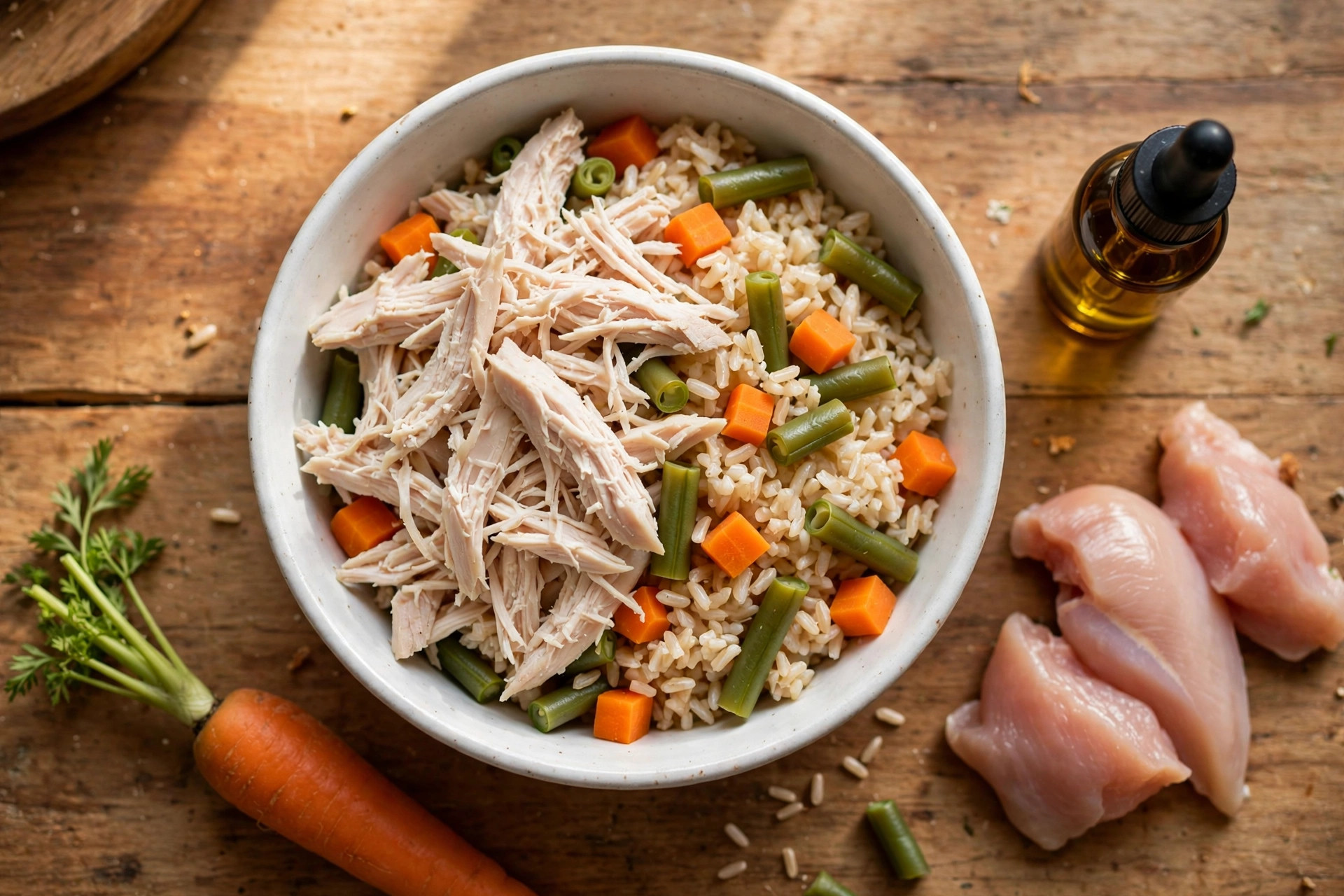
Ask ten dog owners what the best homemade dog food is and you will get ten different answers — usually a bowl of boiled chicken and rice, sometimes with a carrot on top. That bowl is a good sick-day meal. It is not a complete diet. The best homemade dog food is a different thing entirely: a bowl that is complete and balanced, with the right protein, the right calcium, the right fats and the right vitamins, every single day. Get that balance wrong for months and the dog pays for it with dull coats, weak bones and tired energy.
This guide explains what “best” actually means, how to build a balanced bowl, which approach fits your dog’s goal — weight loss, a sensitive stomach, a growing puppy, a slowing senior or a picky eater — and the mistakes that turn well-meaning homemade feeding into a problem. It is a guide, not a recipe list: for seven ready-to-rotate balanced bowls, see our homemade dog food recipes.
Before you start — the 4 rules
1. Balance matters more than ingredients. A bowl of premium chicken with no calcium source is worse than a good kibble. Calcium is the single most common gap in homemade diets.
2. Use a recipe from a vet nutritionist, not a blog comment. A recipe that has not been checked for balance is a guess, however good it looks.
3. Transition slowly. Switch over 7 days, not overnight, or expect an upset stomach.
4. Check in with your vet twice a year. Bloodwork and weight checks catch the deficiencies you cannot see.
What “best” actually means
Vets judge a homemade diet on one test: is it complete and balanced? “Complete” means it contains all the nutrients a dog needs; “balanced” means they are in the right proportions. The usual benchmark is the AAFCO nutrient profile — the standard most good commercial foods are built to. A homemade bowl should aim for the same targets, not just look healthy.
That is why the best homemade food is built from five blocks, not one star ingredient: a lean animal protein, a digestible carbohydrate, a mix of vegetables, a source of healthy fat, and a calcium source. Leave out any one block and the bowl has a hole in it. The most famous hole is calcium: meat is high in phosphorus and low in calcium, so a meat-heavy bowl without a calcium source slowly weakens bones. Dogs do not show that damage until it is advanced.
The second test is whether the food fits the dog in front of you. A puppy, a senior, an overweight Labrador and a dog with a sensitive stomach do not need the same bowl. The best homemade dog food is the best bowl for your dog — which is why this guide is organised by goal, not by recipe.

The 5 building blocks of a balanced bowl
Think of every bowl as five parts. Get the proportions roughly right and you are most of the way there; a vet nutritionist can then fine-tune the recipe for your dog.
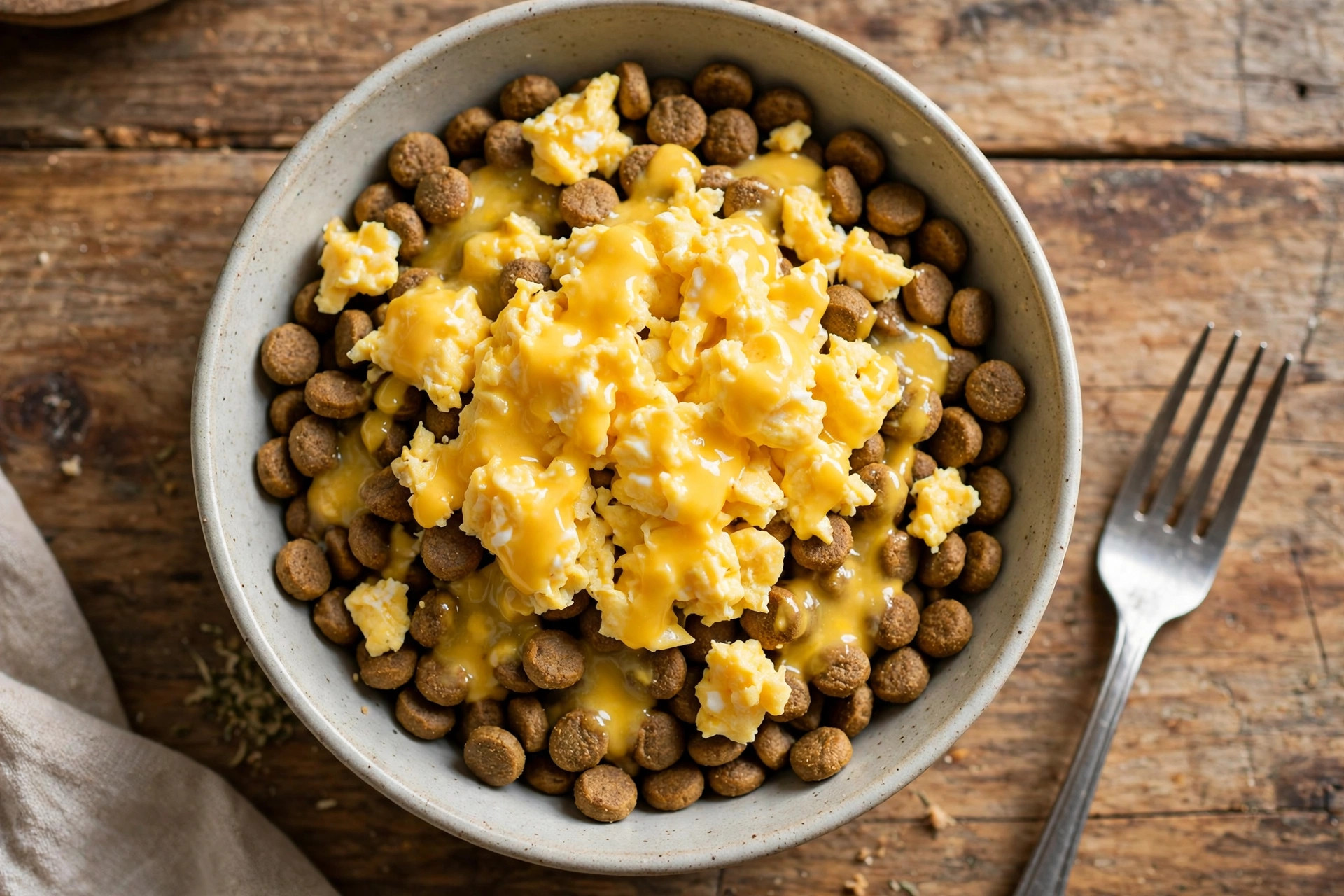
1. Lean protein (about 40–50% of the bowl). Chicken, turkey, lean beef, fish or eggs. Protein builds muscle, repairs tissue and keeps a dog full. Rotate proteins across the week — different proteins bring different amino acids, and rotation lowers the chance of a food sensitivity developing. Avoid fatty cuts and processed meats; a bowl that is too fatty is the fastest route to pancreatitis.
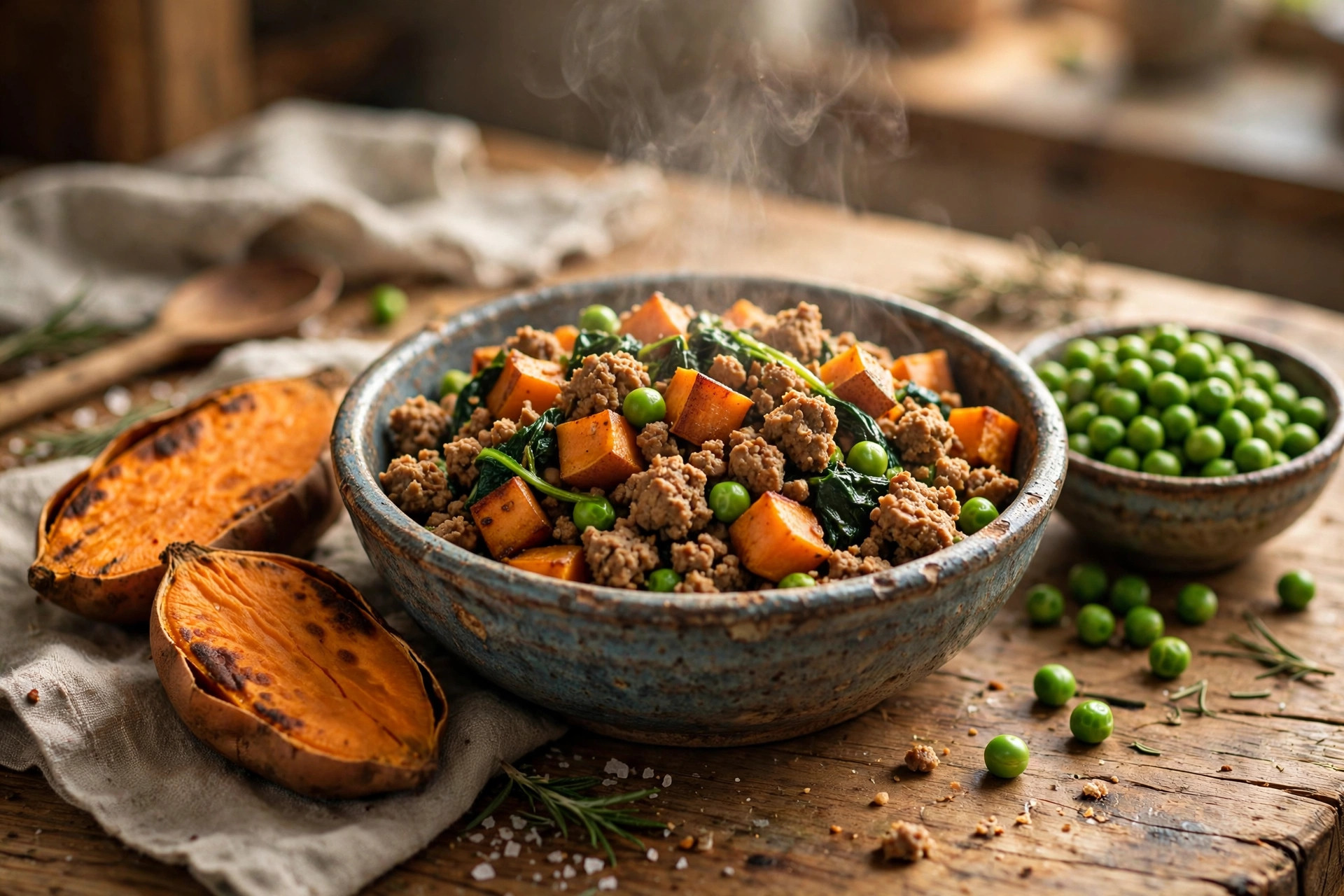
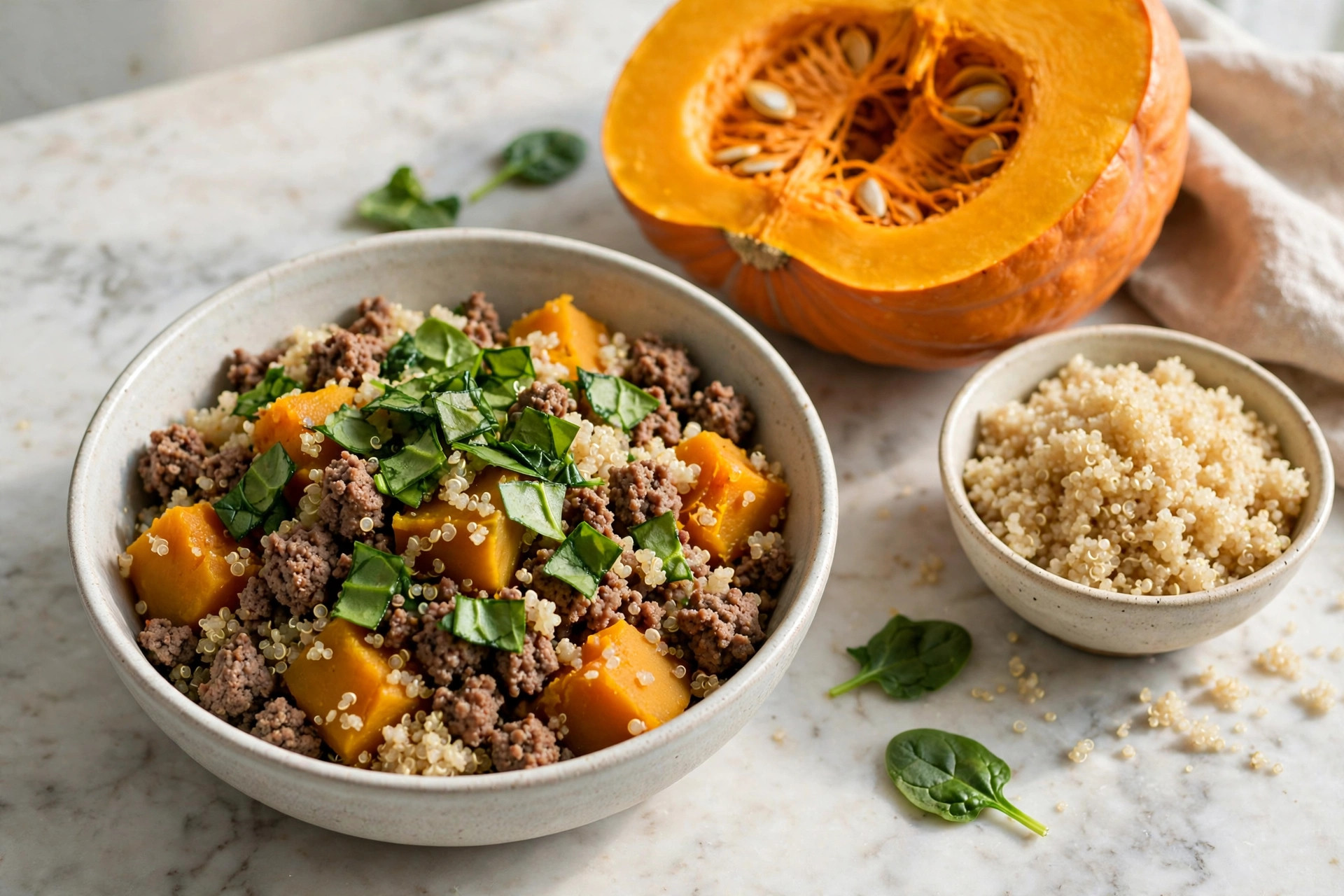
2. Digestible carbohydrate (about 30–40%). Rice, oats, sweet potato, pumpkin or barley. Carbs are not filler — they are the steady energy source that lets protein do its building job instead of being burned as fuel. Sweet potato and pumpkin have the bonus of soluble fibre, which is kind to sensitive stomachs. White rice is the gentlest choice for a dog with an upset gut.
3. Vegetables (about 10–20%). Carrots, green beans, spinach, peas, zucchini and broccoli (in small amounts). Vegetables add fibre, vitamins and bulk without many calories, which matters for weight loss. Cook them lightly — raw vegetables pass through many dogs barely digested. Never add onion, garlic, grapes, raisins or mushrooms from the wild; onion and garlic are toxic to dogs.
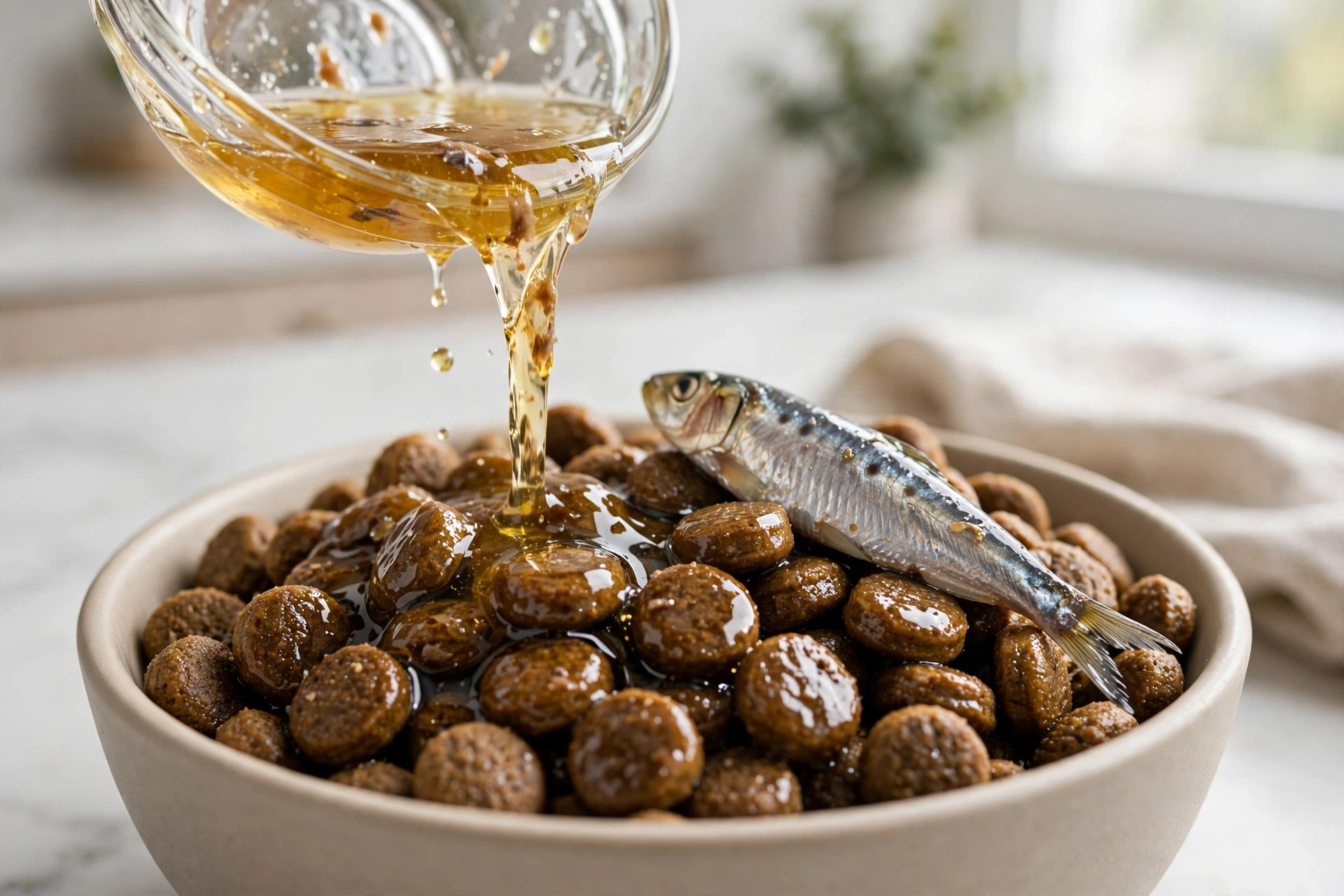
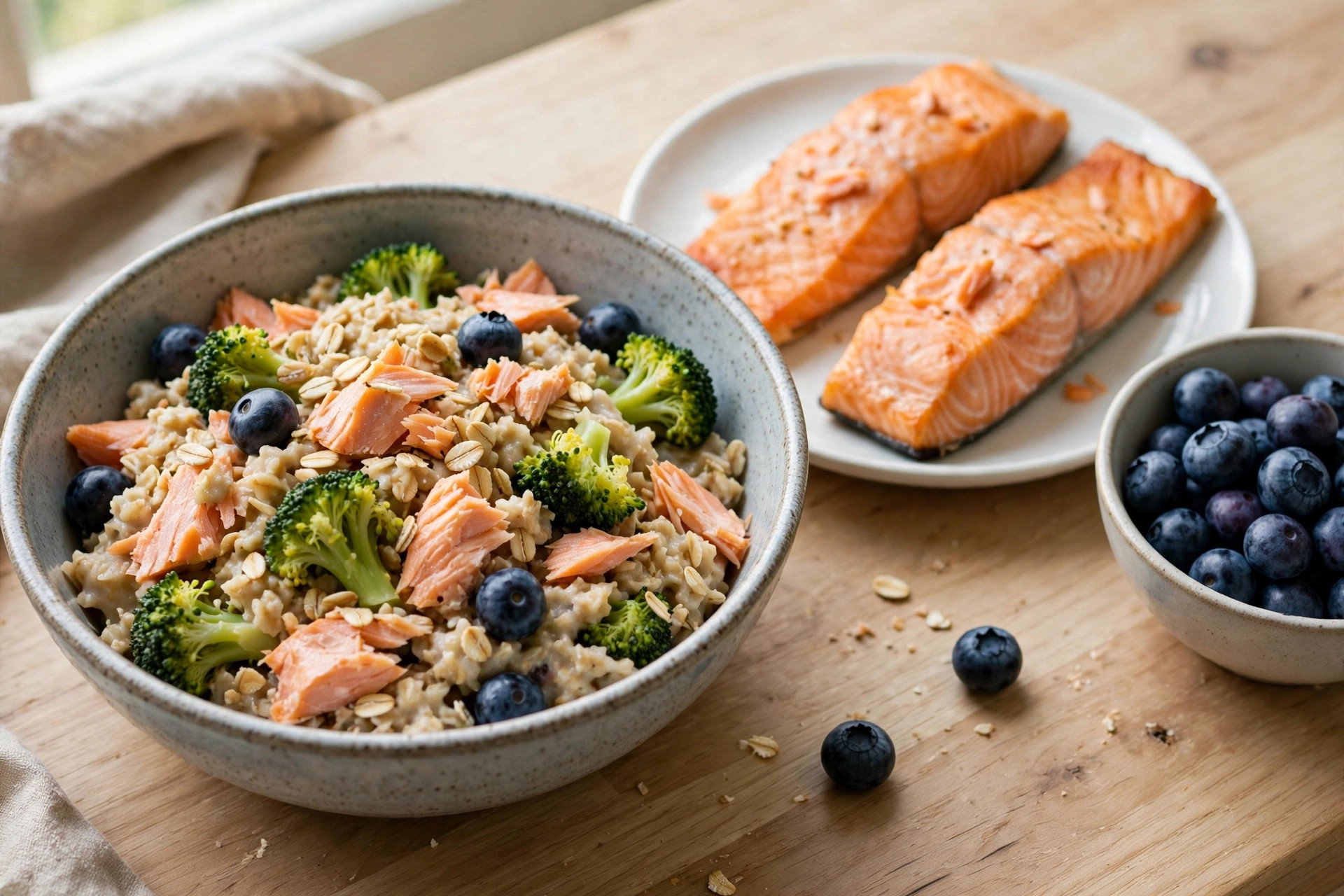
4. Healthy fat (a small drizzle, not a pour). A teaspoon of fish oil or a little salmon oil per meal covers omega-3s for skin, coat and joints. A splash of olive oil or coconut oil works too, but keep the total fat modest — fat is the most calorie-dense part of the bowl.
5. Calcium and minerals (the part everyone forgets). A balanced bowl needs a calcium source: ground eggshell (about half a teaspoon per 500 g of food), a vet-approved calcium supplement, or plain yoghurt in small amounts. This is the step that separates a proper homemade diet from a well-meaning one. If you feed raw meaty bones, that is a different system with its own rules — do not mix the two approaches casually.

Best homemade food by goal
For weight loss. The best bowl for an overweight dog is high in protein and fibre, modest in fat and measured to the gram. Swap half the rice for green beans or pumpkin — the bowl stays the same size, the calories drop by a third, and the dog still feels full. Cut treats to 10% of daily calories and weigh the food; a “scoop” drifts upward by 20% within a week. Most dogs lose weight safely at about 1–2% of body weight per month.
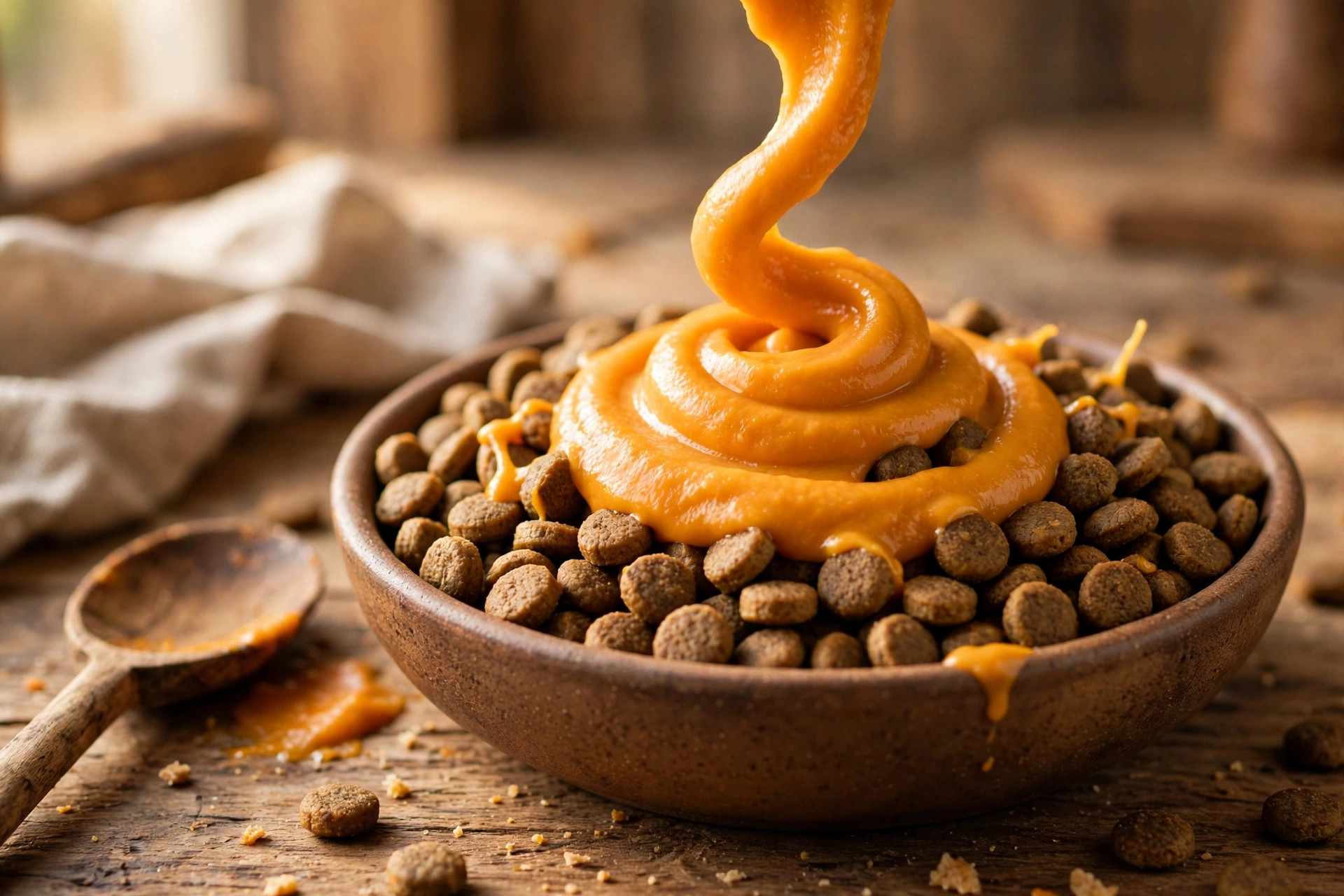
For sensitive stomachs. Keep it boring: one novel protein (turkey or white fish), one gentle carb (white rice or sweet potato) and one vegetable (pumpkin). No new ingredient for two weeks, then add one at a time. A spoonful of plain pumpkin puree and a vet-approved probiotic help many dogs, and bone broth poured over the bowl adds flavour without fat. If your dog’s stomach is often upset, read our guide to feeding sensitive stomachs before changing anything else.
For puppies. Puppies need more calories, more protein and — critically — the right calcium-to-phosphorus ratio for growing bones. Large-breed puppies are the most sensitive: too much calcium or too many calories can cause skeletal problems. Do not feed a puppy an adult homemade recipe, and do not guess at portions. Use a recipe formulated for puppies by a vet nutritionist, and weigh your puppy every two weeks.
For seniors. Older dogs usually need fewer calories but the same (or slightly more) high-quality protein to hold muscle, plus joint support. A bowl of lean turkey, sweet potato, green beans and a fish-oil drizzle fits most seniors well. Warm the food slightly — older dogs with worn teeth and weaker senses eat better when the bowl smells warm. If your senior is losing weight, that is a vet visit, not a bigger bowl.
For picky eaters. Picky dogs are usually trained, not born — they hold out because holding out has worked before. Warm the bowl, add a spoonful of dog food toppers or a splash of bone broth, and put the bowl down for 15 minutes. Whatever is left comes up. No treats between meals. Most dogs eat within two days, and the habit breaks fast once it stops paying off.

How much to feed — portions by weight
The biggest homemade-feeding mistake is eyeballing portions. A dog’s daily need depends on weight, age and activity, and a bowl that looks small to you can be a feast to a 10 kg dog. As a starting point, most adult dogs need roughly 2–3% of their body weight in food per day, split across two meals — but that is a starting point, not a prescription. Use our portion calculator as a guide, then adjust by what the scale and the waistline say: you should feel ribs easily under a thin fat layer, and see a waist from above.
| Dog’s weight | Rough daily amount* | Meals per day |
|---|---|---|
| 5 kg (small) | 150–200 g | 2 |
| 10 kg (medium-small) | 250–350 g | 2 |
| 20 kg (medium) | 450–600 g | 2 |
| 30 kg (large) | 600–800 g | 2 |
| 40 kg (very large) | 750–1,000 g | 2 |
*Cooked weight of a balanced bowl. Active dogs need the top of the range; couch potatoes the bottom. Re-weigh monthly — and weigh the food, not the dog’s enthusiasm.
The supplements that make homemade complete
Even a good bowl usually needs help in three places. Calcium — ground eggshell or a vet-approved supplement, dosed to the recipe, not guessed. Omega-3 — fish oil or salmon oil for skin, coat and joints; store it in the fridge and use it within a month of opening. Vitamin E — homemade diets are often low in it; a vet can advise a dose. What you should not do is add a human multivitamin — the doses are wrong for dogs, and some contain xylitol, which is toxic. If your vet suggests a canine multivitamin, use a product made for dogs.

Mistakes that ruin a good homemade diet
Feeding chicken and rice forever. Fine for a few sick days, dangerous as a lifestyle: no calcium, no omega-3, no variety, and a dog slowly running on empty.
Cooking with bones. Cooked bones splinter. Never add them to a bowl, and never give a cooked bone as a treat.
Seasoning the dog’s food like yours. Salt, onion, garlic, chilli and stock cubes with onion powder have no place in a dog’s bowl. Cook the dog’s portion plain, then season yours.
Too much liver. Liver is nutritious and also very high in vitamin A — a small amount weekly is plenty. Daily liver can cause vitamin A toxicity.
Switching recipes every day. Variety across the week is good; a new recipe every meal is a stomach upset waiting to happen. Give each recipe a week before judging it.
Skipping the vet check. A homemade diet should be reviewed with your vet at least twice a year, with weight and bloodwork. The deficiencies that matter most are the invisible ones.
The 7-day transition plan
Day 1–2: 75% old food, 25% new. Day 3–4: half and half. Day 5–6: 25% old, 75% new. Day 7: fully homemade. If stools loosen at any step, stay at that ratio for two extra days before moving on. Keep fresh water available at all times, and keep the feeding routine the same — same place, same times, same bowl. Dogs do best on routine, and a calm transition is a successful one.
FAQs
Is homemade dog food better than kibble?
It can be — if it is balanced. A well-formulated homemade diet gives you control over ingredients and freshness. An unbalanced one is worse than a decent kibble. The ingredient list is not the test; the nutrient balance is.
How do I know if my homemade food is balanced?
The honest answer is that you cannot tell by looking. Use a recipe formulated by a vet nutritionist, follow it exactly (including the calcium and supplements), and have your vet review it. If you change ingredients, the balance changes too.
Can I feed homemade food to a puppy?
Yes, but only with a puppy-formulated recipe. Puppies have different calcium, calorie and protein needs, and large-breed puppies are especially sensitive to getting them wrong. Never feed a puppy an adult homemade recipe.
How long does homemade dog food keep?
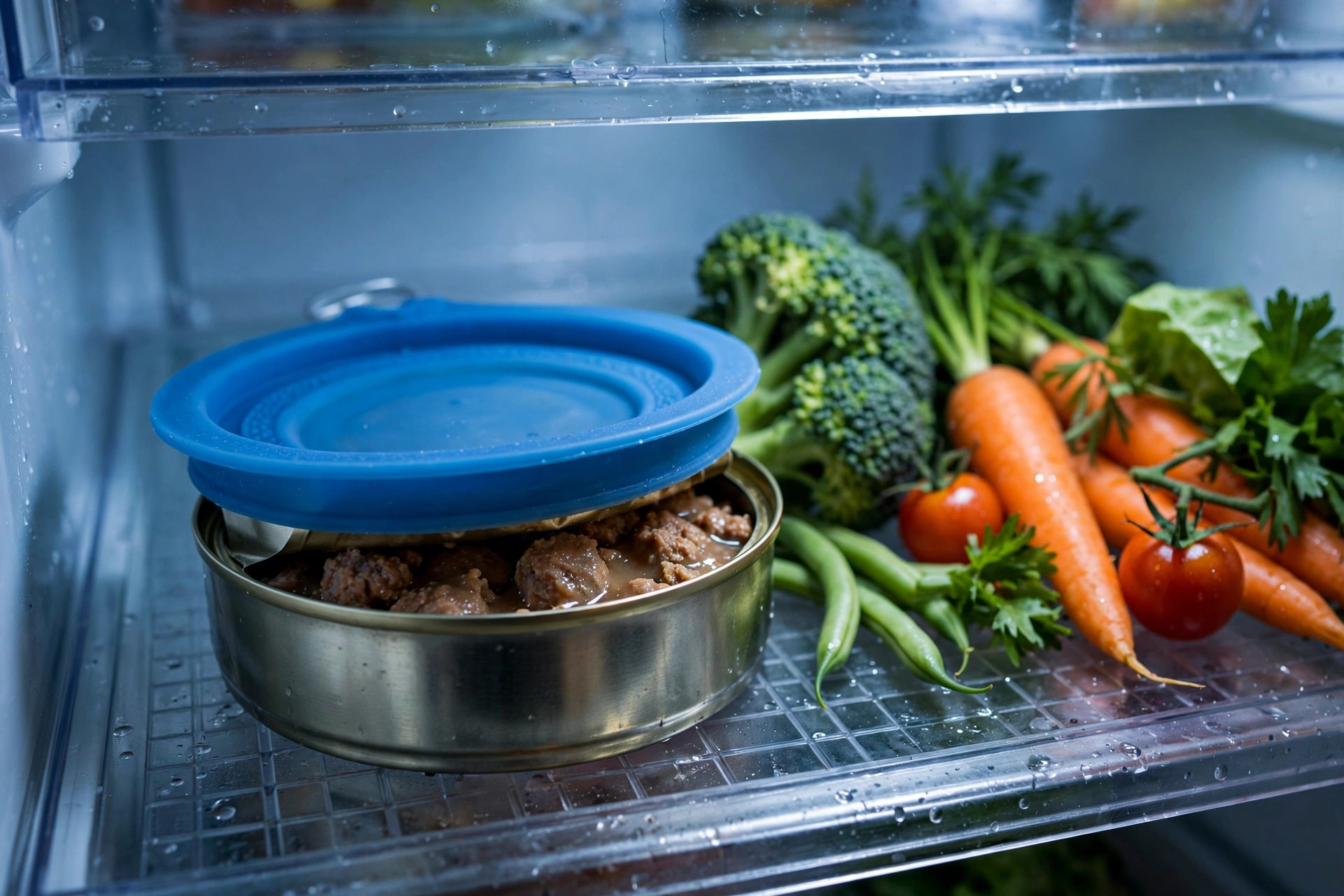
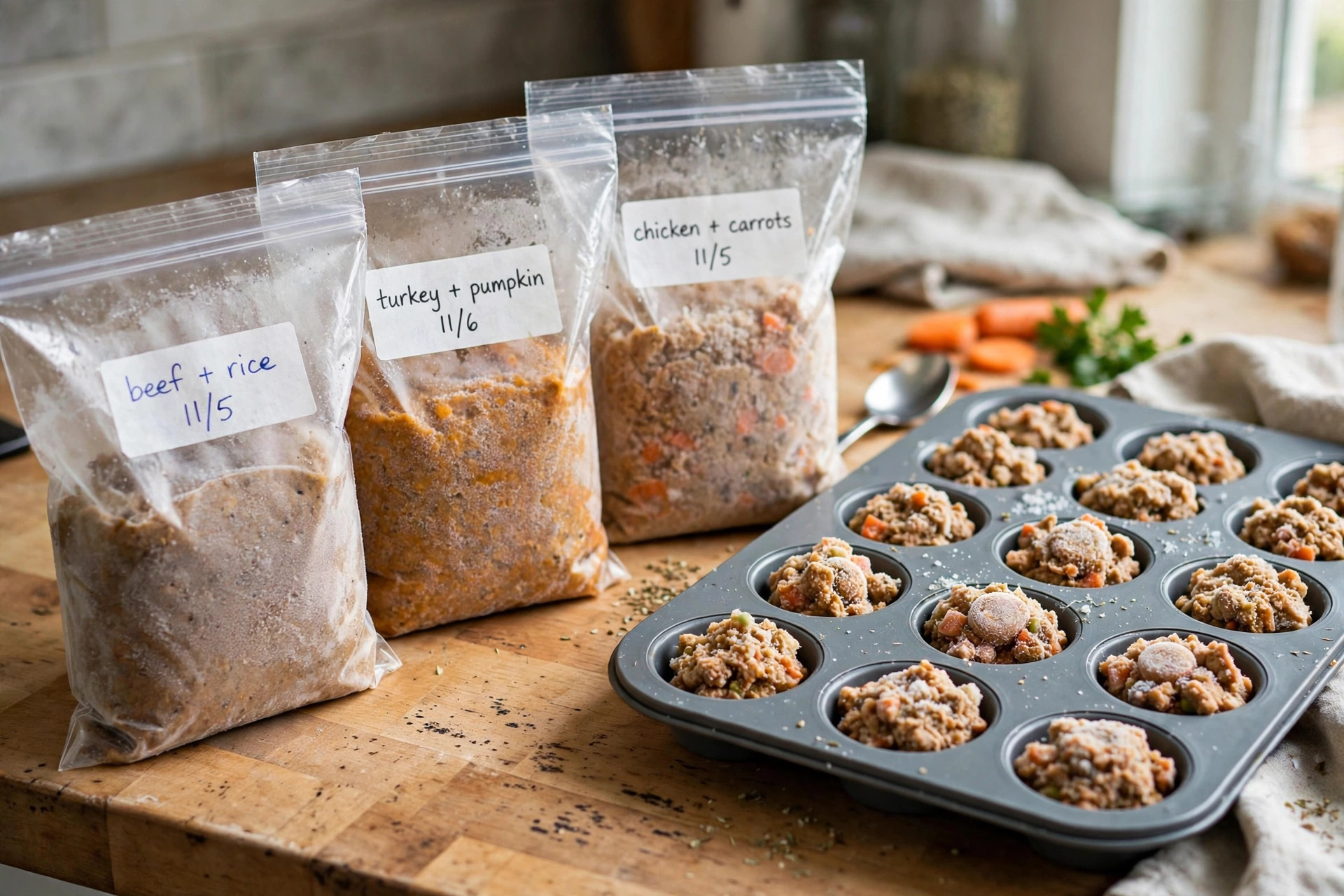
Cooked food keeps 3–4 days in the fridge and up to 3 months in the freezer. Portion it into daily containers before freezing so you thaw only what you need. Never leave cooked food out for more than two hours.
What is the cheapest way to feed homemade?
Buy protein in bulk and freeze it, rotate cheaper proteins like eggs and turkey, and use seasonal vegetables. A balanced homemade diet costs more than budget kibble but less than most premium fresh-food subscriptions — and you control every ingredient.
The bottom line
The best homemade dog food is not the fanciest bowl or the most expensive protein. It is the bowl that is complete and balanced, matched to your dog’s goal, measured to the gram and checked by your vet. Build it from the five blocks — lean protein, digestible carbs, vegetables, healthy fat and calcium — pick the approach that fits your dog, and give the transition a full week. Do that, and homemade feeding stops being a gamble and becomes one of the best things you can do for your dog.
Pin this for later 📌 — and when you are ready to cook, our homemade dog food recipes give you seven balanced bowls to rotate through the week.