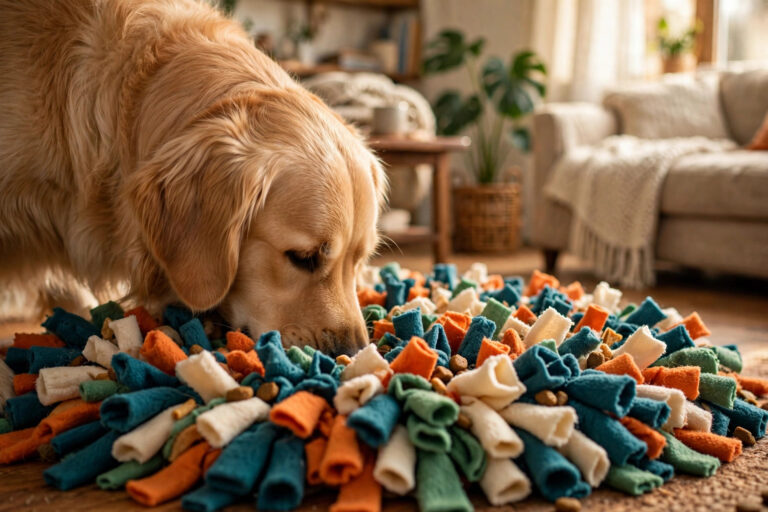
Dogs were built to sniff. A dog’s nose has up to 300 million scent
receptors (we manage about six million), and foraging — nose to the
ground, brain working out where the next bite is hiding — is one of the
most satisfying things your dog can do. The problem is that a bowl of
kibble takes forty seconds to inhale, and then the enrichment is over.
A snuffle mat fixes that in about the cheapest way possible. It’s a
thick, shaggy mat made from hundreds of fabric strips knotted through a
rubber base — you scatter treats or kibble into it, and your dog has to
snuffle, nudge and paw through the fibres to find every last piece. Ten
minutes of foraging can tire a dog out as effectively as a long walk,
which is why trainers reach for snuffle mats on rainy days, for fast
eaters, and for anxious dogs that need a calming focus.
Store-bought snuffle mats exist, but they’re pricey for what they are —
and the DIY version is better, because you control the fabric quality,
the density, and the size. This guide shows you how to make one in under
an hour with no sewing at all.
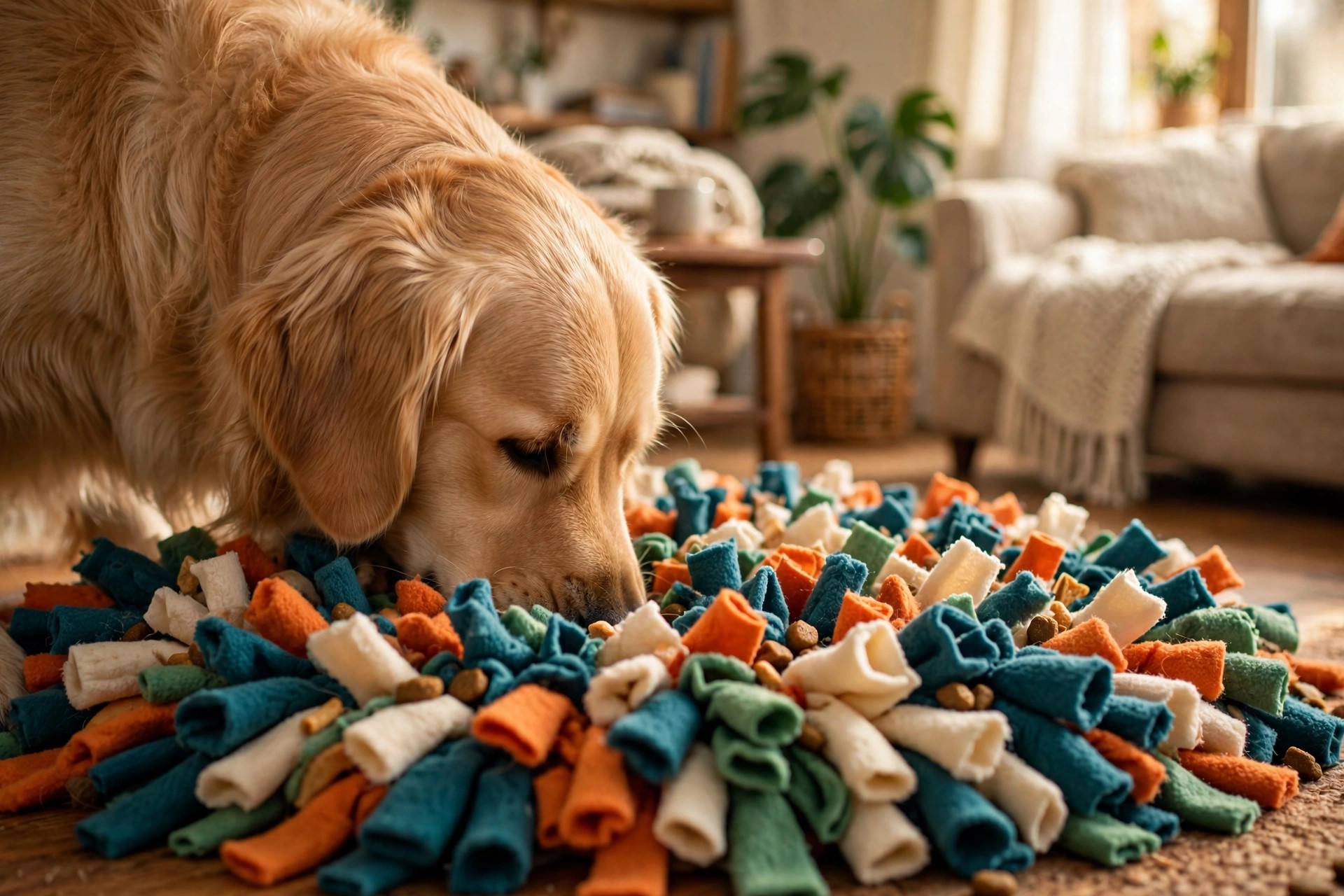
What you’ll need
- A rubber sink mat or anti-fatigue mat (the perforated kind with holes, roughly 40 x 60 cm). This is the base everything knots into. Rubber door mats with drainage holes work too — avoid anything with a crumbly or foam core.
- Fleece fabric, 1 to 1.5 metres. Fleece doesn’t fray, which is why it’s the only fabric I’d use — cut edges stay clean and there’s no loose thread for your dog to swallow. Old fleece blankets are perfect; otherwise buy a cheap fleece throw.
- Scissors and a ruler or tape measure.
- A large bowl of kibble or small training treats for the test run.
That’s the entire shopping list. Total cost: a few pounds or dollars if you’re buying the mat and a cheap fleece throw; nearly free if you’re raiding the airing cupboard.
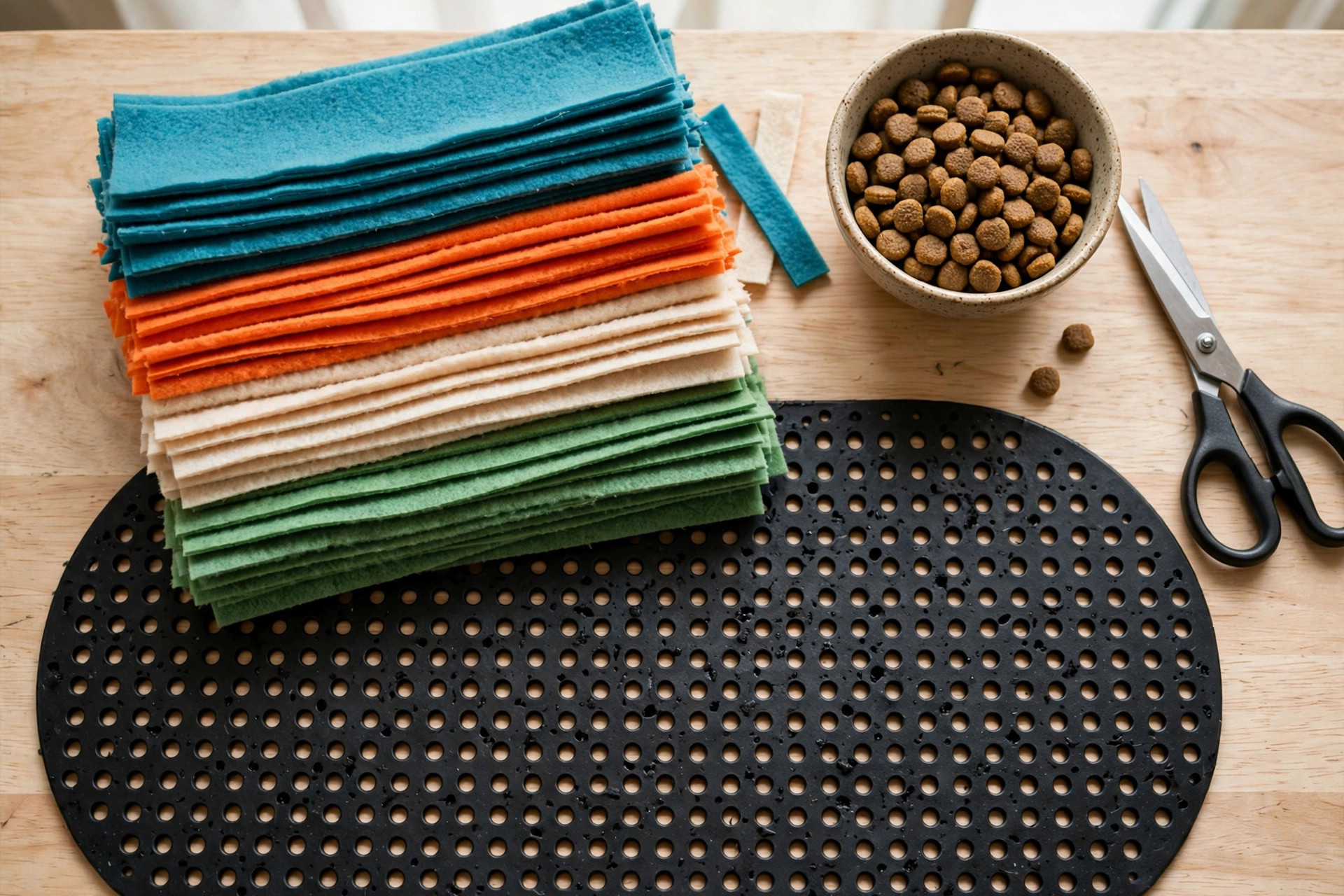
Step 1 — Cut the fleece into strips
Lay your fleece flat and cut it into strips about 2.5 cm wide and 15–20 cm long. Don’t fuss over precision — slight variation actually makes foraging harder and more fun. You’ll need a lot of strips: roughly 200–300 for a standard sink mat, depending on how dense you want it. Put a podcast on; this is the only tedious part.
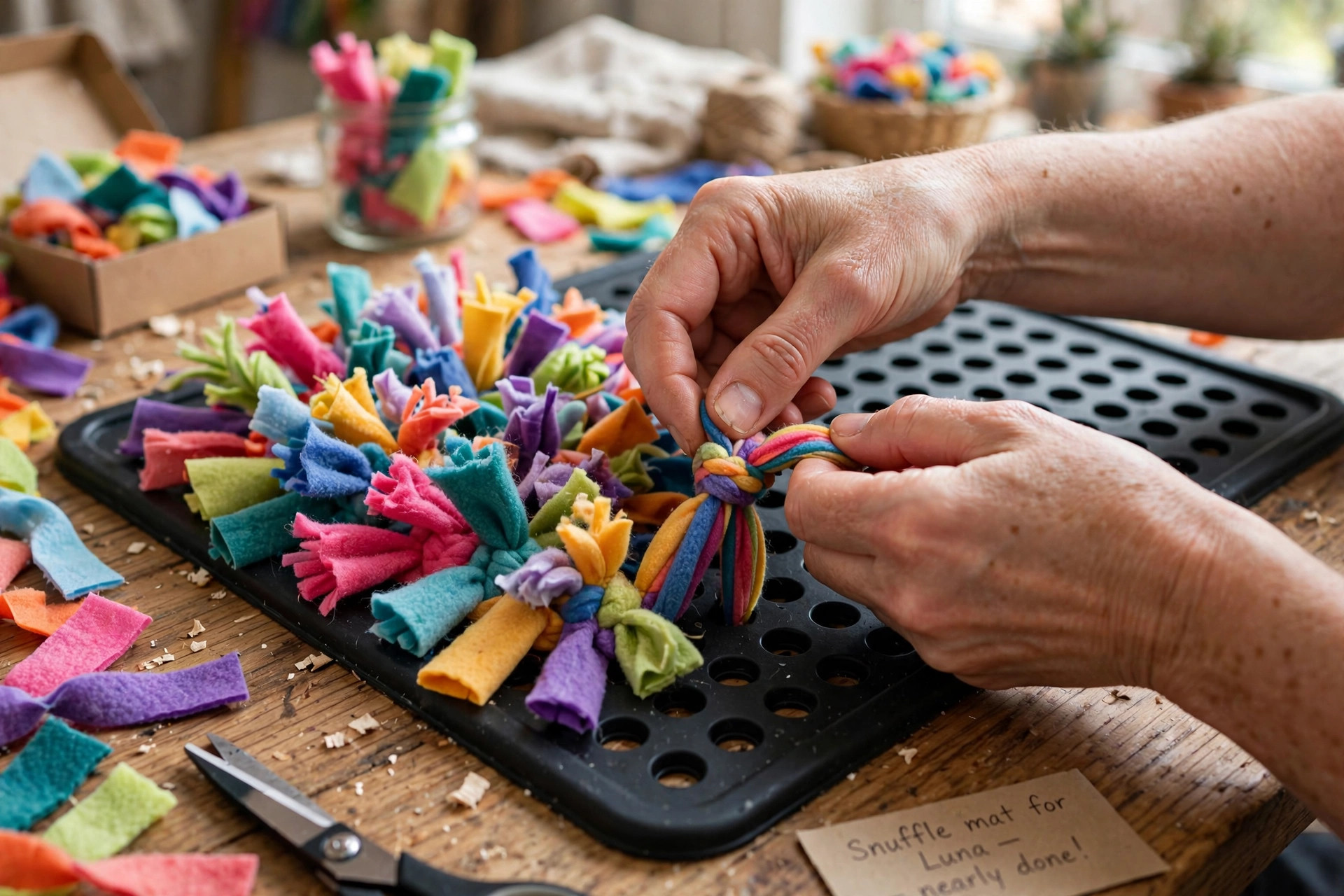
Step 2 — Knot the strips through the mat
Take one strip, push both ends up through one hole of the rubber mat from underneath, and tie it in a single knot on top. Work hole by hole, row by row, until the whole mat is covered. There is genuinely no technique to learn — if the knot holds, it’s right.
How dense should it be? For beginners and nervous dogs, keep it loose (about one strip per hole, loosely knotted) so the first wins come fast. For confident foragers and fast eaters, double up — two strips per hole, pushed through from different angles. A denser mat turns a two-minute meal into a fifteen-minute job.
Step 3 — Trim, fluff and test
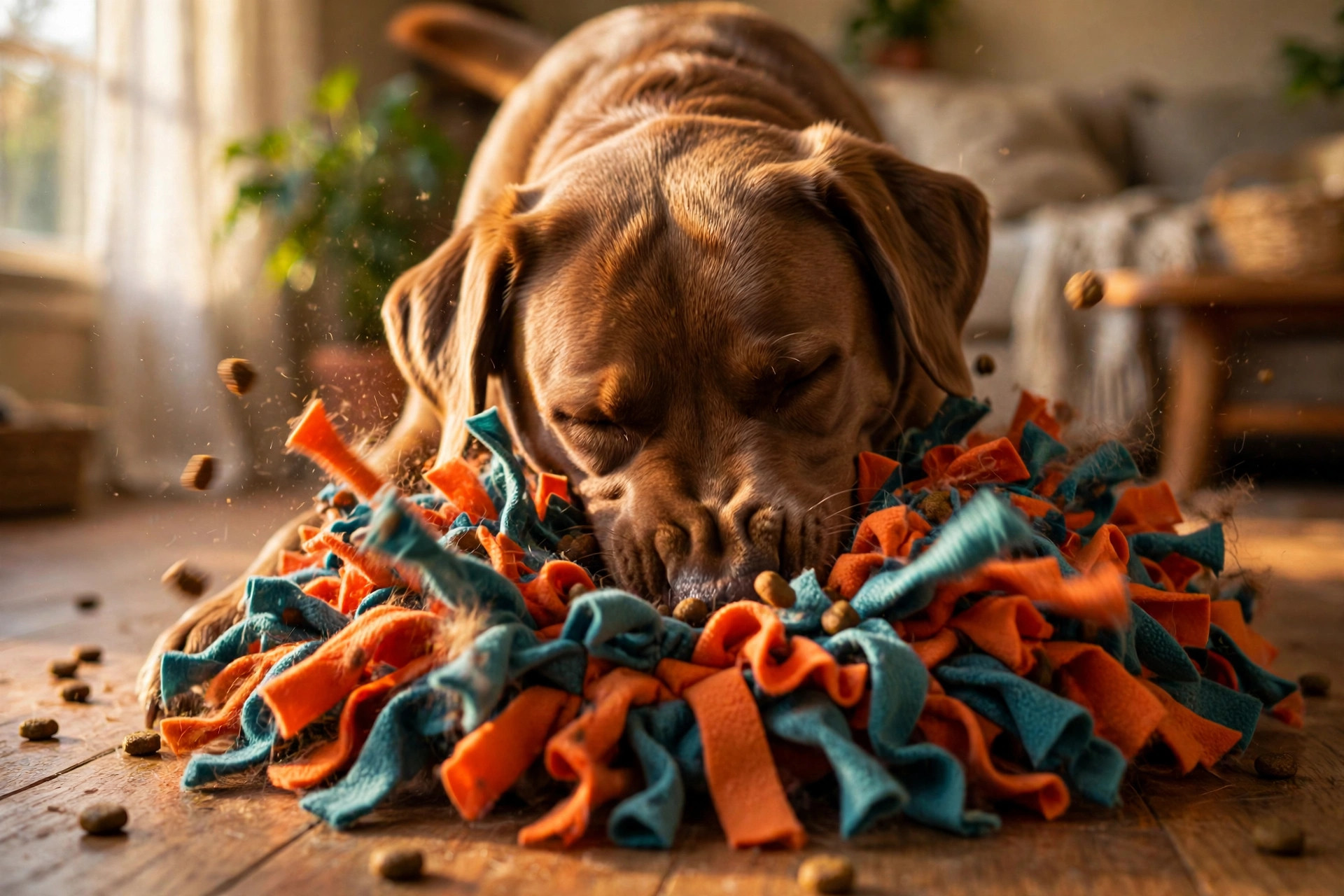
Give the whole mat a shake, trim any strips that are much longer than the rest, and fluff everything up. Now the fun part: scatter a handful of kibble deep into the fleece, hide a few high-value treats right at the bottom, and let your dog at it. Watch how they work — nose first, then paws, then the whole-body wiggle when they find the jackpot piece.
How to use it (three ways)
For meals. Replace the bowl with the snuffle mat for one meal a day and you’ve slowed a 40-second inhale into 10–15 minutes of calm work. Start with a sparse sprinkle so your dog learns the game is worth playing, then hide the kibble deeper as they get the idea.
For rainy-day enrichment. Ten to fifteen minutes of snuffling is a seriously effective energy burner. Use it before the thing you need calmness for — visitors arriving, the evening wind-down, a vet visit later in the day.
For anxious and reactive dogs. Foraging is self-soothing: the repetitive sniffing lowers heart rate in the same way licking does. A snuffle mat session during fireworks season, thunderstorms, or while you’re on a work call gives a worried dog a job instead of a panic.
Difficulty levels (keep it interesting)
Once your dog hoovers the basic mat in minutes, upgrade the challenge:
- Roll it up. Tuck treats inside the mat, roll it like a burrito, and let your dog unroll it.
- Layer it. Fold the mat in half with treats trapped between the layers.
- Hide the jackpot. Bury one amazing treat (a bit of cheese, a freeze-dried liver piece) at the very bottom and let them work for the big reveal.
Cleaning your snuffle mat
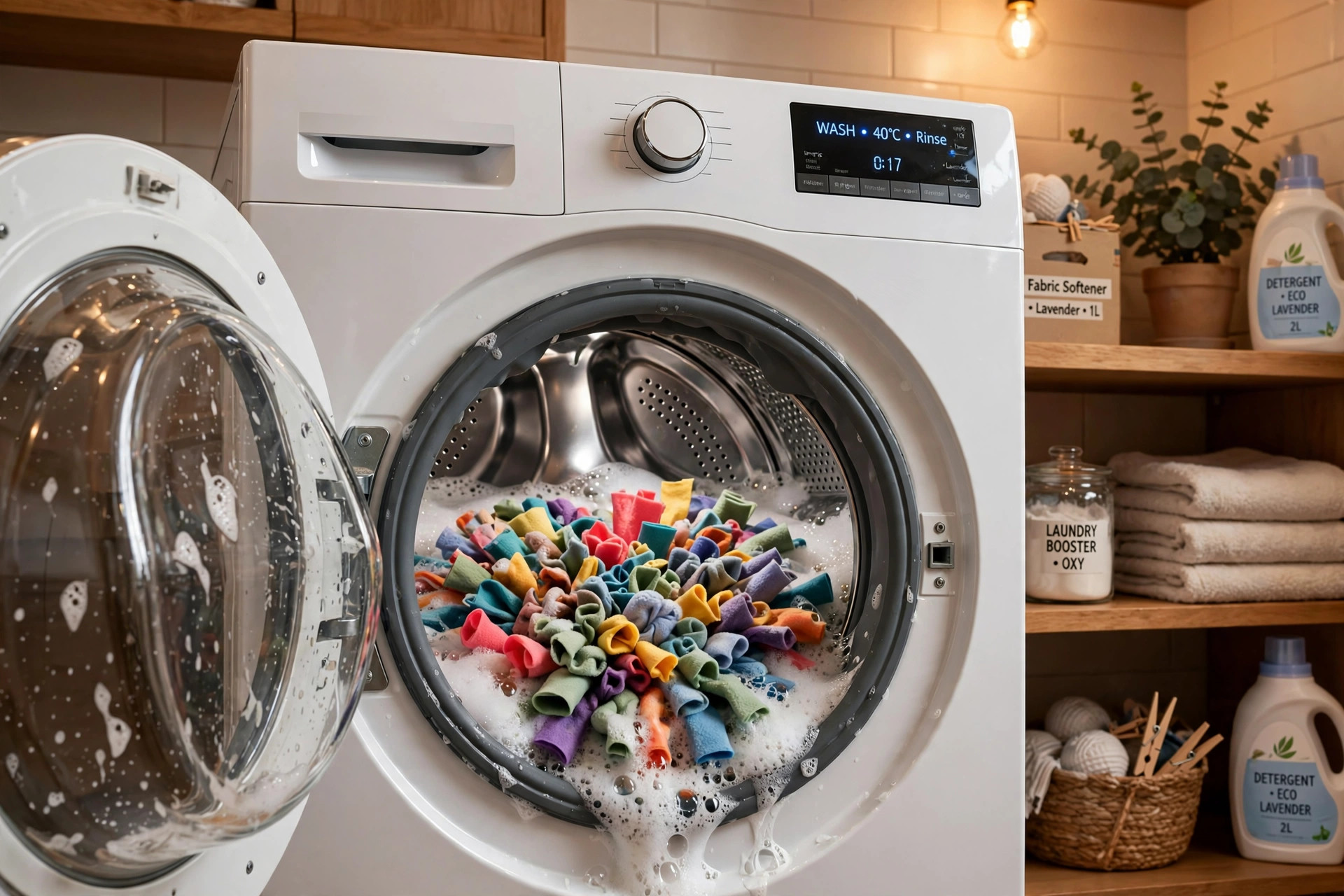
Snuffle mats get grimy — slobber, crumbs, the works. Shake it out after every use, and machine-wash it every week or two on a cool cycle inside a laundry bag or pillowcase (this stops the strips tangling). Air-dry rather than tumble-dry, and give it a good shake once dry to fluff the fleece back up. Check the knots every few washes and re-tie any that have loosened.
Safety notes
- Supervise, always. Snuffle mats are for interactive foraging, not unsupervised chewing. If your dog starts ripping strips off, the session is over.
- Fleece only. Avoid cotton, towels, or anything that frays into threads — swallowed threads can cause gut trouble.
- Size it to your dog. A mat that a big dog can pick up and shake will end its life quickly; use a heavier rubber base for large breeds.
- Watch for resource guarding. Some dogs guard high-value finds — if yours stiffens over the mat, scatter lower-value kibble only, or skip the mat and talk to a trainer.
FAQs
How long does it take to make a snuffle mat?
About 45 minutes to an hour, most of it cutting fleece strips. The knotting itself is simple and oddly relaxing — it’s a one-episode-of-TV project.
Is a snuffle mat good for puppies?
Yes — puppies are natural foragers and snuffle mats are brilliant for crate training wind-downs and teething-distraction. Use a loose-knotted mat so a young puppy wins quickly, and supervise closely since puppies chew everything.
Can I use a snuffle mat for every meal?
You can, but one enriched meal a day is the sweet spot. Keep some feeding routine variety — a snuffle mat for breakfast and a slow-feeder bowl or scatter-feeding in the garden for dinner keeps the novelty alive.
Will my dog destroy it?
A determined chewer can pull fleece strips loose, which is why supervision is non-negotiable. If your dog is a strip-ripper, try a denser knot pattern (harder to grab single strips), use it for short supervised sessions only, and remove the mat between sessions.