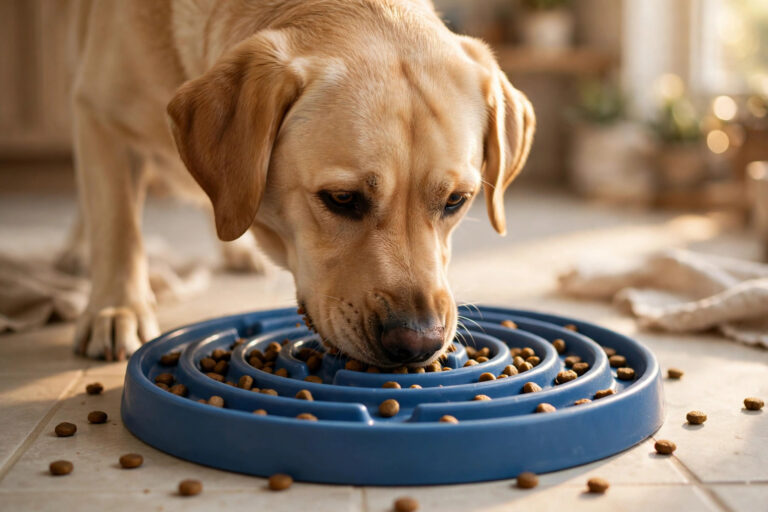
If your dog inhales dinner in under a minute, you are not alone. Plenty of dogs treat mealtimes like a competitive sport — and while it can be funny to watch, fast eating comes with real downsides: swallowed air, vomiting shortly after eating, bloating risk, and a brain that barely registers it had food at all. Slow feeder dog bowls are the simple gadget promising to fix exactly that: raised ridges, mazes and swirls inside the bowl that force your dog to eat around the obstacles.
But do they actually work? For most dogs, yes — with a few honest caveats. Here is the full, vet-informed guide: what fast eating really does, the three main styles of slow feeders, how to match the bowl to your dog’s muzzle, and how to clean them without the frustration.
Why fast eating is worth fixing
Eating at speed is not just a manners problem. Dogs that regularly gulp food:
- Swallow more air, which means burping, flatulence and post-meal vomiting.
-
Risk bloat (gastric dilatation-volvulus). Speed of eating is a known contributing factor to GDV, the life-threatening stomach twist that large, deep-chested breeds are prone to. A slow feeder is not a guarantee against bloat — but reducing the frantic gulping removes one recognised risk.
-
Get less mental stimulation from meals. Foraging is enrichment. A dog that finishes in 40 seconds gets none of the “work” that a ten-minute meal provides, which often shows up as begging sooner, raiding bins, or general restlessness.
If your dog eats so fast it vomits, regurgitates, or coughs, mention it to your vet — a slow feeder helps, but very frantic eating can also flag competition anxiety or a medical issue worth checking.
Do slow feeder bowls actually work?
In short: yes, for most dogs, in a measurable way. A standard meal from a flat bowl takes a speed-eater well under a minute. The same meal from a maze-style slow feeder typically takes five to ten minutes — the ridges physically break the “one big mouthful” strategy.
A few honest caveats so you buy with open eyes:
-
Some dogs solve them too well. Clever dogs learn to flip the bowl or shove it around the floor. A rubber base, a non-slip mat, or a weighted bowl solves most of this.
-
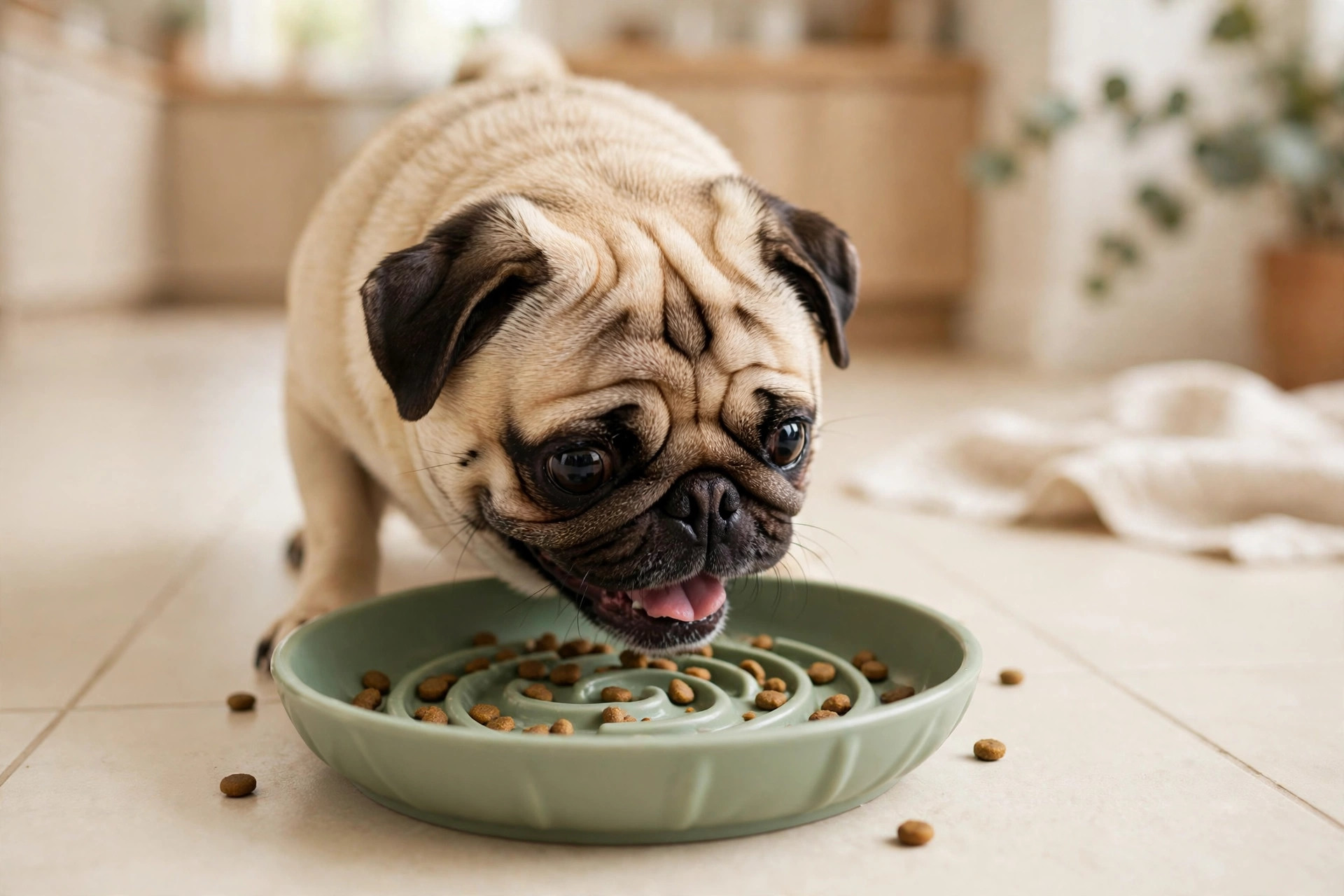
Flat-faced breeds need the right design. Pugs, French bulldogs and shih tzus cannot reach food in deep, narrow mazes. They need shallow, wide designs (more below).
-
They are not a substitute for vet advice. If your dog eats fast because of resource guarding, anxiety or competition with other pets, address that separately — feed dogs apart and speak to your vet or a behaviourist.
The 3 styles of slow feeders
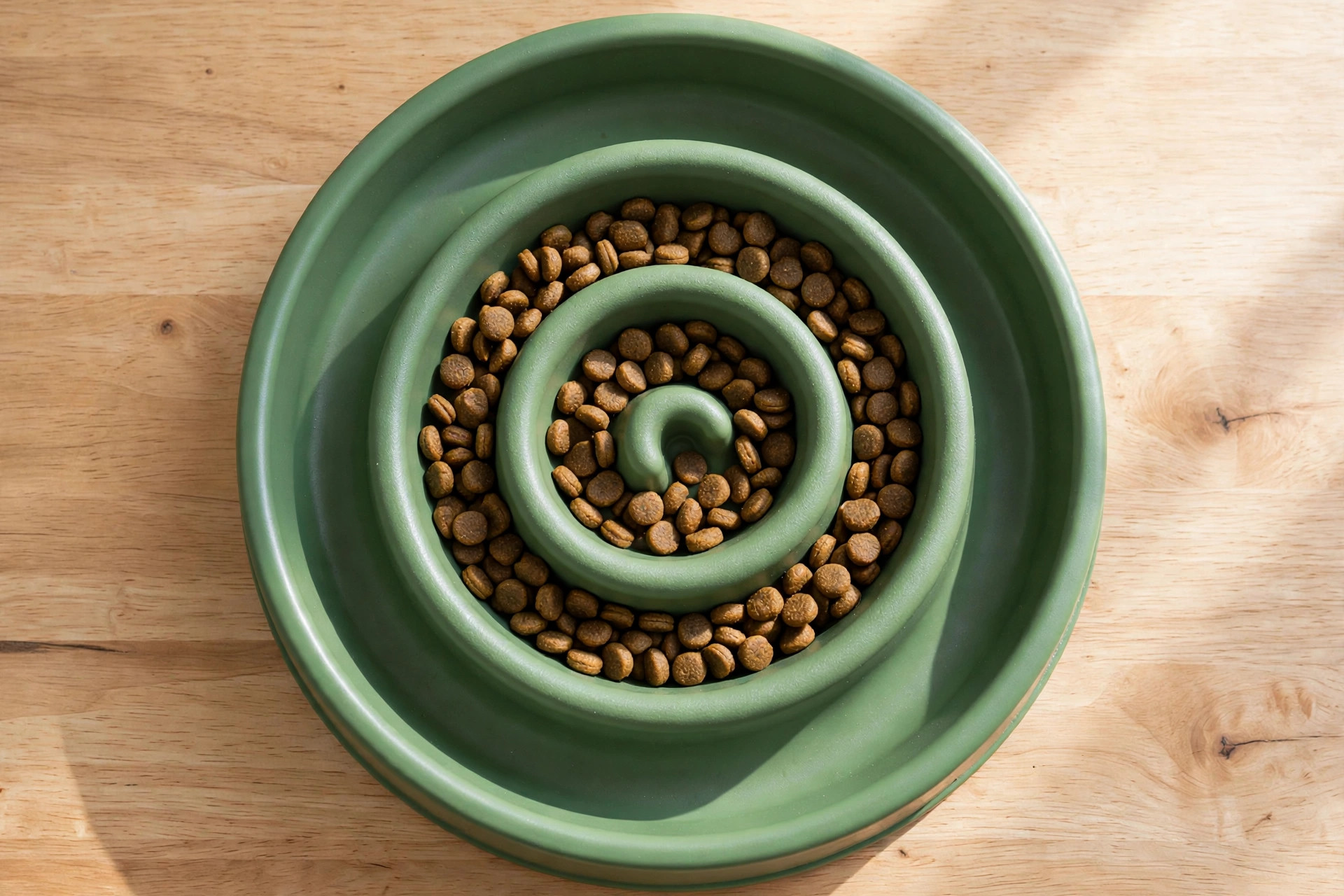
1. Maze and spiral bowls (the classic)
The raised swirls, bumps and channels inside the bowl force the tongue to work between obstacles. These are the most effective at physically slowing eating, they are dishwasher-safe (check the product), and they come in difficulty levels from “gentle bumps” to “diabolical labyrinth.” Start gentle for puppies and seniors; go complex for the competitive eaters.
2. Lick mats
Flat silicone mats with shallow grooves — you spread wet food, yoghurt or peanut butter over them and the dog licks rather than gulps. They slow wet meals beautifully and double as calming enrichment (licking releases calming endorphins). We have a whole set of lick mat recipes for dogs if you want to start. Best for: wet food feeders, anxious dogs, crate-time occupation.
3. Snuffle mats
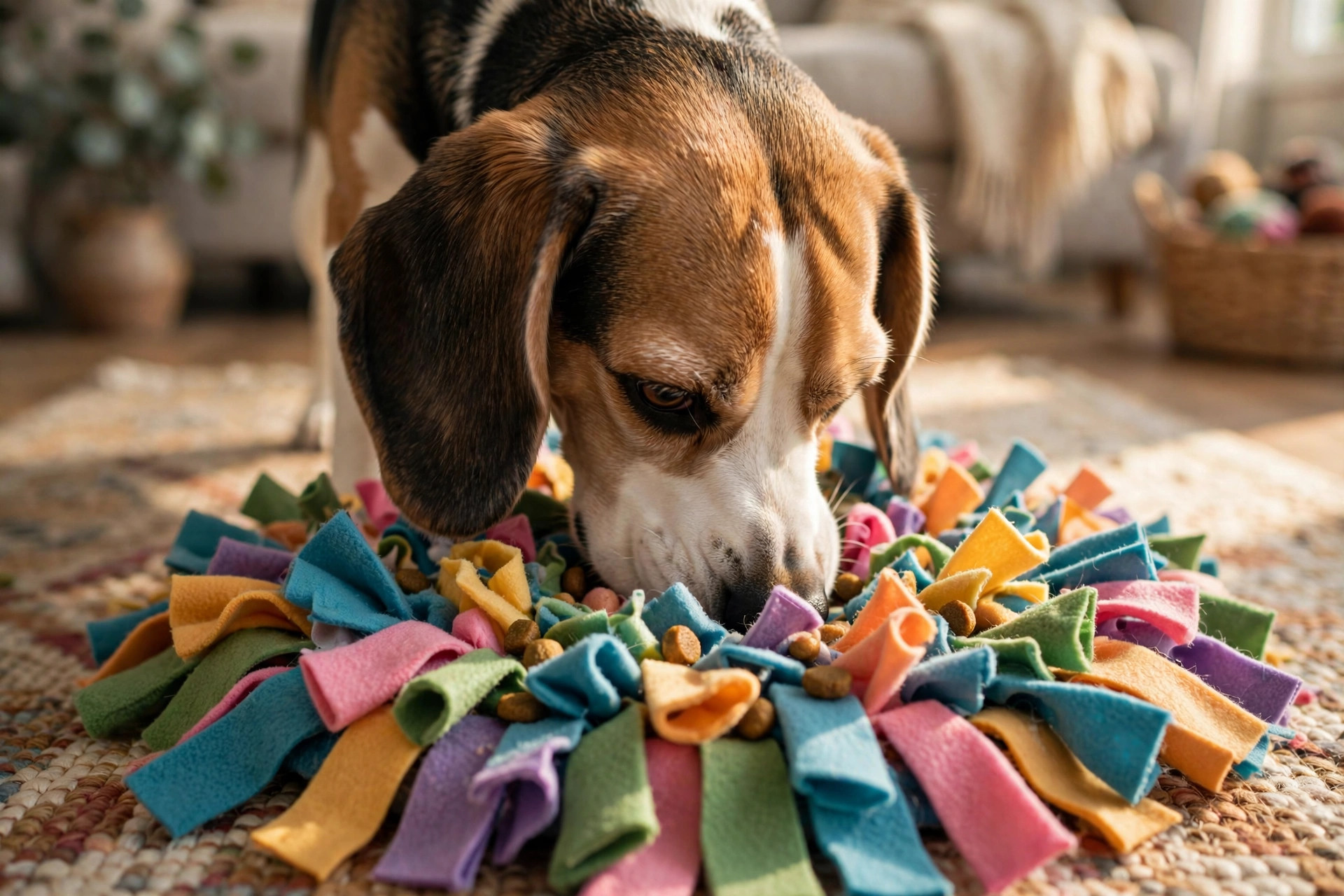
Fabric strips tied to a rubber base — you scatter kibble in the “grass” and the dog forages with nose and paws. Closest to natural feeding behaviour and fantastic mental stimulation, though trickier to wash than a plastic bowl. Our DIY snuffle mat for dogs shows how to make one from a sink mat and fleece. Best for: dry kibble, clever dogs that need a job, rainy-day boredom.
How to pick the right one for your dog
-
Muzzle shape. Deep mazes suit long-snouted breeds (labradors, shepherds, greyhounds). Flat-faced breeds need shallow, wide ridges they can reach with a short tongue. Puppies do best starting on the easiest pattern.
-
Material. Food-grade silicone and melamine bowls are the common picks; stainless steel slow feeders exist if you prefer them. Avoid cheap plastic with strong chemical smells. Whatever you choose, it must be washable — slow feeders have dozens of grooves where food hides.
-
Size. The bowl should hold your dog’s full meal comfortably with room to spare. A too-small maze means the dog just eats from the top of the ridges.
-
Difficulty. Match it to the eater. A mildly quick eater needs only gentle bumps; a championship gulper needs a proper maze. You can always upgrade.
-
Non-slip base. Non-negotiable. A bowl that slides or flips teaches your dog that dinner is a sport, which is the opposite of the point.
How to introduce it (without the tantrum)
Some dogs look at a maze bowl like it personally offended them. Transition smoothly:
-
Start easy. Use the shallowest pattern with a few high-value treats scattered on top so the first experience is rewarding.
-
Supervise the first meals. Some dogs try to chew the ridges, especially plastic ones. Watch, redirect, and do not leave a chewer alone with it.
-
Expect the floor show. A week of learning is normal. Most dogs settle into the new routine and start enjoying the “puzzle.”
-
Keep the old bowl. If your dog refuses entirely or the bowl makes them anxious, feeding should never be stressful — go back to the flat bowl and try scatter feeding or a snuffle mat instead.
Cleaning — the part nobody mentions
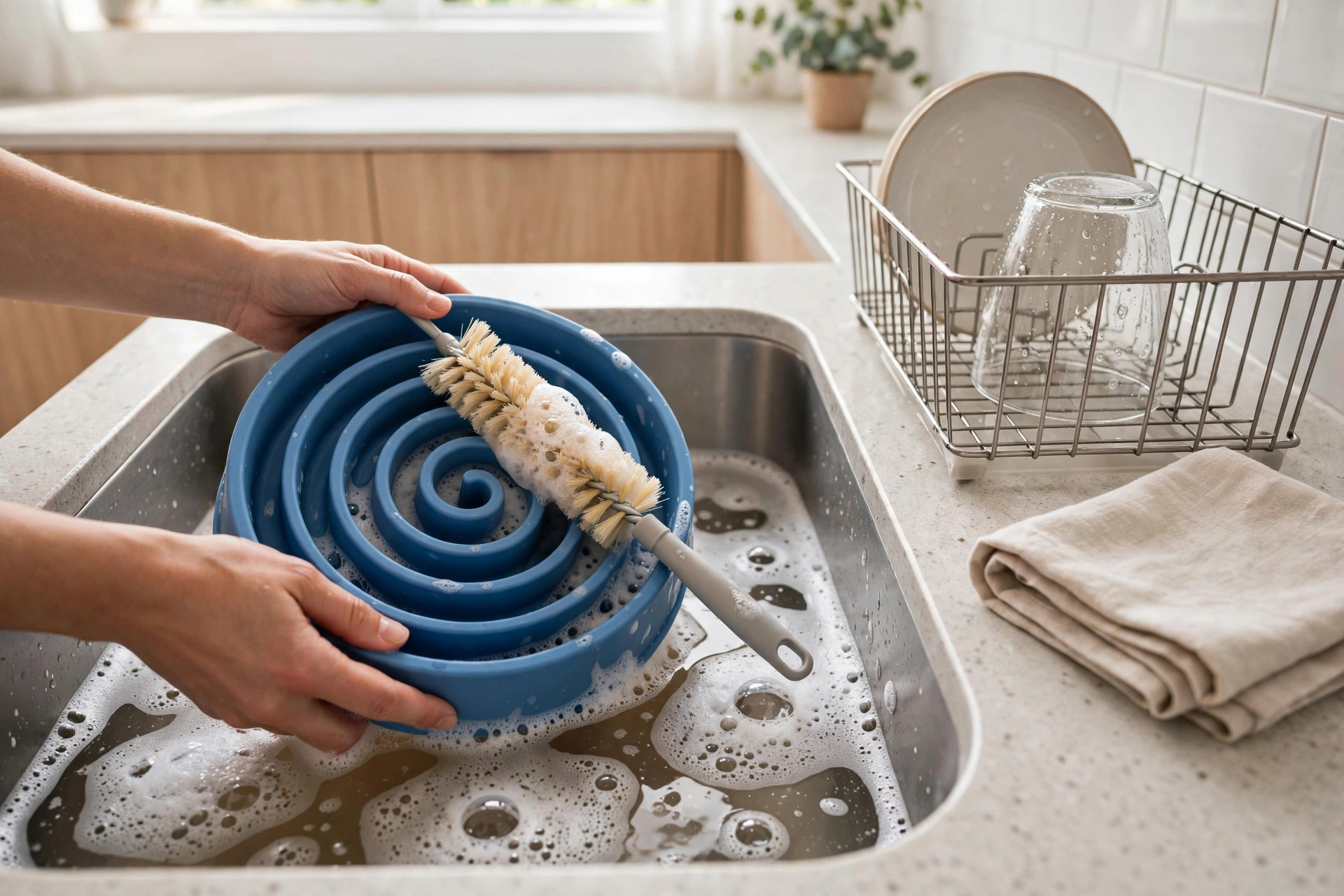
Slow feeders are groovy, literally. Dried food lodged in maze channels can go mouldy, so wash the bowl after every meal — warm soapy water and a bottle brush reach the channels far better than a sponge. Dishwasher-safe bowls make this painless (check the product label; high heat warps cheap plastic). Snuffle mats go in the washing machine in a laundry bag; air-dry them. Lick mats are the easiest: rinse or pop in the dishwasher.
Safety notes – Inspect plastic slow feeders regularly for chew marks and rough edges — retire any bowl that is cracked or has sharp plastic. – Wash the bowl after every meal; trapped food in the grooves can harbour bacteria and mould. – Feed dogs separately if there is competition at mealtimes — a slow feeder helps the speed, not the anxiety. – If fast eating is paired with vomiting, coughing or weight loss, see your vet before buying gear.
FAQs
Will a slow feeder stop my dog vomiting after eating? Often, yes — most post-meal vomiting in speed-eaters comes from swallowed air and huge unchewed mouthfuls, and slowing the meal down fixes exactly that. If the vomiting continues, see your vet.
Can puppies use slow feeder bowls? Yes — start with the easiest pattern and always supervise, since puppies may try to chew the ridges. It is also great early training for calm mealtimes.
Are slow feeders good for flat-faced dogs? Yes, but pick a shallow, wide design. Deep narrow mazes frustrate pugs and French bulldogs because they cannot reach the food with a short tongue.
Maze bowl vs lick mat — which is better? Different jobs. Maze bowls slow dry kibble best; lick mats slow wet food and add calming enrichment. Many owners use both — kibble in the bowl, wet food on the mat.
How long should a meal take? A good target is 5–10 minutes for a standard meal. If your dog is still done in under two minutes, step up the difficulty.
Final word
Slow feeder bowls are one of the rare pet gadgets that genuinely do what they claim: most speed-eaters go from a 45-second inhale to a five-minute meal, which means less air, less vomiting, and a calmer dog. Match the design to your dog’s muzzle, introduce it kindly, wash it properly — and dinner becomes the enrichment it should have been all along.