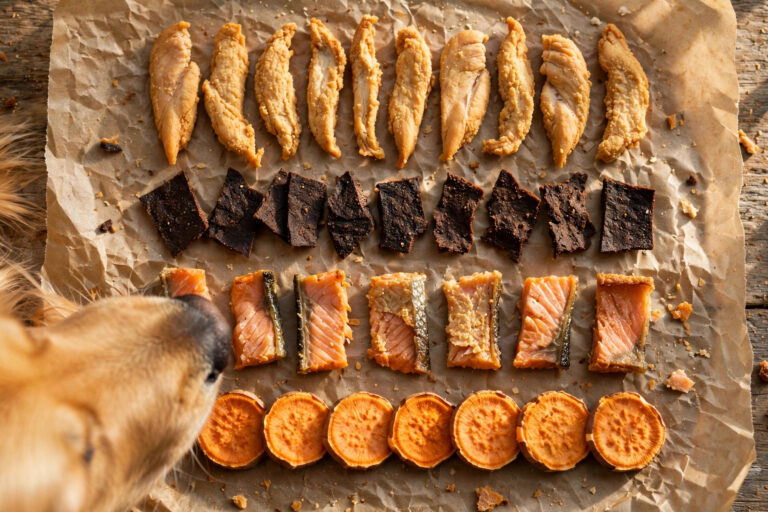
If you’ve ever squinted at the back of a dog treat bag and wondered what half the words even mean, you’re not alone. Treat labels read like chemistry experiments: “natural flavour”, “mixed tocopherols”, “menadione sodium bisulfite complex” — on a bag of something your dog eats every single day.
That’s exactly why single-ingredient dog treats are booming. The idea is beautifully simple: one ingredient. Chicken breast. Beef liver. Sweet potato. Nothing else. No fillers, no flavour enhancers, no mystery powders. What you see is what your dog gets — and for dogs with allergies, sensitive stomachs, or picky humans, that transparency is gold.
This guide covers what “single-ingredient” actually means on a label, the proteins and produce worth rotating through, the red-flag additives to dodge, and 5 single-ingredient DIY treats you can make this weekend.
What does “single-ingredient” actually mean?
On an honest label, it means the treats contain one food item and nothing else — for example, freeze-dried chicken breast should list exactly that: “chicken breast”. No salt, no oil, no preservatives (freeze-drying and dehydrating preserve the food naturally).
But read carefully, because marketing stretches the term:
- “Made with single ingredients” is not the same as single-ingredient. It can still hide glycerin, “natural flavours” or tocopherols at the bottom of the label.
- “Single-protein” only promises one meat source — the treat can still contain ten other ingredients (binders, starches, colourings).
- Ingredient splitting tricks the eye: a label that lists “chicken breast, chicken, chicken fat” is not single-ingredient, however premium it sounds.
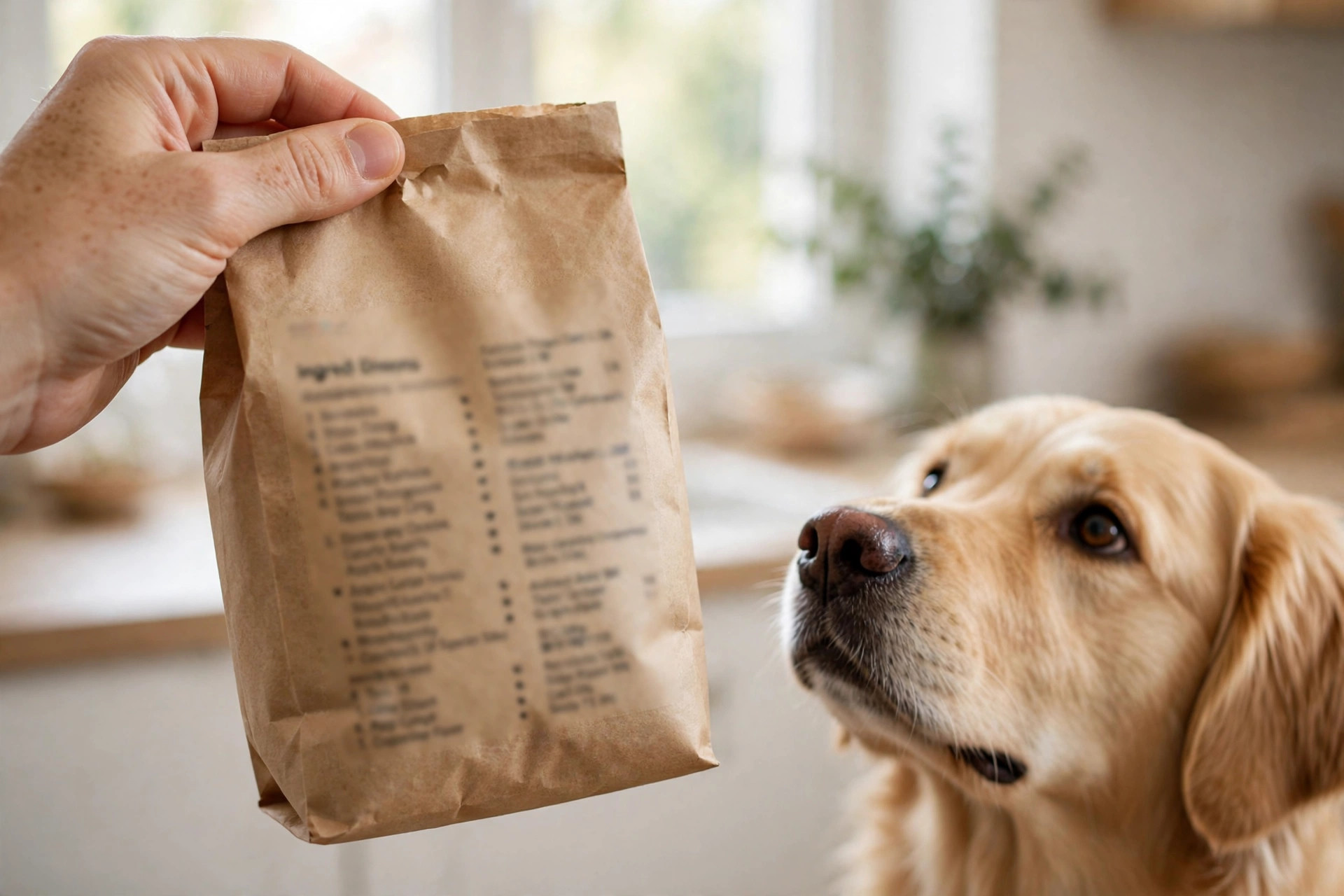
The test is simple: if the ingredient list has more than one item — or anything you can’t buy in a grocery store — it’s not a true single-ingredient treat.
Why dog owners are switching to single-ingredient treats
Allergy detective work. When a dog is itchy or has tummy trouble, vets run elimination diets. Single-ingredient treats let you reward your dog without introducing five mystery ingredients that muddy the results.
Sensitive stomachs. Fewer ingredients means fewer things to react to. Dogs with chronic soft stools often do noticeably better on simple treats.
Senior dogs. Older dogs with kidney or liver concerns benefit from treats without added sodium, phosphorus-rich meals, or rendered by-products.
Training clarity. High-value, smelly single-ingredient proteins (freeze-dried liver, salmon) are the gold standard for recall training — and you know exactly what’s in every reward.
Proteins worth rotating
Variety matters — rotating proteins reduces the chance of your dog developing a sensitivity to any one of them, and it keeps training rewards exciting.
- Chicken breast — lean, cheap, universally loved. Dehydrated strips are the classic starter DIY treat.
- Beef liver — the highest-value training treat in most trainers’ pouches. Nutrient-dense, so keep pieces tiny.
- Salmon — rich in omega-3s for skin and coat. Dried salmon skins make an incredible crunchy chew.
- Turkey breast — a gentle, low-fat option; great for dogs who are sensitive to chicken.
- Duck breast — a novel protein worth trying if your dog reacts to common poultry.
- Lamb lung — light, airy, and easy to break into small training bits.
One caution: organs like liver and kidney are vitamin-A and nutrient powerhouses, which is exactly why portion size matters — a little goes a long way.
Fruits and veggies that work as single-ingredient treats
Not every single-ingredient treat has to be meat. These are all dog-safe as the sole ingredient:
- Sweet potato — sliced and slow-baked into chews; the natural sweetness makes them a favourite.
- Pumpkin — plain purée frozen into cubes, or dehydrated into crisps.
- Apple — thin rings, seeds removed (seeds contain amygdalin — toss the core).
- Banana — sliced and dehydrated into chewy chips; naturally sweet, so use sparingly.
- Carrot — frozen whole carrots are a classic teething soother; dehydrated carrot chips crunch beautifully.
- Blueberry — frozen blueberries are tiny, easy training rewards with almost no calories.
Fruits to never use: grapes and raisins are toxic to dogs, even in small amounts. Skip them entirely.
Red-flag additives to avoid on treat labels
When a “simple” treat label sneaks in extras, these are the ones to watch for:
- “Natural flavour” / “animal digest” — vague by design; often used to make low-quality treats palatable.
- Vegetable glycerin / glycerine — a humectant that keeps soft treats chewy; harmless in tiny amounts but a sign the treat isn’t truly single-ingredient.
- Carrageenan — a thickener linked to gut irritation in sensitive animals; common in soft-moist treats.
- Menadione (vitamin K3) — a synthetic vitamin K supplement with no place in a treat; a marker of cheap formulation.
- Rendered meals (“meat and bone meal”, “poultry by-product meal”) — undefined source, undefined quality.
- Added sugars, corn syrup, molasses — treats don’t need sweeteners; they’re there for shelf appeal to humans.
- Artificial colours (Red 40, Yellow 5, Blue 2) — purely cosmetic; dogs don’t care what colour their treat is.
- BHA / BHT / ethoxyquin — synthetic preservatives; choose treats preserved by dehydration or freeze-drying instead.
5 easy single-ingredient DIY treats
You don’t need a dehydrator to start (though it helps). An oven on its lowest setting with the door cracked works for all of these.
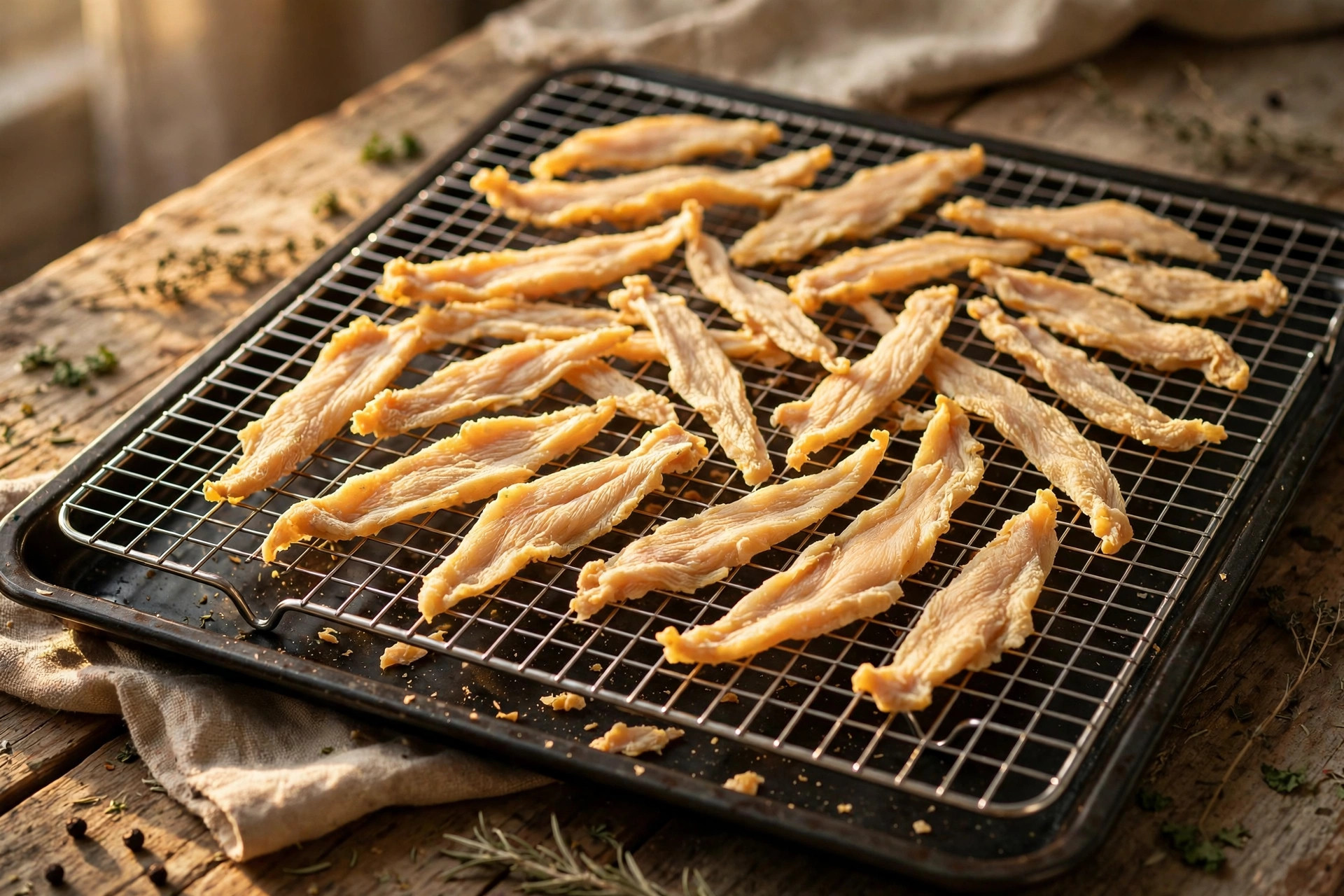
1. Dehydrated chicken breast strips
Slice chicken breast into 5 mm strips against the grain. Lay on a rack over a tray and dry at 75°C / 170°F for 4–6 hours until completely dry and leathery. They should snap, not bend.
2. Beef liver crisps
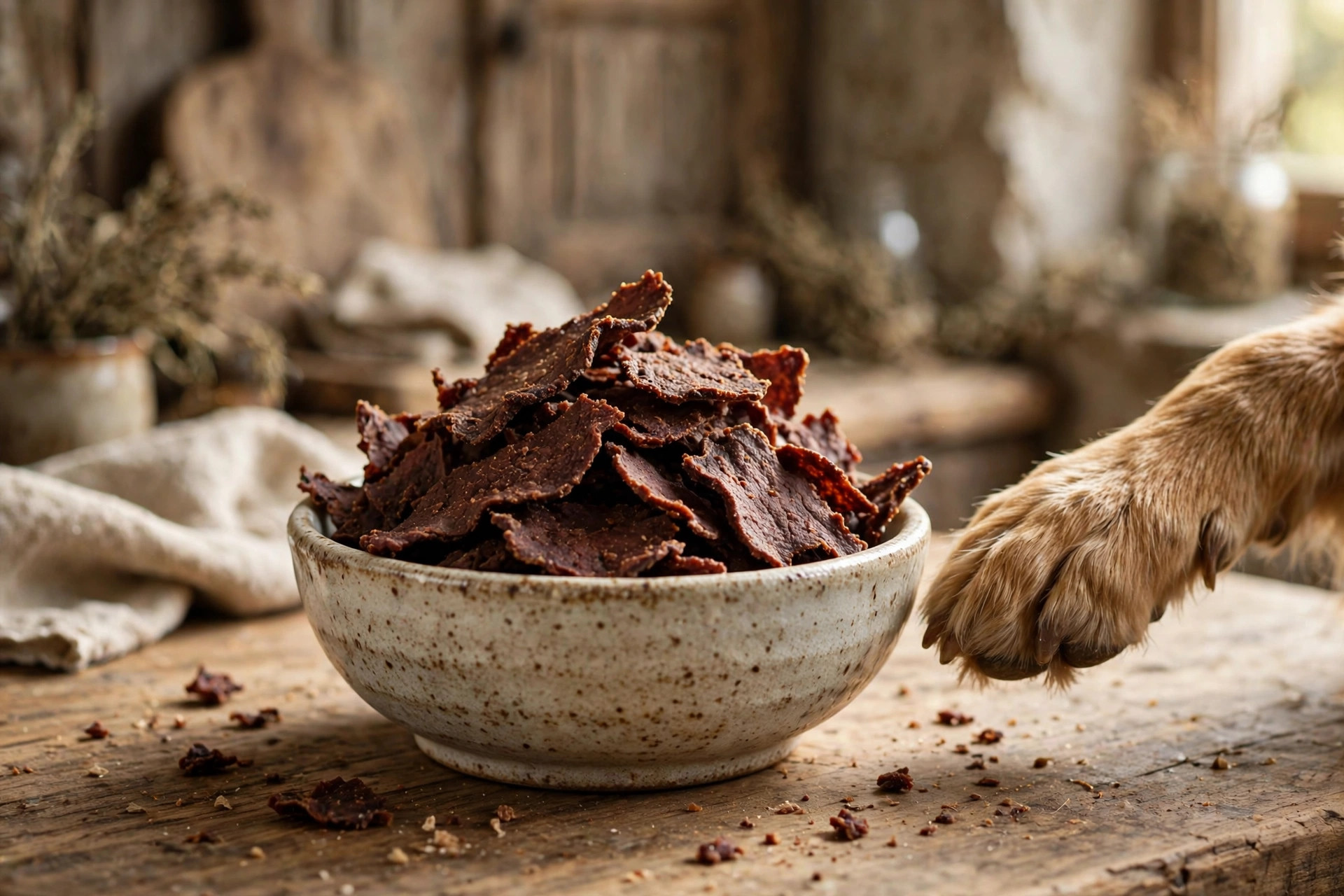
Slice liver while it’s still slightly frozen (much easier). Dry at 75°C / 170°F for 5–7 hours until brittle. Break into pea-sized training bits — liver is rich, so small pieces only.
3. Salmon skin crunchies
Save the skins when you cook salmon fillets. Scrape off excess fat, lay flat, and dry at 75°C / 170°F for 3–4 hours until crisp. Omega-3 packed and dogs go wild for them.
4. Sweet potato chews
Slice sweet potato into 6 mm rounds. Bake low and slow at 120°C / 250°F for 2½–3 hours, flipping halfway. They firm up as they cool — chewy at the edges, soft in the middle.
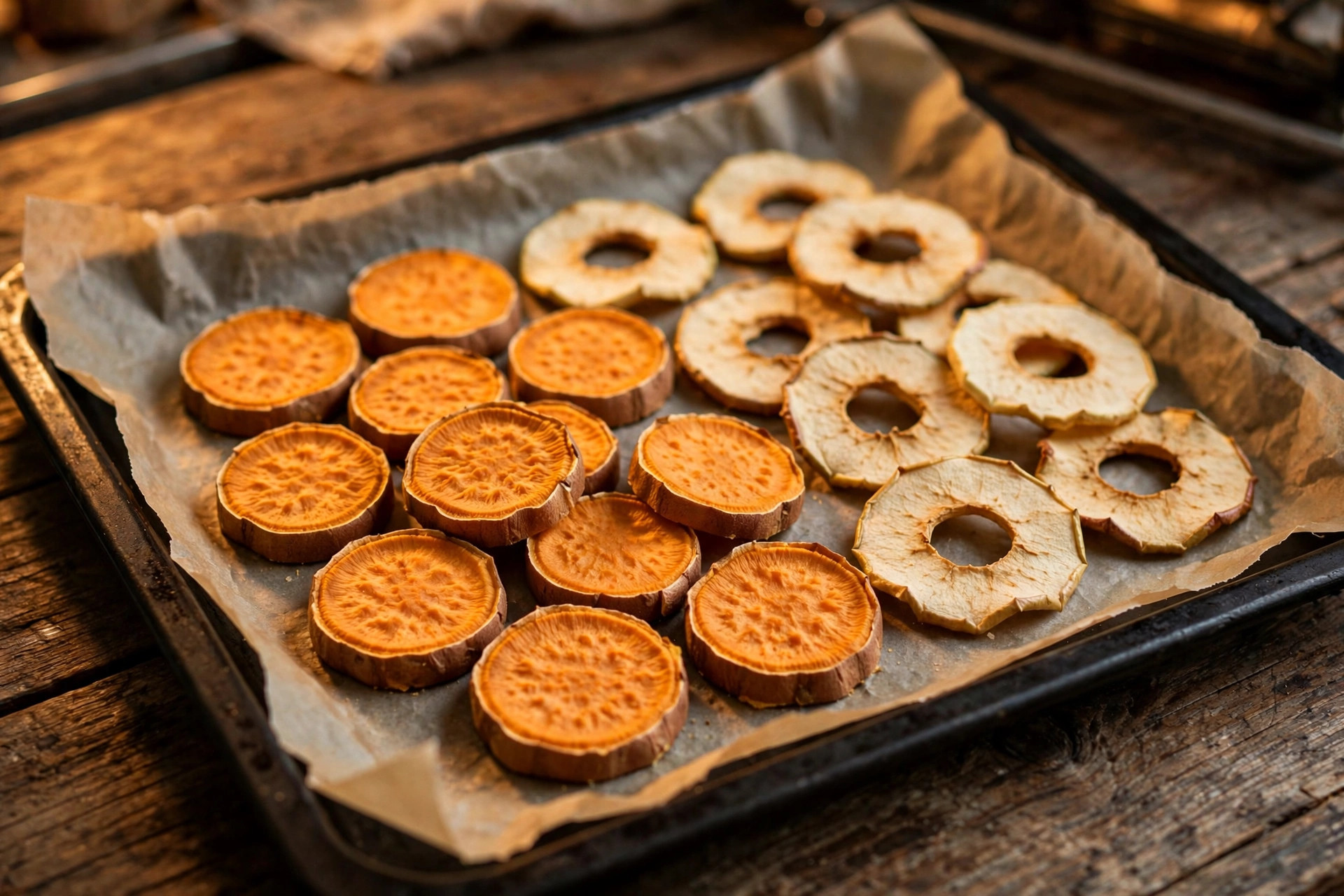
5. Apple rings
Core an apple and slice into 5 mm rings. Dry at 70°C / 160°F for 4–5 hours until leathery. A naturally sweet, almost zero-calorie chew.
Storage: fully dried treats keep 2–3 weeks in an airtight jar at room temperature, or 2 months in the freezer. If a treat feels soft or smells off, toss it — without preservatives, moisture is the enemy.
Safety notes
- Dry completely. The single biggest DIY mistake is under-drying. Any residual moisture invites mould. When in doubt, dry longer.
- Cool before storing. Trapped steam in a sealed jar undoes hours of dehydrating.
- Supervise new chews. Even single-ingredient chews can splinter or be swallowed whole by enthusiastic gulpers — watch the first few.
- Introduce one protein at a time. Especially for allergy-prone dogs, add a new treat protein every few days so you can spot reactions.
- Treats are still treats. Keep all treats — however wholesome — under ~10% of daily calories.
FAQs
Are single-ingredient treats better than regular treats?
For most dogs, yes in one clear way: you know exactly what’s in them. They’re especially valuable for allergy-prone, senior, or sensitive dogs. A high-quality multi-ingredient treat isn’t “bad” — it’s just harder to audit.
Can puppies have single-ingredient treats?
Yes — they’re actually ideal for puppies, since fewer ingredients means easier digestion and clearer allergy tracking. Use tiny pieces and stick to gentle proteins like chicken or turkey at first.
Freeze-dried vs dehydrated — which is better?
Both preserve food without additives. Freeze-drying retains slightly more nutrients and gives a lighter, crunchier texture; dehydrating is cheaper to do at home. Either beats a treat preserved with BHA.
My dog is allergic to chicken. What single-ingredient treats can I use?
Try novel proteins: duck, turkey, lamb lung, or salmon. Single-ingredient treats shine here — with a one-item label, you always know the protein source.
How do I know a store-bought treat is truly single-ingredient?
Flip the bag. The ingredient list should have exactly one item, in plain language. If you see anything you can’t buy at a grocery store, put the bag back.
Final word
Single-ingredient treats are the closest thing to a “what you see is what you get” promise in the treat aisle. Whether you buy freeze-dried or dry your own this weekend, you’re giving your dog rewards with nothing to hide. Start with chicken strips — they’re cheap, nearly foolproof, and if our natural dehydrated treats roundup is anything to go by, your dog will be obsessed by batch two.
Pin this for later 📌 — and if you want more from-scratch ideas, browse our Dog Treats category next.