{
“title”: “Dog Grooming Salon Ideas: Set Up a Calm, Beautiful Salon at Home”,
“slug”: “dog-grooming-salon-ideas”,
“excerpt”: “Dog grooming salon ideas — how to set up a calm, practical grooming salon at home, the zones, equipment and decor that work, and the safety rules that matter.”,
“meta_description”: “Dog grooming salon ideas — how to set up a calm, practical grooming salon at home, the zones, equipment and decor that work, and the safety rules that matter.”,
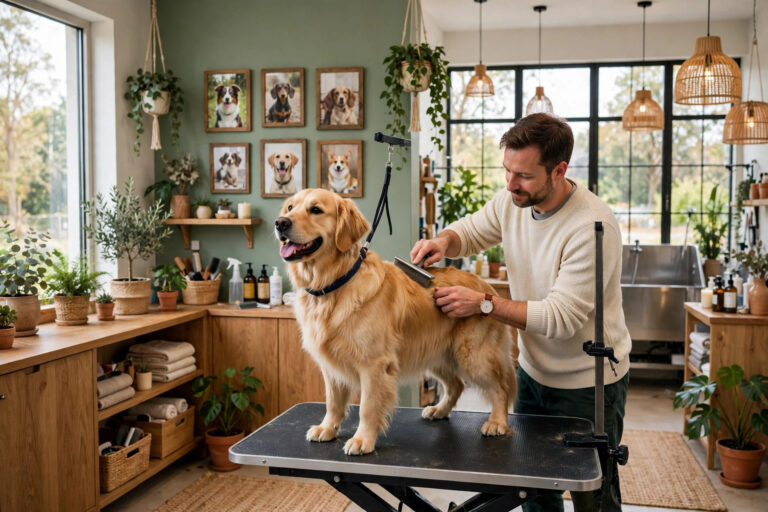
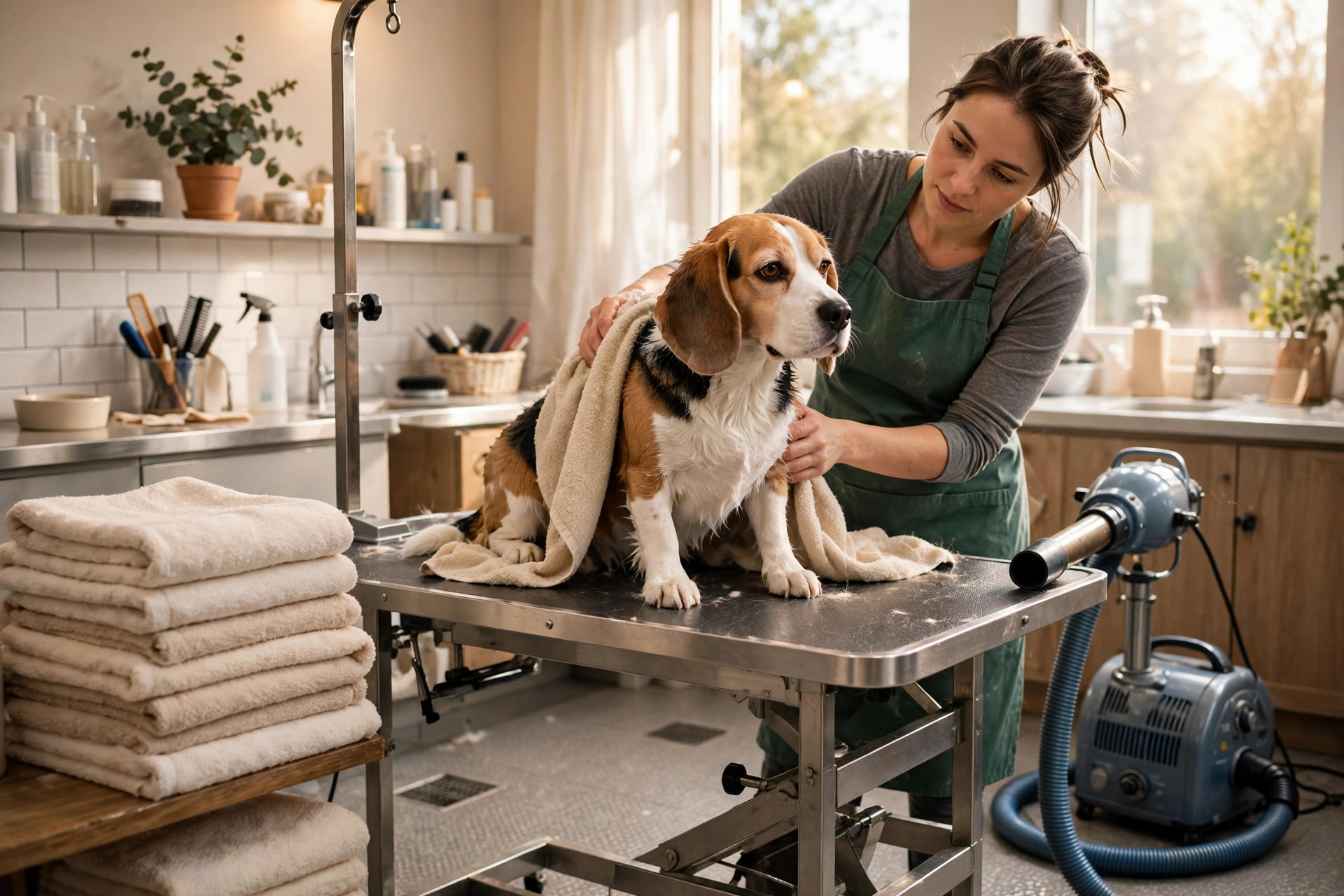
“featured_image_alt”: “Owner brushing a happy golden retriever on a grooming table in a bright home dog grooming salon.”,
“content_html”: “
A good grooming salon is not about marble floors or a fancy sign. It is about a space where the dog stays calm, the groomer can reach everything without bending double, and the mess — water, fur, muddy paws — goes where it belongs. Whether you are setting up a corner of the laundry room, converting a spare room, or planning a small salon business, the same ideas apply: five zones, the right equipment, washable surfaces, and decor that makes dogs (and their owners) relax.
\n
This guide walks through the whole setup — the layout that works, the equipment worth buying first, small-space ideas for flats and houses, decor that looks good and survives wet dogs, and the safety rules that matter more than any of it. It is the salon companion to our DIY dog grooming at home guide, which covers the routine itself: brushing, bathing, nails and ears.
\n
Before you spend anything — the 4 decisions
\n
1. Who is the salon for? A home salon for your own dogs needs one table, one tub and storage. A salon that takes paying clients needs a waiting area, a booking system, and enough space for two dogs without them meeting nose to nose. Be honest about which one you are building — a home setup that grows into a business later is fine, but a business salon squeezed into a space built for one dog will frustrate everyone.
\n
2. Where does the water go? This is the decision that matters most. A salon lives or dies on drainage. A utility room, laundry room or garage with an existing drain is worth more than a pretty spare bedroom with none. If you are plumbing from scratch, budget for it first — a proper drain and a handheld shower head will do more for your daily routine than any decor.
\n
3. How much space do you actually have? A comfortable one-dog salon fits in about 8–10 square metres: a tub, a table, drying space and storage. A small flat corner can work with a folding table and a walk-in shower tray instead of a full tub. Measure the space, mark it out with tape on the floor, and walk through a full groom in your head before you buy anything.
\n
4. What is the budget order? Spend first on what touches the dog: a non-slip tub, a sturdy table, a good dryer. Spend second on what touches the floor: waterproof flooring and washable paint. Spend last on decor — the framed prints and the nice towels. A salon that looks beautiful but has a slippery tub is a bad salon.
\n
The 5 zones every salon needs
\n
Think of the salon as five zones in a loop. The dog moves through them in order, and nothing should force you to backtrack through a wet floor carrying a damp dog.
\n
Zone 1 — Welcome and waiting. A bench or a couple of chairs, a non-slip mat, and a place for leads and coats. Keep it near the door so the dog settles before the groom starts. A calming colour on the wall (sage green, warm grey, soft blue) and a framed photo or two make owners trust the space immediately. Keep the waiting area away from the bath — a wet, nervous dog should never have to walk past a waiting stranger dog.
\n
Zone 2 — Brushing and prep. The grooming table, with a non-slip surface and an adjustable height if you can stretch to it. Good lighting matters here more than anywhere else — a daylight bulb overhead and a small lamp at table level so you can see mats, ticks and skin problems. Keep the slicker brush, steel comb and clippers within arm’s reach on a wall-mounted shelf or a rolling trolley, not in a drawer across the room. Our DIY dog grooming at home guide explains which brush suits which coat — the salon just needs them all to hand.
\n
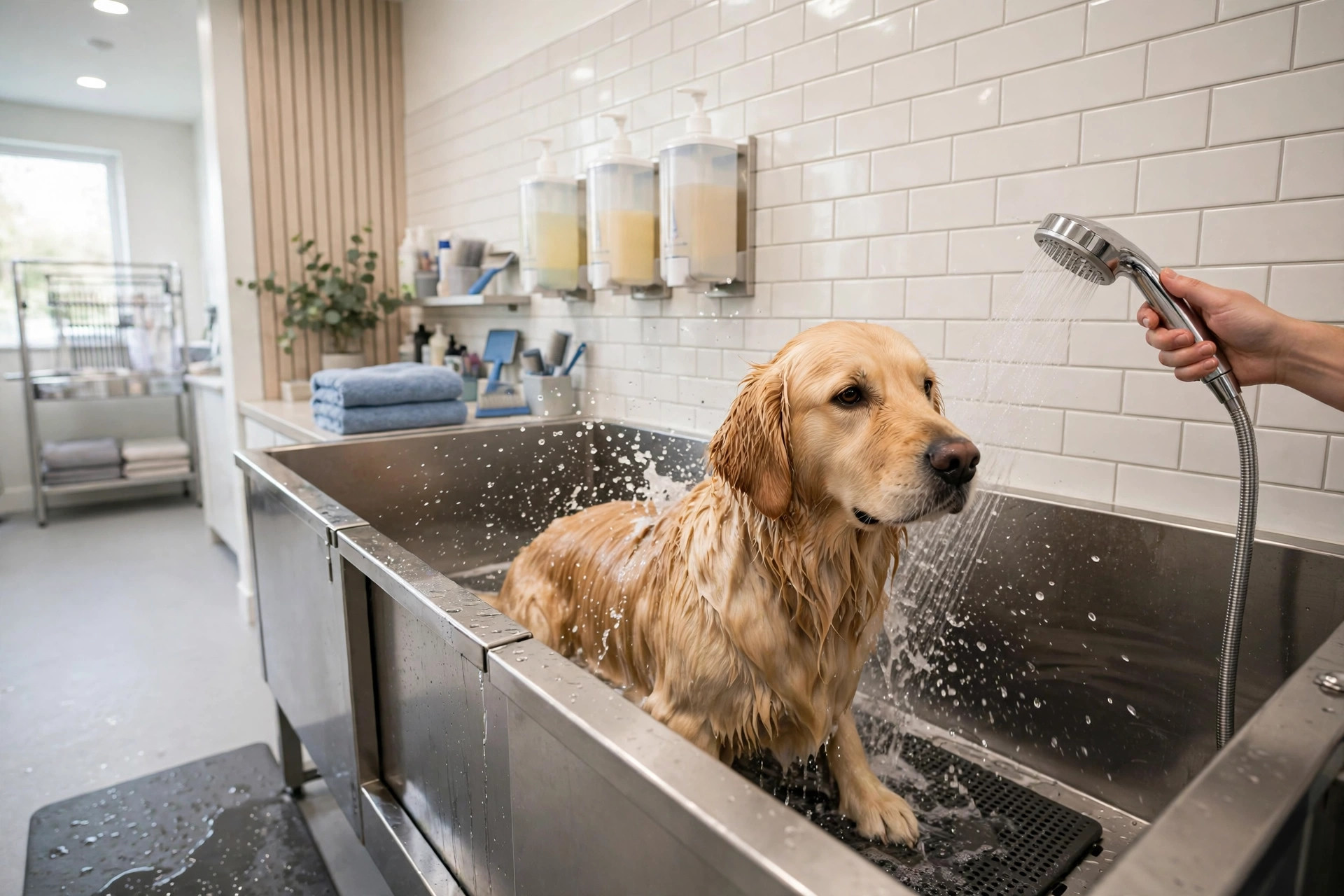
Zone 3 — Bathing. The tub or walk-in shower tray, a handheld shower head with a long hose, and a non-slip mat inside and outside the tub. Wall-mounted shampoo dispensers beat bottles on a shelf — no knocked-over bottles, no bending down with wet hands. A lick mat stuck to the tiles with a smear of xylitol-free peanut butter keeps most dogs still for the whole bath. If you are building the bath area from scratch, our DIY dog wash station guide shows how to convert a laundry-room corner or a garage nook, including the raised platform and the tiled splash zone.
\n
Zone 4 — Drying. Towels, then a dryer. A high-velocity dryer is the single best purchase for a salon — it cuts drying time in half and blows loose undercoat out before it lands on the floor. Give this zone its own corner with a towel rail, a laundry basket for used towels, and a floor that can take puddles. Never dry a dog in the same spot you bath them: the floor is already wet, and a dog that slips once will fear the dryer forever.
\n
Zone 5 — Finishing and photos. Nail trims, ear checks, a final brush — and, if you run a business, the after photo. A plain, light-coloured wall or a simple backdrop makes a clean finishing photo, and clients love a photo of their dog looking its best. Keep the styptic powder, ear cleaner and cotton pads here, not in the bath zone where they get wet.
\n
Equipment — buy this first, skip the rest for now
\n
- \n
- A sturdy grooming table with a non-slip top and an arm with a loop. Folding tables suit small spaces; hydraulic tables suit bad backs. Either way, test the weight limit — a table rated for 30 kg will not hold a 40 kg Labrador.
- A walk-in tub or a shower tray with a non-slip base and a handheld shower. A ramp or a step helps older dogs climb in without being lifted.
- A high-velocity dryer — not a human hairdryer. Human dryers run too hot and too slow. A proper pet dryer with adjustable airflow is safer and faster.
- Wall-mounted storage — shelves, hooks and a magnetic strip for scissors and clippers. Floor space is for dogs, not for boxes.
- A wet-and-dry vacuum for fur and water. A normal vacuum dies quickly in a salon. A wet-and-dry model cleans the floor in minutes and earns its price in the first month.
- Washable everything — washable rugs, washable cushion covers, washable wall paint. If it cannot be washed, it will smell of wet dog within a fortnight.
\n
\n
\n
\n
\n
\n
\n
Skip for now: the fancy cologne shelf, the de-shedding blade collection, the second dryer, the heated towel rail. Buy them when the salon earns them.
\n
Small-space salon ideas
\n
Not everyone has a spare room. A good salon can fit in a corner of a laundry room, a garage nook or even a large bathroom — if the layout is honest about the space.
\n
- \n
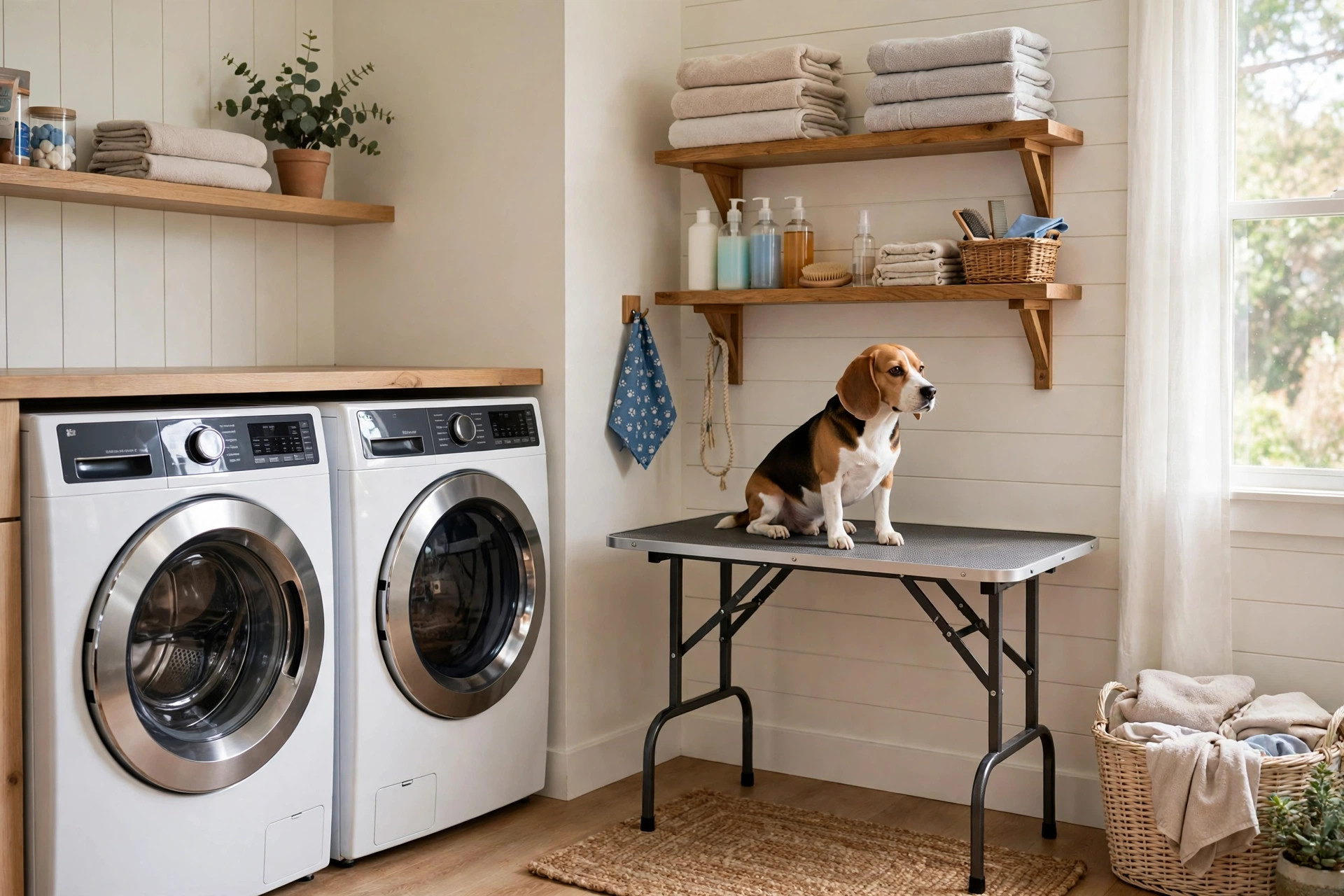
- The laundry-room corner. Stack the washer and dryer, put a folding grooming table against the wall, and use the utility sink as a bath for small dogs. A wall-mounted drying rack doubles as a towel rail. This is the most common home salon setup for a reason: the plumbing and the drain are already there.
- The garage nook. A raised platform with a tub, a hose to the outside drain, and a curtain or a screen to keep the space warm in winter. Garages work well for large dogs — the floor is already hard, the mess is contained, and nobody minds a wet floor.
- The bathroom conversion. A walk-in shower tray instead of a bath, a folding table that hangs on the wall, and a cabinet for the kit. Works for one or two small-to-medium dogs. Keep the human towels in a closed cupboard — dog shampoo on a guest towel is a fast way to lose friends.
- The balcony or garden wash spot. For warm climates only: a raised platform, a hose with a shower head, and a drying corner under cover. Never groom outside in cold or windy weather — a wet dog chills fast.
\n
\n
\n
\n
\n
The rule for small spaces is the same as for big ones: one dog at a time, everything within reach, and a floor you can mop in two minutes.
\n
Decor ideas that survive wet dogs
\n
Salon decor has one job beyond looking good: it must survive water, fur and claws. These ideas do both.
\n
- \n
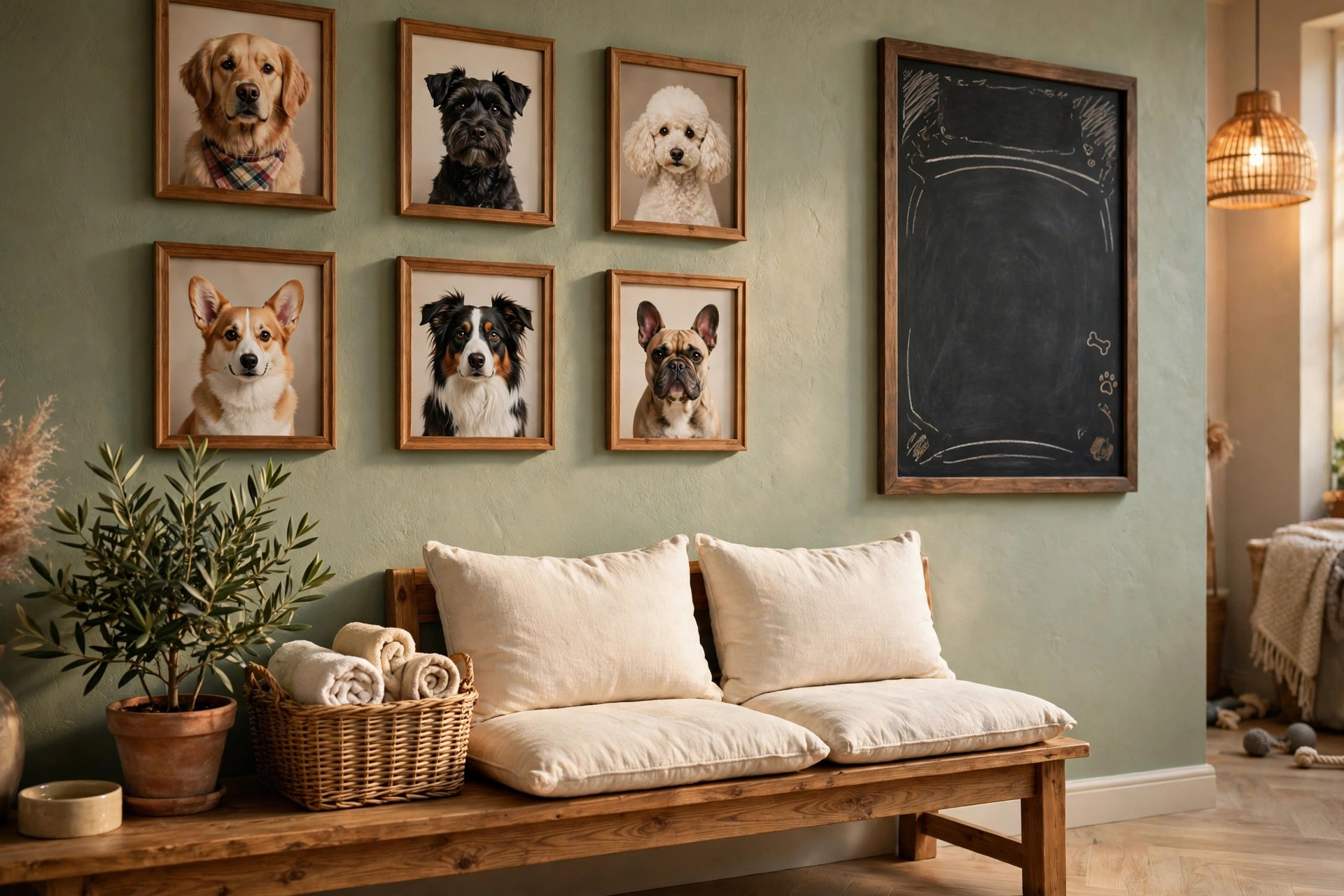
- Washable wall paint in a calm colour. Sage green, warm grey, soft blue or cream. Avoid white — it shows every muddy paw print — and avoid dark colours, which make a small room feel smaller and show fur.
- Framed dog photos at dog-eye level. Clients smile when they see dogs on the wall, and a photo wall is the cheapest decor there is. Use your own dogs’ photos to start — it is personal, and it costs nothing.
- A wooden bench and a woven basket. The bench is the waiting seat; the basket holds clean towels. Wood and woven textures warm up a room full of tile and steel, and both wipe clean.
- Plants that dogs cannot eat. A spider plant on a high shelf, or a fake olive tree in the corner — greenery softens a salon without risking a poisoned dog. Keep all real plants out of reach and check every species against a dog-toxicity list before you buy.
- A chalkboard or a letter board. The service menu, the day’s appointments, a funny line about the dog of the day. It looks intentional, it is cheap, and clients photograph it.
- Good lighting. Daylight bulbs everywhere, a warm lamp in the waiting area, and no bare fluorescent tubes. Dogs read fluorescent flicker as stress; warm light reads as calm.
\n
\n
\n
\n
\n
\n
\n
Safety rules — the part that matters most
\n
- \n
- Non-slip everywhere the dog stands. Tub, table, floor, ramp. A dog that slips once will fear the salon for months.
- Never leave a dog alone on a table with a loop. A looped dog that jumps off a table can strangle. If you step away, unloop the dog first — every time, no exceptions.
- Keep all chemicals locked away. Shampoos, ear cleaners, disinfectants and laundry products go in a closed cabinet. Dogs chew bottles.
- Check the electrics. Dryers, clippers and lights near water need proper sockets and a residual-current device. If you are unsure, pay an electrician for an hour — it is the cheapest safety money you will spend.
- One dog at a time in the working zones. Dogs that do not know each other should never share a tub area or a drying corner. Fights in a wet salon are how groomers and dogs get hurt.
- Know the vet signs. A salon owner sees more skin, ears and lumps than anyone except a vet. Red, hot skin, a bad ear smell, a lump that was not there last month, a dog that yelps when touched — those are vet referrals, not grooming jobs.
\n
\n
\n
\n
\n
\n
\n
Services and pricing — if the salon takes clients
\n
Start with three services and do them well: a bath and brush, a full groom (bath, cut, nails, ears), and a puppy’s first groom (a short, gentle introduction with lots of treats). Add de-shedding, nail-only, and teeth checks later, once the routine is smooth.
\n
Price by coat and size, not by time — a matted doodle takes three times longer than a smooth-coated beagle, and the price should say so. Be clear about it on the chalkboard and in the booking message, so nobody is surprised. And keep a simple record card for every dog: coat type, temperament, what worked, what did not. A groomer who remembers that a dog hates the dryer is a groomer clients come back to.
\n
FAQs
\n
How much space do I need for a home dog grooming salon?\nAbout 8–10 square metres is comfortable for one dog at a time: a tub, a table, drying space and storage. A laundry-room corner or a garage nook can work in less, with a folding table and a walk-in shower tray instead of a full tub.
\n
What equipment do I need to start a dog grooming salon?\nA sturdy non-slip grooming table, a walk-in tub or shower tray with a handheld shower, a high-velocity pet dryer, wall-mounted storage, and a wet-and-dry vacuum. That is the whole starting kit — decor and extras come later.
\n
Can I set up a grooming salon in a small flat?\nYes, for your own dogs: a folding table, a walk-in shower tray, and a wall cabinet for the kit fit in a large bathroom or a laundry corner. Keep it to one dog at a time, use washable surfaces, and never groom a wet dog outside in cold weather.
\n
How do I keep a grooming salon calm for nervous dogs?\nOne dog at a time, a quiet waiting area away from the bath, non-slip floors so the dog never slips, and a lick mat with xylitol-free peanut butter during the bath. Warm lighting and a calm voice help more than any product.
\n
What flooring is best for a dog grooming salon?\nWaterproof, non-slip vinyl or sealed tile with a non-slip mat in the wet zones. Avoid carpet and laminate — carpet holds smell and fur, and laminate swells with water.
\n
Do I need a licence to groom dogs at home?\nRules vary by country and city — check your local council or municipality before taking paying clients. Home salons for your own dogs need no licence anywhere, but a business salon may need registration, insurance and a premises check.
\n
The bottom line
\n
A good dog grooming salon is five zones in a loop — welcome, brush, bath, dry, finish — built around water, drainage and non-slip floors, with washable surfaces and calm decor. Spend first on the table, the tub and the dryer; spend last on the framed prints. Start small, one dog at a time, and let the salon earn its extras. Whether it is a laundry-room corner for your own dogs or the first step toward a small business, the ideas are the same: make it calm, make it washable, and make it safe. Your dog will tell you the rest — a dog that walks into the salon willingly is a salon that works.
\n
Pin this for later 📌 — and if you want the routine itself, our DIY dog grooming at home guide covers brushing, bathing, nails and ears step by step.
“,
“source_draft”: “/home/hatch/workspace/goals/pinterest-pin-automation-for-petsmush-com/files/dog-grooming-salon-ideas-post-draft.md”,
“status”: “publish”
}