{
“title”: “Dog Haircuts: A Complete Guide to Keeping Your Dog Stylish and Healthy”,
“slug”: “dog-haircuts”,
“excerpt”: “Learn dog haircuts: grooming tips, breed styles, tools, and safety for a healthy, stylish pup.”,
“meta_description”: “Learn dog haircuts: grooming tips, breed styles, tools, and safety for a healthy, stylish pup.”,
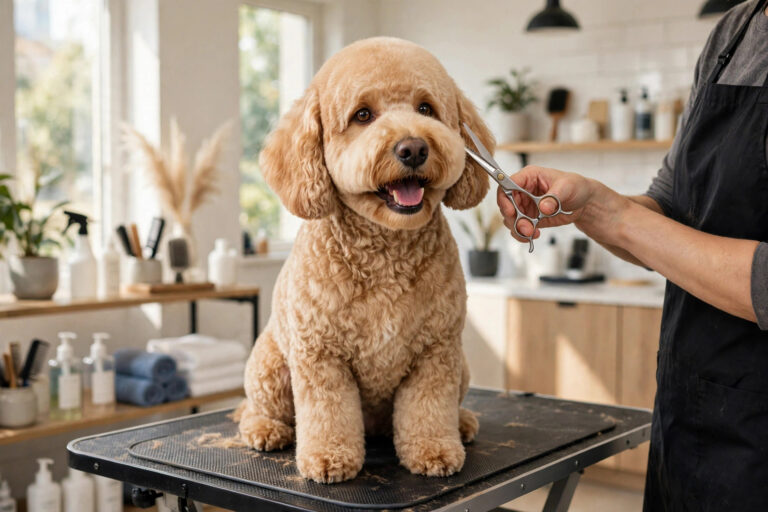
“featured_image_alt”: “Owner trimming a golden doodle’s teddy bear haircut with rounded scissors on a grooming table.”,
“content_html”: “
A good dog haircut is not about vanity. It is about a coat that stays free of mats, skin that can breathe, eyes that are not hidden behind a fringe, and a dog that can move, see and stay cool without a heavy curtain of fur in the way. The stylish part is a bonus — the healthy part is the point.
\n
This guide covers the whole subject: how often different coats need a cut, the tools worth buying, the popular styles by breed and coat type, a safe step-by-step home haircut, the sensitive areas where most accidents happen, and the mistakes that send dogs to the vet. It is the haircut companion to our DIY dog grooming at home guide, which covers the full routine — brushing, bathing, nails and ears — and to our dog grooming salon ideas guide, if you would rather set up a proper space first.
\n
Why haircuts matter — it is not just looks
\n
A coat left to grow unchecked causes real problems, and they creep up quietly. Mats form close to the skin, especially behind the ears, under the collar and in the armpits. Once a mat tightens it pulls the skin with every step, traps moisture underneath, and can hide hot spots, ticks and sores that nobody notices until the dog is in pain. A regular trim keeps all of that visible and manageable.
\n
Long fur also hides the eyes, collects mud and burrs on every walk, and holds heat in summer. Dogs with heavy coats overheat faster, dry slower after a bath or a swim, and pick up more debris that ends up on your sofa. A sensible cut — not a shave, just a tidy length — solves all of it at once.
\n
There is a comfort angle too. A dog that can see clearly, hear without fur blocking the ear canal, and walk without fur tangling between its paw pads is simply a happier dog. Most owners notice the difference the same day: the dog shakes itself, perks up, and moves more freely.
\n
How often does your dog need a haircut?
\n
It depends on the coat, not the calendar. Use this as a starting point, then adjust by how fast your dog’s coat grows and how quickly it mats.
\n
| Coat type | Examples | How often |
|---|---|---|
| Curly, non-shedding | Poodle, doodle, bichon frise | Every 4–6 weeks |
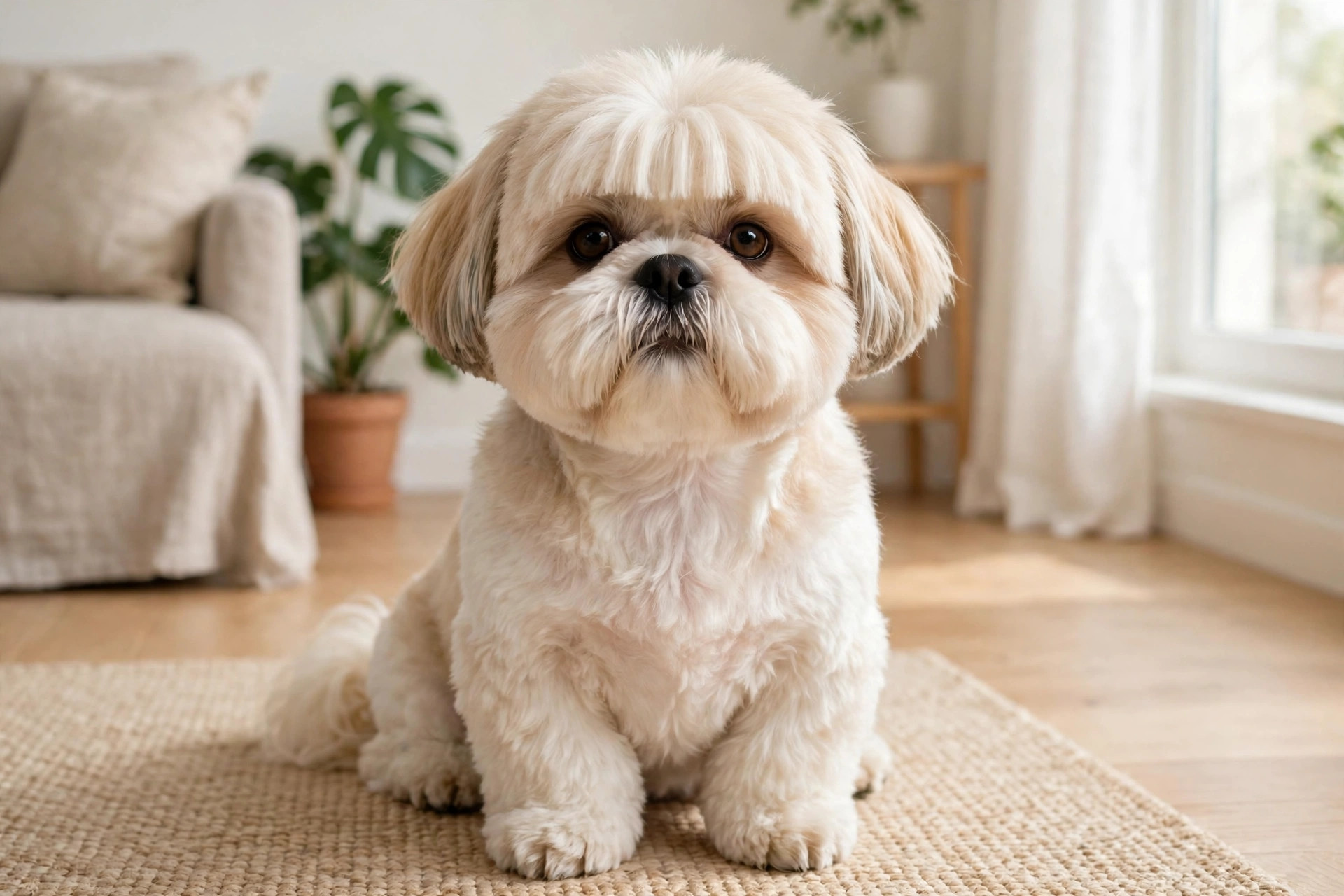
| Long, silky | Shih tzu, yorkie, maltese, lhasa apso | Every 4–6 weeks |
| Medium, wavy | Cocker spaniel, springer spaniel | Every 6–8 weeks |
| Double-coated | Golden retriever, husky, border collie | Trim only — every 8–12 weeks |
| Short, smooth | Beagle, labrador, boxer, french bulldog | Rarely — a tidy-up every few months |
\n
The golden rule: if you can see mats forming, if the fur covers the eyes, or if the coat drags on the ground, the cut is overdue. And one rule overrides the table completely — never shave a double-coated dog. The undercoat regulates temperature in both directions, and shaving it can ruin the coat texture permanently and leave the dog more vulnerable to sunburn and heatstroke, not less.
\n
The tools you actually need
\n
You do not need a professional kit. You need five things, and they should be made for dogs — human clippers run too hot and human scissors are the wrong shape.
\n
- \n
- Dog clippers with a #10 blade and guard combs. A quiet, low-vibration model matters more than a powerful one. A scared dog and a loud clipper is a bad combination. Guard combs (the plastic attachments) set the length — start with the longest guard and work shorter only if you need to.
- Rounded-tip scissors. For the face, ears, paws and tail. The rounded tip is the single most important safety feature in the whole kit: a dog moves its head without warning, and a sharp point near an eye is how accidents happen.
- Thinning shears. These blend the lines where the clippers stop and the scissors start, so the cut looks smooth instead of stepped. They are also the kindest tool for a nervous dog, because they are quiet.
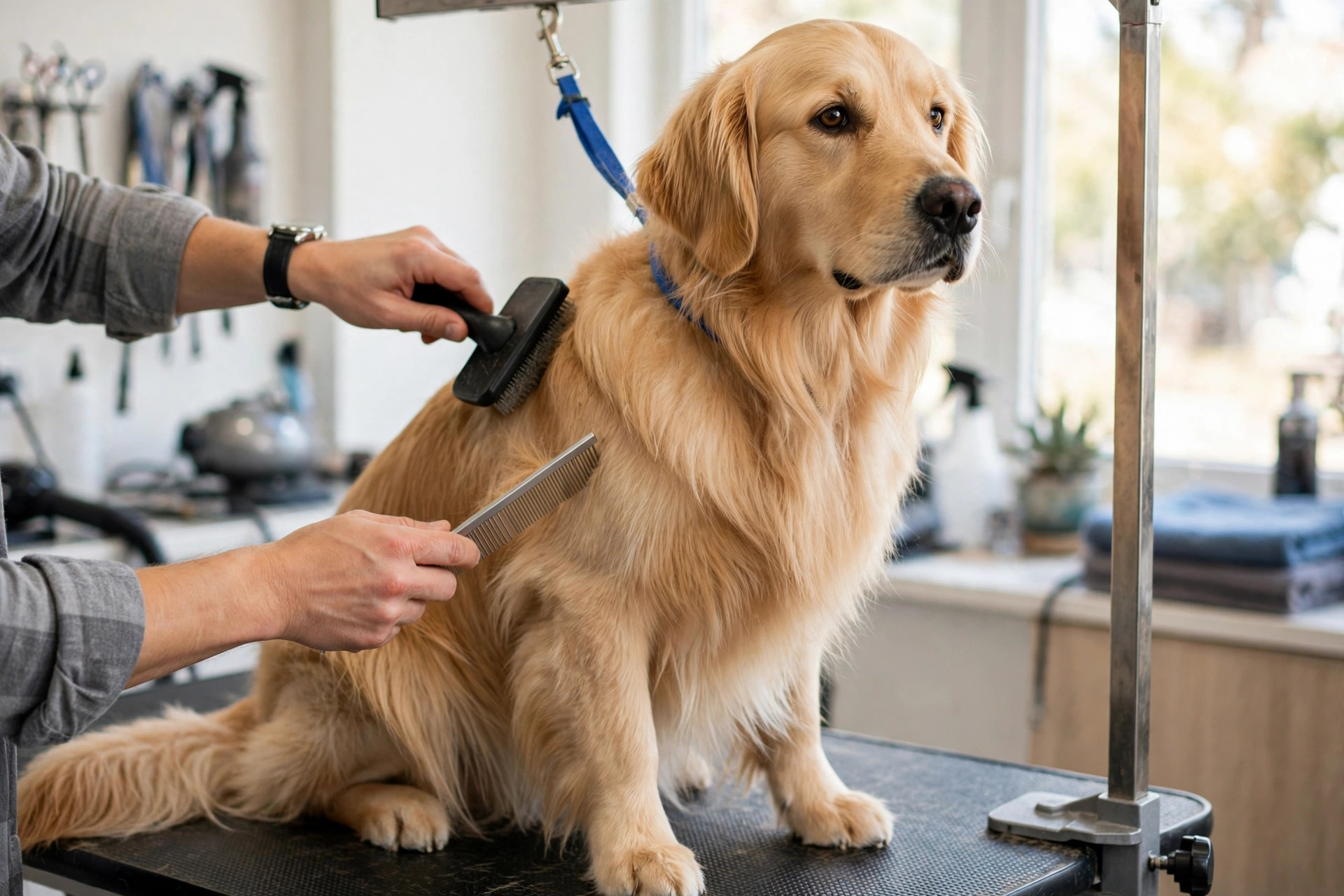
- A steel comb and a slicker brush. The comb finds the mats the brush glides over. If the steel comb cannot pass through a section of coat, that section is matted and must be dealt with before any cutting starts.
- A non-slip mat and good light. A dog that slips on a table panics; a cut done in poor light is a cut done blind. Our best grooming brush for German Shepherds guide explains brush types in detail if your dog is a heavy shedder.
\n
\n
\n
\n
\n
\n
Skip the fancy stuff until the basics are second nature: de-matting combs, curved scissors and clipper coolant spray can wait. A clean, oiled clipper blade and a patient dog matter far more.
\n
Before you pick up the clippers — brush, bath, dry
\n
Every good haircut starts before any cutting. A dirty, tangled coat clogs clippers, pulls painfully, and hides the true length of the fur.
\n
Brush first. Work through the whole coat with the slicker brush, then check with the steel comb. Any tangle the comb will not pass through is a mat. Small mats can be worked apart gently with your fingers and a little detangling spray. Large, tight mats should be cut out carefully with thinning shears held flat against the skin — never pull a mat, and never slide scissors under it with the blade pointing at the skin.
\n
Bath second. A clean coat cuts evenly and the clippers glide instead of dragging. Use a dog shampoo, lukewarm water, and rinse twice as long as you think you need to — shampoo residue makes fur clump and the cut look uneven. If you are setting up a proper wash area, our DIY dog wash station guide shows how to build one in a laundry room or garage corner.
\n
Dry third — fully. Never cut a wet coat. Wet fur hangs longer than dry fur, so a cut done wet ends up shorter than planned once it dries, and it dries unevenly. Towel-dry first, then finish with a dryer on a low, cool setting, brushing as you go. The coat should be completely dry and fluffed up before the clippers come out.
\n
The most popular dog haircut styles
\n
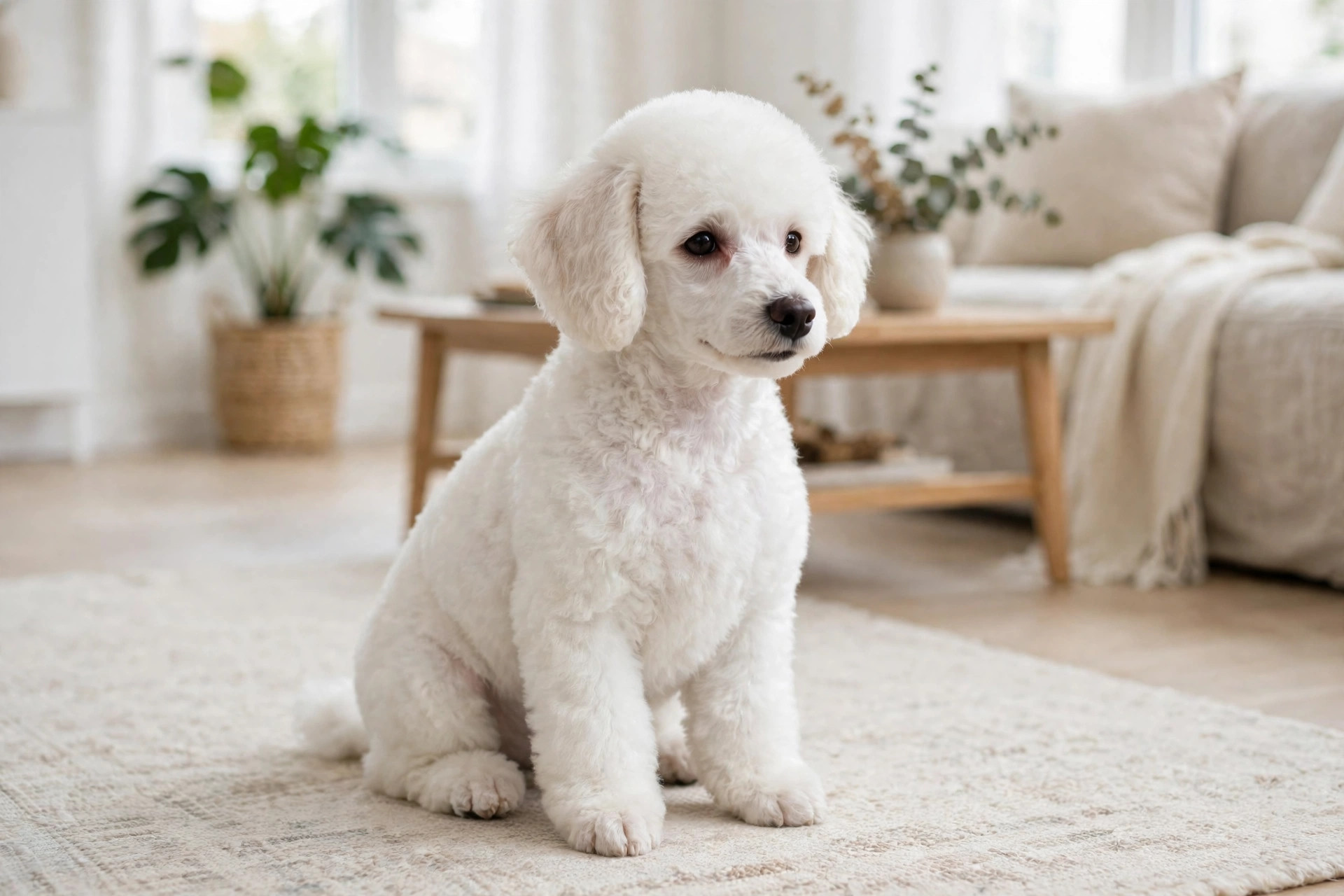
The puppy cut. The most popular cut in the world for a reason: the whole coat clipped to one even length, usually 1–2.5 cm, with the face and ears left a little longer and rounded. It suits almost every breed, it is the easiest cut to maintain at home, and it keeps a doodle, a shih tzu or a cocker comfortable for weeks. If you only learn one cut, learn this one.
\n
The teddy bear cut. A puppy cut with a rounder, softer face — the muzzle trimmed short and the cheeks and ears left fluffy so the head looks like a teddy bear. It is the signature look for doodles, bichons and shih tzus, and it photographs beautifully. The trick is the blending: the face must flow into the neck, not sit on top of it like a helmet.
\n
The lion cut. The body clipped short with a full mane left around the head and a tuft on the tail — a dramatic look that suits chow chows, pomeranians and poodles, but it is a commitment: the mane mats fast and needs daily brushing. Fun for a photo, high-maintenance for real life.
\n
The summer cut. A short, practical clip for hot weather — 1 cm or so all over, face and ears tidied. It is not a shave: enough coat is left to protect the skin from the sun. Best for dogs that swim a lot or live somewhere hot, and it dries in minutes after a bath.
\n
Breed cuts. Some breeds have a traditional shape worth knowing about: the poodle’s continental or sporting clip, the schnauzer’s skirt and beard, the cocker spaniel’s feathered ears and skirt, the yorkie’s long flowing coat or practical short cut. These take practice and a steady hand — if you want a proper breed cut, watch a groomer do it once before you try it yourself.
\n
How to cut your dog’s hair at home — in 3 steps
\n
Step 1 — Brush and prep. Brush the whole coat out, check with the steel comb, remove any mats, then bath and dry fully as above. Lay out every tool within reach, put the non-slip mat down, and let the dog sniff the clippers while they are off, then on — a treat for staying calm. A tired dog is an easier dog: a good walk before the cut helps enormously.
\n
Step 2 — Clip the body. Start with the longest guard comb and clip with the grain of the fur, in long, smooth strokes from neck to tail. Keep the clipper flat against the body — tipping it digs in and leaves lines. Do the back and sides first, then the chest and belly with the dog standing. Stop every few minutes to check the blade temperature on the inside of your wrist; a hot blade burns skin. If the dog fidgets, stop, treat, and resume — never chase a moving dog with running clippers.
\n
Step 3 — Tidy the face, ears and paws. Switch to rounded-tip scissors. Trim the fringe above the eyes so the dog can see, following the curve of the brow — cut a little, comb, and look again. Tidy the ears by combing the fur down and trimming the edges level, never cutting into the ear leather. Trim the fur between the paw pads level with the pads so the dog stops slipping on smooth floors, and neaten the tail with thinning shears. Finish by combing the whole coat and blending any steps with the thinning shears. Our best nail clippers for German Shepherds guide covers the nail trim that usually goes with a haircut day.
\n
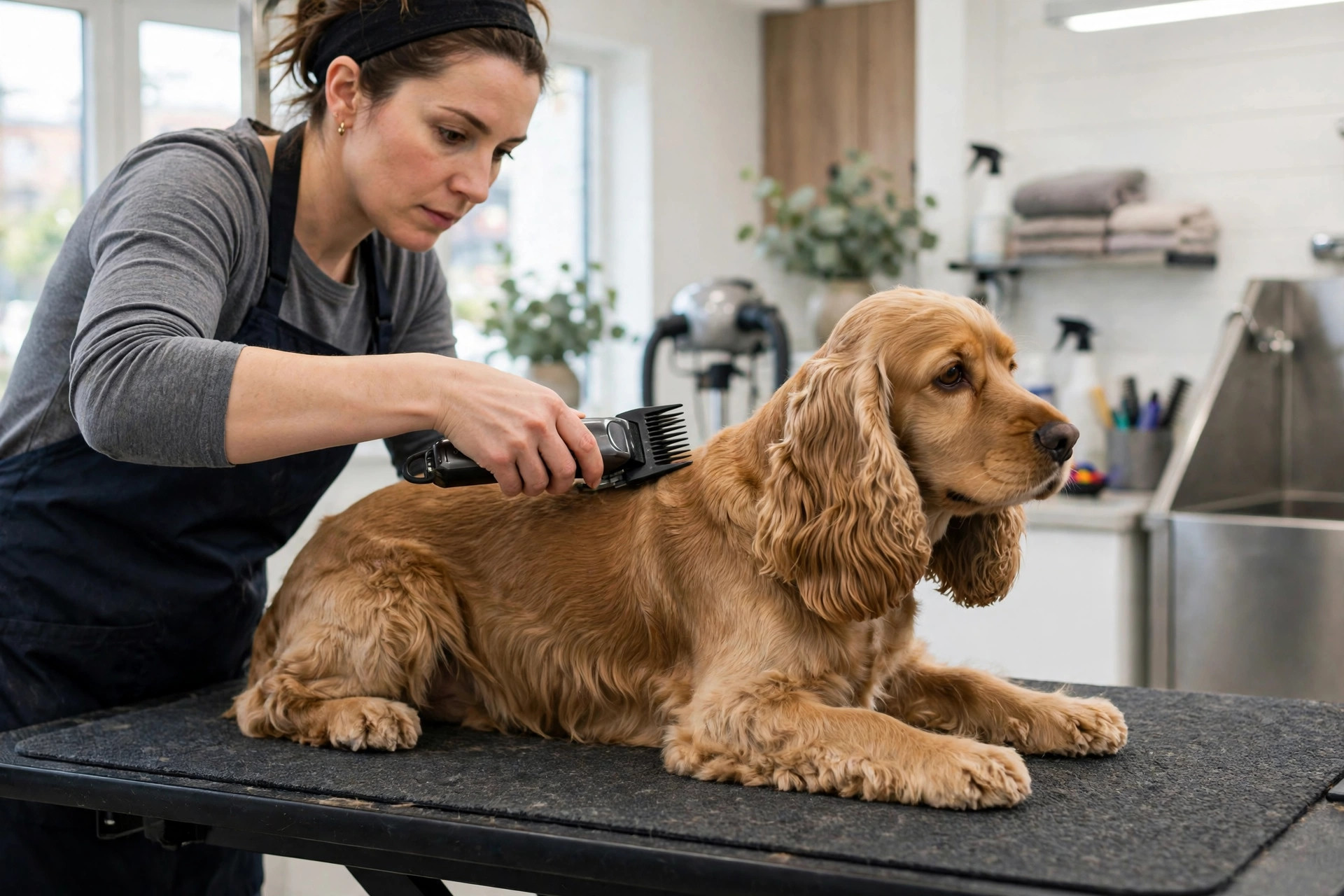
Sensitive areas — where accidents happen
\n
Four places need extra care, and they cause most home-grooming injuries: the face (eyes, lips and the tongue, which dogs stick out at the worst moment), the ears (thin skin that nicks easily), the armpits and groin (loose, folded skin that the clipper can catch), and the tail base. In all four, the rules are the same: use rounded-tip scissors, not clippers, wherever the skin folds; pull the skin taut with your free hand before the clipper passes over it; and if the dog will not hold still, stop. A half-finished haircut is fixable. A nicked ear is a vet visit and a dog that fears grooming for months.
\n
Never cut the whiskers — they are sensory tools, not stray hairs. Never use clippers on a mat pressed flat against the skin; the blade slides under the mat and cuts the skin underneath. And never, ever trim inside the ear canal: the outer ear only, with a cotton pad and ear cleaner, never a cotton bud pushed in.
\n
7 mistakes to avoid
\n
- \n
- Cutting a dirty or matted coat. It pulls, it clogs the clippers, and the result looks patchy.
- Shaving a double-coated dog. The coat may never grow back the same, and the dog loses its built-in temperature control.
- Starting with the shortest guard. You can always go shorter; you cannot put fur back. Start long, check, then go shorter.
- Skipping the blade-temperature check. A hot blade burns before you notice. Check it on your wrist every few minutes.
- Using sharp-pointed scissors near the face. Rounded tips exist for exactly this reason.
- Rushing a nervous dog. A stressed dog moves suddenly. Short sessions with treats beat one long battle.
- Forgetting the paws. Fur between the pads causes slipping, matting and mud balls. Trim it level with the pads every cut.
\n
\n
\n
\n
\n
\n
\n
\n
When to book a professional instead
\n
Some jobs belong to a groomer. A coat full of tight mats that reach the skin, a dog that bites or panics at the clippers, a breed cut you have never attempted, a senior dog with thin skin and lumps, or any skin condition — redness, sores, a smell you cannot explain — all of these are groomer or vet jobs, not home experiments. A good groomer will also let you watch and learn, which is the fastest way to get better at home cuts.
\n
A professional cut every second or third time, with home tidy-ups in between, is the routine most owners settle into. It keeps the coat in shape, keeps the dog used to being handled, and keeps the cost down.
\n
FAQs
\n
How often should I cut my dog’s hair?\nEvery 4–6 weeks for curly and long silky coats (poodles, doodles, shih tzus, yorkies), every 6–8 weeks for medium wavy coats, and a trim only every 8–12 weeks for double-coated breeds. Short smooth coats rarely need a cut at all.
\n
Can I cut my dog’s hair with human clippers?\nNot safely. Human clippers run hotter, vibrate more and are not built for thick dog fur — they drag, overheat and scare the dog. Dog clippers with guard combs are quieter, cooler and cut evenly.
\n
What is the easiest haircut for beginners?\nThe puppy cut: one even length all over with the longest guard comb, then a tidy-up of the face, ears and paws with rounded-tip scissors. It is forgiving, it suits most breeds, and a small uneven patch blends out with thinning shears.
\n
Should I cut my dog’s hair wet or dry?\nAlways dry, and always after a brush-out and a bath. Wet fur hangs longer than dry fur, so a wet cut ends up shorter than planned, and it dries patchy.
\n
Is it OK to shave my dog in summer?\nFor single-coated dogs, a short summer cut is fine. For double-coated dogs — golden retrievers, huskies, border collies, German shepherds — no. Shaving removes the insulation that keeps them cool and can damage the coat permanently.
\n
How do I keep my dog calm during a haircut?\nWalk them first, work in short sessions, treat generously, keep the tools quiet, and stop the moment they get stressed. If the dog will not settle after a few tries, book a groomer — forcing it teaches the dog to fear grooming.
\n
The bottom line
\n
A dog haircut is health care with a stylish side effect: brush out the mats, bath and dry fully, clip with the longest guard first, and tidy the face, ears and paws with rounded-tip scissors. Learn the puppy cut, keep the blade cool, never shave a double-coated dog, and hand the tricky jobs to a professional. Done every 4–8 weeks, it keeps the coat mat-free, the skin healthy and the dog comfortable — and the stylish part takes care of itself.
\n
Pin this for later 📌 — and if you want the full routine, our DIY dog grooming at home guide covers brushing, bathing, nails and ears step by step.
“,
“source_draft”: “/home/hatch/workspace/goals/pinterest-pin-automation-for-petsmush-com/files/dog-haircuts-post-draft.md”,
“status”: “publish”
}