{
“title”: “Dog Memorial Garden: A Gentle Guide to Honouring Your Dog”,
“slug”: “dog-memorial-garden”,
“excerpt”: “A gentle guide to creating a dog memorial garden — choosing the spot, dog-safe plants, a stone marker and small-space ideas to honour your best friend.”,
“meta_description”: “A gentle guide to creating a dog memorial garden — choosing the spot, dog-safe plants, a stone marker and small-space ideas to honour your best friend.”,
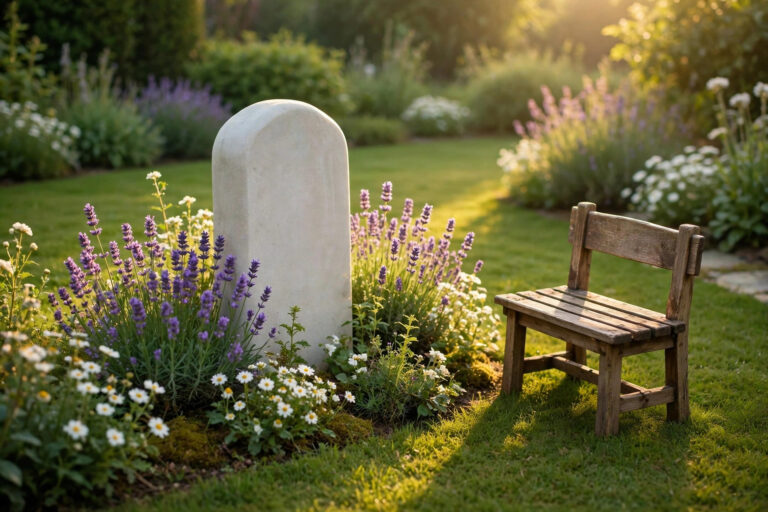
“featured_image_alt”: “A peaceful dog memorial garden corner with a stone marker among lavender and white flowers and a small wooden bench.”,
“content_html”: “
Losing a dog leaves a hole in the house that no one else can see. The lead hangs by the door, the bed stays empty, and the garden — the place they ran, sniffed, and sunbathed — suddenly feels too quiet. A memorial garden is a small, gentle way to answer that quiet: a planted corner of your own garden, made in their honour, where you can sit for a minute, remember them properly, and watch something living grow.
\n
It does not need to be big, expensive, or formal. A few dog-safe plants, a smooth stone, and a place to sit are enough. Some people build theirs in a weekend; others add to it slowly over a season, one plant at a time. This guide walks through the whole thing — choosing the spot, what to plant (and what never to plant), the marker, a seat, small-space versions for balconies and rented homes, and how to look after it through the year.
\n
What is a dog memorial garden?
\n
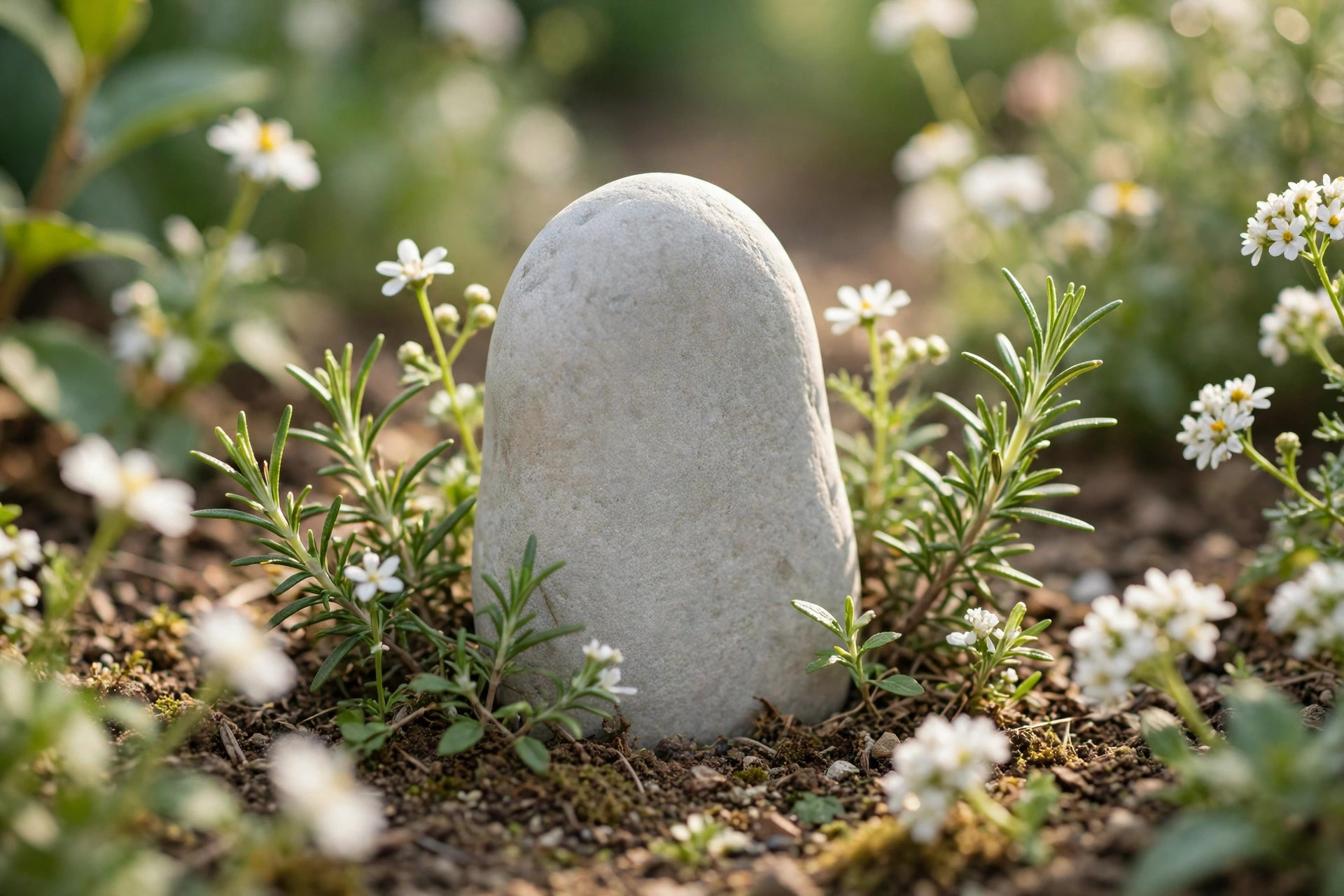
A dog memorial garden is simply a small planted area dedicated to your dog’s memory. It is not a grave and it does not need to mark where anything is buried — it is a living tribute, a corner of the garden that belongs to them. For some families it holds a stone with their dog’s name; for others it is just a bed of their dog’s favourite-coloured flowers and a bench to sit on. Both are right.
\n
The best memorial gardens share three things: they are easy to see from the house (so you actually visit them), they are planted with things that are safe for dogs (because another dog will almost certainly sniff them one day), and they are simple enough to keep up when grief makes even small jobs feel heavy. Start small. You can always add to it.
\n
Step 1 — Choose the spot
\n
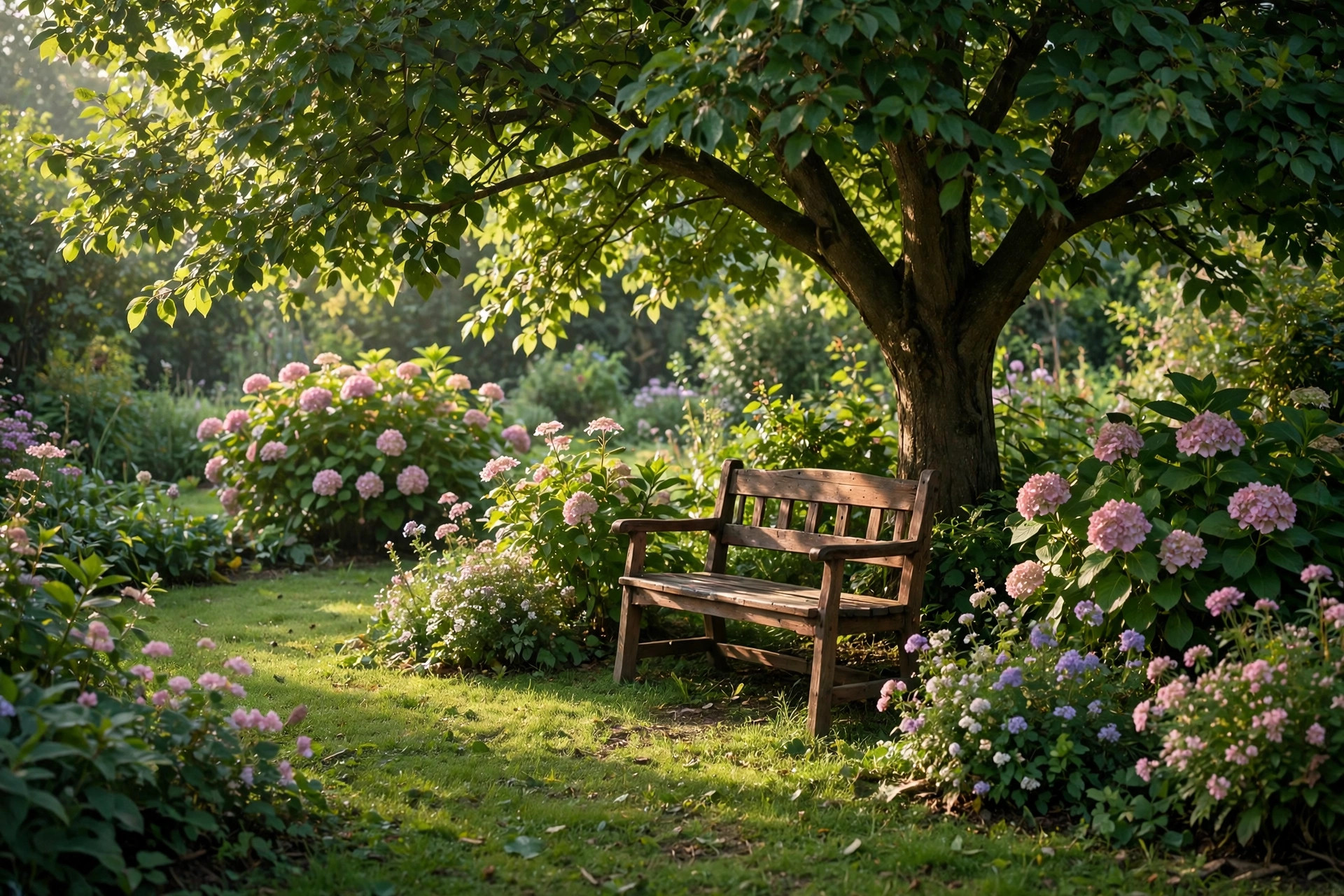
The spot matters more than anything you buy for it, so take your time. Look for a quiet corner that gets four to six hours of sun — most flowering plants need it — and that you can see from a window or the back door. A memorial garden you never see becomes a forgotten corner; one you pass every morning becomes part of the day.
\n
A few practical checks before you dig: avoid the place your current dog uses as a toilet or a digging patch; avoid low ground where water sits after rain (roots rot and stones sink); and if you are planting a small tree or shrub, keep it clear of fences, drains, and overhead wires. A spot near a tree gives dappled shade for a bench, which is lovely in summer — just remember that tree roots will compete with anything you plant underneath, so keep the bed a little way out from the trunk.
\n
If the garden is small, do not worry — the corner by the back step, the strip along a fence, or even a sunny patch of lawn you are happy to give up will do. And if there is no garden at all, the small-space ideas later in this guide cover pots, balconies, and windowsills.
\n
Idea 1 — A planting bed of dog-safe flowers
\n
Flowers are the heart of a memorial garden, and the first rule is simple: plant only things that are safe for dogs. Even if your dog has gone, a visiting dog, a neighbour’s puppy, or a future dog will chew a leaf sooner or later — dog-safe planting is a kindness to them as well as a tribute to yours.
\n
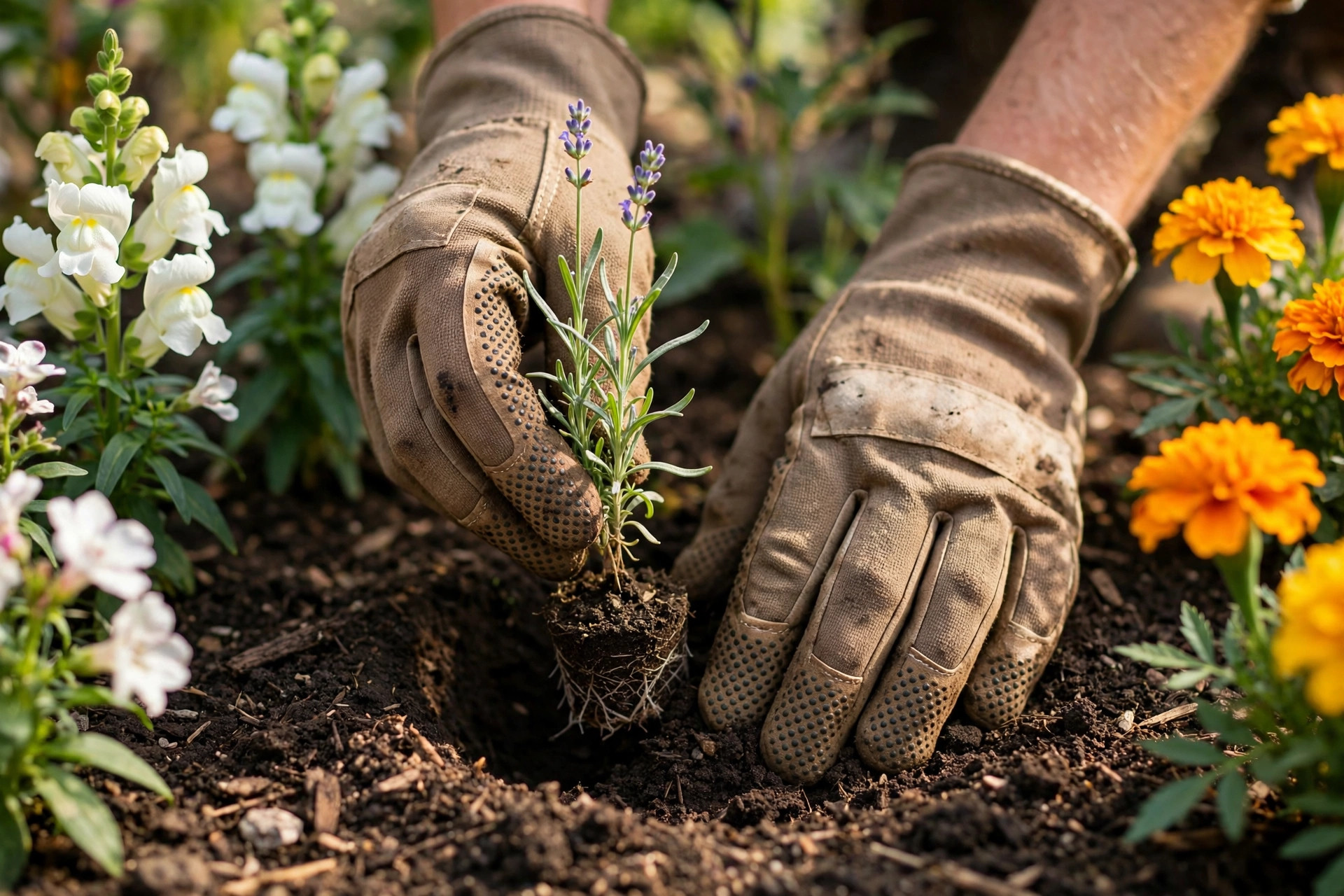
Good choices that are widely listed as dog-safe include lavender, rosemary, sunflowers, marigolds, snapdragons, zinnias, camellias, and roses (watch the thorns — plant roses where nobody brushes past them). Lavender and rosemary are the two most popular memorial plants: they are tough, they smell wonderful, they flower for months, and they stay green through winter, so the garden never looks abandoned. Rosemary has long been the herb of remembrance, which makes it a fitting choice.
\n
| Plant | Why it works | Sun |
|---|---|---|
| Lavender | Fragrant, hardy, flowers for months | Full sun |
| Rosemary | Evergreen, the herb of remembrance | Full sun |
| Sunflowers | Tall, cheerful, easy from seed | Full sun |
| Marigolds | Bright, tough, flower all summer | Full sun |
| Snapdragons | Gentle colour, long flowering season | Sun / part shade |
| Zinnias | Bold colour, very easy to grow | Full sun |
\n
Plant in odd numbers — three lavenders, five marigolds — and leave space between them. New plants always look sparse; they fill in within a season, and overcrowding now means disease later.
\n
Plants to never use
\n
Some of the prettiest garden plants are dangerous to dogs, so check every plant before it goes in. Never plant lilies, daffodils, tulips, azaleas, foxgloves, oleander, or sago palm anywhere a dog can reach them — all are toxic, some seriously so. Bulbs are a particular risk because dogs dig them up, so if you want spring bulbs, plant them in pots kept out of reach, or skip them and use safe annuals instead.
\n
The same rule applies to mulch: cocoa-shell mulch smells like chocolate because it contains theobromine, the same compound that makes chocolate toxic to dogs. Use bark, gravel, or plain compost instead. And if you feed the plants, choose a pet-safe fertiliser and water it in well — or use compost only, which is the safest feed of all.
\n
Idea 2 — A stone marker or plaque
\n
A marker gives the garden its focus — the thing your eye lands on, the place you put the flowers down. A smooth river stone, a flat piece of slate, or a small engraved plaque all work. Keep the wording simple: their name, their dates, and one short line if you like — \”Our best friend\” or \”Forever in our hearts\” is enough. Long inscriptions are hard to read in a garden and harder to engrave well.
\n
Set the stone slightly tilted forward so rain runs off it, and bed it on a little gravel so it does not sink into soft soil. Avoid glass ornaments and painted stones that flake — glass shatters, and flaking paint ends up in the soil. If you would like the marker engraved, a local stone mason or an online pet-memorial engraver can do a simple slate plaque for very little, and it will outlast any wooden sign.
\n
Idea 3 — A bench or a place to sit
\n
A memorial garden is for visiting, and visiting means sitting. A small wooden bench, a single garden chair, or even a large flat stone to sit on turns the corner from something you look at into somewhere you go. Face the seat toward the planting, not away from it, and put a cushion on it that you can bring inside when it rains — a wet cushion is the fastest way to stop using a bench.
\n
If space is tight, a tree stump makes a fine seat, and a folded blanket kept by the back door does the same job. The point is not the furniture; it is giving yourself permission to sit there for five minutes with a cup of tea and remember them.
\n
Idea 4 — Sound and movement: a wind chime or a water bowl
\n
A garden that moves and sounds feels alive, which is exactly what a memorial garden should feel like. A soft-toned wind chime — metal or bamboo, hung from a branch or a hook — gives the corner a gentle sound on breezy days. Choose a low, mellow tone rather than a bright, tinkling one; the garden is a quiet place.
\n
A shallow bird bath or a heavy ceramic water bowl adds movement too, and visiting birds will use it within days. Keep it shallow and heavy: deep water is a drowning risk for small pets and young children, and a light bowl tips over in the first wind. If you already have a pond, fence the memorial corner off from it rather than building the garden beside it.
\n
Idea 5 — A memory tree or shrub
\n
For a longer-lasting tribute, plant a small tree or shrub in their honour — something that grows a little bigger every year, the way your memories of them do. A dwarf fruit tree, a camellia, a rose bush, or a rosemary bush all work, and all are dog-safe. Pick for your climate and your space: a tree that outgrows its spot in five years becomes a problem, not a tribute.
\n
Plant trees and shrubs in autumn or early spring, when the ground is workable and rain does the watering for you. Dig the hole twice as wide as the pot, mix in compost, water deeply after planting, and mulch around the base (bark or gravel, never cocoa shell). Then leave it alone — the hardest part of a memory tree is not fussing over it.
\n
Small-space memorials — pots, balconies and windowsills
\n
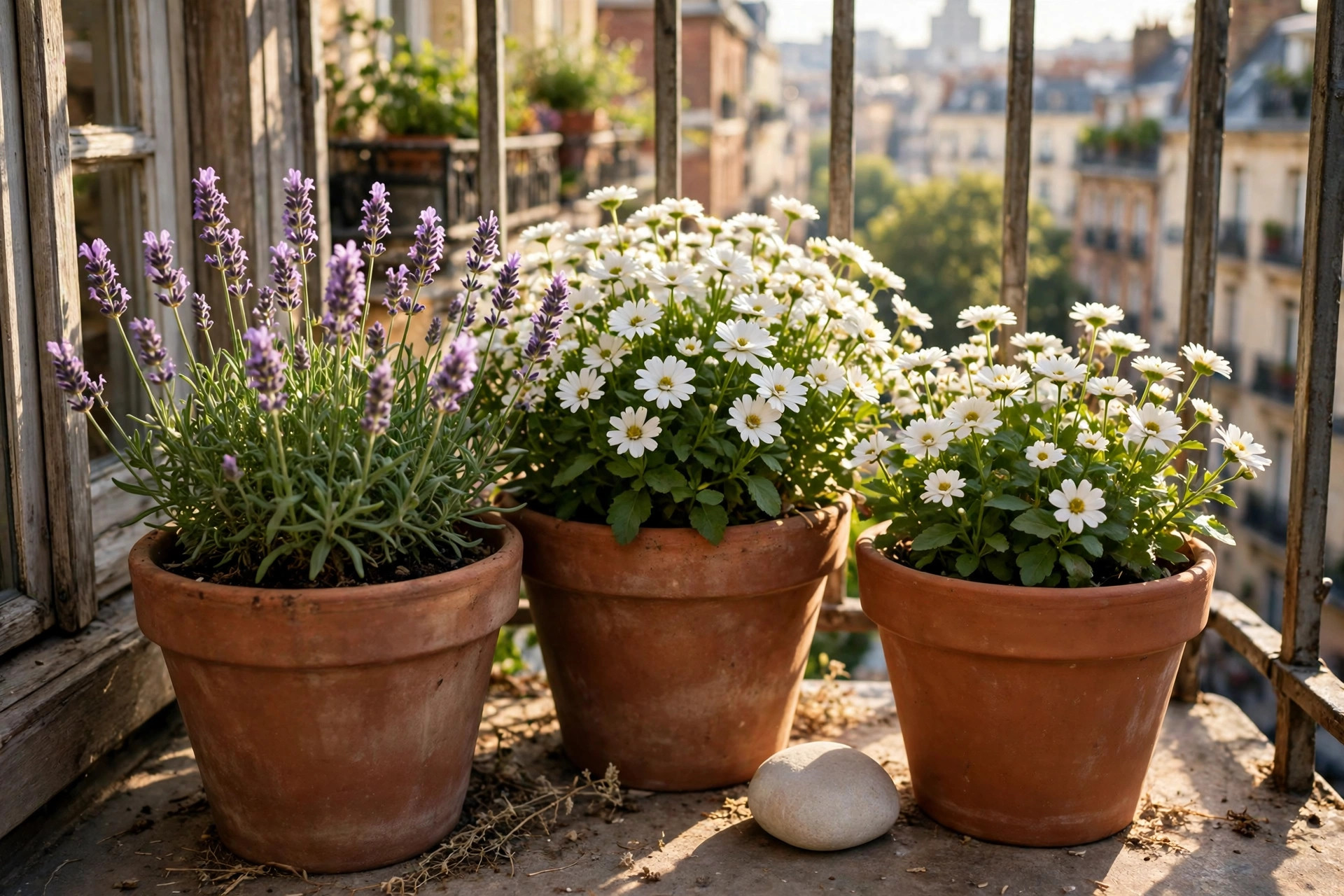
No garden is no obstacle. Three terracotta pots on a balcony — lavender, rosemary, and white snapdragons — with a small smooth stone in the middle pot make a complete memorial garden in under a square metre. A single large pot with a dwarf rose and a stone works on a doorstep. Even a sunny windowsill pot of lavender counts: the garden is the intention, not the acreage.
\n
Renters have an extra advantage with pots: everything moves with you. Use lightweight pots if you are upstairs, put saucers under them so you do not stain the balcony, and choose plants that cope with wind — lavender and rosemary are both tough enough for an exposed balcony. Our apartment dog setup ideas guide has more on making small outdoor spaces work for dogs.
\n
Caring for the garden through the seasons
\n
A memorial garden should ask very little of you, especially in the first months. Here is the lightest possible year:
\n
Spring: tidy away dead growth, top up the mulch, and replant any annuals that did not survive winter. This is the best time to add a new plant if you feel ready.
\n
Summer: water early in the morning so the leaves dry before the heat, and deadhead spent flowers so the plants keep blooming. Lavender and rosemary need very little water once established — overwatering kills more lavender than drought does.
\n
Autumn: cut back perennials, plant any new shrubs or trees, and leave a few seed heads standing for the birds. Rake leaves off the bed so they do not smother small plants.
\n
Winter: the evergreens — rosemary and lavender — keep the garden alive-looking. A small solar light by the stone means the corner is visible on dark evenings, and it costs nothing to run.
\n
If a plant dies, replace it without guilt. Gardens lose plants; it is not a verdict on your care or your love. The garden is allowed to change, just as grief changes.
\n
Involving children
\n
Children grieve too, and a memorial garden gives them something concrete to do with feelings that are hard to name. Let them choose a plant, paint a stone with outdoor paint (seal it so it lasts), or pick the wind chime. A small ceremony helps as well — planting the first flower together, or each saying one favourite memory out loud. Keep it simple and honest: children cope better with plain truth than with euphemism, and a garden they helped build is a place they will want to visit.
\n
What not to do
\n
- \n
- Do not plant toxic flowers. Lilies, daffodils, tulips, azaleas, foxgloves, oleander, and sago palm have no place where any dog can reach them.
- Do not use cocoa-shell mulch. It contains theobromine and is toxic to dogs — use bark, gravel, or compost.
- Do not use glass ornaments. They shatter, and broken glass in a garden bed is a hazard for paws and bare feet alike.
- Do not bury ashes directly under a plant without checking. Ashes are very alkaline and can burn roots if piled in one spot. Check local rules, and if you want ashes in the garden, use a biodegradable planting urn designed for the purpose, or mix a small amount well into a large volume of soil.
- Do not rush it. The garden does not need to be finished this weekend. Plant one thing, sit with it, and add the next when you are ready.
\n
\n
\n
\n
\n
\n
FAQs
\n
Can I make a memorial garden if I rent?\nYes — build it entirely in pots. A lavender, a rosemary, and a small stone in three terracotta pots is a complete memorial garden, and it all moves with you when you move.
\n
What if I have another dog?\nPlant dog-safe only, and put a low temporary fence or a ring of stones around new beds until the plants are established. Dogs are curious about fresh soil — a little protection for the first few weeks saves a lot of replanting.
\n
How much does a memorial garden cost?\nVery little. Three plants, a bag of compost, and a stone can cost less than a takeaway dinner. The bench and the engraved plaque are optional extras, and both can wait until later.
\n
What should I write on the marker?\nTheir name and dates, plus one short line if you like. \”Our best friend\”, \”Forever in our hearts\”, or simply their name is enough — the garden says the rest.
\n
Is it all right to feel sad when I visit it?\nYes. Grief has no timetable, and a memorial garden is meant to hold the sad days as well as the peaceful ones. If the sadness feels too heavy for too long, a pet-loss support group or a counsellor who understands pet bereavement can help — there is no shame in asking.
\n
Can I scatter my dog’s ashes in the garden?\nCheck your local rules first. Ashes are alkaline, so never pile them in one spot under a plant — mix a small amount thoroughly into a large volume of soil, or use a biodegradable planting urn made for the purpose.
\n
The bottom line
\n
A dog memorial garden is not about the plants, the stone, or the bench — it is about having somewhere to go when you miss them. Choose a quiet, sunny spot you can see from the house, plant only things that are safe for dogs, add a simple marker and somewhere to sit, and let it grow at its own pace. Start with one plant if that is all you can manage today; the garden will wait for the rest. And if the corner by the back door is where their bed used to be, our dog bed ideas and best dog beds for crates guides can help you make the indoor spaces they loved just as comfortable for the dogs still with you.
\n
Pin this for later 📌 — and if you are planning the wider garden they loved, our DIY dog house ideas guide shows nine builds to compare before you start.
“,
“source_draft”: “/home/hatch/workspace/goals/pinterest-pin-automation-for-petsmush-com/files/dog-memorial-garden-post-draft.md”,
“status”: “publish”
}