
If your dog has a sensitive stomach, itchy skin, or seems to catch every bug going, the answer might not be another food swap — it might be their gut. The digestive tract holds the majority of your dog’s immune system, and probiotics are the friendly bacteria that keep that whole system running smoothly.
Searches for dog probiotics have climbed sharply over the past year, and for good reason: owners are seeing real, visible differences — firmer stools, calmer tummies, shinier coats. This guide covers what probiotics actually are, when your dog needs them, which strains work, and how to pick a product that isn’t just marketing dust in a pretty jar.
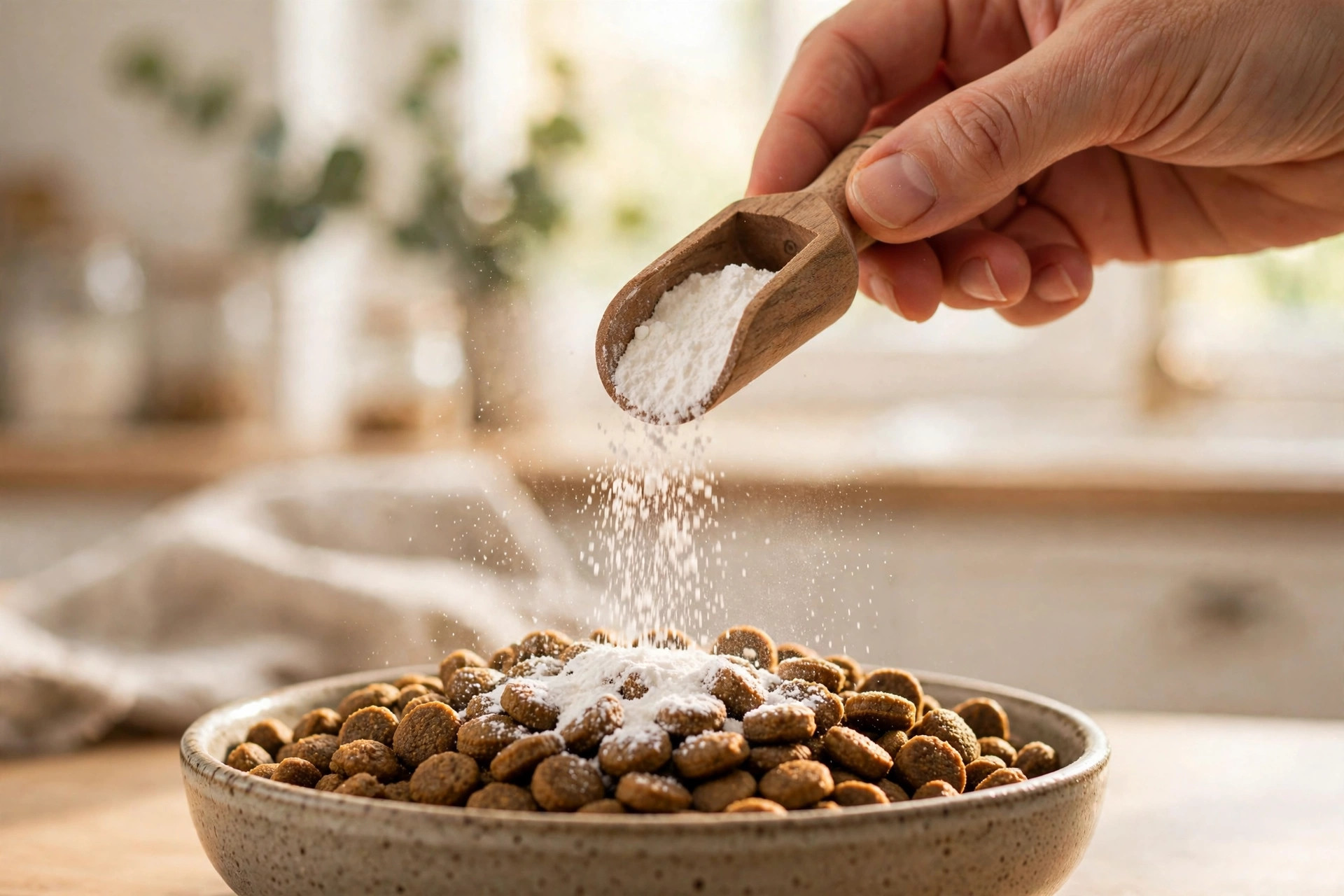
What are probiotics for dogs?
Probiotics are live beneficial bacteria and yeasts that support a healthy gut microbiome — the trillions of microorganisms living in your dog’s digestive tract. Think of the gut as a garden: probiotics are the good plants that crowd out the weeds (harmful bacteria), help break down food, and keep the soil — the gut lining — healthy.
The most studied, dog-appropriate strains include:
- Enterococcus faecium — one of the most researched probiotics for dogs, often used for diarrhoea support.
- Lactobacillus acidophilus — helps digestion and nutrient absorption.
- Bifidobacterium animalis — supports immune health and stool quality.
- Lactobacillus casei — linked to gut and immune support.
- Bacillus coagulans — a hardy, spore-forming strain that survives storage and stomach acid well.
Many quality products also include prebiotics — fibres like fructooligosaccharides (FOS) or chicory root that feed the good bacteria. A product with both is called a synbiotic, and it’s generally the better choice.
6 signs your dog might need a probiotic
Not every dog needs a daily probiotic, but these are the classic signals:
- Recurring diarrhoea or loose stools. Probiotics are one of the best-supported uses — they help stabilise the gut flora after an upset.
- Gassiness and bloating. Excessive wind often means the gut bacteria are out of balance.
- After antibiotics. Antibiotics kill good bacteria along with the bad. A probiotic during and after a course helps rebuild the gut. (Give it a few hours apart from the antibiotic dose — ask your vet.)
- Stress-related stomach issues. Moving house, boarding, fireworks, new pets — stress disrupts the gut. Boarding kennels and travel are classic trigger points.
- Allergies and itchy skin. Gut health and skin health are linked; some dogs with itchiness or recurrent ear infections improve when their gut flora is balanced.
- A weak immune system. Dogs that seem to catch every passing bug may benefit, since so much immunity lives in the gut.
Safety note: these are general wellness signs. If your dog has bloody diarrhoea, vomiting that won’t stop, is lethargic, or refuses water, see a vet promptly — a probiotic is not a substitute for veterinary care.
The real benefits of dog probiotics
Here’s what the evidence and owner experience point to:
- Firmer, more regular stools. The headline benefit — most owners notice a difference in one to two weeks.
- Better digestion and nutrient absorption. A balanced microbiome breaks food down more efficiently, so your dog gets more from the same food.
- Stronger immune defences. A healthy gut is the immune system’s front line.
- Calmer allergic responses. Some dogs show less itching and fewer flare-ups when gut inflammation settles.
- Faster recovery after digestive illness or antibiotics. Rebuilding the gut flora shortens the bounce-back period.
- Better breath and less gas. Some of that “dog smell” starts in the gut.
Types of dog probiotics: powder, chews, capsules
Probiotics come in several forms — pick the one your dog will actually take every day:
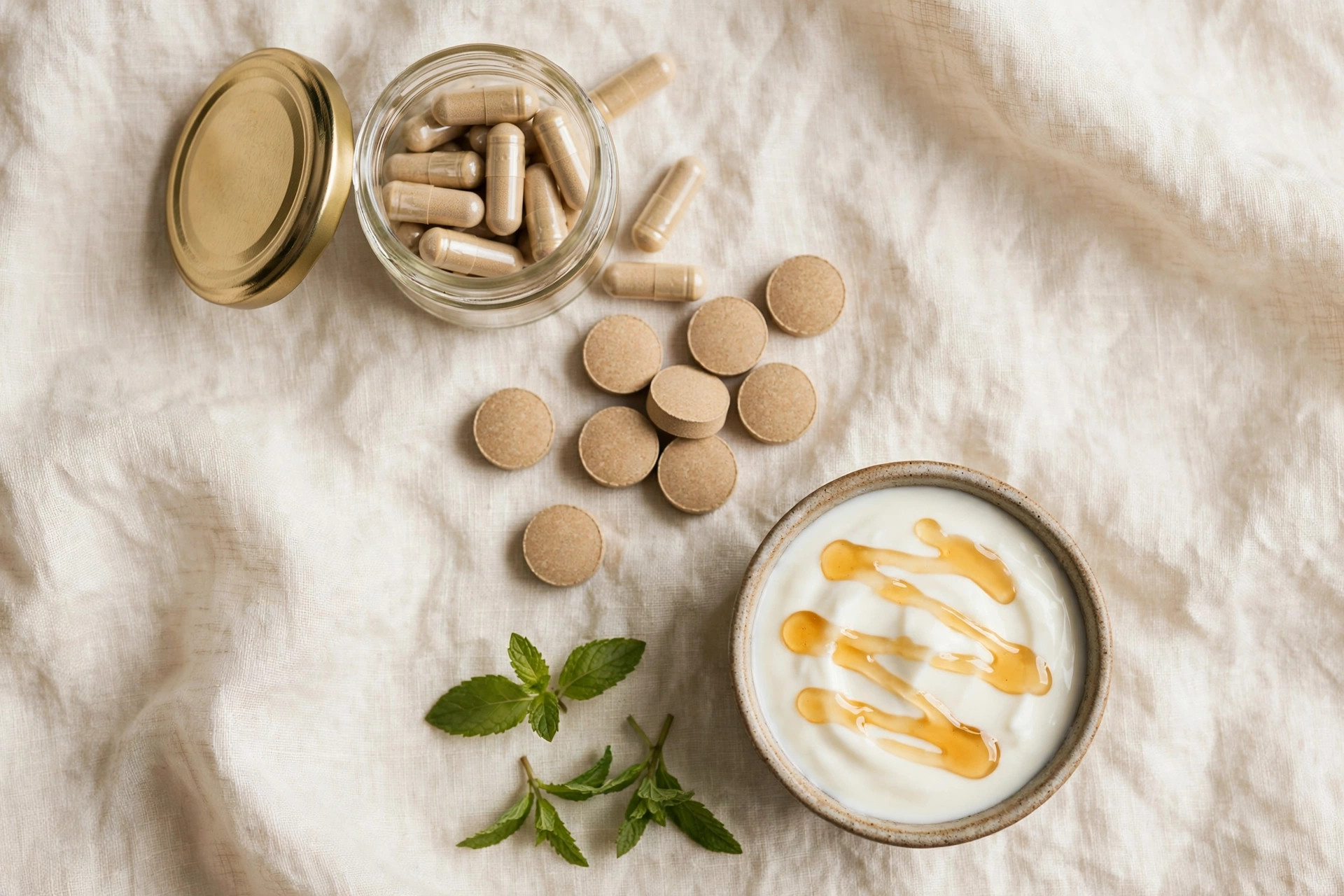
- Powders — sprinkled over food. Easy to dose, usually good value, but some dogs notice the taste or texture change.
- Chews/soft treats — the easiest for fussy dogs, though they can contain more flavourings and fillers. Check the label for xylitol (also called birch sugar) — it must never be in a dog product.
- Capsules — precise dosing, ideal for larger dogs; can be opened and mixed into food.
- Pastes — often sold for acute diarrhoea; handy for short-term use.
- Food-based options — plain unsweetened yoghurt, kefir, and fermented foods contain live cultures. They’re milder than supplements but a great everyday topper — as long as there’s no added sugar, sweeteners, or flavourings.
Whichever form you choose, it has to be given daily and consistently for at least a few weeks before you judge the results.
How to choose a good dog probiotic
The probiotic shelf is a jungle. Here’s how to sort the real thing from the marketing:
- Named strains on the label. Look for the specific strain (e.g. Enterococcus faecium SF68), not just “contains probiotics”.
- CFU count in the billions. A meaningful daily dose is typically 1–10 billion CFUs (colony-forming units). Tiny doses are mostly for show.
- Formulated for dogs. Human probiotics aren’t dangerous in most cases, but dog-specific formulas use strains researched in dogs.
- Prebiotics included. FOS, inulin or chicory root feed the bacteria and improve results.
- Guaranteed through expiry. Live bacteria die off; the CFU number should be guaranteed at the end of shelf life, not just at manufacture.
- Clean label. No xylitol/birch sugar, no artificial sweeteners, minimal fillers and colours.
Price isn’t a perfect guide, but rock-bottom chews with vague labels are a red flag. If in doubt, ask your vet for the brands they actually use — they’ll have seen what works.
Dosage: how much and how often
There is no single universal dose — it depends on the product’s CFU concentration and your dog’s size. General rules:
- Follow the label. Doses are usually weight-banded (e.g. one chew under 10 kg, two above).
- Daily for at least 3–4 weeks before judging. Gut flora changes take time.
- Introduce gradually. Start with half a dose for the first 3–4 days — some dogs get mild gas as the gut adjusts.
- Pair with prebiotics. Fibre feeds the new bacteria; a spoon of plain pumpkin puree is a cheap, dog-safe helper.
When to talk to your vet first: puppies under 8 weeks, dogs with compromised immune systems, dogs on immunosuppressive drugs, and any dog with a serious ongoing illness. Probiotics are very safe for healthy dogs, but severely ill dogs need professional guidance.
Can dogs get probiotics from food?
Yes — as a gentle daily topper, these food sources contain live cultures:
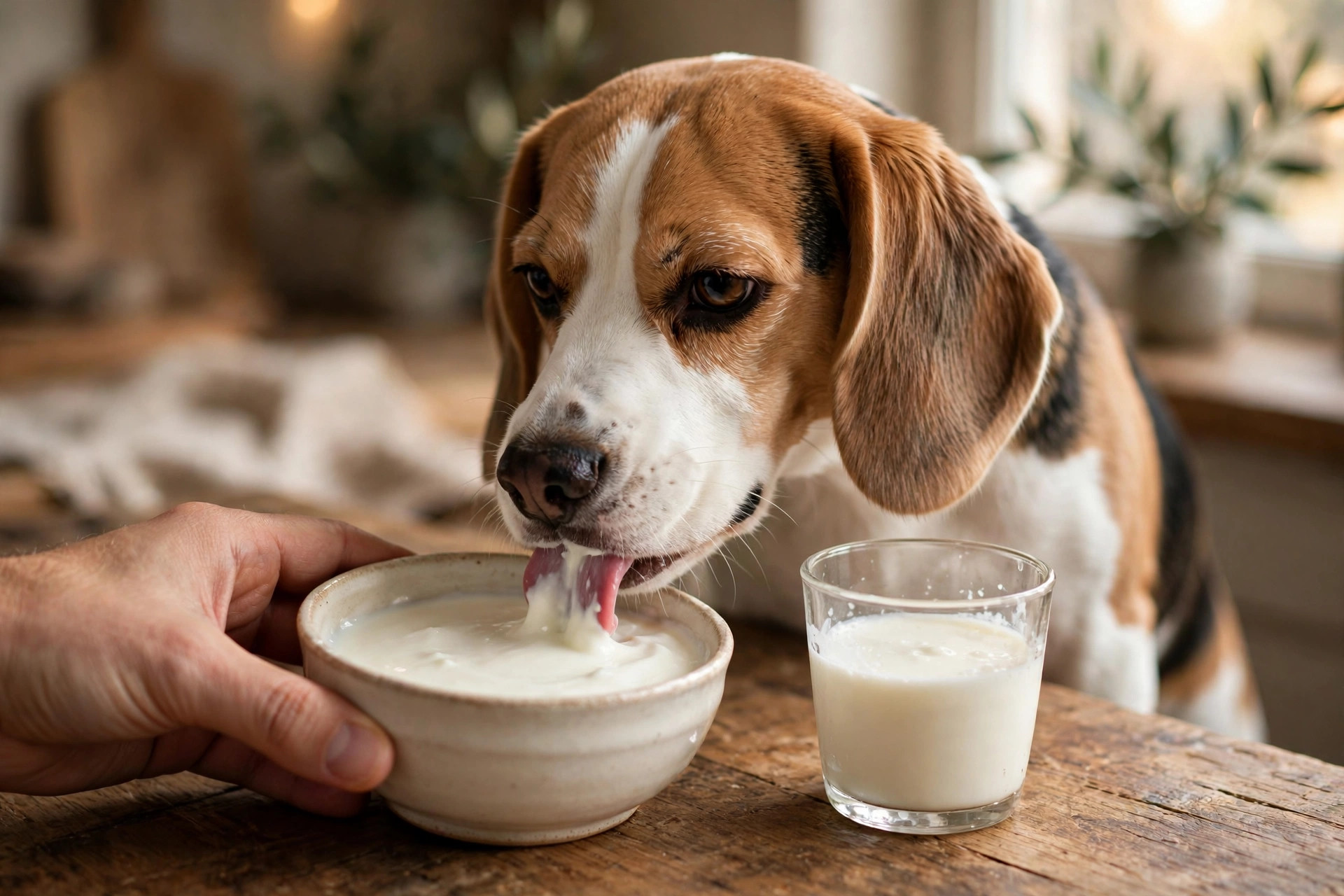
- Plain unsweetened yoghurt — a spoonful a day; check for xylitol on the label, every single time.
- Plain kefir — often higher in live cultures than yoghurt; start with a teaspoon.
- Fermented vegetables (small amounts, plain) — some dogs love them, some don’t.
Food sources are milder than supplements, so think of them as gut maintenance rather than treatment. For a dog with a real digestive issue, a proper supplement plus vet advice is the way.

FAQs
Are probiotics safe for dogs? Yes — probiotics are considered very safe for healthy dogs. The most common side effect is mild, temporary gas when you start. Dogs that are severely ill, immunocompromised, or on immunosuppressive medication should have vet approval first.
How long does it take for dog probiotics to work? Most owners notice changes in stool quality within 1–2 weeks of daily use, with fuller benefits over 4–6 weeks. Consistency matters more than anything — a missed day here and there won’t help the gut settle.
Can I give my dog human probiotics? It’s not dangerous in most cases, but it’s not ideal — human products use strains researched in people, and dosing is unclear. Dog-formulated products use strains studied in dogs and are dosed by weight. Use the dog version when you can.
Do probiotics help dogs with allergies? They can help some dogs. The gut and the immune system are tightly linked, and balancing gut flora may calm overactive immune responses — some dogs itch less and have fewer flare-ups. They’re not a cure, but they’re a sensible part of an allergy management plan alongside vet care.
Should I give probiotics every day? For ongoing support, yes — daily and consistently. For short-term situations (after antibiotics, a stomach bug, stressful travel), a course of a few weeks is usually enough. When in doubt, ask your vet what schedule fits your dog.