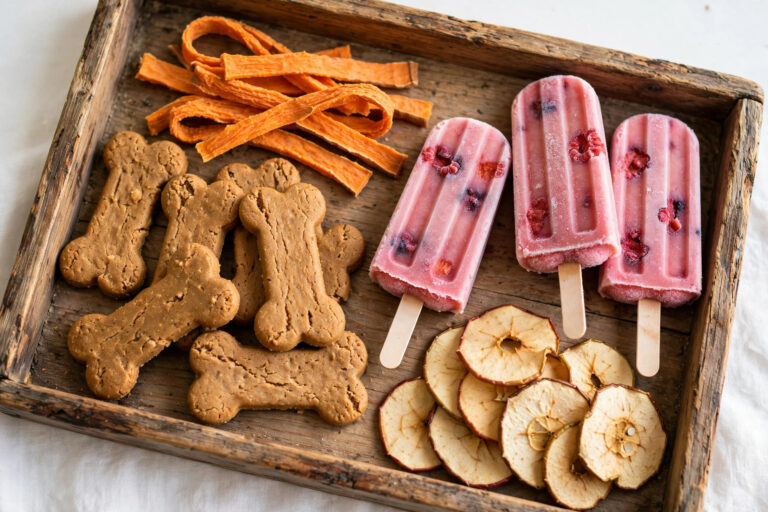
Walk down any pet aisle and half the bags shout “natural” at you. But here’s the thing: in pet food, natural isn’t a tightly regulated word. A treat can call itself natural and still pack in glycerin, vague “meat meals”, and enough sugar to make a nutritionist wince.
The most reliable way to keep treats natural is the same way it’s always been: make them yourself, from ingredients you’d put in your own cooking. Below are 12 natural dog treat ideas — all tested, all built on short ingredient lists, and all free of the additives that make dog owners read labels twice. Many use fewer than five ingredients.
Before you bake — the 4 rules
1. Peanut butter must be xylitol-free. Check the label: xylitol (also listed as “birch sugar”) is extremely toxic to dogs.
2. Use plain pumpkin purée, NOT pumpkin pie filling — the filling has spices like nutmeg, which dogs shouldn’t eat.
3. Never chocolate, grapes, raisins, or macadamia nuts. For “chocolatey” decoration, use carob chips — they’re dog-safe.
4. Treats are treats. Keep them under ~10% of your dog’s daily food, and introduce new recipes one at a time.
What “natural” should actually mean
When you bake at home, natural is simple: a recognisable ingredient, minimal processing, no artificial colours, flavours or preservatives. When you buy, use this quick checklist:
- ✅ Named whole ingredients first (“sweet potato”, “peanut butter”, “oats”)
- ✅ Short ingredient list — under 10 is a good sign
- ❌ Avoid: artificial colours, added sugars, propylene glycol, vague terms like “meat and animal derivatives”, and anything “sugar-free” that might hide xylitol
Homemade wins every time — and it’s cheaper too. Here’s where to start.
Baked biscuits (longest lasting)
1. Peanut Butter & Oat Bones
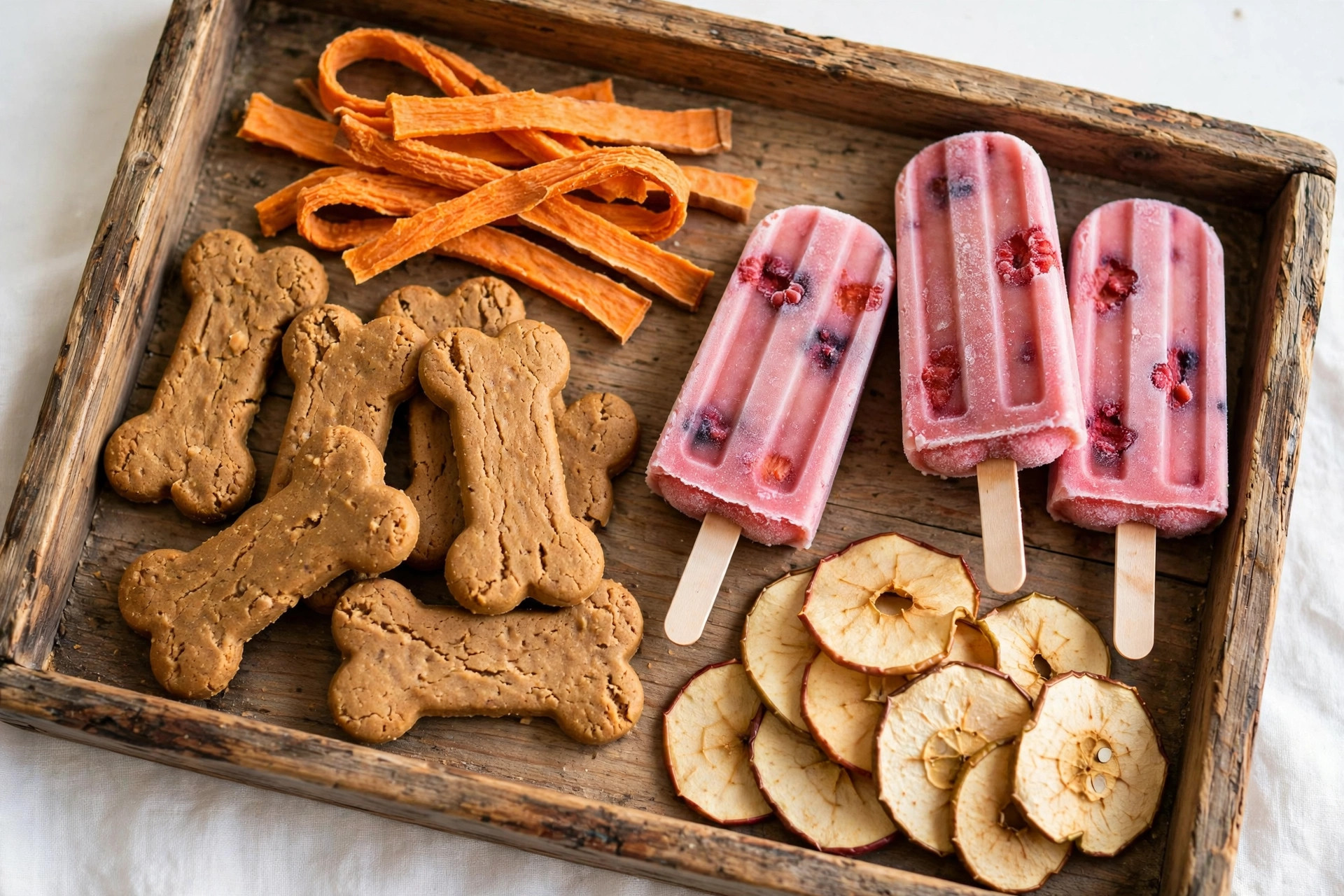
Our classic homemade peanut butter treats — just peanut butter, banana, egg and oats, baked until crunchy. Dogs lose their minds over these, and there’s nothing in them you couldn’t eat yourself (though we’d recommend your own snacks too).
2. Pumpkin Oatmeal Pup Cookies
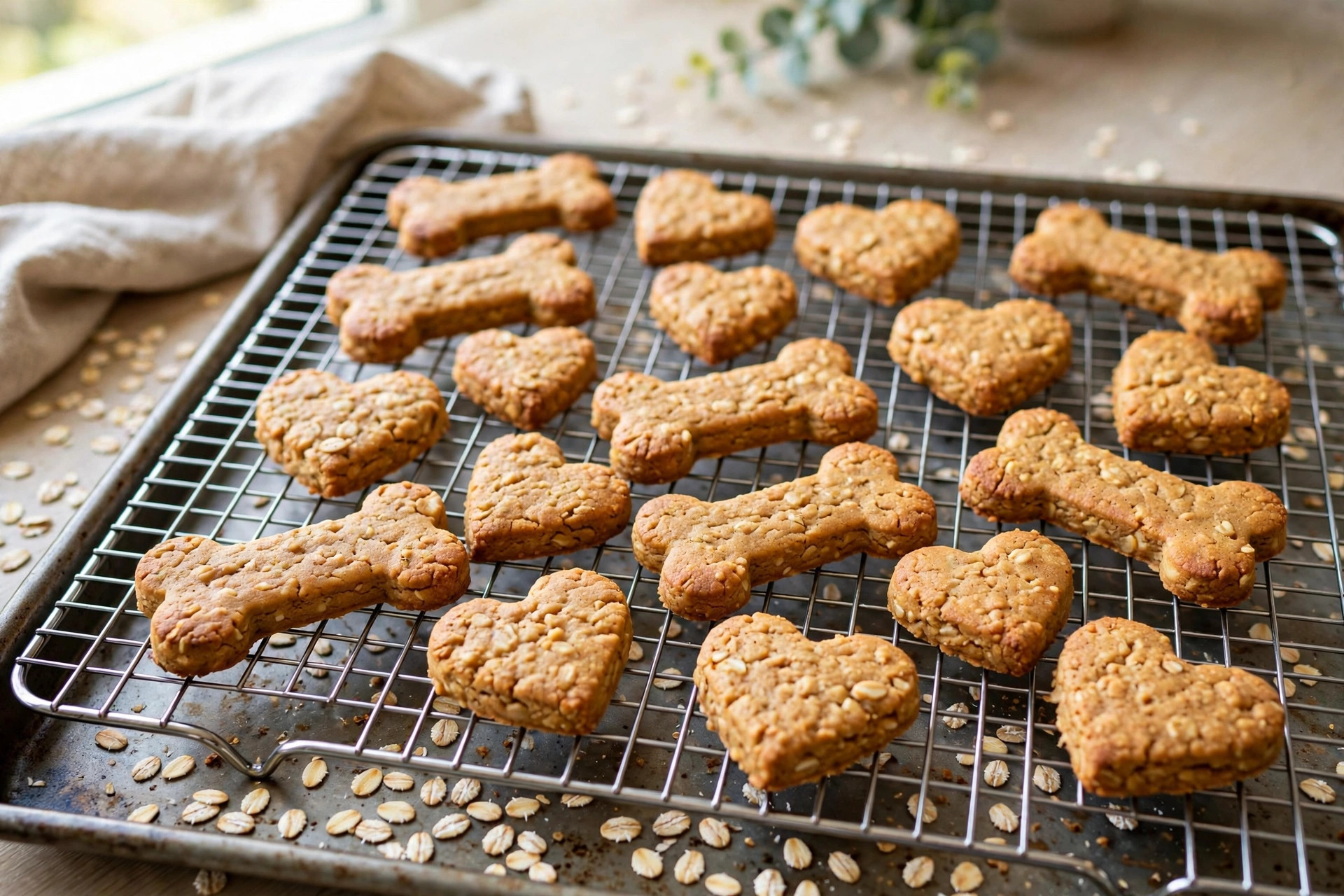
Pumpkin is the gentlest ingredient in a dog’s pantry — great for digestion. These soft pumpkin and oat cookies take 20 minutes and one bowl. Full method: see the pumpkin oatmeal recipe post.
3. Carrot & Oat Squares
Grated carrot, oats, a spoonful of coconut oil. Naturally sweet, crunchy, and a good one for dogs who need a lighter treat — carrots are low in calories and high in fibre.
4. Apple & Cinnamon Bites
Unsweetened applesauce, oat flour, a pinch of cinnamon, one egg. Drop-spoon cookies, baked 18–22 minutes at 175°C / 350°F. Softer bake for older dogs: take them out 5 minutes early.
No-bake & frozen (easiest)
5. Frozen Berry Yoghurt Pops
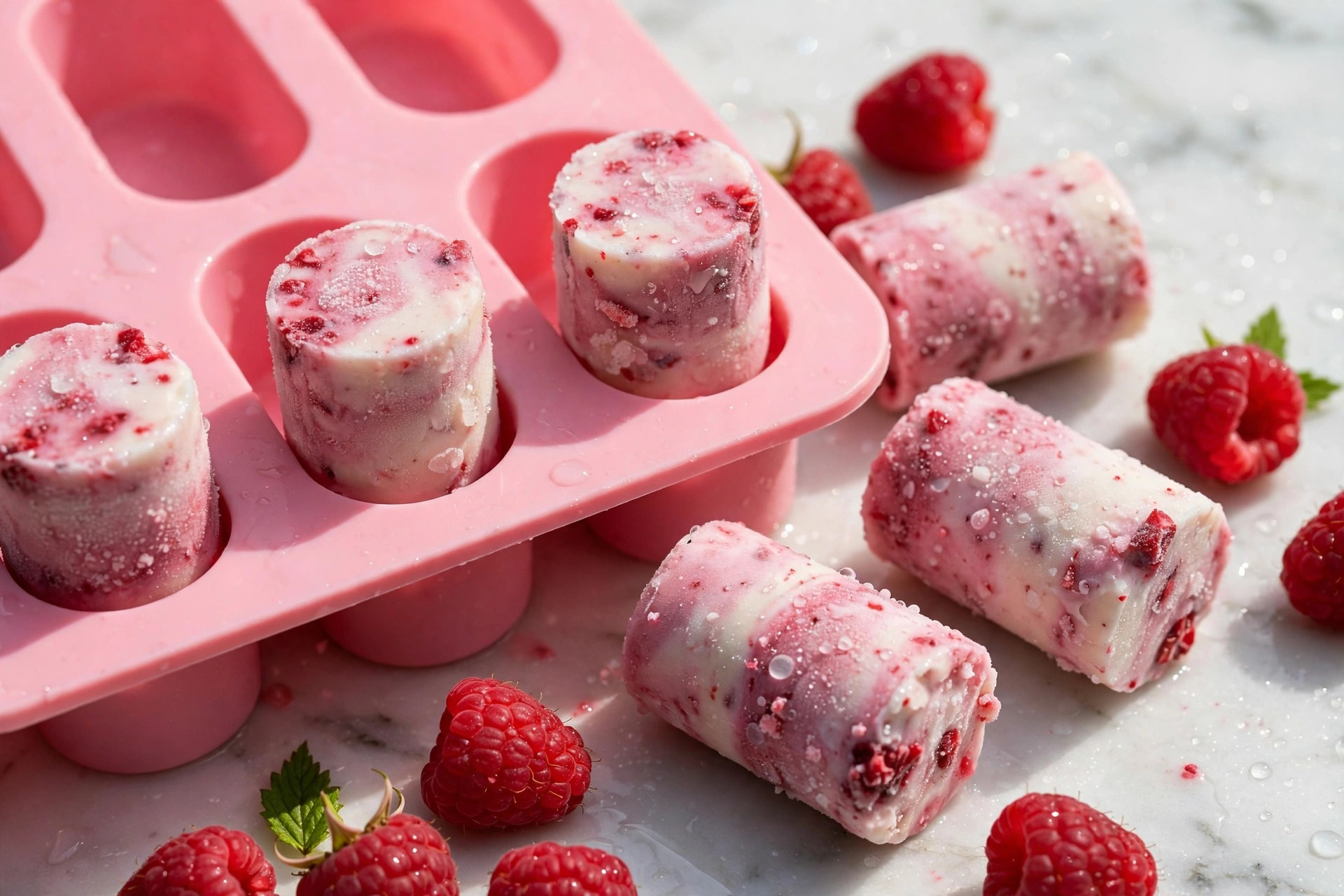
Plain yoghurt (xylitol-free!) and a handful of strawberries or raspberries, layered in silicone moulds and frozen. See our frozen berry treats post for the marbled technique — two ingredients, zero baking, huge tail-wag payoff.
6. Peanut Butter Banana Ice Cubes
Mash one banana into ½ cup plain yoghurt with a tablespoon of xylitol-free peanut butter. Pour into ice cube trays, freeze overnight. Perfect for hot days — and for stuffing into Kongs.
7. Watermelon “Popsicles”
Seedless watermelon blended with a little coconut water, frozen in moulds. Hydrating, low-calorie, and dogs genuinely seem to like the ice-cold crunch. Remove any seeds first — even in “seedless” fruit, check.
Chews & jerky (slow and satisfying)
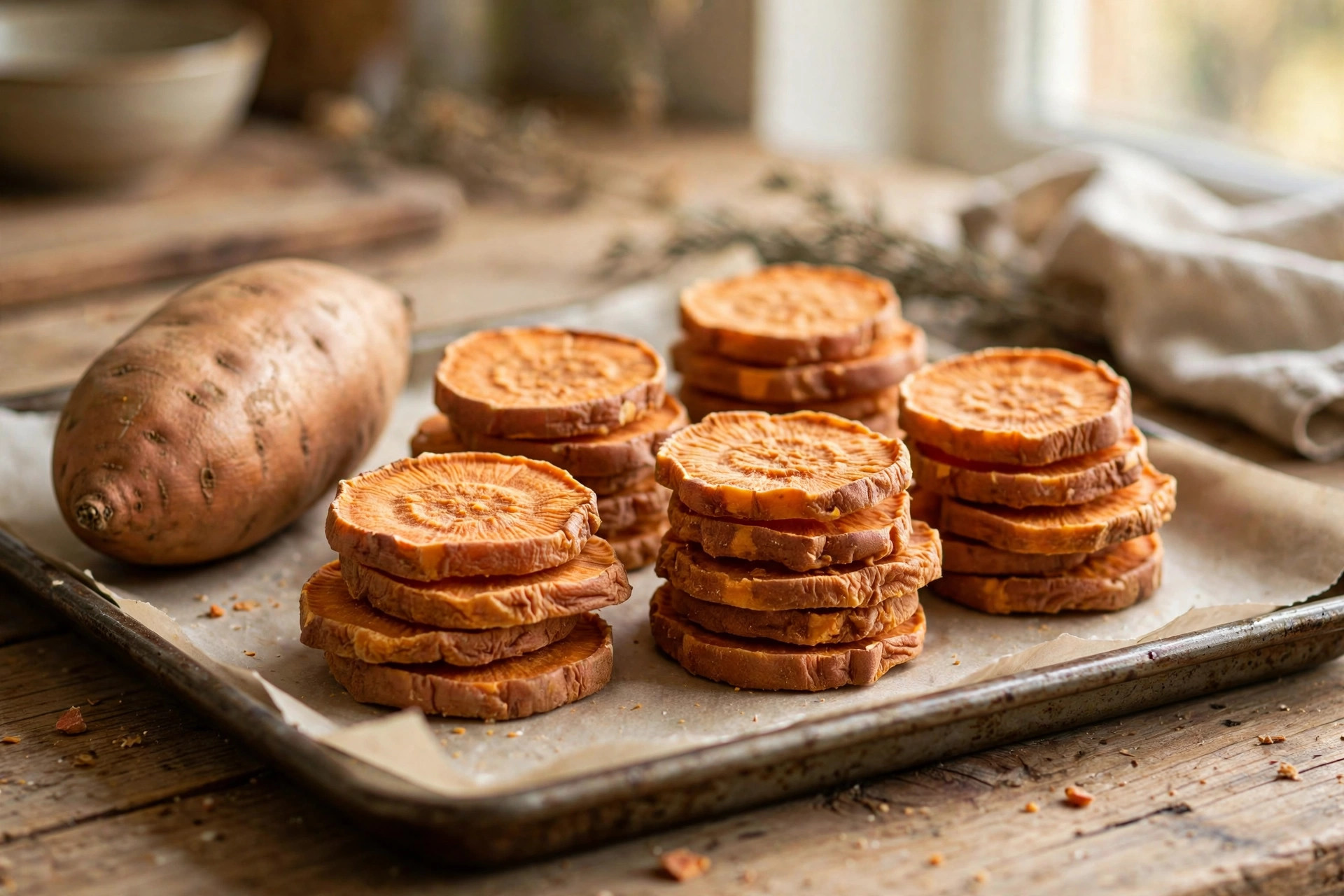
8. Sweet Potato Chews
One ingredient, sliced thin and baked low and slow (120°C / 250°F for about 3 hours) until chewy. Our sweet potato chews guide walks through it — the chewiness keeps dogs occupied, and they’re naturally grain-free.
9. Apple Chips
Core and slice an apple into thin rounds, bake at 120°C / 250°F for 2 hours, flipping once. Crisp, sweet, and a nice breath-freshener too. Skip the cinnamon if your dog’s stomach is fussy.
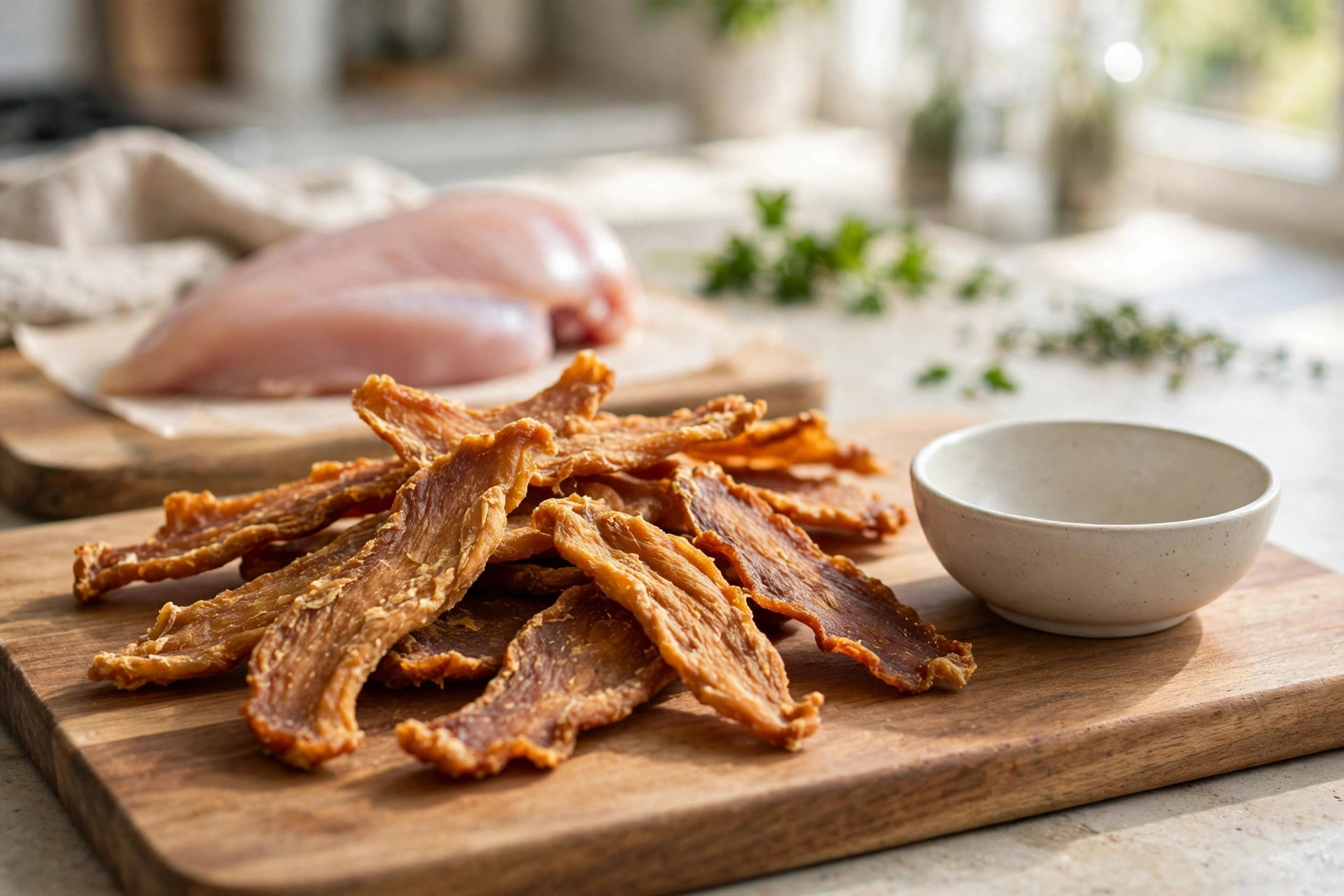
10. Chicken Jerky Strips
Slice chicken breast 3 mm thin, bake at 110°C / 230°F for 3–4 hours until completely dry. No salt, no marinade, no seasoning — just chicken. Cool fully and refrigerate; they keep about 2 weeks.
Protein bites (training gold)
11. Salmon & Pumpkin Bites
Tinned salmon (in spring water, drained), pumpkin purée and oat flour, baked into pea-sized bites. Stinky to humans, irresistible to dogs — ideal high-value training rewards. Our salmon treat post has the full recipe.
12. Turkey & Blueberry Meatballs
Lean turkey mince, a handful of blueberries and an egg, rolled small and baked at 175°C / 350°F for 18 minutes. Soft, smelly (in a good way), and freezer-friendly for a month.
How to store homemade treats
- Baked biscuits: 1 week in an airtight tin, 2 weeks in the fridge, 3 months in the freezer.
- Frozen treats: 1 month in a sealed container — label them, because frozen berry pops look suspiciously like human desserts.
- Jerky & chews: fridge only, 2 weeks max. They contain no preservatives — that’s the point, so respect the shelf life.
- General rule: if it smells off, bin it. Homemade treats have no preservatives by design.
FAQs
Are natural dog treats better than store-bought?
Not automatically — but homemade natural treats let you control every ingredient, avoid additives, and skip the preservatives that give commercial treats their long shelf life. Store-bought can be fine if the ingredient list is short and transparent.
Can I give my puppy these treats?
Yes, in small pieces, from about 12 weeks. Start with the softer recipes (the apple bites and protein bites) and introduce one new recipe per day.
What should I avoid in shop-bought “natural” treats?
Artificial colours, added sugars, propylene glycol, vague “meat derivatives”, and anything labelled sugar-free that could contain xylitol. If the ingredient list reads like a chemistry exam, it’s not natural.
How many treats per day?
Treats — homemade or not — should stay under about 10% of your dog’s daily calories. For a medium dog that’s roughly 20–30 small biscuits’ worth of room, depending on size.
Final word
Natural shouldn’t need a marketing department. Pick a recipe from the list, check your peanut butter label once, and bake a batch this weekend — your dog won’t care about the packaging, but they’ll absolutely notice the difference.
Pin this for later 📌 — and if you’re baking for the holidays, our Christmas dog treats are next on your list.