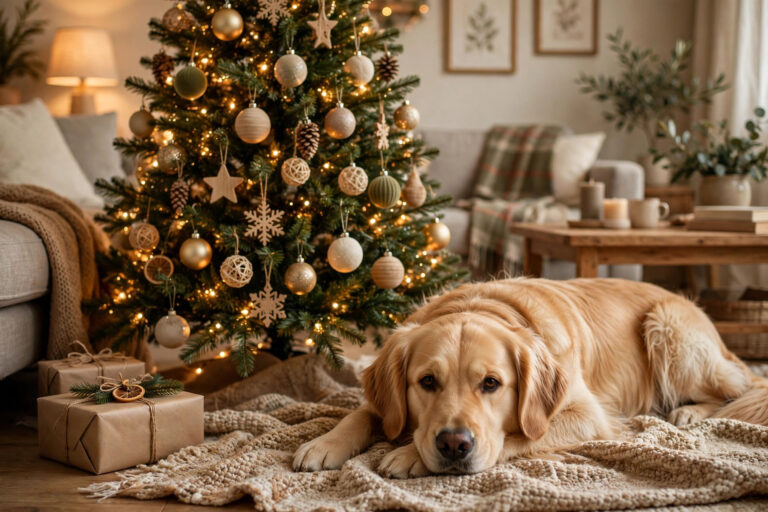
The Christmas tree goes up, the lights go on, and within minutes your dog has decided the whole thing is a gift shop built just for them. Baubles are for batting, tinsel is for tasting, and that warm pine smell is suspicious enough to investigate at close range.
Dogs and Christmas decor can absolutely coexist — thousands of dog households do it every year — but it takes a little planning. Every December, vets see the same parade of festive emergencies: shattered ornaments, swallowed tinsel, chewed light cords, poisoned tree water, and eaten holly berries. Almost all of it is preventable with a dog-proofing pass before the season starts.
Here’s how to make your Christmas decor dog-safe, room by room, starting with the big one: the tree.
The tree: anchor it like you mean it
A real or artificial tree is the single biggest Christmas risk for a dog — it’s tall, it wobbles, and it’s covered in interesting things. A medium dog body-slamming a tree at play speed will topple most stands.
-
Anchor the tree. Tie the top of the tree to a wall hook or window frame with clear fishing line or a discreet ribbon. It’s invisible from the front and it turns a catastrophic topple into a harmless wobble.
-
Use a heavy, stable stand. For a real tree, choose the widest, heaviest stand you can find and fill it properly. If you have a large, excitable dog, consider a corner position with furniture on two sides — harder to hit at full sprint.
-
Gate it if you must. A decorative baby gate, a low fence, or a ring of wrapped presents around the base (yes, really) keeps a curious puppy or a brand-new rescue at a safe distance while they learn the rules. There’s no shame in a tree barrier in year one.
Tree water: the hidden toxin
This is the one most dog owners miss. The water in a real tree’s stand becomes a chemical soup within days — pine sap, needle oils, preservatives, and sometimes fertiliser from the farm. It’s also mildly stagnant, which dogs find irresistible.
Tree water can cause stomach upset, drooling and diarrhoea, and in rare cases it’s much worse if preservatives were added. Cover the stand so your dog can’t drink from it: a tree skirt pulled tight, a fitted stand cover, or even an upside-down plastic bowl with a hole for the trunk works. Refresh the water often and never add preservatives if a dog can get near the tree.
Ornaments: shatterproof is non-negotiable
Glass baubles are beautiful and absolutely terrible around dogs. One batted ornament becomes a pile of razor-sharp glass on the floor — and dogs don’t wear shoes.
-
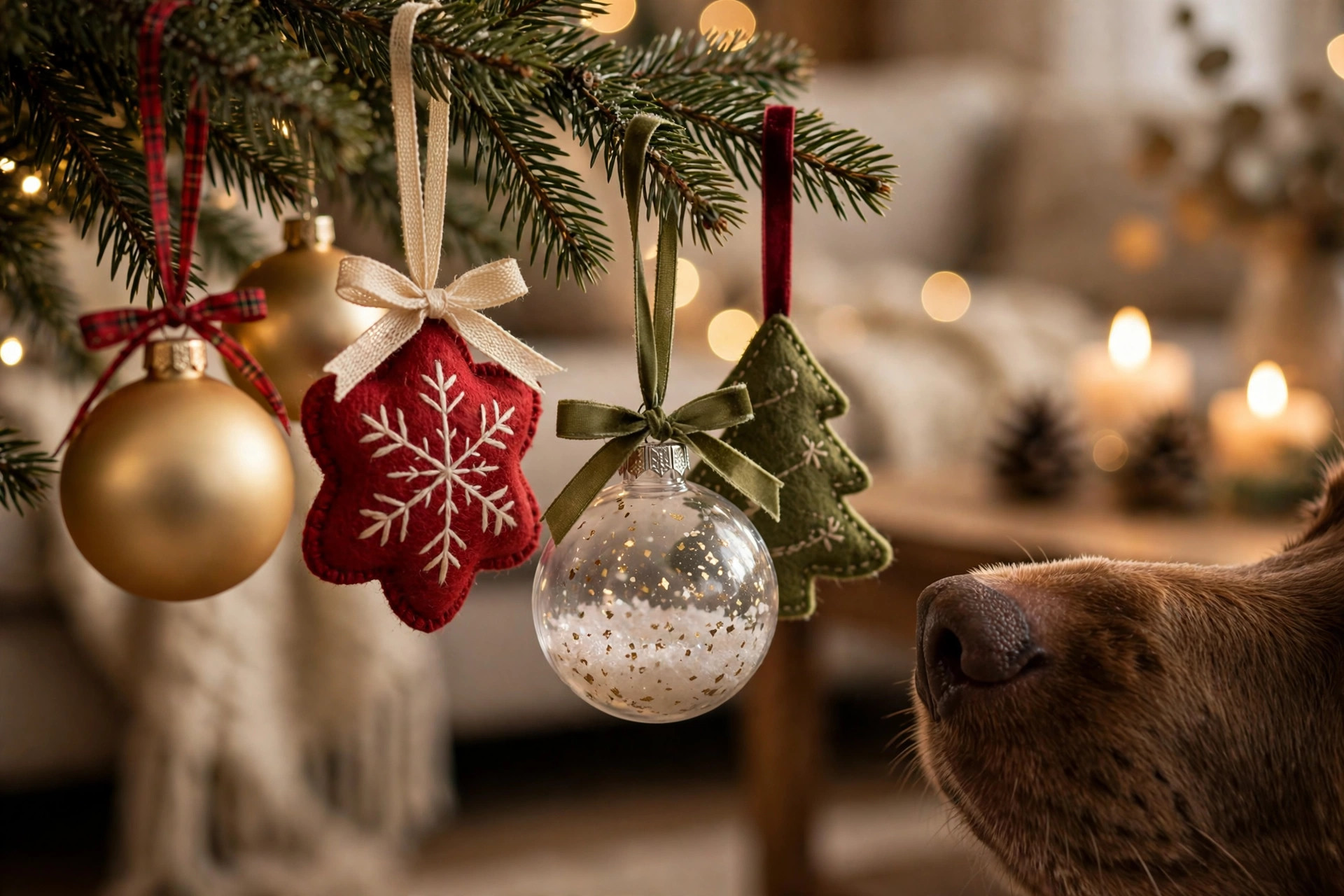
Swap glass for shatterproof. Plastic, fabric, wood and felt ornaments look festive and bounce instead of breaking. Keep your heirloom glass for the top half of the tree, well above nose and tail height.
-
Hang fragile ornaments high. Anything precious, glass or sentimental goes on the top third of the tree. The bottom third is the dog zone — tough ornaments only.
-
Ditch the hooks for ribbon. Metal ornament hooks are sharp little gut-punchers if swallowed. Tie ornaments on with ribbon or string, and keep spare hooks in a closed tin, not a bowl on the side table.
Tinsel, ribbons and garlands: the linear foreign body problem
Tinsel is the worst Christmas decoration for dogs, full stop. Dogs love shiny, dangly things, and tinsel is nearly impossible for them to resist — and it’s one of the most dangerous things they can swallow.
Long, stringy material doesn’t pass through a dog’s gut the way a chewed toy piece might. It can saw through the intestinal wall as the gut tries to move it along — vets call this a linear foreign body, and it’s a surgical emergency. The same goes for ribbons, curling ribbon, beaded garlands, and string lights’ spare wire.
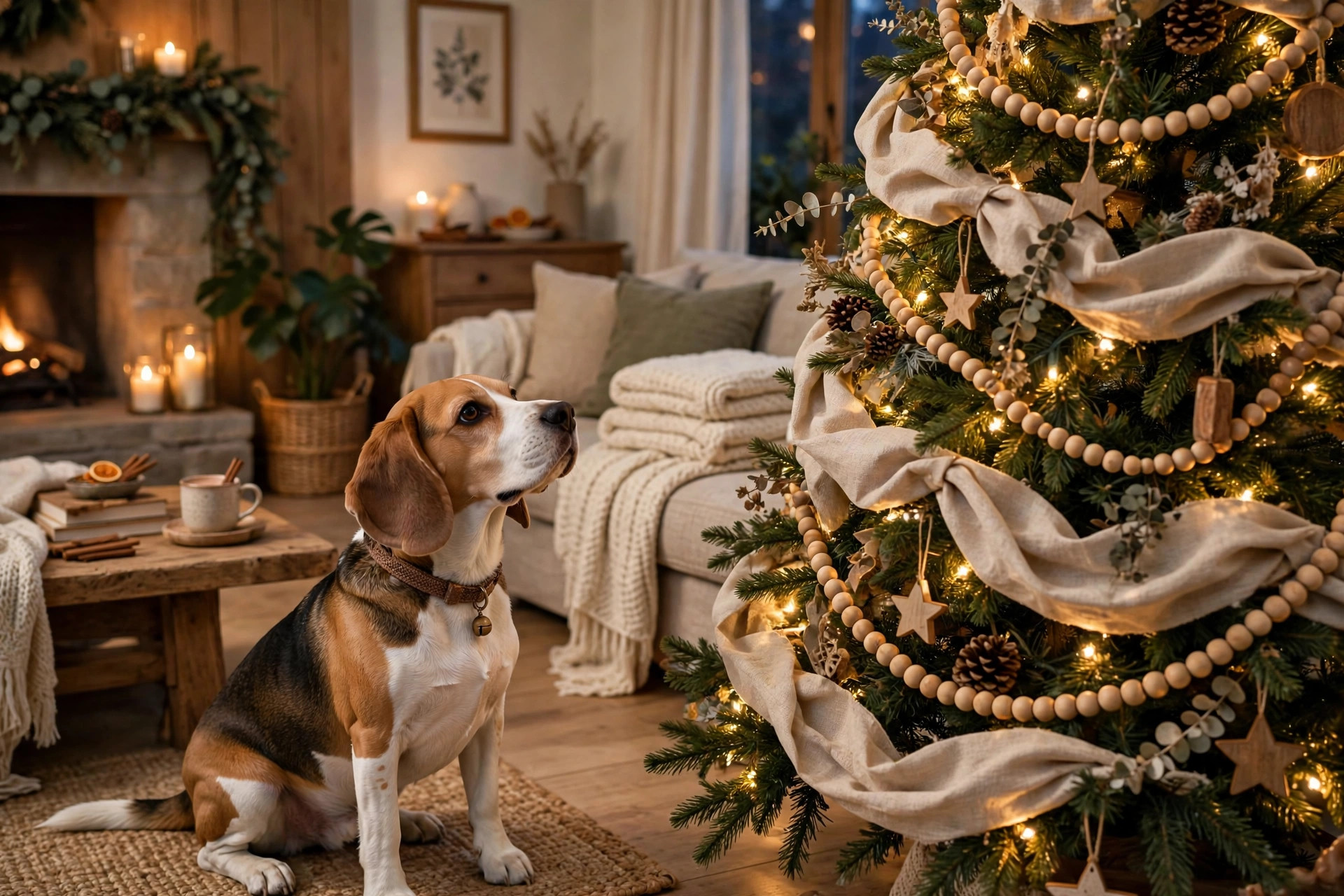
The safest move: skip tinsel entirely if you have a dog, especially a puppy or a known chewer. Use wide fabric garlands, wooden bead strings, or paper chains instead — nothing long, thin and dangly at dog height.
Lights: beautiful, chewable, dangerous
A dog that chews a live light cord can get an electrical burn to the mouth, a shock, or worse. Puppies are the prime suspects, but plenty of adult dogs find a dangling cord irresistible.
-
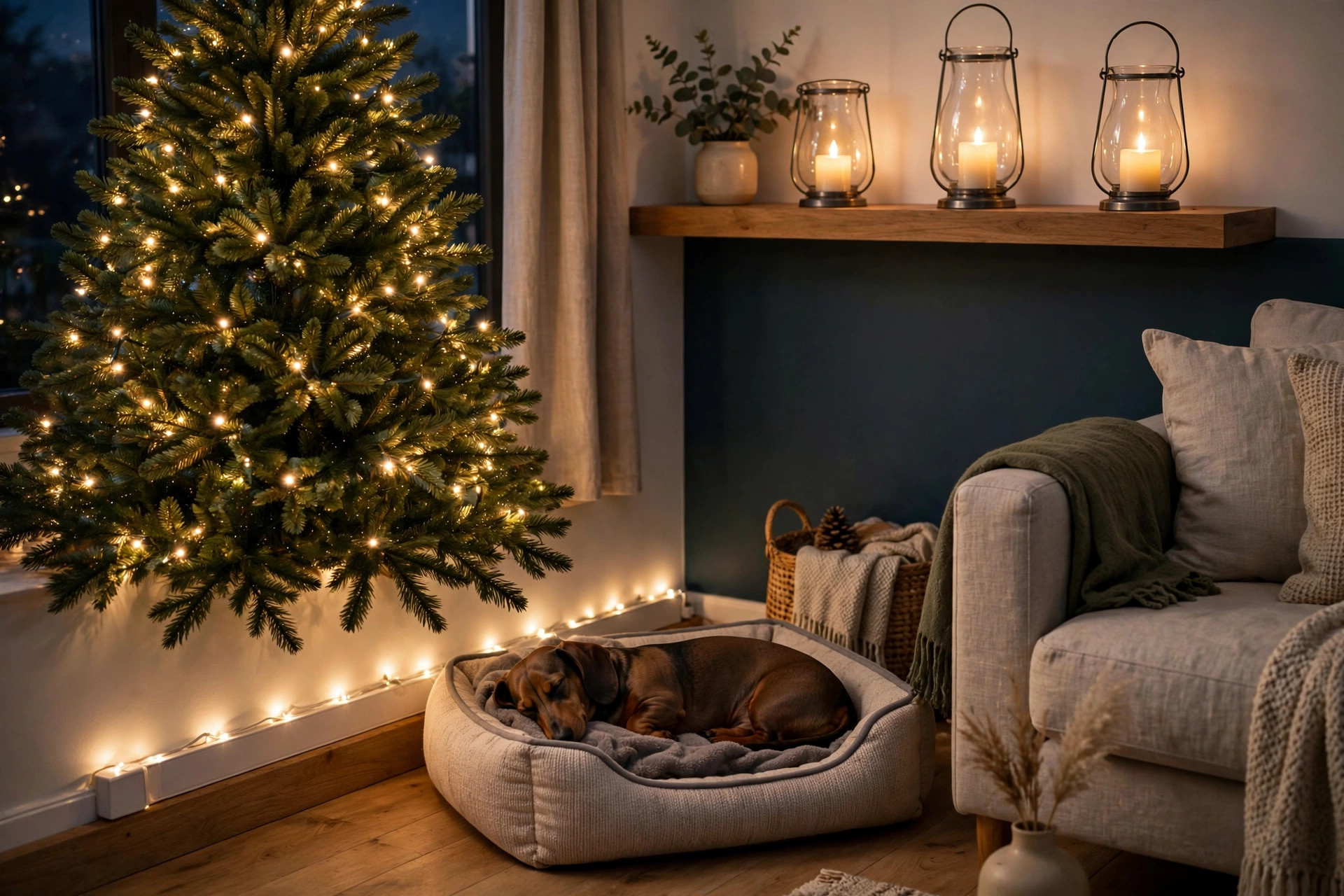
Run cords along walls, not across floors. Tape them down with cord covers or run them behind furniture so there’s nothing loose at chewing height.
-
Unplug when you’re out. Lights off and unplugged whenever the dog is unsupervised — this one rule prevents almost every light-related accident.
-
Check for heat. Older incandescent strings get genuinely hot. LED strings run far cooler and use less power — they’re the dog-safer choice, and they won’t burn a curious nose.
-
Watch the low-hanging bulbs. Big, shiny bulbs at the bottom of the tree are chew toys to a puppy. Keep the lowest lights a foot or two up, or use unbreakable LED ornaments at the base.
The toxic plant hit list
Christmas greenery looks innocent and much of it is not. Here’s what to keep out of reach — or out of the house:
-
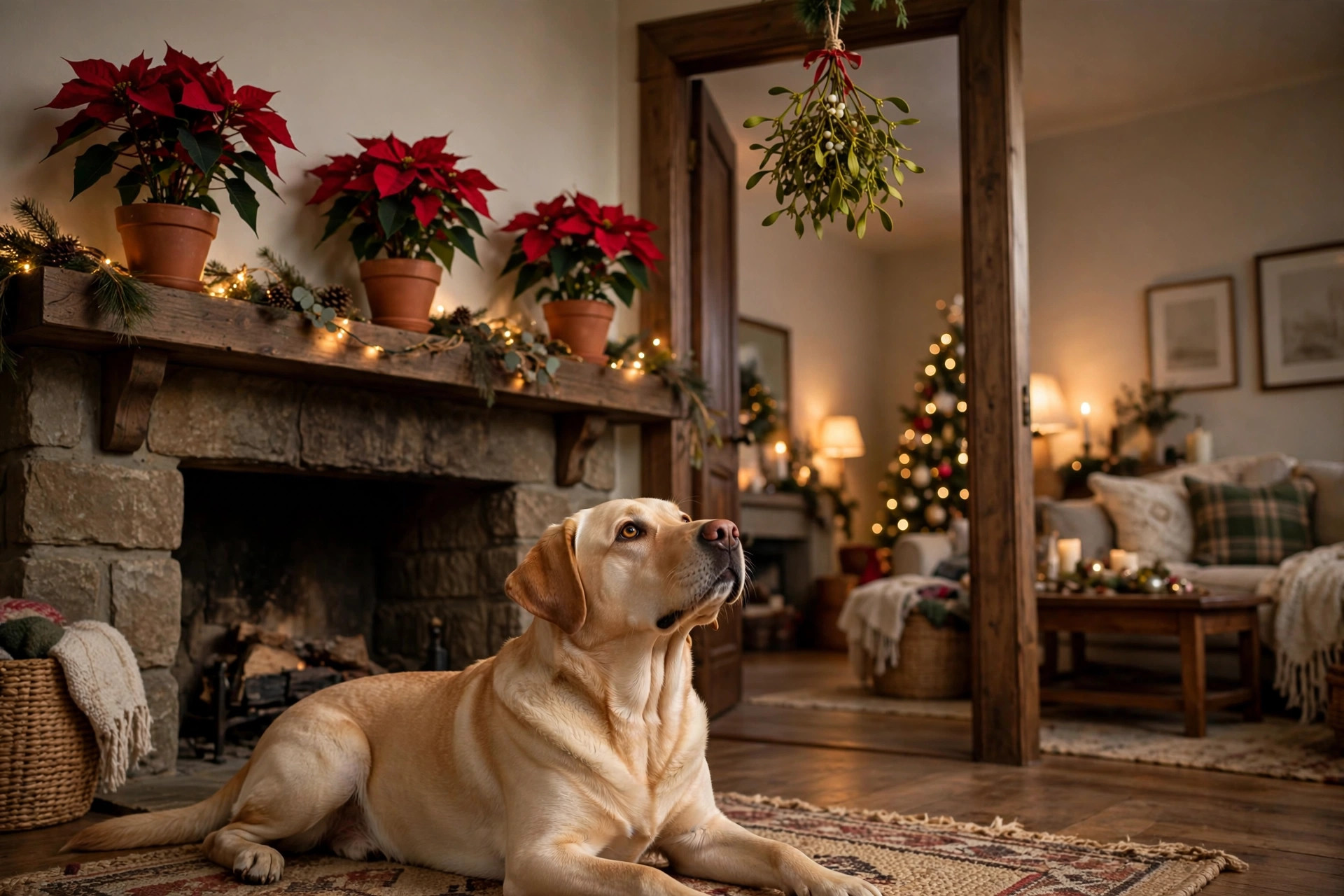
Poinsettia. Mildly toxic: the milky sap irritates the mouth and stomach. A nibble usually means drooling and a sore tummy, not an emergency — but put them on high shelves anyway.
-
Mistletoe and holly. Both are genuinely dangerous. Mistletoe berries can cause vomiting, diarrhoea, low blood pressure and, in large amounts, heart problems. Holly berries and leaves cause intense stomach upset. Hang mistletoe high — properly high — and skip holly garlands at dog height.
-
Christmas cactus and amaryllis. Amaryllis bulbs are the toxic part; the flowers cause stomach upset. Christmas cactus is only mildly irritating, but keep them all on shelves just in case.
-
Lilies (sometimes in Christmas bouquets) are a cat emergency more than a dog one, but don’t bring them into a mixed-pet home.
Pine needles themselves are mildly toxic and sharp — vacuum under the tree regularly, especially with a real tree, and pick up fallen needles before your dog does.
Candles, fireplaces and potpourri
-
Candles and wagging tails don’t mix. A happy tail can sweep a candle off a coffee table in one wag. Use flameless LED candles around dogs — they flicker convincingly and can’t burn the house down. If you must burn real candles, put them in enclosed lanterns, on high shelves, and never leave them lit in a room with an unsupervised dog.
-
Fireplace screens are mandatory. An open fire with a dog asleep in front of it is a Christmas card waiting to happen — until an ember pops. Keep a sturdy screen in front of any open flame, always.
-
Simmer pots and potpourri. Liquid potpourri is the dangerous one: it’s concentrated essential oils that burn the mouth and oesophagus if a dog drinks it. Dried potpourri is safer but still keep it out of reach. Simmering citrus and cinnamon on the stove is the dog-friendly way to make the house smell like Christmas.
Gifts, stockings and the wrapping-paper gauntlet
Christmas morning is a minefield of small, swallowable, toxic things:
-
Wrap the dog’s presents, not just yours. Dogs get excited by tearing paper — channel it: wrap a new chew toy and let them join in. It’s the safest outlet for the wrapping-paper frenzy.
-
Chocolate and food gifts go up high. Selection boxes, chocolate oranges, food hampers and advent calendars are dog poison in pretty packaging. Keep them on high shelves or in closed cupboards until they’re opened — then the wrappers go straight in a lidded bin.
-
Ribbon and bows are tinsel’s cousins. Pick up every scrap of ribbon, string and tape as you unwrap. A bored dog and a floor full of curling ribbon is a vet visit waiting to happen.
-
Small toy parts. If the kids got LEGO, batteries or anything with small parts, the post-unwrapping tidy-up is a dog-safety operation. Button batteries are a genuine emergency if swallowed.
The snow globe and the fake snow
Snow globes look magical and contain ethylene glycol (antifreeze) or similar fluids in some older ones — extremely toxic to dogs. Keep them on high shelves and out of the “shake it!” zone. Artificial snow spray is mildly toxic and irritating; sprayed low on windows or mirrors, a dog can lick it off. Use it high or skip it.
A dog-safe decorating checklist
Do this once, before the tree goes up, and the whole season gets easier:
- Anchor the tree to the wall and cover the water stand.
- Swap the bottom-third ornaments for shatterproof ones; ribbon instead of hooks.
- Remove tinsel; replace with fabric garlands or paper chains.
- Tape down light cords, switch to LED, unplug when out.
- Move poinsettias, mistletoe and holly out of reach.
- Swap real candles for flameless; screen the fireplace.
- Put chocolate, food gifts and small toy parts up high.
- Save your vet’s holiday opening hours on your phone.
Done right, your Christmas looks exactly as festive — and your dog gets to enjoy every minute of it with you, safely.
FAQs
Is a real or artificial Christmas tree safer for dogs? Artificial trees avoid the toxic tree-water problem and the needle drop, so they’re slightly safer. But a real tree is fine if you cover the water stand, vacuum needles regularly, and anchor the tree well. The bigger risks — ornaments, lights, tinsel — are identical for both.
Are poinsettias really poisonous to dogs? Mildly, not lethally. The sap irritates the mouth and stomach, causing drooling and an upset tummy, but a nibble is rarely an emergency. Mistletoe and holly are the ones to genuinely worry about — keep those well out of reach.
How do I stop my dog from drinking the Christmas tree water? Cover the stand completely — a tight tree skirt, a fitted stand cover, or a bowl with a hole for the trunk. Refresh the water often, and never add preservatives or fertiliser if a dog can access the tree.
What Christmas decorations are most dangerous for dogs? Tinsel (linear foreign body emergency), glass ornaments (shards), chewed light cords (electrical burns), tree water (toxins), mistletoe and holly berries, liquid potpourri, real candles near wagging tails, and snow globes with antifreeze-type fluids.