{
“title”: “Dog Shed Ideas: Turn a Garden Shed Into Your Dog’s Own Space”,
“slug”: “dog-shed”,
“excerpt”: “Turn a garden shed into a safe, cosy dog shed — insulation, ventilation, flooring, a dog door and 7 shed ideas for every dog and budget.”,
“meta_description”: “Turn a garden shed into a safe, cosy dog shed — insulation, ventilation, flooring, a dog door and 7 shed ideas for every dog and budget.”,
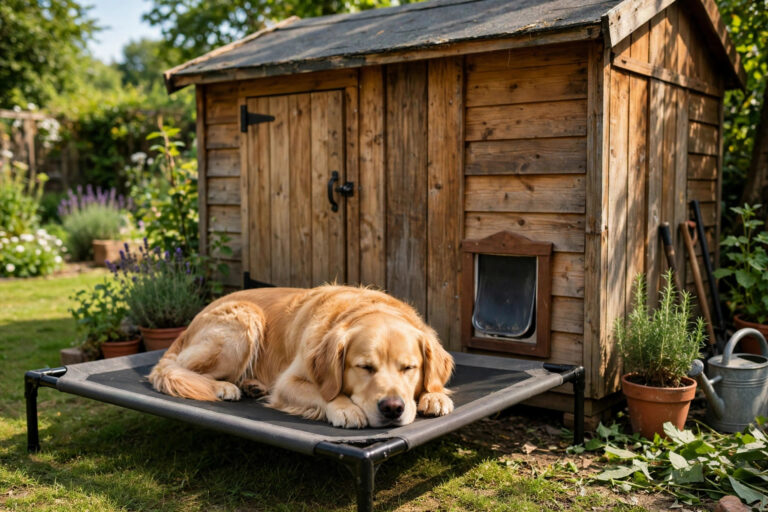
“featured_image_alt”: “A golden retriever resting outside a converted wooden garden shed with a dog door in a sunny garden.”,
“content_html”: “
Most gardens already have one: a wooden shed at the bottom of the garden, holding a lawnmower, half a bag of compost, and a bicycle nobody rides any more. With a weekend of work, that same shed can become something far more useful — a proper dog shed: a dry, draught-free, shaded spot of your dog’s own, right where they spend their outdoor time.
\n
A dog shed is not a kennel and it is not a replacement for the house. It is a shelter — a place for your dog to rest out of the sun, dry off after rain, and sleep somewhere clean and warm on the days they are outside. Done well, it is one of the most practical garden projects a dog owner can take on, and it costs far less than buying a ready-made dog house of the same size. This guide covers the whole thing: choosing and sizing the shed, the seven best ways to set one up, insulation, ventilation, flooring, the dog door, and the safety rules that matter most.
\n
Why a shed works so well for dogs
\n
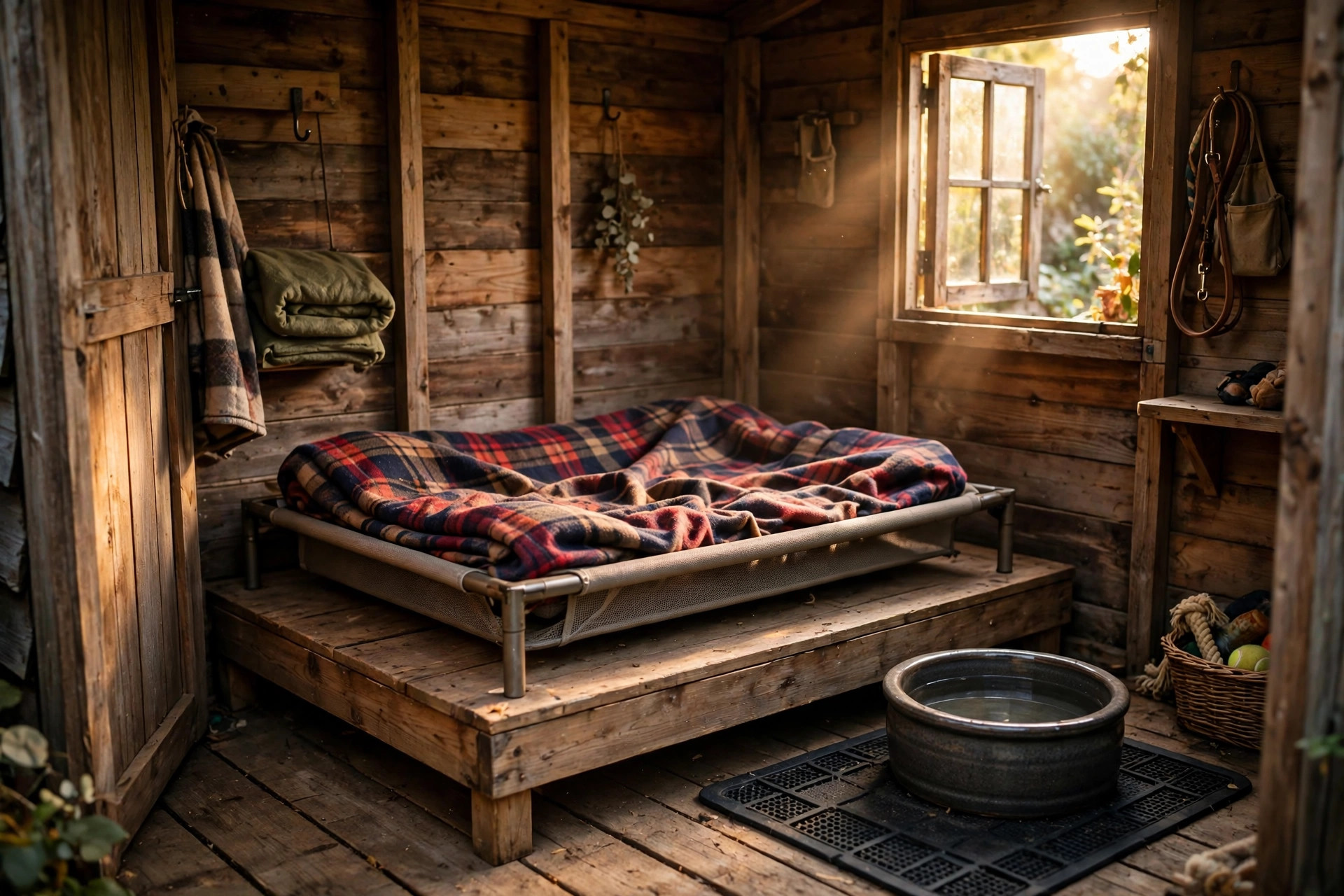
Dogs like spaces that feel like dens: enclosed, quiet, and theirs. A garden shed copies that shape at a much bigger scale than a dog house, which is exactly why it works. There is room for a proper bed, a water bowl that cannot be tipped, and space for the dog to stand up, turn around, and stretch out fully — the three things a small dog house often fails on for medium and large breeds.
\n
A shed also solves the two problems that ruin most outdoor dog shelters: heat and damp. A thin plastic dog house bakes in summer sun and leaks in winter rain. A wooden shed with a felted roof, a raised floor, and a vent stays dry in a storm and cool in the sun, and it is big enough to insulate properly. And because the shed is already there in most gardens, the project is mostly conversion, not construction — a weekend, not a month.
\n
Choosing the right shed
\n
Not every shed makes a good dog shed. Before you spend anything, check the one you have — or the one you are about to buy — against these points.
\n
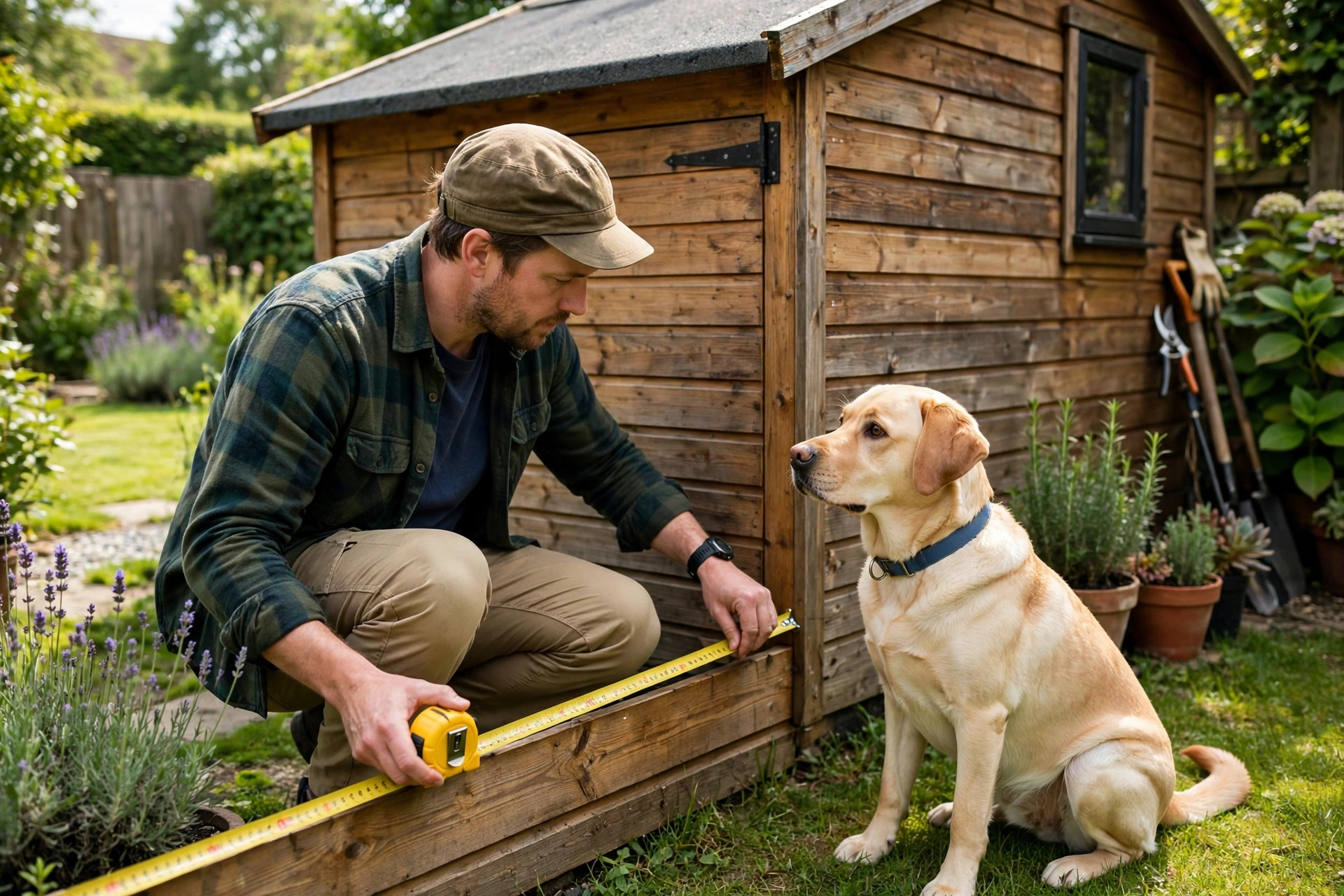
Size. The shed must fit the dog, not the other way round. As a minimum, the dog needs to stand up fully, turn around, and lie flat on their side with 15 cm to spare. For one medium dog, that means at least 1.8 m by 1.2 m of floor space; for a large dog, 2.4 m by 1.8 m is a better starting point. A shed that is too small is worse than no shed at all — the dog will simply not use it. If two dogs share, size for the larger dog, then add half the smaller dog’s length.
\n
Condition. Check the roof first: felt that is lifting or torn will leak, and a leaking shed is a damp shed. Check the floor — a shed floor that sits straight on the ground will rot and wick up damp. The floor needs to be raised on bearers, or the shed needs a paving-slab or gravel base with a gap underneath. Check the walls for rot at the bottom, especially on the side that faces the rain.
\n
Position. The best spot for a dog shed is a dry, slightly raised part of the garden, close enough to the house that the dog still feels part of the family, and in a place that gets shade in the afternoon. A shed at the far end of a long garden, out of sight and earshot, will go unused — dogs want to be near their people, even when they are outside.
\n
What to avoid. Do not use a metal shed as a dog shed without serious insulation — metal swings from baking hot to freezing cold and sweats with condensation. Do not use a shed that has stored chemicals, paint, or fuel unless it has been thoroughly cleaned and aired; the smell alone is a warning, and residues can be toxic. And never use a shed with a broken or missing window that cannot be secured — a dog shed needs to close properly.
\n
Idea 1 — The simple converted shed
\n
The easiest dog shed is the one you already own, emptied and tidied. Clear it out completely, sweep it, wash the floor, and let it dry with the door open for a day. Then put in the three things every dog shed needs: a raised bed, a heavy water bowl, and a mat by the door.
\n
A dog bed on a low platform works better than a bed straight on the floor — it keeps the dog off cold wood and the air moving underneath stops the bed going damp. For nervous dogs, a calming dog bed with a raised rim gives the enclosed feeling of a den without any building work at all. Put the water bowl on a rubber mat with a raised edge, away from the bed, so spills never reach the sleeping area. That is the whole conversion — most dogs will move in the same day.
\n
Idea 2 — The insulated all-weather shed
\n
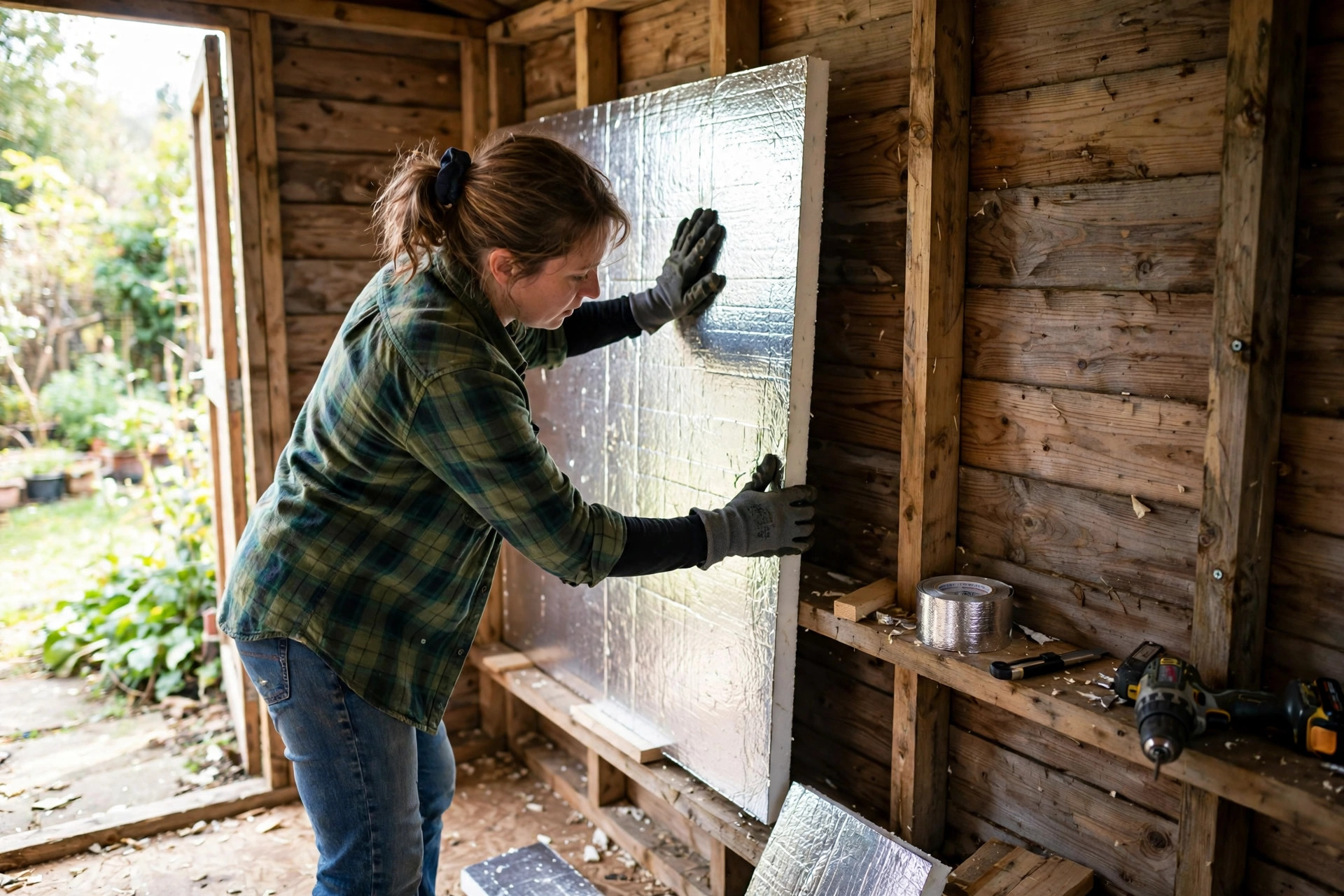
If your dog will use the shed through winter, insulation is the single best thing you can spend money on. Line the walls and the roof with foil-backed insulation boards, held in place with battens, then cover the boards with plywood so the dog cannot chew them. Insulation boards are not dog-safe on their own — the plywood skin is part of the job, not an optional extra.
\n
A draught excluder around the door and a strip of thick plastic over the doorway (the kind used on stable doors) cuts the wind without blocking the dog. In a cold snap, a single safe heat source — a low-wattage panel heater fixed high on the wall, out of reach, with a thermostat — is enough in an insulated shed. Never use a fan heater, a heat lamp, or anything with an exposed element or a trailing cable inside a dog shed.
\n
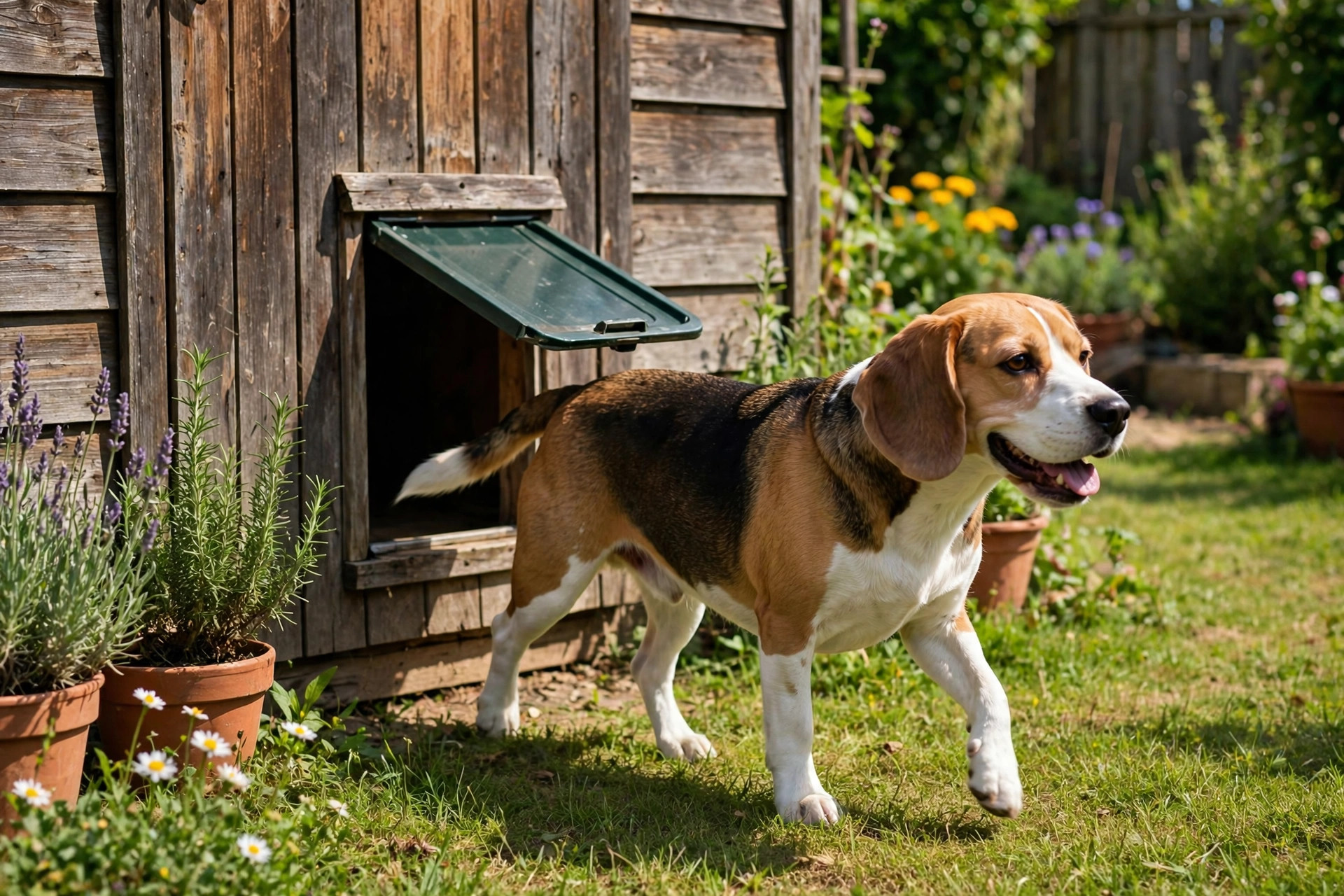
Idea 3 — The shed with a dog door
\n
A dog shed earns its keep when the dog can come and go freely, and that means a dog door. Fit the flap in the shed wall or door at the dog’s shoulder height, sized so the dog passes through without ducking — measure shoulder height and add 5 cm. A magnetic flap that closes by itself keeps the rain and the wind out, and a locking panel lets you shut it at night.
\n
Cut the opening with a jigsaw, seal the cut edges with wood preservative, and fit a frame around the flap so the shed wall stays rigid. Train the dog the same way you would train any dog door: hold the flap open with a treat on the other side, then let it close a little more each time, until the dog pushes through on their own. Most dogs learn it in an afternoon. If you want the full guide to choosing and fitting one, our DIY dog house ideas guide covers flap sizing in detail.
\n
Idea 4 — The shed as a drying room
\n
Wet dogs are a fact of life, and a shed is the perfect place to deal with them. Set up one end of the shed as a drying zone: a rubber mat on the floor, a hook for the lead, a stack of old towels, and a brush. The dog comes in from the rain, gets towelled off in the shed, and only then comes into the house — no more muddy paw prints across the kitchen floor.
\n
A handheld shower head on a hose, connected to an outside tap, turns the drying zone into a proper wash station for muddy paws, and a small shelf for shampoo and towels keeps everything in one place. Keep the drying zone at the door end of the shed and the bed at the far end, so the dog never has to walk across a wet floor to reach their bed.
\n
Idea 5 — The shed for two dogs
\n
Two dogs can share a shed happily, but only if it is genuinely big enough for both to stretch out without touching. Use the sizing rule above for the larger dog, then add half the smaller dog’s length to the floor space. Two beds side by side work better than one big bed, because each dog can choose their own spot and move away when they want to.
\n
Watch the first week. If one dog always blocks the doorway while the other waits outside, the shed is too small or the entrance is too narrow for two. Give each dog their own bed in the shed, and if the guarding continues, give the second dog their own shelter. Dogs that love each other on the sofa can still argue over a doorway, and a shed should never become a place where one dog keeps the other out.
\n
Idea 6 — The summer-cool shed
\n
A shed that is perfect in winter can be an oven in summer, so plan for heat. The most effective cooling is shade: position the shed where it gets afternoon shade, or plant a fast-growing climber on a trellis on the sunny side. A light-coloured roof reflects far more heat than a dark felt roof, and a small vent high on each gable end lets hot air escape — heat rises, so vents at the top of the shed work far better than vents at the bottom.
\n
Inside, a cooling mat on the bed and a bowl of fresh water changed twice a day are the basics. On genuinely hot days, no shed replaces shade and water, and no dog should be left outside in extreme heat — bring them in. The shed is a shelter, not a substitute for the house when the weather turns dangerous.
\n
Idea 7 — The shed with a run attached
\n
The best dog sheds are part of a bigger outdoor setup: a shed with a fenced run attached to the front, so the dog has a safe outdoor space and a sheltered indoor space in one. A run of 3 m by 2 m, fenced to at least 1.5 m high, gives the dog room to move without wandering the whole garden — and it keeps the dog off the flower beds.
\n
Build the run from weld-mesh panels on a timber frame, with the mesh buried 15 cm into the ground so a digging dog cannot get under it, and a gate that closes with a proper latch. Our best dog backyard ideas guide covers fencing and layout in more detail, and the DIY dog agility course guide has seven builds that fit neatly inside a run once the shed is done.
\n
Flooring that stays dry and clean
\n
The floor makes or breaks a dog shed. Bare shed wood soaks up moisture, smells within a month, and is almost impossible to clean properly. The fix is simple: a waterproof layer on top of the wood. Interlocking rubber stable mats are the best option — they are warm underfoot, non-slip, easy to hose down, and they insulate the dog from a cold floor. Vinyl offcuts or a sheet of lino work too, as long as the edges are sealed so water cannot get underneath.
\n
Avoid carpet, which holds damp and smell, and avoid bare concrete, which is cold and hard on older dogs’ joints. Whatever you choose, make sure the bed sits on top of the flooring, not directly on the wood, and that the floor can be swept and mopped without dismantling anything. A shed floor that cannot be cleaned will smell within a month, and a smelly shed is a shed the dog stops using.
\n
Ventilation — the part everyone forgets
\n
A shed with no airflow goes damp, and a damp shed smells and breeds mould. The fix is two vents: one low on the cool side of the shed and one high on the warm side, so air moves through naturally. A vent the size of a brick is enough for a small shed; a louvred vent keeps the rain out while letting air in. Cover every vent with fine mesh so insects and mice cannot get through.
\n
Never seal a dog shed up completely. A dog sleeping in a sealed box breathes out moisture all night, and by morning the walls are wet. If the shed ever smells musty, or you find mould on the walls, stop using it until you have found the cause — dogs with breathing problems should never sleep in a damp space.
\n
Safety notes — read before you build
\n
- \n
- Never lock a dog in. A dog shed is a shelter, not a cage. The dog must always be able to get out, and the shed should never be used as a punishment space.
- Use dog-safe paint and finishes. Choose low-VOC, water-based paint and wood preservative, and let everything dry and air for at least 48 hours before the dog moves in. Avoid creosote and oil-based treatments inside the shed.
- Hide every cable. Heaters, lights, and extension leads have no place within chewing reach. Use trunking or route cables behind the plywood lining.
- Check for chemicals first. If the shed has stored paint, fuel, weedkiller, or fertiliser, clean it thoroughly and air it for several days. Residues can be toxic, and dogs will lick anything.
- Secure the roof and door. A shed door that slams in the wind can injure a dog, and a loose roof panel in a storm is dangerous. Fit a proper door catch and check the roof felt every autumn.
- Mind the heat. Never leave a dog in a shed in extreme heat, and never use a heat lamp or fan heater inside one. If the shed feels hot to you, it is too hot for the dog.
\n
\n
\n
\n
\n
\n
\n
What not to do
\n
- \n
- Do not use a metal shed without insulation. Metal swings from baking hot to freezing cold and sweats with condensation — it is the worst material for a dog shelter.
- Do not put the bed on bare wood. A bed straight on a shed floor goes damp underneath. Use a raised platform or rubber mats.
- Do not skip the vents. A sealed shed goes damp and musty fast, and damp is bad for any dog’s lungs.
- Do not build the shed at the far end of the garden. A shed out of sight and earshot will go unused — dogs want to be near their people.
- Do not forget the cleaning. A shed that cannot be swept and mopped will smell within a month. Build it so the bed lifts out and the floor is easy to reach — our how to wash a dog bed guide covers keeping the bed itself fresh.
\n
\n
\n
\n
\n
\n
FAQs
\n
Can my dog sleep in a shed overnight?\nA well-insulated, ventilated, dry shed with a proper bed can be a fine overnight spot for a healthy adult dog in mild weather — but it is not a substitute for the house in freezing cold or extreme heat. Most dogs sleep better, and settle faster, indoors with the family. Use the shed as a daytime shelter and a drying room first, and only consider overnight use once it has been dry and comfortable through a full winter.
\n
What size shed do I need for my dog?\nSize for the dog lying flat, nose to tail base, plus 15 cm for the bed length, with enough headroom for the dog to stand and turn. For one medium dog, 1.8 m by 1.2 m of floor is the minimum; for a large dog, 2.4 m by 1.8 m. If two dogs share, add half the smaller dog’s length.
\n
How do I keep a dog shed warm in winter?\nInsulate the walls and roof with foil-backed boards covered in plywood, fit a draught excluder and a plastic strip over the doorway, and use a raised bed with a thick blanket. A low-wattage panel heater on a thermostat, fixed high and out of reach, is enough in an insulated shed. Never use a fan heater or heat lamp.
\n
How do I stop a dog shed smelling?\nVentilation and washable flooring. Two vents (one low, one high), rubber mats or lino on the floor, a washable bed, and a weekly sweep and mop. The smell almost always comes from damp — fix the damp and the smell goes with it.
\n
Can I convert a plastic or metal shed into a dog shed?\nPlastic sheds can work if they are well ventilated and shaded, but they are hard to insulate and can warp in the sun. Metal sheds are the worst choice — they overheat, freeze, and sweat. A wooden shed is the right material for a dog shed, every time.
\n
Do I need planning permission for a dog shed?\nIn most cases, converting an existing garden shed needs no permission at all, and a new shed of normal garden size usually falls under permitted development. Rules vary by area, so check with your local council before building a new shed, especially if it is close to a boundary.
\n
The bottom line
\n
A dog shed is one of the best-value garden projects a dog owner can do: the shed is usually already there, the conversion is a weekend, and the result is a dry, draught-free, shaded spot that your dog will actually use. Start with the three essentials — a raised bed, fresh water, and a mat by the door — then add insulation, a dog door, and proper ventilation, in that order. Keep every finish dog-safe, every cable hidden, and the dog’s way out always open. And if you want to compare it with the smaller option before you start, our DIY dog house ideas guide shows nine builds, and our dog crate furniture ideas guide covers the indoor equivalent for dogs that prefer to stay inside.
\n
Pin this for later 📌 — and if you are planning the garden around the shed as well, our best dog backyard ideas guide covers fencing, shade, and layout for the whole space.
“,
“source_draft”: “/home/hatch/workspace/goals/pinterest-pin-automation-for-petsmush-com/files/dog-shed-post-draft.md”,
“status”: “publish”
}