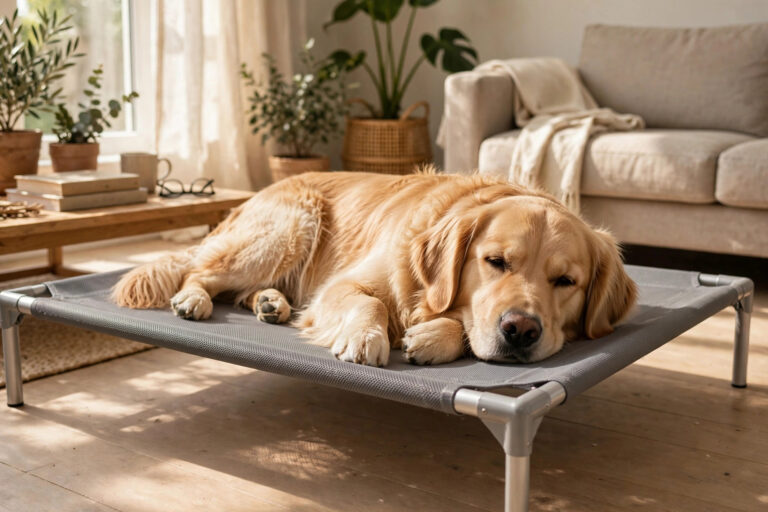
Most dog beds sit flat on the floor — a cushion or mattress your dog
settles into. An elevated dog bed does the opposite: it lifts your dog a
few inches off the ground on a taut, breathable fabric stretched over a
frame, like a camping cot built for canines.
Walk through any dog-training facility, kennel, or summer dog park and
you’ll see them everywhere. But are elevated dog beds actually better than
the plush cushion your dog already has? For some dogs, the answer is a
clear yes. For others, a raised bed is the wrong tool entirely. Here’s the
honest breakdown: what the design does, which dogs benefit most, the real
downsides, and how to choose one that lasts.
How elevated dog beds work
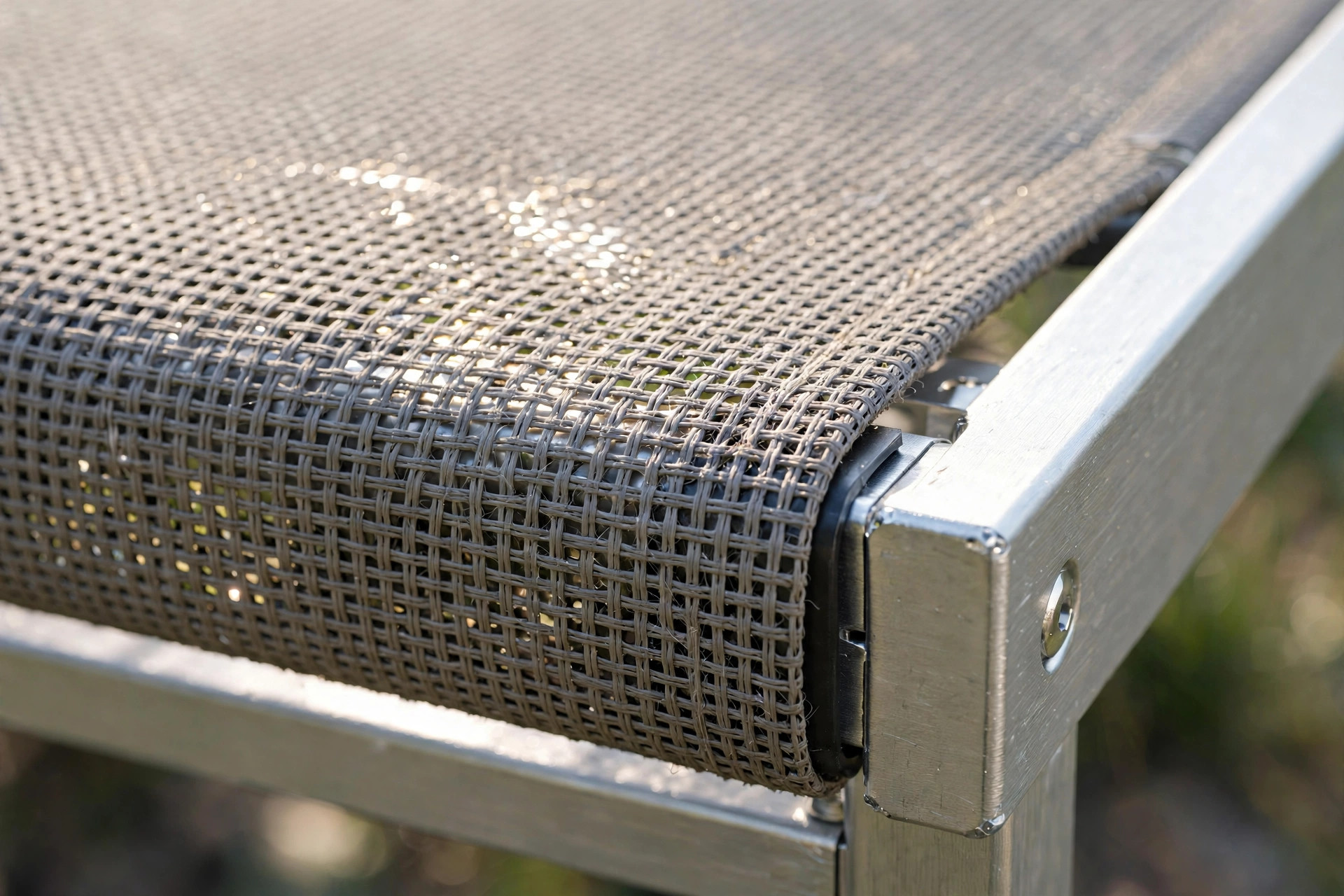
The design is simple. A rectangular frame — usually aluminium, steel, or
heavy-duty PVC — holds a woven fabric (often a PVC-coated mesh like
Textilene) pulled drum-tight. Your dog lies on a suspended surface,
roughly 15 to 20 cm above the floor.
That air gap is the whole point. Air circulates above and below the dog,
so heat doesn’t build up under the body the way it does on a floor
mattress. The taut fabric also distributes weight evenly, without the
sagging centre that lets bony joints press into hard floorboards through a
thin cushion.
Vets and trainers like raised beds for three practical reasons: they’re
easy to hose down, they keep dogs off cold or damp floors, and the firm,
even surface makes standing back up easier for dogs with stiff joints.
The cooling advantage
Overheating is a bigger problem for dogs than most owners realise — dogs
cool themselves mainly by panting, and a thick insulating bed traps body
heat against their belly and chest. Elevated beds are the cooling
counter-move.
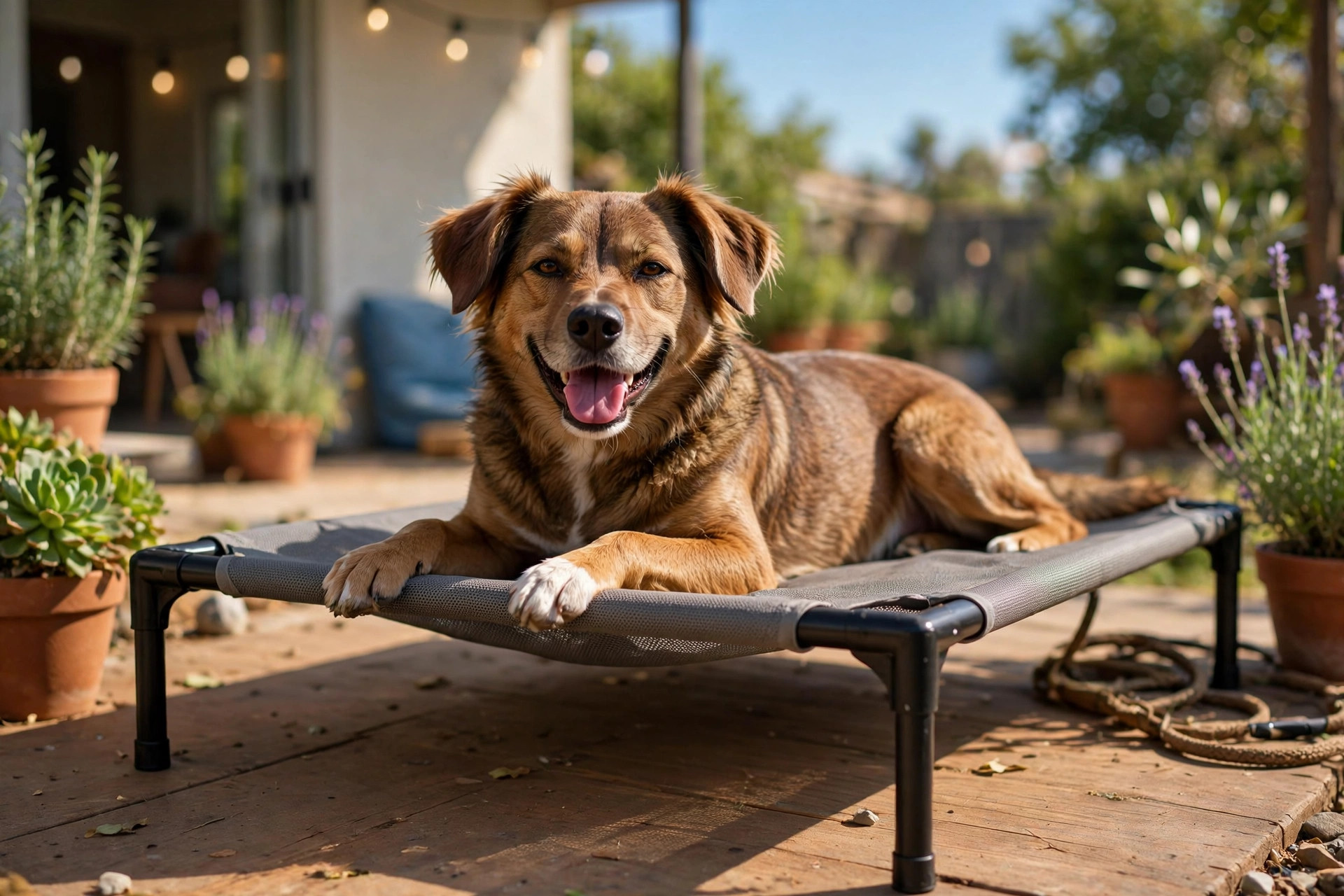
On a raised mesh bed, air moves freely underneath. The mesh itself doesn’t
insulate — it breathes. Dogs that flop on cool tile floors in summer, or
dig at the hot side of their cushion to reach the cooler floor beneath,
are telling you exactly what they want: airflow.
This matters most for:
-
Thick-coated breeds — Huskies, Malamutes, Newfoundlands, Samoyeds,
and other double-coated dogs run warm even in air-conditioned rooms. -
Brachycephalic breeds — Bulldogs, Pugs, and Shih Tzus pant less
efficiently, so passive cooling helps them regulate. -
Summer and warm climates — if your home runs hot in summer, a
raised bed can be the difference between a restless dog and a settled
one.
They won’t replace water, shade, or air conditioning — a raised bed helps
a dog shed heat, it doesn’t actively cool them. But as a passive comfort
measure, the effect is real and noticeable on warm days.
Easier on joints and bones
Here’s the benefit that surprises people. A plush bed feels soft to your
hand, but once a 30 kg dog compresses it, bony elbows, hips, and hocks can
end up pressing through thin padding onto the hard floor — especially on
older, flattened cushions.
The taut surface of an elevated bed spreads pressure evenly and never
bottoms out. There’s no centre sag, no cold spot where the filling has
migrated to the edges. For senior dogs with arthritis, or large breeds
prone to elbow hygromas and hip stiffness, that even, firm support often
feels better than a squishy mattress.
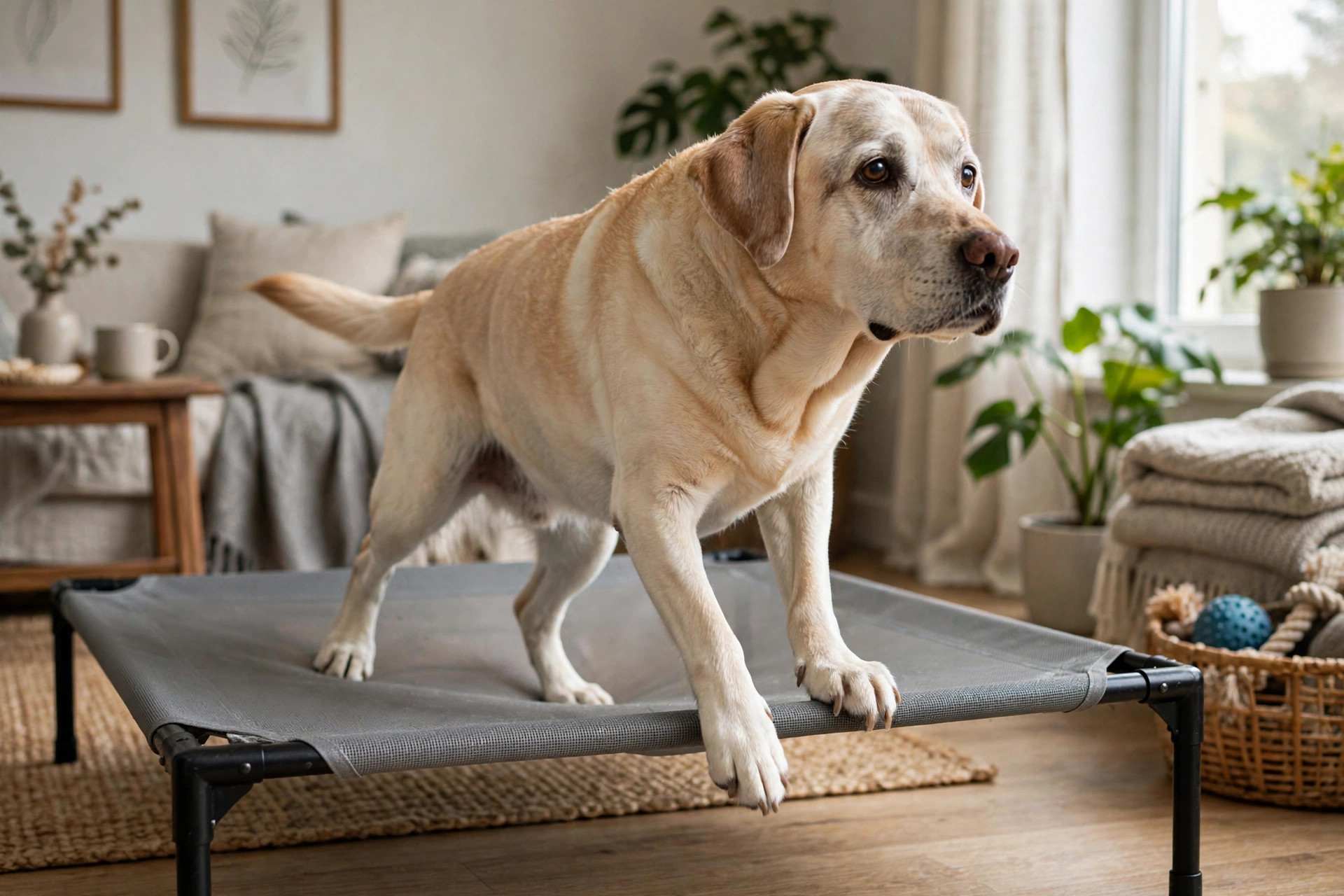
Getting up is easier too. Pushing up from a flat floor cushion asks stiff
joints to lift the full body weight from a dead stop. A raised surface
starts the dog a few inches higher and lets the legs stay slightly bent —
a small difference that adds up for arthritic dogs who get up a dozen
times a day.
Built for chewers and messy paws
Chew-proofing is the third big selling point. Many elevated beds have no
stuffing to shred — just fabric and frame. A determined chewer can still
gnaw the fabric edge, but there’s no tempting fluffy interior, no squeaker,
no zip to work open. For power chewers who have destroyed three cushion
beds this year, a raised bed often survives where plush ones don’t.
They’re also the easiest bed to clean. Muddy paws? Hose it down outside or
wipe it with a damp cloth. The fabric doesn’t absorb odours the way
polyfill does, and most covers remove for a proper wash. For muddy-season
dogs, garden dogs, or dogs with incontinence issues, a washable raised bed
plus a thin washable pad on top is a practical combination.
And because the dog sits above the floor, raised beds stay cleaner in the
first place — dust, draughts, and cold dampness from the ground don’t reach
the sleeping surface.
The honest downsides
Elevated beds aren’t for every dog. Know the limits before you buy.
Not a nest. Dogs that love to burrow, curl into a ball, and feel
walls around them — the anxiety-prone “curlers” — often find a flat raised
platform too exposed. A calming donut bed suits those dogs better.
The fabric feel is unfamiliar. Some dogs step onto the taut mesh,
feel it give slightly underfoot, and refuse to lie down. Most adapt within
a few days (treats on the bed help enormously), but a small minority of
dogs never take to it — especially seniors with poor footing confidence.
Less insulation in cold weather. The same airflow that cools in
summer can feel draughty in winter. In cold homes, add a blanket or pad on
top, or use the raised bed as the summer option and a cushioned bed for
winter.
Weight limits matter. Cheap raised beds sag or crack under large
dogs. Always check the manufacturer’s weight rating and buy above your
dog’s weight — a bed rated to 45 kg for a 40 kg dog will last far longer
than one rated to exactly 40 kg.
Assembly and size. They’re bulkier than a cushion and need assembling.
Measure your space — and your dog stretched out — before ordering.
How to choose the right one
1. Frame material
Powder-coated steel and aluminium frames are the sturdiest and best for
large dogs; heavy-duty PVC frames are lighter and fine for small to medium
dogs. Avoid thin uncoated metal that rusts after the first hose-down.
2. Fabric
Look for PVC-coated woven mesh (often sold as Textilene or similar). It
should feel taut and springy, not floppy. A tighter weave resists claws
better; a looser weave breathes more. Replacement covers from reputable
brands are a good sign — it means the frame is expected to outlast the
fabric.
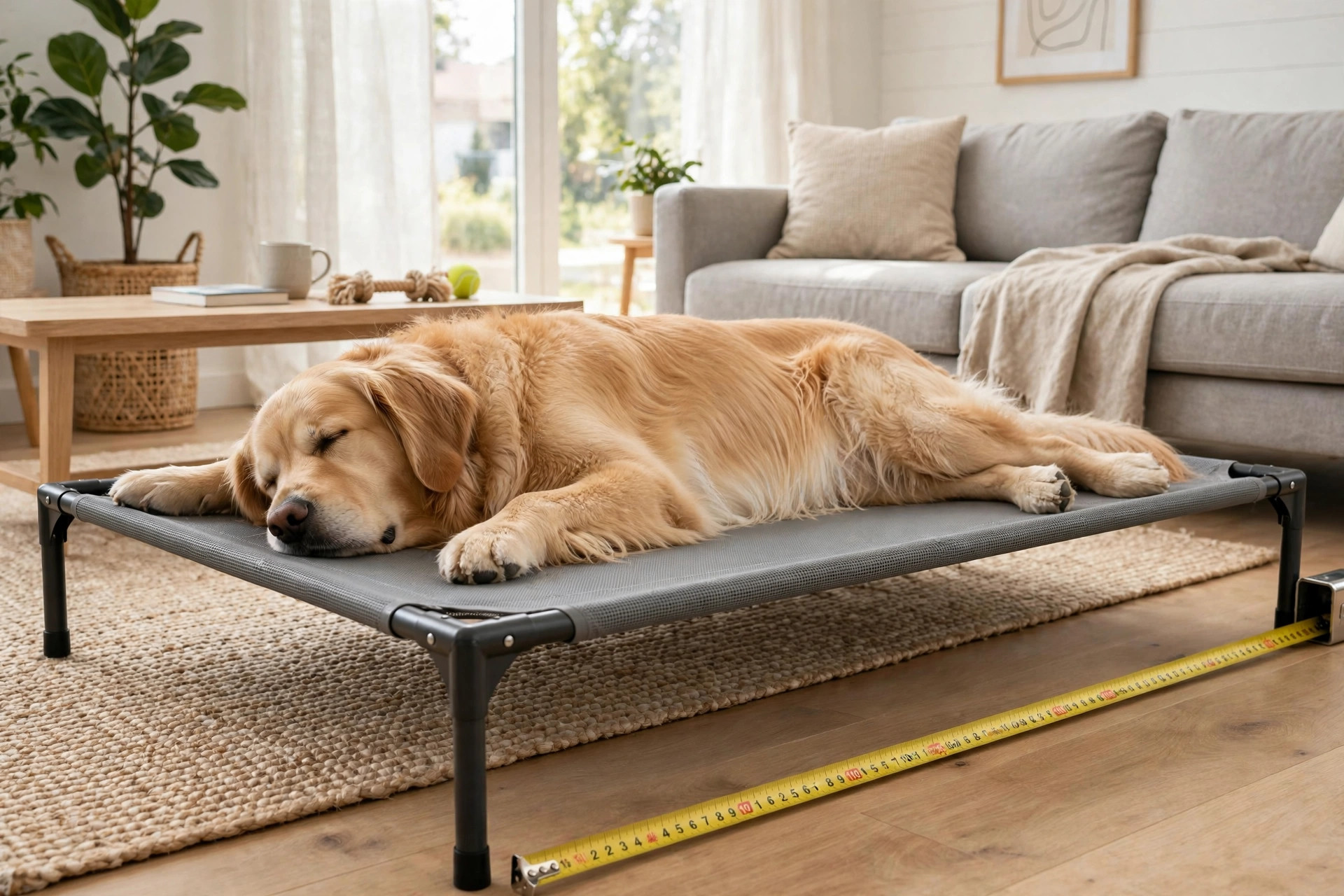
3. Size
Your dog should be able to lie fully stretched on the bed with room to
spare. When in doubt, size up — a bed that’s slightly too big is fine; one
that’s slightly too small goes unused. Check the weight rating, not just
the dimensions.
4. Feet and stability
Skid-resistant feet matter on tile and wood floors. A bed that slides when
the dog jumps on is a bed the dog stops trusting. Some models add
rubberised feet or a slightly wider stance for stability.
5. Portability
If you travel, camp, or move the bed between rooms, look for a folding or
quick-assembly design. Many elevated beds disassemble in minutes, which is
another reason trainers love them.
Getting your dog to actually use it
Placement is half the battle. Put the raised bed where your dog already
likes to rest — near the family, not banished to a cold corner. Make the
first introductions positive: treats on the bed, praise for stepping on,
a favourite chew the first few times.
If your dog hesitates at the springy feel, lay a thin blanket or their old
favourite cushion on top for the first week, then gradually remove it.
Dogs that already like sleeping on the sofa (a raised, springy surface)
usually convert fastest.
FAQs
Are elevated dog beds good for puppies?
Yes, with supervision — they’re easy to clean during house-training, and
the firm surface is good for growing joints. Just make sure the height is
low enough that a small puppy can climb on safely.
Do elevated dog beds help with arthritis?
Many owners and vets say yes. The even, firm support and easier stand-up
help stiff dogs, though a raised bed is a complement to vet treatment, not
a replacement. For severe arthritis, some dogs do better with a thick
orthopedic mattress — watch which one your dog chooses.
Can dogs sleep on elevated beds in winter?
They can, but add insulation — a blanket or pad on top, and keep the bed
away from draughts. The airflow that cools in summer works against you in
a cold room.
How do you clean an elevated dog bed?
Most need only a hose-down or a wipe with mild soap and water. Removable
covers can usually go in the washing machine. Let the fabric dry fully
before the dog uses it again.
How long do elevated dog beds last?
A good steel-frame bed lasts years; the fabric is the wear item and many
brands sell replacement covers. Cheap models with thin fabric and weak
joints may last months with a large dog — the frame is where the money
goes.
The bottom line
Elevated dog beds are better than floor cushions for one specific job:
keeping a dog cool, supported, and off the ground on a surface that’s easy
to clean. Hot sleepers, seniors with stiff joints, chewers, and muddy-paw
dogs all tend to thrive on them. Nervous burrowers and cold-sensitive dogs
usually prefer something plusher.
If your dog flops on the kitchen tiles every summer evening, or stands up
stiffly from a flattened old cushion, a raised bed is one of the simplest
upgrades you can make to their daily comfort.