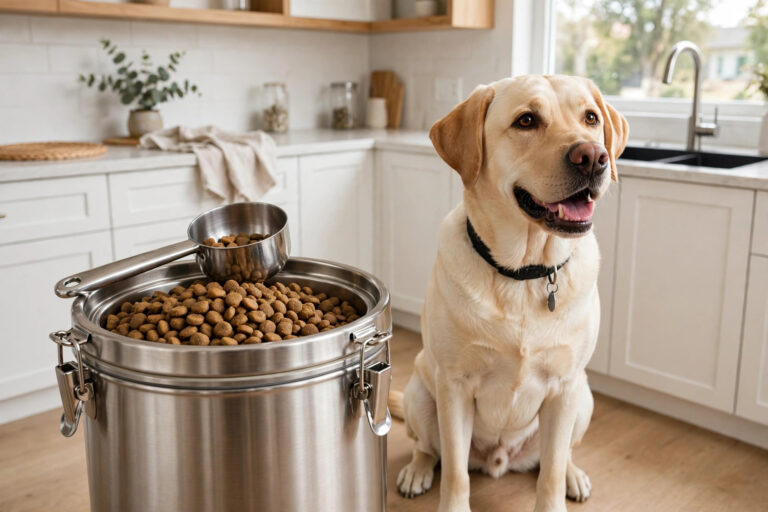
A bag of kibble is one of the most expensive groceries in many dog households — and most of us store it the same way we store a bag of rice: open, rolled down, tossed in a corner of the pantry. That habit costs you money and, in the worst cases, your dog’s health. Once the bag is open, oxygen, heat, light, and moisture start working on the fats and nutrients inside. Kibble goes stale, then rancid. Homemade batches grow bacteria. And “best by” dates stop meaning what you think they mean the moment the seal breaks.
The good news: proper dog food storage is simple, cheap, and takes about ten minutes to set up. Here’s how long opened dog food actually lasts, the storage mistakes that spoil it fastest, and a system that keeps every bowl as fresh as the day you opened the bag.
How long does dog food last once opened?
Forget the “best by” date printed on the bag — that date assumes the bag is still factory-sealed. Once opened, the clock runs faster:
-
Dry kibble: about 4–6 weeks after opening, if stored properly. Large bags bought “for the savings” often go stale before the dog finishes them.
-
Opened wet/canned food: 2–3 days in the fridge, covered. After that, bacteria have the upper hand — discard it.
-
Unopened wet food: follows its best-by date, stored in a cool, dark cupboard.
-
Homemade cooked dog food: 3–4 days refrigerated, 2–3 months frozen (see the freezer section below).
-
Semi-moist treats and dental chews: reseal tightly and use within the window on the pack — often 4 weeks.
Smaller, more frequent buys beat one giant economy bag if your dog takes longer than a month to finish it.
The golden rule: bag-in-bin
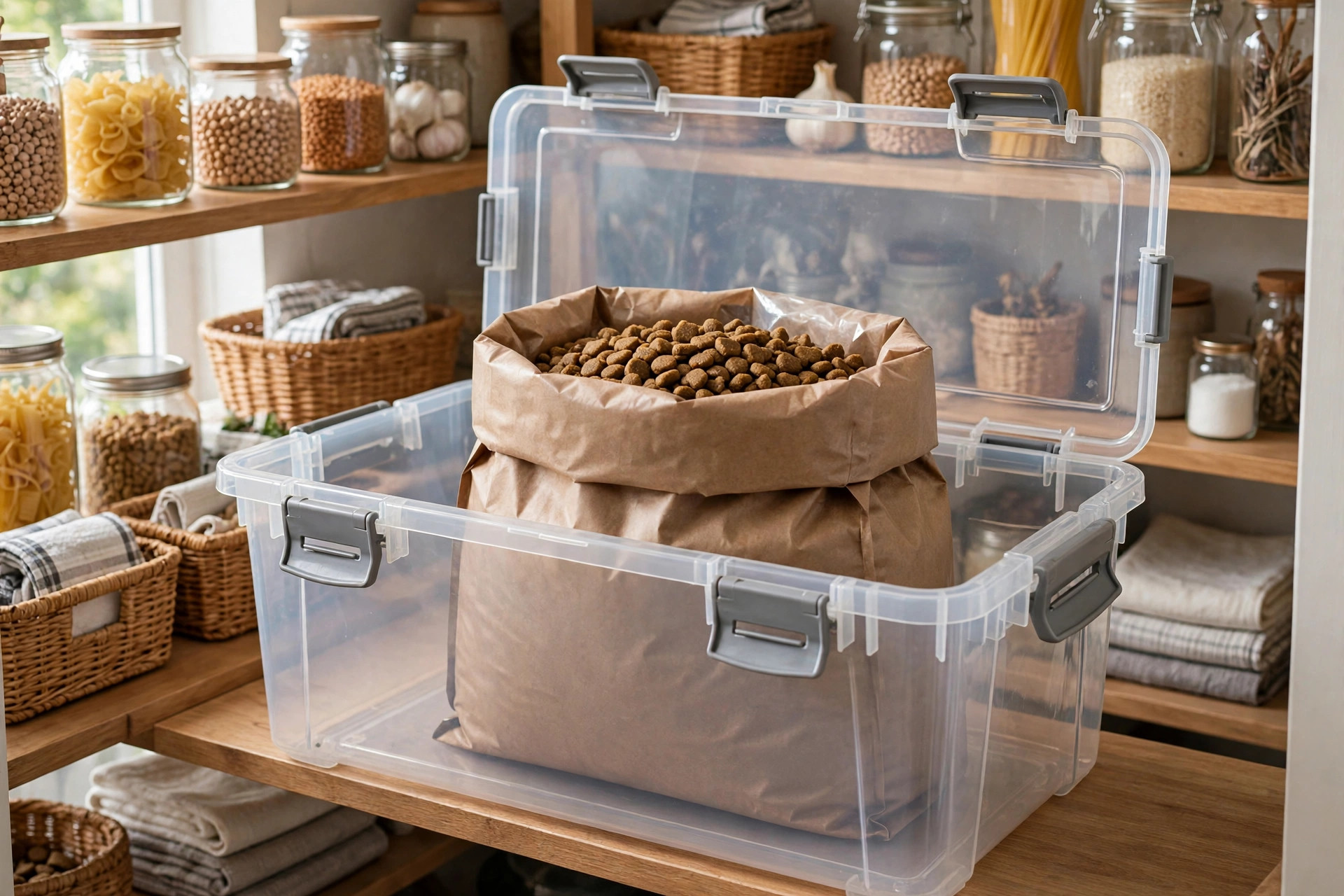
The single best habit in dog food storage is this: keep the kibble in its original bag, and put the whole bag inside your storage container.
It sounds redundant, but it solves three problems at once. The bag’s inner lining is an engineered fat barrier — it slows oxidation far better than a plain plastic bin wall. The rolled-down bag adds an extra seal around the food. And if there’s ever a recall, the lot number, UPC, and best-by date are right there on the bag instead of long thrown away.
Squeeze the air out of the bag before rolling it down, close the container lid over it, and you’ve built a double barrier against staleness.
Choose the right container
Not every container is food-safe. Here’s what to look for:
-
Food-grade material. Stainless steel or BPA-free, food-grade plastic marked with a food-safe symbol. Avoid bargain bins with no material marking — cheap plastics can leach and can absorb rancid fat odours over time.
-
A genuinely airtight lid. Gasket or silicone-seal lids, not loose snap-on tops. If you can smell the kibble with the lid closed, air is getting in.
-
The right size. Buy a container that fits the bag you actually buy with minimal empty airspace. A half-empty giant bin is just a lot of stale air sitting on your dog’s dinner.
-
Easy to wash. Fat residue goes rancid and contaminates every fresh bag you pour in. Wash and fully dry the container between bags — never just top up the new kibble onto the old.
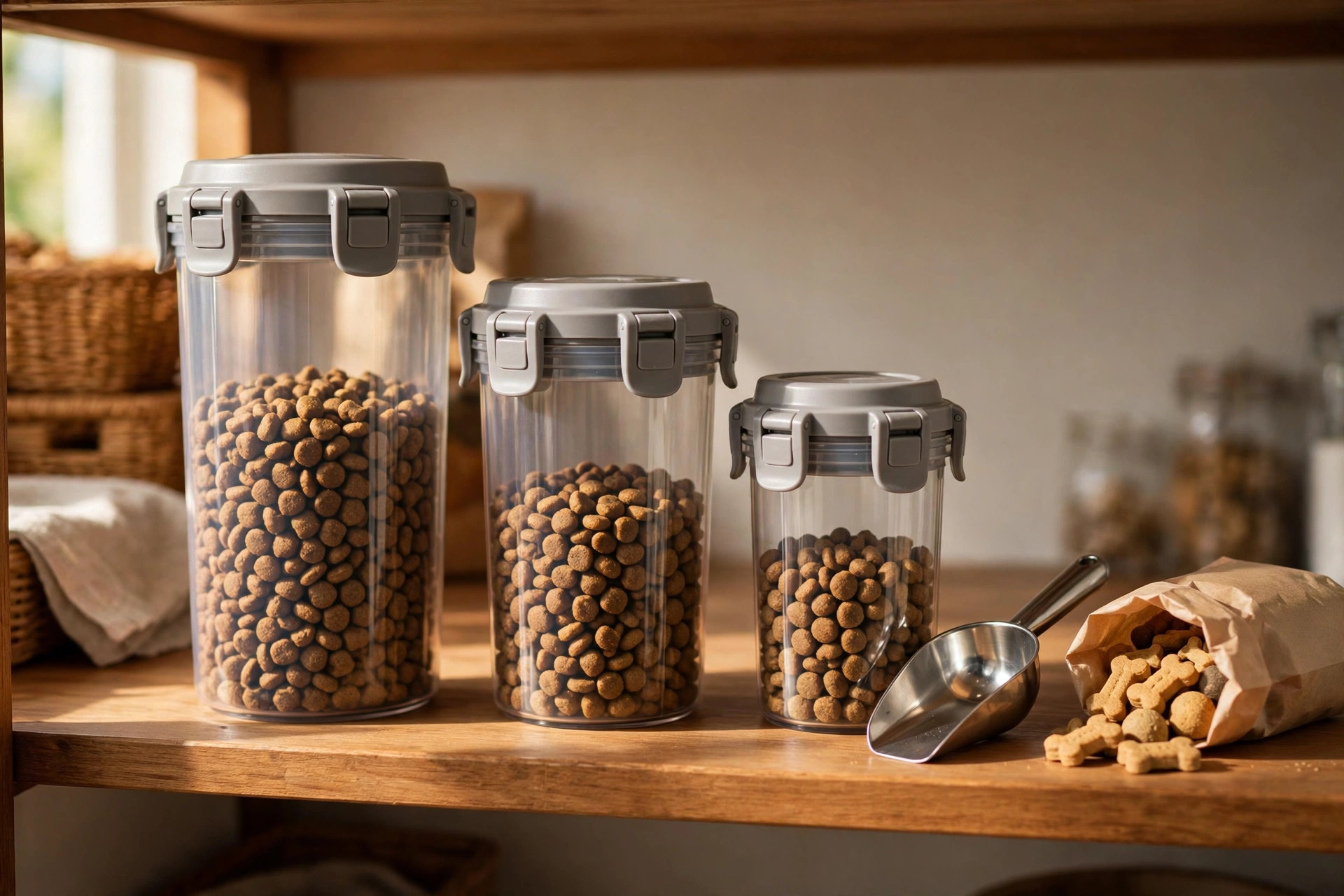
Airtight pet-food containers with measuring scoops included are cheap and widely available; they’re one of the best value purchases in dog care.
Where you store it matters as much as how
Kibble is happiest somewhere cool, dry, and dark — ideally below 25°C (77°F). The usual suspects that ruin it:
-
The garage. Temperature swings, summer heat, and humidity turn fat rancid fast. The garage is the number-one kibble killer.
-
Next to the oven or dishwasher. Heat and steam, every single day.
-
Sunlit pantry shelves. UV light degrades vitamins and accelerates fat oxidation.
-
Damp basements or laundry rooms. Moisture invites mold — and moldy kibble can contain mycotoxins that are genuinely dangerous to dogs.
A hallway cupboard, an interior pantry away from appliances, or under the kitchen counter all work. If your home runs hot in summer, a cooler spot is worth the effort.
Storing opened wet food
Wet food is the easy one to get wrong because the rules are strict:
-
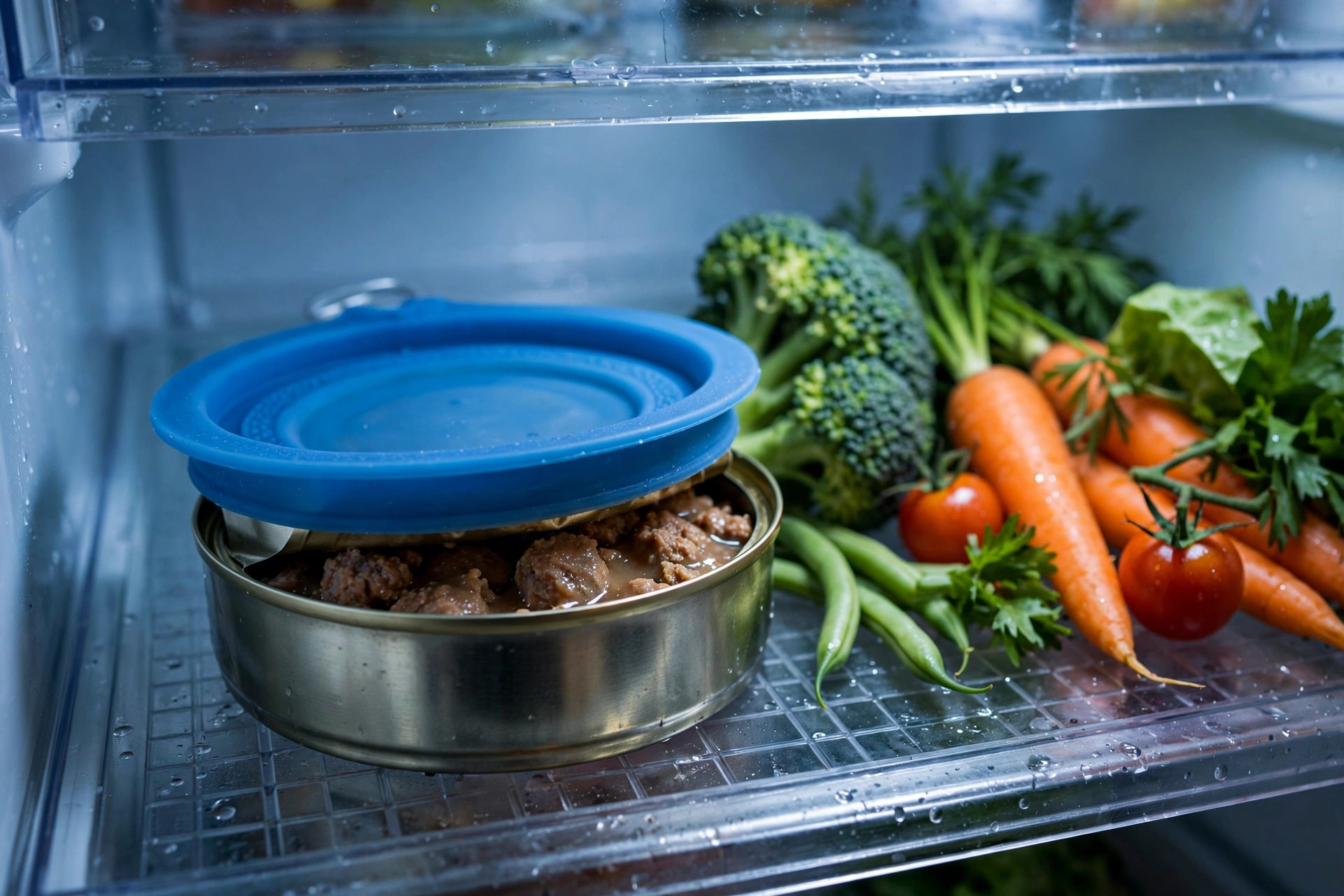
Cover the open can tightly — a silicone can lid or a layer of cling film pressed onto the surface. Never store it in the open can uncovered; the metal edge and air exposure both degrade it.
-
Refrigerate at or below 4°C (40°F).
- Use within 2–3 days, then discard the rest.
- Serve at room temperature — warm the portion for 10–15 minutes out of the fridge. Most dogs refuse fridge-cold food, and cold food can upset sensitive stomachs.
If you regularly throw away half cans, consider buying smaller cans or pouches, or freezing portions (below).
Freezing homemade dog food (and wet food portions)
Batch cooking is only worth it if the batches survive the freezer. Here’s the system:
-
Cool it fast first. Spread cooked food on a tray or in shallow containers and get it into the fridge within 2 hours of cooking. Never put steaming food straight into the freezer.
-
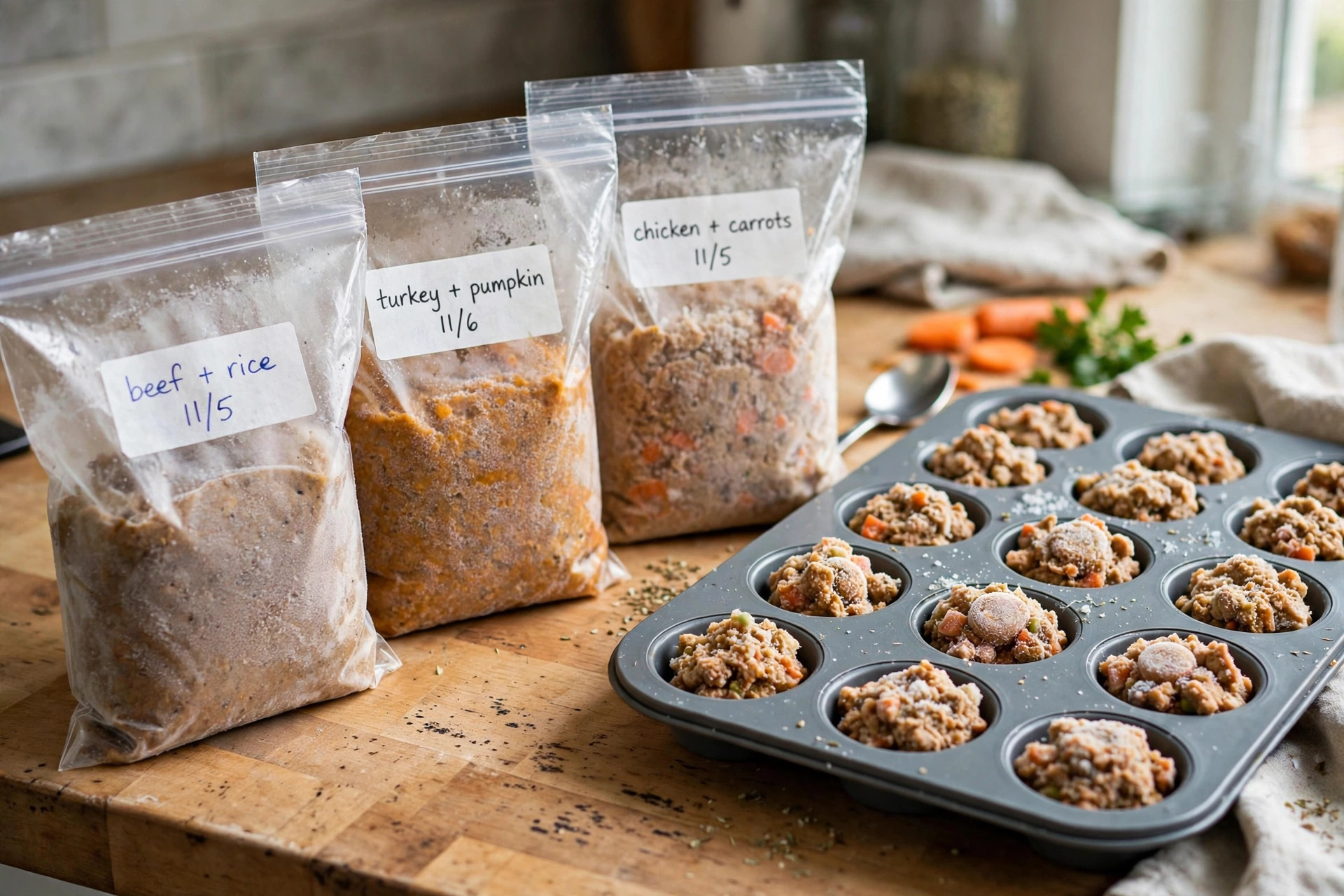
Portion before freezing. Freeze in single-meal or single-day portions so you never thaw more than you need. Silicone muffin trays are perfect for this.
-
Use freezer bags or airtight containers. Squeeze out the air; freezer burn dries food out and ruins the texture dogs actually eat.
-
Label everything. Write the contents and the date on every bag. Frozen mystery meals get thrown away.
-
Keep it 2–3 months. Quality drops after that — safe, usually, but noticeably less appealing.
-
Thaw in the fridge, never on the counter. Move tomorrow’s portion to the fridge tonight. Refrozen-thawed food goes straight in the bin, not back in the freezer.
The same method works for half cans of wet food — freeze leftovers in a silicone tray on day one instead of watching them age in the fridge.
What spoils fastest — and the signs
Fats are the weak link in every dog food. Vegetable oils and animal fats oxidise, and rancid fat doesn’t just taste bad — it destroys vitamins and can cause digestive upset. Learn the signs:
-
Off or sour smell. Fresh kibble smells mildly meaty or biscuity. Rancid kibble smells sharp, paint-like, or sour.
-
Greasy or sticky texture. Kibble that’s suddenly oily to the touch is breaking down.
-
Mold — any amount. White, green, or grey fuzz anywhere in the bag means the whole bag goes in the bin. Mycotoxins from moldy grain can cause serious illness; never “pick around” mold.
-
Pantry moths or weevils. Tiny moths, larvae, or webbing in the kibble mean infestation. Discard the food, wash the container and the shelf, and check neighbouring dry goods.
-
The dog refuses it. Dogs often smell rancidity before we do. A sudden refusal of a familiar food is worth investigating, not forcing.
Storage mistakes to avoid
The greatest-hits list of things that quietly spoil dog food:
-
Dumping kibble straight into the bin and throwing the bag away (loses the fat barrier and the recall info).
-
Topping up new kibble on top of old crumbs and rancid fat residue.
-
Storing in the garage through a hot summer.
-
Buying the 20 kg bag for one small dog “because it’s cheaper per kilo” — then feeding stale food for three months.
-
Leaving wet food out for hours “so it warms up” — two hours at room temperature is the limit for any moist food.
-
Thawing homemade food on the counter instead of in the fridge.
- Keeping probiotics and fish-oil supplements in a warm cupboard — many need cool, dark storage; check the label.
FAQs
Does kibble really go bad after opening? Yes. The fats oxidise and the vitamins degrade. Most manufacturers and vets put the practical window at 4–6 weeks once the seal is broken, assuming airtight, cool, dark storage. Without it, stale arrives sooner.
Can I store dog food in the fridge? Dry kibble doesn’t need the fridge and can pick up moisture there. Wet food, once opened, must be refrigerated. Sealed bags of kibble are fine at room temperature in a cool spot.
Is it safe to freeze dry kibble? You can, but it’s rarely worth it — freezing doesn’t extend opened kibble’s life much and condensation on thawing can invite mold. Freezing is a great tool for homemade food and wet-food portions, not for kibble.
How can I tell if my dog’s food has gone rancid? Trust your nose: sharp, sour, or paint-like smells instead of the usual mild meaty scent. Oily texture, discolouration, or your dog suddenly refusing a familiar food are all red flags.
Should I wash the storage container between bags? Absolutely. Old fat residue goes rancid and contaminates the fresh bag immediately. Wash with hot soapy water, rinse well, and dry completely before refilling.
What about treats — do they need special storage? Meaty, soft, or homemade treats follow the same rules as food: airtight, cool, dark. Crunchy biscuits are forgiving, but anything soft, chewy, or meaty spoils like wet food once opened.
The bottom line
Fresh food is one of the simplest upgrades to your dog’s daily life, and it costs almost nothing: keep kibble in its original bag inside an airtight container, store it cool, dark, and dry, buy bag sizes your dog finishes within a month, and treat homemade batches like the perishable food they are — fridge for days, freezer for months, thawed in the fridge. If you batch-cook for your dog, our homemade dog food recipes guide pairs with this one — cook the bowls, then store them right.
Your dog can’t read a best-by date. But they’ll tell you when dinner is fresh — usually by eating it like they mean it.