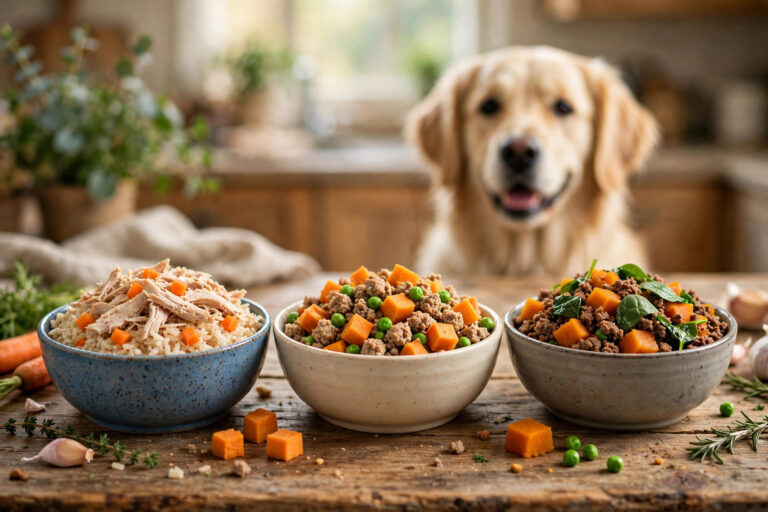
More dog parents are taking dinner back into their own kitchens — and
not just because of the recall headlines. Homemade dog food means you
control every ingredient: no mystery fillers, no artificial
preservatives, no ingredients you can’t pronounce. You can tailor the
bowl to your dog’s age, activity level, allergies and taste, and many
dogs simply eat more enthusiastically when the bowl smells like real
food.
But there’s a catch worth taking seriously: a bowl that looks
wholesome can still be nutritionally incomplete. Dogs need the right
balance of protein, fat, fibre, vitamins and minerals — and missing a
single nutrient over months can cause real problems. That’s why this
guide isn’t just a list of tasty mixes. You’ll get a simple balancing
framework, seven complete-bowl recipes you can rotate through the
week, the foods that must never go in the pot, and honest guidance on
when to loop in your vet or a canine nutritionist.
How to build a balanced homemade dog bowl
Every recipe below follows the same easy framework. Aim roughly for
this breakdown per meal:
- 40–50% lean protein. Chicken, turkey, lean beef, salmon or eggs. Protein builds and maintains muscle, and it’s the most important macronutrient in the bowl.
- 25–35% cooked complex carbs. Brown rice, sweet potato, pumpkin, oats or quinoa give steady energy and fibre for digestion.
- 15–25% vegetables and fruit. Carrots, green beans, peas, spinach, blueberries or apple (no seeds) add vitamins, minerals and antioxidants.
- A source of healthy fat. A drizzle of salmon oil or a little coconut oil supports skin, coat and brain health. Go easy — too much fat triggers digestive trouble.
- Calcium and micronutrients. Dogs on homemade diets commonly miss calcium. Talk to your vet about a balanced canine multivitamin or a calcium supplement — do not rely on guesswork.
Portion-wise, most adult dogs need roughly 2–3% of their body weight in food per day (split into two meals), but active, senior and small breeds differ a lot. Use this as a starting point and adjust by weight, energy and stool quality — your vet can fine-tune it in one visit.
1. Classic chicken and rice comfort bowl
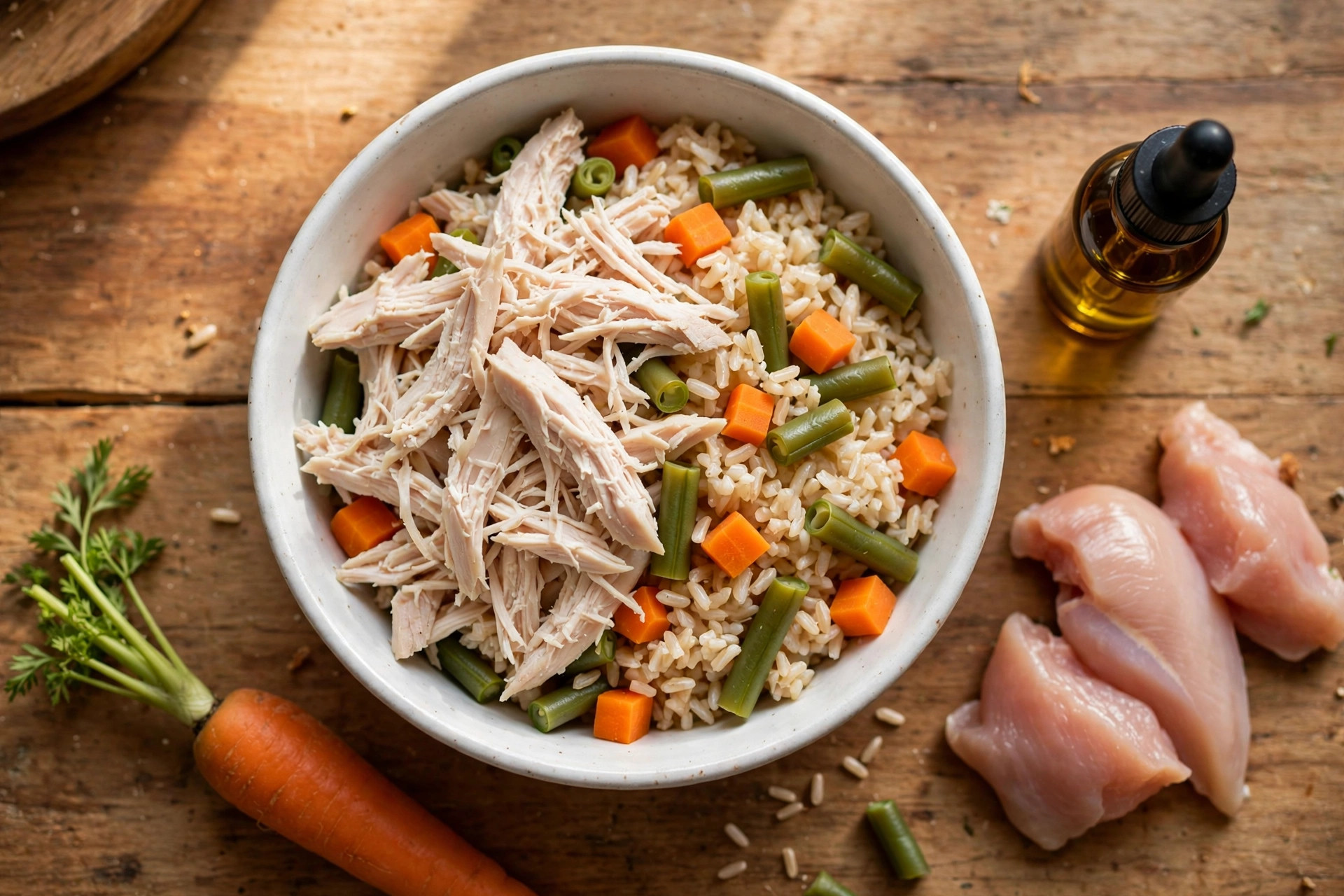
The go-to recipe vets have recommended for decades — and for good reason. Poach 2 cups of skinless chicken breast, cook 1.5 cups of brown rice, and steam 1 cup of diced carrots and green beans. Shred the chicken, fold everything together with a teaspoon of salmon oil, and let it cool completely before serving. It’s gentle on stomachs, easy to digest, and the recipe most recovering dogs already know and love. Makes about 4 cups.
2. Turkey, sweet potato and pea bowl
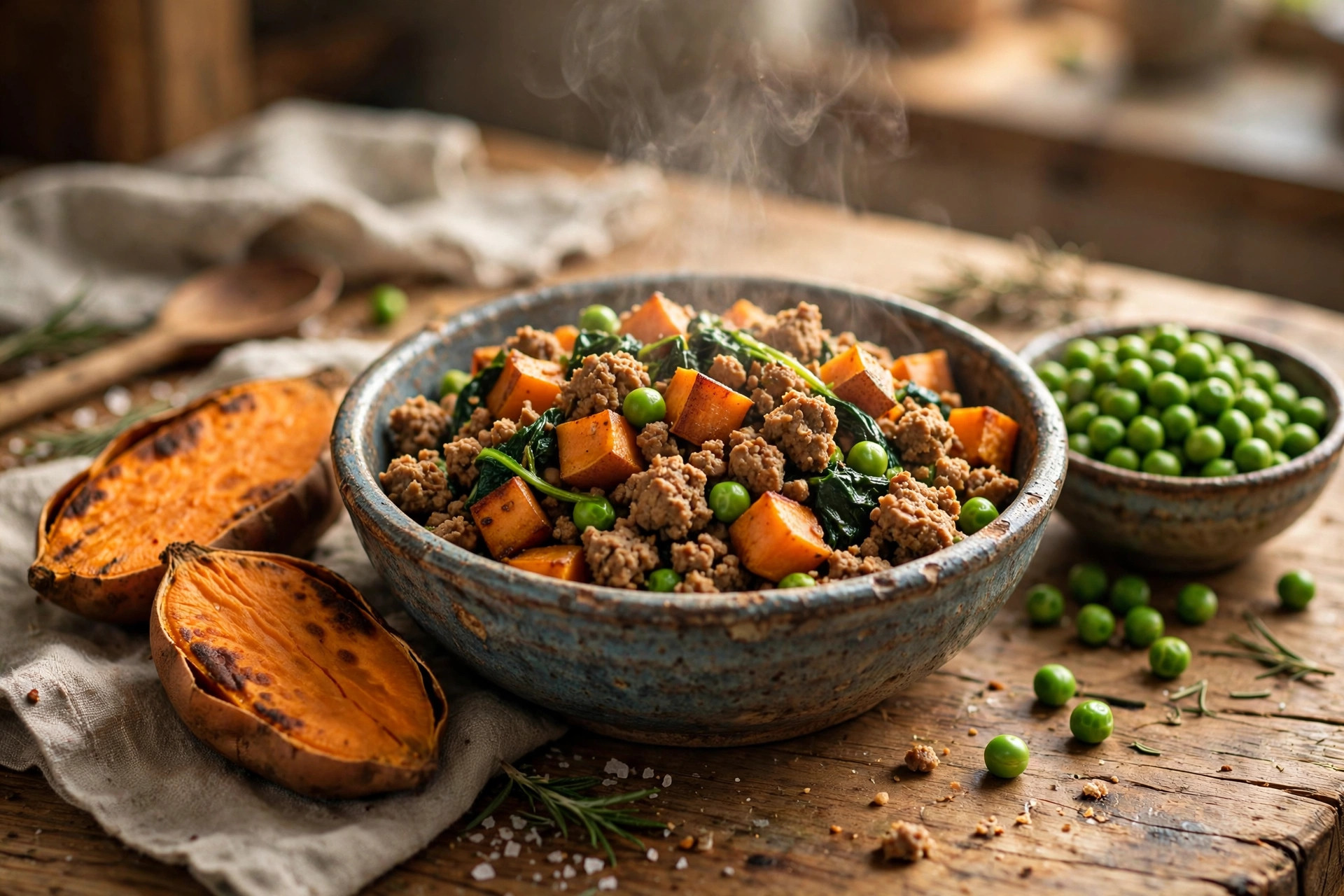
A leaner, fibre-rich option that fussy dogs tend to demolish. Brown 2 cups of ground turkey (93% lean) until cooked through, then add 1.5 cups of cubed cooked sweet potato and 1 cup of peas. Stir through a handful of wilted spinach at the end for iron and antioxidants. Sweet potato brings slow-release energy and vitamin A, while turkey is one of the leanest proteins around — great for dogs watching their waistline.
3. Beef, pumpkin and spinach power bowl
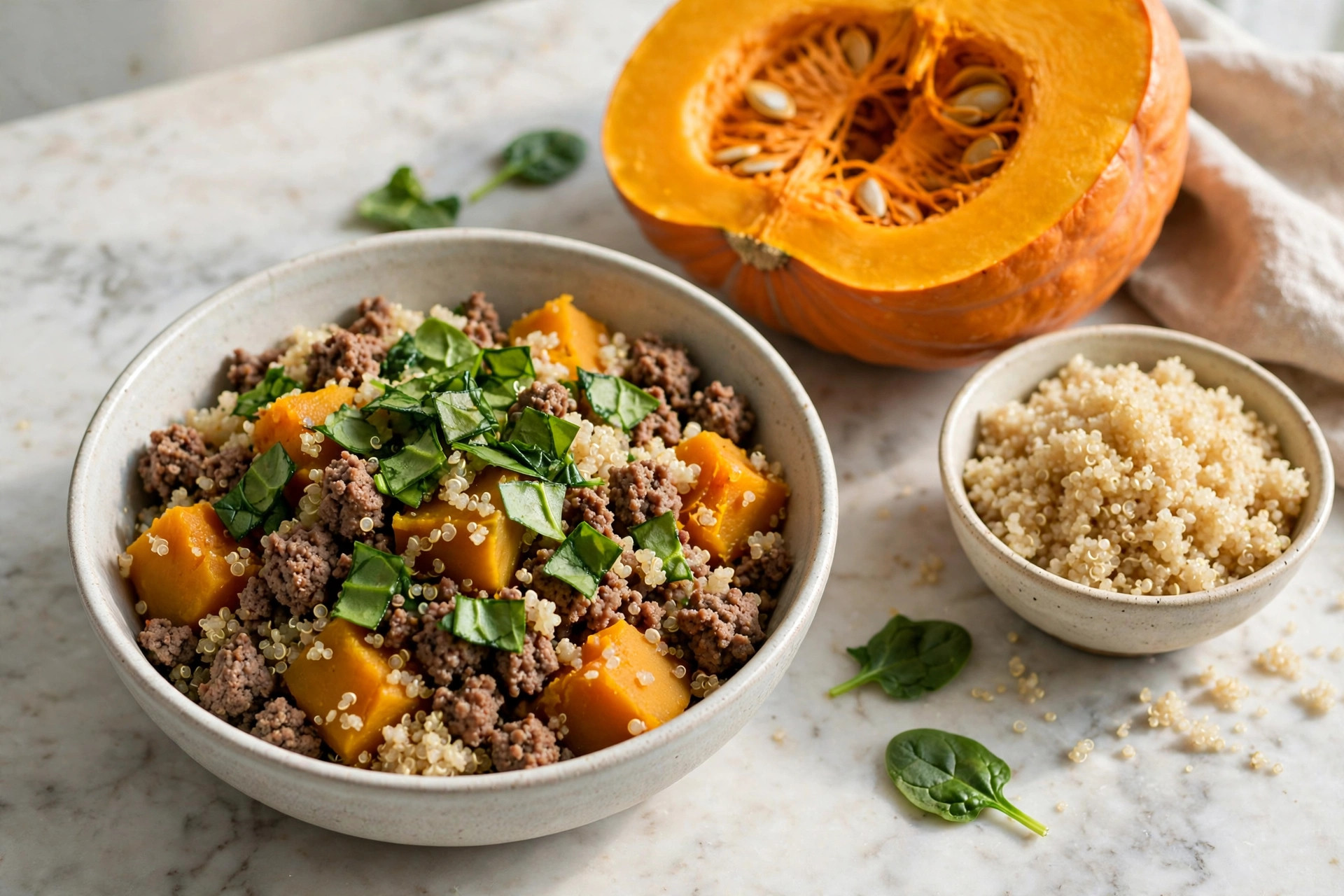
For active dogs that need a little more oomph. Brown 2 cups of lean ground beef (90% lean), then fold in 1.5 cups of plain cooked pumpkin (not pie filling), 1 cup of cooked quinoa and a generous handful of chopped spinach. Pumpkin is the digestive all-rounder: it firms up loose stools and loosens up constipation. Quinoa adds complete plant protein on top of the beef.
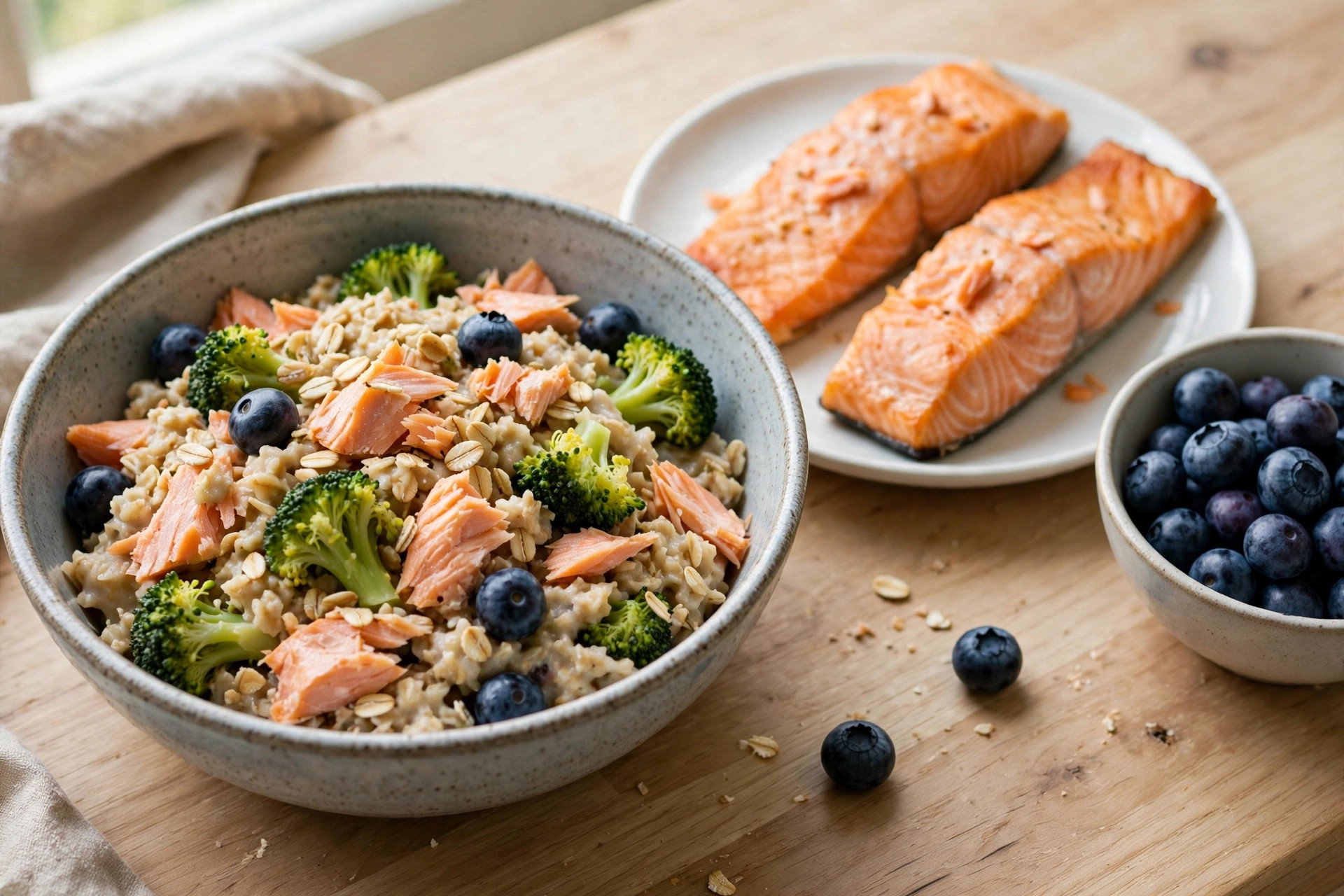
4. Salmon and sweet potato shine bowl
An omega-3 hero for skin, coat and joints. Bake or poach 2 salmon fillets until fully cooked and flake out every bone — check carefully, as fish bones are dangerous. Mix with 1.5 cups of cooked oats, 1 cup of steamed broccoli florets (chopped small) and half a cup of blueberries. The EPA and DHA in salmon are some of the best-studied nutrients in canine nutrition, linked to healthier skin and reduced joint inflammation.
5. Egg, rice and veggie breakfast bowl
A quick, budget-friendly bowl for lighter days. Scramble 4 eggs (plain, no butter or seasoning), then combine with 1.5 cups of cooked brown rice, 1 cup of mixed steamed veg (carrots, peas, green beans) and a drizzle of coconut oil. Eggs are a near-perfect protein with excellent bioavailability, and this one comes together in under 20 minutes — ideal for busy mornings or as a recovery meal.
6. Chicken, pumpkin and apple harvest bowl
A cosy, fibre-forward option with a touch of natural sweetness. Poach 2 cups of diced chicken thigh (trimmed of skin), stir in 1 cup of cooked pumpkin, 1 cup of cooked oats, half a cup of finely diced apple (no seeds, no core) and 1 cup of steamed green beans. Apple adds vitamin C and crunch appeal, and most dogs go slightly mad for the sweet-savoury combo. Keep portions of fruit modest — a little goes a long way.
7. Turkey, blueberry and spinach superfood bowl
The antioxidant flagship of the rotation. Brown 2 cups of ground turkey, then mix with 1 cup of cooked brown rice, half a cup of blueberries, a big handful of wilted spinach and a teaspoon of salmon oil. Blueberries are low in sugar and packed with anthocyanins; spinach adds iron, calcium and vitamin K. This one photographs beautifully, too — expect your dog to stare at it like it owes them money.
Foods that must never go in the pot
Homemade cooking is wonderful right up until a forbidden ingredient slips in. These are the hard no’s — memorise them:
- Onion and garlic (including onion/garlic powder) — damage red blood cells and can cause life-threatening anaemia.
- Grapes and raisins — can trigger sudden kidney failure, even in small amounts.
- Chocolate, cocoa and coffee — theobromine and caffeine are toxic to dogs.
- Xylitol (birch sugar) — found in some peanut butters and sugar-free products; causes rapid insulin release and liver failure. Always read the peanut butter label.
- Macadamia nuts — cause weakness, vomiting and tremors.
- Cooked bones — splinter and can puncture the digestive tract; never use them as chews from your cooking.
- Excess salt, spices and rich sauces — season the human food, keep the dog’s bowl plain.
Homemade vs store-bought: an honest comparison
Homemade wins on control and freshness. You choose the protein quality, skip the additives and adjust for allergies, age or appetite dips. Dogs with sensitive stomachs or food intolerances often do better on a simple homemade diet, and it’s genuinely rewarding to watch a picky eater finally clean the bowl.
Store-bought wins on guaranteed completeness. Commercial foods labelled “complete and balanced” (look for the AAFCO statement) have been formulated and tested to hit every nutrient target. Replicating that at home long-term takes planning and usually a vet-recommended supplement — which is why many nutritionists suggest a hybrid: a good kibble base with homemade toppers from the recipes above. Best of both worlds.
When to talk to your vet
Cooking at home is a joy, not a DIY nutrition degree — so bring your vet into the plan in these cases:
- Puppies and seniors have very different nutrient targets; homemade-only diets need professional formulation for both.
- Dogs with kidney, liver, heart or pancreatic disease need prescription-level adjustments — never wing it.
- If your dog loses weight, develops a dull coat, or has persistent digestive issues on a homemade diet, that’s a red flag for a nutrient gap; get bloodwork and a diet review.
- Before going 100% homemade long-term, ask your vet to recommend a balanced supplement or refer you to a board-certified veterinary nutritionist. One conversation now prevents problems later.
Rotate through the seven bowls, keep the framework in mind, keep the forbidden list on the fridge — and enjoy the part where your dog follows you to the kitchen with enormous hopeful eyes. That’s the real pay-off.
FAQs
Can I feed my dog homemade food every day?
Yes, as long as the diet is balanced over time. Rotate proteins and carbs, add a vet-recommended supplement for calcium and trace minerals, and have your vet review the plan — especially for puppies, seniors or dogs with health conditions.
How much homemade food should I feed my dog?
Start with 2–3% of body weight per day, split into two meals, then adjust. A 10 kg dog gets roughly 250–300 g a day; a 30 kg dog roughly 600–900 g. Active dogs need more, couch potatoes less — monitor weight and body condition monthly.
Is homemade dog food cheaper than kibble?
Not usually. Homemade costs more per meal than mid-range kibble (protein is the pricey part), but it’s comparable to premium fresh brands — and you get full ingredient control in return.
Can dogs eat the same homemade food as humans?
Sharing a plain, unseasoned portion is fine in principle, but human recipes often contain onion, garlic, salt or rich sauces that are unsafe for dogs. Cook the dog’s portion plain and add your seasonings to your own plate.
What’s the easiest starter recipe?
The classic chicken and rice bowl (recipe 1) — three ingredients, gentle on every stomach, ready in 30 minutes, and a reliable base you can build on as you get confident.