{
“title”: “Homemade Dog Treats Grain Free: 6 Easy Recipes Dogs Love”,
“slug”: “homemade-dog-treats-grain-free”,
“excerpt”: “Homemade dog treats grain free — 6 easy recipes with coconut, almond and chickpea flour, plus what grain-free really means and the vet facts to know first.”,
“meta_description”: “Homemade dog treats grain free — 6 easy recipes with coconut, almond and chickpea flour, plus what grain-free really means and the vet facts to know first.”,
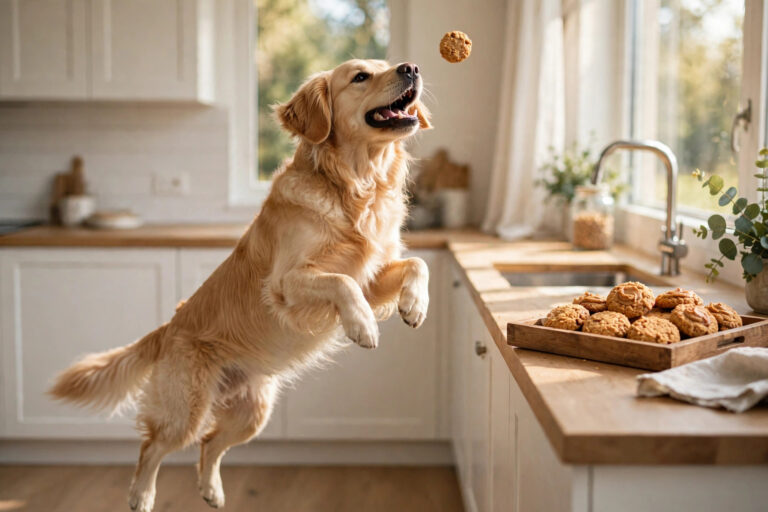
“featured_image_alt”: “Golden retriever catching a homemade grain-free dog treat in a bright kitchen.”,
“content_html”: “
Walk down the dog treat aisle and \”grain-free\” is on half the bags. At home, though, most homemade treat recipes still start with wheat flour or oats — and oats are a grain. So if your dog genuinely needs grain-free treats, the usual recipes do not help.
\n
This guide is different. Every recipe below is fully grain-free: no wheat, no corn, no rice, no oats, no barley. Instead they use coconut flour, almond flour, chickpea flour and tapioca — flours that behave differently from wheat, so the guide also explains how each one works, how much to use, and which one suits which recipe. There is also an honest section on when grain-free is worth it and when it is not, including what vets say about grain-free diets.
\n
What \”grain-free\” actually means
\n
Grain-free means no grains at all — not just no wheat. That includes the grains people often forget are grains:
\n
- \n
- Wheat, barley, rye — the obvious ones, and the ones most often linked to dog food sensitivities.
- Oats — a grain, even though oat flour is often sold as a \”healthy\” swap. An oat-flour biscuit is flour-free but it is not grain-free.
- Rice and corn — both grains, and both common in shop-bought treats.
\n
\n
\n
\n
Grain-free is not the same as low-carb, and it is not the same as gluten-free. A gluten-free biscuit can still contain rice or oats. A grain-free biscuit contains none of them — which is why the recipes below use nut and seed flours, coconut flour, and root starches instead.
\n
Why go grain-free? And when not to
\n
Most dogs do not need grain-free treats. Grains are not harmful to most dogs, and a healthy dog digests oats and rice perfectly well. Grain-free is worth considering in three situations:
\n
1. Your vet suspects a grain sensitivity. True grain allergies in dogs are uncommon — beef, dairy and chicken are far more common triggers — but some dogs do react to wheat or corn. If your vet has suggested a trial, grain-free treats keep the trial clean. Our best dog food for sensitive stomachs guide explains how an elimination trial works.
\n
2. Your dog has a sensitive stomach. Some dogs with recurring soft stools or gassy tummies do better on a simpler, grain-free treat. It is not a cure, but removing one variable often helps — and the pumpkin and coconut in these recipes are both famously gentle on digestion.
\n
3. You want treat variety. Even for a healthy dog, rotating treat types is good. Grain-free recipes use different ingredients, so they add variety to a treat jar that is otherwise all wheat and oats.
\n
When grain-free is not the right call: if your dog is happy and healthy on normal treats, there is no reason to switch. Grain-free is a tool for a specific job, not a badge of a better treat. And if your dog has a diagnosed medical condition, ask your vet before changing anything — including treats.
\n
The vet note: grain-free diets and heart health
\n
You may have heard about a possible link between grain-free diets and a heart condition called dilated cardiomyopathy (DCM) in dogs. Here is what is actually known, in plain terms:
\n
- \n
- The US Food and Drug Administration (FDA) investigated reports of DCM in dogs eating grain-free diets, particularly diets heavy in peas, lentils and potatoes as main ingredients.
- No direct cause has been proven. The link is an association, not a confirmed cause, and the investigation is ongoing.
- The concern is about a dog’s whole diet — what they eat every day, meal after meal — not about an occasional treat.
\n
\n
\n
\n
What that means for this guide: these are treats, not meals. They make up a small part of your dog’s day, they are rotated with other treats, and none of the recipes use peas or lentils as a main ingredient. If your dog eats a grain-free diet as their main food, talk to your vet about it — that is a diet question, and it deserves a vet’s answer. For treats, the recipes below are a safe, varied addition to a normal diet.
\n
The grain-free flour guide
\n
Grain-free flours do not behave like wheat flour. Each one has its own personality, and knowing it saves you from crumbly biscuits and soggy centres.
\n
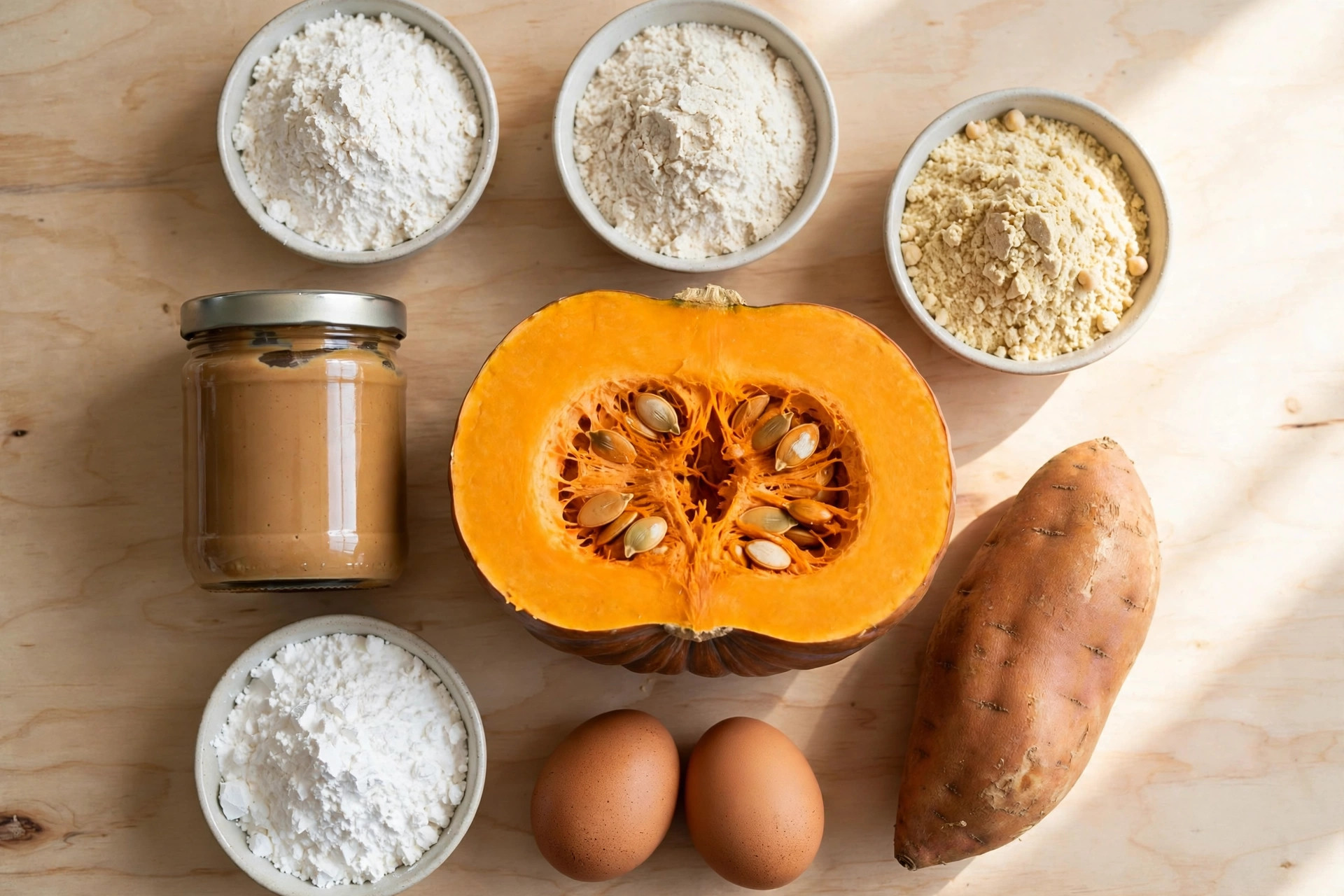
Coconut flour — the sponge. Coconut flour absorbs an enormous amount of liquid — roughly four times its own weight. Use about a quarter of the amount you would use of wheat flour, and add an extra egg or a splash of water to keep the dough moist. It gives a soft, slightly sweet biscuit that dogs love. Best for: soft chews and training bites. Watch out for: using too much. A dough that looks dry will often be fine after five minutes of resting.
\n
Almond flour — the rich one. Almond flour is ground almonds, so it is high in healthy fats and protein and gives a tender, crumbly biscuit. It browns faster than wheat flour, so bake at a slightly lower temperature and check five minutes early. Best for: soft-baked chews and biscuits for older dogs. Watch out for: dogs with nut sensitivities — almonds are not toxic to dogs, but any nut flour should be introduced in small amounts first.
\n
Chickpea flour — the sturdy one. Chickpea flour (also called gram flour or besan) is the closest to wheat flour in behaviour. It holds together well, makes a firm biscuit, and is high in protein and fibre. Best for: crunchy biscuits and shaped treats. Watch out for: it has a slightly beany smell when raw, which disappears completely in the oven.
\n
Tapioca starch — the binder. Tapioca is a starch from cassava root, not a flour. On its own it makes a chewy, almost gummy texture — useful in small amounts (a tablespoon or two) to help a grain-free dough hold together. Best for: adding chew to soft treats and no-bake recipes. Watch out for: using too much, which turns biscuits rubbery.
\n
A good rule for converting any wheat-flour recipe: replace 1 cup of wheat flour with ¾ cup of chickpea flour, or ¼ cup of coconut flour plus an extra egg, or 1 cup of almond flour baked 10°C cooler. Test a small batch first — grain-free doughs vary more than wheat doughs, and a test batch costs you ten minutes.
\n
The 6 recipes
\n
All six recipes are grain-free, and all six keep treats under 10% of your dog’s daily food. Introduce one new recipe at a time and watch for any tummy reaction over the next day.
\n
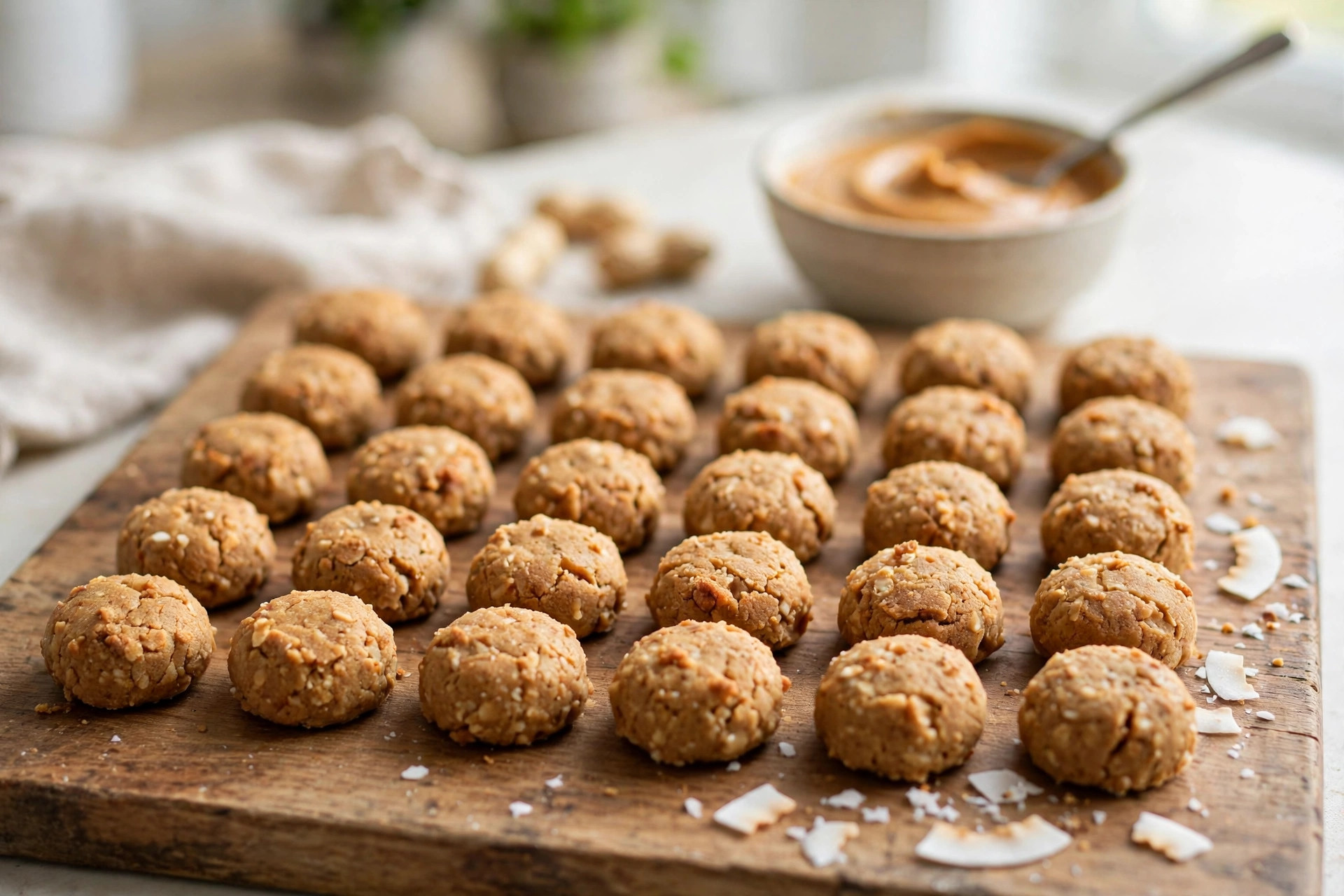
1. Peanut Butter & Coconut Flour Bites
\n
The easiest recipe on this list, and the one to start with. Coconut flour makes a soft, crumbly bite that even small dogs can manage.
\n
Ingredients
\n
- \n
- ½ cup (130 g) smooth peanut butter (xylitol-free — check the label)
- 2 eggs
- ¼ cup (30 g) coconut flour
- 1 tbsp coconut oil, melted
\n
\n
\n
\n
\n
Method
\n
- \n
- Heat the oven to 175°C / 350°F. Line a baking tray.
- Stir the peanut butter, eggs and coconut oil together, then mix in the coconut flour. Rest the dough for 5 minutes — coconut flour keeps absorbing liquid, and the dough will firm up.
- Roll into small balls, about the size of a grape, and flatten slightly with a fork.
- Bake 12–15 minutes until set and lightly golden at the edges. Cool completely.
\n
\n
\n
\n
\n
Makes ~30 small bites. Keeps 1 week in an airtight tin, 2 weeks in the fridge, 3 months frozen. A good training treat — small, soft and smelly, which is exactly what a training treat should be.
\n
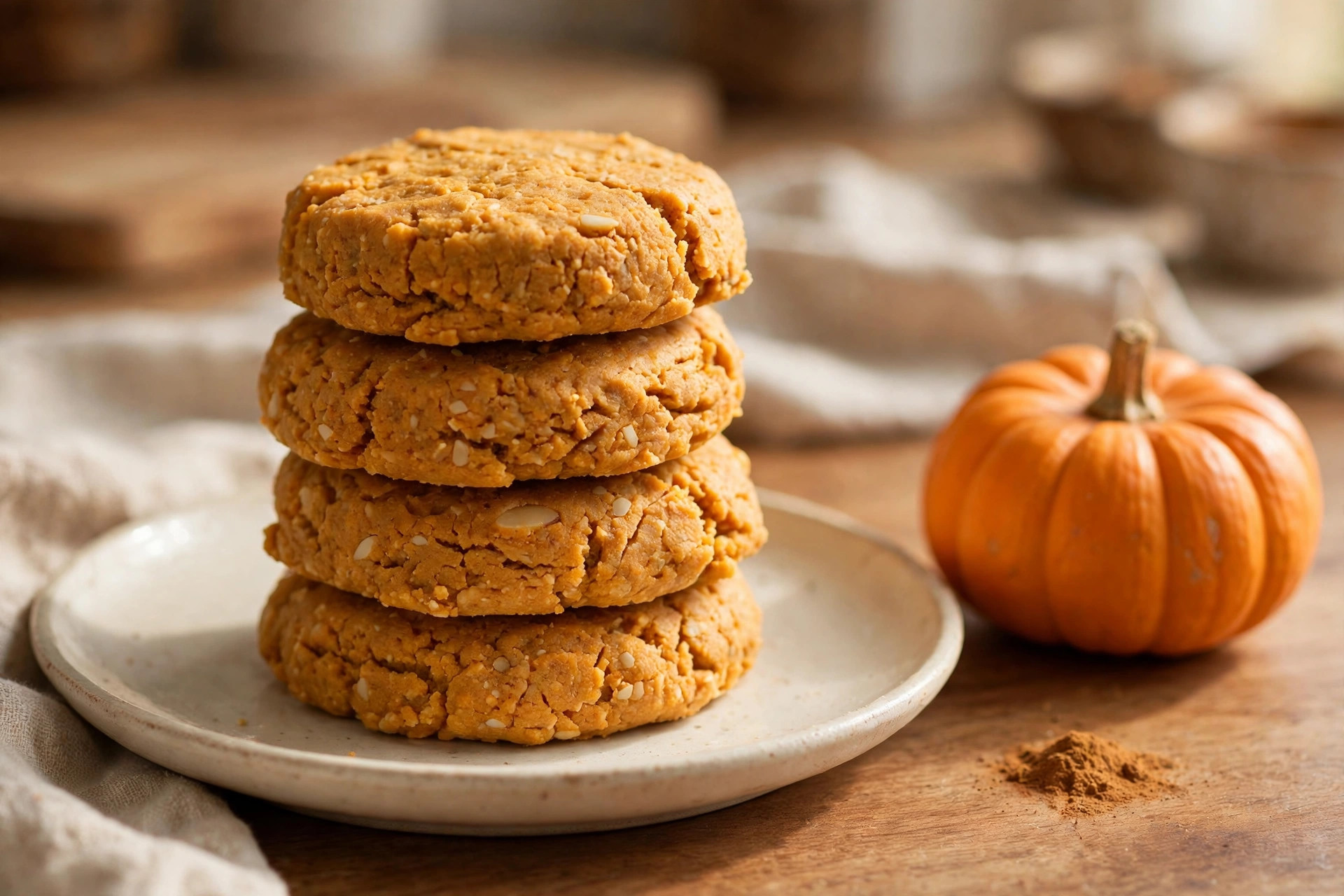
2. Pumpkin & Almond Flour Soft Chews
\n
Soft, moist, and gentle on digestion — pumpkin is the classic sensitive-stomach ingredient, and almond flour keeps them tender for older dogs and puppies.
\n
Ingredients
\n
- \n
- 1 cup (240 g) plain pumpkin purée (not pie filling)
- 1 egg
- 1 cup (100 g) almond flour
- 2 tbsp tapioca starch
- ½ tsp cinnamon
\n
\n
\n
\n
\n
\n
Method
\n
- \n
- Heat the oven to 165°C / 325°F — almond flour browns fast, so bake cooler than usual.
- Mix the pumpkin, egg and cinnamon, then stir in the almond flour and tapioca starch to form a soft dough.
- Drop teaspoons of dough onto a lined tray and flatten gently.
- Bake 18–20 minutes until set but still soft in the middle. Cool completely — they firm up as they cool.
\n
\n
\n
\n
\n
Makes ~24 soft chews. Keeps 1 week in the fridge, 3 months frozen. For more pumpkin ideas, our no-bake dog treats guide has a frozen pumpkin recipe that needs no oven at all.
\n
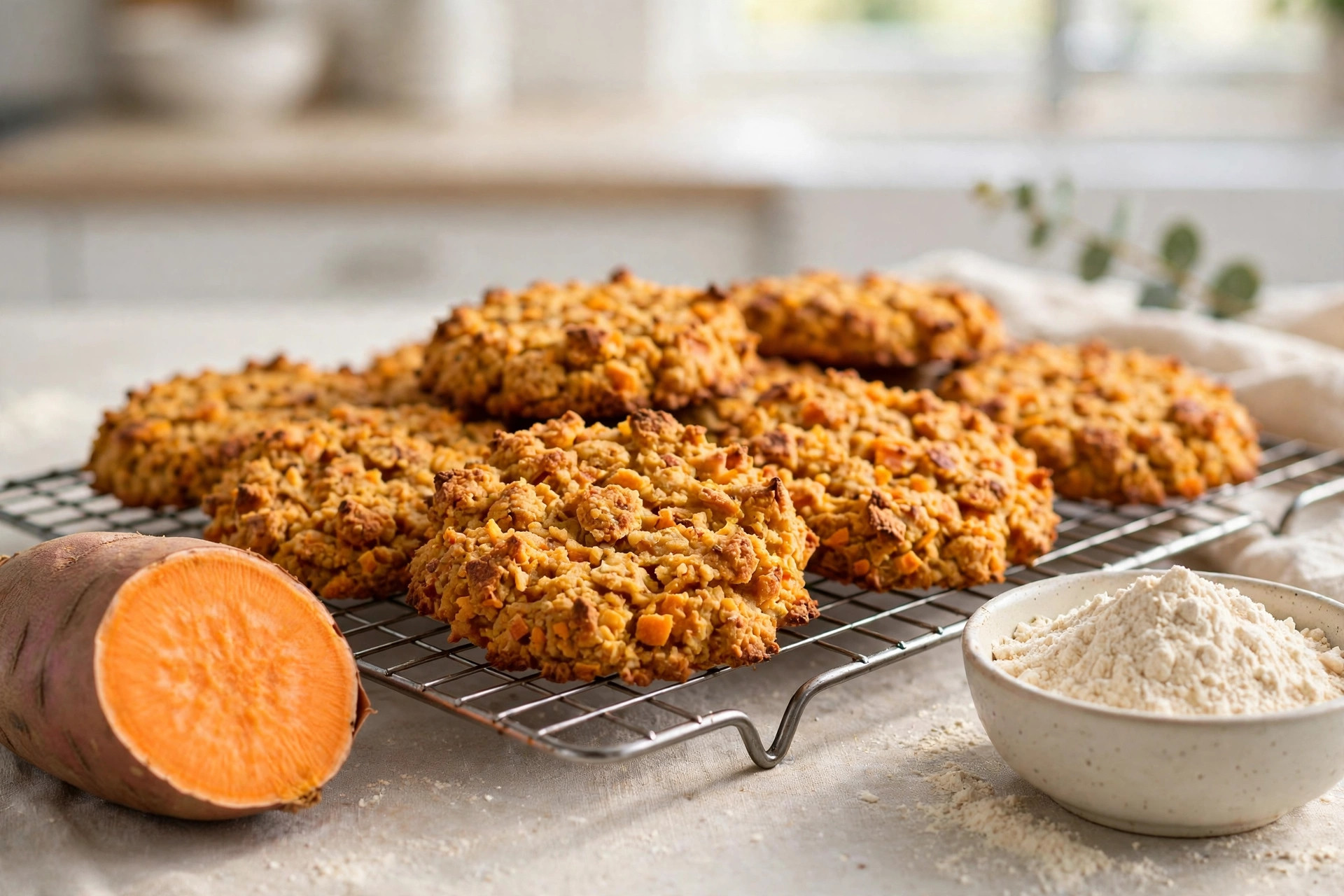
3. Sweet Potato & Chickpea Flour Biscuits
\n
The crunchiest recipe here, and the sturdiest — these hold their shape in a treat pouch and do not crumble in a pocket. Chickpea flour gives them a firm, satisfying snap.
\n
Ingredients
\n
- \n
- 1 cup (200 g) mashed cooked sweet potato, cooled
- 1 egg
- 1 cup (120 g) chickpea flour
- 1 tbsp coconut oil, melted
- 1 tbsp chopped fresh parsley (optional — freshens breath)
\n
\n
\n
\n
\n
\n
Method
\n
- \n
- Heat the oven to 180°C / 350°F. Line a baking tray.
- Mix the sweet potato, egg and coconut oil, then work in the chickpea flour to form a firm dough. Add a spoon of water only if it crumbles.
- Roll out to about 6 mm (¼ inch) thick and cut into shapes, or slice into squares with a knife.
- Bake 25–30 minutes until firm and golden. For extra crunch, turn the oven off and leave the biscuits inside for 30 minutes to dry out.
\n
\n
\n
\n
\n
Makes ~28 biscuits. Keeps 2 weeks in an airtight tin. Sweet potato is also the star of our homemade dental treats — the crunch helps clean teeth as your dog chews.
\n
4. Banana & Tapioca Frozen Chews (no-bake)
\n
No oven, no flour at all — just banana, yoghurt and a little tapioca to hold them together. These are the summer recipe, and the easiest one to make with children helping.
\n
Ingredients
\n
- \n
- 2 ripe bananas, mashed
- ½ cup (120 g) plain Greek yoghurt (no xylitol, no artificial sweeteners)
- 2 tbsp tapioca starch
- 1 tbsp smooth peanut butter (xylitol-free)
\n
\n
\n
\n
\n
Method
\n
- \n
- Mash the bananas, then stir in the yoghurt, peanut butter and tapioca starch until smooth.
- Spoon into silicone moulds or an ice-cube tray.
- Freeze at least 4 hours. Pop out and serve outside or on an easy-clean floor — they melt.
\n
\n
\n
\n
Makes ~16 chews depending on mould size. Keeps 1 month in the freezer. If your dog loves frozen treats, our homemade teething treats guide has more freezer recipes that soothe sore gums too.
\n
5. Chicken & Coconut Flour Training Bites
\n
Small, soft, and high-value — the treat you reach for when you need your dog’s full attention. Chicken is the smell that makes most dogs sit up and listen.
\n
Ingredients
\n
- \n
- 1 cup (150 g) cooked chicken breast, finely chopped or blitzed
- 1 egg
- ¼ cup (30 g) coconut flour
- 1 tbsp plain Greek yoghurt
\n
\n
\n
\n
\n
Method
\n
- \n
- Heat the oven to 175°C / 350°F. Line a baking tray.
- Blitz the chicken, egg and yoghurt together, then mix in the coconut flour. Rest 5 minutes.
- Roll into pea-sized balls — training treats should be tiny, so your dog can eat one in a second and get back to work.
- Bake 12–14 minutes until set. Cool completely.
\n
\n
\n
\n
\n
Makes ~40 tiny bites. Keeps 3 days in the fridge, 3 months frozen — freeze in small bags so you can defrost one training session’s worth at a time. For the full training-treats system — the low, medium and high-value hierarchy and the 10% calorie rule — see our dog training treats recipe guide.
\n
6. Apple & Carrot Grain-Free Crunchers
\n
The lunchbox biscuit: apple for sweetness, carrot for crunch, chickpea flour to hold it together. These are the firmest biscuits in the guide and the best for stuffing into a puzzle toy.
\n
Ingredients
\n
- \n
- 1 small apple, grated (no seeds — apple seeds contain amygdalin)
- 1 medium carrot, grated
- 1 egg
- 1 cup (120 g) chickpea flour
- 1 tbsp coconut oil, melted
\n
\n
\n
\n
\n
\n
Method
\n
- \n
- Heat the oven to 180°C / 350°F. Line a baking tray.
- Mix the grated apple, carrot, egg and coconut oil, then work in the chickpea flour to form a firm dough.
- Roll out to 6 mm (¼ inch) and cut into rounds or squares.
- Bake 25–28 minutes until firm and golden at the edges. Cool completely — they crisp up as they cool.
\n
\n
\n
\n
\n
Makes ~26 biscuits. Keeps 2 weeks in an airtight tin. Apple and carrot are also two of the safest everyday additions to a dog’s bowl — our single-ingredient dog treats guide has more one-ingredient ideas that pair well with these.
\n
How to store grain-free treats
\n
Grain-free treats go stale faster than wheat treats, because the flours hold moisture differently. Three rules keep them good:
\n
- \n
- Cool completely before storing. Warm treats sweat inside a tin, and damp treats grow mould in days. Wait until they are fully cool to the touch.
- Airtight tin, cool cupboard. Baked biscuits keep 1–2 weeks in an airtight tin. Soft chews go in the fridge and keep about a week. Frozen treats stay in the freezer for up to 3 months.
- Freeze in batches. Grain-free doughs freeze beautifully. Make a double batch, bake half, and freeze the other half as dough balls — then bake fresh whenever the tin runs low.
\n
\n
\n
\n
Mistakes to avoid
\n
- \n
- Swapping flours one-for-one. Coconut flour is not a straight swap for wheat flour — use a quarter of the amount and add an extra egg. Chickpea flour is the closest to a one-for-one swap.
- Skipping the rest. Coconut flour doughs need 5 minutes to absorb the liquid. If you bake straight away, the dough is too wet and the biscuits spread.
- Baking almond flour too hot. Almond flour browns fast. Drop the temperature by 10°C and check five minutes early, or the edges burn while the middle is still soft.
- Using pie filling instead of pumpkin purée. Pumpkin pie filling contains nutmeg and other spices dogs should not eat. Plain purée only.
- Forgetting the xylitol check. Every peanut butter and yoghurt label needs checking. Xylitol (also listed as \”birch sugar\”) is extremely toxic to dogs, and it hides in \”sugar-free\” products.
- Going grain-free for the wrong reason. If your dog is healthy on normal treats, grain-free adds nothing. Save it for a vet-suggested trial, a sensitive stomach, or simple variety — not because a bag in the shop told you grains are bad.
- Treating treats as meals. Even the best homemade treat is still a treat. Keep all treats under 10% of your dog’s daily food, and count training treats — forty tiny bites still add up.
\n
\n
\n
\n
\n
\n
\n
\n
FAQs
\n
Are grain-free dog treats better than normal treats?\nNot automatically. For most dogs, a normal wheat or oat treat is perfectly healthy. Grain-free treats are better for dogs with a suspected grain sensitivity, a sensitive stomach, or a vet-recommended grain-free trial. For everyone else, they are simply a useful variety.
\n
Can puppies have grain-free treats?\nYes, in small pieces, from about 12 weeks — the soft chews (recipes 2 and 5) are the best starting point because they are gentle on puppy teeth and easy to break into smaller pieces. Introduce one new recipe at a time.
\n
Is coconut flour safe for dogs?\nYes, in treat-sized amounts. Coconut flour is just dried, ground coconut meat. It is high in fibre, so introduce it slowly — a sudden large amount can loosen stools. The amounts in these recipes are modest and spread across a batch.
\n
Is almond flour safe for dogs?\nYes, in small amounts. Almonds are not toxic to dogs, but they are high in fat, so almond-flour treats are best as an occasional recipe rather than an everyday one. Dogs with nut sensitivities should skip recipe 2 and use one of the other five.
\n
What is the difference between grain-free and flour-free treats?\nFlour-free treats contain no flour, but they often use oats, which are a grain. Grain-free treats contain no grains at all — no wheat, oats, rice, corn or barley. Our homemade dog treats without flour guide covers the flour-free side; this guide covers the fully grain-free side.
\n
Can I freeze grain-free treats?\nYes — all six recipes freeze for up to 3 months. Baked biscuits defrost at room temperature in about an hour. The frozen banana chews (recipe 4) are designed to be served frozen. For more freezer-friendly ideas, our homemade freeze-dried dog treats guide covers the other end of the shelf-life spectrum.
\n
My dog has allergies. Are these recipes safe?\nThese recipes avoid grains, but they still contain common allergens — chicken, egg, peanut, almond, dairy. If your dog has a known allergy, check each recipe against it and use the swaps: sunflower seed butter instead of peanut butter, a flax egg (1 tbsp ground flax + 3 tbsp water, rested 5 minutes) instead of egg. For a full allergy plan, our dog probiotics guide and our allergy-food guide explain elimination diets and gut support in detail.
\n
The bottom line
\n
Grain-free treats are not better treats — they are different treats, for a specific job. If your dog needs them, the six recipes above give you a full rotation: soft chews for training, crunchy biscuits for the treat jar, and a frozen no-bake for hot days, all without a single grain. Start with the peanut butter and coconut flour bites tonight — they take fifteen minutes, they use four ingredients, and they will tell you within one batch whether your dog is a grain-free convert.
\n
Pin this for later 📌 — and if your dog’s tummy is the reason you went grain-free, our best dog food for sensitive stomachs guide and our lick mat recipes both pair well with a gentler treat routine.
“,
“source_draft”: “/home/hatch/workspace/goals/pinterest-pin-automation-for-petsmush-com/files/homemade-dog-treats-grain-free-post-draft.md”,
“status”: “publish”
}