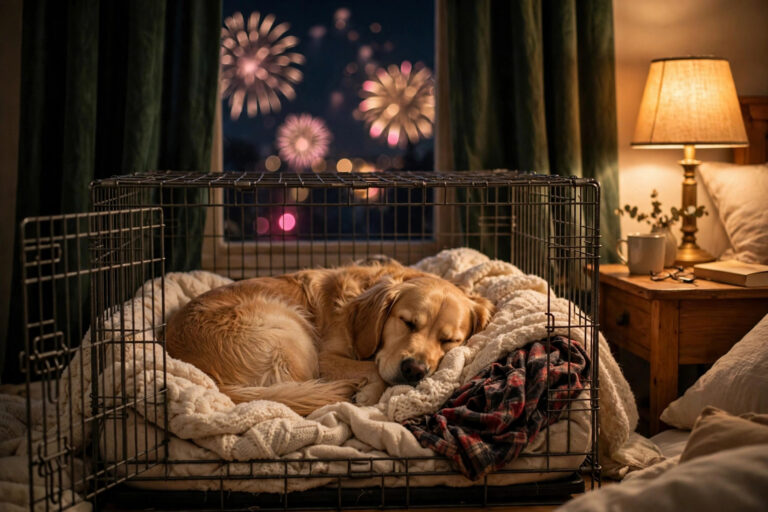
If your dog trembles, pants, hides in the bathroom or tries to bolt the second the fireworks start, you’re not alone — roughly half of all dogs show real fear of fireworks. And New Year’s Eve is one of the loudest nights of the year.
The good news: the calendar is on your side. Firework fear responds best to preparation started 4–6 weeks ahead, and right now you’ve got exactly that window. This guide gives you a simple desensitization plan you can start today, a safe-space setup for your home, a minute-by-minute plan for the big night, and honest guidance on when your vet should be part of the team.
Why dogs fear fireworks (and why telling them “it’s fine” doesn’t work)
Dogs hear far better than we do — sounds that are loud to us are startling at a level we can’t fully appreciate. Worse, fireworks are unpredictable: no warning, no pattern, and flashes of light to go with the booms. For a nervous dog, that’s the recipe for genuine panic, not mild annoyance.
Fear also tends to get worse with age if nothing is done. Each New Year’s Eve where a dog panics teaches their brain that the bangs are something to panic about. That’s why starting early matters — you’re rewriting that lesson before the next lesson arrives.
The 4-week desensitization plan (start today)
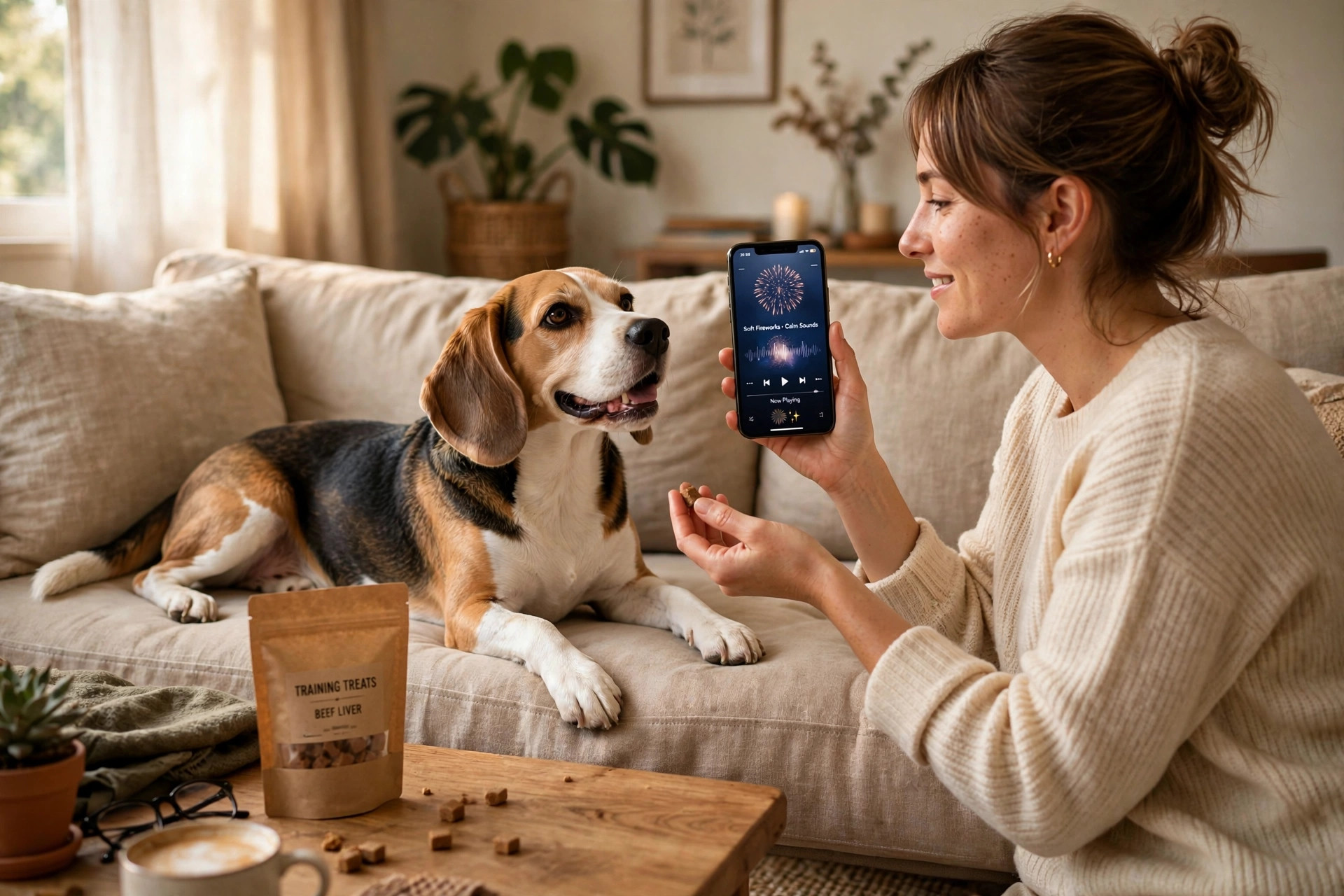
Desensitization means teaching your dog that boom-sounds predict good things, not danger. It works, but only if you go gradually and never push past what your dog can handle. Plan on one short session a day, 5–10 minutes, with high-value treats (cheese, chicken, whatever your dog loves most).
Weeks 1–2: sounds at whisper volume. Play firework sounds from a phone or speaker at the lowest volume where your dog notices but doesn’t react. Every few booms, deliver a treat — the order matters: sound first, then treat. You’re building the association “boom = snack time”. If your dog stiffens, drools, leaves or stops taking treats, the volume is too high. Turn it down and carry on.
Week 3: a little louder, still relaxed. Nudge the volume up one notch every few days. Keep sessions short and end on a win — a session where the dog stayed relaxed is perfect, even if it’s brief. Practice in different rooms so the lesson isn’t tied to one spot.
Week 4: realistic volume in the evening. By now the volume should be clearly audible but below panic level. Run some sessions in the evening, dim the lights, and let the sounds play in the background while your dog chews a stuffed Kong or lick mat. If you hit a wall at a certain volume, don’t fight it — drop back down for a few days. Patience beats pressure every time.
The golden rule: desensitization should always look boring. If your dog is showing fear, you’re going too fast. Slow down, not out — you’ll still make progress.
Free firework soundtracks are easy to find on video sites and streaming apps; look for tracks made for dog desensitization, which ramp in intensity.
Set up a safe space (do this once, keep it up through January)
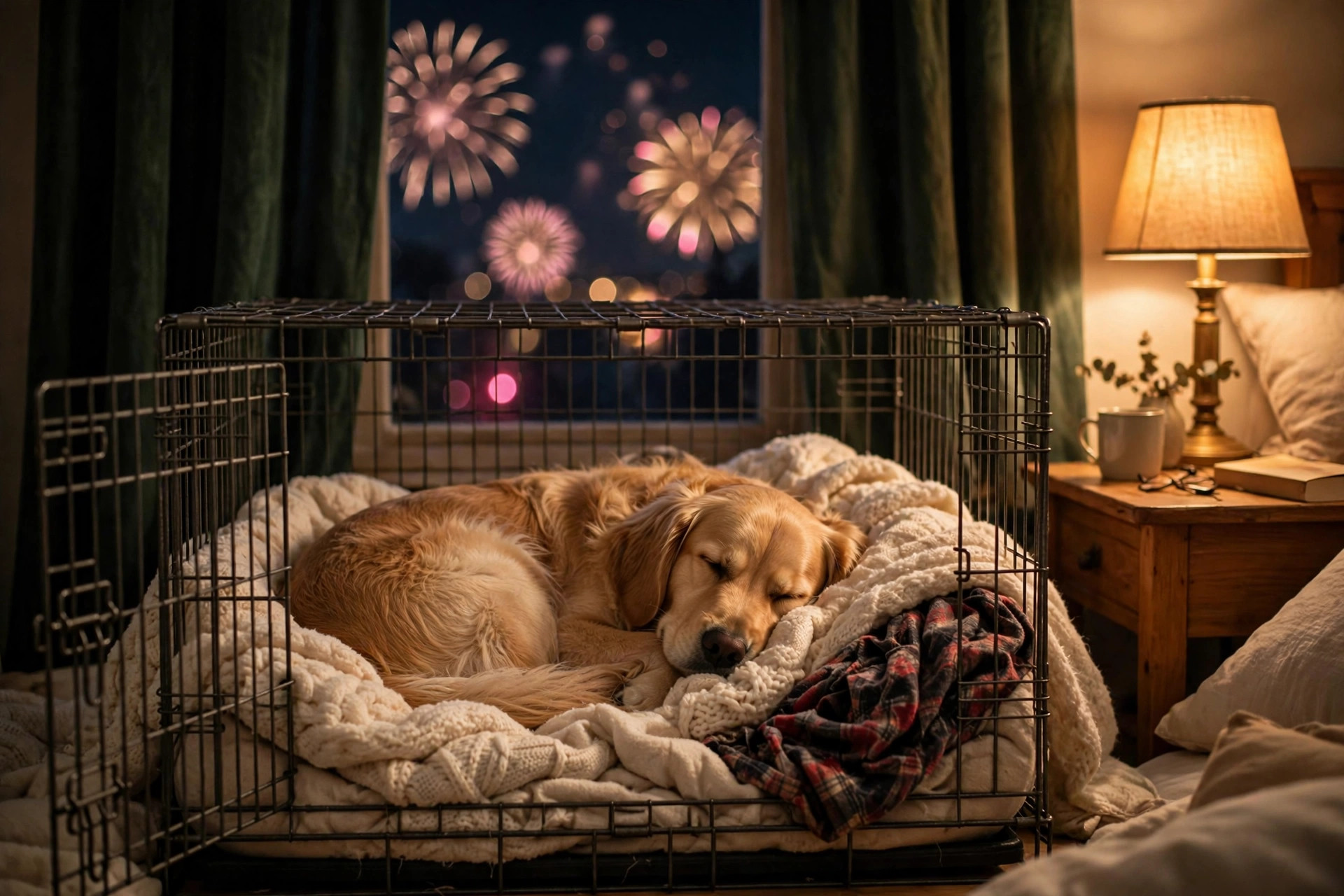
A safe space is a den-like spot your dog can retreat to — not a punishment zone, but a cosy bolt-hole they chose themselves.
- Pick the spot. An interior room away from outside walls and windows is best — noise and vibration carry less. A crate with the door left open, or a corner behind the sofa, both work.
- Make it cosy and sound-dampened. Thick blankets, their bed, a worn T-shirt that smells like you. Heavy curtains or blankets over nearby windows cut the flashes.
- Add white noise. A fan, TV, or radio on a normal channel takes the edge off the silence between booms. Some dogs prefer “through a dog’s ear” classical playlists.
- Load it with long-lasting chews. A frozen stuffed Kong, a lick mat, or a safe chew gives them something to do with the anxiety. Licking is genuinely calming for dogs — it lowers their heart rate.
- Introduce it now. Feed meals and treats in the safe space for the next few weeks so it becomes the best spot in the house, long before the first firework.
Your New Year’s Eve evening timeline
Even with weeks of prep, the night itself needs a plan. Here’s one that works:
Morning and afternoon
- Walk and exercise your dog well — a tired dog copes better. Aim for the long walk well before dusk, while it’s still quiet.
- Feed dinner early, around the usual time or a little before. Don’t change the routine; routine is reassuring.
Before the fireworks start (evening)
- Take them out for a final toilet break before dark, on a lead, even in a fenced garden — panicking dogs scale fences.
- Close all windows, curtains and doors. Turn on the TV or music and set up the safe space with fresh chews.
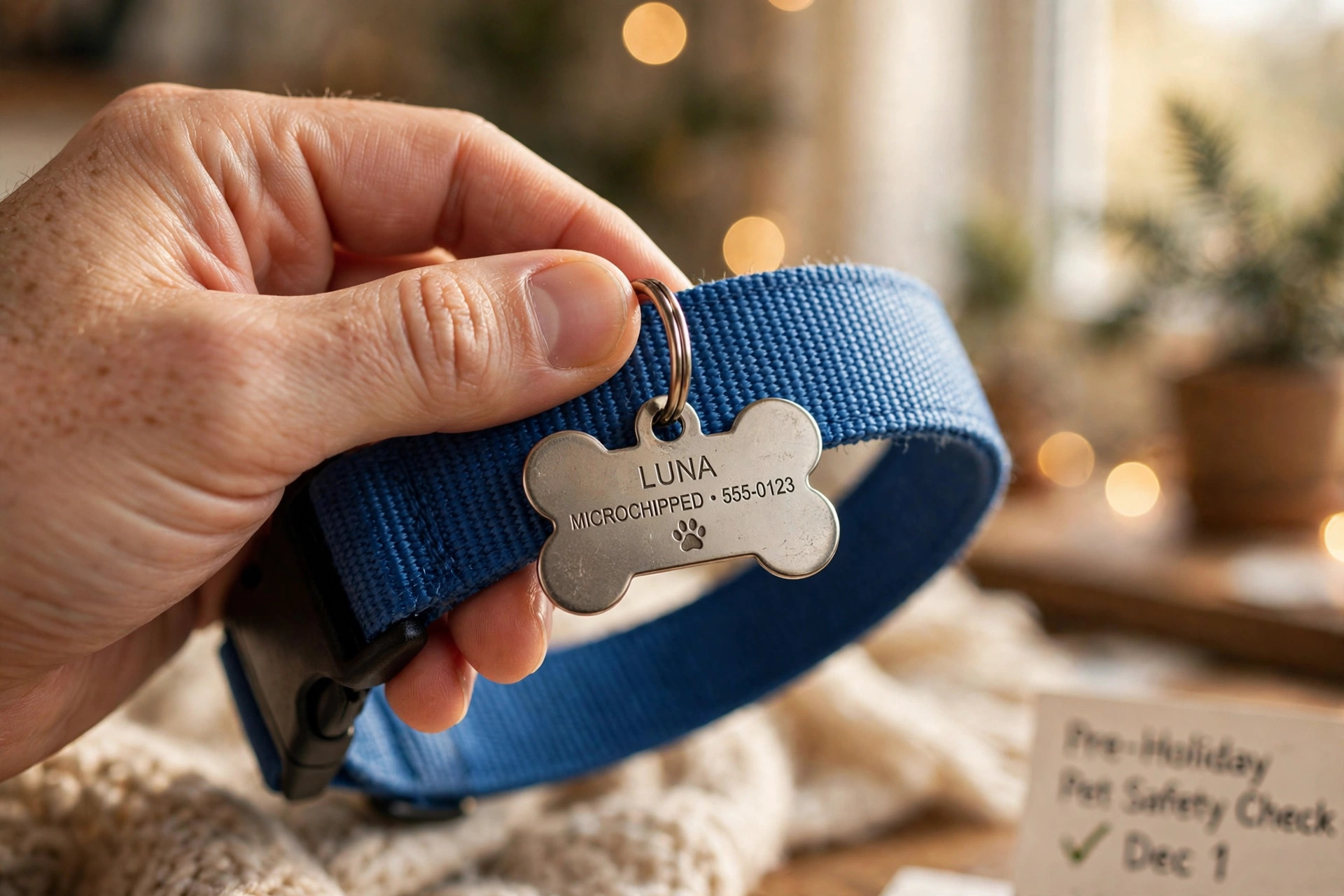
- Check their collar and ID tag are on, and that your contact details are current with the microchip registry. More dogs go missing on fireworks nights than any other.
During the fireworks (midnight)
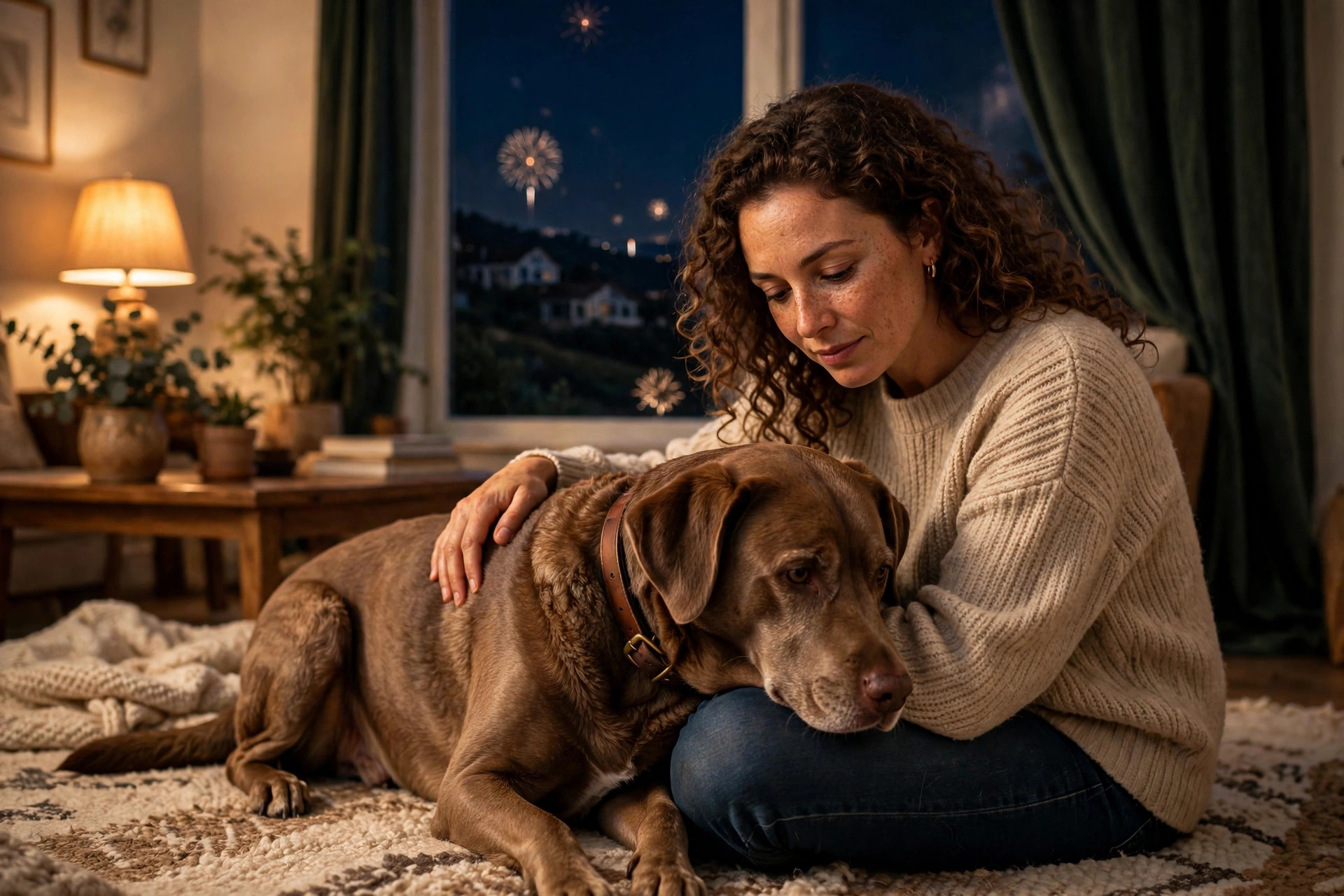
- Stay calm and behave normally — dogs read our body language obsessively. If you’re jumpy, they’ll assume there’s something to jump about.
- It’s fine to comfort a scared dog. The old advice that comforting “rewards” fear is outdated — gentle petting and a calm voice lower stress, they don’t teach panic.
- Don’t force them out of hiding. If they choose the bathroom or under the bed, let them. Being “brave” isn’t the goal; feeling safe is.
- Never leave a firework-fearful dog home alone on New Year’s Eve. If you must go out, a trusted person should stay with them.
Calming aids worth trying (start these before the night)
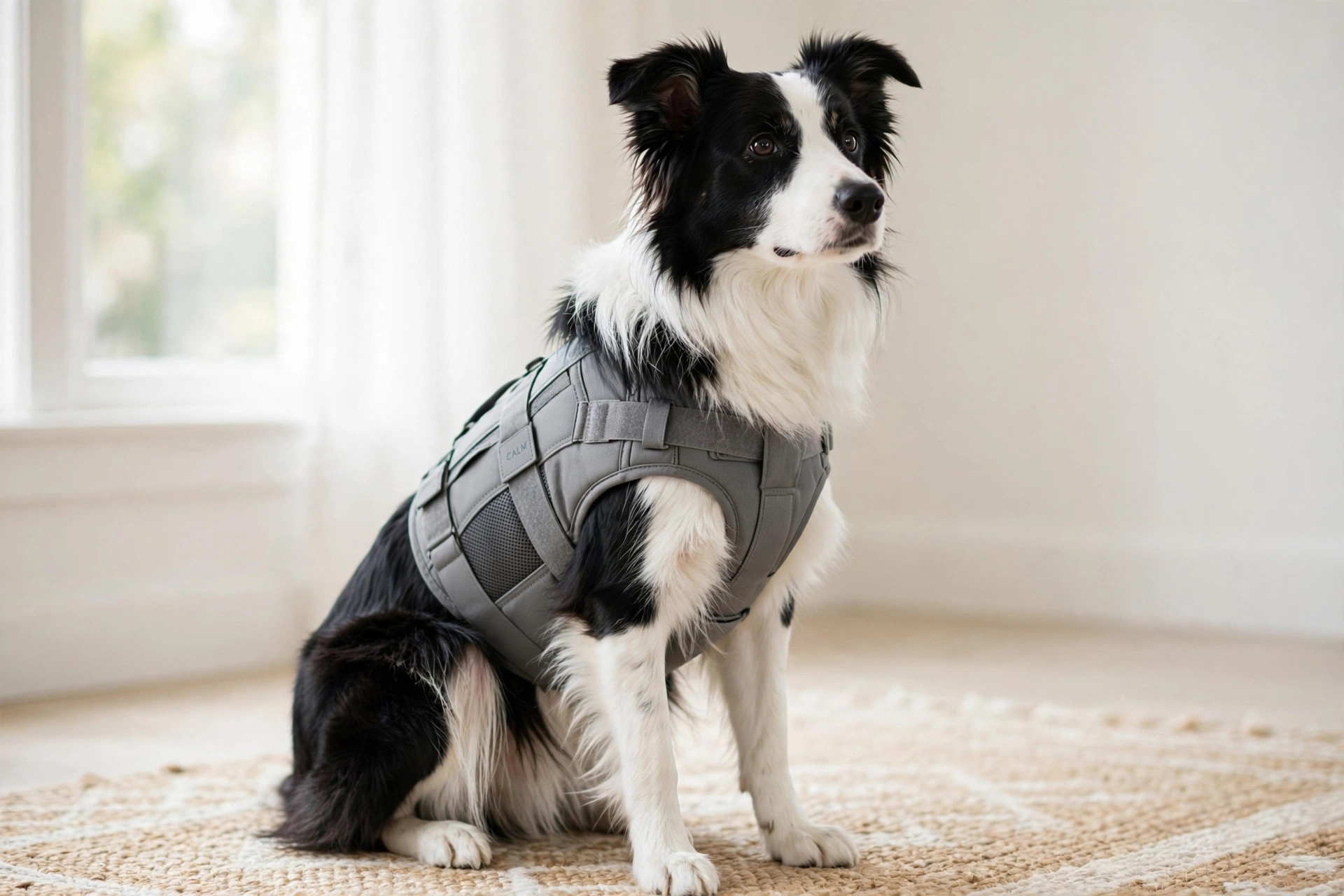
- Pressure wraps (like a Thundershirt): gentle, constant pressure calms many dogs, similar to swaddling. Buy it now and let your dog wear it for short, happy sessions so it doesn’t arrive as a surprise on NYE.
- Calming supplements and pheromone diffusers: products with casein, L-theanine or dog-appeasing pheromone (DAP) help some dogs. Effects vary — test them on a normal evening first so you know what you’re working with.
- Anxiety medication from your vet: for dogs with severe firework phobia — shaking, drooling, trying to escape, injuring themselves — talk to your vet now, not on December 30th. Some anti-anxiety medications need weeks to reach full effect, and vets get booked up in December. This is the single most underused option for dogs that truly suffer.
When fear becomes an emergency
Most firework anxiety is managed at home, but call your vet promptly if your dog: tries to chew or claw through doors, windows or crates; pants, drools and shakes for hours; injures themselves; or has a heart condition and shows extreme distress. And if your dog ever bolts during fireworks, don’t chase — a running dog in a panic state can run into roads. Note the direction, and call for them calmly once they’ve stopped running.
FAQs
Can you fully cure a dog’s fear of fireworks? You can often reduce it dramatically, especially in young dogs and with early, gradual desensitization. Some dogs become genuinely relaxed; others just cope much better. Severe phobias usually need a vet-led plan, and that’s okay.
Should I comfort my scared dog or ignore them? Comfort them. Calm, gentle reassurance reduces stress hormones. What doesn’t help is frantic fussing or scolding — be the calm presence you’d want.
Are “calming” fireworks-night treats safe? Most are, but check ingredients as with any treat: no xylitol (birch sugar), no chocolate, nothing you wouldn’t otherwise feed. Treats are 10% of the day’s food at most — an anxious dog with an upset stomach has two problems instead of one.
My dog is fine with thunder but terrified of fireworks — why? Thunder usually comes with warning signs dogs learn (pressure changes, rain) and builds gradually. Fireworks arrive without warning at full volume, often late at night when the dog is already settling. Different trigger, different reaction.