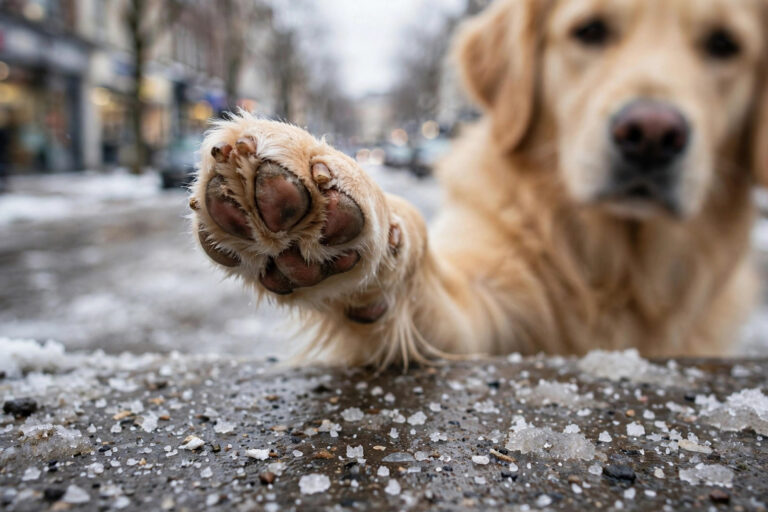
Winter is the hardest season of the year for your dog’s paws. Road salt and chemical de-icers burn and crack paw pads, ice balls wedge painfully between toes, snowmelt soaks through, and dry indoor heating sucks the last of the moisture out. A dog limping mid-walk in January is almost always a paw problem — and almost always preventable.
The good news: winter paw care is a simple routine, not a project. A minute before the walk, three minutes after it, and a weekly check is all it takes to get your dog through the season with soft, intact pads.
Why winter wrecks paw pads
A dog’s paw pads are tough, but they’re not invincible. Three things attack them in winter:
Salt and de-icers. Rock salt and chemical melts (calcium chloride, magnesium chloride) irritate and burn paw pads on contact, then dry them out as they sit. Worse, most dogs lick their paws when they get home — and ingesting de-icer salts can cause vomiting, diarrhoea and, in large amounts, electrolyte problems. Assume every treated pavement is contaminated.
Ice and snow packing. Snow compacts between the toes into painful ice balls that stretch the skin and make dogs limp or chew at their feet. Dogs with feathered feet (spaniels, huskies, poodles) suffer most.
Dry air. Indoor heating drops humidity to desert levels, and pads that have been wet all walk dry out and crack when they come inside. Cracked pads hurt with every step — and tiny cracks can split deeper if ignored.
The pre-walk routine: wax or boots
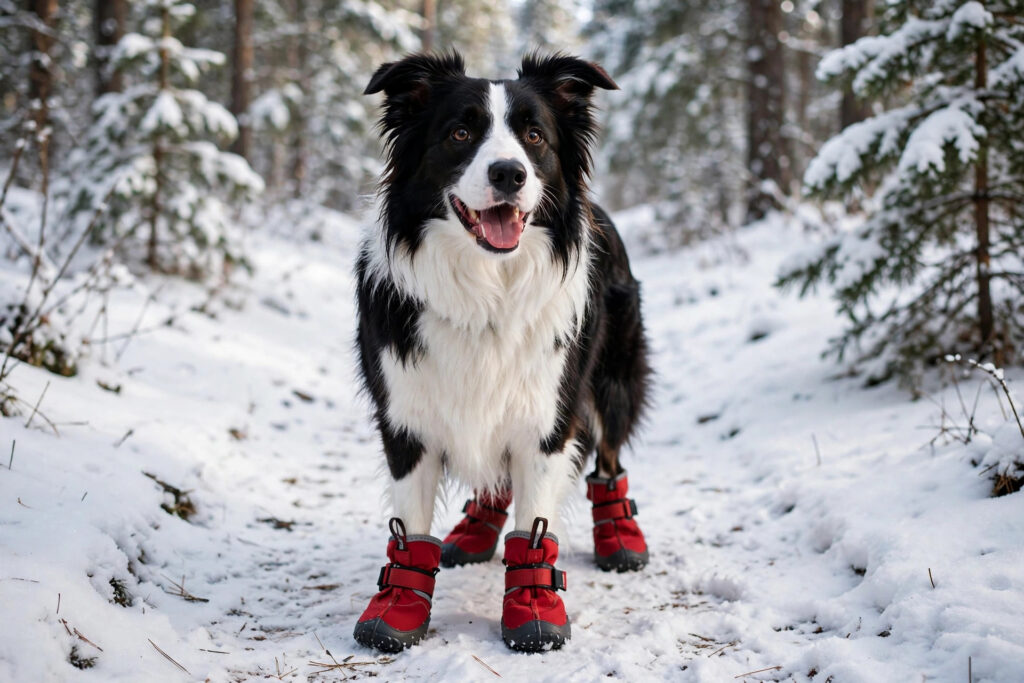
You have two defences, and they work best in combination.
Paw wax (every winter walk). A layer of paw wax or balm before every walk creates a breathable barrier between the pad and the salt. Rub a pea-sized amount into each pad and between the toes, about 5 minutes before you head out so it sets. Wax doesn’t make paws salt-proof — it buys you time and keeps pads supple. Reapply on walks longer than 30 minutes.
Dog boots (the heavy-duty option). For walks on freshly salted streets, boots beat wax outright — nothing touches the pad. The catch: most dogs hate boots at first. Introduce them indoors with treats for a few days before expecting a normal walk, and check the fit — a boot that’s too tight cuts circulation; too loose twists and falls off. Carry a spare: one lost boot is a salted paw.
The combo: wax under boots on the worst days (boots come off mid-walk more often than you’d think). Wax alone on quiet, untreated paths.
The post-walk routine: rinse, check, moisturise
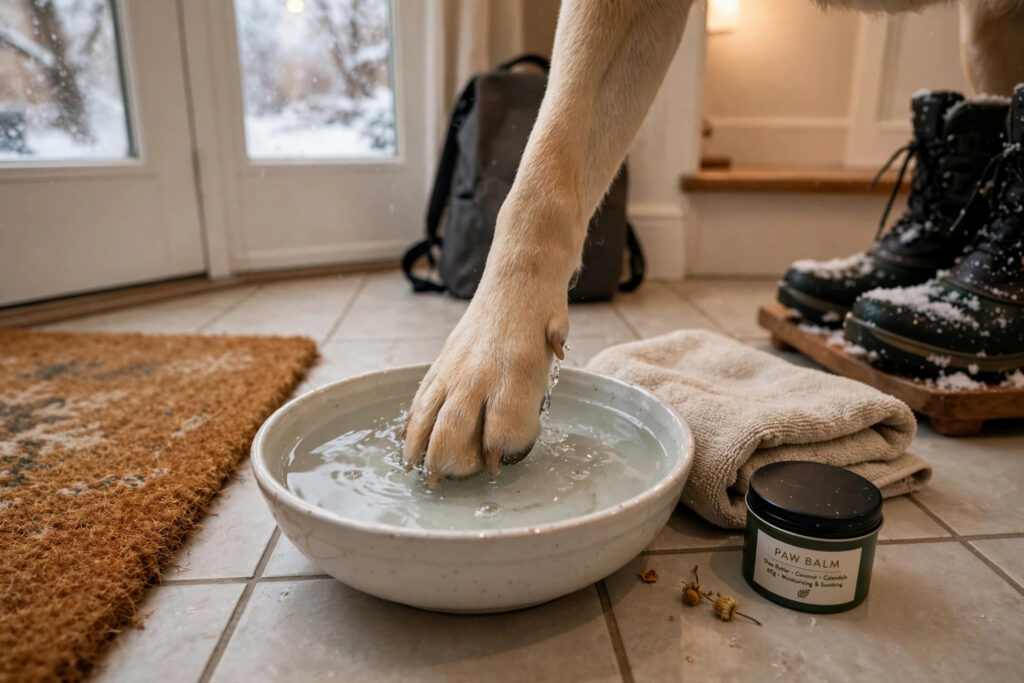
This three-minute ritual after every winter walk prevents 90% of paw problems.
- Rinse. Fill a shallow basin with lukewarm — never hot — water and dunk each paw, swishing gently. This dissolves salt and de-icer residue before your dog licks it off. No basin? A damp flannel and a bottle of lukewarm water work.
- Check. Dry each paw and look: between the toes for ice balls or matted fur, on the pads for cuts, cracks or redness, and around the nails for swelling. Catching a small crack now beats treating a split pad in a week.
- Moisturise. Massage a thin layer of paw balm into the pads while they’re still slightly damp. This is when dry winter pads drink moisture in.
DIY paw balm (5 minutes, pennies per batch)
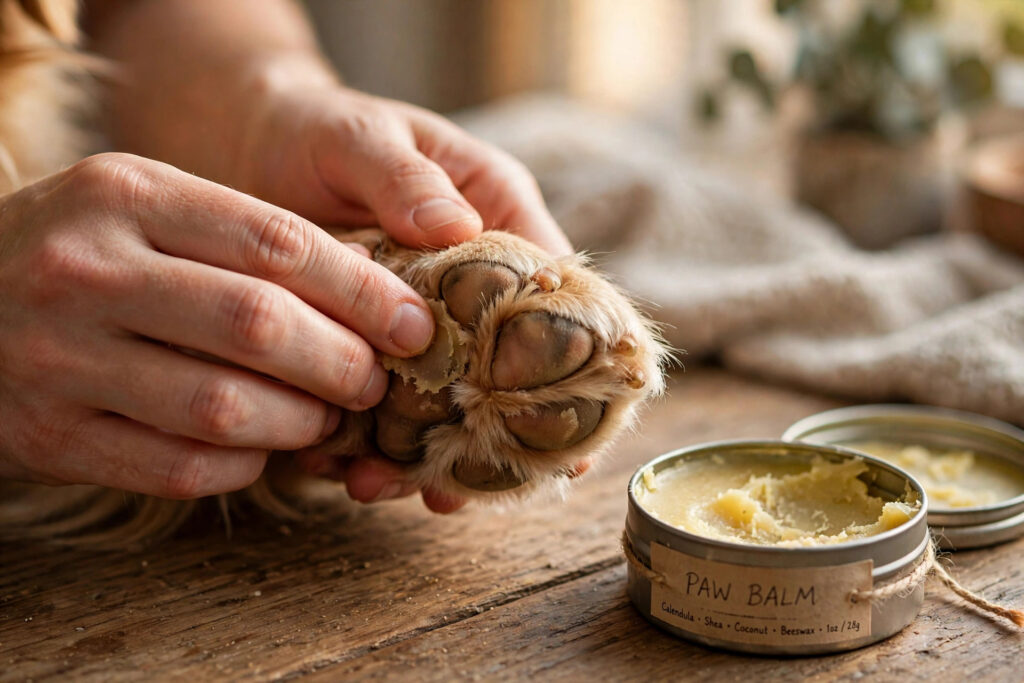
Store-bought balms work fine, but a homemade batch costs a fraction and you know exactly what’s in it.
Ingredients
- 4 tbsp coconut oil
- 2 tbsp shea butter
- 2 tbsp beeswax pellets (or grated beeswax)
- 1 tsp vitamin E oil (optional, for extra conditioning)
Method
- Melt the coconut oil, shea butter and beeswax together in a heatproof bowl over simmering water.
- Stir in the vitamin E oil if using, then pour into a small tin or jar.
- Let it set at room temperature — about an hour.
Rub a thin layer into each pad before walks (as your pre-walk wax) or after the post-walk rinse. Keeps 3 months in a cool cupboard. Safety note: it’s lick-safe, but keep the tin away from enthusiastic chewers — beeswax in quantity isn’t dinner.
Store-bought picks: what to look for
If you’d rather buy, look for balms where the first ingredients are natural waxes and butters (beeswax, shea butter, coconut or olive oil) and nothing you can’t pronounce. Avoid anything with tea tree oil, artificial fragrance or essential oils at high concentrations — a dog will lick whatever you put on, so treat it like food. Unscented or lightly scented is best.
Don’t forget the fur between the toes
Trim the hair between the paw pads flush with the pad surface through winter. Long tufts collect snow, form ice balls, and trap salt against the skin — the single biggest cause of winter limping in long-haired breeds. A quick trim every two to three weeks, plus keeping nails short (long nails splay the toes and expose more skin), makes an enormous difference. If you’re nervous with scissors near paws, ask your groomer to do a “paw tidy” — it’s a five-minute job.
Salt-burn first aid
If your dog suddenly limps on a salted pavement, lifts a paw and won’t put it down, or you notice red, irritated pads after a walk:
- Get off the salted surface immediately.
- Rinse all four paws thoroughly in lukewarm water — a bottle of water poured over each paw works on the street.
- Pat dry and apply paw balm.
- Watch for licking. Persistent licking, swelling, bleeding cracks or refusal to walk need a vet visit — chemical burns can go deeper than they look, and cracked pads can get infected.
When to see the vet
Most winter paw issues resolve with the rinse-and-balm routine. See your vet if: a crack is bleeding or won’t close after a few days, the paw is swollen or hot, your dog suddenly won’t bear weight, or there’s discharge or a bad smell between the toes (possible infection). Also call if your dog may have swallowed a lot of de-icer — vomiting, drooling or lethargy after licking salted paws warrants a check.
FAQs
Can I use Vaseline on my dog’s paws?
In a pinch, yes — plain petroleum jelly is non-toxic and creates a barrier. But paw-specific waxes and balms stay on better and condition the pads; Vaseline is a stopgap, not a routine.
Are dog boots really necessary?
Not for every dog. If your winter walks are mostly on untreated paths and you use wax plus the post-walk rinse, many dogs do fine without boots. They’re worth it for city dogs on heavily salted pavements, and for any dog that already has cracked pads.
How often should I apply paw balm?
Before every winter walk as a barrier, and after the post-walk rinse as a moisturiser. In deep winter, a nightly balm massage keeps pads supple even on rest days.
My dog licks the balm straight off — what now?
Apply it right before you head out (the walk distracts them) or just before bedtime. A lick-safe balm is harmless in small amounts; the bigger risk is no protection at all. Boots solve this too.
Is road salt dangerous if my dog eats it?
Small licks usually just irritate the mouth. Larger amounts of rock salt or chemical de-icers can cause vomiting, diarrhoea, excessive thirst and, rarely, sodium poisoning — which is why the post-walk rinse matters as much as the barrier.