Your dog’s bed is one of the biggest objects in the room — and for years,
most of them looked like it: a shapeless brown cushion that clashed with
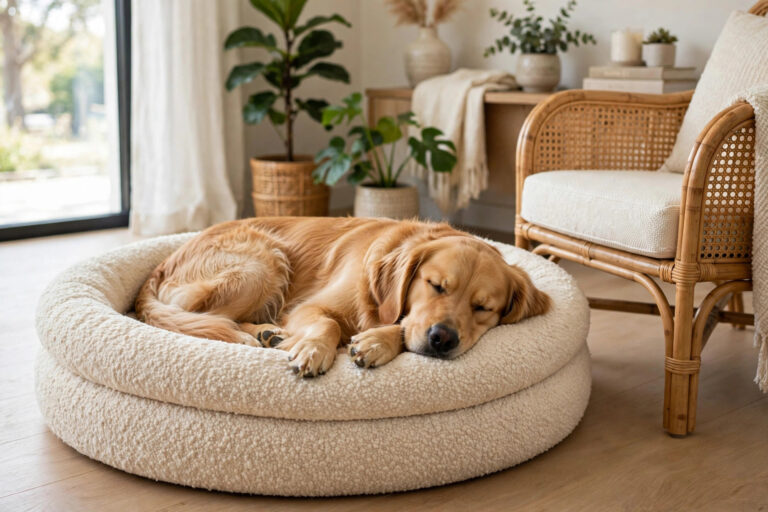
everything. That era is over. The 2026 petcore trend has pushed dog beds
into actual furniture territory, with boucle fabrics, rattan frames,
mid-century lines, and covers designed to be washed weekly without going
grey.
The good news: a bed that looks good doesn’t have to be a compromise for
the dog. The same washable, durable, supportive features that make a bed
practical are the ones that keep it looking smart. Here’s how to pick a
dog bed that suits your dog’s sleep style and survives your living room —
and how to make it look like it belongs there.
The petcore idea: treat the dog’s spot like a room, not an afterthought
The interior-design term floating around this year is “petcore” — the
idea that your pet’s corner is a designed zone, not a tolerated one.
Dedicated pet zones get the same treatment as the rest of the room: a
cohesive palette, a piece that fits the furniture style, and materials
chosen for looks as well as durability.
This isn’t about being precious. A bed that looks right is a bed that
stays in the room — which means the dog actually uses it instead of
migrating to your sofa. Owners who upgrade from the “temporary cushion
in the corner” to a proper bed in a deliberate spot often find the dog
settles there far more reliably.
The starting move is simple: decide the dog’s sleeping spot, then choose
a bed for that spot the way you’d choose an ottoman — by size, material,
and colour, not just by the “dog bed” aisle.
Pick the style that matches your furniture
Dog beds now come in recognisable furniture styles. Match the bed to
the room you already have.
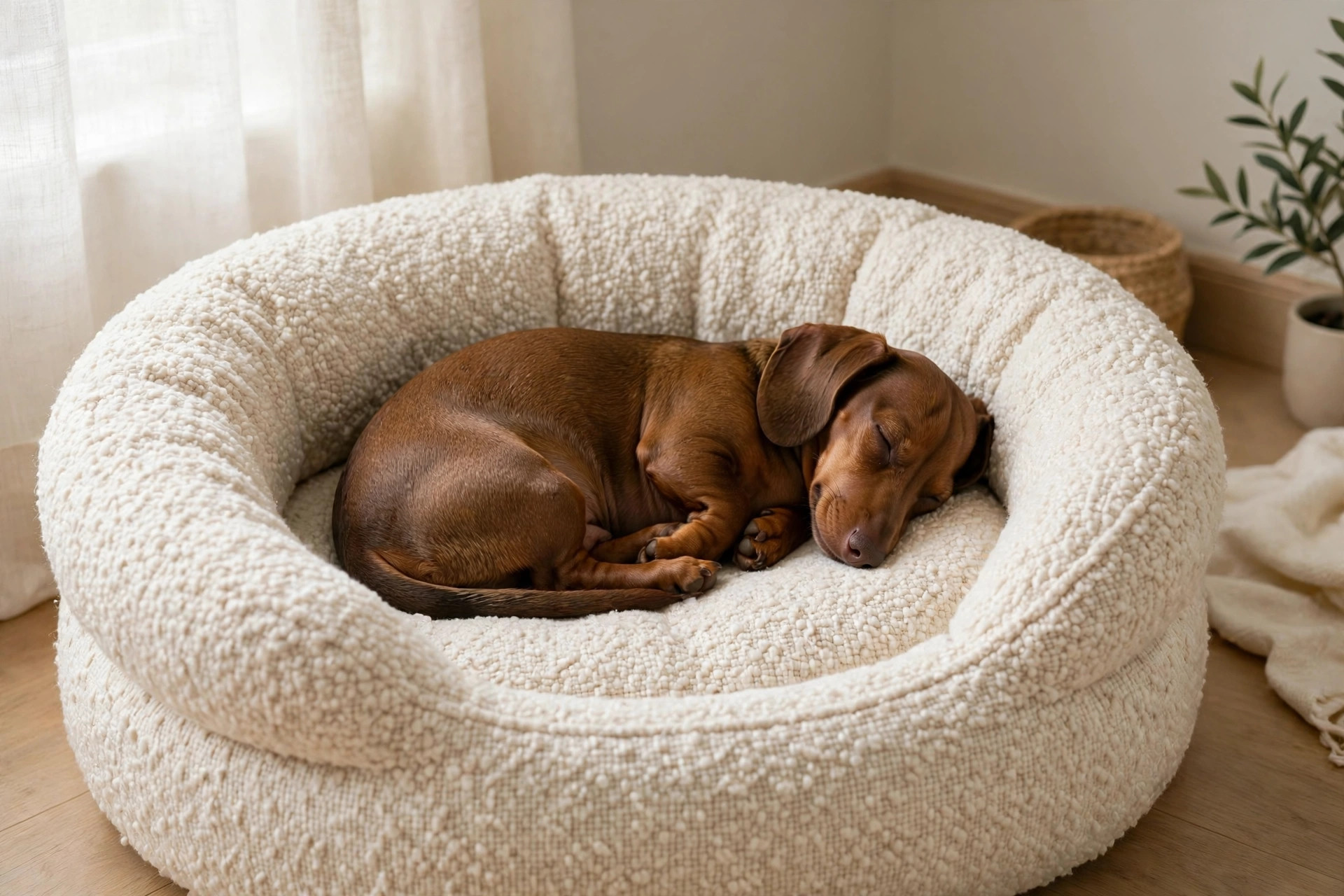
Boucle rounds for soft, modern rooms. Cream and oatmeal boucle is
the 2026 signature look — a nubby, textured weave that reads as a design
piece first, dog bed second. The round, nest-like shape suits curlers and
burrowers, and the raised rim doubles as a chin rest. The caveat: light
fabrics show dirt fast, so only buy boucle if the cover is machine
washable — and be honest about whether you’ll wash it weekly.
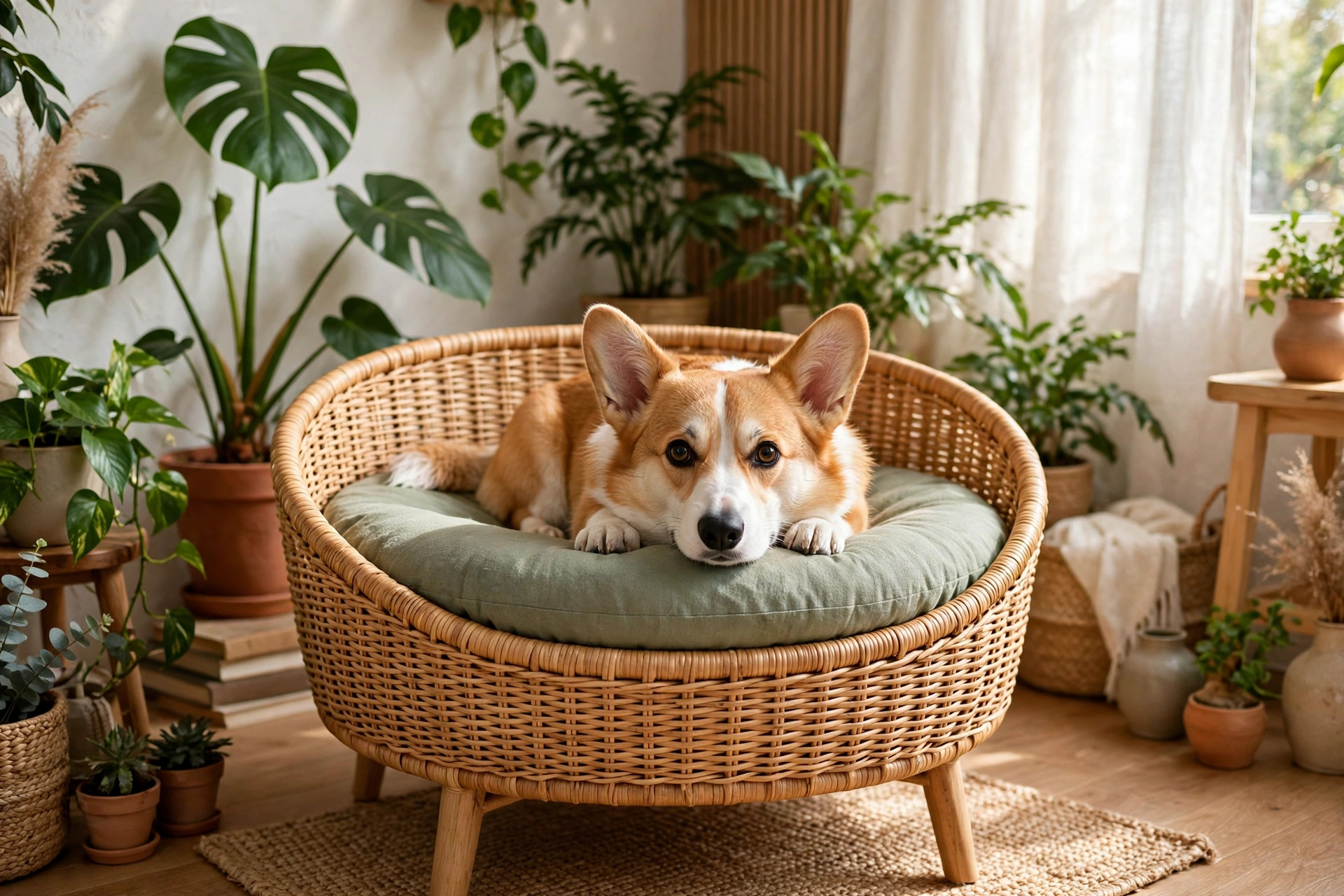
Rattan and cane for warm, natural interiors. Woven rattan dog beds —
raised baskets on legs, or round bolster frames — look like actual side
furniture. They’re airy (great for warm rooms), the raised position keeps
dogs off cold floors, and the weave hides pet hair better than dark flat
fabrics. Check the cushion inside is thick enough, because the frame is
doing the aesthetic work, not the padding.
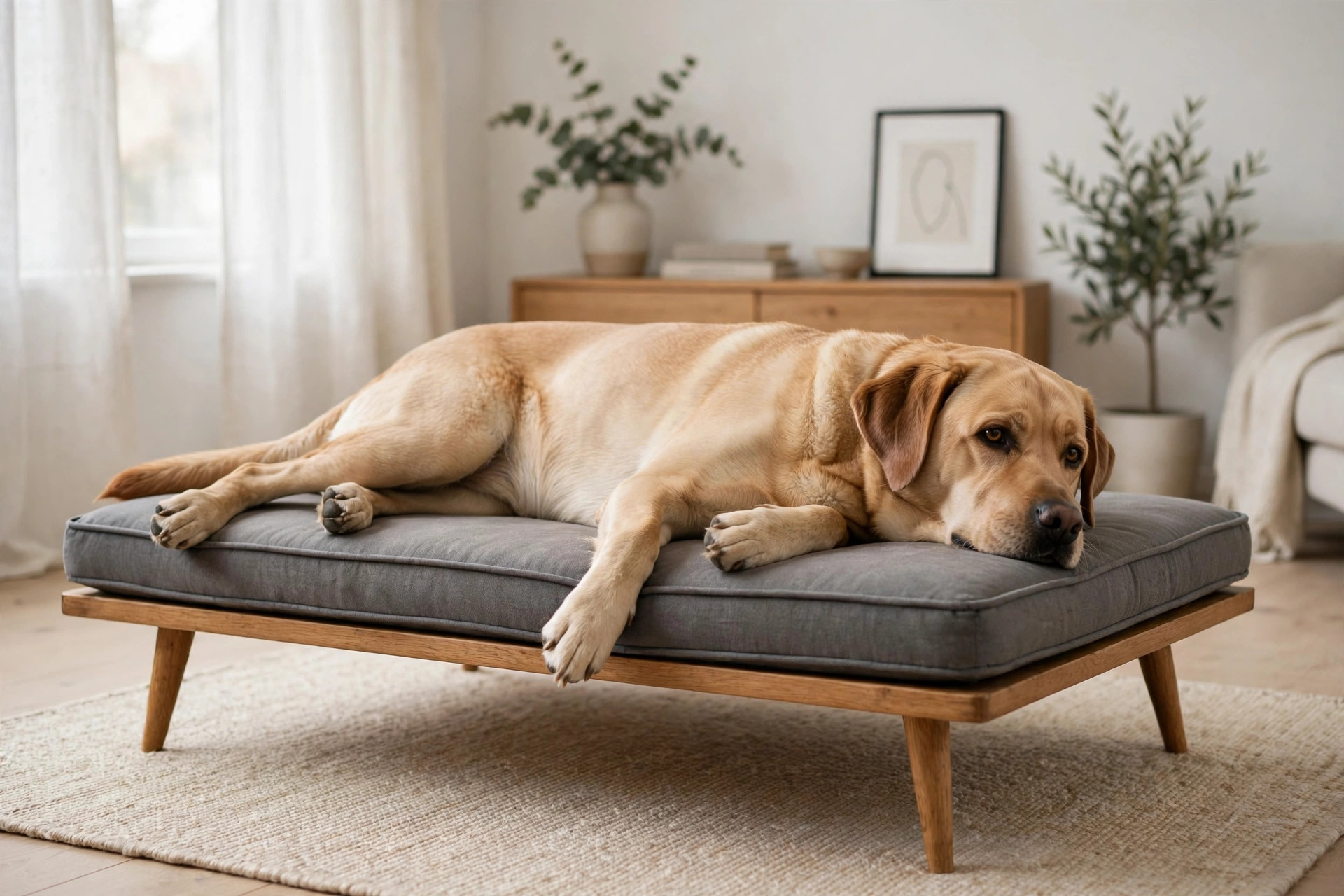
Mid-century lines for minimalists. Low-slung rectangular beds with
tapered wooden legs, piped edges, and solid-colour covers in muted tones
(greige, forest, terracotta) slot into Scandinavian and mid-century rooms
without a wobble. The slim profile stays out of the way, and a separate
cover in a neutral tone is easy to coordinate with a rug.
Faux-leather and performance fabrics for high-traffic homes. If the
dog is muddy, drooly, or shares the bed with kids, wipeable matters more
than weave. Modern vegan-leather and performance-fabric beds (crypton
style) look like a good ottoman and shrug off paw prints with a damp
cloth. They’re the least “dog bed looking” option of all — and the most
practical.
What actually makes a bed “stylish” without failing the dog
Looks are the brief, but the dog still votes with their body. A beautiful
bed the dog won’t touch is just an expensive floor cushion. Check the
comfort fundamentals before you fall for the design.
Match the sleep style. Sprawlers need a flat mattress with no
restrictive rim; curlers want a bolstered nest with walls to lean on;
burrowers want a cave or hooded bed. The stylish-bed ranges cover all
three — but pick the shape for the dog first, the fabric second.
Support matters in pretty packages too. Senior dogs and large breeds
need real support — memory foam or a thick, high-density fill that
doesn’t flatten in a month. Some designer beds skimp on fill to hit a
slim profile. Press the centre: if your fingers reach the floor through
it, keep looking.
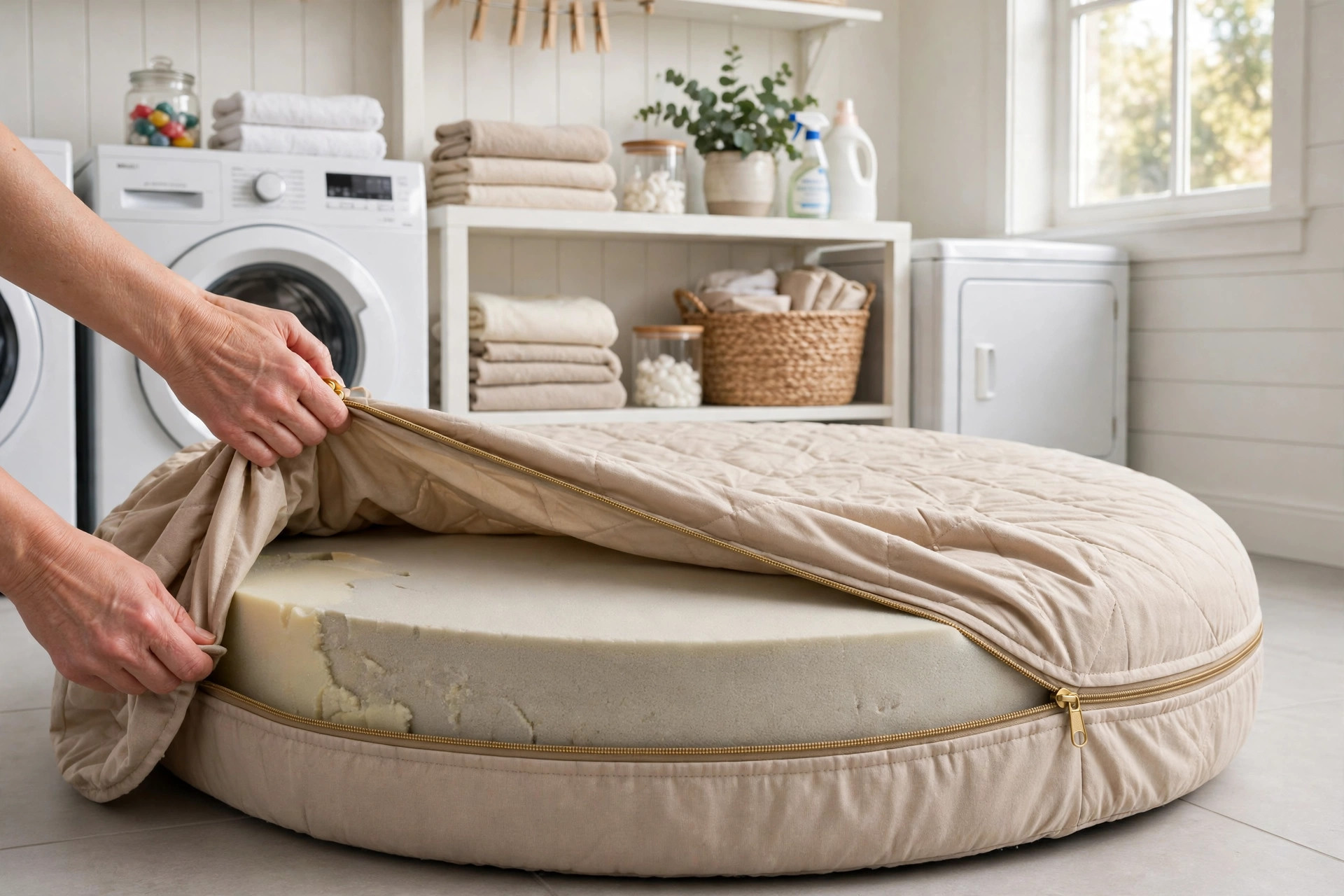
Washable covers are non-negotiable. Every beautiful bed becomes an
ugly one within a month of unwashed use. A removable, machine-washable
cover is what keeps the investment looking like the product photo.
Hidden zips keep the lines clean; spare covers in the same style are
worth buying if offered.
Water-resistant liners. The feature nobody photographs but everybody
appreciates: a waterproof liner under the cover protects the inner
mattress from drool, accidents, and the occasional muddy-paw disaster. It
doubles the bed’s life.
Size like furniture, not like a gift. Measure the dog stretched out,
then add room to spare. An undersized designer bed looks sad and goes
unused; a correctly sized one anchors the corner like a piece of furniture.
Match the palette to the room
The fastest way to make a dog bed look designed-in: pull one colour from
the room.
- Neutral rooms (white, greige, oak): cream, oatmeal, or camel beds
disappear into the palette beautifully. Boucle and natural textures do
the heavy lifting here. - Green and plant-heavy rooms: forest, sage, or moss covers echo the
foliage; rattan frames sit naturally among plants. - Dark, moody rooms: charcoal, espresso, or deep navy beds hold their
own and hide hair better than light colours — the practical choice if
you won’t wash weekly. - Patterned or colourful rooms: pick one solid accent colour from the
rug or cushions and let the bed repeat it. The bed becomes a deliberate
accent instead of a clash.
One rule: avoid the bed that tries to match nothing and clashes with
everything. A single colour pulled from the room beats a “fun” print
almost every time.
Placement: give the dog a proper zone
Where the bed sits is half the styling. The dog-zone approach that works
best:
- Anchor the corner. Beds pushed against a wall or into a corner look
intentional; beds floating mid-room look temporary. A corner with a
small side table or plant beside it reads as a “spot”. - Near the family, not exiled. Dogs settle where the people are. A
beautiful bed in a lonely hallway loses to your sofa every time. Put the
good-looking bed where the dog actually wants to be. - Add one prop. A small throw blanket draped over the bed’s edge, or
a basket for toys beside it, turns “dog bed on the floor” into a
styled corner. The throw is also washable and protects the cover. - Keep the feeding zone separate. Food bowls next to the bed invite
crumbs into the fabric. A few metres of separation keeps the bed
cleaner and the zone looking sharp.
Keeping a pretty bed pretty
Style is maintenance. The owners whose beds still look good in year two
all do the same boring things:
- Wash the cover on a schedule. Every 1-2 weeks for light fabrics,
monthly at minimum for dark. Add a cup of white vinegar to the wash
to kill odours without harsh scent. - Vacuum the bed between washes. A quick weekly vacuum stops hair
working into the weave — especially on boucle. - Rotate and fluff. Turn the inner cushion and shake it out weekly
so the fill doesn’t migrate into a permanent dog-shaped dent. - Sun the cushion. An hour in sunlight now and then deodorises
naturally and discourages dust mites. - Spot-clean immediately. Muddy paw prints lift off easily when
fresh; left for a day they set into the fabric.
FAQs
Are stylish dog beds as comfortable as regular ones?
They can be — comfort comes from fill and shape, not price or looks.
A well-made designer bed with dense memory foam beats a cheap lumpy
cushion easily. Always check the fill quality, not just the fabric.
Is boucle practical for a dog bed?
Only with a washable cover. Boucle’s textured weave traps hair, but it
releases it in the wash, and it hides wear better than flat fabrics.
If you won’t wash weekly, choose a darker or wipeable fabric instead.
How do I stop the dog bed smelling?
Wash the cover regularly, use a waterproof liner under it, vacuum the
inner cushion, and sun it occasionally. Most persistent smells live in
the inner mattress, not the cover — so protect the inside.
Should the dog bed match my decor exactly?
It doesn’t need to match — it needs to coordinate. One colour pulled
from the room (rug, cushions, wall art) is enough to make the bed look
deliberate rather than accidental.
What size dog bed looks best in a living room?
The right size for the dog always beats the most photogenic size.
Measure your dog stretched out and size up slightly. An undersized bed
looks cramped; a correctly sized one reads as furniture.
Are raised rattan dog beds good for older dogs?
The frame is fine, but check the cushion thickness — some rattan beds
have thin pads over hard weave. Seniors need real padding, so add a
memory-foam insert if the included cushion is thin.
The bottom line
A dog bed that looks like furniture is no longer a luxury niche — it’s
where the market has gone, and the practical features (washable covers,
supportive fills, waterproof liners) are the same ones that keep it
looking good. Pick the shape for the dog, the fabric for your washing
habits, and one colour from the room, and the bed stops being the thing
you apologise for and starts being part of the room.