
Some dogs eat anything and thrive. Others look at the same bowl and
reward you with a 3 a.m. symphony of gurgles, grass-eating and
regret. If yours falls into the second camp, you’re dealing with a
sensitive stomach — one of the most common complaints vets hear, and
one of the most fixable through food.
This guide covers the signs of a genuinely sensitive stomach, what
causes it, what to look for in a dog food (and what to avoid), the
gentle add-ons that calm digestion, and a 7-day transition plan that
gets your dog onto the new food without a GI revolt. If you’d like
the wider feeding picture first, our homemade dog food recipes
cover balanced bowls you can rotate for easy digesters.
Signs your dog has a sensitive stomach
Occasional digestive drama is normal — every dog meets a bin it
shouldn’t have met. A pattern is different. The signs of a truly
sensitive stomach include:
-
Frequent loose stools or intermittent diarrhoea without a
clear cause (no bin raids, no new treats). -
Vomiting or regurgitation after meals, especially with rich
or fatty foods. -
Excessive gas — every dog farts, but constant, foul wind is a
signal. -
Gurgling, grass-eating and nausea between meals.
-
Itchy skin or ear infections that flare with diet changes —
the gut and the skin are more connected than most owners realise. -
A “picky” reputation — many dogs labelled fussy are actually
self-protecting from foods that make them feel bad.
One important distinction: a sensitive stomach is a management
issue, not a diagnosis. Food allergies (immune-mediated, usually
protein-triggered) and medical problems like pancreatitis,
inflammatory bowel disease or parasites can look identical. If
symptoms are severe, sudden, bloody, or paired with lethargy and
weight loss, see your vet before changing anything — that’s a
safety line, not a suggestion.

What causes sensitive stomachs in dogs?
Ingredient overload. The most common driver is simply too much
going on in the bowl: long ingredient lists with multiple proteins,
grains, legumes, rendered meals, artificial colours and flavour
enhancers. Each extra ingredient is another thing a delicate gut has
to process — and another candidate for intolerance.
Protein intolerance. True food allergies are less common than
intolerance, but when they appear they’re usually triggered by
proteins the dog has eaten a lot of: beef, dairy and chicken top
the canine allergen charts. A dog that has eaten chicken-based kibble
for years can develop a sensitivity to chicken — which is why novel
proteins (duck, venison, turkey, fish) are the classic reset.
Fat level. Rich, high-fat foods are the fastest way to upset a
sensitive gut. Pancreatitis risk aside, fat slows gastric emptying
and a greasy meal can trigger vomiting in dogs that handle leaner
food perfectly well.
Abrupt changes. Switching foods overnight is the single most
common cause of transition diarrhoea — and the easiest to fix (see
the 7-day plan below).
Eating habits. Gulpers who inhale food swallow air along with
it, and a dog that bolts its meals will always digest worse than a
slow eater. If fast eating is part of the problem, a slow feeder
bowl can genuinely change the picture.
What to look for in a sensitive-stomach dog food
Limited-ingredient diets (LID). Fewer ingredients means fewer
suspects. A good LID food lists one named animal protein and one
carbohydrate source up front, with a short, readable remainder.
Limited ingredient does not mean low quality — it means traceable.
Novel or single protein. Duck, venison, turkey, salmon or lamb
give the gut a protein it hasn’t learned to react to. Single-protein
formulas beat “meat medleys” for sensitive dogs every time — you
can’t identify the culprit if the bowl contains four.
Highly digestible carbs. White rice, sweet potato and oatmeal
are the classic gentle carbs; they absorb well and produce less
fermentation (read: less gas) than many legume-heavy formulas. Grain-
free is not automatically better for sensitive stomachs — digestibility
matters more than grain politics.
Moderate fat. Look for fat levels in the moderate range (around
12–16% dry matter for maintenance foods). Very rich performance
formulas and heavy toppers are the usual vomiting triggers.
Prebiotics and probiotics. Live cultures and prebiotic fibres
(feeding the good gut bacteria) are genuinely useful for sensitive
dogs — the evidence for dog probiotics in
digestive support is one of the stronger corners of supplement
research. A food with added probiotics, or a separate probiotic
supplement, is a sensible layer.
No artificial colours, flavours or vague “meat meals”. If the
label won’t name the animal, don’t buy it. Sensitivities hide in
vagueness.
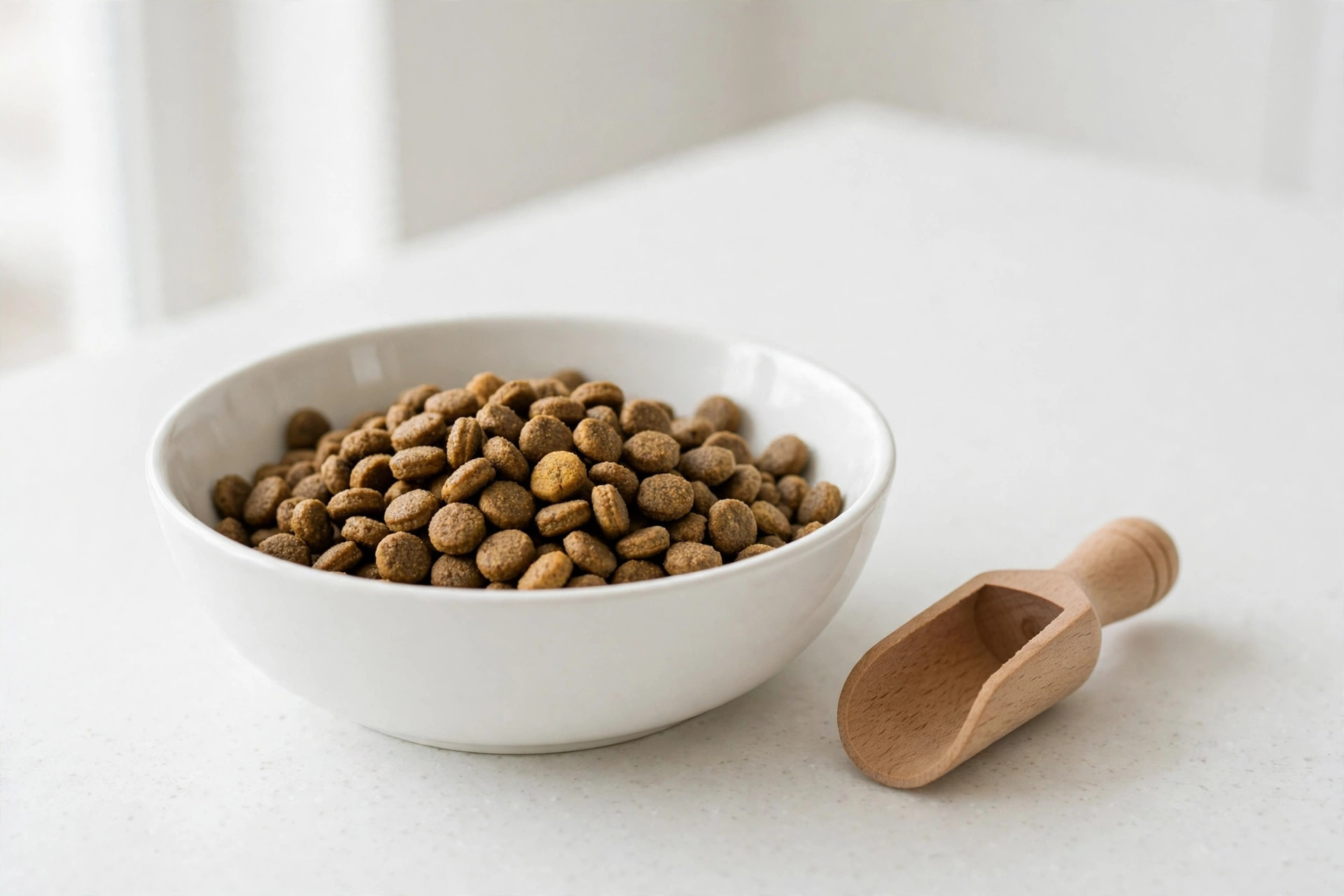
Gentle add-ons that calm digestion
You don’t always need a full food change. These add-ons, mixed into
the current food, help many sensitive stomachs:
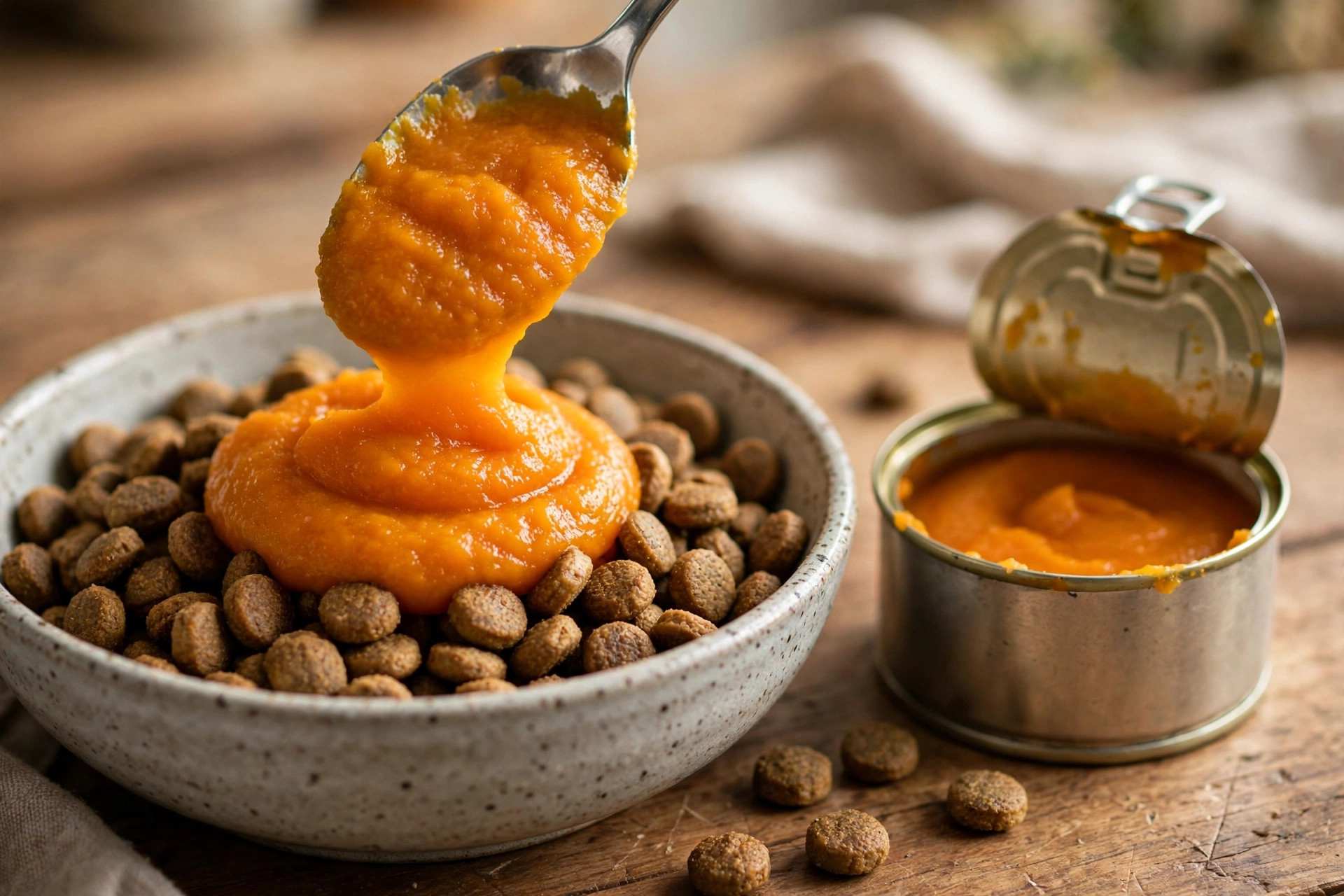
Plain pumpkin puree. The MVP of canine digestion: soluble fibre
that firms loose stools and softens hard ones. One to two
tablespoons for a medium dog, plain canned pumpkin (never pie
filling — no sugar, no spices).
Bone broth. A splash of plain, low-sodium bone
broth over kibble makes meals more enticing
and easier on the gut — the gelatin soothes the digestive lining,
and the extra moisture helps dogs that don’t drink enough.
Plain cooked white rice + boiled chicken (short term). The vet’s
classic bland diet for acute tummy trouble: 2–3 days of small, frequent
bland meals, then transition back. Not a long-term diet — it’s not
nutritionally complete — but an excellent reset button.
Probiotic supplement. Especially useful during and after food
transitions, courses of antibiotics, or stressful periods (kennels,
moves) that throw gut flora off balance.
What to skip: dairy (most adult dogs lack the enzymes),
onion/garlic anything, rich gravies, fatty table scraps, and sudden
“superfood” experiments. Add one thing at a time so you know what
worked.
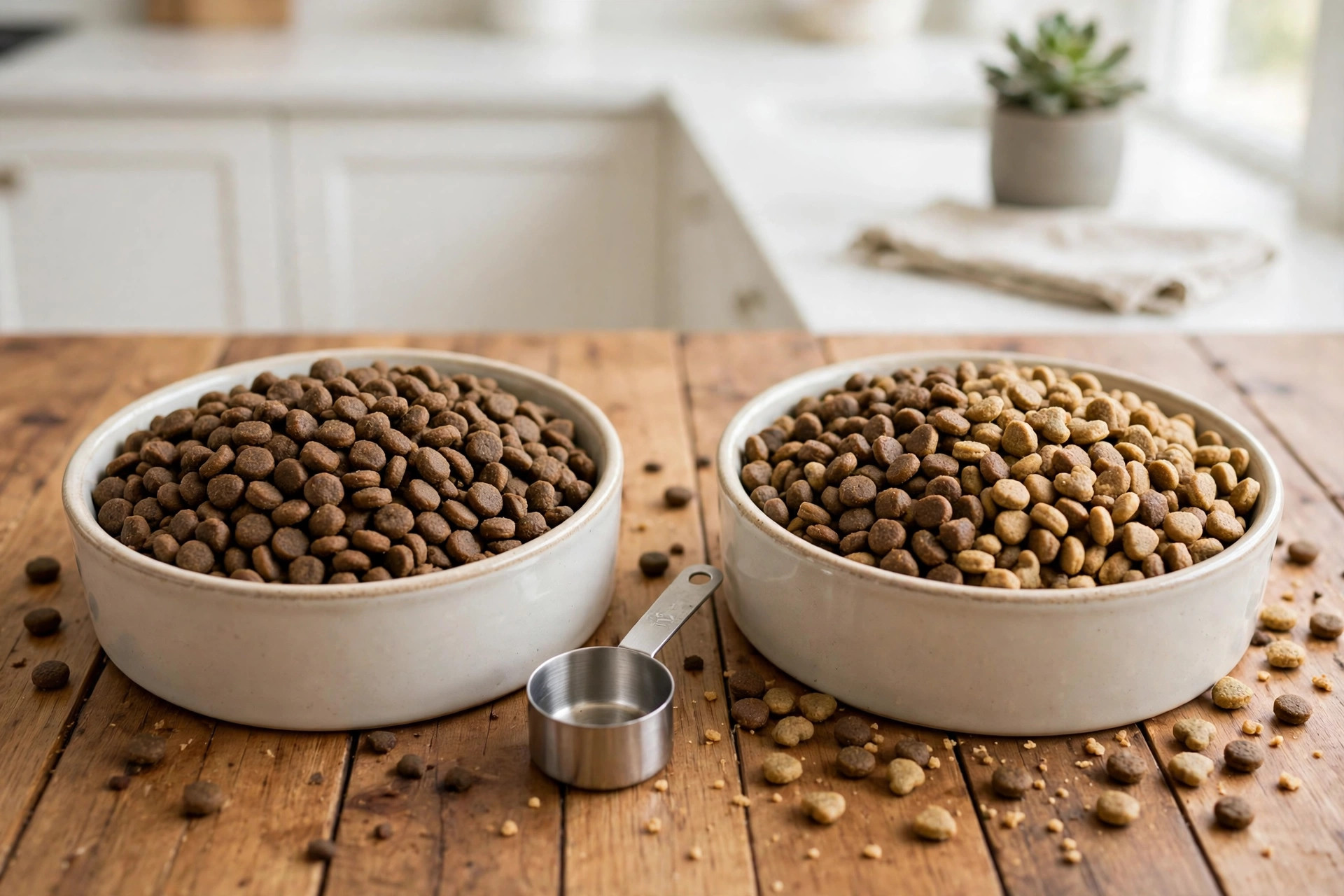
How to switch foods without the GI upset: the 7-day plan
The transition is where most sensitive-stomach plans fail — not the
food choice, the speed. Follow this:
Days 1–2: 75% old food, 25% new food.
Days 3–4: 50/50.
Days 5–6: 25% old, 75% new.
Day 7: 100% new food.
For very sensitive dogs, stretch it to 10–14 days (add two days per
stage). Keep everything else constant during the switch — no new
treats, no new chews, no table scraps — so any reaction points at
one variable. Expect slightly soft stools around day 3–4; that’s
normal adjustment. Watery diarrhoea, vomiting or refusal to eat is
not — pause the transition and call your vet.
Feed smaller, more frequent meals during the change (three meals
instead of two), and serve at room temperature. Cold food straight
from the fridge is harder on delicate stomachs. Store the new food
properly once opened — rancid kibble upsets every stomach, sensitive
or not (see our dog food storage guide).
When a “sensitive stomach” needs the vet
Home management has limits. Book the vet if you see: blood in stool
or vomit; vomiting more than once in 24 hours or repeated over days;
diarrhoea lasting more than 48 hours; lethargy, appetite loss or
weight loss; a suddenly bloated, hard abdomen (bloat is an emergency
— don’t wait); or symptoms in a puppy under 6 months, which
dehydrate fast. Chronic issues that never fully resolve on diet
changes deserve a proper workup — food trial, faecal test, and a
look at whether it’s really the stomach at all.
The bottom line
The best dog food for a sensitive stomach is boring in the best way:
limited ingredients, one named novel protein, digestible carbs,
moderate fat, and no mystery meals. Layer on pumpkin, broth or a
probiotic for extra calm, and — the part everyone rushes — switch
over a full week, not a weekend. Most sensitive stomachs aren’t
broken; they’re just asking for a simpler bowl and a slower change.
Listen, simplify, transition gently, and the 3 a.m. gurgles usually
fade on their own. When they don’t, that’s what vets are for.
FAQs
What is the best dog food for a sensitive stomach?
Limited-ingredient diets with a single novel protein (duck, venison,
turkey, salmon) and digestible carbs like rice or sweet potato work
best for most sensitive dogs. Look for moderate fat, added
prebiotics or probiotics, and a short, readable ingredient list.
What protein is easiest on a dog’s stomach?
Novel proteins the dog hasn’t eaten much of — duck, venison, turkey
and fish — are usually the gentlest choices, because sensitivities
most often develop to over-fed proteins like beef, dairy and
chicken.
Is grain-free better for sensitive stomachs?
Not automatically. Digestibility matters more than grain content —
white rice, oatmeal and sweet potato are gentle, well-absorbed carbs.
Some grain-free formulas rely on legumes that ferment more (more
gas). Judge the formula, not the marketing category.
How long does it take to switch dog food safely?
Seven days minimum for sensitive dogs (75/25 → 50/50 → 25/75 →
100%), stretched to 10–14 days for very delicate stomachs. Keep
treats and extras constant during the switch so any reaction points
at one variable.
Can I give my dog pumpkin every day?
Yes — one to two tablespoons of plain canned pumpkin (not pie
filling) daily is safe for most medium dogs and supports both loose
and firm stools thanks to its soluble fibre. Scale down for small
dogs, up for large ones.
When should I worry about my dog’s sensitive stomach?
Blood in stool or vomit, repeated vomiting, diarrhoea beyond 48
hours, lethargy, weight loss, a bloated hard abdomen, or any severe
symptoms in a young puppy all warrant a vet visit rather than a diet
tweak.