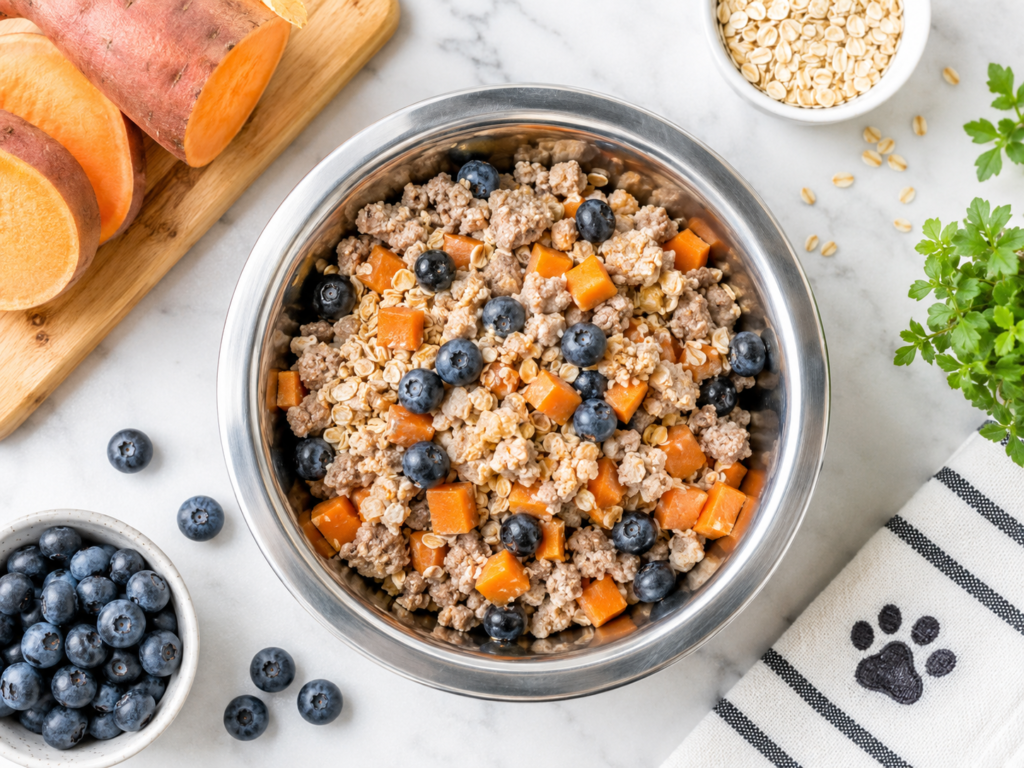
{
“title”: “How Much Homemade Dog Food Do You Feed Your Dog? A Vet-Smart Portions Guide”,
“slug”: “how-much-homemade-dog-food-do-you-feed-your-dog”,
“excerpt”: “How much homemade dog food do you feed your dog? The 2–3% body-weight rule, daily gram tables by weight, and how to adjust for age, activity and body condition.”,
“meta_description”: “How much homemade dog food do you feed your dog? The 2–3% body-weight rule, daily gram tables by weight, and how to adjust for age, activity and body condition.”,
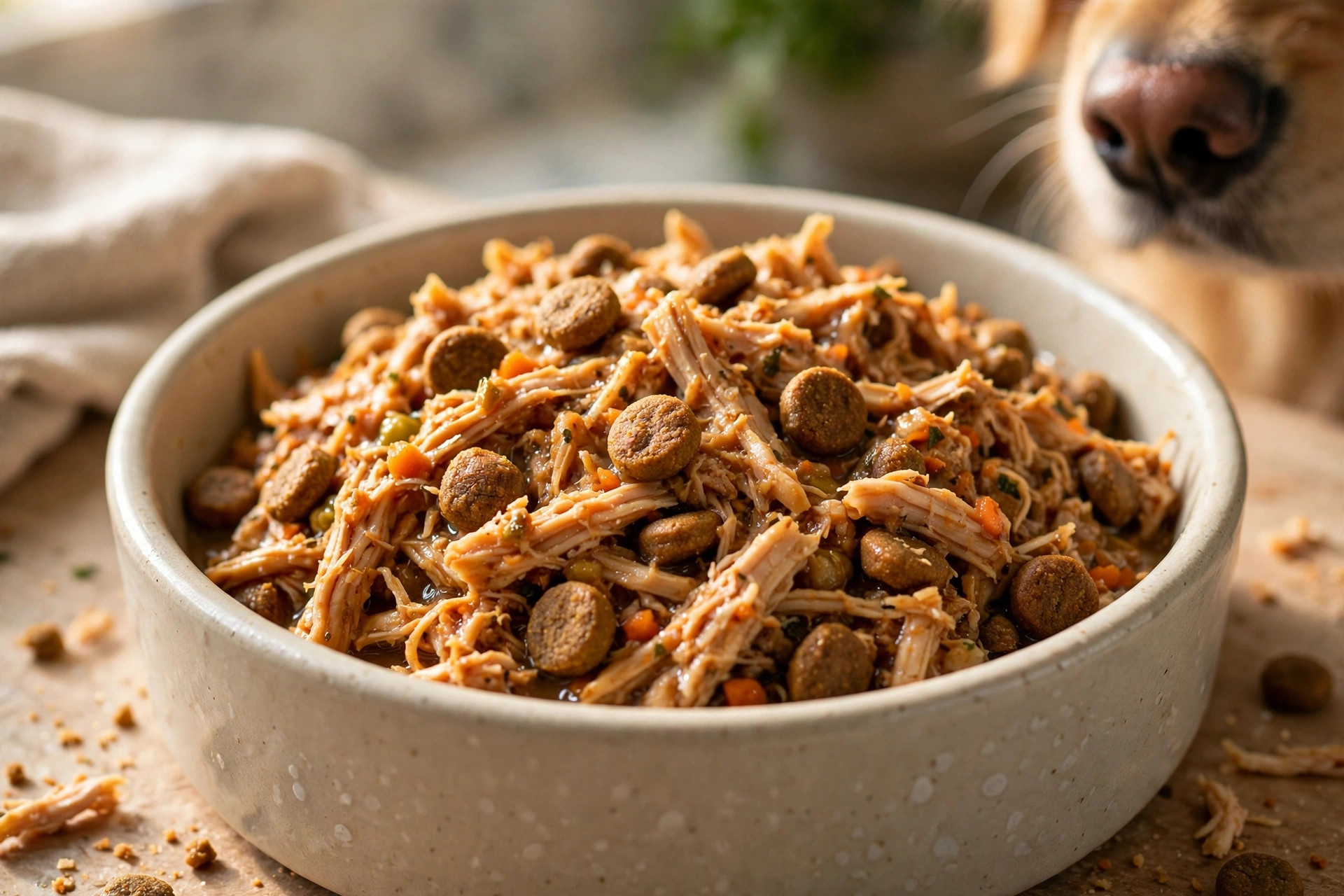
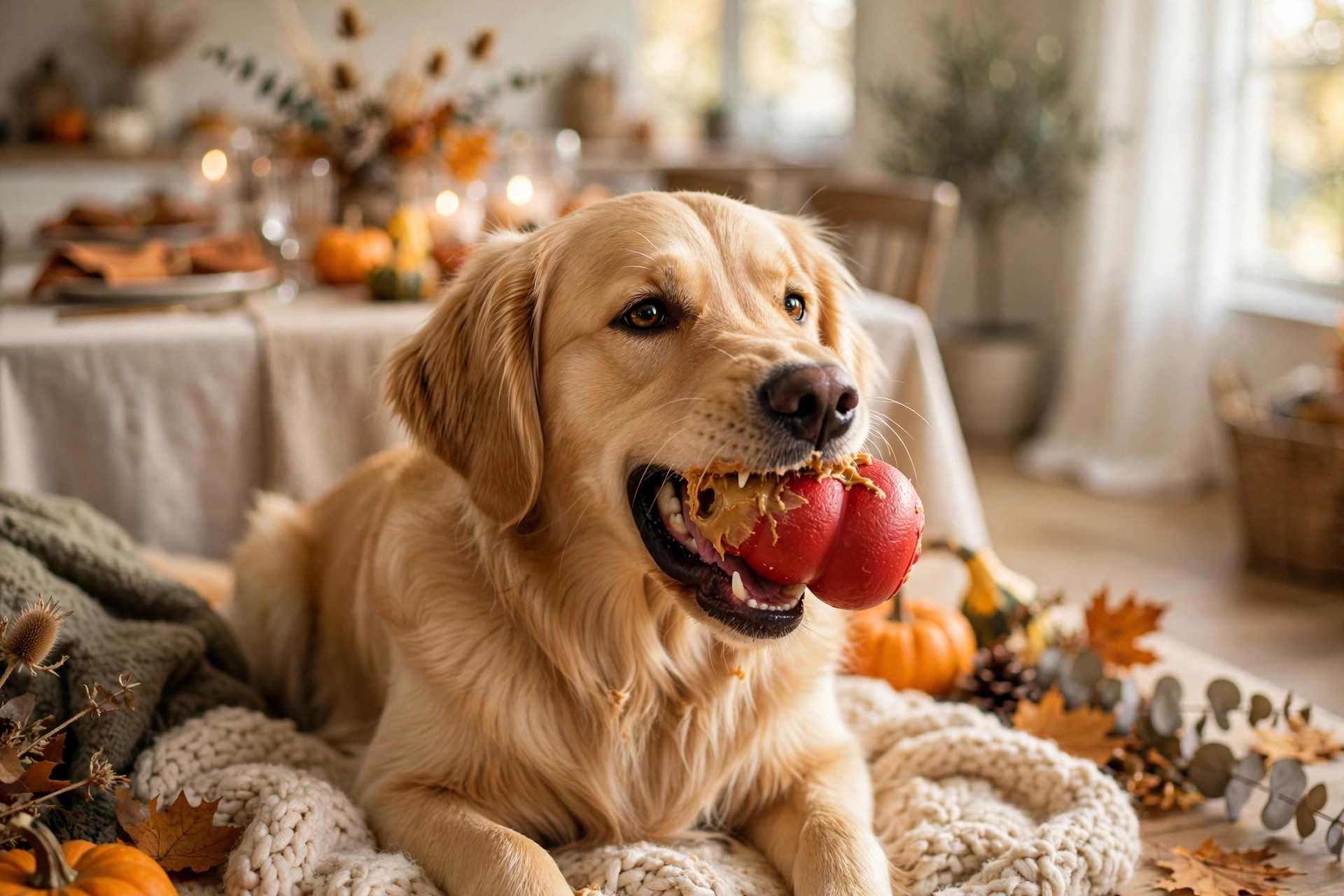
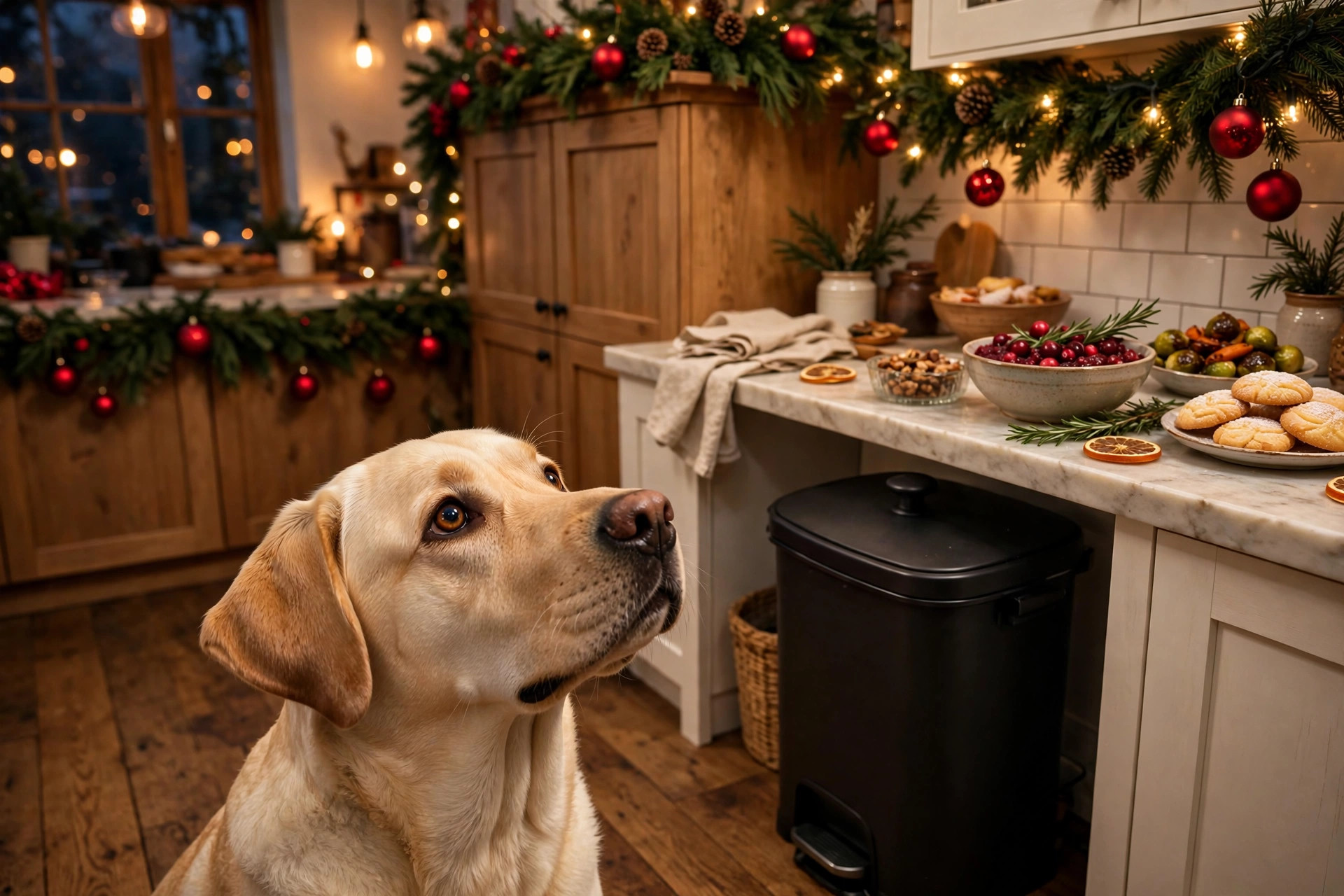
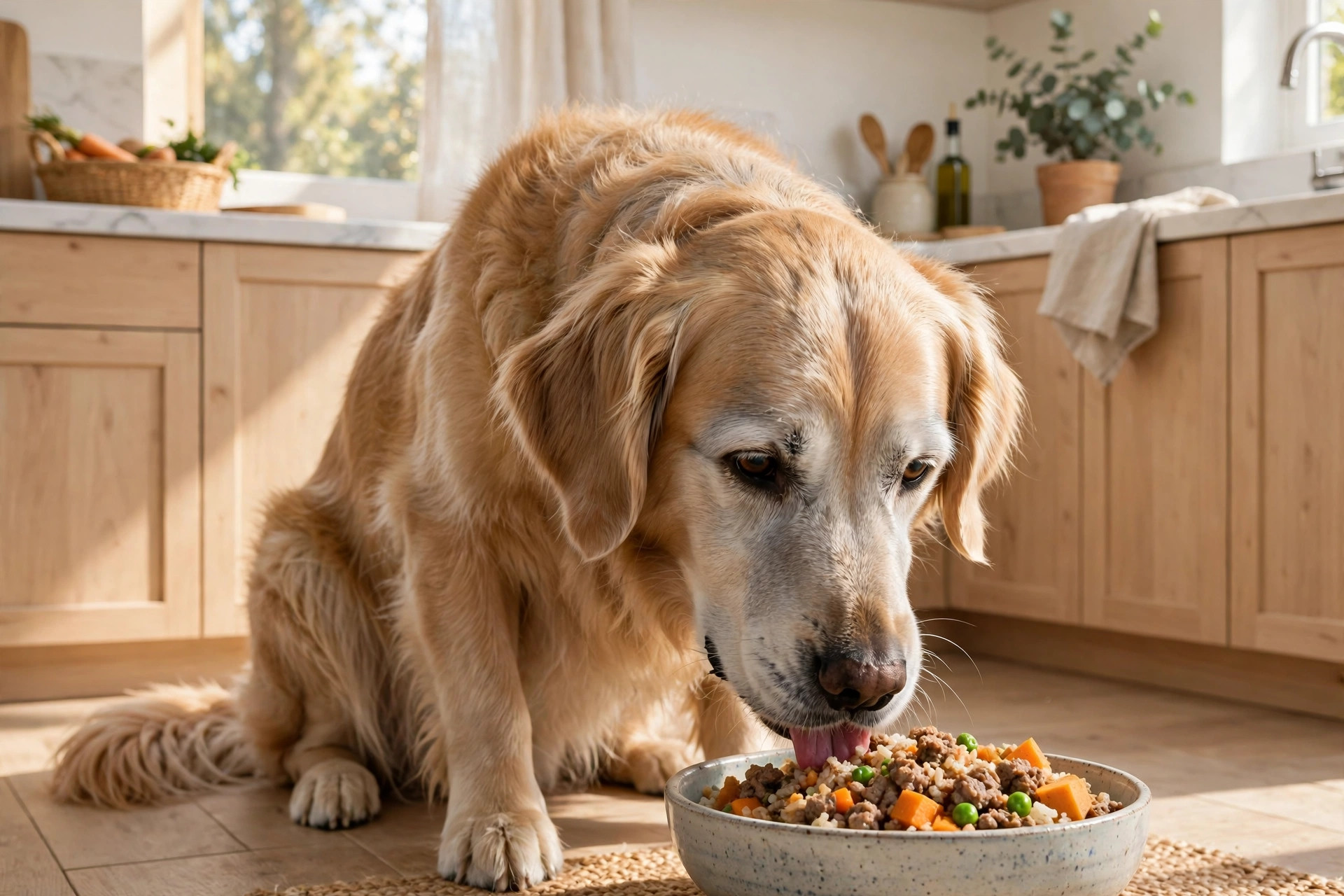
“featured_image_alt”: “Golden retriever eating homemade dog food from a bowl in a bright kitchen.”,
“content_html”: “
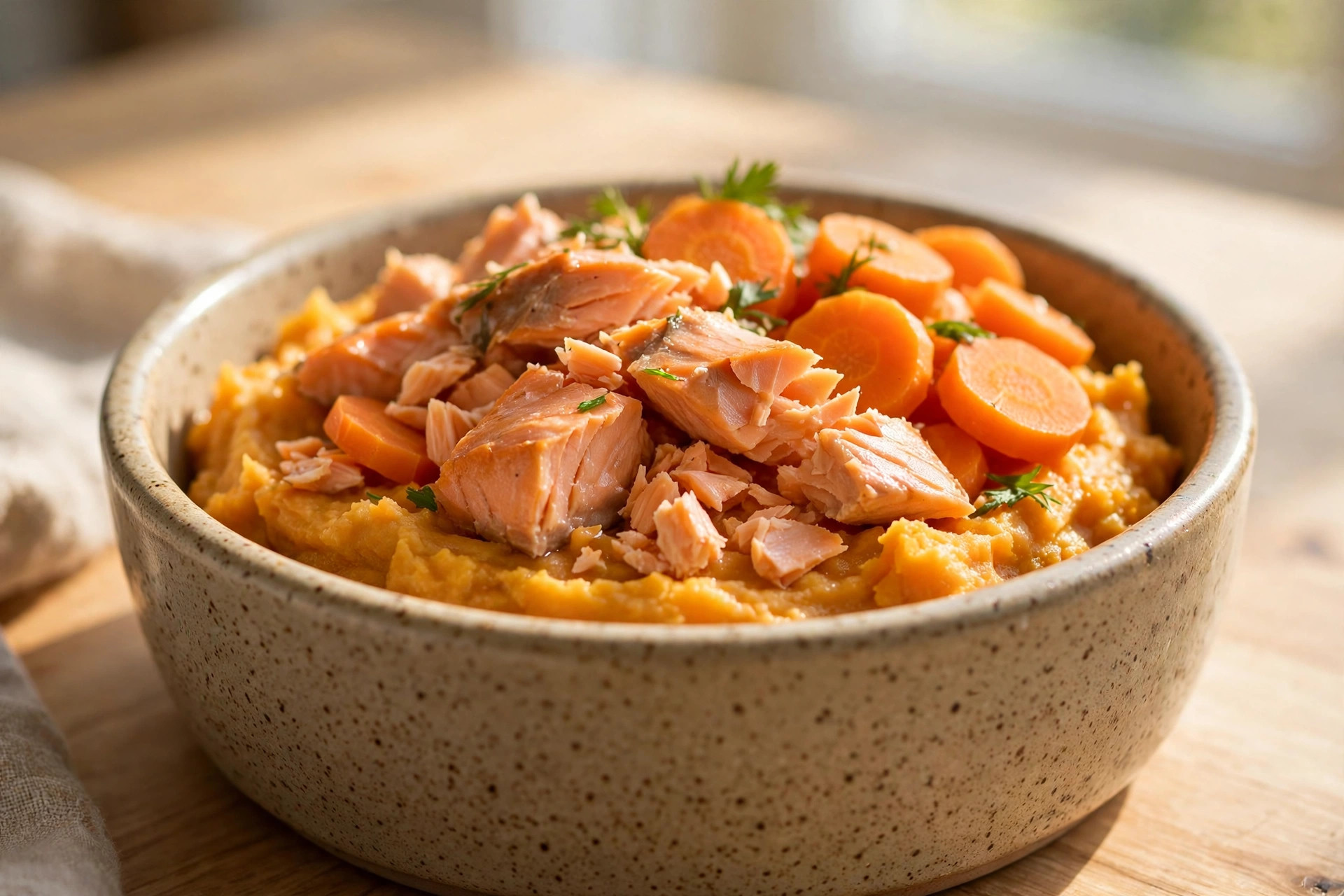
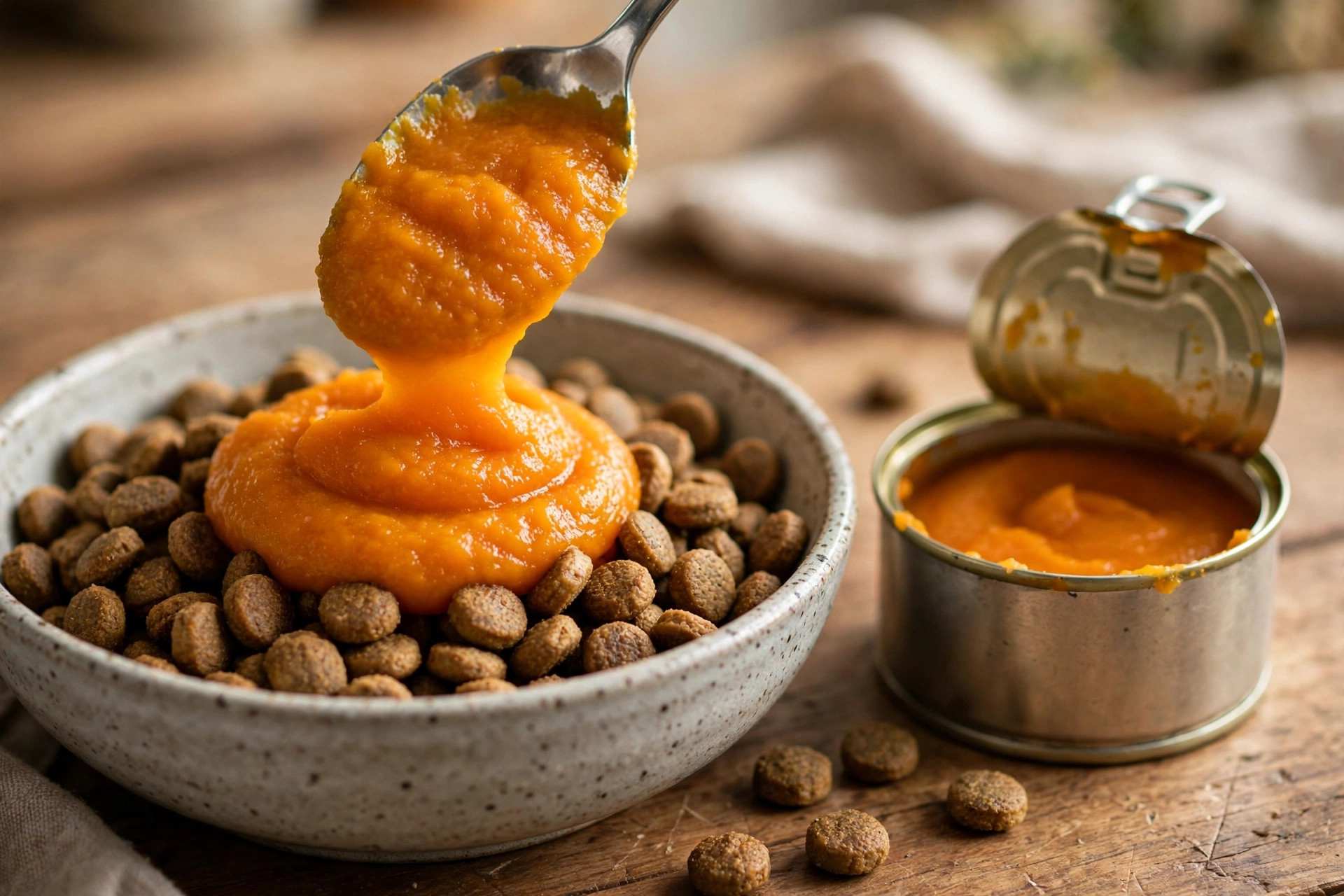
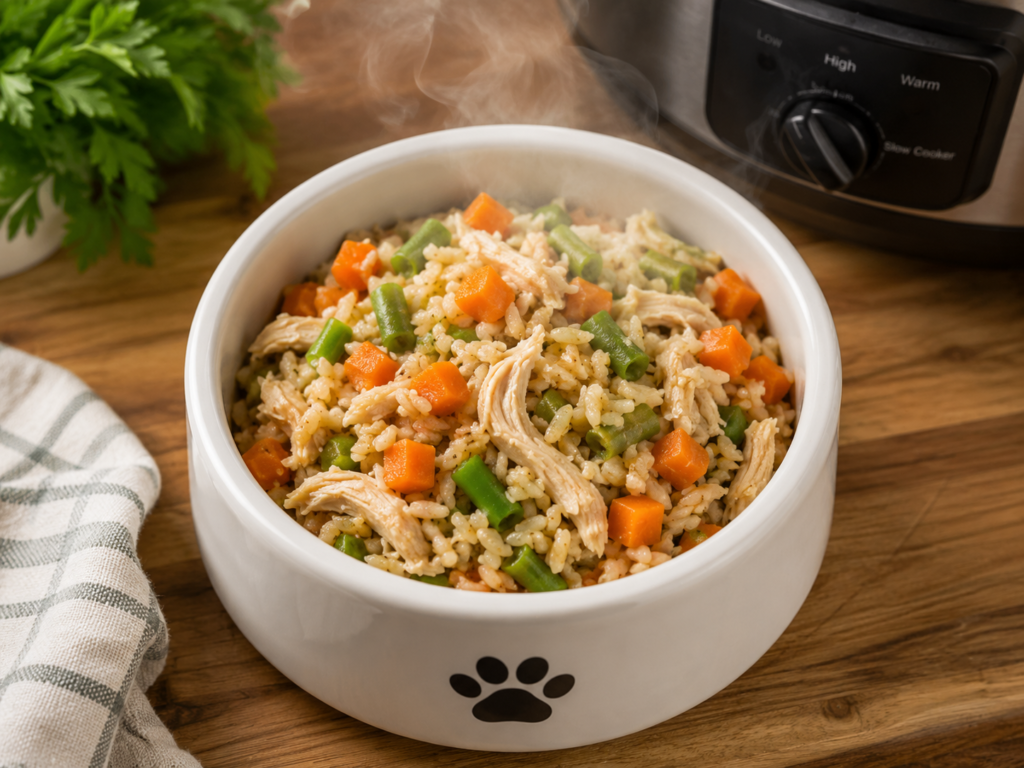
You have cooked a beautiful bowl of homemade dog food — chicken, rice, carrots, a spoon of pumpkin. Now comes the question every homemade feeder asks: how much of it should actually go in the bowl?
\n
Feed too little and your dog loses weight, begs constantly and runs out of energy. Feed too much and the weight creeps on, the stools go soft and the vet starts talking about slimming down. And because homemade food is not portioned by a scoop on a bag, there is no label to tell you the answer.
\n
This guide gives you the answer in plain numbers: the 2–3% body-weight rule, daily gram tables by weight, and — most importantly — how to adjust the numbers for your own dog’s age, activity and body shape. It is a guide, not a prescription: if your dog has a medical condition, your vet’s numbers always win.
\n
The 2–3% rule: the starting point
\n
For a healthy adult dog, the standard starting point is 2–3% of body weight per day in homemade food, split across two meals. That is the rule vets and canine nutritionists use as the baseline, and it works because it scales with the dog: a 10 kg beagle and a 40 kg labrador need very different bowls.
\n
- \n
- 2% — the low end. Use it for older dogs, couch potatoes, dogs prone to weight gain, and dogs on a mainly cooked diet with starchy ingredients like rice or potato.
- 2.5% — the middle. A good starting point for most healthy adult dogs with a normal activity level.
- 3% — the high end. Use it for young adults, very active dogs, working dogs, and dogs on a raw or very low-carb homemade diet, which is less calorie-dense per gram.
\n
\n
\n
\n
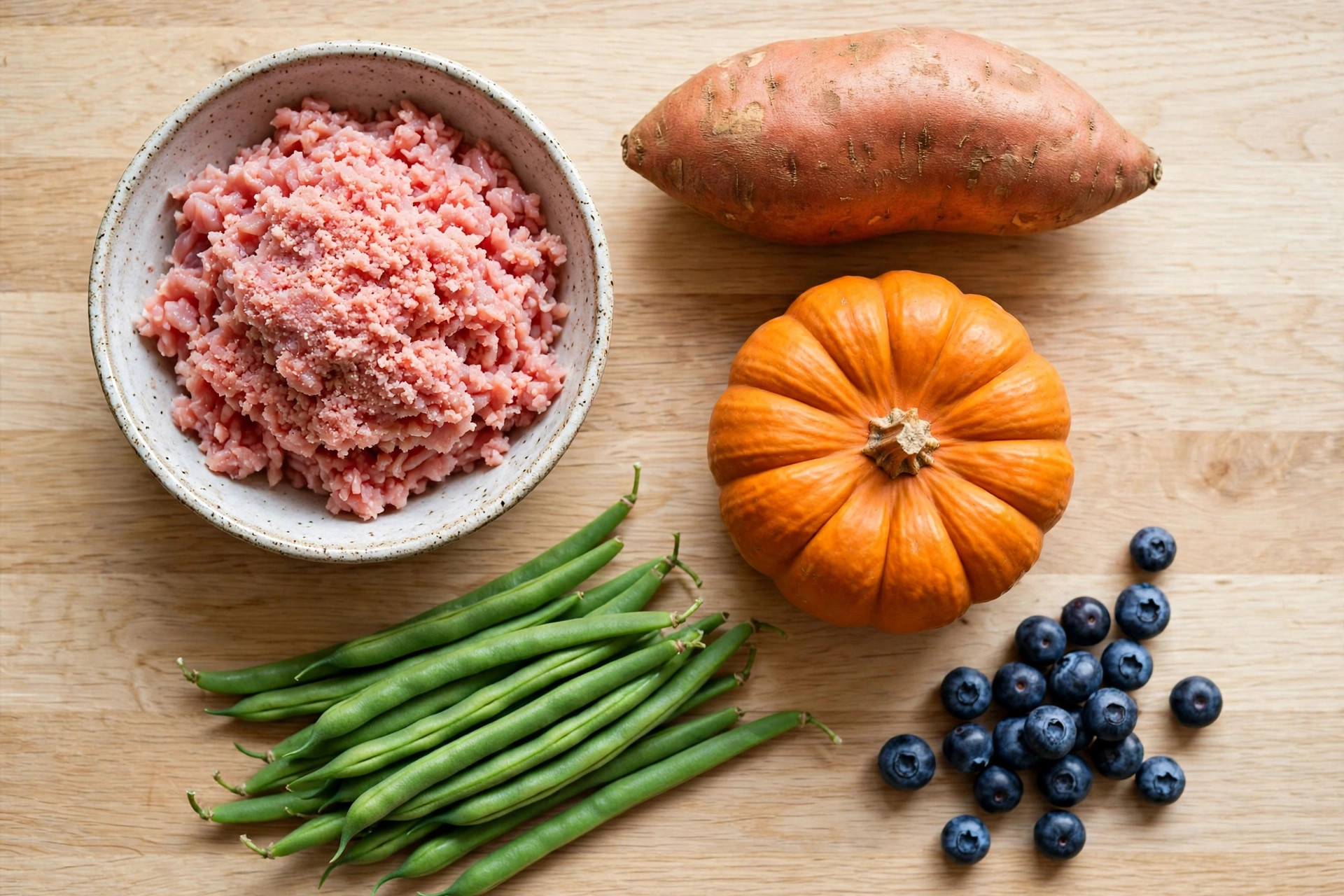
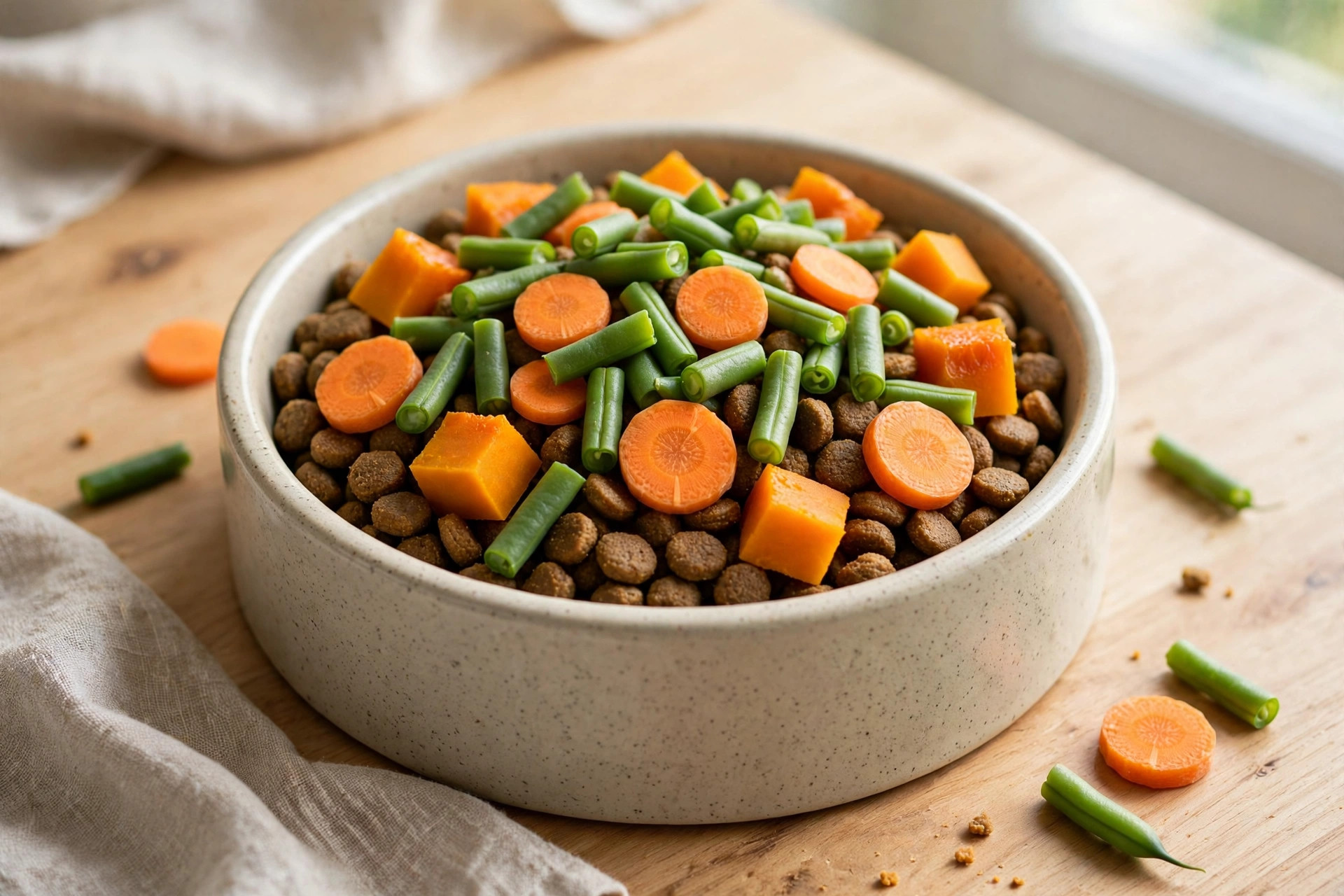
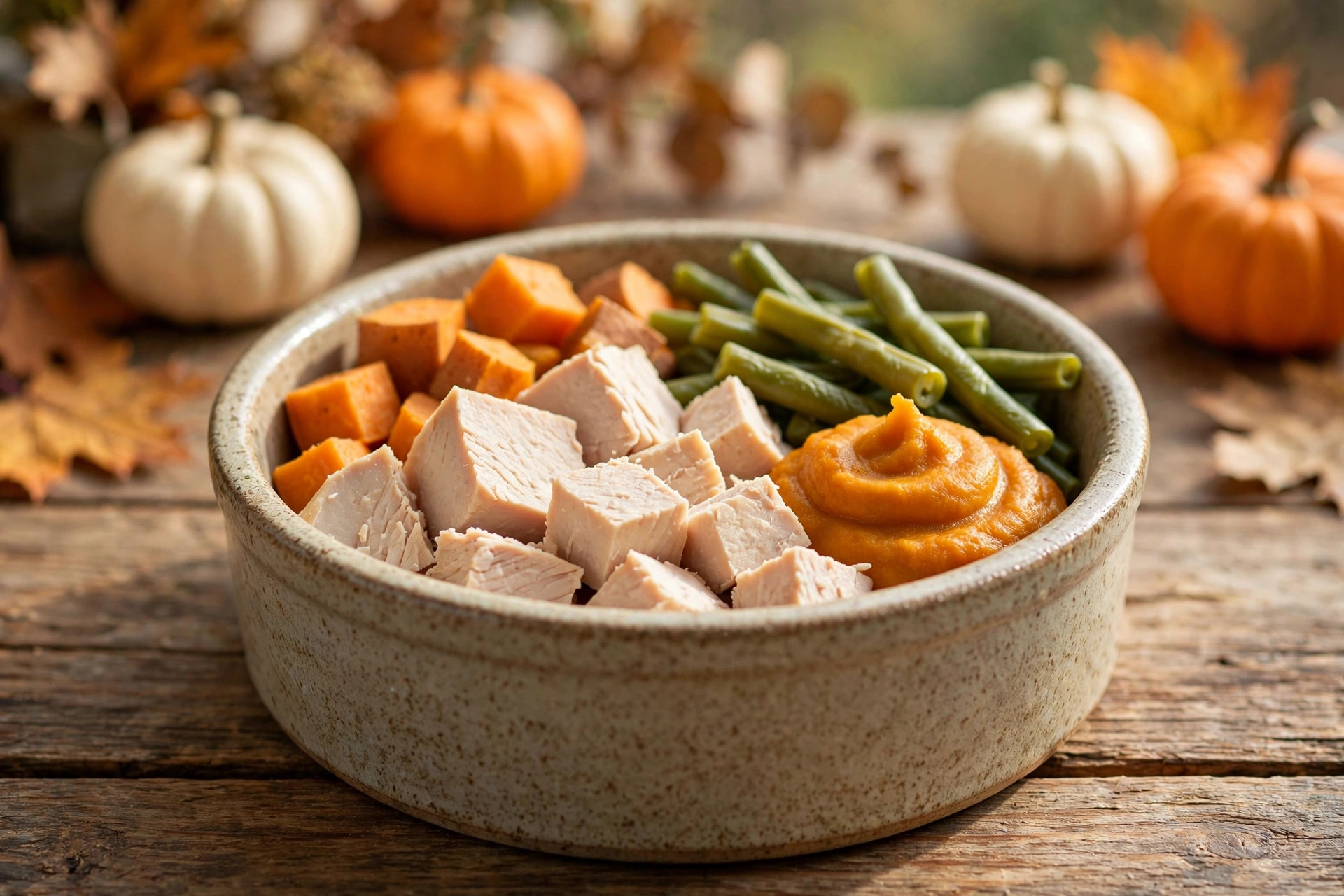
Worked example: a 20 kg dog at 2.5% needs 500 g of homemade food per day — 250 g per meal, twice a day. That is the whole bowl: meat, vegetables, carbohydrate and any extras together, not 500 g of meat alone.
\n
One important note: these percentages are for cooked homemade food. Cooked food holds water, so it weighs more than raw food for the same calories. If you feed raw, the same 2–3% rule still applies, but most raw feeders start at the lower end (2%) because raw food is more calorie-dense per gram. Our raw dog food for beginners guide explains the raw side in detail.
\n
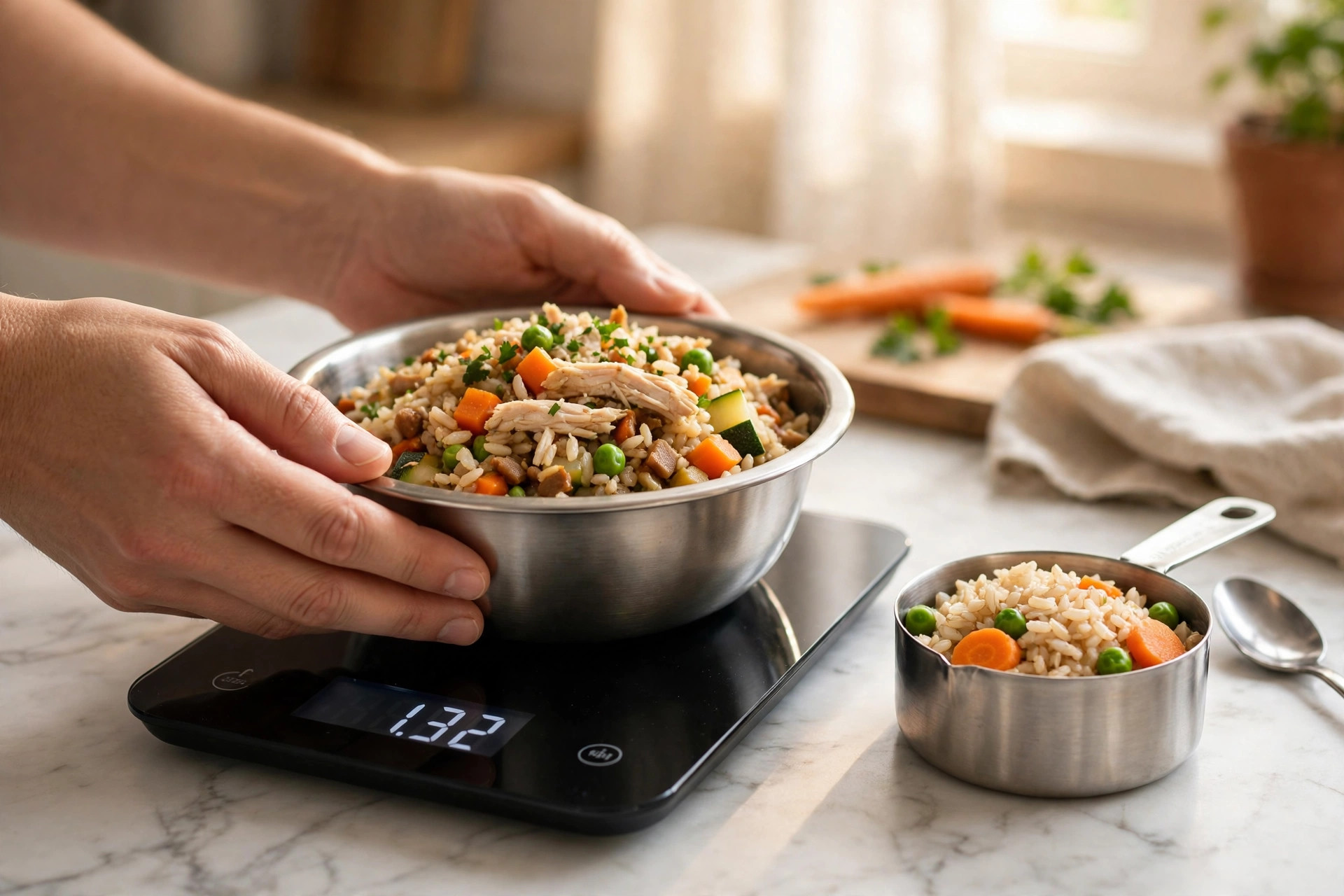
Daily amounts by weight (the table)
\n
Here is the daily total, split into two meals. Start in the middle of the range, weigh your dog after two weeks, and adjust up or down by 10% at a time.
\n
| Dog’s weight | 2% (low) | 2.5% (middle) | 3% (high) |
|---|---|---|---|
| 5 kg (small — e.g. dachshund, pug) | 100 g | 125 g | 150 g |
| 10 kg (e.g. beagle, cocker spaniel) | 200 g | 250 g | 300 g |
| 15 kg (e.g. border collie, staffy) | 300 g | 375 g | 450 g |
| 20 kg (e.g. labrador, boxer) | 400 g | 500 g | 600 g |
| 25 kg (e.g. golden retriever) | 500 g | 625 g | 750 g |
| 30 kg (e.g. German Shepherd) | 600 g | 750 g | 900 g |
| 40 kg (e.g. rottweiler, large lab) | 800 g | 1,000 g | 1,200 g |
\n
A quick way to check your maths: 2.5% of body weight is body weight in kilograms × 25. So a 12 kg dog needs 12 × 25 = 300 g a day. A 30 kg dog needs 30 × 25 = 750 g a day. If you would rather have a calculator do it for you, our homemade dog food serving size calculator and homemade dog food calculator both work from your dog’s weight.
\n
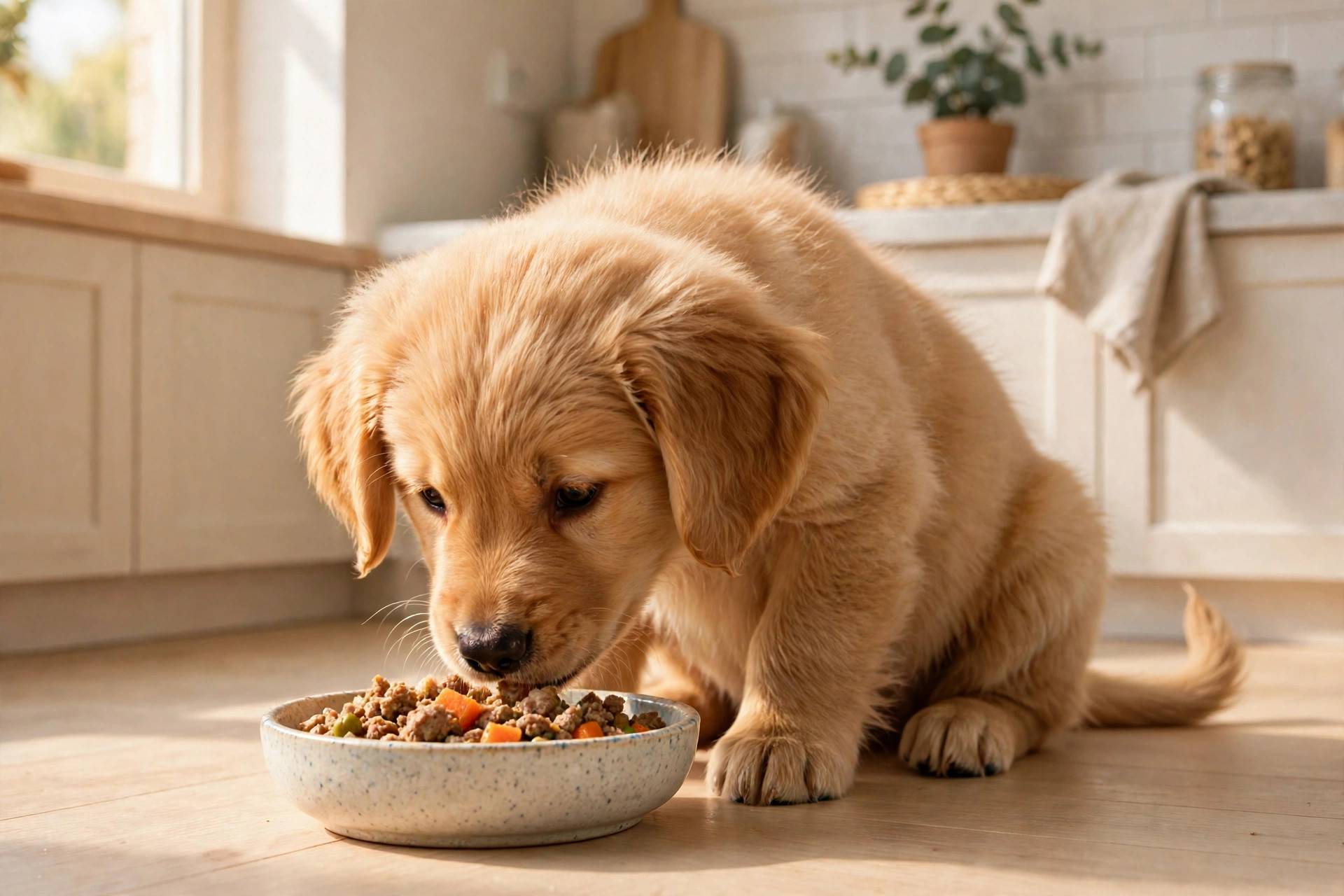
Weigh the food, do not guess it
\n
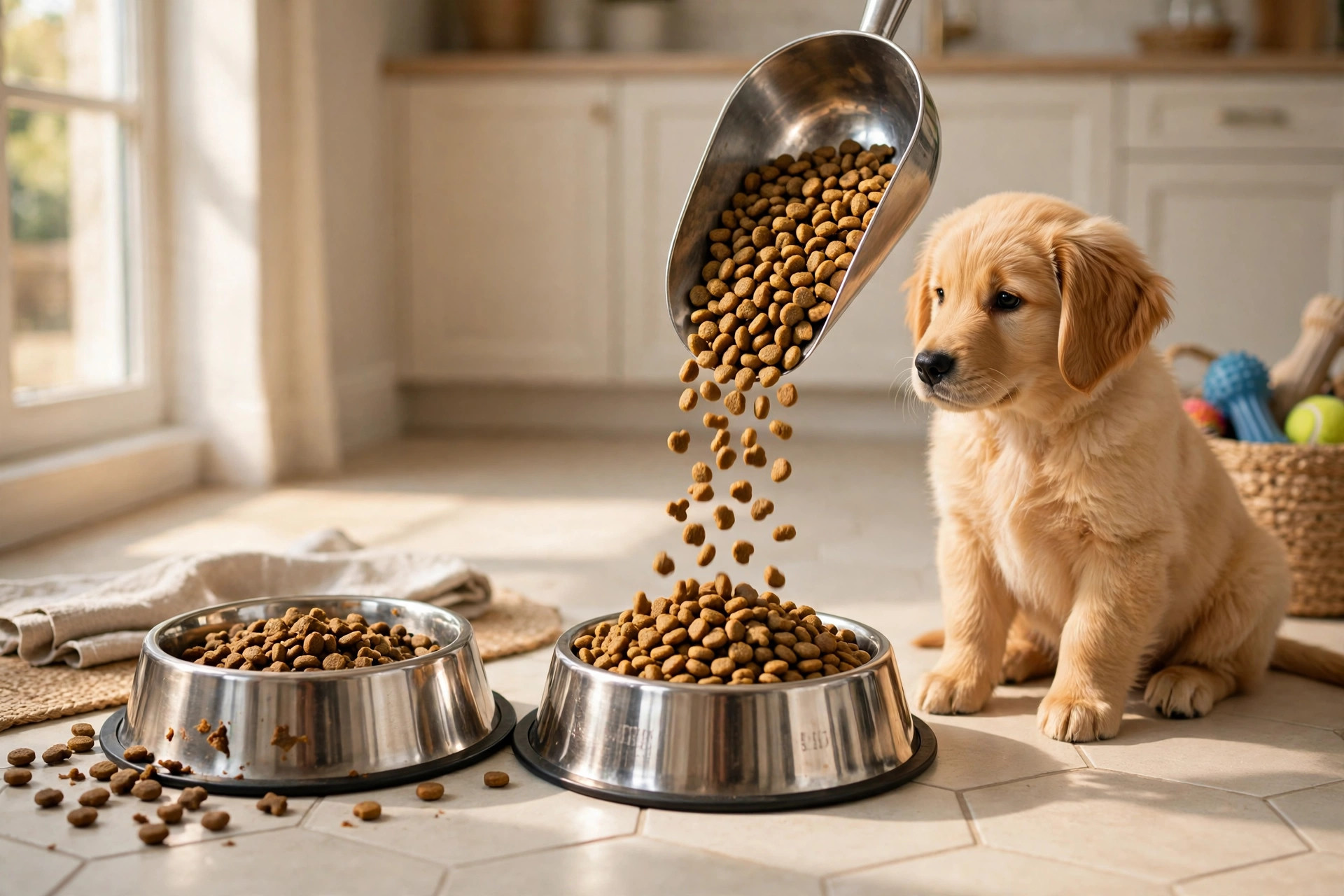
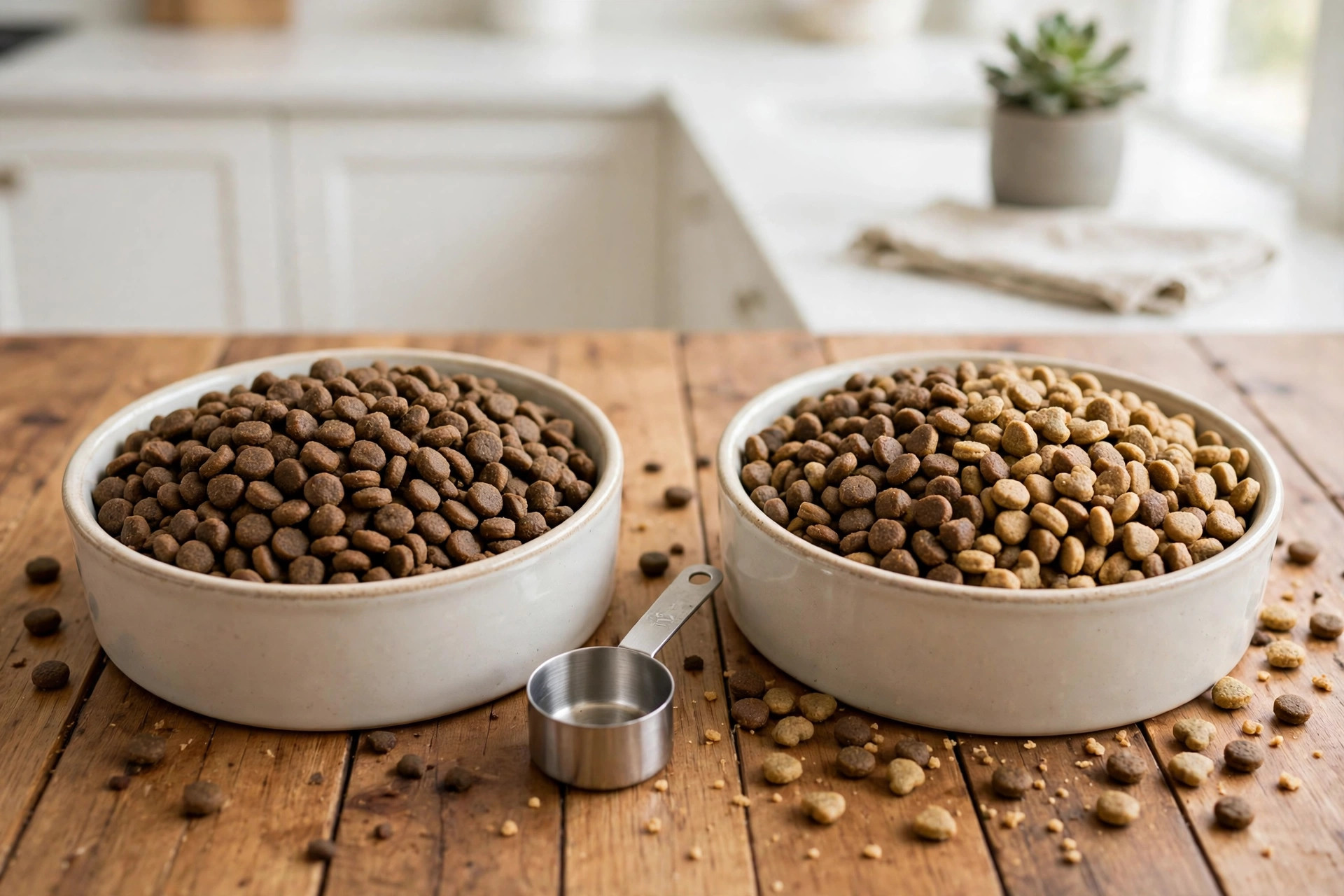
The single biggest reason homemade portions go wrong is guessing. A \”cup\” of homemade food can weigh anywhere from 180 g to 280 g depending on how much rice, meat and water is in it — a difference of 50% between two scoops that look identical.
\n
Three habits fix this:
\n
- \n
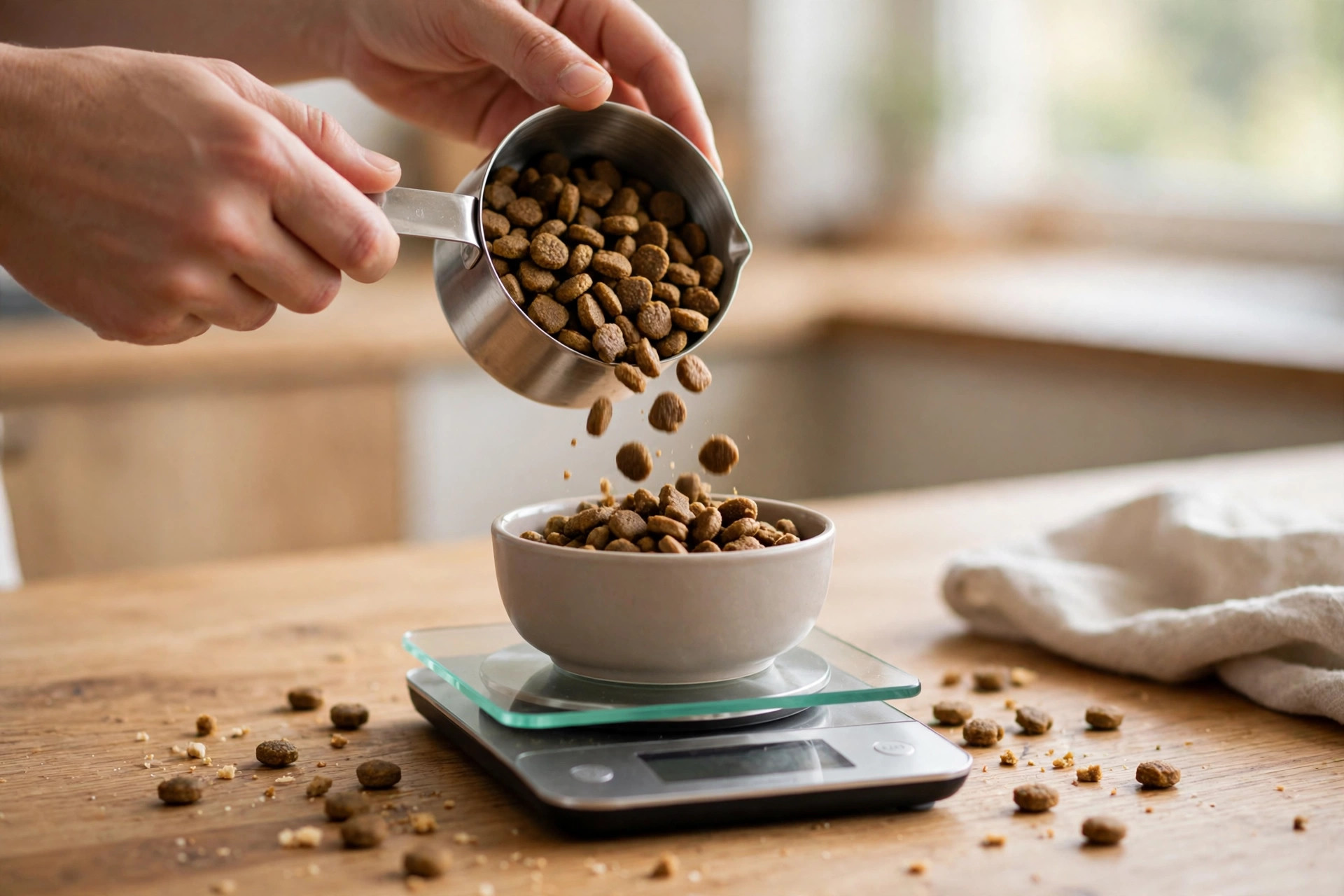
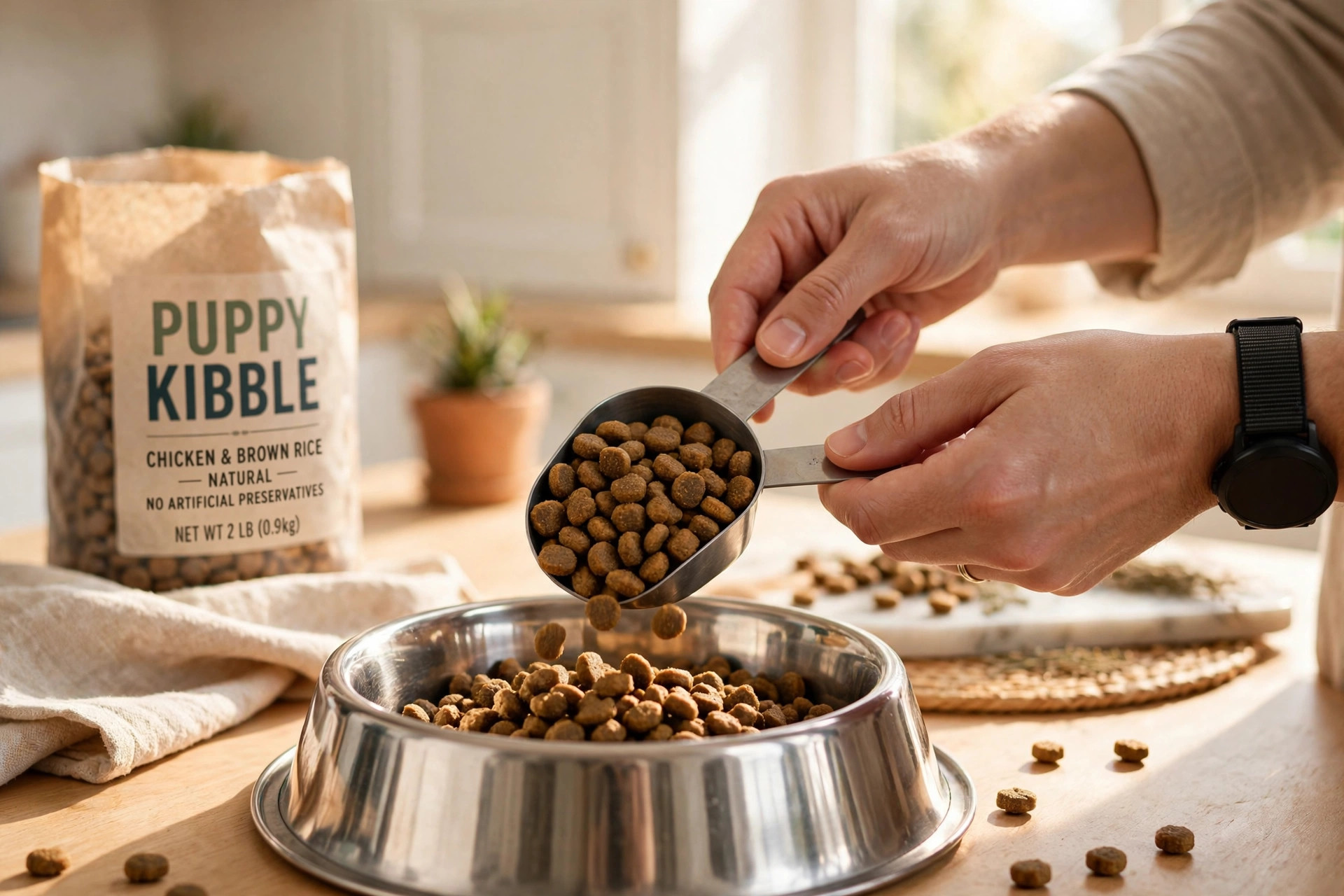
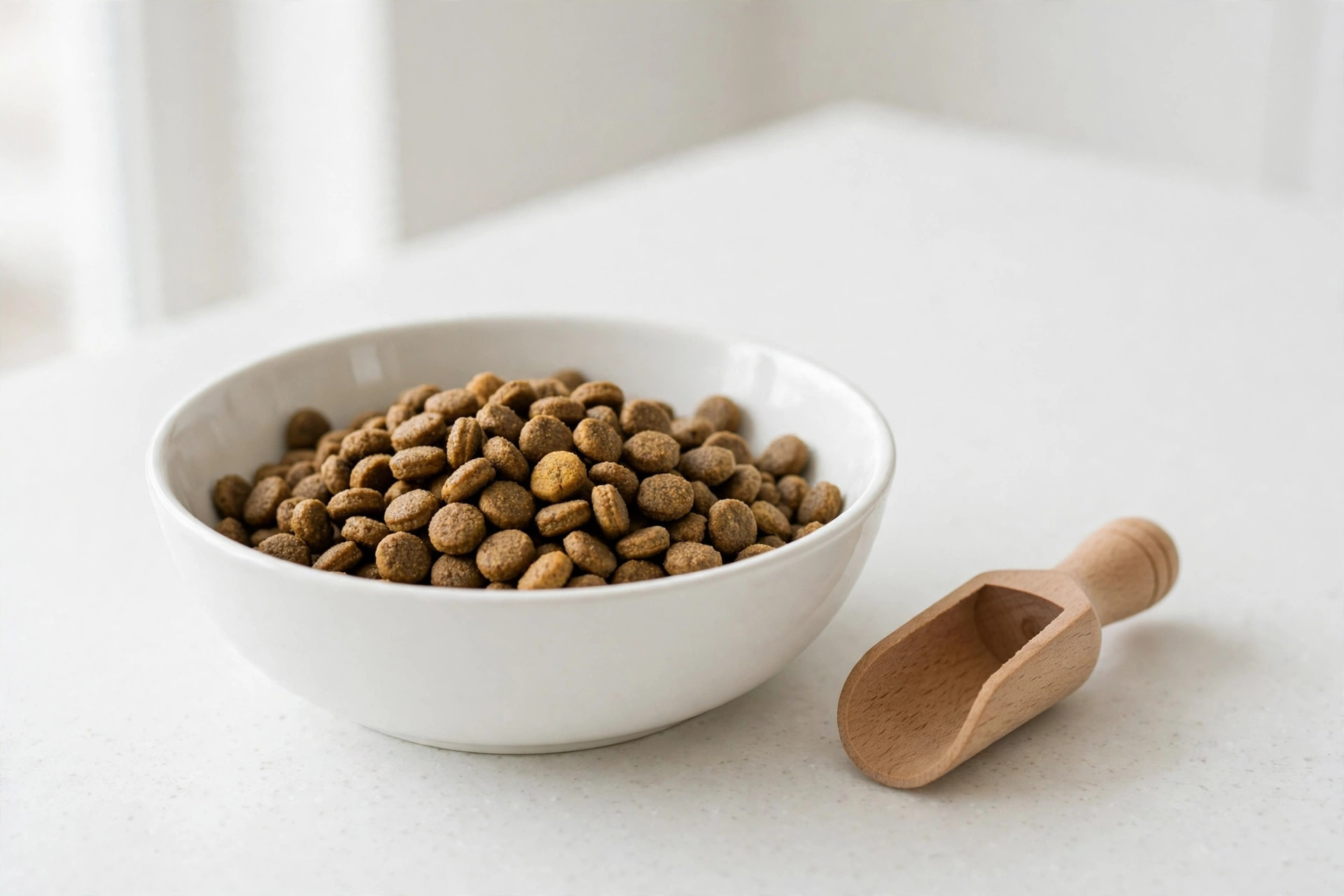
- Use a kitchen scale. Weigh the daily amount once, then weigh each meal. It takes ten seconds and it is the only way the table above actually works.
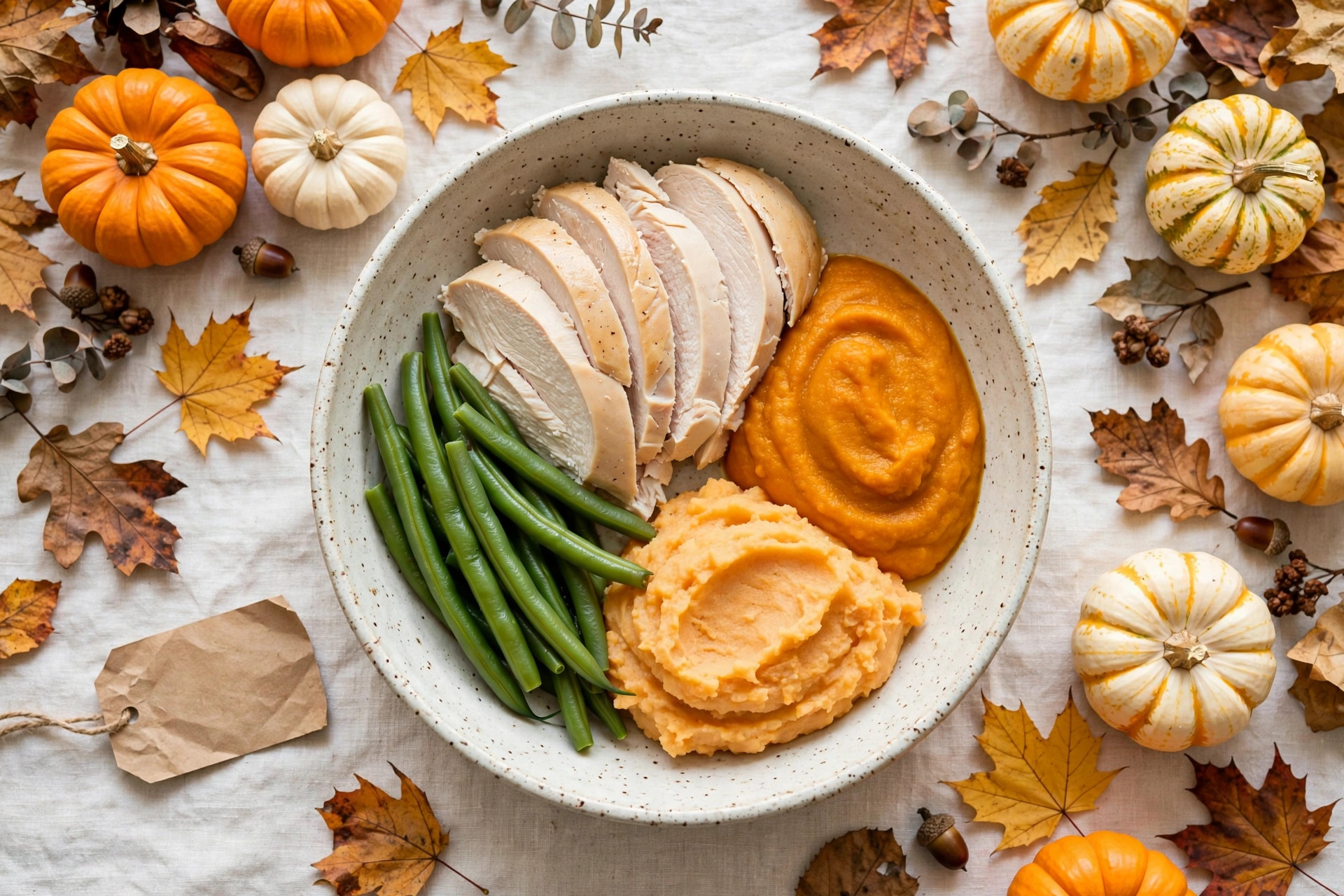
- Weigh the whole bowl, not the parts. You do not need to weigh the chicken and the rice separately every day. Weigh the finished food. The ratio inside the bowl matters for balance, not for the daily total — our homemade dog food recipes guide covers the ratios.
- Use the same bowl. Once you know what 250 g looks like in your dog’s usual bowl, you can eyeball it on busy days — but re-weigh once a week to keep your eye honest.
\n
\n
\n
\n
Adjusting for age: puppies, adults and seniors
\n
The 2–3% rule is for healthy adults. Puppies and seniors play by different rules.
\n
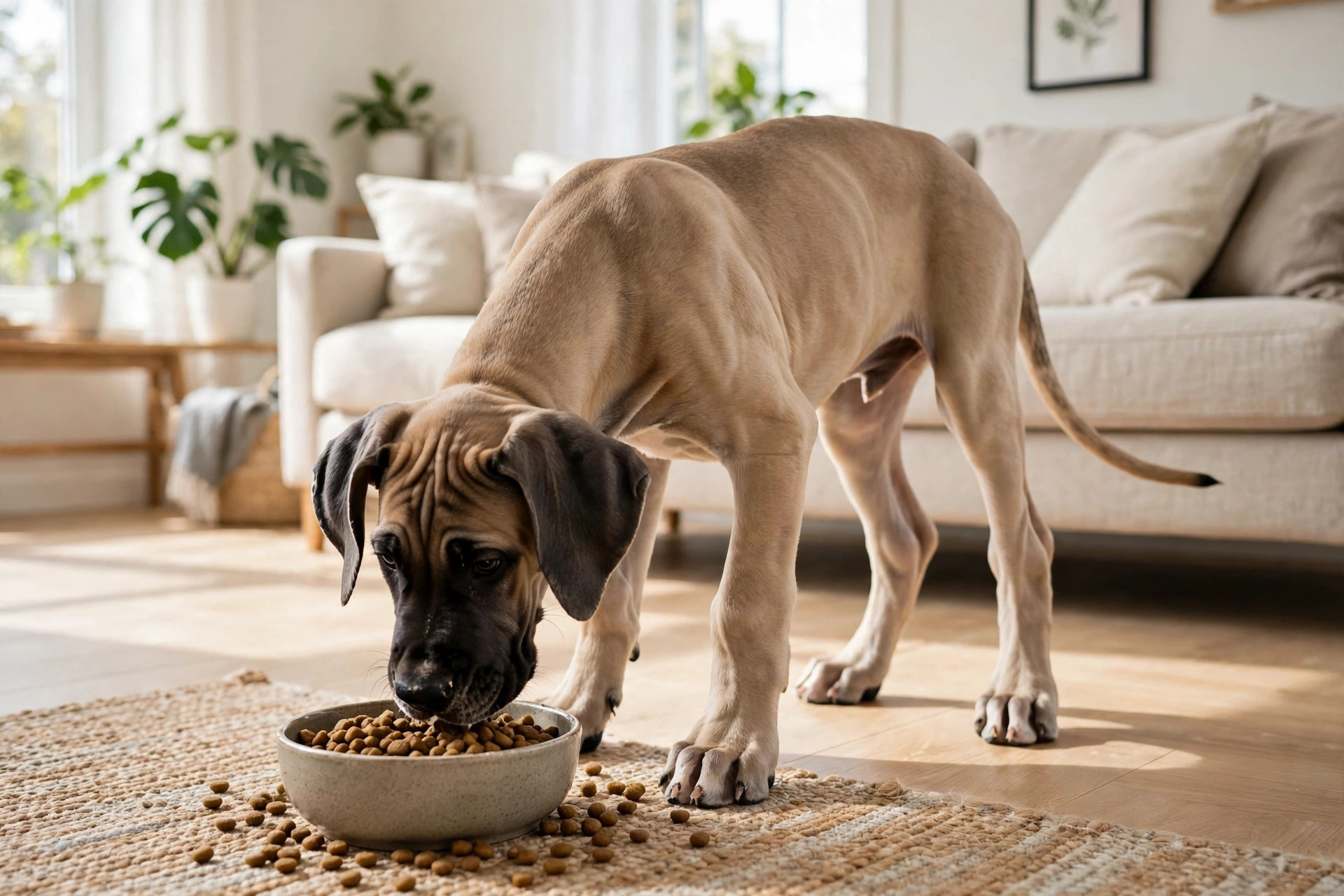
Puppies — feed more, more often. A growing puppy needs roughly double the adult rate: 5–10% of body weight per day, depending on age and breed size. Young puppies (8–12 weeks) eat 4 meals a day; by 6 months, 3 meals; by 12 months, most are on 2 meals. Large-breed puppies need careful portion control — overfeeding a large-breed puppy makes them grow too fast, which raises the risk of joint problems later. Our best puppy food guide covers feeding amounts by age and breed size in detail.
\n
Adults — the 2–3% rule. This is the group the table above is built for. A dog between 1 and 7 years old, healthy weight, normal activity: start at 2.5% and adjust from there.
\n
Seniors — feed a little less. Dogs over 7 (over 5 for giant breeds) usually move less and burn fewer calories, so start at 2% or just below. Watch the waistline closely — senior dogs gain weight quietly, and extra weight on old joints is painful. If your senior is losing muscle rather than gaining fat, the answer is usually more protein, not more food overall — talk to your vet before increasing portions.
\n
Adjusting for activity and body type
\n
Two dogs can weigh the same and need very different amounts:
\n
- \n
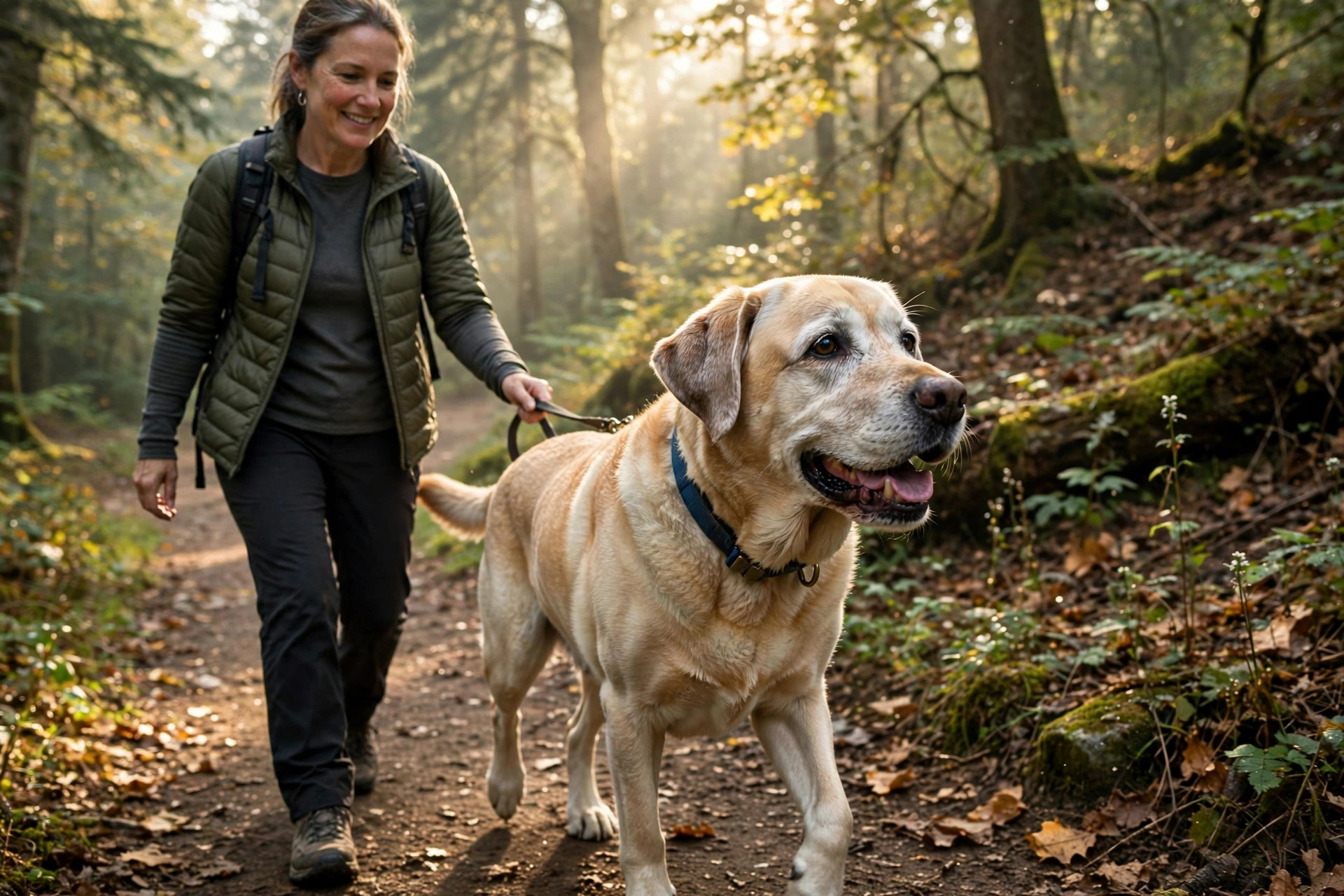
- Very active dogs (working dogs, dogs that run or hike daily, agility dogs) can need 3–4% — sometimes more in hard work. If your dog is losing weight on 3%, go up by 10% and re-check in two weeks.
- Quiet dogs (flat dwellers, dogs that sleep most of the day) often do best at 2% or even 1.5%. If the ribs are disappearing under a layer of fat, the amount is too high, not the food.
- Neutered dogs burn roughly 10–20% fewer calories than intact dogs of the same weight. If your dog was neutered recently and the weight is creeping up, drop the portion by 10% and see.
- Dogs losing weight on purpose should eat about 1.5–2% of their target weight (not their current weight) per day, with the vet’s agreement. Never crash-diet a dog — a steady 1–2% of body weight lost per week is the safe rate.
\n
\n
\n
\n
\n
The body condition check (better than the scales)
\n
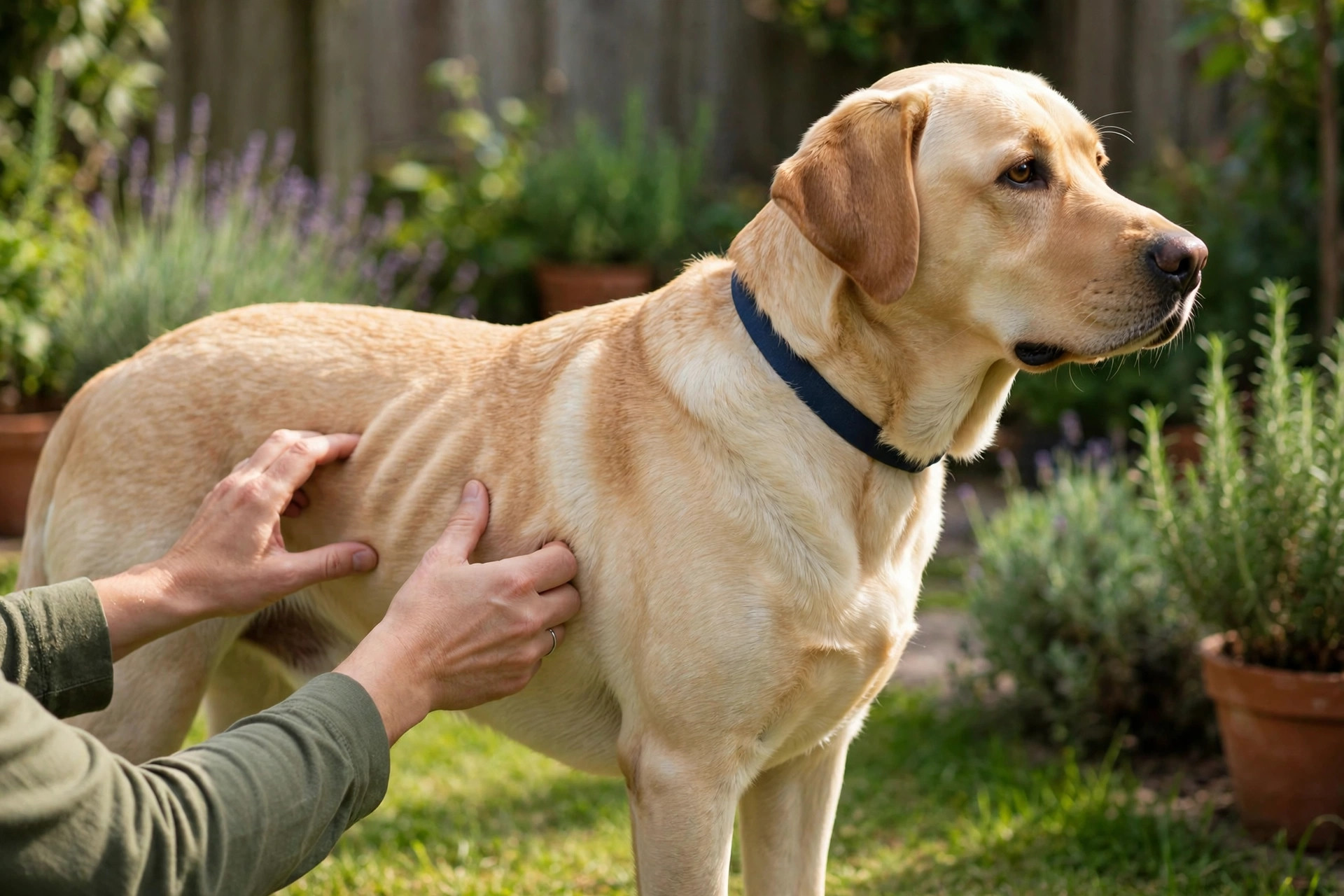
Your dog’s weight on the scales tells you one number. The body condition check tells you whether that number is right — and it is the tool vets actually use. Do it every two weeks, and let it decide whether to adjust the portion.
\n
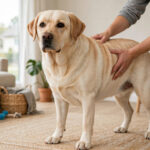
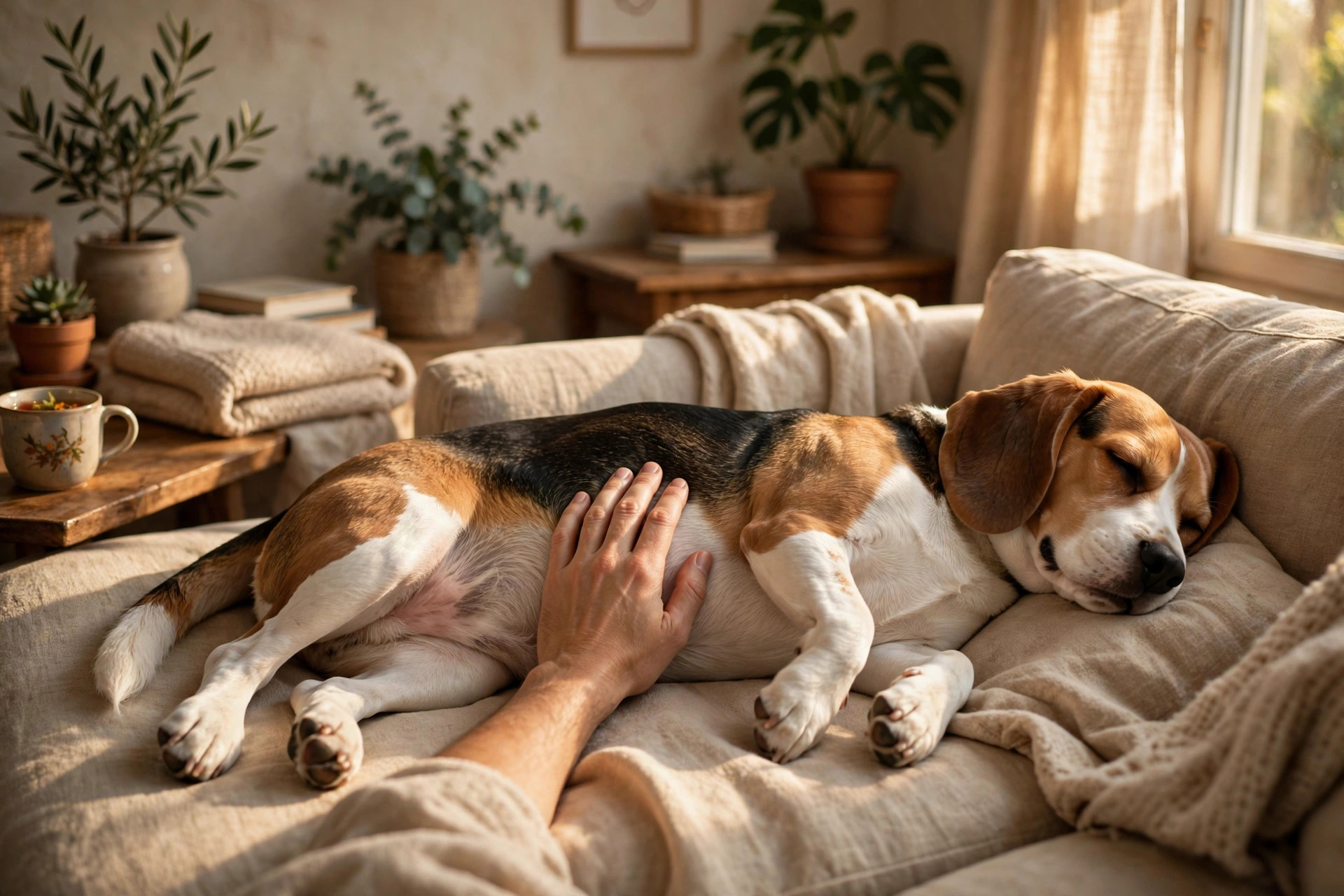
1. Feel the ribs. Run your hands along your dog’s sides. You should be able to feel the ribs easily under a thin layer of fat, like feeling knuckles through a thin glove. If you have to press hard to find them, your dog is overweight. If the ribs stick out with no fat at all, your dog is underweight.
\n
2. Look from above. Standing over your dog, you should see a waist — a visible narrowing behind the ribs. If the body is a straight tube from shoulders to hips, the portion is too big.
\n
3. Look from the side. There should be a tuck — the belly line rising up from the chest towards the back legs. A sagging belly line means too much food.
\n
The target is a body condition score of 4–5 out of 9: ribs you can feel, waist you can see, tuck you can spot. If your dog scores 6 or above, cut the daily amount by 10% and re-check in two weeks. If your dog scores 3 or below, add 10% and re-check. Never change the amount by more than 10% at a time — small, steady adjustments are how you find the right number without overshooting.
\n
How many meals a day?
\n
Most adult dogs do best on two meals a day — morning and evening, roughly 12 hours apart. Two meals keep blood sugar steadier than one big meal, and they cut the risk of bloat in large, deep-chested breeds (labradors, German Shepherds, Great Danes), where one huge meal is a genuine risk factor.
\n
- \n
- Puppies under 6 months: 3–4 meals a day.
- Adults: 2 meals a day.
- Seniors: 2 meals a day, or 3 smaller meals if digestion is a problem.
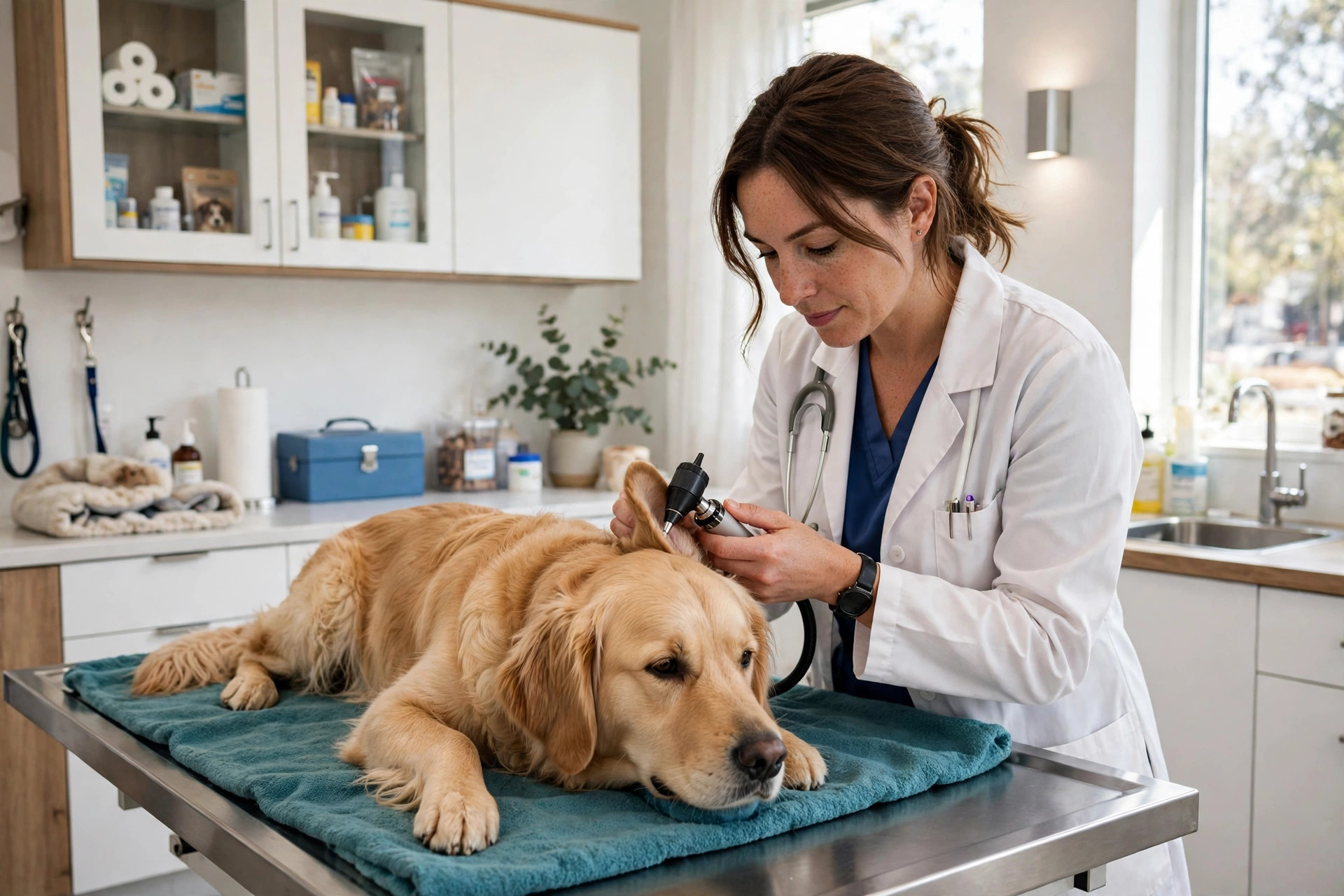
- Dogs that eat too fast: split the same daily amount into 2 meals and serve it in a slow feeder. Our slow feeder dog bowls guide explains which type suits which dog.
\n
\n
\n
\n
\n
Treats are part of the daily total, not on top of it. All treats together — training treats, chews, the odd bit of toast — should stay under 10% of daily calories. If you train with treats every day, take that amount out of the bowl. Forty tiny training bites still add up.
\n
Signs you are feeding too much
\n
- \n
- Weight creeping up month by month, even though the bowl looks the same.
- Soft, bulky stools — the gut is getting more than it can process.
- Ribs hard to feel; waist disappearing from above.
- Your dog finishes meals and still begs — begging is a habit, not proof of hunger, but a dog that is gaining weight and begging is definitely getting enough.
- Less energy, reluctance to run or climb stairs — extra weight is hard work to carry.
\n
\n
\n
\n
\n
\n
Signs you are feeding too little
\n
- \n
- Ribs, hip bones or spine visible with no fat cover.
- Constant hunger, scavenging, eating non-food items.
- Low energy, dull coat, slow to recover after exercise.
- Weight falling on the scales over two or three weeks.
- Puppies not gaining weight at the expected rate — this one needs a vet visit, not just more food.
\n
\n
\n
\n
\n
\n
If either list sounds familiar, adjust by 10% and re-check in two weeks. If the signs are strong — rapid weight loss, vomiting, diarrhoea, or a puppy not growing — skip the adjusting and book a vet visit. Portion problems are common, but they can also be the first sign of a medical issue.
\n
Switching to homemade: the 7-day transition
\n
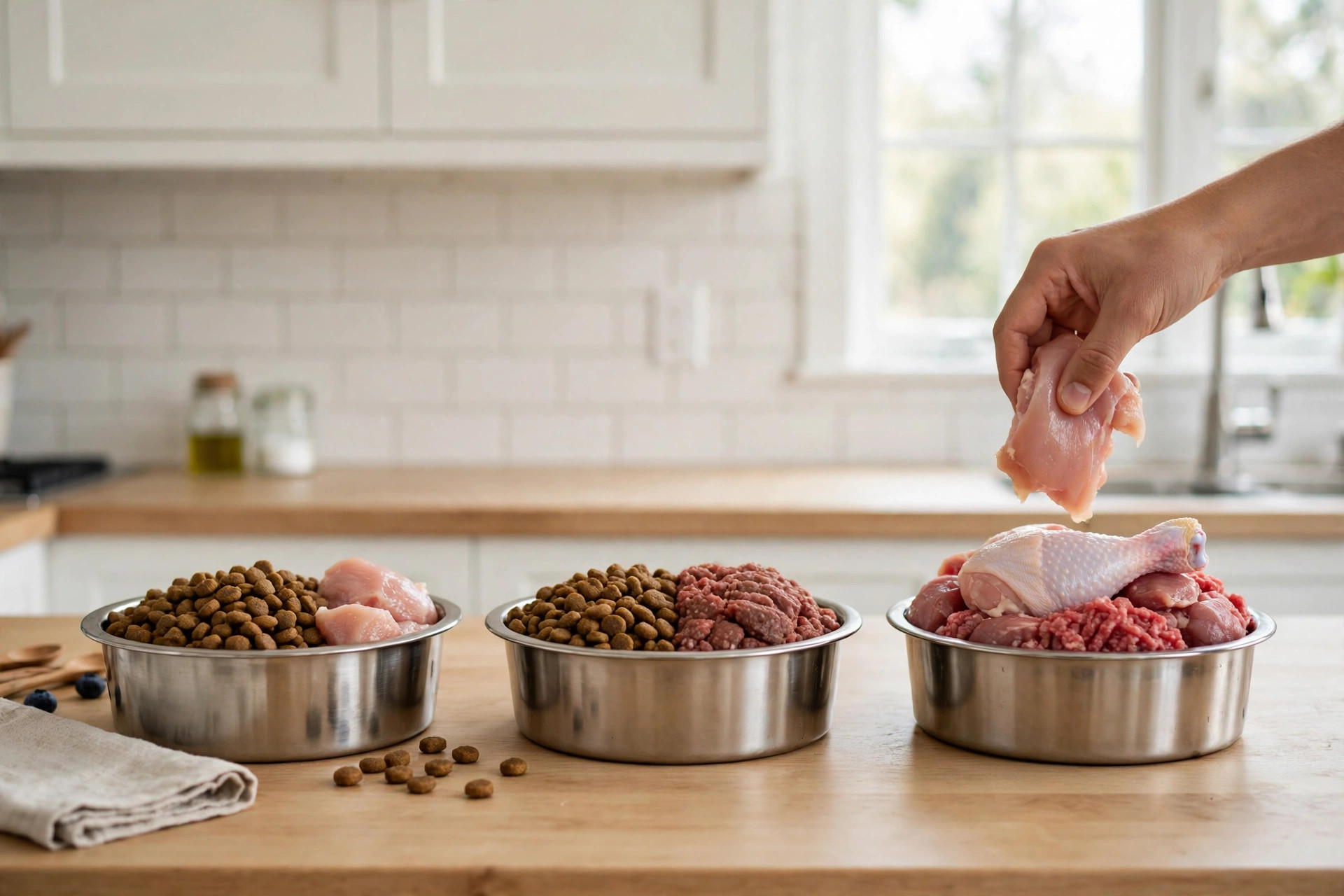
If your dog is moving from kibble to homemade food, do not switch in one meal. A sudden change upsets most dogs’ stomachs. Mix the foods over a week:
\n
- \n
- Days 1–2: 25% homemade, 75% old food.
- Days 3–4: 50% homemade, 50% old food.
- Days 5–6: 75% homemade, 25% old food.
- Day 7: 100% homemade.
\n
\n
\n
\n
\n
Watch the stools during the week. If they go soft, hold at the current ratio for an extra day or two before moving on. If your dog has a sensitive stomach, stretch the transition to 10–14 days. Our best dog food for sensitive stomachs guide explains the slow-switch in more detail, and our dog probiotics guide covers gut support during a change.
\n
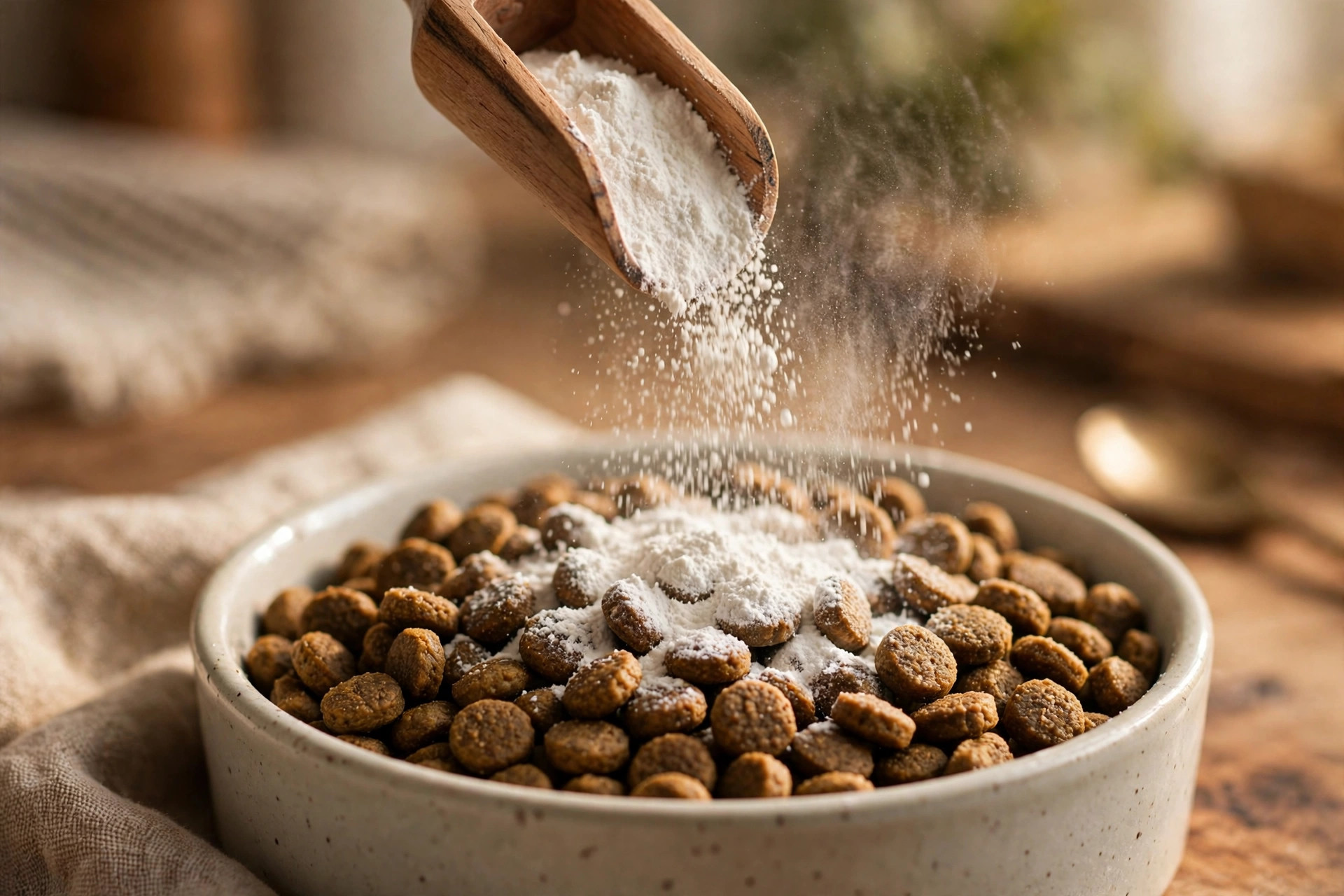
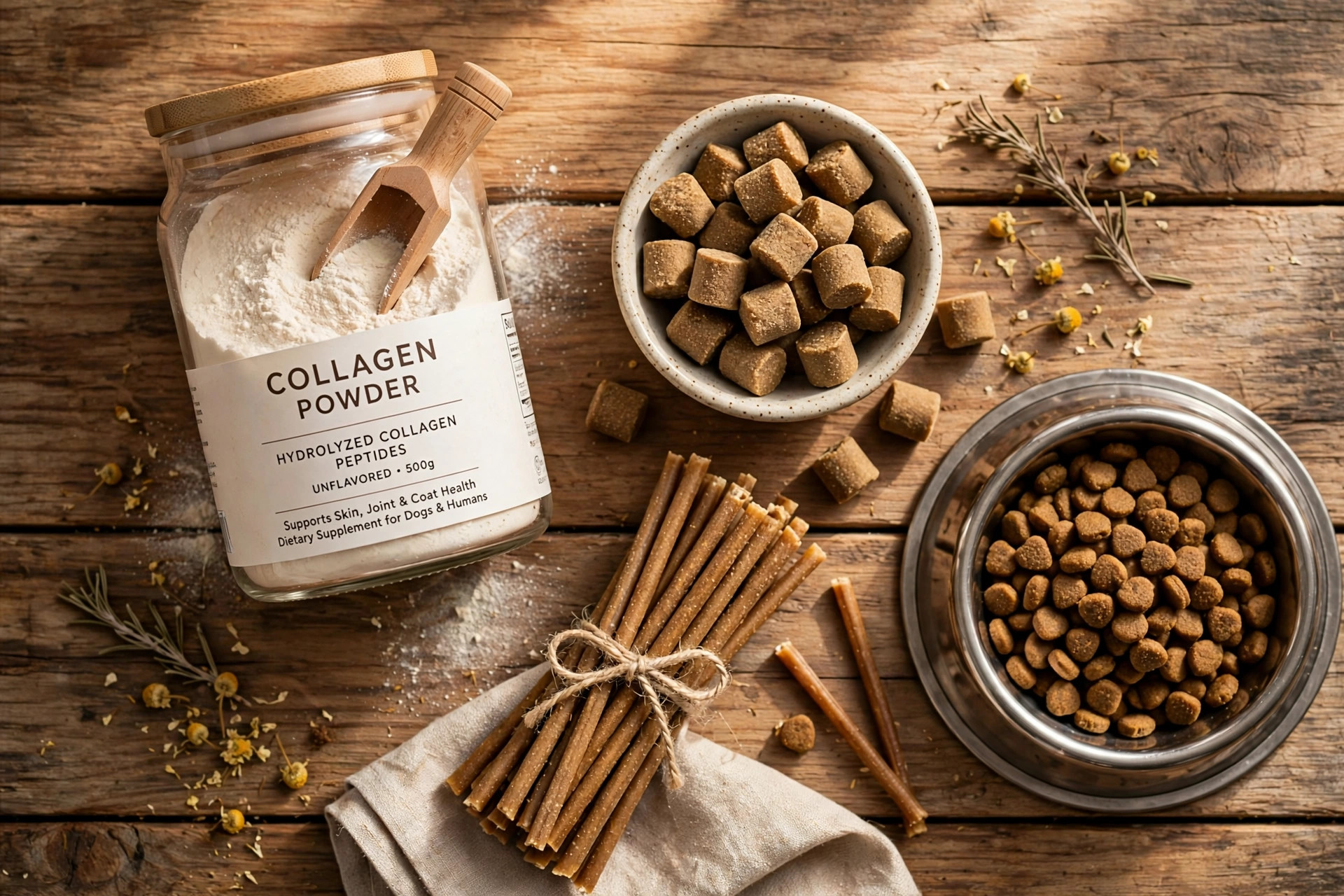
One more thing to get right at the switch: balance. A bowl of chicken and rice is not a complete diet on its own. Homemade food needs the right balance of protein, carbohydrate, vegetables, healthy fats and calcium — and most homemade diets need a supplement to be complete. Our best homemade dog food guide explains what \”complete and balanced\” actually means and the five building blocks every bowl needs. Get the amount right and the balance right, and homemade feeding works beautifully.
\n
Storing and batching homemade food
\n
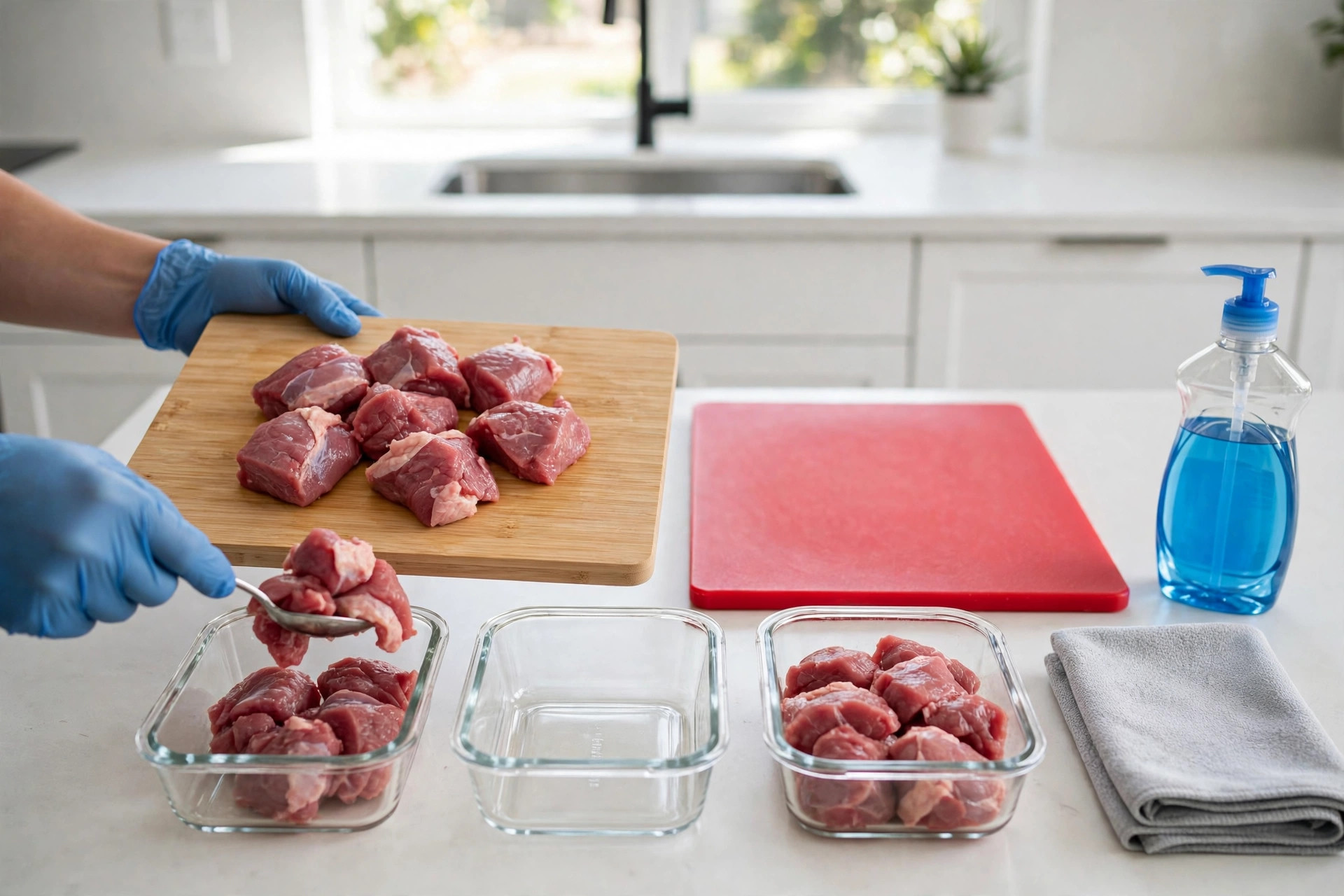
Portioning is easier when you cook in batches. Cook 3–4 days’ worth at a time, weigh it into daily portions, and store in sealed containers in the fridge (3–4 days) or the freezer (up to 3 months). Defrost overnight in the fridge, never on the counter. A kitchen scale and a set of identical containers turn portion control from a chore into a two-minute job. Our how to store dog food guide covers fridge and freezer rules for homemade batches.
\n
Mistakes to avoid
\n
- \n
- Guessing the amount. A cup is not a measurement for homemade food. Weigh it.
- Feeding the same amount to every dog. A 20 kg couch-potato labrador and a 20 kg working border collie need different bowls.
- Forgetting the treats. Training treats, chews and table scraps count. Take them out of the bowl.
- Changing the amount every day. Dogs need two weeks at one amount before you can tell whether it is right. Change by 10%, wait, re-check.
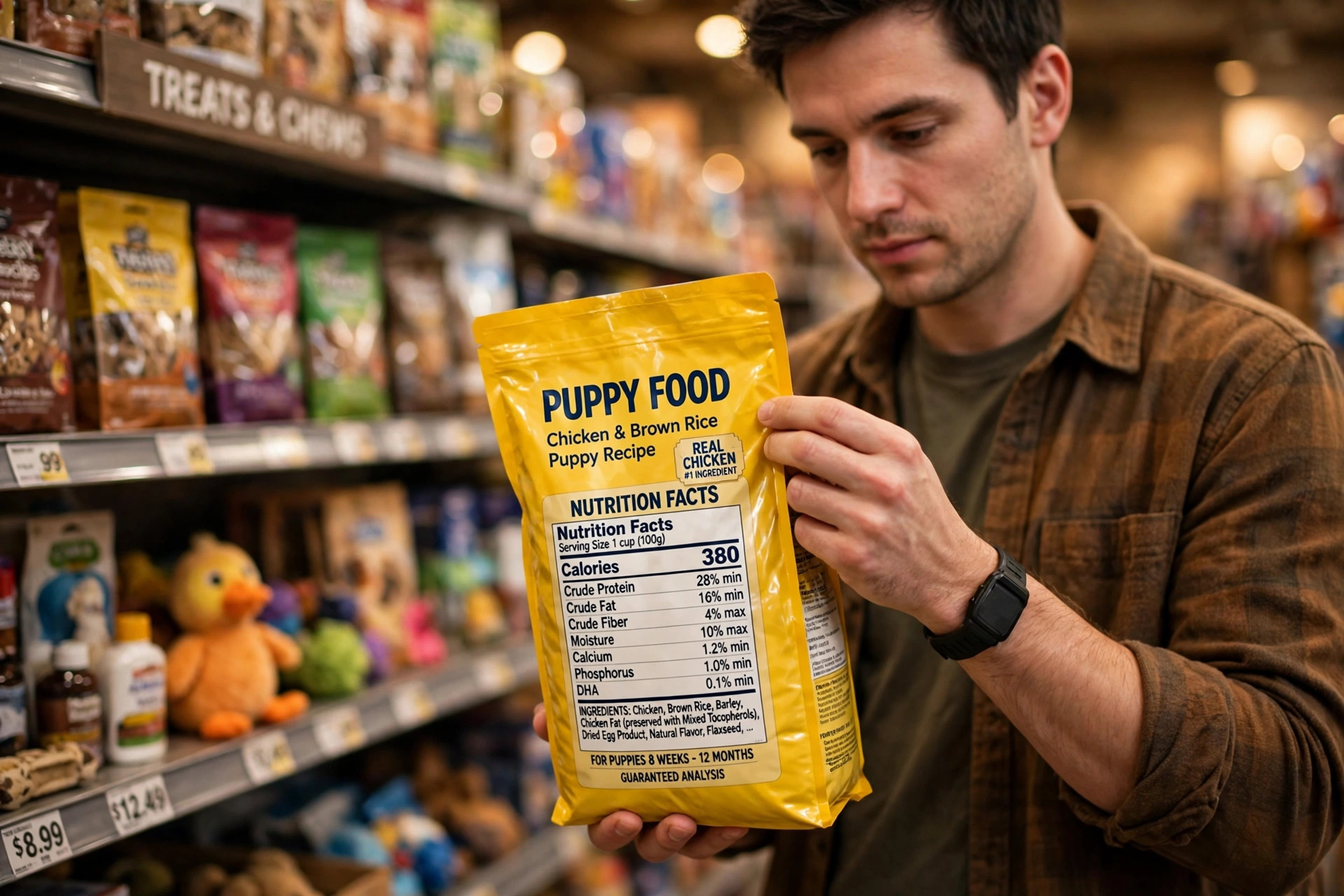
- Using the kibble bag’s numbers. Kibble feeding guides are for kibble — dry, dense, calorie-packed. Homemade food is wetter and lighter per gram, so the numbers do not transfer.
- Feeding by the bowl, not the dog. The right amount is the one that keeps your dog at a body condition score of 4–5, not the amount that fills the bowl nicely.
- Skipping the vet for medical cases. Dogs with kidney disease, pancreatitis, diabetes or food allergies need amounts — and recipes — set by a vet, not by a general guide.
\n
\n
\n
\n
\n
\n
\n
\n
FAQs
\n
How much homemade dog food should I feed my dog per day?\nStart with 2–3% of your dog’s body weight per day, split into two meals. A 20 kg dog needs roughly 400–600 g a day. Start at 2.5% (500 g for a 20 kg dog), check the body condition after two weeks, and adjust by 10% at a time.
\n
How much homemade food for a 10 kg dog?\nAbout 200–300 g a day — 100–150 g per meal, twice a day. Start at 250 g a day and adjust by the body condition check.
\n
How much homemade food for a 30 kg dog?\nAbout 600–900 g a day — 300–450 g per meal, twice a day. Start at 750 g a day and adjust by the body condition check.
\n
Is 2% or 3% better?\nNeither is \”better\” — they are the low and high ends of the same rule. Use 2% for older, quieter or weight-prone dogs, and 3% for young, active or working dogs. Most dogs land in the middle at 2.5%.
\n
How much homemade food should a puppy eat?\nPuppies need much more relative to their size: roughly 5–10% of body weight per day, split into 3–4 meals for young puppies. Large-breed puppies need careful portion control to avoid growing too fast — our best puppy food guide has the age-by-age numbers.
\n
Should I feed homemade food once or twice a day?\nTwice a day for most adult dogs — morning and evening. One big meal a day raises the bloat risk in large, deep-chested breeds, and two meals keep energy steadier.
\n
How do I know if I am feeding too much homemade food?\nFeel the ribs: if you have to press hard to find them, and the waist has disappeared when you look from above, the portion is too big. Cut the daily amount by 10% and re-check in two weeks.
\n
Do treats count towards the daily amount?\nYes. All treats together should stay under 10% of daily calories, and the treat amount comes out of the bowl. If you train with treats daily, reduce the meals to compensate.
\n
Can I use a calculator instead of the table?\nYes — our homemade dog food serving size calculator works out the daily grams from your dog’s weight, and our homemade dog food calculator does the same by weight. Use the calculator to get the number, then use the body condition check every two weeks to confirm it is right for your dog.
\n
My dog is losing weight on homemade food. What should I do?\nFirst, check the amount — weigh the food for a week to make sure the bowl really holds 2–3% of body weight. If the amount is right and the weight is still falling, add 10% and re-check in two weeks. If weight keeps falling, or there is vomiting or diarrhoea, book a vet visit — portion problems can also be a medical issue.
\n
The bottom line
\n
How much homemade dog food do you feed your dog? Start with 2–3% of body weight a day — 2.5% for most dogs — split into two meals, weighed on a kitchen scale. Then let your dog’s body tell you the rest: ribs you can feel, a waist you can see, steady weight on the scales. The table in this guide gets you to the right neighbourhood; the body condition check, done every two weeks, gets you to the exact number. That is how homemade feeding works — not a scoop, not a guess, but a measured bowl that fits the dog in front of you.
\n
Pin this for later 📌 — and if you are still building your homemade routine, our homemade dog food recipes give you seven balanced bowls to rotate, and our best homemade dog food guide explains what makes a bowl complete.
“,
“source_draft”: “/home/hatch/workspace/goals/pinterest-pin-automation-for-petsmush-com/files/how-much-homemade-dog-food-post-draft.md”,
“status”: “publish”
}