
Everyone wants a dog. But some of us? We want a lot of dog.
You know the type. The one that leans against your leg and nearly knocks you over. The one whose water bowl is basically a small bathtub. The one that scares the delivery driver into leaving packages at the end of the driveway even though he’s just standing there wagging his enormous tail.
My aunt had a Newfoundland named Bruno who tipped the scales at 165 pounds and thought he was a lap dog. Every visit ended with all 165 pounds of him draped across whoever sat on the couch first. Total gentle giant. Total love.
If you’re dreaming of a big dog but worried about temperament, drool, or fitting one into your family life, this list is for you. These are the five best big dog breeds known for their calm, affectionate, family-first personalities — plus the honest realities of what it’s actually like to live with them.
#1: Great Dane — The Apollo of Dogs
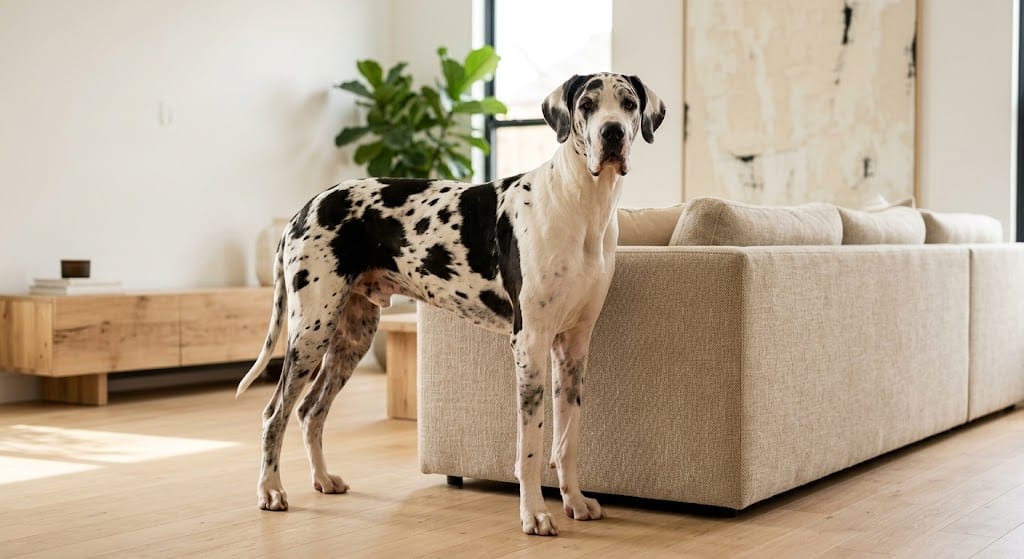
Standing up to 32 inches at the shoulder and easily eyeballing you from across the dinner table, the Great Dane is arguably the most iconic big dog on the planet. And despite the towering height, they’re some of the most laid-back dogs you’ll ever meet.
Height: 28–32 inches | Weight: 110–175 lbs | Lifespan: 7–10 years
Great Danes were originally bred as boar hunters, but modern Danes are more “professional couch occupant.” They’re gentle, playful, deeply people-oriented, and typically fantastic with children when raised alongside them. They don’t bark much, don’t need marathon exercise, and often behave more like a giant, low-energy roommate than a dog.
Best for: Families with space (a small apartment is not it), patient owners who can afford giant-breed food and vet bills, and anyone who wants a dog that looks intimidating but greets guests with a wagging tail.
Watch for: Bloat is the biggest health concern in Danes and other deep-chested giants — feed multiple small meals daily, use a slow-feeder bowl, and avoid vigorous exercise around mealtimes. Also, that heartbreakingly short lifespan is real. Loving a Great Dane is a shorter but incredibly rich commitment.
Pro Tip: Start training early and firmly. A 30-pound Great Dane puppy who jumps up is cute. A 130-pound adult who jumps up is a broken hip.
#2: Bernese Mountain Dog — The Swiss Cuddle Machine

If a dog could be described as “a warm blanket that follows you around,” it’s the Bernese Mountain Dog. That tri-color coat, those soulful eyes, that goofy grin — Berners are basically walking Instagram content, and they know it.
Height: 23–27 inches | Weight: 70–115 lbs | Lifespan: 7–10 years
Bred in the Swiss Alps as farm and cart dogs, Berners are hardworking, calm-natured, and deeply loyal. They form intense bonds with their families and tend to shadow their favorite person around the house all day. They’re patient with children, tolerant of other pets, and generally friendly with strangers once introduced.
Best for: Cool climates (that thick double coat is a real handicap in heat), families who want a cuddly dog with just enough working-dog structure to enjoy hikes and outdoor time, and anyone who doesn’t mind constant, gentle shadowing.
Watch for: Berners are notoriously prone to cancer and joint issues. Buy only from health-tested lines that screen for hips, elbows, heart, and von Willebrand disease. Their lifespan is heartbreakingly short — make every year count.
Pro Tip: Get on a good grooming rhythm from puppyhood — twice-weekly brushing and monthly baths. Berners shed like it’s their full-time job, and staying on top of it saves your house.
#3: Newfoundland — The Water Rescue Bear

Nicknamed “Nana dogs” after the famous nanny in Peter Pan, Newfoundlands are giant, sweet-natured water rescue dogs who genuinely think of themselves as protectors of small humans. If a dog was designed by committee to be the perfect family teddy bear, it would look exactly like a Newfoundland.
Height: 26–28 inches | Weight: 100–150 lbs | Lifespan: 9–10 years
Newfies were bred to jump off Canadian fishing boats and retrieve people from freezing water. Their webbed feet, waterproof double coat, and incredible strength make them born swimmers — and their patience with kids is basically legendary. They’re slow-moving, deeply affectionate, and almost impossible to provoke.
Best for: Families with young children, homes near water, and owners who don’t mind a whole lot of drool and a whole lot of shedding. Also excellent for people who’ve always wanted a large, warm rug that follows them around.
Watch for: The drool situation is real. Keep “slobber towels” in every room. Newfoundlands also overheat easily — they’re built for cold water, not August afternoons. Provide plenty of shade, water, and air conditioning.
Pro Tip: If you live near a lake, ocean, or river, let your Newfie swim regularly. It’s incredible exercise for their joints, and they will love you forever for it.
#4: Saint Bernard — The Alpine Rescue Icon

Barrel of brandy optional. The Saint Bernard is the classic gentle giant — originally bred by Swiss monks at the Great St. Bernard Pass to find travelers lost in the snow. That legendary calm, patience, and rescue instinct still runs strong in the modern Saint Bernard.
Height: 26–30 inches | Weight: 120–180 lbs | Lifespan: 8–10 years
Saint Bernards are gentle, protective, and deeply devoted to their families. They’re not high-energy — a couple of good walks a day and some backyard puttering is plenty — but they need to be part of family life. Left alone too much, they get sad, and a sad Saint is a giant sad experience for everyone.
Best for: Families with kids of all ages, cooler climates, and homes with enough square footage to accommodate 150 pounds of dog spread across the living room floor.
Watch for: Massive drool. Massive shedding. And massive food and vet bills. Also, brachycephalic-adjacent breathing issues in some lines — look for a breeder producing dogs with proper muzzle length and open airways.
Pro Tip: Get pet insurance the day you bring a Saint home. Giant-breed emergency vet visits can hit five figures fast, and insurance turns catastrophic bills into manageable ones.
#5: Irish Wolfhound — The Tallest of Them All

Standing eye-to-eye with an average adult, the Irish Wolfhound is the tallest dog breed in the world. Originally bred to hunt wolves and elk, today they’re one of the most laid-back, quiet, dignified dogs you can invite into a family home.
Height: 30–35 inches | Weight: 105–180 lbs | Lifespan: 6–8 years
Wolfhounds are sighthounds — they’re built for short bursts of speed followed by long hours of luxurious lounging. They’re calm indoors, gentle with children, and remarkably quiet for their size. Think of them as a horse-sized greyhound with the temperament of a poet.
Best for: Owners who want an impressive, gentle companion; homes with fenced yards (that sighthound prey drive is real); and people willing to accept a heartbreakingly short average lifespan in exchange for one of the most magnificent dogs on Earth.
Watch for: The shortest lifespan on this list. Wolfhounds are also prone to bloat, heart disease (particularly dilated cardiomyopathy), and bone cancer. Only buy from breeders doing full cardiac and orthopedic screening.
Pro Tip: Puppies grow fast — too fast. Feed a large-breed puppy formula and avoid over-exercising them until their growth plates close around 18–24 months. Slow, correct growth = fewer joint problems later.
The One Mistake People Make With Big Dogs
Everyone falls in love with the size. Almost nobody plans for the space, cost, and time commitment that comes with it.
A big dog needs a big car (that Prius isn’t going to cut it). A big dog eats big food — budget $80–$150 a month, minimum. A big dog needs big vet care — anesthesia, X-rays, and medications all scale with body weight. And a big dog leaves a big footprint on your daily life, from the dog bed that eats a whole corner of the living room to the crate that’s the size of a small piece of furniture (see our dog crate furniture guide for how to make that work in a real home).
The fix: plan the logistics before you fall in love with the puppy. Measure the vehicle. Price the food. Get quotes on pet insurance. Look at your yard, your flooring, and your daily schedule with brutal honesty. Big dogs are worth every dollar and every square foot — but only if you’re prepared for both.
The Bottom Line
Big dogs aren’t for everyone. They’re expensive, they don’t live as long as smaller breeds, and they take up real physical and emotional space in your home. But if you have the room, the resources, and the heart for it? There is nothing on Earth like coming home to 150 pounds of dog who has been waiting all day just to lean on your leg.
Pick the breed whose temperament, coat, and climate needs match your life — not just the one that photographs best. And when you find your gentle giant, give them the space, care, and love that a dog their size absolutely deserves.
Looking to give your big dog their own corner? Check out our 5 dog spaces in the house guide for ideas that scale up beautifully.
Which one is calling your name?