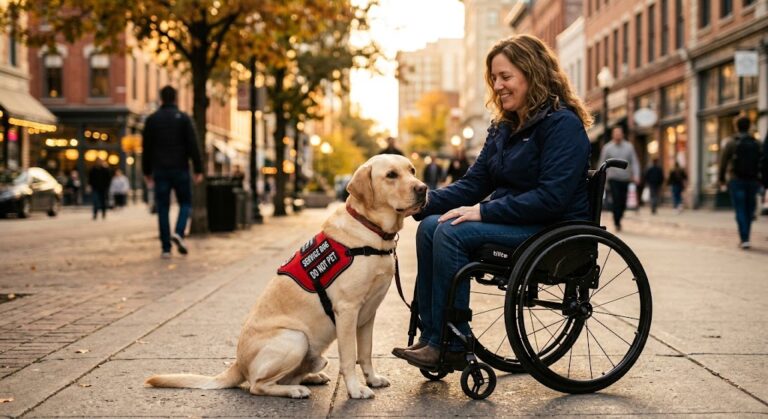
Service dogs are more than pets — they are working partners who guide the blind, alert to seizures, steady a wheelchair, and bring calm to a veteran mid-flashback. The right breed matters. A dog wired for the job learns faster, works longer, and lives a happier life alongside its handler. Below are the ten breeds most consistently chosen by service-dog programs worldwide, why they excel, and where each one fits best.
What Makes a Great Service Dog?
Before diving into the breeds, it helps to know what trainers actually look for. A strong service candidate combines four traits: a stable, unflappable temperament; high biddability (the desire to work with a person); moderate-to-high intelligence paired with a willingness to repeat tasks; and physical soundness suited to the task — a Chihuahua cannot brace a falling adult, and a Great Dane cannot curl under an airplane seat. Reputable programs screen for hips, eyes, heart, and temperament long before formal training begins.
1. Labrador Retriever
If there is a “default” service dog, it is the Labrador. Guide Dogs for the Blind, Canine Companions, and most major programs breed Labs at scale for good reason: they are food-motivated (making training easy), gentle-mouthed (originally bred to retrieve game without damage), athletically capable of mobility work, and socially bombproof around crowds, children, and other dogs.
Best for: Guide work, mobility assistance, medical alert (diabetes, seizure), autism support.
Watch for: Weight gain — a chubby Lab is not a working Lab. Feed to condition, not to appetite.
2. Golden Retriever
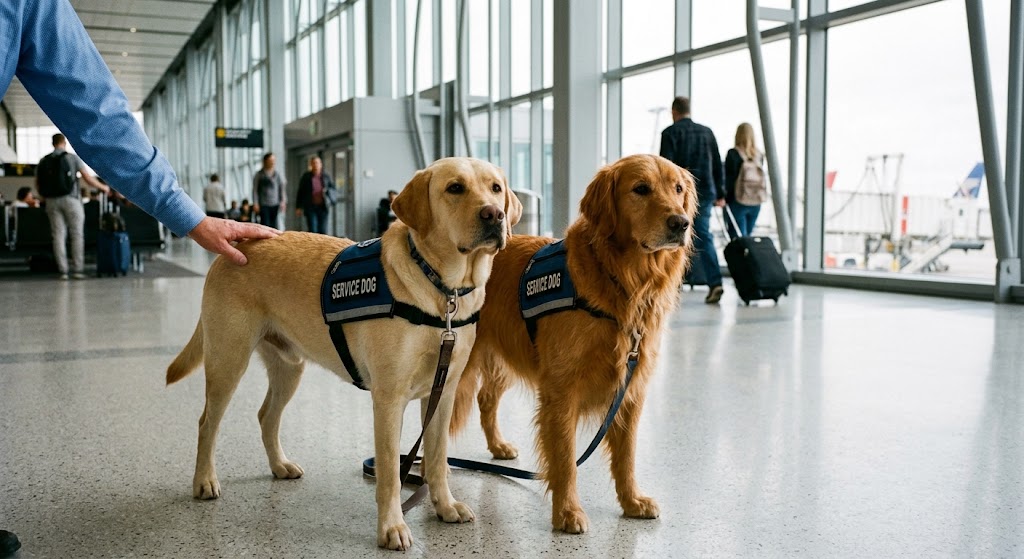
The Golden brings almost every strength of the Lab plus an extra dose of emotional sensitivity. That sensitivity is why Goldens dominate psychiatric service and facility-therapy work: they read human distress quickly and respond with calm, close proximity rather than agitation.
Best for: PTSD support, autism companion work, mobility, guide work, hospital and courthouse therapy.
Watch for: Coat maintenance and a shorter average lifespan than Labs; screen breeders for cancer history.
3. German Shepherd

The original guide dog — the first formal guide programs after WWI used German Shepherds — the breed remains a top choice for handlers who need presence, protection instincts, and serious working drive. GSDs excel where the handler benefits from a dog that notices the environment: mobility handlers navigating unpredictable spaces, veterans with PTSD, and diabetic-alert work.
Best for: Mobility, PTSD, medical alert, hearing assistance.
Watch for: Hip and elbow dysplasia. Insist on OFA-cleared parents. Their working intensity is not a fit for every handler — a low-drive GSD is a happier service dog than an over-driven one.
4. Standard Poodle
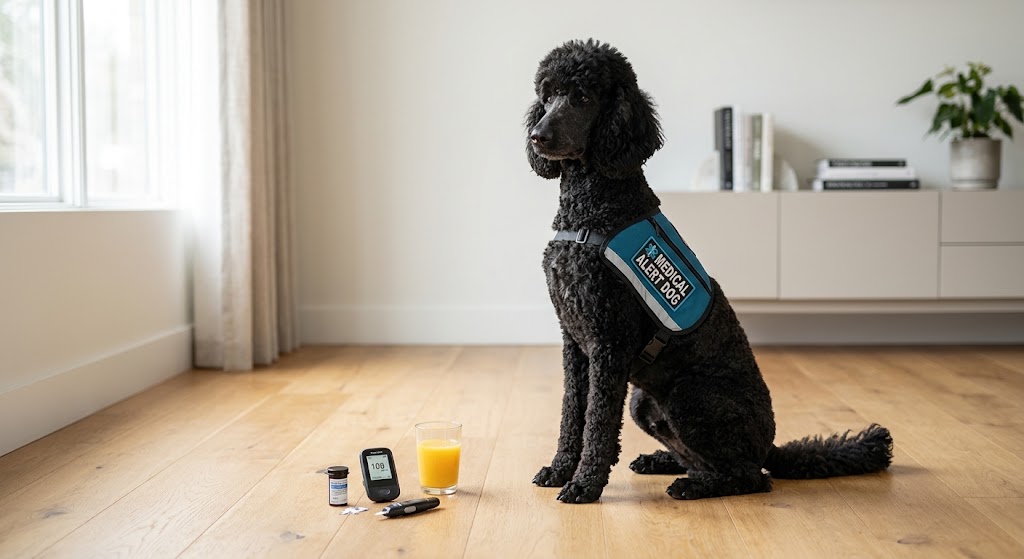 Do not let the show-ring haircut fool you: Standard Poodles are athletic, brilliant, and among the most trainable breeds on Earth. Their curly coat sheds minimally, which makes them a leading choice for handlers with allergies or those in food-service and medical environments where dander is a concern.
Best for: Handlers with allergies, medical alert, mobility (in the larger Standards, 45+ lb), diabetic alert.
Watch for: Boredom. Poodles need a job or they invent one — usually one you will not like.
5. Border Collie
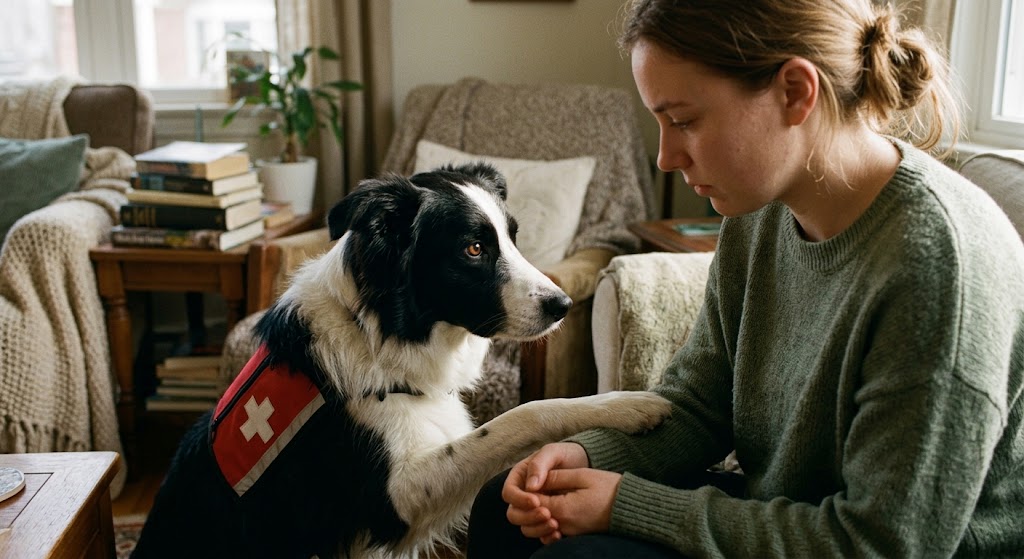 Border Collies are the sports cars of the dog world: fast, precise, and demanding. They shine in medical-alert and psychiatric service roles because they read subtle cues — a shift in breathing, a change in posture — before a person notices it themselves.
Best for: Seizure alert, diabetic alert, psychiatric service for handlers who can meet their exercise and mental-stimulation needs.
Watch for: Under-stimulation. This is not the breed for a sedentary lifestyle. They also can be sound- and motion-sensitive, which requires careful early socialization.
6. Bernese Mountain Dog
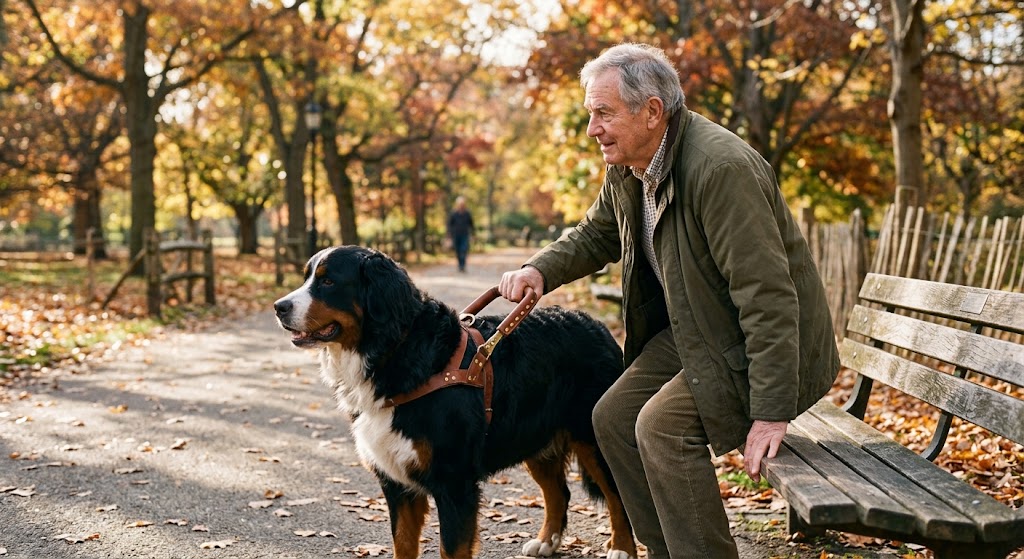
Big, calm, and steady, the Berner is a mobility handler’s dream — provided the dog comes from health-tested lines. Their natural inclination toward slow, deliberate movement and close human contact makes them ideal for wheelchair users and handlers who need counter-balance support.
Best for: Mobility assistance, deep pressure therapy, autism support.
Watch for: Lifespan and heat tolerance. Berners average only 7–9 years and struggle in hot climates. Their size is a strength and a limitation.
7. Boxer
Boxers combine muscle with an almost puppyish devotion to their people. They are used less commonly than Labs or Goldens but shine in psychiatric and mobility work for handlers who want a medium-large, short-coated dog with strong intuition.
Best for: PTSD support, mobility, medical response (bringing meds, phones).
Watch for: Brachycephalic breathing issues in poorly-bred lines. Look for longer-muzzled working lines and cardiac clearances.
8. Great Dane
For a tall handler or someone needing serious bracing and counter-balance work, few breeds match the Great Dane. They are surprisingly gentle, quiet indoors, and calm in public. Their sheer size lets them stabilize an adult during a stand or transfer.
Best for: Mobility and counter-balance for tall or heavier handlers.
Watch for: Short lifespan (7–10 years), bloat risk (feed multiple small meals, no exercise around meals), and the practical realities of housing, feeding, and transporting a 130-lb dog.
9. Portuguese Water Dog
Increasingly popular in service programs, PWDs offer Poodle-like intelligence and low-shedding coats in a slightly sturdier, more athletically driven package. They excel in medical alert and are often chosen by handlers who want a hypoallergenic option smaller than a Standard Poodle.
Best for: Medical alert, hearing assistance, allergy-sensitive handlers.
Watch for: Grooming demands and high exercise needs. Not a “low-maintenance” option despite the modest size.
10. Collie (Rough and Smooth)
The classic “Lassie” breed remains one of the most underrated service dogs in the modern era. Collies are gentle, herding-smart, deeply attuned to their people, and typically less intense than Border Collies — a combination that suits psychiatric service, autism support, and hearing-alert work.
Best for: Hearing assistance, autism support, psychiatric service, children’s programs.
Watch for: The MDR1 gene mutation — insist on tested parents. Coat care for Rough Collies is a real commitment.
Breeds to Approach With Caution
Certain breeds are romanticized as service dogs but rarely succeed at scale. Huskies and Malamutes are independent by design and struggle with the “work with me” demand. Livestock guardians like the Great Pyrenees are bred to make autonomous decisions — the opposite of what service work requires. Small toy breeds can excel at medical alert and psychiatric work but cannot perform mobility tasks. And any breed with known aggression concerns or fear-reactivity should not be pushed into service work, no matter how much the handler loves the individual dog.
Choosing the Right Breed for Your Needs
Start with the task, not the breed. A handler needing wheelchair pull work should look at Labs, Goldens, GSDs, Berners, or Danes. A handler with severe allergies is looking at Poodles or PWDs. A handler with unpredictable seizures benefits from a breed with sharp environmental awareness — Border Collies, GSDs, or Poodles. Then filter by lifestyle: how much dog can you actually exercise, groom, feed, and afford? A perfectly matched Lab from a working line will outperform a mismatched “dream breed” every time.
Finally, go through a reputable program or breeder. Owner-training is legal in many jurisdictions but is a two-to-three-year commitment involving hundreds of hours and thousands of dollars. Established programs like Assistance Dogs International maintain member directories with vetted breeding and training standards.
The Bottom Line
The “best” service dog breed is the one whose temperament, size, energy, and health match the handler’s needs. Labs and Goldens earned their reputation for good reason — they succeed across the widest range of tasks and handlers. But a well-bred Poodle, an intuitive Golden, a steady Berner, or a sharp Border Collie can transform a life just as completely. Choose deliberately, screen for health, invest in training, and you will end up with far more than a pet: a partner.