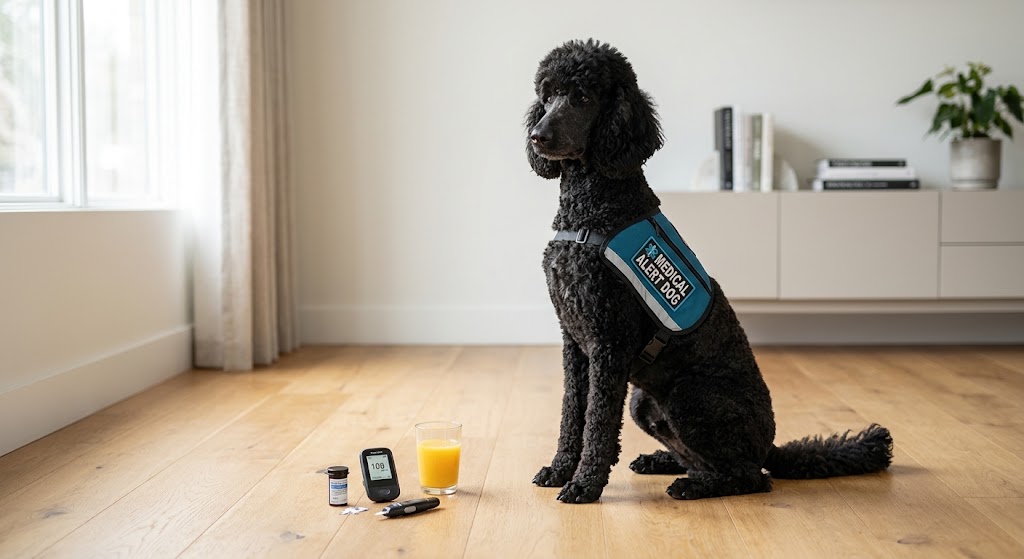
12 Adorable DIY Dog Collar Ideas Your Pup Will Actually Wear

12 Adorable DIY Dog Collar Ideas Your Pup Will Actually Wear

You know that sad little wall of identical nylon collars at the pet store? The ones that all look like they came out of the same lonely factory? Yeah. Your pup deserves better than a boring black strap that clashes with literally everything.

Between the endless dog aisles and the sky-high “designer” boutique prices, finding a collar that actually feels like your dog gets impossible fast. You want something soft, safe, and cute enough to show off on Instagram — without dropping fifty bucks on something they’ll outgrow in three months.

Don’t worry. I’ve got you.

I rounded up twelve gorgeous DIY dog collar projects that anyone can pull off with a rainy Sunday and a trip to the craft aisle. Grab your coffee. Let’s make something your pup will actually love wearing.

#1: The Classic Braided Paracord Collar
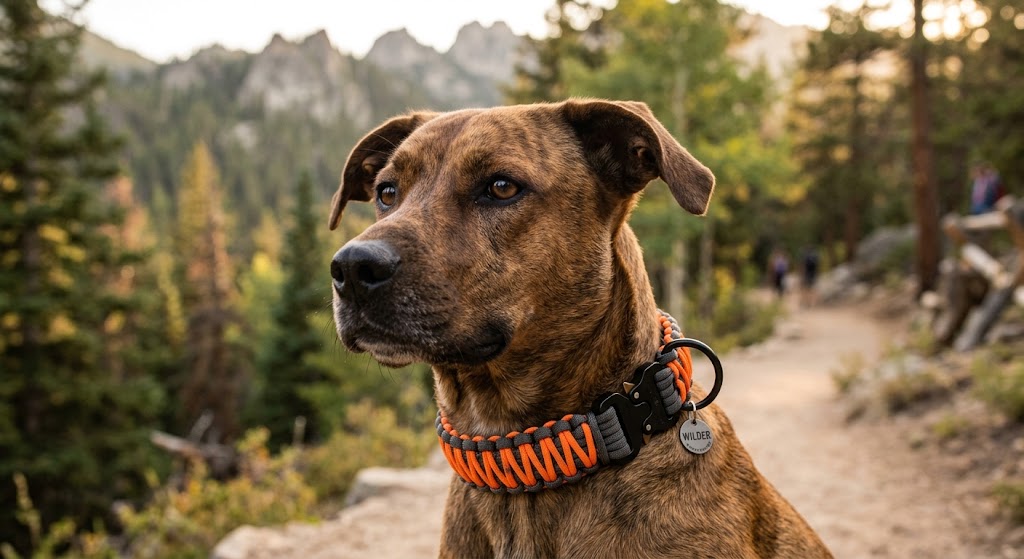
ParacordThis one project alone will make you feel like a full-blown craft wizard.

Paracord is basically the workhorse of the DIY world — tough, water-resistant, and comes in every color combo you can dream of. This collar uses a cobra weave in charcoal grey and safety orange, giving off a rugged outdoor vibe that pairs perfectly with hiking days and muddy park romps.

All you need is about 10 feet of 550 paracord, a matching plastic side-release buckle, and a lighter to seal the ends. It sits flat against the neck, holds up to serious wear, and honestly looks way more expensive than the $8 in materials suggests.

Pro Tip: Always attach the leash to a separate flat collar or harness — paracord is for style and ID tags, not for pulling.

#2: Boho Macramé Collar With Wooden Beads
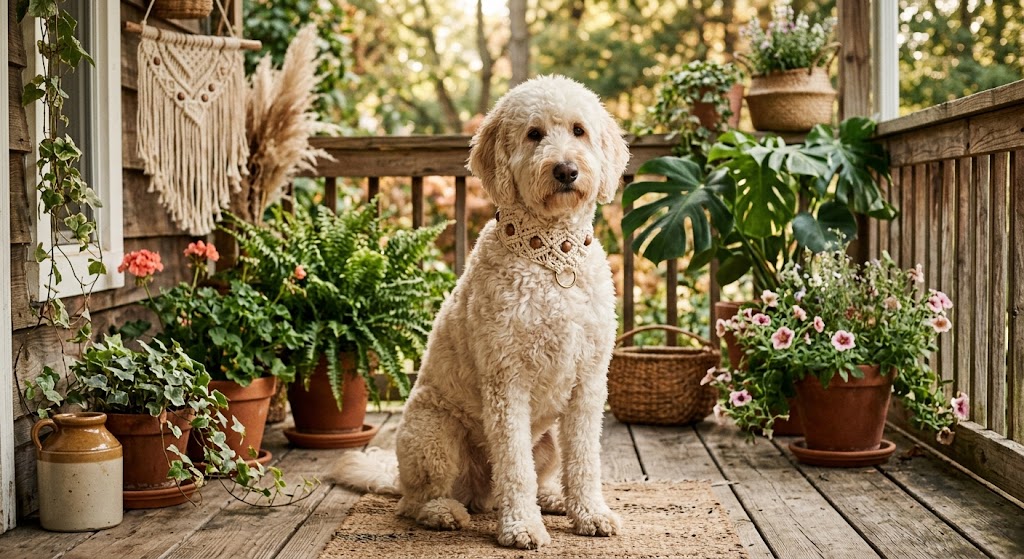
Boho Macramé Collar With Wooden BeadsEver wish your pup’s accessories matched your Pinterest-worthy living room? Same, girl.

This macramé collar uses natural cream cotton cord knotted in a simple half-hitch pattern, punctuated with warm walnut wooden beads and a chunky brass D-ring. It gives off major earthy cottagecore vibes without feeling stiff or scratchy against fur.

Best of all, you can size it to your pup exactly and swap the bead colors anytime you get bored. My friend made one for her golden and it’s the only collar the dog hasn’t tried to shake off within five minutes.

#3: Upcycled Necktie Bow Collar

Upcycled Necktie Bow CollarGot a thrift store nearby? Then you’ve got the raw material for the cutest gentleman collar on the block.

Grab a silk or satin men’s necktie in a fun pattern — think navy paisley, burgundy plaid, or forest green herringbone — and fold it into a slip-on bow that clips right over an existing flat collar. Total cost: about two dollars. Total effort: fifteen minutes with a hot glue gun.

It’s the perfect move for weddings, holiday photos, or just Tuesday when your pup deserves to look sharp.

Pro Tip: Stick with real silk over polyester — it drapes softer and photographs way better in natural light.

#4: No-Sew Fleece Braided Collar

Can’t sew? Don’t own a glue gun? Doesn’t matter.

This no-sew fleece collar takes three strips of soft fleece in complementary colors — I love dusty pink, mustard, and cream together — braided tight and knotted around a metal ring. It’s wildly soft against the neck, warm in winter, and honestly looks boutique-tier for something you made during a Netflix binge.

Perfect for puppies with sensitive skin who react to nylon or leather.

#5: Custom Embroidered Canvas Collar

Nothing beats a collar with your dog’s actual name stitched right on it.

Grab a plain canvas or cotton webbing collar in oatmeal or forest green, thread a needle with contrasting embroidery floss, and stitch your pup’s name in a simple backstitch or chain stitch. Even beginners can pull this off in an afternoon.

Add tiny embroidered daisies, hearts, or a little bone motif at each end and you’ve just made a personalized piece that would cost forty bucks on Etsy.

#6: Bandana-Style Slip Collar

The bandana collar is that classic country-dog look, but sewn as an actual collar so it never slides off crooked mid-walk.

Cut a triangle of your favorite cotton print — gingham, ditsy floral, or cowboy paisley — sew a channel along the top, and thread it onto a plain flat collar. The result: your pup looks like they just walked out of a farmhouse Instagram feed, and the bandana stays put no matter how much they shake.

Bonus: it’s machine-washable, so muddy adventures don’t ruin the aesthetic.

#7: Leather Cord and Copper Ring Collar

Want something that ages beautifully? Leather is your friend.

This minimalist design uses a single strand of vegetable-tanned leather cord hand-punched to fit, sealed with a raw hammered copper ring that patinas gorgeously over time. It feels weighty and substantial without being heavy, and the leather softens with wear until it fits like a second skin.

Best on medium and large dogs — the aesthetic really lands on a big goofy lab or a stately shepherd.

Pro Tip: Condition the leather with a drop of beeswax salve every few months to keep it supple and water-resistant.

#8: Reversible Fabric Bowtie Collar

Two collars in one? Yes please.

This project sandwiches two coordinating fabrics — say, a busy floral on one side and a solid navy on the other — around a strip of interfacing, with a matching removable bowtie snapped on with velcro. Flip it around depending on the day’s outfit or mood.

Slightly more sewing-heavy than the others, but if you’ve got a machine and thirty minutes, you’re set. The bowtie snaps off for washdays or when your pup needs to look serious.

#9: Beaded Turquoise Southwestern Collar

Feeling a little more Sedona than suburbia? This one’s calling your name.

String small turquoise, cream, and terracotta glass beads onto a strong nylon-coated wire, alternating with tiny silver spacer beads for that authentic Southwestern feel. Finish with a lobster clasp and a hammered pendant charm for a boho statement piece.

Best kept for photo shoots and short outings — beaded collars aren’t built for tug-and-pull play, but they photograph like a dream.

#10: Reflective Safety Collar (Actually Cute Edition)

Safety doesn’t have to look like a construction cone.

Take a plain flat collar in a bold color — cherry red, deep teal, or hot pink — and stitch or glue a strip of high-visibility reflective ribbon straight down the middle. Add a small brass name tag with your phone number etched in, and you’ve got a collar that keeps your pup visible on early morning walks without looking like leftover trail gear.

Pro Tip: Test the reflective strip with a phone flashlight in a dark room before you commit — not all ribbon labeled “reflective” actually is.

#11: Floral Crown Collar for Special Occasions

Okay, this one is pure extra. And I love it.

Build a base collar out of a simple ribbon or fabric strip, then hot-glue small silk flowers — peonies, daisies, baby’s breath, and eucalyptus sprigs — all along the top edge. It looks absolutely magical in wedding photos, birthday shoots, or spring garden portraits.

Store it flat between uses to keep the flowers from crushing, and swap in seasonal blooms for holidays.

#12: The Chunky Chain Link Statement Collar

Ever thought your pup could pull off streetwear chic? This is the one.

Take a lightweight aluminum or gold-tone chain in a chunky link style (the kind sold as belt hardware works perfectly), fit it to your pup’s neck with a quick-release clasp, and add a heavy engraved dog tag as the pendant.

It reads part hip-hop icon, part high-fashion runway, and gets stopped at the park by every stranger who wants to ask where you bought it. Answer: you didn’t. You made it.

Pro Tip: Skip real metal chains and use lightweight aluminum — heavier options put strain on your dog’s neck over time.

Level Up Your DIY Dog Collar Game

Listen, making a dog collar isn’t just cute craft time — it’s a small design project that has to actually hold up on a live, moving, occasionally chaotic animal. Most first-timers make the same rookie mistakes. Skip the fluffy yarn, skip the button closures, and please, please skip anything sharp.

Here’s the golden rule: always start with a hardware backbone. That means a real quick-release buckle or D-ring rated for your dog’s pull weight, not a decorative clasp from the jewelry aisle. Your beautiful macramé or leather braid wraps around that backbone, giving you all the aesthetic with none of the “my dog just Houdini’d out of their collar at the dog park” drama.

Second rule: measure twice, cut once. A collar should fit with exactly two fingers of space between the strap and the neck. Too tight, and you risk irritation; too loose, and a determined pup will back right out of it.

Third: reserve decorative collars for supervised time. Beaded, floral, and delicate handmade collars are for walks, photos, and coffee-shop patios — not for solo backyard time where they can snag on a fence or a stick.

Time to Get Crafting

Making a handmade dog collar is such a satisfying way to spoil your furry best friend. You get a piece nobody else at the dog park has, you get to control the fit and safety, and you get bragging rights when strangers ask where you found it.

All you need is a free afternoon, a few dollars of materials, and a pup willing to sit still for the fitting session (bribe with treats accordingly).

While you’re in DIY mode, don’t forget to check out our best service dog breeds guide to learn which breeds thrive on hands-on care and creative enrichment like this.

Which one of these designs are you casting on first?

Best Service Dog Breeds

Best Service Dog Breeds: 10 Loyal Companions Who Change Lives

Service dogs are more than pets — they are working partners who guide the blind, alert to seizures, steady a wheelchair, and bring calm to a veteran mid-flashback. The right breed matters. A dog wired for the job learns faster, works longer, and lives a happier life alongside its handler. Below are the ten breeds most consistently chosen by service-dog programs worldwide, why they excel, and where each one fits best.

What Makes a Great Service Dog?

Before diving into the breeds, it helps to know what trainers actually look for. A strong service candidate combines four traits: a stable, unflappable temperament; high biddability (the desire to work with a person); moderate-to-high intelligence paired with a willingness to repeat tasks; and physical soundness suited to the task — a Chihuahua cannot brace a falling adult, and a Great Dane cannot curl under an airplane seat. Reputable programs screen for hips, eyes, heart, and temperament long before formal training begins.

1. Labrador Retriever


If there is a “default” service dog, it is the Labrador. Guide Dogs for the Blind, Canine Companions, and most major programs breed Labs at scale for good reason: they are food-motivated (making training easy), gentle-mouthed (originally bred to retrieve game without damage), athletically capable of mobility work, and socially bombproof around crowds, children, and other dogs.

Best for: Guide work, mobility assistance, medical alert (diabetes, seizure), autism support.
Watch for: Weight gain — a chubby Lab is not a working Lab. Feed to condition, not to appetite.

2. Golden Retriever

Golden Retriever

The Golden brings almost every strength of the Lab plus an extra dose of emotional sensitivity. That sensitivity is why Goldens dominate psychiatric service and facility-therapy work: they read human distress quickly and respond with calm, close proximity rather than agitation.

Best for: PTSD support, autism companion work, mobility, guide work, hospital and courthouse therapy.
Watch for: Coat maintenance and a shorter average lifespan than Labs; screen breeders for cancer history.

3. German Shepherd

How Much Does a German Shepherd Cost

The original guide dog — the first formal guide programs after WWI used German Shepherds — the breed remains a top choice for handlers who need presence, protection instincts, and serious working drive. GSDs excel where the handler benefits from a dog that notices the environment: mobility handlers navigating unpredictable spaces, veterans with PTSD, and diabetic-alert work.

Best for: Mobility, PTSD, medical alert, hearing assistance.
Watch for: Hip and elbow dysplasia. Insist on OFA-cleared parents. Their working intensity is not a fit for every handler — a low-drive GSD is a happier service dog than an over-driven one.

4. Standard Poodle

Do not let the show-ring haircut fool you: Standard Poodles are athletic, brilliant, and among the most trainable breeds on Earth. Their curly coat sheds minimally, which makes them a leading choice for handlers with allergies or those in food-service and medical environments where dander is a concern.
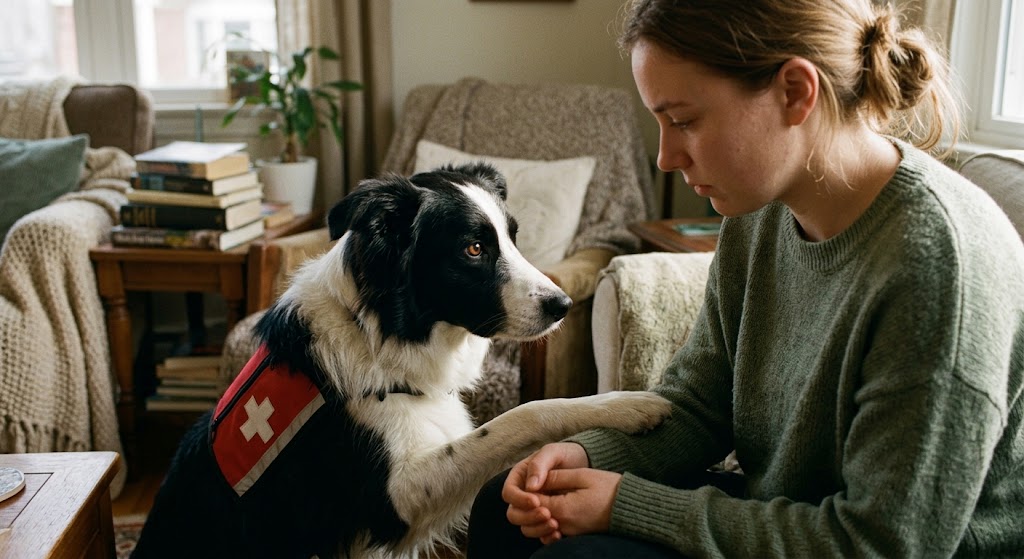
Best for: Handlers with allergies, medical alert, mobility (in the larger Standards, 45+ lb), diabetic alert.
Watch for: Boredom. Poodles need a job or they invent one — usually one you will not like.

5. Border Collie

Border Collies are the sports cars of the dog world: fast, precise, and demanding. They shine in medical-alert and psychiatric service roles because they read subtle cues — a shift in breathing, a change in posture — before a person notices it themselves.
Best for: Seizure alert, diabetic alert, psychiatric service for handlers who can meet their exercise and mental-stimulation needs.
Watch for: Under-stimulation. This is not the breed for a sedentary lifestyle. They also can be sound- and motion-sensitive, which requires careful early socialization.

6. Bernese Mountain Dog

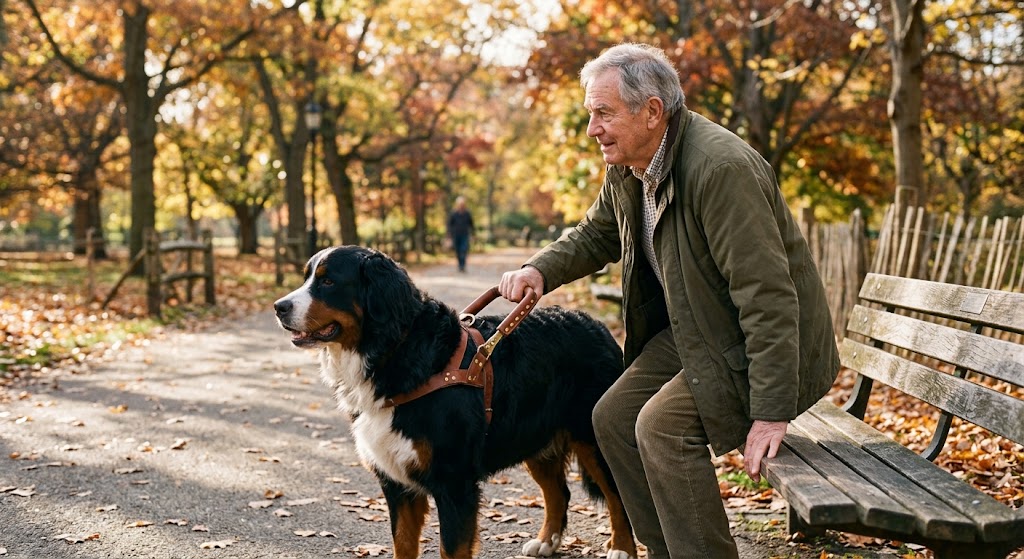
Big, calm, and steady, the Berner is a mobility handler’s dream — provided the dog comes from health-tested lines. Their natural inclination toward slow, deliberate movement and close human contact makes them ideal for wheelchair users and handlers who need counter-balance support.

Best for: Mobility assistance, deep pressure therapy, autism support.
Watch for: Lifespan and heat tolerance. Berners average only 7–9 years and struggle in hot climates. Their size is a strength and a limitation.

7. Boxer

Boxers combine muscle with an almost puppyish devotion to their people. They are used less commonly than Labs or Goldens but shine in psychiatric and mobility work for handlers who want a medium-large, short-coated dog with strong intuition.

Best for: PTSD support, mobility, medical response (bringing meds, phones).
Watch for: Brachycephalic breathing issues in poorly-bred lines. Look for longer-muzzled working lines and cardiac clearances.

8. Great Dane

For a tall handler or someone needing serious bracing and counter-balance work, few breeds match the Great Dane. They are surprisingly gentle, quiet indoors, and calm in public. Their sheer size lets them stabilize an adult during a stand or transfer.

Best for: Mobility and counter-balance for tall or heavier handlers.
Watch for: Short lifespan (7–10 years), bloat risk (feed multiple small meals, no exercise around meals), and the practical realities of housing, feeding, and transporting a 130-lb dog.

9. Portuguese Water Dog

Increasingly popular in service programs, PWDs offer Poodle-like intelligence and low-shedding coats in a slightly sturdier, more athletically driven package. They excel in medical alert and are often chosen by handlers who want a hypoallergenic option smaller than a Standard Poodle.

Best for: Medical alert, hearing assistance, allergy-sensitive handlers.
Watch for: Grooming demands and high exercise needs. Not a “low-maintenance” option despite the modest size.

10. Collie (Rough and Smooth)

The classic “Lassie” breed remains one of the most underrated service dogs in the modern era. Collies are gentle, herding-smart, deeply attuned to their people, and typically less intense than Border Collies — a combination that suits psychiatric service, autism support, and hearing-alert work.

Best for: Hearing assistance, autism support, psychiatric service, children’s programs.
Watch for: The MDR1 gene mutation — insist on tested parents. Coat care for Rough Collies is a real commitment.

Breeds to Approach With Caution

Certain breeds are romanticized as service dogs but rarely succeed at scale. Huskies and Malamutes are independent by design and struggle with the “work with me” demand. Livestock guardians like the Great Pyrenees are bred to make autonomous decisions — the opposite of what service work requires. Small toy breeds can excel at medical alert and psychiatric work but cannot perform mobility tasks. And any breed with known aggression concerns or fear-reactivity should not be pushed into service work, no matter how much the handler loves the individual dog.

Choosing the Right Breed for Your Needs

Start with the task, not the breed. A handler needing wheelchair pull work should look at Labs, Goldens, GSDs, Berners, or Danes. A handler with severe allergies is looking at Poodles or PWDs. A handler with unpredictable seizures benefits from a breed with sharp environmental awareness — Border Collies, GSDs, or Poodles. Then filter by lifestyle: how much dog can you actually exercise, groom, feed, and afford? A perfectly matched Lab from a working line will outperform a mismatched “dream breed” every time.

Finally, go through a reputable program or breeder. Owner-training is legal in many jurisdictions but is a two-to-three-year commitment involving hundreds of hours and thousands of dollars. Established programs like Assistance Dogs International maintain member directories with vetted breeding and training standards.

The Bottom Line

The “best” service dog breed is the one whose temperament, size, energy, and health match the handler’s needs. Labs and Goldens earned their reputation for good reason — they succeed across the widest range of tasks and handlers. But a well-bred Poodle, an intuitive Golden, a steady Berner, or a sharp Border Collie can transform a life just as completely. Choose deliberately, screen for health, invest in training, and you will end up with far more than a pet: a partner.

Puppy Training: Complete First 12 Weeks Guide

Why Early Training Matters

The first 12 weeks of a puppy’s life are critical for development. During this period, puppies are most receptive to learning and developing positive behaviors. Early training sets the foundation for a well-behaved adult dog.

Puppy Development Stages

Weeks 1-4: Neonatal Period

Puppies are entirely dependent on their mother. They’re learning bite inhibition and social skills through play and interaction with littermates. Keep them in a calm, quiet environment.

Weeks 4-12: Socialization Period

This is the critical socialization window. Puppies learn to interact with people, other animals, and their environment. Early positive experiences prevent behavioral problems later.

Weeks 12+: Juvenile Stage

Puppies become more independent. They’re ready to learn commands and establish boundaries. Training becomes more formal.

Essential Training Goals (Weeks 1-12)

1. Housetraining

Start immediately. Take puppies outside:

  • First thing in the morning
  • After eating (within 15-30 minutes)
  • After playing
  • Before bedtime
  • Every 2-3 hours during the day

Accidents happen! Never punish accidents. Simply clean up and continue the schedule. Positive reinforcement works best.

2. Bite Inhibition

Puppies learn bite control through play. Encourage play with littermates if possible. When playing with your puppy:

  • Yelp loudly if they bite too hard
  • Stop play immediately
  • Wait 30 seconds, then resume
  • This teaches that hard bites end fun

3. Socialization

Expose your puppy to:

  • Different people (children, adults, elderly)
  • Other dogs and pets
  • Various environments (parks, streets, stores)
  • Different sounds (traffic, vacuum, doorbell)
  • Different surfaces (grass, pavement, carpet)

Important: Wait until 12-16 weeks for full vaccination before visiting public areas. Always supervise interactions closely.

4. Basic Commands

Start with simple commands:

  • “Sit”: Easiest command. Hold treat above nose, lure head up. Say “Sit” as bottom touches ground. Reward immediately.
  • “Come”: Essential for safety. Use excited, positive tone. Reward generously when puppy comes.
  • “Stay”: Wait until puppy masters “Sit” first. Start with 2-3 seconds, gradually increase.
  • “Down”: More challenging. From “Sit”, lure treat to floor. Reward when elbows touch down.

5. Crate Training

A crate is a safe space and aids housetraining:

  • Make it comfortable with blankets and toys
  • Leave door open initially
  • Toss treats inside to create positive association
  • Never use crate as punishment
  • Gradually extend time inside

6. Leash Training

Get your puppy comfortable with collar/harness and leash:

  • Let them wear collar indoors for short periods
  • Attach leash and let them drag it around (supervised)
  • Practice walking indoors first
  • Reward for walking near you

Training Principles for Success

Positive Reinforcement Works Best

Reward desired behaviors immediately with:

  • High-value treats (small pieces work best)
  • Enthusiastic praise
  • Play and attention
  • Vary rewards to maintain interest

Keep Sessions Short

Puppies have short attention spans. Train for 5-10 minutes at a time, multiple times daily. Multiple short sessions beat one long session.

Be Consistent

Everyone in the household must use the same commands and rules. Inconsistency confuses puppies.

Practice Patience

Puppies make mistakes. Never yell or physically punish – this creates fear and behavioral problems. Stay calm and redirect to appropriate behavior.

Remove Temptations

Don’t leave valuable items, shoes, or dangerous objects where puppies can access them. Puppy-proof your home thoroughly.

Common Puppy Behaviors

Biting and Nipping

Normal puppy behavior. Redirect to toys. Provide appropriate chew toys. Never play rough with hands.

Jumping

Don’t reward jumping with attention. Ignore jumping behavior. Reward calm, four-paw contact.

Barking

Normal communication. Ignore excessive barking (don’t yell, which they may see as joining in). Redirect to toys or commands.

Chewing

Completely normal. Provide appropriate chew toys. Rotate toys to maintain interest. Never leave unsupervised without safe toys.

Week-by-Week Training Schedule

Weeks 1-4

  • Establish feeding schedule
  • Begin housetraining
  • Start crate training
  • Let puppy explore home safely

Weeks 5-8

  • Continue housetraining
  • Introduce collar and leash (gentle familiarization)
  • Begin basic socialization at home
  • Start bite inhibition training

Weeks 9-12

  • Introduce basic commands (sit, come)
  • Increase socialization activities
  • Work on leash walking
  • Continue crate training
  • Reinforce housetraining

When to Seek Professional Help

  • Excessive fearfulness or aggression
  • Difficulty with housetraining after 4 months
  • Severe separation anxiety
  • Any behavior you’re unsure how to address

Professional trainers can provide personalized guidance and address specific behavioral challenges.

Key Takeaways

  • The first 12 weeks are critical for development
  • Consistency and patience are essential
  • Positive reinforcement is the most effective approach
  • Socialization prevents behavioral problems
  • Short, frequent training sessions work best
  • Never use punishment-based methods
  • Consult a vet if you have health concerns

Remember: Every puppy develops at their own pace. Celebrate small wins and be patient with setbacks. A well-trained puppy grows into a well-behaved, happy adult dog!

Best Dog Training Books, Articles, & Courses

Quick answer: The best dog training resources in 2026 combine science-based, positive-reinforcement methods with structured, repeatable plans. For books, start with Don’t Shoot the Dog by Karen Pryor and The Culture Clash by Jean Donaldson. For courses, Dr. Ian Dunbar’s puppy programs and SpiritDog Training rank highest for everyday owners. For free articles, the Whole Dog Journal and the American Kennel Club (AKC) library are the most reliable starting points. Whether you just brought home an eight-week-old puppy or you’re untangling years of leash reactivity, the right resource can be the difference between frustration and a calm, well-mannered dog. This guide breaks down the best dog training books, articles, and courses available right now — organized by skill level, goal, and budget — so you can pick what actually fits your situation. Every recommendation here favors humane, evidence-based training (positive reinforcement and LIMA: Least Intrusive, Minimally Aversive). That’s the approach endorsed by veterinary behavior organizations and the one most likely to produce lasting results without damaging your relationship with your dog.


How We Chose These Resources

Not every popular dog training resource is a good one. The titles and programs below were selected against four criteria that professional trainers use:

  • Evidence-based and humane — methods grounded in learning science (operant and classical conditioning), using positive reinforcement rather than fear, pain, or intimidation.
  • Actionable — clear step-by-step plans, weekly schedules, and troubleshooting notes, not just theory.
  • Stage-appropriate — content matched to your dog’s age and your experience level, from puppy basics to advanced behavior modification.
  • Teaches observation — helps you read your dog and measure progress, rather than telling you to simply “try harder.”

Best Dog Training Books

Books give you structured, repeatable guidance you can return to anytime — something videos and one-off classes rarely match. Here are the best dog training books, grouped by purpose.

Best for Understanding How Dogs Learn

1. Don’t Shoot the Dog — Karen Pryor A timeless classic and arguably the most influential book on the principles of training. Pryor explains positive reinforcement and behavioral science in plain language that applies far beyond dogs. If you read only one book to understand the “why” behind training, make it this one. 2. The Culture Clash — Jean Donaldson A foundational text that exposes the gap between how humans think dogs see the world and how dogs actually experience it. Donaldson dismantles common myths (like dominance theory) and replaces them with a science-backed framework. Widely assigned in professional trainer programs. 3. The Other End of the Leash — Patricia McConnell Written by an applied animal behaviorist, this book focuses on the human–dog communication gap — how our primate body language often confuses our dogs. Engaging, story-driven, and genuinely practical.

Best for New Owners and Puppies

4. Zak George’s Dog Training Revolution — Zak George Plain-English foundations for first-time owners: house training, socialization, basic manners, and the common mistakes to avoid. Pairs naturally with George’s free YouTube videos. 5. The Power of Positive Dog Training — Pat Miller A practical, beginner-friendly program built entirely on positive reinforcement. Miller (a longtime Whole Dog Journal contributor) offers a clear week-by-week training structure that’s easy to follow.

Best for Behavior Problems (Reactivity, Fear, Aggression)

6. Behavior Adjustment Training 2.0 — Grisha Stewart The go-to resource for fear, frustration, and reactivity. Stewart’s BAT protocol teaches dogs to make better choices using force-free techniques. Best for owners actively managing a reactive or anxious dog. 7. Control Unleashed — Leslie McDevitt Excellent for shy, reactive, easily distracted, or high-energy dogs. Focuses on building focus, impulse control, and confidence — popular among sport-dog handlers too.

Best for Going Deeper

8. Meet Your Dog — Kim Brophey Introduces the L.E.G.S. model (Learning, Environment, Genetics, Self) to explain why your individual dog behaves the way it does. A game-changer for understanding breed-driven behavior.

Trainer tip: Read in this order — one “how dogs learn” book, then one matched to your current challenge. Reading three behavior books before you’ve mastered the fundamentals usually slows progress rather than speeding it up.


Best Dog Training Articles & Free Resources

If you’re not ready to buy a book, these free, reputable sources publish trainer-quality articles. Stick to organizations with editorial oversight and credentialed contributors — the dog training space is full of confident but unqualified advice.

  • American Kennel Club (AKC) — akc.org — Breed-specific guides, puppy timelines, and obedience how-tos. Broad, beginner-friendly, and well-maintained.
  • Whole Dog Journal — whole-dog-journal.com — Ad-free, science-leaning articles on training and behavior from professional contributors. One of the most trusted independent sources.
  • Karen Pryor Clicker Training — clickertraining.com — Deep library on clicker and marker training, straight from the people who popularized it.
  • Fear Free Happy Homes — fearfreehappyhomes.com — Focused on low-stress, fear-free handling for vet visits, grooming, and everyday life.
  • The Academy / certified-trainer blogs — Many CPDT-KA and CCPDT-certified trainers publish free, in-depth articles. Look for stated credentials.

How to vet a free article in 10 seconds: Check whether the author lists a recognized credential (CPDT-KA, KPA-CTP, CDBC, or a veterinary behaviorist DACVB), and whether the methods described are positive-reinforcement-based. If an article leads with “dominance,” “alpha,” or quick-fix punishment tools, treat it with skepticism.


Best Online Dog Training Courses

Courses add what books can’t: video demonstrations, structured pacing, and (often) feedback from a real trainer. Here are the best online dog training courses in 2026 across budgets.

Best Overall for Puppies

Dr. Ian Dunbar’s Puppy & Dog Training Programs Dunbar, a veterinarian and behavior pioneer, offers science-based courses covering puppy training, socialization, and practical obedience. His programs (often bundled with videos, books, and behavior blueprints) are widely considered the gold standard for foundational training.

Best for Targeted Problem-Solving

SpiritDog Training The platform to choose when you don’t need to start over — you just need a specific problem (leash pulling, recall, reactivity) handled properly. Self-paced, affordable, and well-structured, with bundles for common issues.

Best with Live Trainer Support

Peach on a Leash Strictly LIMA-based (no e-collars, prong, or choke collars). Offers self-paced courses plus personalized programs with certified trainers and a student community. Their Certified Separation Anxiety Trainer program is a standout for that specific issue. Note: no money-back guarantee, and they’re transparent about not promising specific outcomes.

Best on a Budget

Udemy — Science-Based Dog Training (Ian Dunbar) & similar courses Frequently discounted, lifetime access, and beginner-friendly. Quality varies by instructor, so prioritize courses taught by credentialed trainers with strong reviews.

Best for Aspiring Professional Trainers

Karen Pryor Academy (KPA) & The Academy of Pet Careers (APC) For those pursuing a career in dog training. KPA offers respected professional certification online; APC offers self-paced online and in-person programs with hands-on requirements and job-placement support. Professional programs are a significant investment — typically several thousand dollars — but lead to recognized credentials.

What to look for in any course: a refund or money-back window (90 days is the longest commonly offered), explicit positive-reinforcement methodology, and access to a real trainer for questions.


Books vs. Articles vs. Courses: Which Should You Choose?

Resource Best For Cost Trainer Feedback?
Books Deep understanding, repeatable reference $ (low) No
Free articles Quick answers, specific how-tos Free No
Self-paced courses Structured plans + video demos $$ (medium) Sometimes
Live/coached courses Accountability, custom feedback $$$ (higher) Yes
Pro certification Becoming a working trainer $$$$ (highest) Yes

The most effective approach for most owners: pair one foundational book (to understand the principles) with one course (for video demos and a structured plan), and use free articles to troubleshoot specific moments along the way.


Frequently Asked Questions

What is the best dog training book for beginners? For total beginners, Zak George’s Dog Training Revolution and The Power of Positive Dog Training by Pat Miller are the most approachable. Both use positive reinforcement and walk you through house training, socialization, and basic obedience step by step. Are online dog training courses worth it? Yes — for most owners, a structured online course is worth it because it adds video demonstrations and a clear plan that books alone can’t provide. Courses with live trainer feedback (like Peach on a Leash) are especially valuable for behavior problems. Look for a money-back guarantee and positive-reinforcement methods. What dog training method do experts actually recommend? Veterinary behavior experts recommend positive reinforcement and the LIMA framework (Least Intrusive, Minimally Aversive). This means rewarding desired behavior rather than punishing unwanted behavior, which research links to better long-term results and a stronger human–dog bond. Can I train my dog using only free articles? You can teach basics like sit, stay, and house training using free articles from reputable sources like the AKC or Whole Dog Journal. However, for complex issues such as reactivity, aggression, or separation anxiety, a structured book or course — or a one-on-one certified trainer — produces far better results. How long does it take to train a dog? Basic obedience (sit, stay, recall, loose-leash walking) typically takes a few weeks to a few months of consistent daily practice. Behavior modification for issues like reactivity or anxiety often takes several months and benefits from professional guidance. Consistency matters more than session length — short, frequent sessions outperform occasional long ones. What credentials should a dog trainer or author have? Look for CPDT-KA or CPDT-KSA (Certification Council for Professional Dog Trainers), KPA-CTP (Karen Pryor Academy), CDBC (Certified Dog Behavior Consultant), or DACVB (a board-certified veterinary behaviorist). These indicate vetted, science-based expertise.


The Bottom Line

The best dog training resources share three things: humane positive-reinforcement methods, clear and actionable plans, and a focus on teaching you to understand your dog. Start with one foundational book like Don’t Shoot the Dog or The Culture Clash, add a structured course such as Dr. Ian Dunbar’s programs or SpiritDog Training, and lean on trusted free articles from the AKC and Whole Dog Journal to fill the gaps. Pick the format that matches how you actually learn and how much support you need — then commit to short, consistent sessions. That combination, more than any single book or course, is what produces a happy, well-trained dog.

Pet Boarding, Dog Daycare, Cat Boarding – Best Pet Services

Suspendisse quis luctus lorem, id euismod eros. Quisque ultrices posuere ex vitae tincidunt. Aliquam erat volutpat. Fusce aliquet lectus vel lorem lobortis, ac rhoncus nisl sagittis. Mauris egestas lobortis justo quis ullamcorper. Aenean ornare, arcu ut ultricies maximus, purus dui rhoncus leo, et congue mauris purus sed purus. Suspendisse potenti. Donec ac malesuada ante, ut iaculis augue.

Cras purus velit, sagittis quis vehicula in, lobortis at mi. Ut sit amet purus neque. Donec at scelerisque libero, et tempus nulla. Nullam sagittis hendrerit lacus, vitae viverra lectus maximus ut. Sed ac tristique tellus, nec congue quam. Sed sollicitudin tellus justo, a vehicula magna pharetra sit amet. Curabitur lacinia, elit ac suscipit rutrum, leo lorem vehicula ipsum, eget cursus erat lacus ac leo. Morbi vestibulum ultricies odio vitae condimentum. Ut tristique, elit sit amet dictum aliquet, justo ex ullamcorper lacus, quis vestibulum felis lectus a libero. Morbi pretium quis nulla vitae pellentesque.

Cras interdum hendrerit orci vel aliquam. Sed ut elementum eros. Aliquam erat volutpat. Morbi vehicula interdum justo ac mollis. Mauris suscipit erat egestas, hendrerit nisi non, volutpat nisl. Vivamus rhoncus ante et ex eleifend, ut cursus eros dictum. Sed velit justo, egestas quis egestas in, ullamcorper non sapien. Morbi convallis risus ex, id luctus metus placerat at. Praesent ultrices erat ipsum, sed ornare sem scelerisque sit amet. Pellentesque egestas, purus nec consectetur scelerisque, lectus est viverra mauris, a egestas felis ipsum vitae lorem. Maecenas vel cursus eros. In eu finibus eros. Morbi nec nulla nisi. Sed ac eros quis lacus consequat consequat. Cras placerat fermentum cursus. Integer non est massa.

Praesent iaculis nisl at eros pharetra volutpat ac id nisi. Suspendisse bibendum urna purus, in porta odio aliquam quis. Suspendisse est lacus, iaculis pretium varius eu, tempus at libero. Suspendisse potenti. In eget nunc luctus, faucibus erat vel, vestibulum urna. Sed id sem magna. Lorem ipsum dolor sit amet, consectetur adipiscing elit. Fusce id lectus vel sem viverra semper eget nec ligula. Mauris eu iaculis diam. Pellentesque ut neque eget elit venenatis tristique. Aliquam non semper quam, id tempus enim. Pellentesque quis dolor posuere, bibendum nisi at, imperdiet arcu.

Sed nec auctor nibh. Aliquam in arcu ligula. Quisque vestibulum mattis malesuada. Vivamus ut dui aliquam, semper turpis eget, mollis risus. Donec dictum ex lorem, nec accumsan nibh euismod eu. Sed non posuere nunc. Nullam velit odio, cursus nec mauris non, viverra sagittis magna.

Best Pet Trainers In Your Area

Suspendisse quis luctus lorem, id euismod eros. Quisque ultrices posuere ex vitae tincidunt. Aliquam erat volutpat. Fusce aliquet lectus vel lorem lobortis, ac rhoncus nisl sagittis. Mauris egestas lobortis justo quis ullamcorper. Aenean ornare, arcu ut ultricies maximus, purus dui rhoncus leo, et congue mauris purus sed purus. Suspendisse potenti. Donec ac malesuada ante, ut iaculis augue.

Cras purus velit, sagittis quis vehicula in, lobortis at mi. Ut sit amet purus neque. Donec at scelerisque libero, et tempus nulla. Nullam sagittis hendrerit lacus, vitae viverra lectus maximus ut. Sed ac tristique tellus, nec congue quam. Sed sollicitudin tellus justo, a vehicula magna pharetra sit amet. Curabitur lacinia, elit ac suscipit rutrum, leo lorem vehicula ipsum, eget cursus erat lacus ac leo. Morbi vestibulum ultricies odio vitae condimentum. Ut tristique, elit sit amet dictum aliquet, justo ex ullamcorper lacus, quis vestibulum felis lectus a libero. Morbi pretium quis nulla vitae pellentesque.

Cras interdum hendrerit orci vel aliquam. Sed ut elementum eros. Aliquam erat volutpat. Morbi vehicula interdum justo ac mollis. Mauris suscipit erat egestas, hendrerit nisi non, volutpat nisl. Vivamus rhoncus ante et ex eleifend, ut cursus eros dictum. Sed velit justo, egestas quis egestas in, ullamcorper non sapien. Morbi convallis risus ex, id luctus metus placerat at. Praesent ultrices erat ipsum, sed ornare sem scelerisque sit amet. Pellentesque egestas, purus nec consectetur scelerisque, lectus est viverra mauris, a egestas felis ipsum vitae lorem. Maecenas vel cursus eros. In eu finibus eros. Morbi nec nulla nisi. Sed ac eros quis lacus consequat consequat. Cras placerat fermentum cursus. Integer non est massa.

Praesent iaculis nisl at eros pharetra volutpat ac id nisi. Suspendisse bibendum urna purus, in porta odio aliquam quis. Suspendisse est lacus, iaculis pretium varius eu, tempus at libero. Suspendisse potenti. In eget nunc luctus, faucibus erat vel, vestibulum urna. Sed id sem magna. Lorem ipsum dolor sit amet, consectetur adipiscing elit. Fusce id lectus vel sem viverra semper eget nec ligula. Mauris eu iaculis diam. Pellentesque ut neque eget elit venenatis tristique. Aliquam non semper quam, id tempus enim. Pellentesque quis dolor posuere, bibendum nisi at, imperdiet arcu.

Sed nec auctor nibh. Aliquam in arcu ligula. Quisque vestibulum mattis malesuada. Vivamus ut dui aliquam, semper turpis eget, mollis risus. Donec dictum ex lorem, nec accumsan nibh euismod eu. Sed non posuere nunc. Nullam velit odio, cursus nec mauris non, viverra sagittis magna.

Tips for Training Pets

Suspendisse quis luctus lorem, id euismod eros. Quisque ultrices posuere ex vitae tincidunt. Aliquam erat volutpat. Fusce aliquet lectus vel lorem lobortis, ac rhoncus nisl sagittis. Mauris egestas lobortis justo quis ullamcorper. Aenean ornare, arcu ut ultricies maximus, purus dui rhoncus leo, et congue mauris purus sed purus. Suspendisse potenti. Donec ac malesuada ante, ut iaculis augue.

Cras purus velit, sagittis quis vehicula in, lobortis at mi. Ut sit amet purus neque. Donec at scelerisque libero, et tempus nulla. Nullam sagittis hendrerit lacus, vitae viverra lectus maximus ut. Sed ac tristique tellus, nec congue quam. Sed sollicitudin tellus justo, a vehicula magna pharetra sit amet. Curabitur lacinia, elit ac suscipit rutrum, leo lorem vehicula ipsum, eget cursus erat lacus ac leo. Morbi vestibulum ultricies odio vitae condimentum. Ut tristique, elit sit amet dictum aliquet, justo ex ullamcorper lacus, quis vestibulum felis lectus a libero. Morbi pretium quis nulla vitae pellentesque.

Cras interdum hendrerit orci vel aliquam. Sed ut elementum eros. Aliquam erat volutpat. Morbi vehicula interdum justo ac mollis. Mauris suscipit erat egestas, hendrerit nisi non, volutpat nisl. Vivamus rhoncus ante et ex eleifend, ut cursus eros dictum. Sed velit justo, egestas quis egestas in, ullamcorper non sapien. Morbi convallis risus ex, id luctus metus placerat at. Praesent ultrices erat ipsum, sed ornare sem scelerisque sit amet. Pellentesque egestas, purus nec consectetur scelerisque, lectus est viverra mauris, a egestas felis ipsum vitae lorem. Maecenas vel cursus eros. In eu finibus eros. Morbi nec nulla nisi. Sed ac eros quis lacus consequat consequat. Cras placerat fermentum cursus. Integer non est massa.

Praesent iaculis nisl at eros pharetra volutpat ac id nisi. Suspendisse bibendum urna purus, in porta odio aliquam quis. Suspendisse est lacus, iaculis pretium varius eu, tempus at libero. Suspendisse potenti. In eget nunc luctus, faucibus erat vel, vestibulum urna. Sed id sem magna. Lorem ipsum dolor sit amet, consectetur adipiscing elit. Fusce id lectus vel sem viverra semper eget nec ligula. Mauris eu iaculis diam. Pellentesque ut neque eget elit venenatis tristique. Aliquam non semper quam, id tempus enim. Pellentesque quis dolor posuere, bibendum nisi at, imperdiet arcu.

Sed nec auctor nibh. Aliquam in arcu ligula. Quisque vestibulum mattis malesuada. Vivamus ut dui aliquam, semper turpis eget, mollis risus. Donec dictum ex lorem, nec accumsan nibh euismod eu. Sed non posuere nunc. Nullam velit odio, cursus nec mauris non, viverra sagittis magna.

Pets Professional: Animal Training and Behavior

Suspendisse quis luctus lorem, id euismod eros. Quisque ultrices posuere ex vitae tincidunt. Aliquam erat volutpat. Fusce aliquet lectus vel lorem lobortis, ac rhoncus nisl sagittis. Mauris egestas lobortis justo quis ullamcorper. Aenean ornare, arcu ut ultricies maximus, purus dui rhoncus leo, et congue mauris purus sed purus. Suspendisse potenti. Donec ac malesuada ante, ut iaculis augue.

Cras purus velit, sagittis quis vehicula in, lobortis at mi. Ut sit amet purus neque. Donec at scelerisque libero, et tempus nulla. Nullam sagittis hendrerit lacus, vitae viverra lectus maximus ut. Sed ac tristique tellus, nec congue quam. Sed sollicitudin tellus justo, a vehicula magna pharetra sit amet. Curabitur lacinia, elit ac suscipit rutrum, leo lorem vehicula ipsum, eget cursus erat lacus ac leo. Morbi vestibulum ultricies odio vitae condimentum. Ut tristique, elit sit amet dictum aliquet, justo ex ullamcorper lacus, quis vestibulum felis lectus a libero. Morbi pretium quis nulla vitae pellentesque.

Cras interdum hendrerit orci vel aliquam. Sed ut elementum eros. Aliquam erat volutpat. Morbi vehicula interdum justo ac mollis. Mauris suscipit erat egestas, hendrerit nisi non, volutpat nisl. Vivamus rhoncus ante et ex eleifend, ut cursus eros dictum. Sed velit justo, egestas quis egestas in, ullamcorper non sapien. Morbi convallis risus ex, id luctus metus placerat at. Praesent ultrices erat ipsum, sed ornare sem scelerisque sit amet. Pellentesque egestas, purus nec consectetur scelerisque, lectus est viverra mauris, a egestas felis ipsum vitae lorem. Maecenas vel cursus eros. In eu finibus eros. Morbi nec nulla nisi. Sed ac eros quis lacus consequat consequat. Cras placerat fermentum cursus. Integer non est massa.

Praesent iaculis nisl at eros pharetra volutpat ac id nisi. Suspendisse bibendum urna purus, in porta odio aliquam quis. Suspendisse est lacus, iaculis pretium varius eu, tempus at libero. Suspendisse potenti. In eget nunc luctus, faucibus erat vel, vestibulum urna. Sed id sem magna. Lorem ipsum dolor sit amet, consectetur adipiscing elit. Fusce id lectus vel sem viverra semper eget nec ligula. Mauris eu iaculis diam. Pellentesque ut neque eget elit venenatis tristique. Aliquam non semper quam, id tempus enim. Pellentesque quis dolor posuere, bibendum nisi at, imperdiet arcu.

Sed nec auctor nibh. Aliquam in arcu ligula. Quisque vestibulum mattis malesuada. Vivamus ut dui aliquam, semper turpis eget, mollis risus. Donec dictum ex lorem, nec accumsan nibh euismod eu. Sed non posuere nunc. Nullam velit odio, cursus nec mauris non, viverra sagittis magna.

Dogs vs. Cats: Which is Better for Your Family?

Suspendisse quis luctus lorem, id euismod eros. Quisque ultrices posuere ex vitae tincidunt. Aliquam erat volutpat. Fusce aliquet lectus vel lorem lobortis, ac rhoncus nisl sagittis. Mauris egestas lobortis justo quis ullamcorper. Aenean ornare, arcu ut ultricies maximus, purus dui rhoncus leo, et congue mauris purus sed purus. Suspendisse potenti. Donec ac malesuada ante, ut iaculis augue.

Cras purus velit, sagittis quis vehicula in, lobortis at mi. Ut sit amet purus neque. Donec at scelerisque libero, et tempus nulla. Nullam sagittis hendrerit lacus, vitae viverra lectus maximus ut. Sed ac tristique tellus, nec congue quam. Sed sollicitudin tellus justo, a vehicula magna pharetra sit amet. Curabitur lacinia, elit ac suscipit rutrum, leo lorem vehicula ipsum, eget cursus erat lacus ac leo. Morbi vestibulum ultricies odio vitae condimentum. Ut tristique, elit sit amet dictum aliquet, justo ex ullamcorper lacus, quis vestibulum felis lectus a libero. Morbi pretium quis nulla vitae pellentesque.

Cras interdum hendrerit orci vel aliquam. Sed ut elementum eros. Aliquam erat volutpat. Morbi vehicula interdum justo ac mollis. Mauris suscipit erat egestas, hendrerit nisi non, volutpat nisl. Vivamus rhoncus ante et ex eleifend, ut cursus eros dictum. Sed velit justo, egestas quis egestas in, ullamcorper non sapien. Morbi convallis risus ex, id luctus metus placerat at. Praesent ultrices erat ipsum, sed ornare sem scelerisque sit amet. Pellentesque egestas, purus nec consectetur scelerisque, lectus est viverra mauris, a egestas felis ipsum vitae lorem. Maecenas vel cursus eros. In eu finibus eros. Morbi nec nulla nisi. Sed ac eros quis lacus consequat consequat. Cras placerat fermentum cursus. Integer non est massa.

Praesent iaculis nisl at eros pharetra volutpat ac id nisi. Suspendisse bibendum urna purus, in porta odio aliquam quis. Suspendisse est lacus, iaculis pretium varius eu, tempus at libero. Suspendisse potenti. In eget nunc luctus, faucibus erat vel, vestibulum urna. Sed id sem magna. Lorem ipsum dolor sit amet, consectetur adipiscing elit. Fusce id lectus vel sem viverra semper eget nec ligula. Mauris eu iaculis diam. Pellentesque ut neque eget elit venenatis tristique. Aliquam non semper quam, id tempus enim. Pellentesque quis dolor posuere, bibendum nisi at, imperdiet arcu.

Sed nec auctor nibh. Aliquam in arcu ligula. Quisque vestibulum mattis malesuada. Vivamus ut dui aliquam, semper turpis eget, mollis risus. Donec dictum ex lorem, nec accumsan nibh euismod eu. Sed non posuere nunc. Nullam velit odio, cursus nec mauris non, viverra sagittis magna.