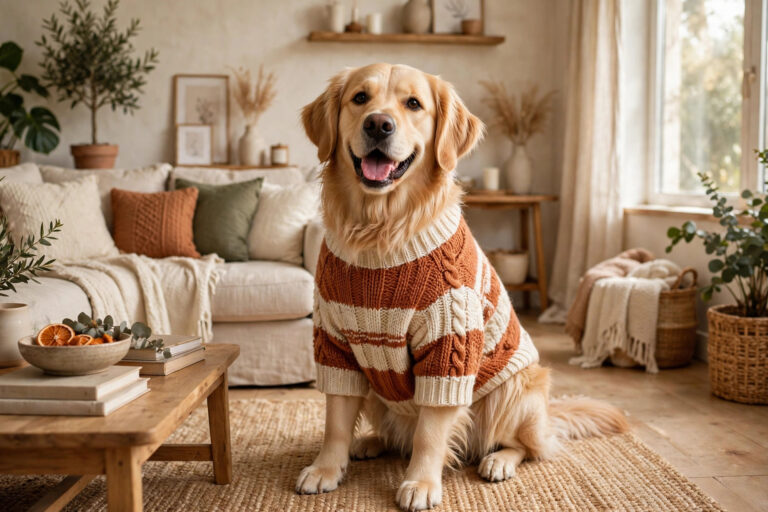
A shop-bought dog jumper can cost more than your own. A handmade one costs almost nothing, fits your dog properly, and — if we are honest — looks better too. DIY dog clothes are one of the easiest wins in the dog world: most projects need an old jumper, a pair of scissors and twenty minutes, and your dog ends up warmer, drier and considerably more photogenic.
This guide covers 7 easy DIY dog clothes projects, from a no-sew bandana that takes five minutes to a proper fleece jacket. Every project uses materials you probably already own, and every one includes the safety notes that matter — because a cute outfit that your dog hates, chews apart or gets tangled in is not worth making.
Before you start — the 3 rules
1. Fit first, fashion second. Clothes should sit flat, never pull, and let your dog walk, sit, lie down and go to the toilet normally. If your dog freezes, paws at it or tries to wriggle out, take it off and adjust the fit.
2. Nothing small, dangly or chewable. No buttons, beads, sequins, drawstrings or loose ribbons — dogs chew them off and swallow them. Use flat seams, velcro or simple ties that sit out of reach.
3. Supervise the first wear. Never leave a dog unsupervised in a new outfit, especially a puppy or a chewer. Clothes are for outings and cold days, not for all-day wear indoors.
Do dogs actually need clothes?
Some do, some do not — and it depends on the dog, not the owner. Short-coated breeds (greyhounds, whippets, boxers, dachshunds), small dogs, puppies, seniors and dogs with very little body fat genuinely feel the cold, especially in rain or wind. Thick-coated breeds like huskies, malamutes and most spaniels usually do not need a jumper at all, and can overheat in one.
The honest test is your dog’s behaviour: shivering, tucking the tail, lifting paws off cold ground, or refusing to go outside in bad weather are all signs a layer would help. A warm dog walks further and enjoys it more. If your dog is comfortable without clothes, do not force the issue — a bandana or a lightweight raincoat for wet days is plenty.
Measure first — the 30-second sizing guide
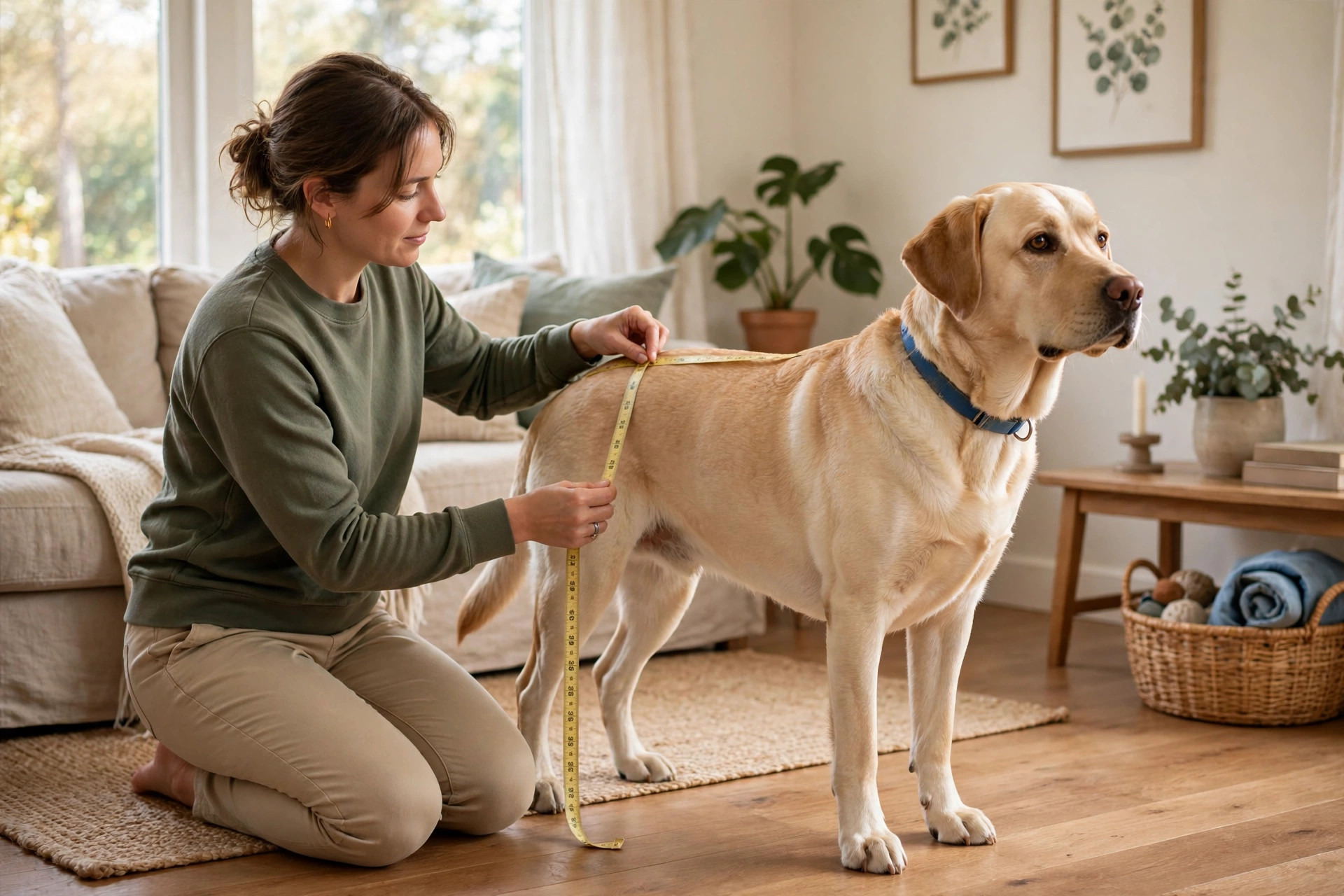
Every project below works from three measurements, so take them before you cut anything. Use a soft tape measure and measure over the dog standing square:
Back length: from the base of the neck (where the collar sits) to the base of the tail. This is the number most patterns ask for, and the one that matters most.
Chest: around the widest part of the ribcage, just behind the front legs. Add 2–3 cm of ease so the garment does not pull when your dog moves.
Neck: around the base of the neck, loose enough to fit two fingers underneath.
Write the numbers down and keep them with your sewing kit. Dogs grow, puppies especially — re-measure every few months, and always test a new garment indoors for ten minutes before the first walk.
1. No-sew bandana (5 minutes)
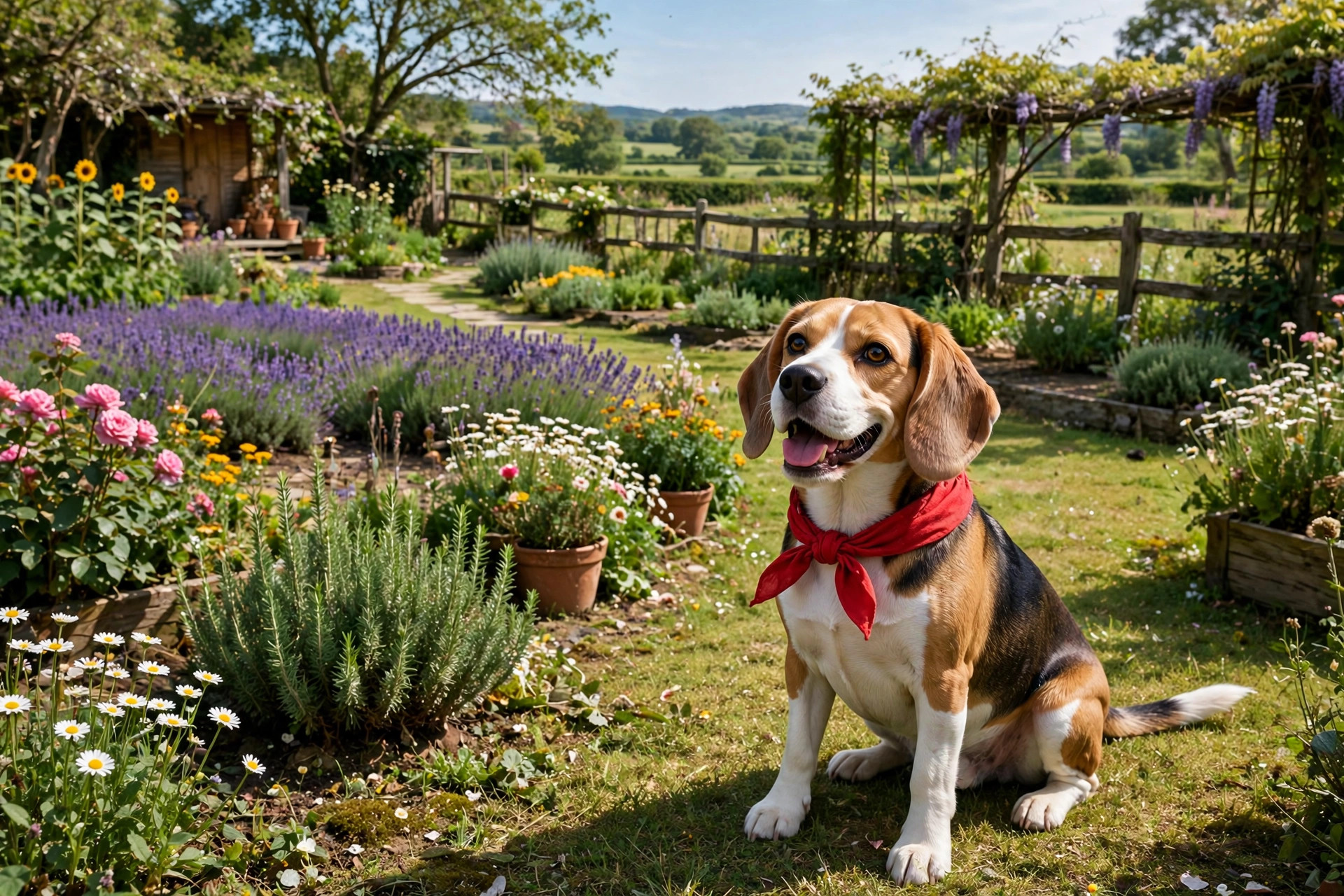
The perfect first project. Take a square of cotton fabric — an old shirt, a fat quarter from a craft shop, a tea towel you like — and cut it to size: for a medium dog, a 55 cm square works well; small dogs need about 40 cm, large dogs about 70 cm.
Fold it diagonally into a triangle, roll the long edge down two or three times until the band sits comfortably across your dog’s chest, then tie it loosely behind the neck with the point facing down the chest. That is it. No sewing, no velcro, no fuss.
Choose a light cotton that breathes, and avoid anything with a print that uses flaking paint or glitter. Bandanas are also the easiest way to dress a dog up for a photo or a party without asking them to wear a whole outfit — and if your dog hates clothes, a bandana is often the one thing they will tolerate happily.
2. Old jumper sweater (20 minutes)
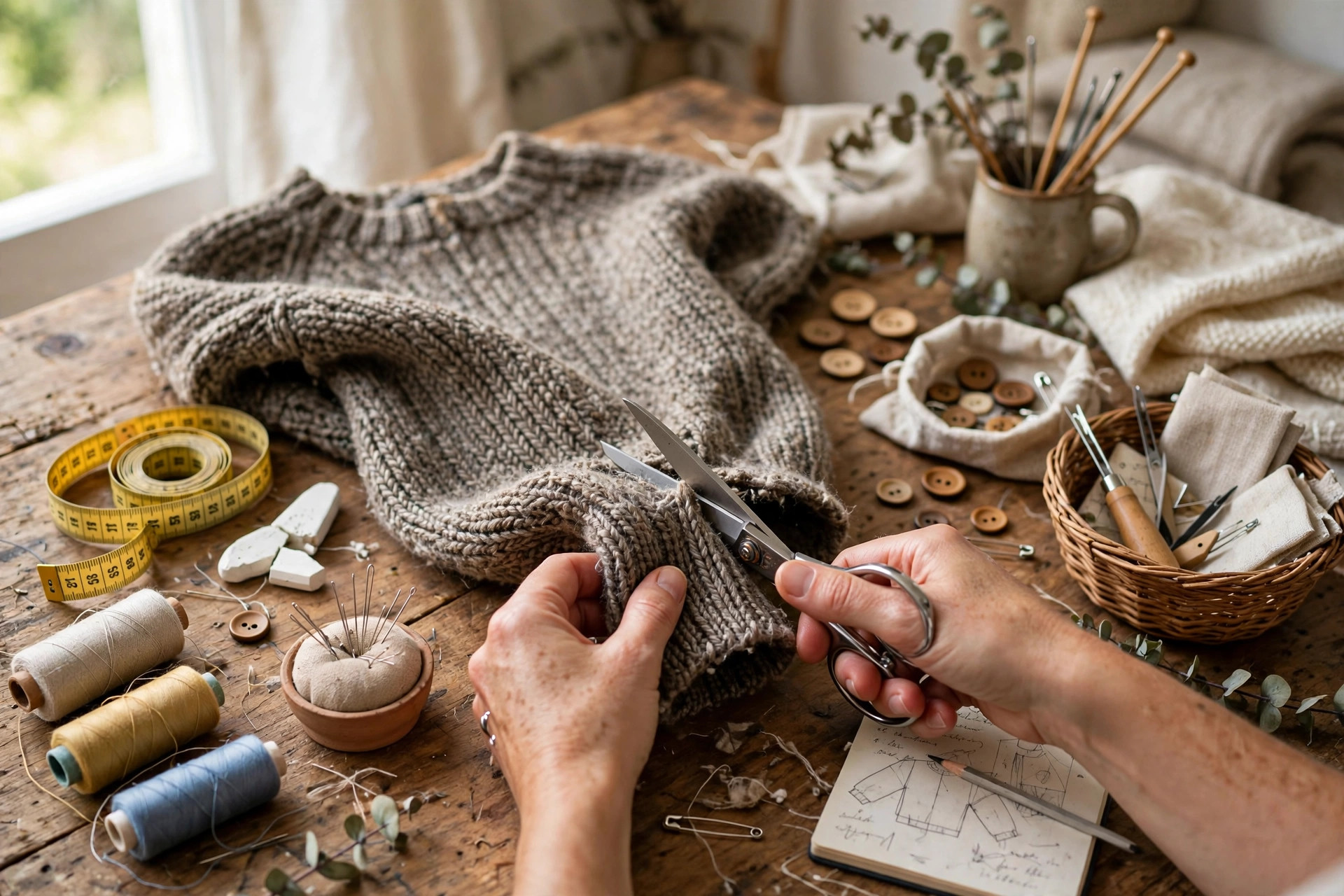
The classic, and the one that saves a perfectly good jumper from the charity bag. Lay an old wool or fleece jumper flat and cut off one sleeve — that sleeve is your dog’s sweater. The cuff becomes the neck opening, so choose the sleeve whose cuff fits loosely around your dog’s neck.
Cut the sleeve to your dog’s back length, then cut two small leg holes on the underside, about a third of the way from the cuff end. Try it on, mark where the holes should sit with chalk, and cut them slightly smaller than you think — stretchy knit gives, and a hole that is too big will not stay put.
Fold the raw edge under and stitch it down, or use a zigzag stitch to stop fraying. If the jumper is thick, leave the hem raw and let it curl naturally — it will not unravel much on knit fabric. This is the warmest project in the list and the best use for the jumpers you were about to throw away.
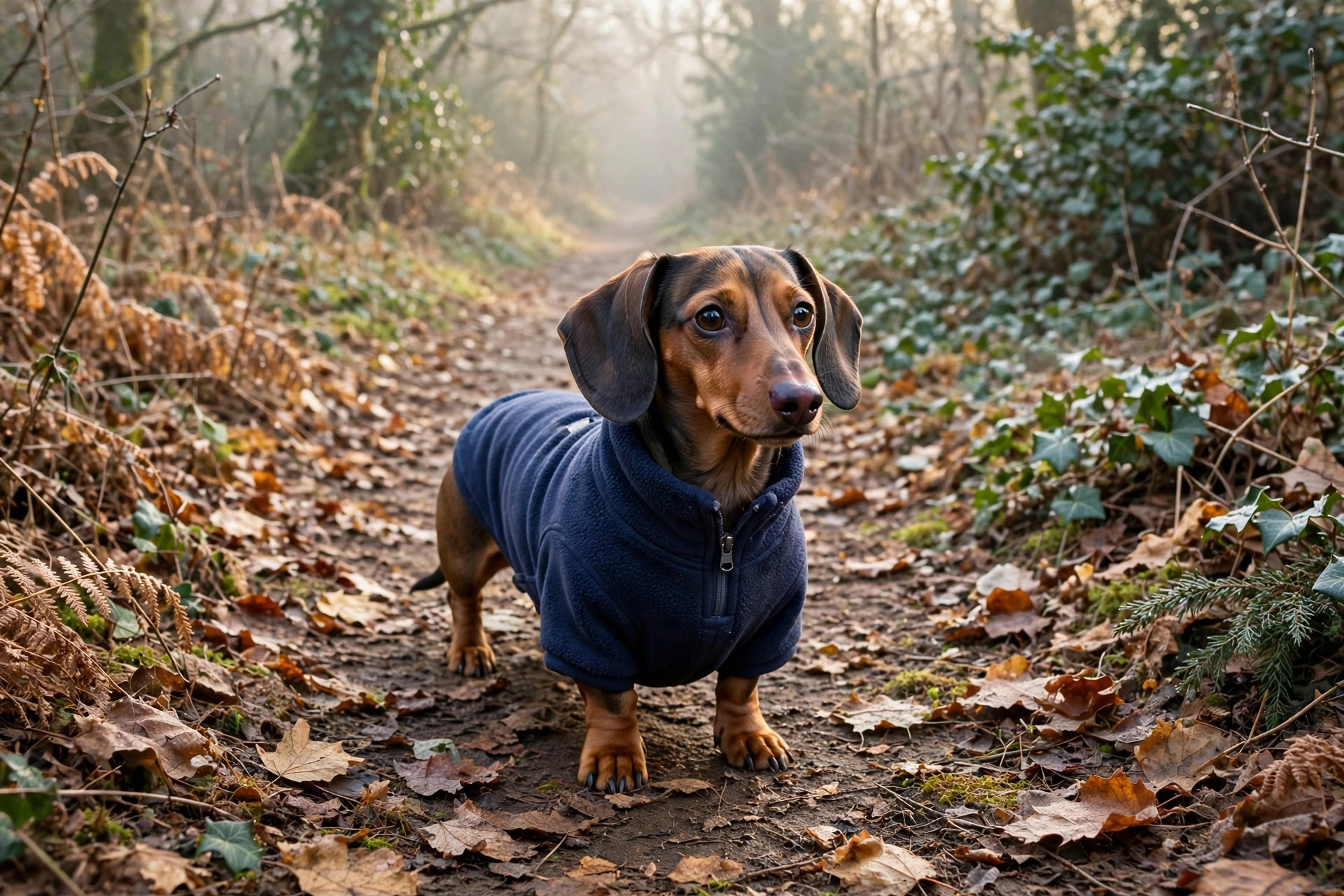
3. Fleece jacket with velcro (30 minutes)
For dogs that need real warmth on winter walks, a fleece jacket beats a sweater: it covers the chest and belly, dries fast, and does not hold water the way wool does. You need a piece of polar fleece (an old blanket works perfectly), velcro strips, and a tape measure.
Cut a rectangle of fleece: length = back length plus 5 cm, width = chest measurement plus 10 cm. Round the corners. Cut a shallow curve at the front for the neck, and two slits where the belly strap will pass through. Sew or glue velcro strips on the belly strap and the chest, so the jacket fastens underneath and your dog steps into it rather than having it pulled over its head.
Fleece does not fray, so you can leave the edges raw and the jacket will still look tidy. Add a strip of reflective tape along the back if your dog walks in the dark — it costs pennies and makes a real difference to visibility.
4. Raincoat from a shower curtain (30 minutes)
Wet dogs, wet houses, wet car seats — a raincoat solves all three. A cheap shower curtain, a poncho or a waterproof tablecloth is the perfect material: light, waterproof and easy to cut.
Cut the same rectangle as the fleece jacket, but add a hood if your dog will tolerate one — a simple rectangle of material, sewn or taped at the back of the neck opening, that sits over the ears in heavy rain. Most dogs prefer no hood, so make it optional: attach it with velcro so you can remove it.
Keep the coat short — it should end at the base of the tail, never further, so your dog can go to the toilet without soaking it. And make sure the belly is covered but the leg holes are generous: a raincoat that rubs the insides of the legs will be chewed off within minutes. For more on keeping paws and coats comfortable in bad weather, see our guide to winter paw care.
5. Cosy sleep shirt (15 minutes)
Some dogs — especially short-coated and older dogs — sleep cold, and a light sleep shirt keeps them comfortable through the night without overheating them. This is the simplest sewn project here: take an old t-shirt, cut it to your dog’s back length, and cut the sleeves off at the shoulder seam.
The t-shirt’s existing neckline becomes the dog’s neckline, so choose a shirt with a wide, stretchy neck. Hem the raw edges with a straight stitch, or leave them — jersey fabric curls rather than frays. The shirt should be loose: if you can slide two fingers under it everywhere, the fit is right.
Use it only for sleeping in a cool room, and take it off in the morning. A dog that sleeps in clothes every night can develop irritated skin where the fabric rubs, so keep the shirt clean and give the skin a break during the day.
6. Paw covers and booties (20 minutes)
Paw covers are the least glamorous item here and the most useful in winter, when salt and ice burn paws. Cut four small rectangles of fleece or old sock material, fold each into a tube that fits loosely over the paw, and stitch or glue a strip of elastic around the top — loose enough to slide two fingers underneath.
The trick is the fit: too tight and the circulation suffers, too loose and they fall off in the first minute. Test indoors first, and expect your dog to walk like a comedy act for the first five minutes — that is normal, and almost every dog gets used to them within a day. For the full cold-weather paw routine, including salt-burn first aid, see our winter paw care guide.
If your dog refuses booties entirely, a smear of paw balm before walks and a rinse afterwards does most of the same job with no dressing up required.
7. Dress-up bandana set (10 minutes)
Once the basic bandana works, make a set: one for every season, one for birthdays, one that matches your own scarf. Cut the same triangle in different fabrics and add a velcro tab instead of a tie, so you can swap them in seconds.
This is also the best project to make with children: let them pick the fabric, cut the triangle (with safety scissors), and decorate it with fabric pens. Just keep the decorating flat — iron-on patches are fine, anything raised or glued is a chewing hazard.
A bandana set is the only item on this list that is purely for fun, and that is the point. Dogs do not care about fashion, but they do care about attention — and a dog in a bright bandana gets a lot of it.
Washing and care
Handmade dog clothes get dirty fast, so wash them like dog bedding: warm water, a mild detergent with no fragrance, and air-dry flat. Wool jumpers should be hand-washed or they will shrink to a size that fits a hamster. Fleece and cotton can go in the machine on a gentle cycle.
Check the seams every few washes — a loose thread is a chewing invitation. And store the clothes somewhere your dog cannot reach them: a surprising number of dogs will drag their favourite jumper out of the drawer and sleep on it, which is flattering but not hygienic.
Safety notes — read this before your dog wears anything
Clothes should never restrict movement, breathing or toileting. Watch for rubbing behind the front legs and under the collar — the two places garments chafe first. If you see redness or hair loss there, the garment does not fit.
Never dress a dog in clothes with a hood pulled tight, a drawstring, or anything around the neck that could catch on a fence or a branch. Never leave a dog in clothes in a crate, in the car, or unsupervised — a caught garment can panic a dog badly. And if your dog is clearly stressed by clothes — freezing, lip-licking, trying to bite the garment off — respect that. Some dogs simply do not like it, and a raincoat for the worst weather is all they will ever need.
FAQs
What fabric is best for DIY dog clothes?
Cotton and fleece are the easiest to work with and the most comfortable for dogs. Cotton breathes and washes well; fleece is warm, light and does not fray. Avoid anything stiff, scratchy or heavily treated, and avoid wool for dogs with sensitive skin unless it is a soft merino.
Can I make dog clothes without sewing?
Yes — the no-sew bandana and a simple tied fleece wrap need no sewing at all, and fabric glue or iron-on hemming tape works for most straight hems. A basic running stitch is worth learning though: it takes ten minutes to learn and makes every other project neater and longer-lasting.
How do I stop my dog chewing their clothes?
Fit is usually the cause: a garment that pulls, rubs or hangs loose invites chewing. Make sure it fits well, remove it when you are not supervising, and give your dog something else to chew. Bitter-apple spray on the hem works for some dogs, but fit and supervision matter more.
Are DIY dog clothes safe for puppies?
Yes, with two rules: puppies grow fast, so measure often and do not make anything they will outgrow in a week; and never leave a puppy unsupervised in clothes, because puppies chew everything and can swallow fabric or fasteners. A simple bandana or a loose sleep shirt is the safest starting point.
My dog hates wearing clothes. What should I do?
Do not force it. Try a bandana first — most dogs accept it. Introduce new garments slowly, with treats, for a few minutes at a time indoors. If your dog still hates it after a week of gentle tries, accept it: some dogs never take to clothes, and a quick towel-dry after wet walks does the job instead.
The bottom line
DIY dog clothes are cheap, quick and genuinely useful — especially for short-coated dogs, puppies and seniors in cold or wet weather. Start with the no-sew bandana, graduate to the old-jumper sweater, and only make what your dog actually needs. Measure twice, cut once, skip the buttons and beads, and always let your dog tell you whether the outfit stays or goes. And if you have old clothes left over after the sewing, turn the rest into toys — our guide to DIY dog toys from old clothes shows you how.
Pin this for later 📌 — and if your dog also needs a warmer place to sleep, our guide to dog bed ideas is a good next read.