
A bed that fits a beagle will not survive a 40 kg Labrador. Big dogs need more than a bigger rectangle of foam — they need a bed rated for their weight, long enough for a full stretch, and tough enough to take a hundred pounds of dog flopping down on it twice a day. Buy a bed built for a small dog in a large size and you get the same thin fill, the same weak seams and the same flattened pancake within a month — just bigger.
This guide covers the ten big dog bed ideas that actually hold up: what size your dog really needs, which fills support heavy joints, which covers survive muddy paws and weekly washing, and the mistakes that send most large-dog beds to the bin early. If you are starting from scratch, our dog bed ideas roundup covers every sleeper type; this guide is the big-dog deep dive.
Before you buy — the 4 rules
1. Measure the dog, not the room. Measure your dog stretched out nose to tail, then add 15–20 cm. A bed that is “about right” is too small.
2. Check the weight rating, not just the size label. “XL” means nothing without a weight limit — look for a stated rating of at least your dog’s weight plus 10 kg.
3. Fill matters more than looks. For dogs over 25 kg, memory foam or high-density foam is the floor; polyester fill flattens fast under heavy dogs.
4. Washability is not optional. A big dog means a big mess. If the cover does not come off and go in the machine, the bed will smell within a month.
What counts as a “big dog” bed?
A big dog bed starts where standard beds stop: roughly 90 cm long and up, with a stated weight capacity. The table below is a starting point — always measure your own dog, because a long-legged 30 kg greyhound needs a longer bed than a stocky 30 kg bulldog.
| Dog’s weight | Bed length to look for | Best fill |
|---|---|---|
| 20–30 kg (medium-large) | 90–110 cm | High-density foam or thick polyester |
| 30–45 kg (large) | 110–130 cm | Memory foam, 10 cm+ thick |
| 45 kg+ (giant) | 130 cm+ (XXL) | Orthopaedic memory foam, 12 cm+ thick |
If you want the exact numbers for your dog, our dog bed size calculator works it out from your dog’s measurements. The short version: a dog should be able to lie fully stretched out without paws or head hanging off the edge, and curl up without spilling over the sides.
1. XXL orthopaedic memory foam
The default best choice for most big dogs, and the one to buy if you only buy one. A slab of memory foam 10–12 cm thick spreads a heavy dog’s weight instead of letting hips and elbows sink through to the floor. It is the same logic as our orthopedic dog beds guide: for seniors and arthritic dogs it is not a luxury, it is joint care. Look for a CertiPUR or similar foam certification, a non-slip base so the bed does not skate across hard floors, and a cover you can remove.

2. Bolster beds for leaners
Big dogs love to lean. A bolster bed — a flat sleeping surface with raised edges on three or four sides — gives a heavy head somewhere to rest and gives sprawlers a backrest. For giant breeds, check the bolster height: a 15 cm bolster is a pillow, a 25 cm bolster is a wall. The best big bolster beds use the same dense foam in the bolsters as in the base, so the edges do not collapse under a leaning head. Avoid bolsters stuffed with loose fill if your dog is a leaner — they go flat in weeks.
3. Elevated cooling beds
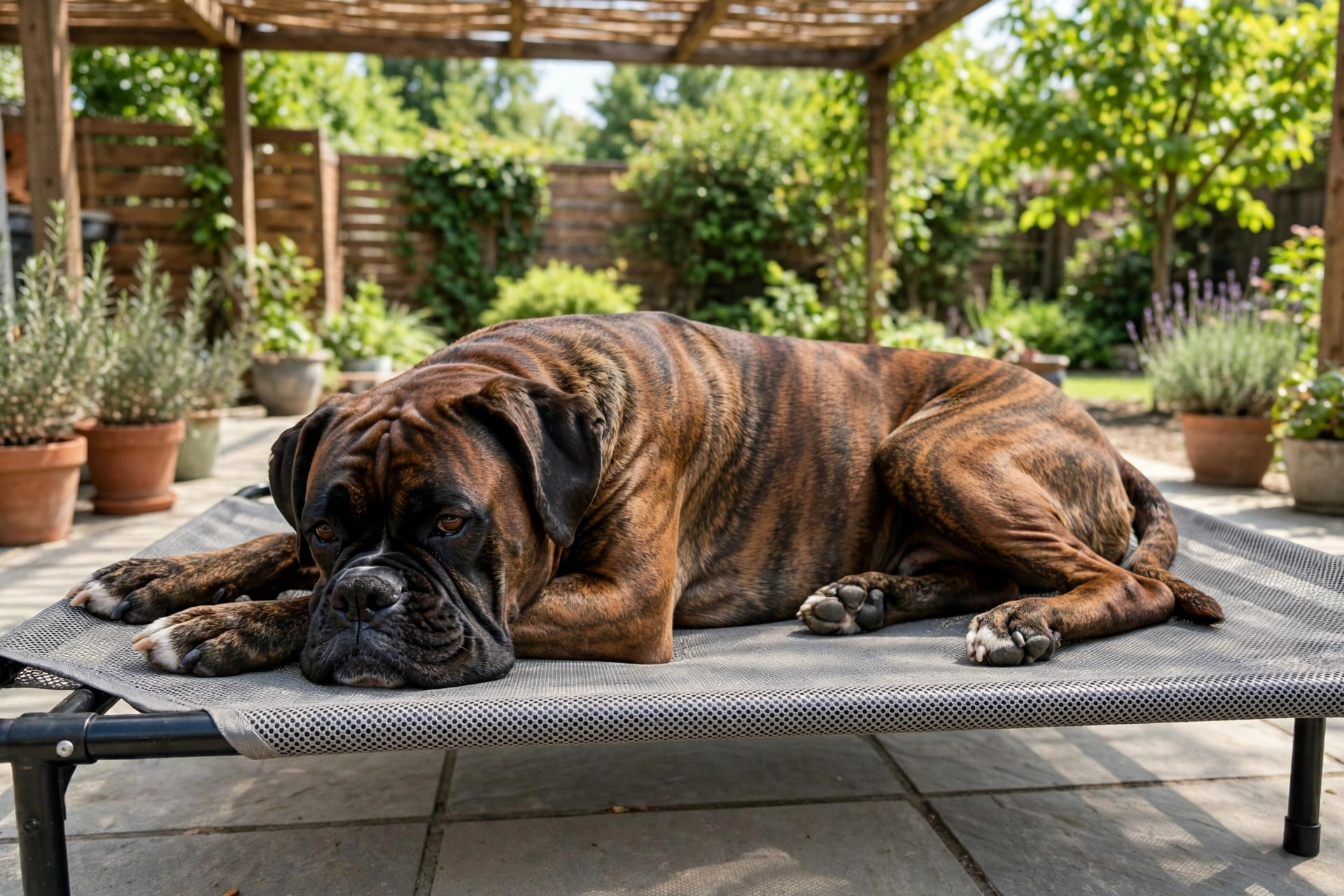
A raised mesh bed lets air flow underneath, which is why they are the go-to for thick-coated big dogs and hot sleepers. The frame matters more than the fabric: look for a steel or heavy-duty aluminium frame rated well above your dog’s weight, and a taut, chew-resistant mesh. Cheap elevated beds sag in the middle under a 40 kg dog and become a hammock, which is bad for joints. Our elevated dog beds guide covers cooling, frames and chew-proofing in detail.
4. Chew-proof ballistic beds
Some big dogs chew. A bed with a ballistic nylon or Cordura-style cover, hidden zips and reinforced seams survives dogs that shred ordinary beds in an afternoon. The honest version: no bed is truly chew-proof, but a heavy-duty cover with no loose flaps or exposed zips buys months instead of days. Pair it with a chew-proof crate mat if the bed lives in a crate — and check our best dog beds for crates for sizing inside a crate.
5. XXL donut and calming beds
Calming donut beds work by letting a dog curl into a den-like nest — and they do make them in XXL. For an anxious big dog, a 110–120 cm donut with a deep, soft rim can be the bed they actually use instead of your sofa. The catch is the fill: a donut full of loose polyester flattens under a heavy dog, so look for one with a foam base under the plush top. Our calming dog beds guide explains the anxiety mechanism and what the evidence actually says.
6. Waterproof beds for droolers and accidents
Big dogs drool, puppies have accidents, and older dogs leak. A waterproof liner — either built in or as a separate zip-on cover — protects the foam, which is the part you cannot wash. Without it, one accident soaks into the fill and the bed is finished. Check that the waterproof layer is on the inside of the cover, not a crinkly plastic sheet on top: the dog should sleep on fabric, with the waterproofing underneath it.
7. Rugged outdoor and patio beds
If your big dog sleeps on the porch or in the garden room, an indoor bed will rot. Outdoor big-dog beds use weather-resistant fabric, a raised or mesh base so rain drains through, and fill that does not hold water. A raised mesh bed doubles as the outdoor option and the cooling option, which is why it appears twice in this list. Bring it inside in heavy rain anyway — “weather-resistant” is not “waterproof”.
8. Crate-fit XL beds
A bed that fits the crate is not the same as a bed that fits the dog. Measure the crate pan first, then find the thickest foam that fits inside it — a bed that curls up at the edges wastes the space the dog needs. Flat, rectangular foam beds with a low profile work best in crates; deep bolsters eat floor space. If the crate bed needs washing weekly, a two-cover system (one on the bed, one in the wash) is worth the extra cost.
9. Washable-cover beds
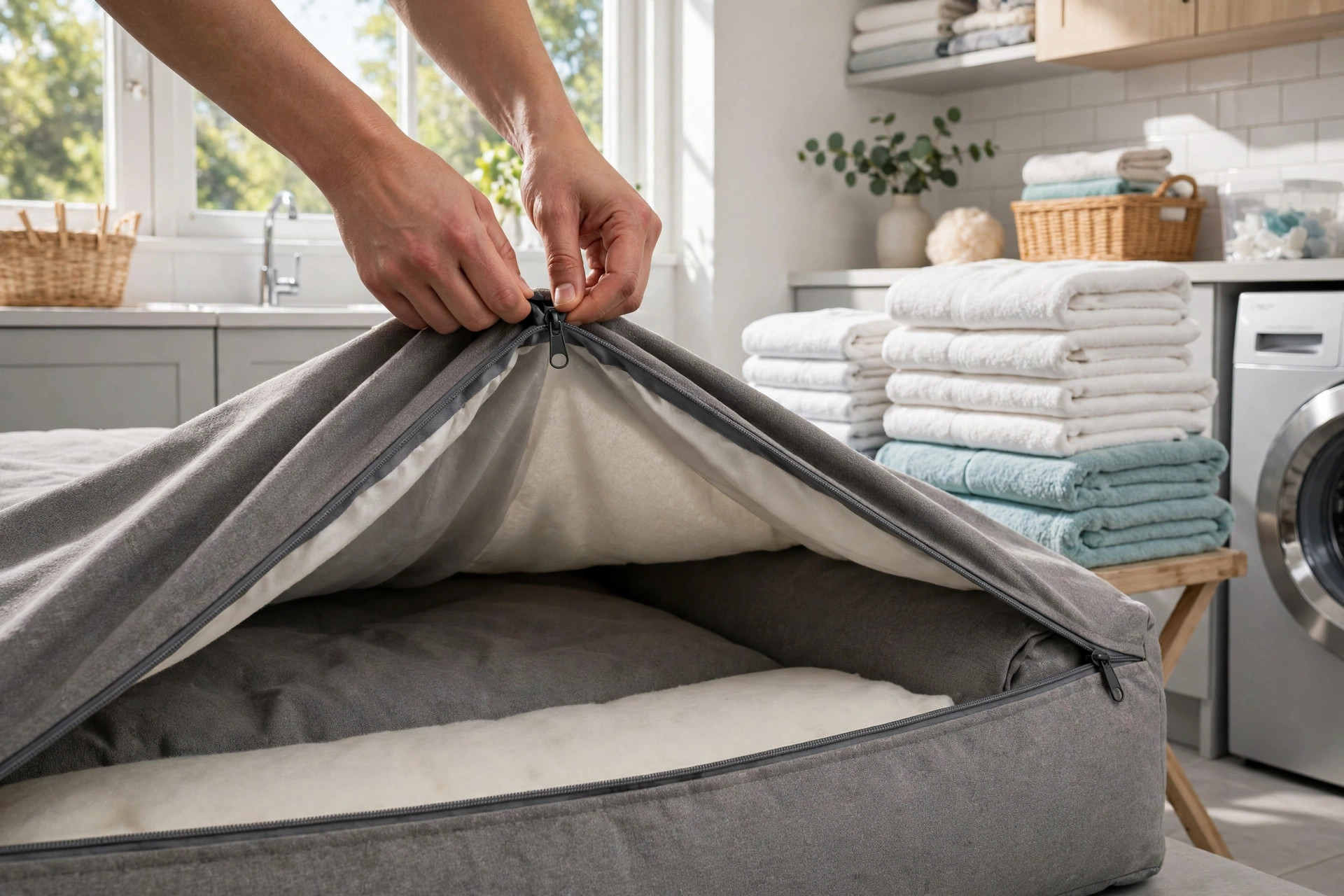
The single most practical feature on any big dog bed. A cover that unzips fully, goes in the machine on a normal cycle, and dries without shrinking will double the bed’s useful life. Look for a zip that runs at least three-quarters of the way around — a small zip makes the cover a wrestling match with a 130 cm bed. Wash on a gentle cycle with unscented detergent, and air-dry the cover when you can: tumble drying shrinks covers faster than anything else. Our how to wash a dog bed guide covers machine vs hand washing by bed type.
10. DIY no-sew bolster from old blankets
If shop prices for XXL beds sting, the cheapest big-dog bed is one you make: an old duvet folded into a thick rectangle, wrapped in a washable cover, with a rolled blanket bolster along two sides. It costs almost nothing, it is fully washable in parts, and you can adjust the thickness by adding a layer. Our no-sew DIY dog bed guide walks through the knot method step by step. It will not outlast a proper orthopaedic bed, but it is the best stopgap — and a good way to test what size and shape your dog actually prefers before spending real money.

How to measure your dog for a bed
Do it while the dog is asleep — that is when they are longest. Measure from the tip of the nose to the base of the tail with the dog fully stretched out, then add 15–20 cm. Then measure across the widest point (usually the chest or hips) and add 10 cm. The larger of the two numbers sets the bed length; the smaller sets the width. For a dog that sleeps curled up, measure the curled diameter instead and add 10 cm. And weigh the dog before you shop: the weight rating matters as much as the dimensions, and most owners underestimate their dog’s weight by 5 kg or more.
Mistakes that ruin a big dog bed
Buying by the label, not the measurements. “Large” on one brand is “medium” on another. Measure first, then match the measurements to the product’s listed dimensions.
Thin fill under a heavy dog. Anything under 8 cm of foam will bottom out under a 30 kg dog. If you can press the fill to the floor with one hand, the dog will do it with one hip.
A cover you cannot remove. A bed you cannot wash is a bed with a expiry date measured in weeks for a big, muddy dog.
Ignoring the weight rating. A bed rated to 25 kg will sag, split seams and flatten under a 40 kg dog within a month. The rating is the manufacturer’s own admission of what the bed can hold — believe it.
Putting a good bed in a bad spot. A draughty doorway or a cold tiled corner undoes the point of a good bed. Put it where the dog already sleeps, not where it looks tidy — a bed the dog will not use is decoration.
FAQs
What size bed does a big dog need?
Measure your dog stretched out nose to tail and add 15–20 cm — that is the minimum bed length. For most large breeds that means 110–130 cm; for giant breeds, 130 cm and up. The dog should be able to stretch fully without hanging off the edge.
Is memory foam worth it for big dogs?
Yes, for most dogs over 25 kg. Memory foam spreads weight and supports joints in a way polyester fill cannot, and it keeps its shape for years instead of months. For seniors and arthritic dogs it is the single most useful upgrade — see our orthopaedic beds guide for the density numbers to look for.
How do I stop my big dog destroying their bed?
Use a ballistic-nylon cover with hidden zips, remove loose flaps and tags, and give the dog an approved chew instead. No bed is indestructible, but a heavy-duty cover plus a chew toy buys months. If the dog chews from anxiety or boredom, fix that first — the bed is the symptom.
Can big dogs use donut beds?
Yes, in XXL sizes (110–120 cm) with a foam base under the plush top. A donut full of loose fill will flatten under a heavy dog, so check the base before you buy — and expect to pay more for a big one that holds its shape.
How often should I wash a big dog bed?
Wash the cover every 1–2 weeks, and the whole bed (or the foam, if it allows it) monthly. Big dogs bring in more mud, hair and smell than small ones, and a regular wash keeps the bed from becoming the smelly corner of the room.
The bottom line
The best big dog bed is the one that fits your dog’s body, holds your dog’s weight, and survives your washing machine. Measure the dog stretched out, buy foam thick enough for their weight, and insist on a removable, washable cover. Get those three things right and the bed lasts years; get any one wrong and it lasts weeks. Start with an XXL orthopaedic bed if you are unsure — it is the safest default for a big dog — and use the other nine ideas here to match the bed to the way your dog actually sleeps.
Pin this for later 📌 — and if you are still deciding on size, our dog bed size calculator works out the exact dimensions from your dog’s measurements.