{
“title”: “Dog Treat Business: How to Start Selling Homemade Dog Treats from Home”,
“slug”: “dog-treat-business”,
“excerpt”: “How to start a dog treat business from home: pick a niche, perfect 3 recipes, price for profit, sort the legal side, and find your first customers.”,
“meta_description”: “How to start a dog treat business from home: pick a niche, perfect 3 recipes, price for profit, sort the legal side, and find your first customers.”,
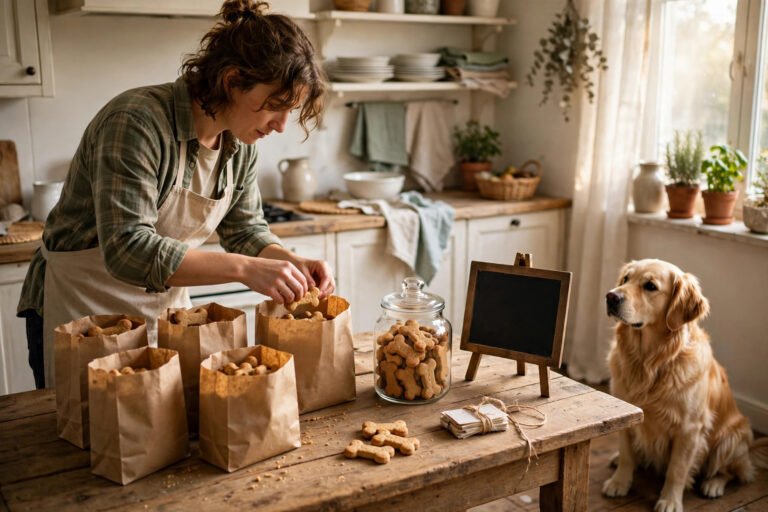
“featured_image_alt”: “Freshly baked homemade dog biscuits being packed into kraft paper bags on a kitchen table.”,
“content_html”: “
Every week, someone bakes a tray of dog biscuits, watches their own dog go mad for them, and thinks: I could sell these. It is a good instinct — and it is also a harder business than it looks from the outside. The good news is that a dog treat business is one of the cheapest food businesses to start: you already have the kitchen, the recipes are simple, and your first customers are probably already in your phone contacts. The hard part is not the baking. It is the pricing, the labelling, and the unglamorous work of finding people who will pay, week after week, for something they could technically make themselves.
\n
This guide walks through the whole thing in order: whether it can actually make money, how to pick a niche that sells, the recipes to start with, the legal and labelling side, how to price for a real profit, where to sell, and how to find your first ten customers. No hype, no promises of easy money — just the steps that work.
\n
Can a dog treat business actually make money?
\n
Yes — but probably not the way the social media posts suggest. A home dog treat business is a real, modest business, not a passive income machine. Here is what the numbers usually look like.
\n
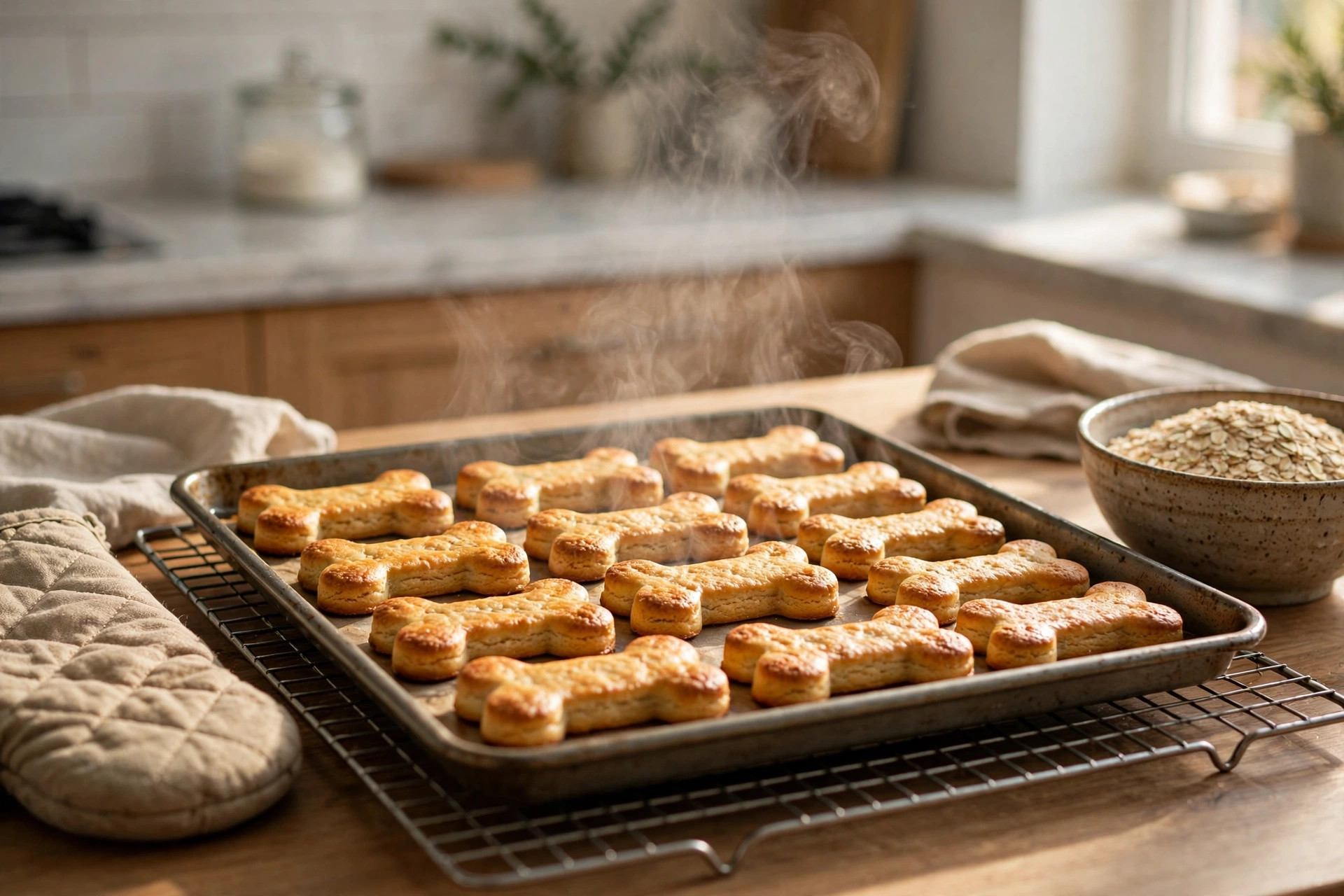
A bag of 150 grams of homemade biscuits costs roughly £1.50 to £3.00 to make, depending on the ingredients — oats and peanut butter are cheap, freeze-dried meat and novel proteins are not. That same bag sells for £5 to £9 at a farmers’ market or online, depending on your area and how good the branding is. After packaging, labels, market stall fees, and your time, a realistic profit is £2 to £4 per bag. Sell 50 bags a week and you are making £100 to £200 a week before tax — a genuine side income, and a solid foundation to grow from. Sell 10 bags a week and you are covering the cost of your own dog’s treats with a little left over.
\n
The two things that decide whether you make money are volume and repeat customers. One-off buyers at a market are nice; subscribers who order every fortnight are what pay the bills. Everything in this guide is aimed at the second group.
\n
Be honest with yourself about time, too. A batch of biscuits takes about an hour from mixing to bagging, and a market day takes five to six hours including the drive, the stall, and the packing up. If you price your treats without counting your time, you will work very hard for very little. Price them as if your hour is worth something — because it is.
\n
Step 1 — Pick a niche, not a catalogue
\n
The biggest mistake new sellers make is offering twenty different treats. A stall with twenty flavours looks like a shop; a stall with three excellent ones looks like a specialist. Specialists charge more and get remembered. Pick one niche and own it.
\n
Single-ingredient treats. One protein, nothing else — dried chicken, beef liver, sweet potato. Our single-ingredient dog treats guide explains why owners with allergy-prone dogs love these, and why they are the easiest treats to make honestly. Low ingredient cost, simple labelling, and a clear story.
\n
Allergy-friendly treats. Grain-free, limited-ingredient, or free from the common triggers (wheat, chicken, dairy). This is the niche with the most desperate customers: an owner whose dog reacts to everything will pay well for a treat they trust, and they will tell every other allergy-dog owner they know.
\n
Training treats. Small, soft, smelly, and sold in bulk bags for owners who train daily. Training treats are bought on repeat more than any other kind, because a training owner gets through a bag in a week. The recipes are simple and the margins are good.
\n
Celebration treats. Birthday cakes, gotcha-day boxes, and seasonal gift sets. Higher price per item, lower volume, and very seasonal — but a single birthday cake can sell for the price of six bags of biscuits. Our pumpkin spice dog birthday cake recipe is a good starting point for this niche.
\n
Dental and functional treats. Treats with a job: mint and parsley for breath, crunchy textures for teeth, or calming ingredients for anxious dogs. Our homemade dental treats and dog treats for bad breath guides cover the angles that sell here — but be careful with claims (more on that below).
\n
Pick the niche that matches what you already bake well and what the dogs around you actually need. If half your friends have itchy dogs, allergy-friendly is your niche. If you train your own dog every day, training treats are. Do not pick a niche because it sounds profitable — pick the one you can talk about for an hour without notes.
\n
Step 2 — Perfect three recipes (and test them properly)
\n
Start with three recipes, not ten. Three is enough to look like a real range, and few enough that you can make them all well, every time, in one baking session. Choose recipes that:
\n
- \n
- Use ingredients you can buy every week, from the same supplier, at a stable price. A recipe that depends on a seasonal ingredient will break your pricing.
- Keep well. A treat that goes stale in three days is a returns problem, not a product. Aim for at least two weeks of shelf life at room temperature, or a product that freezes well. Dehydrated and baked-dry treats last longest; soft, moist treats need a shorter best-before date and a fridge note on the label.
- Survive posting. If you plan to sell online, your treats will be dropped, shaken, and left in a hot van. Pack a test bag, post it to yourself, and see what arrives. Crumbs in the bottom of the bag are normal; a bag of dust is a recipe problem.
- Taste-test with real dogs, not just your own. Give free samples to ten dogs of different sizes and breeds, and ask the owners honestly: did the dog finish it? Did they come back for more? Would they pay for it? Your own dog will eat anything you make. Strangers’ dogs are the real test.
\n
\n
\n
\n
\n
Write each recipe down exactly — weights in grams, oven temperature, baking time, cooling time, and storage. The moment you start selling, a recipe is a specification, not a habit. If a batch comes out different, you need to know what changed. Keep a notebook: batch number, date, oven, and any notes. It feels over the top for three bags a week; it is essential when a customer asks why this batch tastes different from the last one.
\n
Good starting points on this site: our 3-ingredient dog treats guide is the simplest possible launch range, our no-bake dog treats guide works well for summer sellers without a big oven, and our homemade freeze-dried dog treats guide covers the longest-shelf-life option of all.
\n
Step 3 — The legal and labelling side (do this before your first sale)
\n
This is the step most people skip, and the one that matters most. Dog treats are pet food, and pet food is regulated — even when it is baked in a home kitchen. The rules vary a lot by country and by state or region, so treat this section as a checklist of things to check locally, not as legal advice.
\n
Register the business. In many places, anyone making and selling pet food must register with their local authority or food standards body first. In the UK, for example, you register with your local council as an animal feed business. In the US, the rules are set state by state — some states have cottage food rules that cover pet treats, others do not, and some require a licensed commercial kitchen. Search for your local rules before you sell a single bag, and keep a note of what you found.
\n
Label every bag properly. At a minimum, a dog treat label should list: the product name, the net weight, the full ingredient list in descending order of weight, feeding guidance (treats are a snack, not a meal), a best-before date, storage instructions, and your business name and contact details. In the EU and UK, you also need to list the analytical constituents (protein, fat, fibre, ash, moisture) — which means getting a lab analysis done for each recipe, usually a one-off cost per recipe. Allergens matter too: if a treat contains wheat, egg, dairy, or peanut, say so clearly.
\n
Be careful with claims. You can say a treat \”supports dental health\” only if you can back it up, and you cannot claim a treat treats or cures any condition. Words like \”calming\”, \”hypoallergenic\”, \”vet approved\”, and \”all-natural\” all carry legal weight in different markets. Keep your claims modest and provable: \”made with three ingredients\”, \”baked in small batches\”, \”no added sugar\”. If in doubt, leave the claim off the label.
\n
Keep a paper trail. For every batch, record the batch number, the date, the supplier and batch of each ingredient, and how many bags you made. If a supplier ever recalls an ingredient, you need to know which of your bags used it. This is also what an inspector will ask to see.
\n
Insurance. A simple product-liability policy for a home food business is usually inexpensive, and it is the one cost you should never skip. If a dog ever gets sick and the owner blames your treats, insurance is the difference between a bad week and a business-ending bill.
\n
Step 4 — Cost it, then price it for a real profit
\n
Most home sellers underprice. They price by guessing what a bag \”feels\” worth, or by copying a competitor, and they forget half their costs. Do it properly, once, in a spreadsheet.
\n
Cost per bag = ingredients + packaging + labels + your time + a share of the fixed costs.
\n
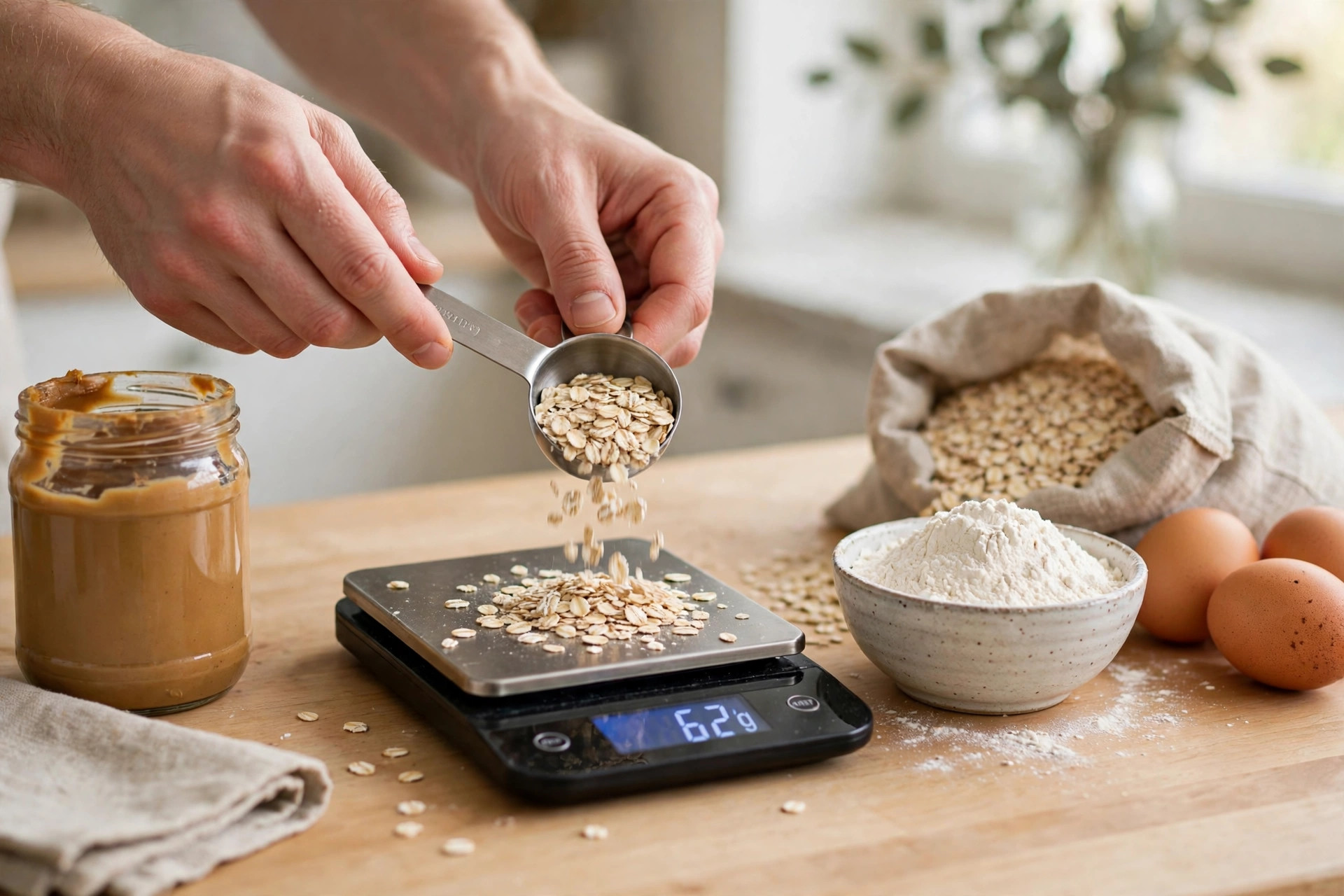
Work out the ingredient cost per bag exactly: weigh what goes into one batch, divide by the number of bags it fills. Add the bag, the label, the sticker, and the twist tie or seal — packaging is usually 30p to 80p a bag, and it surprises people. Add your time at a real hourly rate, even a modest one: if a batch takes an hour and fills 10 bags, that is 6 minutes a bag. Then add a share of the fixed costs — the market stall fee, the website, the insurance — spread across the bags you expect to sell that month.
\n
Then set the price. A common starting point is cost × 2.5 to × 3 for retail, which leaves room for wholesale later (a shop will want 40 to 50% of your retail price). If your cost per bag is £2.50, a £6.50 to £7.50 retail price is about right. If that feels high, do not cut the price — cut the cost. A cheaper recipe, a bigger batch, or a simpler bag will do more for your profit than a lower price ever will.
\n
Do not race to the bottom. There will always be someone selling cheaper biscuits. You are not competing with them. You are competing on trust, on ingredients an owner can pronounce, and on a treat their dog actually finishes. Price like a specialist, not a discounter.
\n
Step 5 — Packaging and branding that earns the price
\n
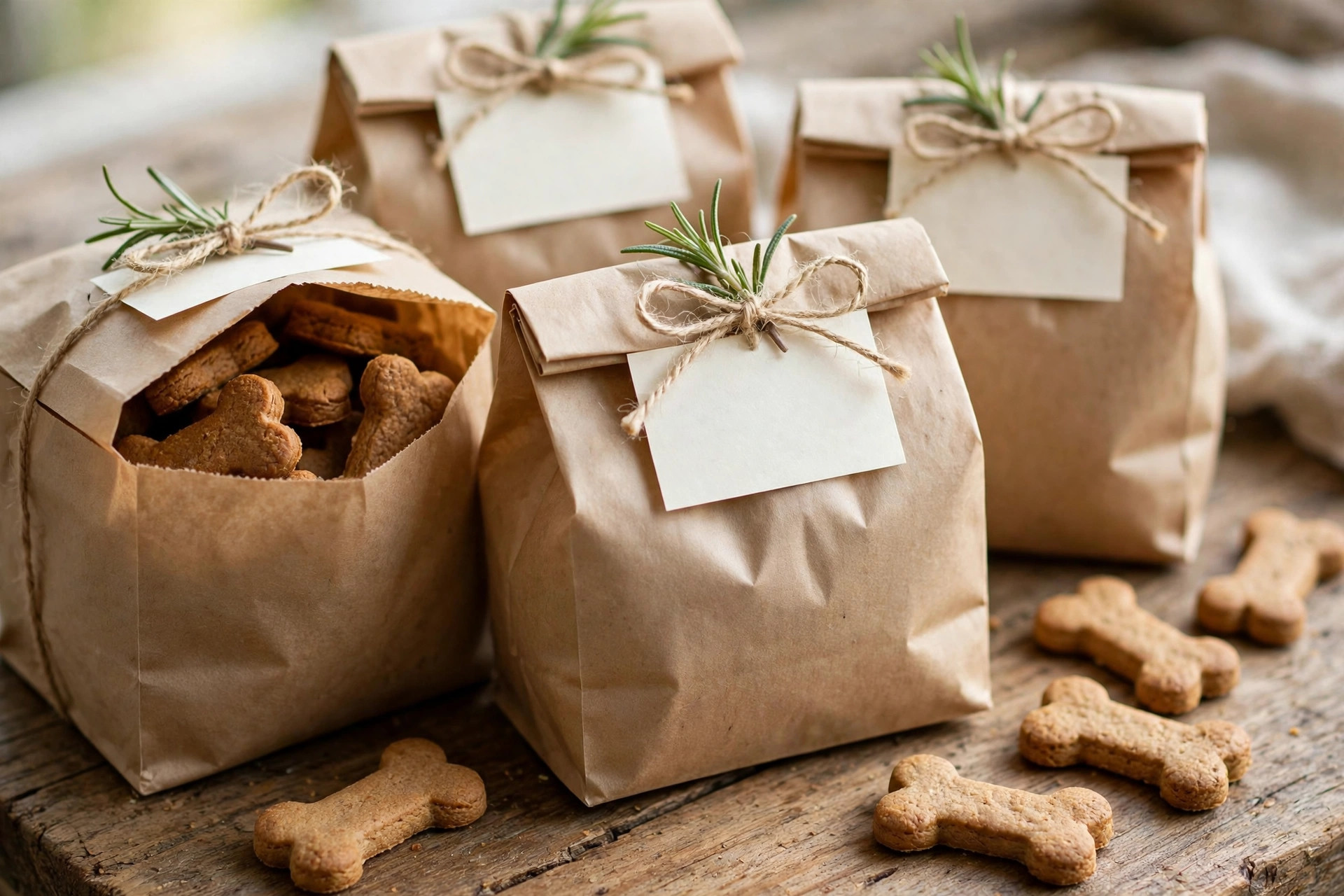
Owners buy with their eyes first and their dog’s opinion second. Your packaging has to do three jobs: keep the treats fresh, carry the legal label, and look worth the price.
\n
Bags. Kraft paper stand-up pouches with a resealable zip are the standard for a reason: they look homemade, they keep treats crisp, and they cost very little. Clear windows let the treats show through, which sells more than any label. Buy them in bulk once you know your sizes — a hundred bags at a time is usually the price break.
\n
Labels. A simple, clean label beats a busy one. Product name, your business name, ingredients, weight, best-before, and one honest line about what makes it special. Print them at home to start with — a basic label printer pays for itself in a month — and move to printed labels once you are selling steadily.
\n
The small touches that get remembered. A handwritten \”thank you\” card in the first few orders. A free sample of a new flavour tucked into a repeat order. A stamp with your logo instead of an expensive printed bag. None of this costs much, and it is what turns a one-time buyer into someone who tells their dog group about you.
\n
Photography. You do not need a studio. A clean kitchen table, natural light from a window, and your dog eating the treat will outsell a professional shot of a bag on a white background. Take a photo of every batch — you will need the pictures for your shop, your social posts, and your market stall banner.
\n
Step 6 — Where to sell
\n
You do not need to be everywhere. Pick one channel, get good at it, and add a second only when the first is working.
\n
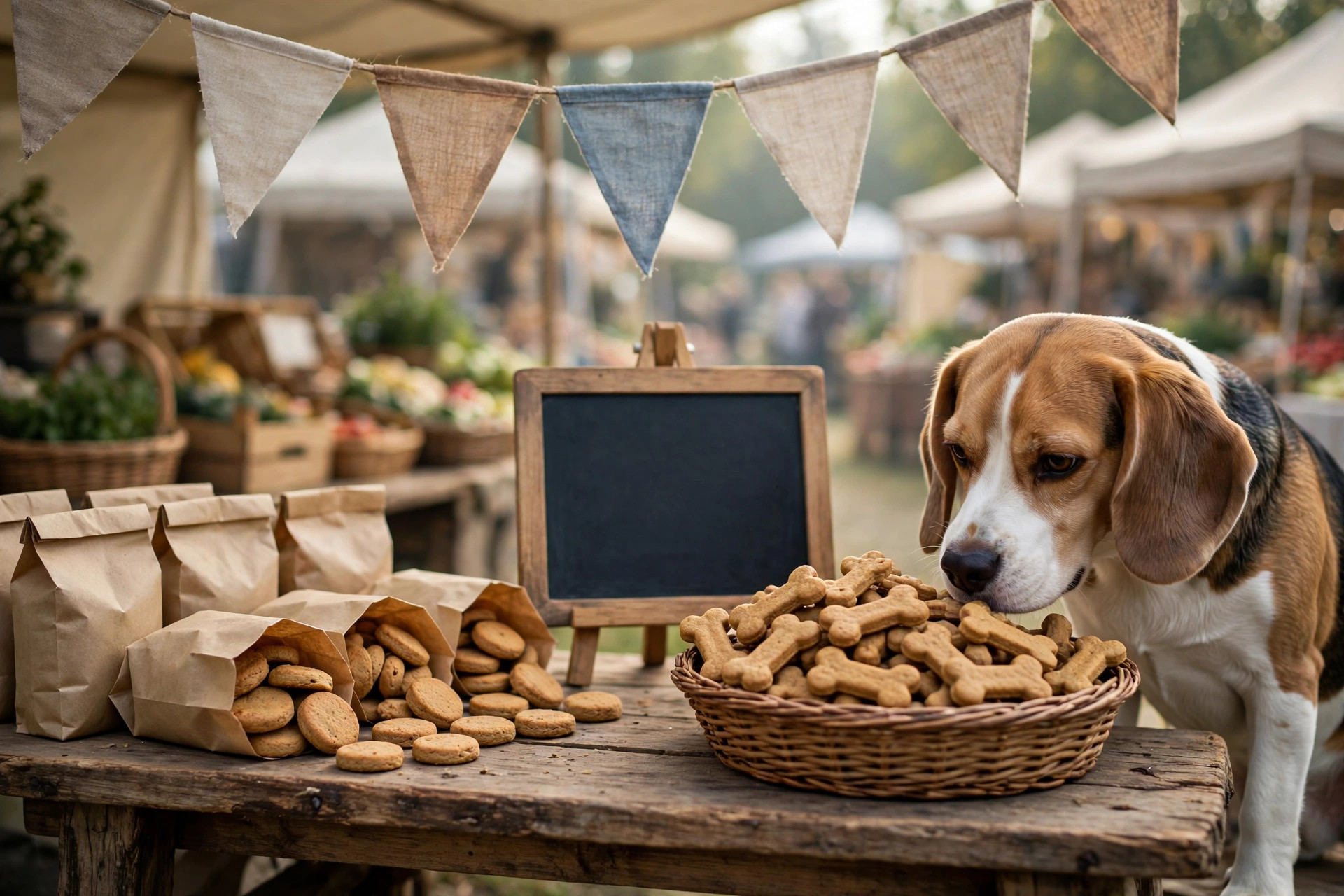
Farmers’ markets and dog events. The best first channel. You meet the dogs, you watch them eat the treat in front of you, and you get honest feedback in real time. A stall costs £20 to £60 a day depending on the market, and a good market day can sell 40 to 80 bags. Bring samples — a dog that tastes the treat sells it for you.
\n
Online — your own shop or a marketplace. Etsy and similar marketplaces bring the customers to you, but they take a cut and you compete with thousands of sellers. Your own simple shop (a basic website with an order form is enough to start) keeps the full price but needs you to drive the traffic yourself. Either way, posting treats needs sturdy packaging and a shelf life that survives the post — dehydrated and baked-dry treats travel best.
\n
Local pet shops and vets. A small pet shop will often take a few bags on consignment or wholesale if you ask nicely and leave samples. Wholesale means you earn less per bag — remember the 40 to 50% rule — but a shop that reorders every month is steadier than a market. Vets and groomers are good for referral, not for selling: leave a sample tub and a card, not a sales pitch.
\n
Subscription and repeat orders. The goal is not one sale; it is a customer who orders every fortnight. Offer a simple subscription — same bag, same day, every two weeks, with a small discount for committing. Even ten subscribers at £7 a fortnight is £140 a month you can count on, and it is the steadiest income a treat business has.
\n
Seasonal lines. Christmas, Easter, and Halloween are the biggest treat-selling weeks of the year. A small seasonal range — gift boxes, advent treats, birthday sets — can earn in a month what a normal month earns in three. Plan them eight weeks ahead, not the week before.
\n
Step 7 — Finding your first ten customers
\n
Your first ten customers are the hardest, and they are also the most important — because they are the ones who will tell the next fifty. Here is how to find them without spending money on ads.
\n
- \n
- Give samples to people you know. Ten free bags to ten dog owners you know, with one ask: tell me honestly what your dog thought, and tell one other dog owner if they liked it. Word of mouth is the whole marketing plan at this stage.
- Post the baking, not the selling. A short video of biscuits coming out of the oven, a photo of your dog taste-testing, a picture of the first market stall — these get shared. A post that just says \”buy my treats\” does not.
- Join local dog groups. Not to sell — to be useful. Answer a question about treats, share a recipe, help someone whose dog will not eat. When people trust you, they buy from you. When you only ever post adverts, they mute you.
- Ask for one review per customer. A review with a photo of the dog eating the treat is worth ten reviews without one. Put the best ones on your shop page and your stall.
- Follow up once. A short message a week after a first order — \”How did Biscuit like them?\” — is the difference between a one-time buyer and a repeat customer. Do not chase people who do not reply.
\n
\n
\n
\n
\n
\n
Mistakes to avoid
\n
- \n
- Selling before the recipes are tested. A bad first batch does more damage than a late launch. Test first, sell second.
- Pricing without counting your time. If your hour is free, your business is a hobby. Hobbies are fine — just do not call them a business.
- Copying a competitor’s label. Your label is your legal responsibility. Write your own, check it against your local rules, and keep it honest.
- Making treats with unsafe ingredients. Chocolate, xylitol, grapes, raisins, onions, garlic, macadamia nuts, and cooked bones never belong in a dog treat — and xylitol hides in some peanut butters, so check the label every time. Our natural dog treats guide explains how to keep a treat range genuinely clean.
- Over-promising on shelf life. A soft treat that goes mouldy in a customer’s cupboard will end the relationship. Be conservative with your best-before dates and honest about storage.
- Growing too fast. Ten happy customers are better than a hundred rushed ones. Grow when the baking, the labelling, and the posting all still work — not before.
\n
\n
\n
\n
\n
\n
\n
FAQs
\n
How much money do I need to start a dog treat business?\nVery little — usually under £100 to £200 for your first batch of bags, labels, and ingredients, plus the cost of registering the business and a basic insurance policy if your area requires them. Most people start with the oven and mixer they already own. The real cost is your time, not your money.
\n
Do I need a licence to sell dog treats from home?\nIt depends where you live. Many places require you to register as a pet food business with your local authority before you sell, and some require a licensed kitchen or an inspection. Check your local food standards or agriculture department rules before your first sale — the rules are usually simple, but they are not optional.
\n
How long do homemade dog treats last?\nBaked-dry treats keep for two to four weeks in a sealed bag at room temperature; soft, moist treats keep for three to five days in the fridge; dehydrated and freeze-dried treats can last two to three months. Always put a best-before date on the bag, and be conservative — a treat that goes stale early costs you a customer.
\n
What is the most profitable dog treat to sell?\nTraining treats and single-ingredient treats usually have the best margins: cheap ingredients, simple recipes, and customers who buy on repeat. Celebration cakes have the highest price per item but the lowest volume. The most profitable treat is the one you can make well, in batches, with ingredients you can buy reliably.
\n
Can I sell dog treats on Etsy or at a farmers’ market?\nYes, both are common first channels — but check the rules first. Marketplaces have their own policies for pet food, and some markets require proof of registration or insurance before they will give you a stall. Ask the market organiser what they need before you book.
\n
Should I offer subscriptions?\nYes, as soon as you have a few repeat customers. A simple fortnightly subscription — same bag, same day, small discount — is the steadiest income a treat business has, and it turns your baking into a predictable routine instead of a weekly scramble for orders.
\n
Do I need to get my treats lab tested?\nIn some markets, yes — the EU and UK require analytical constituents (protein, fat, fibre, ash, moisture) on the label, which means a lab analysis per recipe. In other markets, a full analysis is not required for small sellers. Check your local rules; if an analysis is needed, it is usually a one-off cost per recipe, not per batch.
\n
The bottom line
\n
A dog treat business starts with three good recipes, a niche you can talk about, and a price that pays for your time. Register the business, label every bag properly, cost every batch honestly, and sell where you can watch dogs eat your treats in front of you. Your first ten customers will come from people you know and dogs who loved the sample — and if you look after those ten, they will bring the next fifty. Start small, start legal, and let the treats do the talking.
\n
Pin this for later 📌 — and if you want the recipes to build your range from, our 3-ingredient dog treats guide is the fastest place to start, and our single-ingredient dog treats guide is the niche most new sellers begin with.
“,
“source_draft”: “/home/hatch/workspace/goals/pinterest-pin-automation-for-petsmush-com/files/dog-treat-business-post-draft.md”,
“status”: “publish”
}