{
“title”: “Homemade Dog Food for Dogs with Allergies: A Vet-Smart Guide”,
“slug”: “homemade-dog-food-for-dogs-with-allergies”,
“excerpt”: “Homemade dog food for dogs with allergies — spot the triggers, run a simple elimination diet, and build safe, balanced bowls with novel proteins.”,
“meta_description”: “Homemade dog food for dogs with allergies — spot the triggers, run a simple elimination diet, and build safe, balanced bowls with novel proteins.”,
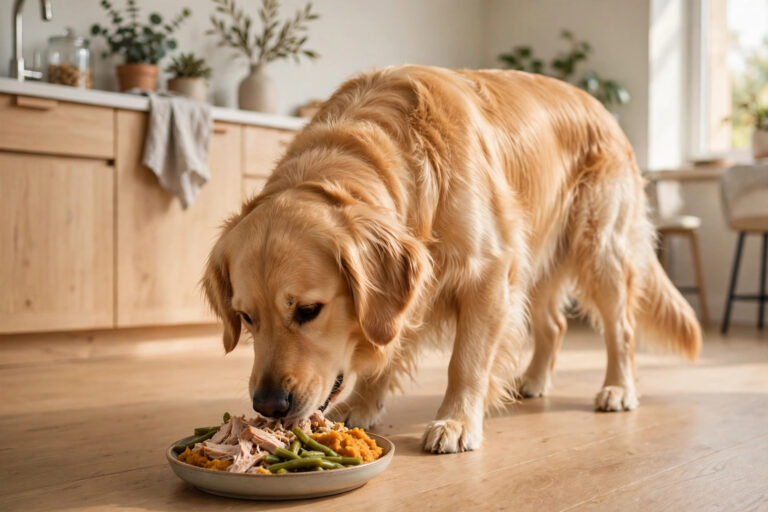
“featured_image_alt”: “Golden retriever eating a homemade allergy-friendly dog food bowl with turkey and pumpkin.”,
“content_html”: “
If your dog is always itching, licking its paws, or dealing with an upset stomach, the food in its bowl may be the problem. Food allergies are one of the most common — and most fixable — causes of chronic itching and digestive trouble in dogs. The trouble is that the trigger is rarely obvious: it is usually an ordinary ingredient your dog has eaten happily for years.
\n
Homemade food gives you something no bag of kibble can: total control over every single ingredient. This guide explains how to tell a food allergy from a food intolerance, how to run a proper elimination diet at home, which proteins and ingredients are safest for allergic dogs, and three balanced allergy-friendly bowl recipes you can start with. It is not a replacement for veterinary advice — but it is the practical, step-by-step plan most vets will ask you to follow anyway.
\n
Food allergy vs food intolerance — why the difference matters
\n
The two get mixed up constantly, and the fix is different for each.
\n
A food allergy is an immune reaction. The dog’s immune system mistakes a normal food protein — usually beef, chicken, dairy, or wheat — for a threat and overreacts. The signs are mostly skin: itching, red or inflamed ears, hot spots, paw licking, and recurrent ear infections. Digestive upset can appear too, but skin is the headline.
\n
A food intolerance is a digestive problem, not an immune one. The dog simply cannot digest an ingredient well — lactose in dairy is the classic example. The signs are mostly gut: soft stools, gas, vomiting, and a grumbling stomach, usually without the itching.
\n
Why does it matter? Because an intolerance can often be managed by reducing the offending ingredient or switching to a gentler version of it, while a true allergy needs the trigger removed completely — even a small amount in a treat or a flavoured chew can set the dog off again. If you are not sure which one your dog has, treat it as an allergy until a vet tells you otherwise: that is the safer, stricter approach, and it is the one the elimination diet below is built for.
\n
The most common food triggers in dogs
\n
Research consistently points to the same short list. The vast majority of confirmed food allergies in dogs involve one of these:
\n
- \n
- Beef — the single most common trigger, and the one most owners least expect, because beef is in so many foods and treats.
- Dairy — milk, cheese, and yoghurt. Many dogs are also lactose intolerant, so dairy causes trouble twice over.
- Chicken — the most common protein in commercial dog food, which is exactly why so many dogs develop a sensitivity to it.
- Wheat and gluten — less common than the proteins above, but a real trigger for some dogs, and often blamed when the culprit is actually something else.
- Soy — a common filler in cheaper foods, and a frequent hidden ingredient in treats.
- Eggs — the yolk and the white can both trigger reactions.
- Lamb and pork — less common triggers, but they do occur, especially in dogs fed the same food for years.
\n
\n
\n
\n
\n
\n
\n
\n
Notice what is missing: corn, rice, and most vegetables are rarely the problem. And \”grain-free\” is not the same as \”allergy-free\” — a grain-free kibble stuffed with chicken and beef will still trigger a chicken-allergic dog. The protein is almost always the trigger, not the grain. That is why the elimination diet below starts by changing the protein, not by cutting grains.
\n
How an elimination diet works (the only reliable home test)
\n
Blood and saliva allergy tests for food are unreliable in dogs — vets will tell you this themselves. The gold standard is the elimination diet: feed a very small set of ingredients your dog has never eaten before, wait, and watch. It is slow, and it is strict, but it works.
\n
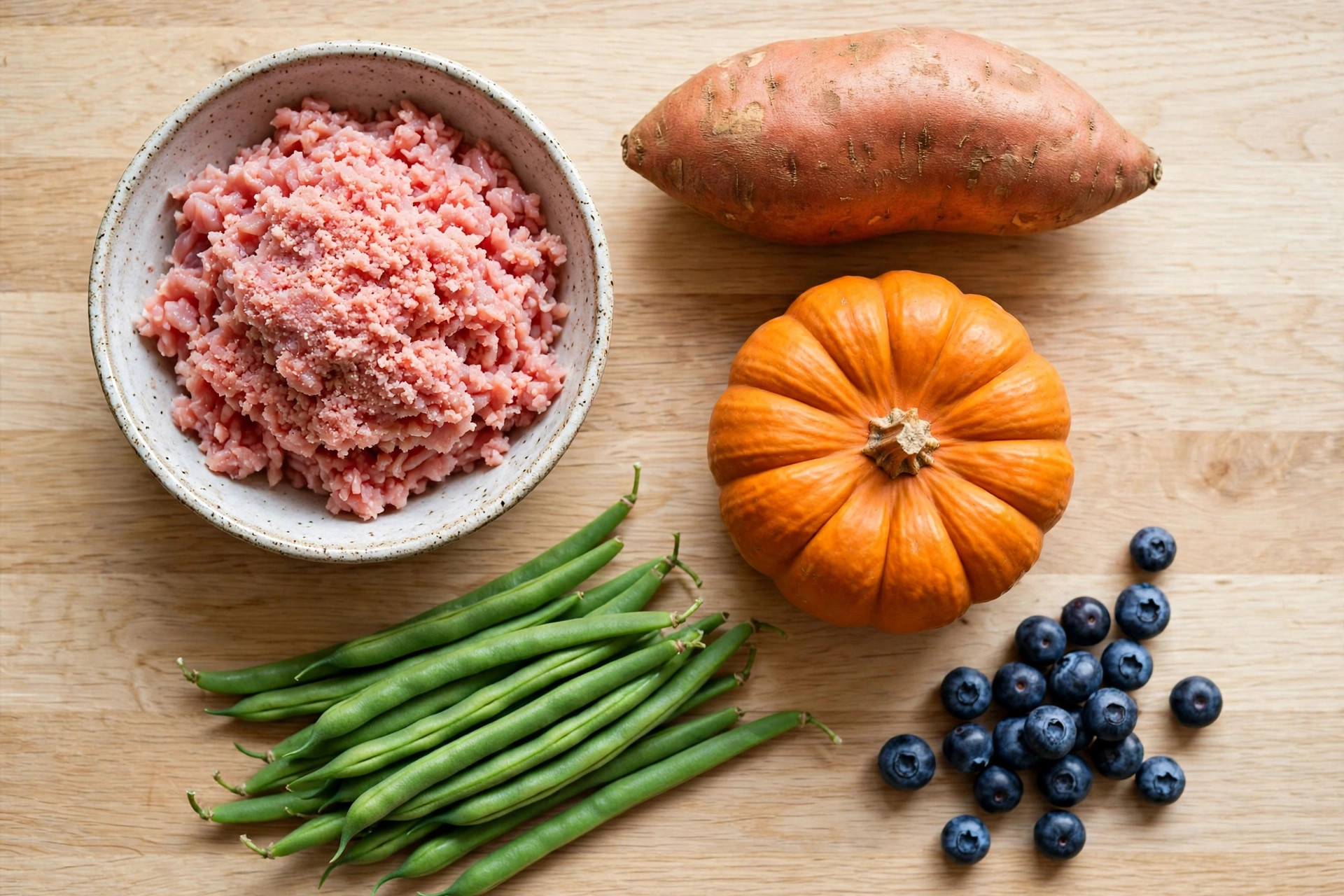
Step 1 — Pick one novel protein and one novel carbohydrate. \”Novel\” means your dog has never eaten it. Good combinations: turkey with sweet potato, venison with potato, duck with pumpkin, or rabbit with oats. If your dog has eaten chicken, beef, and lamb all its life, none of those count as novel.
\n
Step 2 — Feed only that combination for 8 weeks. Nothing else. No treats, no table scraps, no rawhide, no flavoured chews, no dental sticks, and no stealing the cat’s food. Every extra ingredient is a variable that can ruin the test. Use the same novel protein, cut into small pieces and dried, as the only treat.
\n
Step 3 — Keep a food diary. Every day, note what the dog ate, how much, and how the symptoms look on a simple 1–10 itch scale. Improvement usually starts in 2–4 weeks and should be clear by week 8. If there is no improvement at all by week 8, food is probably not the main trigger — talk to your vet about environmental allergies instead.
\n
Step 4 — Reintroduce one ingredient at a time. Once the itching has settled, add back one old ingredient — chicken, say — for two weeks and watch. If the itching returns, you have found a trigger. Remove it, wait for the symptoms to settle, then test the next one. This is the slow part, but it is the only way to build a safe, permanent ingredient list for your dog.
\n
A word of honesty: most owners give up in week 3 because the diet feels too strict and the dog looks bored. That is exactly when it starts working. The dogs that get through all 8 weeks are the ones whose owners finally know, for certain, what their dog can and cannot eat.
\n
Safe building blocks for an allergy-friendly bowl
\n
Once you know the triggers, building a homemade bowl is straightforward. Every bowl needs the same four building blocks — protein, carbohydrate, vegetables, and a healthy fat — just chosen from your dog’s safe list.
\n
Novel proteins (start here): turkey, duck, venison, rabbit, and fish such as salmon or white fish. Turkey is the easiest starting point for most owners: affordable, widely available, and genuinely novel for many dogs. Fish is a strong choice too, because it doubles as an omega-3 source for itchy skin — our salmon oil for dogs guide explains the dosage by weight.
\n
Safe carbohydrates: sweet potato, pumpkin, white potato, oats, and quinoa. Sweet potato is the workhorse: gentle on the stomach, rich in fibre, and most dogs love it. Pumpkin is the best choice during a flare-up because it firms up loose stools fast. If your dog is sensitive to grains, skip the oats and quinoa and stick with sweet potato and pumpkin.
\n
Safe vegetables and fruits: green beans, carrots, zucchini, spinach, and blueberries. Green beans add bulk and fibre without calories, which matters if your dog needs to lose weight while you sort out the diet. Blueberries are a safe, low-sugar treat that most allergic dogs tolerate well. Avoid onion, garlic, grapes, and raisins entirely — they are toxic to dogs, allergic or not.
\n
Healthy fats: a teaspoon of fish oil or a drizzle of coconut oil per meal, adjusted to your dog’s size. Fat is not the enemy here: it carries flavour, keeps the coat healthy, and helps a limited-ingredient diet feel satisfying. Just measure it — a tablespoon too many every day is how a homemade diet quietly becomes a weight-gain diet.
\n

Three allergy-friendly bowl recipes
\n
These three bowls are complete starting points, not finished diets. They assume your dog has no known trigger among their ingredients — swap the protein if you need to, and check the balance with your vet or a veterinary nutritionist before feeding any homemade diet long term.
\n
1. Turkey and pumpkin bowl (the elimination-diet starter)\nCook 150 g of minced turkey, 150 g of mashed sweet potato, 100 g of steamed pumpkin, and a handful of steamed green beans. Mix, cool, and serve. This is the bowl to start an elimination diet with: two ingredients your dog has probably never had, plus green beans for fibre. Keep it exactly like this for the full 8 weeks — no extras, no toppers, no treats from other proteins.
\n
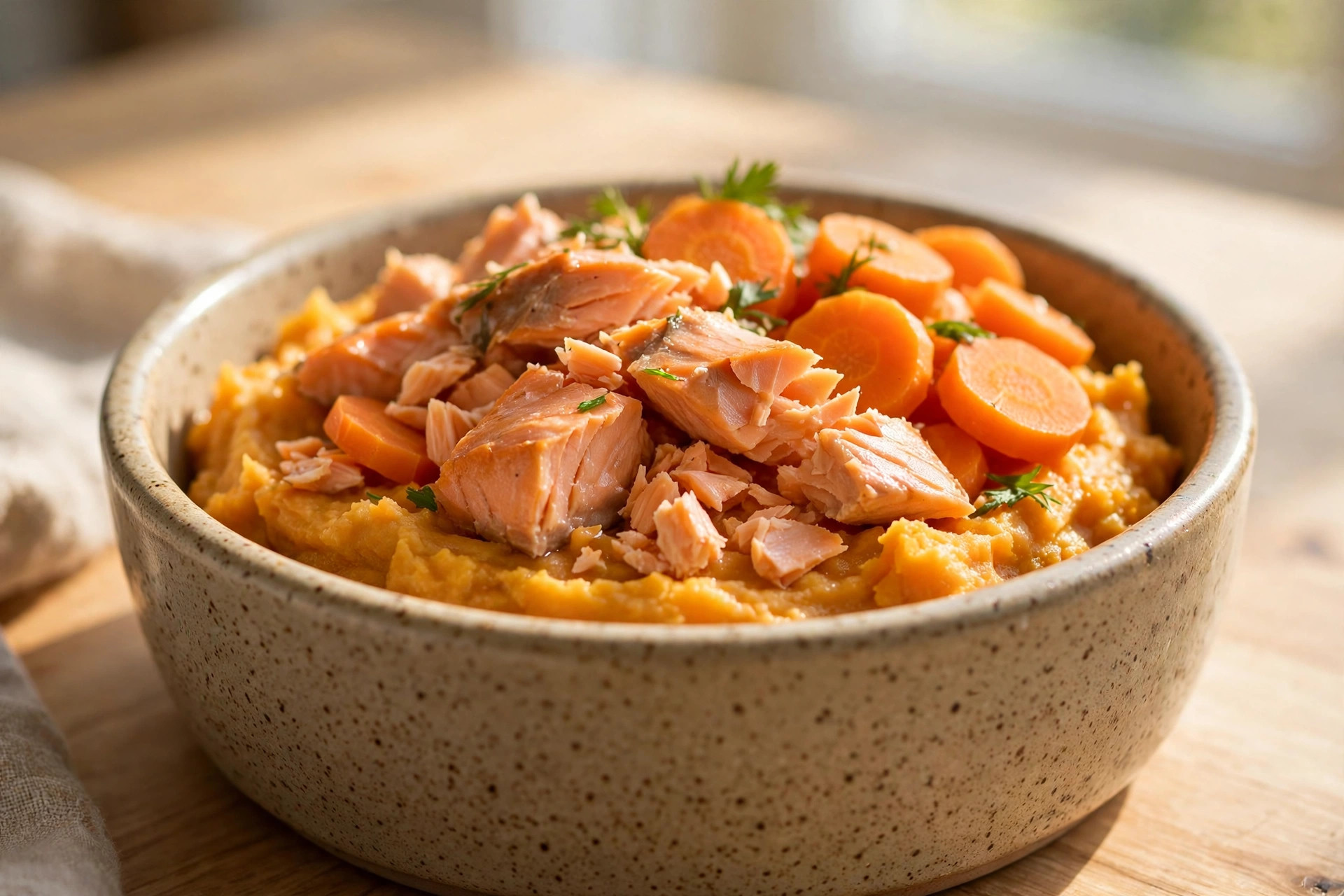
2. Salmon and sweet potato bowl (for itchy skin)\nBake or steam 150 g of salmon fillet, flake it, and mix with 150 g of mashed sweet potato and 100 g of steamed carrots. Add a teaspoon of fish oil if your vet agrees. Salmon is a novel protein for many dogs and the omega-3s in the fish itself help calm inflamed skin from the inside — it is the closest thing to a food that treats the symptom as well as avoiding the trigger. Our salmon oil for dogs guide covers how much extra oil to add by body weight.
\n
3. Lamb and quinoa bowl (for dogs that need more energy)\nCook 150 g of minced lamb, 120 g of cooked quinoa, 100 g of steamed zucchini, and a small handful of blueberries. Lamb suits active dogs that found turkey too lean, and quinoa adds complete protein and a little more energy than sweet potato. Skip this one if your dog has ever reacted to lamb — it is a less common trigger, but it is still a trigger for some dogs.
\n
Portion sizes above suit a medium dog of around 20 kg; scale up or down by roughly 10% for every 5 kg of body weight, and watch your dog’s waistline for the first month — homemade food is more calorie-dense than it looks. For the full framework on what makes a homemade bowl complete and balanced, see our best homemade dog food guide, which covers the five building blocks, AAFCO balance, and portions by weight in detail.
\n
Transitioning to homemade food safely
\n
Do not switch overnight. A sudden change from kibble to a homemade bowl will upset even a healthy stomach, and with an allergic dog you will not know whether the loose stools are the new food or a reaction. Transition over 7–10 days: 25% homemade and 75% old food for three days, then 50/50 for three days, then 75/25, then fully homemade. If the stools loosen at any stage, hold at that ratio for an extra two days before moving on.
\n
Cook everything thoroughly and cool it before serving. Raw meat is not part of an allergy-management plan — the goal is fewer variables, not more, and raw feeding adds a bacterial risk that an already uncomfortable dog does not need. Store cooked batches in the fridge for up to three days, or freeze portions for up to a month. A splash of bone broth for dogs over the bowl adds flavour and hydration, and it is a good way to tempt a dog that is bored of its limited menu — as long as the broth is made from a protein your dog tolerates.
\n
Supplements that actually help
\n
Supplements do not fix a food allergy — only removing the trigger does that. But two of them genuinely help while the diet does its work:
\n
- \n
- Omega-3 fish oil. Reduces skin inflammation and itching. Dose by weight (our salmon oil for dogs guide has the table), and give it 4–6 weeks before judging the result.
- Probiotics. Support the gut while it adjusts to a new diet. Look for a dog-specific product, not a human one, and introduce it slowly — a quarter dose for the first few days.
\n
\n
\n
Skip the rest until the elimination diet is done. Multi-ingredient \”skin and coat\” chews often contain chicken, beef, or dairy as a flavouring, which defeats the whole purpose of the diet. Read every label, including the treats.
\n
Foods allergic dogs must avoid
\n
Beyond your dog’s own triggers, these are off-limits for every dog, allergic or not: chocolate, grapes and raisins, onion and garlic, xylitol (in sugar-free gum and some peanut butters), macadamia nuts, cooked bones, and alcohol. With an allergic dog, also avoid the \”may contain\” trap — biscuits, dental chews, and flavoured medications often contain chicken or beef meal even when the packet does not advertise it. If the ingredient list is vague, do not feed it.
\n

When to see the vet
\n
Homemade food and an elimination diet handle most food allergies, but see your vet promptly if your dog has any of these: raw or bleeding skin, a swollen face or muzzle, vomiting or diarrhoea that lasts more than 24 hours, weight loss, or ear infections that keep coming back. These can mean a secondary infection, a different allergy (environmental allergies often run alongside food allergies), or a condition that diet alone will not fix. A vet can also refer you to a veterinary nutritionist, who will check your homemade recipes for long-term balance — homemade diets commonly run low on calcium, zinc, and vitamin E, and a nutritionist will tell you exactly what to add.
\n
Mistakes to avoid
\n
- \n
- Quitting the elimination diet at week 3. Improvement usually starts at 2–4 weeks. Stopping early means you never find out whether food was the problem.
- \”Just one treat won’t hurt.\” One chicken treat can restart the itching for days and reset your 8-week clock. Use only the novel protein as treats.
- Blaming grains first. The protein is the trigger in the overwhelming majority of cases. Cutting grains while keeping the same chicken-based food changes nothing.
- Feeding the same protein forever. Once you know the safe list, rotate between two or three tolerated proteins. Feeding one protein for years is how new sensitivities develop.
- Skipping the vet check. A homemade diet that is not balanced will cause new problems — usually calcium deficiency — within months. Get the recipe checked.
- Trusting \”hypoallergenic\” labels. The word is not regulated for dog food. A \”hypoallergenic\” kibble can still contain the exact protein your dog reacts to. Read the ingredient list, not the front of the bag.
\n
\n
\n
\n
\n
\n
\n
FAQs
\n
How do I know if my dog has a food allergy?\nThe classic signs are year-round itching (especially paws, ears, and belly), recurrent ear infections, and digestive upset that does not respond to a food change. The only reliable confirmation is an elimination diet followed by a challenge — blood and saliva tests are unreliable for food allergies in dogs.
\n
What is the best protein for a dog with allergies?\nThe best protein is one your dog has never eaten: turkey, duck, venison, rabbit, or fish are the usual starting points. There is no single \”best\” protein for every dog — it depends entirely on what your dog has already been exposed to.
\n
How long does an elimination diet take?\nEight weeks on the restricted diet, then two weeks per ingredient during the reintroduction phase. It is slow, but it is the only method that gives you a certain answer about what your dog can eat.
\n
Can I feed my allergic dog rice?\nYes, for most dogs. Rice is a low-allergy carbohydrate and is rarely a trigger. Sweet potato and pumpkin are often better choices during a flare-up because they are gentler on the stomach and add more fibre.
\n
Is grain-free food better for allergic dogs?\nNot necessarily. Most food allergies are to proteins, not grains. A grain-free food made with chicken will still trigger a chicken-allergic dog. Focus on the protein, not the grain.
\n
Can homemade dog food cure my dog’s allergies?\nIt cannot cure the allergy, but it can control it completely: remove the trigger, and the symptoms stop. The allergy itself remains, which is why the trigger has to stay out of the diet permanently — even in treats.
\n
Do I need to add supplements to homemade dog food?\nAlmost always, yes — homemade diets commonly run low on calcium, zinc, and vitamin E. A vet or veterinary nutritionist should check your recipes and advise what to add for your dog’s size and age.
\n
The bottom line
\n
Food allergies in dogs are frustrating, but they are also one of the most solvable problems in pet care. Pick a protein your dog has never eaten, feed it with one safe carbohydrate for 8 strict weeks, keep a diary, and reintroduce ingredients one at a time. The dogs that get through the full process come out the other side with a short, certain list of safe foods — and owners who never have to guess at the pet shop again. If your dog’s skin is already irritated, our dog skin allergies home remedies guide covers what soothes the itch while the diet does its work, and our homemade dog food recipes give you seven balanced bowls to rotate once you know the safe list. For the bigger picture — including portions by weight and the mistakes that unbalance a homemade diet — see our best dog food for sensitive stomachs guide as well.
\n
Pin this for later 📌 — and if your dog’s stomach is the bigger problem, our best dog food for sensitive stomachs guide covers limited-ingredient diets, transition plans, and the add-ons that calm a troubled tummy.
“,
“source_draft”: “/home/hatch/workspace/goals/pinterest-pin-automation-for-petsmush-com/files/homemade-dog-food-for-dogs-with-allergies-post-draft.md”,
“status”: “publish”
}