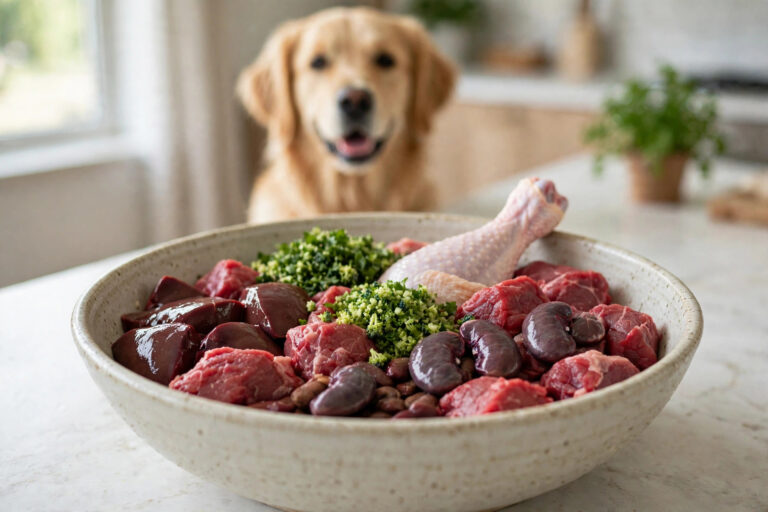
Raw feeding is having a moment. Freeze-dried and gently cooked formats keep
surging, and more dog owners are asking the same question: should I just
feed raw myself? Done well, a raw diet can be a genuinely good way to feed
your dog. Done badly — a freezer bag of random mince and hope — it can cause
real problems, from nutritional gaps to nasty bacterial infections.
This guide is the safe middle ground: what raw feeding actually means, the
80/10/10 rule every beginner should learn, a 7-day transition plan, the
bones that are safe and the ones that are never okay, kitchen hygiene that
protects your household, and — honestly — who should not feed raw at all.
If you’re brand new to home-prepared feeding, our
homemade dog food recipes
guide is a gentler cooked starting point; a warm bowl of
bone broth for dogs is a nice
bridge between kibble and fully raw.
The 3 rules before you start
1. Transition slowly. A sudden switch from kibble to raw almost
guarantees an upset stomach. Give it 7 days minimum.
2. Balance over time. A single meal doesn’t need to be perfect, but
the week’s worth of meals must cover meat, bone, organs and a little
plant matter.
3. Talk to your vet first. Especially if your dog is a puppy,
pregnant, elderly, immunocompromised, or has kidney or liver disease.
What “raw feeding” actually means
“Raw” covers a few different styles, and the differences matter:
-
Prey-model raw (the 80/10/10 approach): whole-animal eating — roughly
80% muscle meat, 10% raw meaty bones, 5% liver and 5% other secreting
organs, over time. No grains, minimal plant matter. -
BARF (Bones And Raw Food / Biologically Appropriate Raw Food): similar
but adds 20–30% fruit, vegetables and extras like eggs and yoghurt. -
Commercial raw: pre-made frozen patties, nuggets or freeze-dried meals
from pet brands. The easiest entry point — balanced formulas, but pricier.
This guide focuses on home-prepared prey-model/BARF basics, because that’s
where beginners make the costly mistakes.
The potential benefits (and what’s actually proven)
Owners who switch often report shinier coats, smaller/firmer stools,
cleaner teeth and less “dog smell”. Some of this is real: chewing raw meaty
bones genuinely scrapes plaque, and ditching filler-heavy kibble can calm
some digestive grumbles.
But be honest with yourself: large-scale proof for raw diets is thin, and
what’s not disputed is that raw meat carries bacteria — Salmonella,
Campylobacter, E. coli, Listeria — that can sicken dogs and the humans who
live with them. The benefits are possible; the risks are certain. Which is
why the rest of this guide is about managing the risks properly.
Who should NOT feed raw
Not every dog is a candidate, and not every household should try. Skip raw
(or wait and talk to your vet) if:
-
Your dog is a puppy under ~6 months, pregnant or nursing — growth and
reproduction are the hardest life stages to balance without a
nutritionist-formulated plan. -
Your dog is immunocompromised or on immunosuppressive drugs.
-
Your dog has kidney or liver disease — raw diets are high in protein
and phosphorus, which these conditions often restrict. -
Someone in your home is immunocompromised, very young or elderly —
raw-fed dogs can shed bacteria in their stool and saliva. -
You can’t commit to hygiene. Raw feeding is 20% food, 80% kitchen
discipline. If batch prep feels like a chore you’ll skip, stick with
quality commercial food.
None of this is a moral judgement — cooked homemade diets and good kibble
feed millions of healthy dogs. Raw is an option, not an obligation.
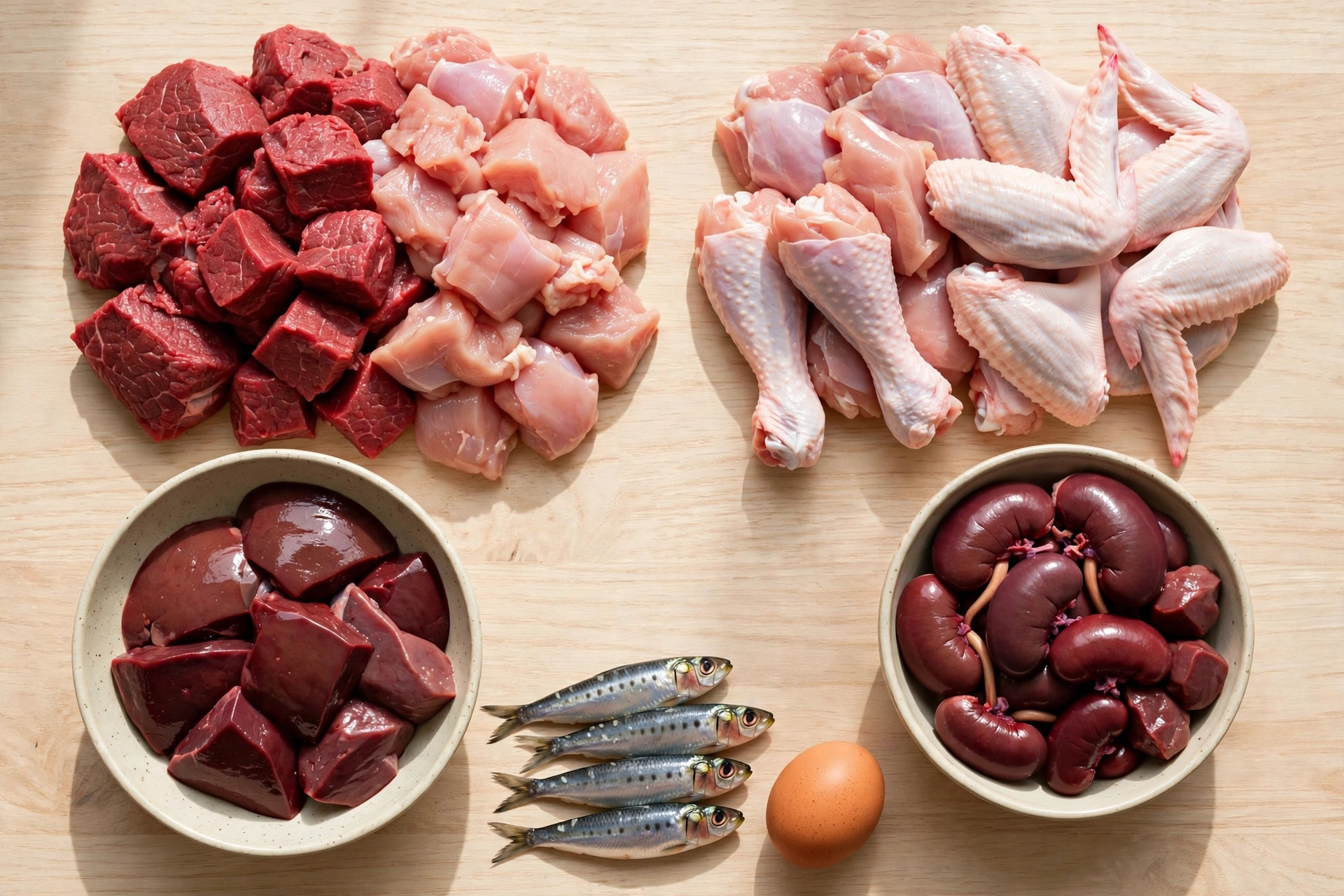
The 80/10/10 rule, explained simply
Think of it as a weekly target, not a per-meal formula. Over the course of
a week, aim for:
-
80% muscle meat — chicken thighs, turkey, beef trim, lamb, duck, pork
(pork must be frozen 3+ weeks first to kill parasites), heart (counts as
muscle meat, nutritionally). -
10% raw meaty bone — chicken necks, wings, duck feet, turkey necks
for bigger dogs. The bone must always be raw and meaty (flesh still
on it). -
5% liver — beef, chicken or lamb liver. Liver is the multivitamin of
the raw world (vitamin A, copper, B12). Too much causes vitamin A toxicity,
so respect the 5%. -
5% other secreting organs — kidney, spleen, pancreas, brain,
testicles. (Sweetbreads/thymus count too.)
On top of that, many BARF feeders add 10–20% blended vegetables, fruit,
eggs with shell, oily fish and extras. A small scoop of
bone broth over the bowl adds
hydration and collagen without upsetting the balance.
Supplements worth considering: oily fish (sardines, mackerel) 2–3 times
a week for omega-3s; vitamin E; and for DIY feeders who skip organs, a
canine multivitamin — see our
dog multivitamins guide
for label-reading help.
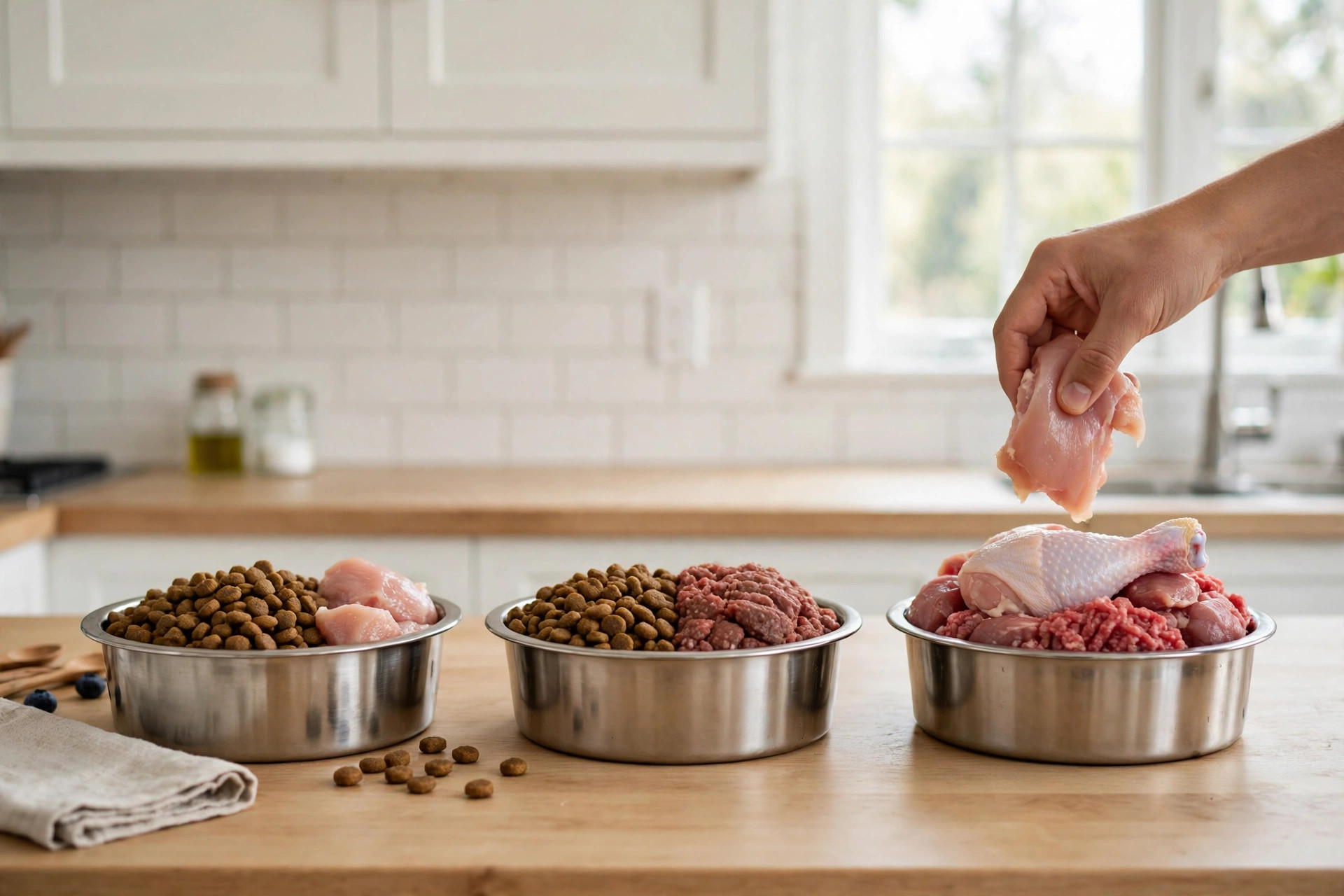
The 7-day transition plan
Don’t go cold turkey. Kibble and raw digest at different rates, and a hard
switch is the classic recipe for diarrhoea.
Days 1–2: 75% old food, 25% raw (start with one easy protein like
boneless chicken or turkey — no bone yet).
Days 3–4: 50/50. Add one raw meaty bone meal (e.g. a chicken neck or
two) and watch the stool — slightly firmer and smaller is normal.
Days 5–6: 25% old food, 75% raw. Introduce liver in pea-sized amounts
(too much, too fast = loose stool — the classic beginner error).
Day 7: 100% raw. Add the second secreting organ and start rotating
proteins — aim for 3–4 different proteins across each fortnight.
If stools go very loose at any stage, step back one stage for 2–3 days.
Mild softness is normal; watery diarrhoea lasting more than 48 hours is a
vet call, not a feeding tweak.
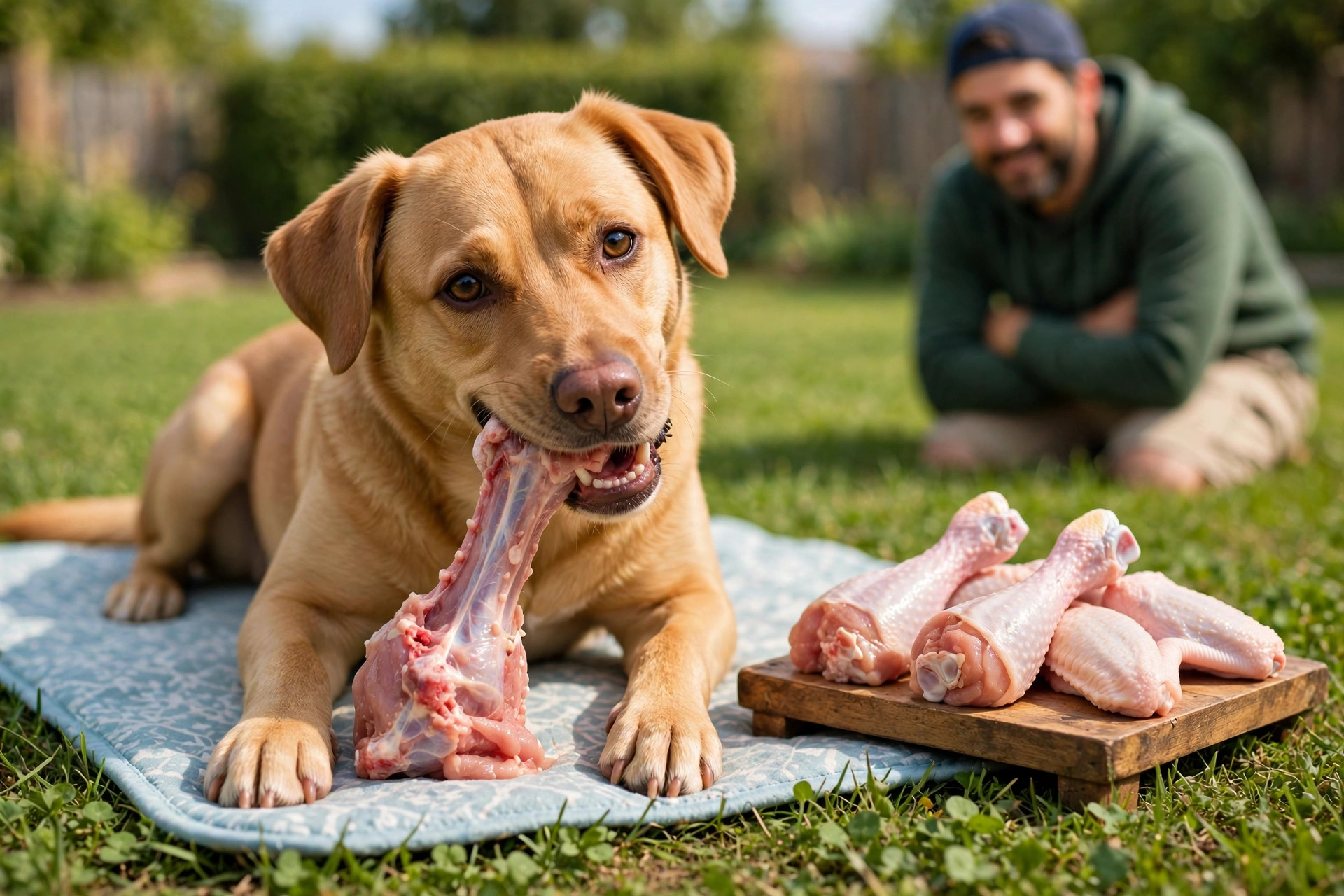
Bones: the safe list and the never list
Chewing raw meaty bones is the dental hero of raw feeding — but bones are
also where raw feeding gets its worst injuries, so this section is not
optional reading.
SAFE (raw only, size-appropriate, always supervised):
chicken necks, wings and carcasses; duck necks and feet; turkey necks (large
dogs); lamb ribs; recreational marrow bones given briefly then removed once
the meat is gone (they’re too hard for power chewers to gnaw long-term).
NEVER: any cooked bone (cooking makes bones brittle and splintery —
this includes leftover roast chicken carcasses and smoked bones); cut
marrow bones for aggressive chewers (slab fractures of the big carnassial
teeth are the classic injury); tiny bones a gulper can swallow whole; bones
left lying around to go rancid.
Feed bones on a washable surface or outdoors, supervise every chew, and take
the bone away when it’s chewed down to a swallowable size.
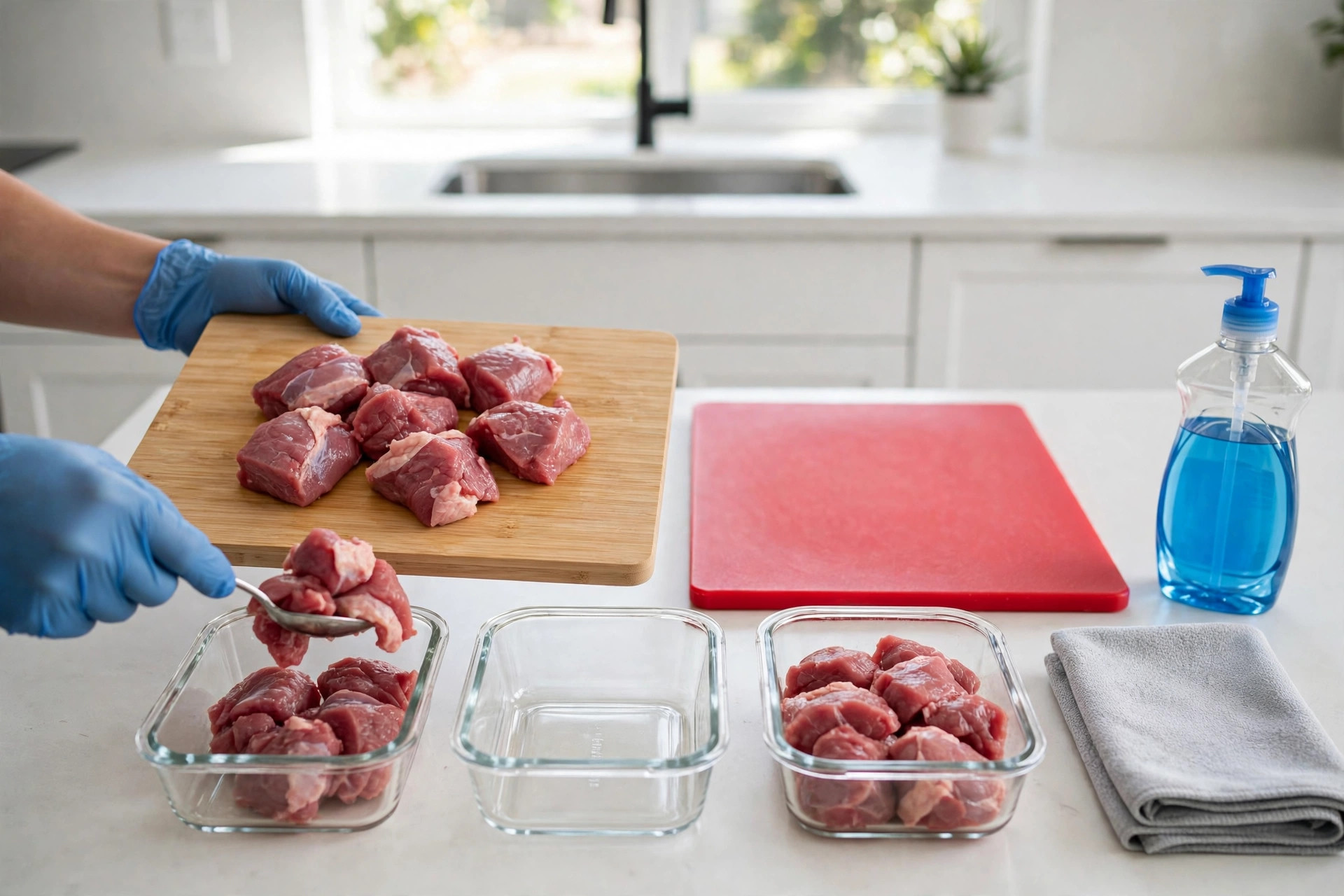
Kitchen hygiene: the non-negotiable rules
Raw meat in a home kitchen demands restaurant-level habits:
-
Separate everything. Dedicated cutting board, knife and bowls for
raw dog food. Wash in hot soapy water immediately after use. -
Thaw safely. Thaw in the fridge, never on the counter. Use within
2 days of thawing. -
Portion and refreeze smart. Freeze meat in daily portions so you
thaw only what you need. Pork and wild game: freeze at −18°C for 3+
weeks before feeding to kill parasites. -
Wash hands before and after handling, and wash your dog’s bowl after
every raw meal. -
Clean the feeding spot. Wipe floors and mats where raw bowls sat —
toddlers crawl there. -
Pick up poop promptly. Raw-fed dogs can shed more bacteria in their
stool; don’t let it linger in the garden.
Signs it’s working — and red flags
Good signs (2–4 weeks in): smaller, firmer, less smelly stools; a
shinier coat; cleaner teeth; steady energy and weight.
Red flags — call your vet: persistent diarrhoea or vomiting beyond
48 hours; lethargy or loss of appetite; weight loss; a dog straining,
drooling or pawing at the mouth after a bone (possible obstruction or tooth
fracture); any sign of illness in a household member after you started raw.
Weigh your dog monthly for the first 3 months. Feed roughly 2–3% of ideal
adult body weight per day (more for very active dogs, less for couch
potatoes), and adjust by the ribs — you should feel them easily under a
thin fat layer.
The bottom line
Raw feeding can work beautifully for the right dog in the right household:
learn the 80/10/10 framework, transition over a week, respect the bone
rules, run a tight hygienic kitchen, and keep your vet in the loop. Start
with one protein, master the basics, then widen the rotation. If any part
of this guide feels like too much — the prep, the hygiene, the organ
sourcing — that’s useful information, not failure. A good commercial food
or a balanced cooked diet will keep your dog thriving too.
FAQs
Is raw dog food actually better than kibble?
It can be, for some dogs — particularly for dental health and stool quality.
But “better” depends entirely on balance and hygiene. A well-formulated
kibble beats a sloppy raw diet every time.
Can puppies eat raw food?
Only with a nutritionist-formulated plan. Puppies have narrow margins for
calcium, phosphorus and calories, and getting them wrong during growth can
cause permanent skeletal problems. Most vets advise waiting until growth is
complete.
How much raw food should I feed per day?
A starting point is 2–3% of your dog’s ideal adult body weight daily, split
into 1–2 meals. Adjust by body condition — ribs felt but not seen — rather
than the scale alone.
Is it safe to feed raw chicken to dogs?
Dogs handle raw chicken (including soft bones like necks) far better than
humans do, provided it’s fresh, properly stored, and your kitchen hygiene is
strict. Never feed cooked chicken bones.
Do I need to add vegetables to a raw diet?
Strict prey-model feeders don’t. BARF-style feeders add 10–20% blended
veg and fruit for fibre and phytonutrients. Either way, keep plant matter a
side dish, not the main event — dogs are facultative carnivores, not
salad enthusiasts.