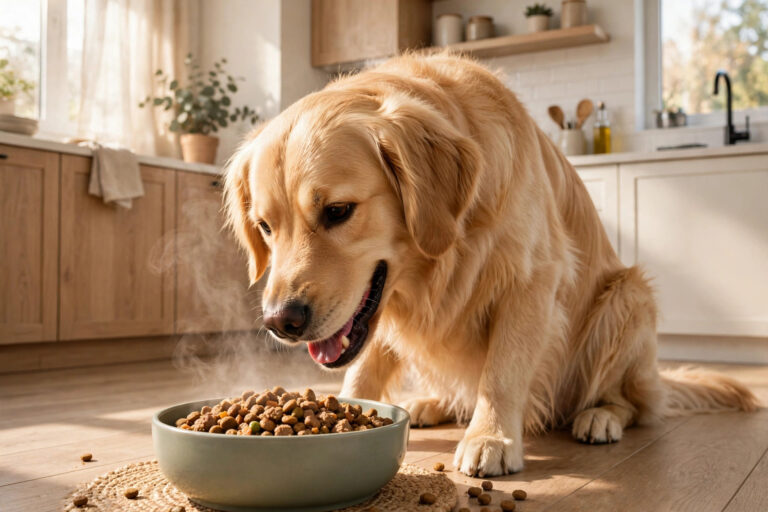
If you’ve ever stared at a full bowl of premium dog food while your dog stares at you, unimpressed, you’re not alone. Picky eating is one of the most common complaints dog owners have — and one of the most misunderstood. The good news: most picky eating isn’t a medical emergency, and it often isn’t even about the food. It’s about aroma, texture, temperature and routine — all things you can fix without spending a fortune on a new bag every week.
This is a palatability-first guide: how to make the food your dog already has worth eating, how to buy smarter for a fussy dog, and how to tell the difference between a fussy eater and a dog who needs a vet.
Rule out illness first. A dog who suddenly goes off food — especially one who used to eat eagerly — may be telling you something hurts. Dental pain, nausea, infections and medication side effects all kill appetite. If pickiness is new, sudden, or comes with lethargy, vomiting or weight loss, call your vet before you change a single thing about the menu. The tricks below are for chronic fussiness, not sudden appetite loss.
Why dogs turn picky (it’s often not the food)
Dogs experience food through their noses far more than their tongues — roughly 300 million scent receptors versus our 6 million. A bowl that smells flat gets dismissed before a single bite is tasted. That’s why the same food eaten cold from the bag gets ignored and demolished when it’s warm, wet, or topped with something fragrant.
The usual suspects behind chronic pickiness:
- Boredom with the bowl. Dogs fed one kibble, day after day, for years often just go stale on it — the same way you’d tire of plain rice.
- Too many extras. Dogs who get treats, scraps and chews between meals hold out for the good stuff. If the kitchen tap of extras never stops, why eat kibble?
- Free-feeding. A bowl that’s always full teaches a dog that food is always available, so there’s never any urgency to eat it.
- Temperature and texture. Cold food straight from the bag or fridge releases almost no aroma. Big, hard kibble is work for a dog with a sore mouth or small teeth.
Understanding which of these is at play tells you which fix to try first.
Trick 1: warm the food to release the aroma
This is the single highest-return change you can make. Aroma drives appetite, and warming food multiplies aroma.
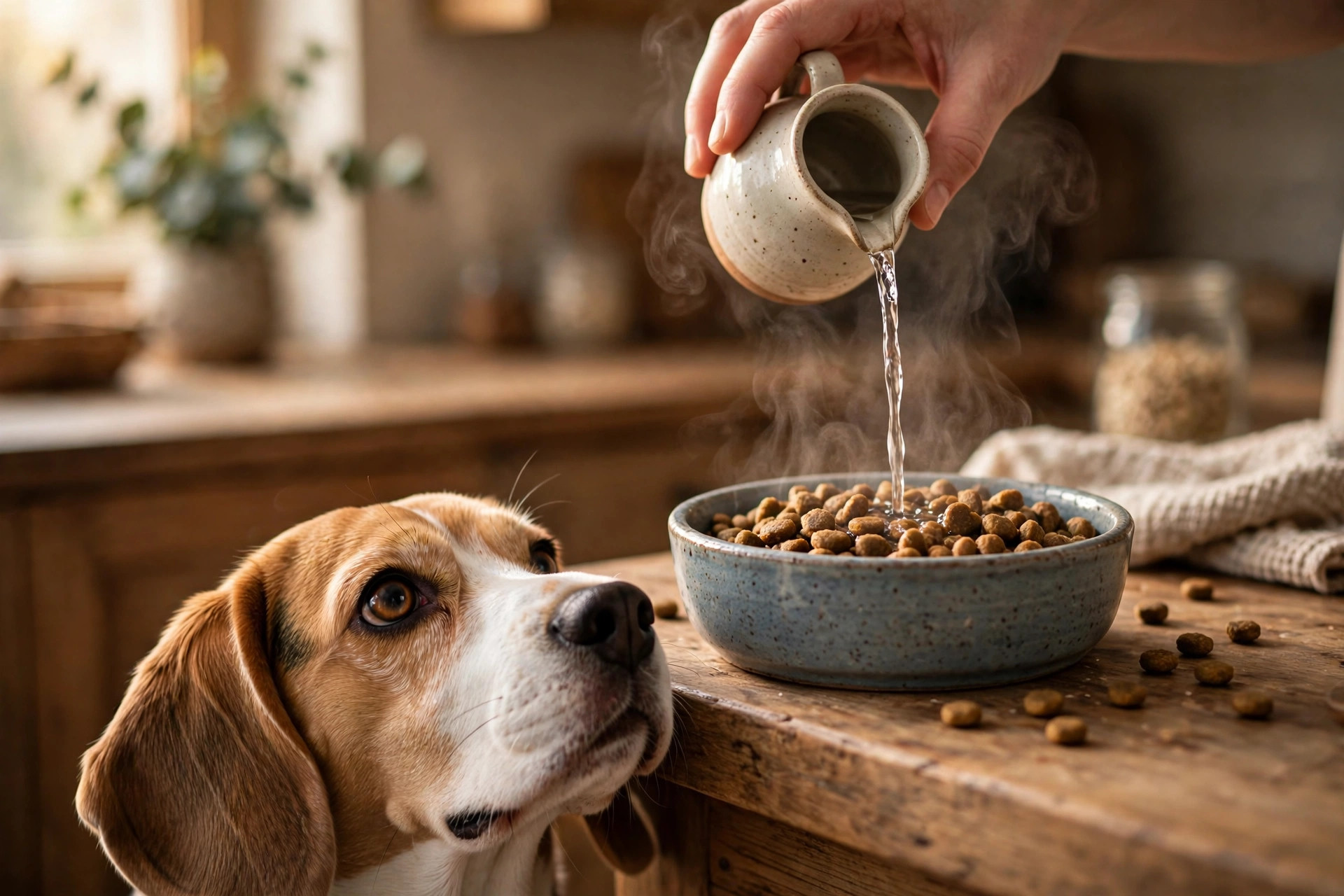
- Kibble: pour the meal into the bowl, add 2–3 tablespoons of warm (not hot) water and let it sit for 3–5 minutes. The steam wakes the food up.
- Wet food from the fridge: let it come to room temperature, or warm it gently for 10–15 seconds. Serve at roughly body temperature — warm to the touch, never hot. A dog that burns its tongue will distrust the bowl for days.
- The quick version: a splash of warm water works on almost any food and costs nothing.
Never microwave bone or leave warmed food sitting out — refrigerate leftovers and discard any uneaten wet food after about 2 hours.
Trick 2: fix the texture
If warming doesn’t do it, texture is the next lever. Many picky dogs are actually texture-sensitive: they dislike food that’s too dry, too large, or too uniform.
- Soften the crunch. The warm-water trick above softens kibble into something closer to a chunky mash — many fussy dogs prefer it.
- Mix wet and dry. A spoonful or two of wet food stirred through kibble adds moisture and flavour without changing the base diet. Keep the ratio sensible: the meal should still be nutritionally balanced, so don’t let toppers creep past about 10–20% of the bowl.
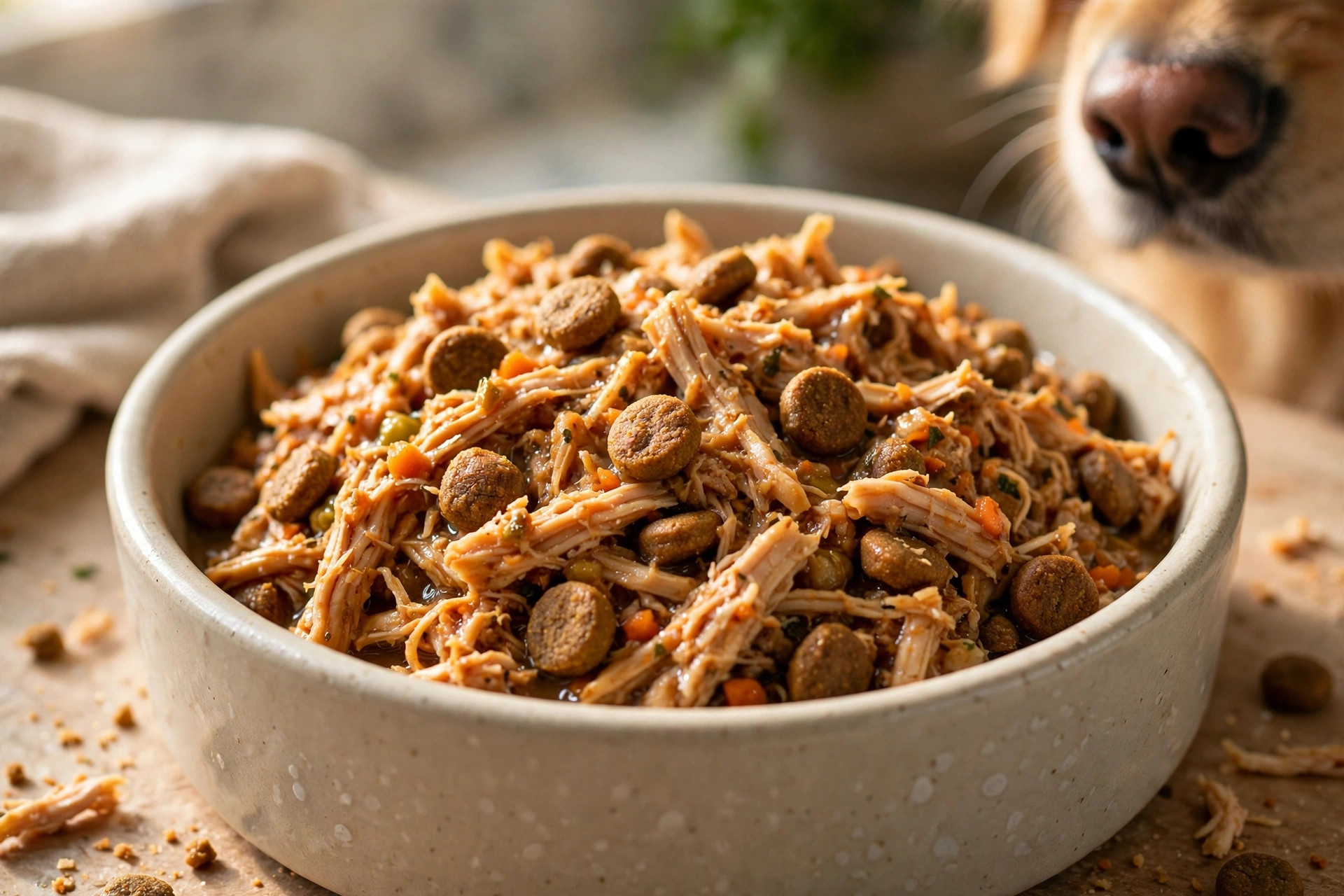
- Try shredded or chunked formats. Shredded-blend foods — where the protein comes apart in fibres — are consistently rated more palatable than hard pellets. If your dog eats around kibble to pick out the soft bits, that’s a texture message: switch the format, not necessarily the brand.
- Smaller pieces for small mouths. Some dogs simply dislike wrestling with large kibble. A smaller-size formula of the same food can end the fuss.
Trick 3: toppers and mix-ins picky dogs actually finish
Toppers are the bridge between “same old bowl” and “something new” — without the upheaval of switching foods. A drizzle of something fragrant can finish a bowl that would otherwise sit. Our favourites:
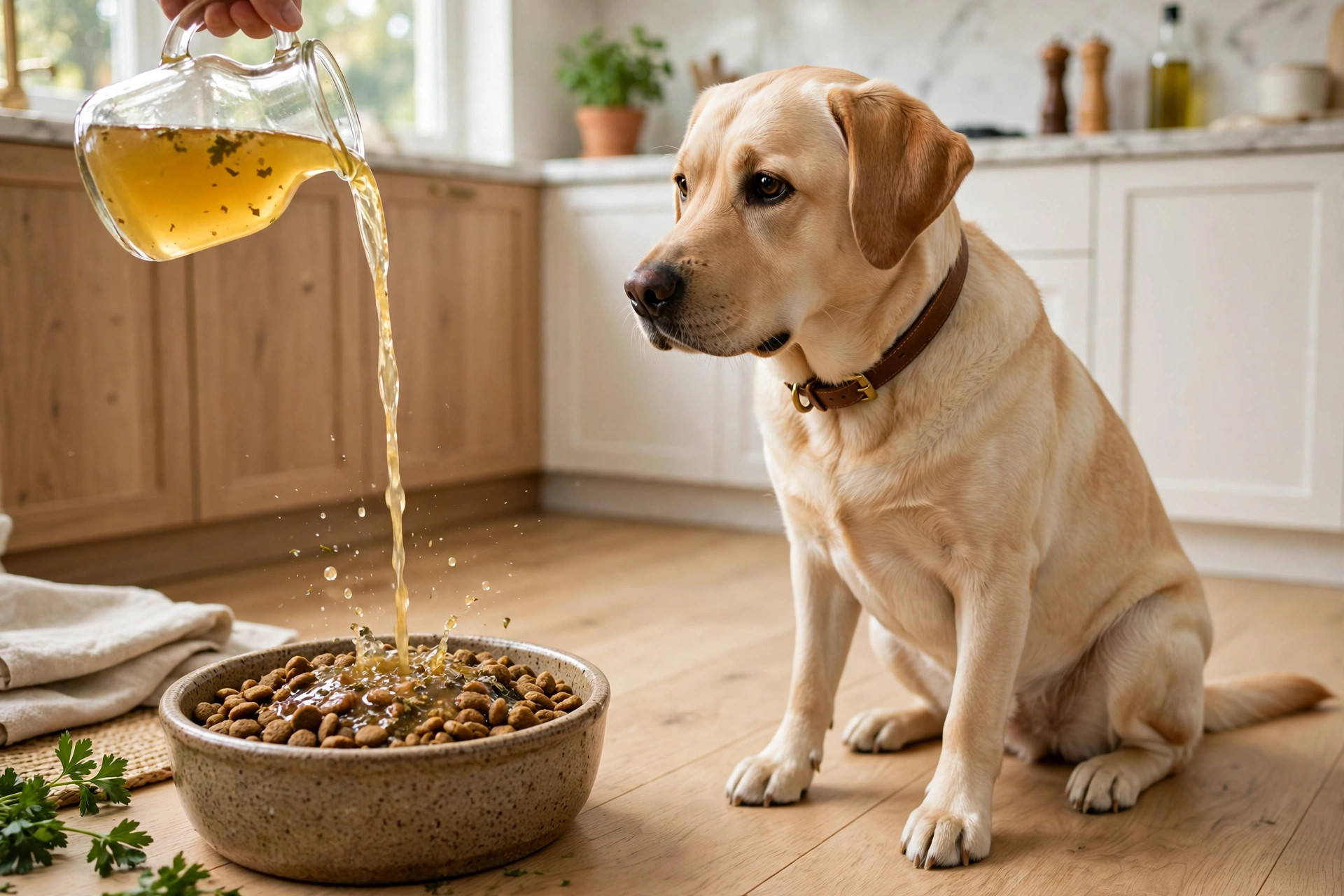
- Warm bone broth: pour a few tablespoons of warm, low-sodium, dog-safe broth over kibble. It adds aroma, moisture and a little collagen — most dogs find it irresistible. (Homemade broth made without onion or garlic is best; see our bone broth guide for the safe recipe.)
- Salmon oil: a pump over the bowl adds a fishy aroma dogs go mad for, plus omega-3s for coat and joints. Start with half the label dose and build up.
- Plain shredded chicken or turkey: a tablespoon of unseasoned, skinless shredded meat stirred through the meal. Cooked plain — no seasoning, no onion or garlic.
- Freeze-dried crumbles: crush a freeze-dried treat or two over the top. The concentrated aroma acts like seasoning.
- Plain pumpkin purée: a spoonful for dogs who like a softer, sweeter mix-in. Use plain canned pumpkin, not pumpkin pie filling.
Keep toppers honest: they should enhance the meal, not become the meal. If your dog starts picking the topper off and leaving the kibble, you’ve gone too far — reduce the amount and stir it in properly.
Trick 4: fix the routine, not just the recipe
How you feed matters as much as what you feed.
- Timed meals, not grazing. Put the food down for 15–20 minutes. If it’s untouched, lift it and offer it again at the next meal — no guilt, no extra treats to compensate. Most dogs learn the rhythm within a few days, and timed meals make appetite far more predictable.
- Cap the extras. Treats and table scraps should stay under about 10% of daily calories. A dog holding out for cheese will always find kibble disappointing.
- Exercise before dinner. A decent walk or play session before the evening meal is the oldest appetite stimulant there is. Our guide to homemade dog food recipes pairs well with this routine if you’re rotating fresh meals through the week.
- Quiet, calm mealtimes. Feeding in a noisy, busy kitchen while the dog feels watched can put anxious dogs off food. A calm corner, same spot every day, builds a habit.
How to switch foods without the hunger strike
If you’ve decided the current food genuinely isn’t working, switch it properly — a hard swap is how dogs develop the stomach upsets that owners then blame on the new food.
Days 1–3: 75% old food, 25% new. Days 4–6: 50/50. Days 7–10: 25% old, 75% new. Day 11+: fully new food.
A short period of sniffing and circling is normal with any new food. A dog that refuses for more than 24 hours, or shows vomiting or diarrhoea during the transition, is telling you to slow down or try a different formula.
What NOT to do with a picky eater
- Don’t turn yourself into a short-order cook. Making a fresh meal from scratch every time the dog refuses teaches one lesson: refusing works. One balanced food, prepared well, is the goal.
- Don’t bribe with table scraps. Rich, seasoned human food is the fastest way to create a dog who never eats dog food again — and fatty scraps can trigger pancreatitis.
- Never use sugar-free peanut butter as a flavour trick. Many “sugar-free” spreads contain xylitol, which is extremely toxic to dogs even in tiny amounts. If you use peanut butter at all, read the label every time and stick to plain varieties with no xylitol.
- Don’t add garlic or onion to “make it tasty.” Both are toxic to dogs, even in small amounts, and they hide in many human broths and sauces.
When pickiness needs a vet
Chronic fussiness with a healthy, energetic dog is usually a preference problem. But book a vet visit if you notice any of these:
- A sudden change from eager eater to refuser (days, not months).
- Weight loss, even gradual.
- Dropping food, chewing on one side, or pawing at the mouth — classic dental-pain signs.
- Vomiting, diarrhoea, excessive drooling or bad breath alongside the appetite change.
- A puppy who stops eating — puppies have no reserves, so don’t wait.
- Any pickiness that survives two weeks of proper timed meals and the tricks above.
Trust your gut here: you know what “normal fussy” looks like for your dog. Anything that feels different deserves a professional opinion.
FAQs
My dog eats treats but not meals. What’s going on? That’s the clearest sign the issue is preference, not appetite. The dog is hungry — it’s just holding out for better options. Cut extras to near zero, switch to timed meals, and the regular food becomes the best offer on the table within a few days.
Is it okay to leave food down all day for a picky dog? Usually not — free-feeding removes the structure that builds appetite. Timed meals (15–20 minutes, then the bowl comes up) are the single best routine change for grazers and fussers alike.
Should I try a more expensive food? Price doesn’t predict palatability. A mid-range shredded-blend or a well-chosen wet food often beats a premium kibble your dog won’t touch. Judge by the bowl being emptied, not the price tag — and transition any new food slowly.
Can I put salmon oil or supplements on every meal? A daily topper is fine as long as the base diet stays balanced and the topper stays a small fraction of the meal. If you’re adding several supplements, check the labels don’t overlap on the same vitamins — our dog multivitamins guide covers how to read supplement labels without doubling up.
My puppy is suddenly picky — is that normal? Puppies can go through short fussy phases (teething is a common one), but a puppy that stops eating is always worth a vet call sooner rather than later. Puppies dehydrate and lose condition fast. See our best puppy food guide for age-appropriate feeding amounts.
The bottom line
Most picky eating is a presentation problem, not a food problem. Warm it, wet it, add a fragrant topper, feed on a schedule — and give the dog a reason to eat the bowl in front of them. Save the food switch for when the tricks genuinely don’t work, and keep the vet in the loop if anything about the pattern changes. The best dog food for a picky eater is the one they’ll actually finish, and that’s usually closer to the current bowl than you’d think.